

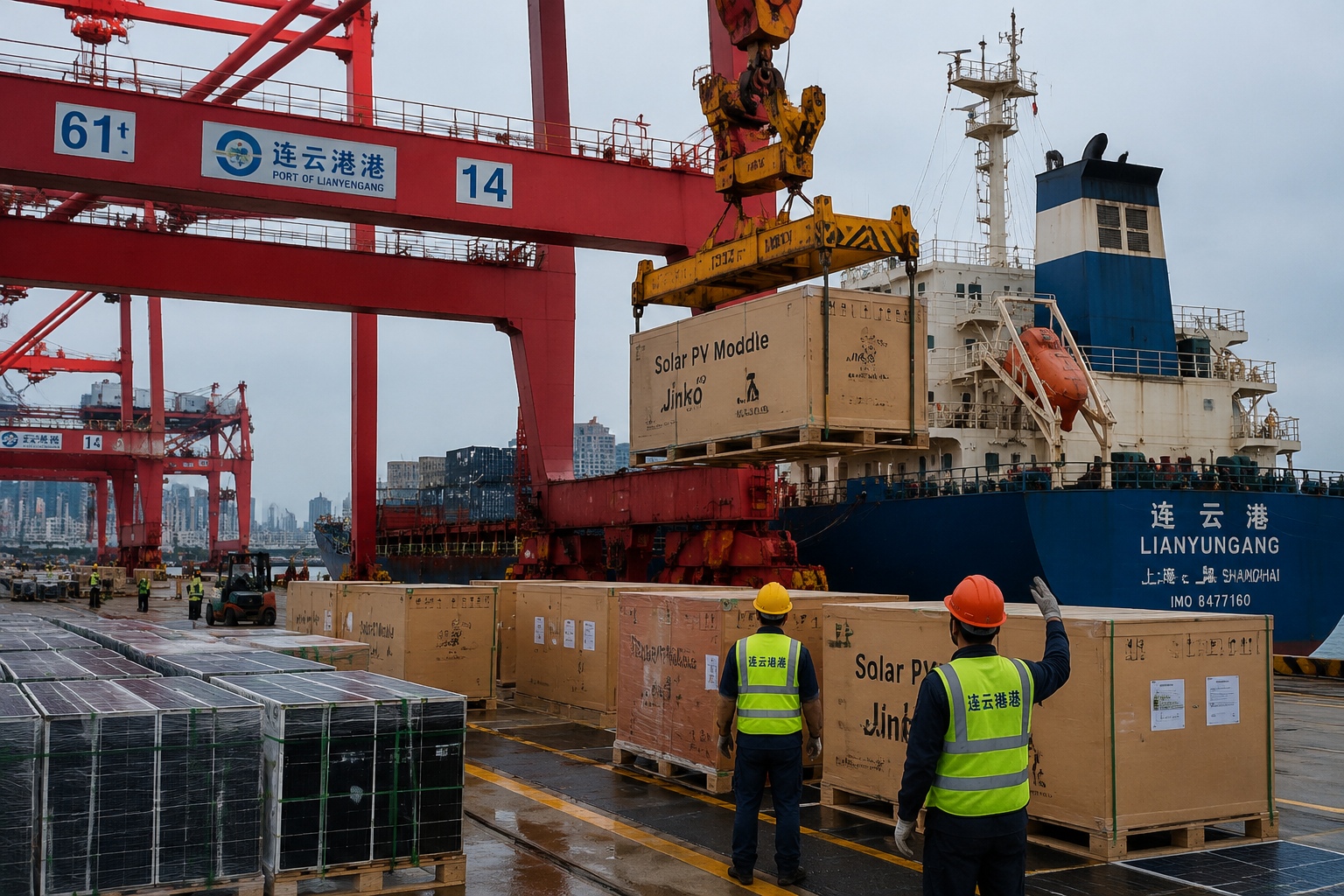
In Lianyungang, a port city in northern Jiangsu province, a container ship bound for Rotterdam is being loaded with solar panels. Workers in yellow vests use cranes to hoist huge boxes stacked with glass-covered modules, each one designed to convert sunlight into electricity for homes or businesses in Europe. On any given day, dozens of similar containers leave from Jiangsu’s ports—Nantong, Taicang, Nanjing—carrying photovoltaic products to every inhabited continent.
Jiangsu is not the sunniest part of China. The Gobi Desert in the west retains far more solar resources. But when it comes to making the technology that captures sunlight, Jiangsu is the undisputed leader. The province has built the world’s most complete solar manufacturing supply chain—from crushed quartz to finished panels—and it supplies a staggering share of the world’s photovoltaic equipment.
A Province That Makes One in Four Solar Panels Worldwide
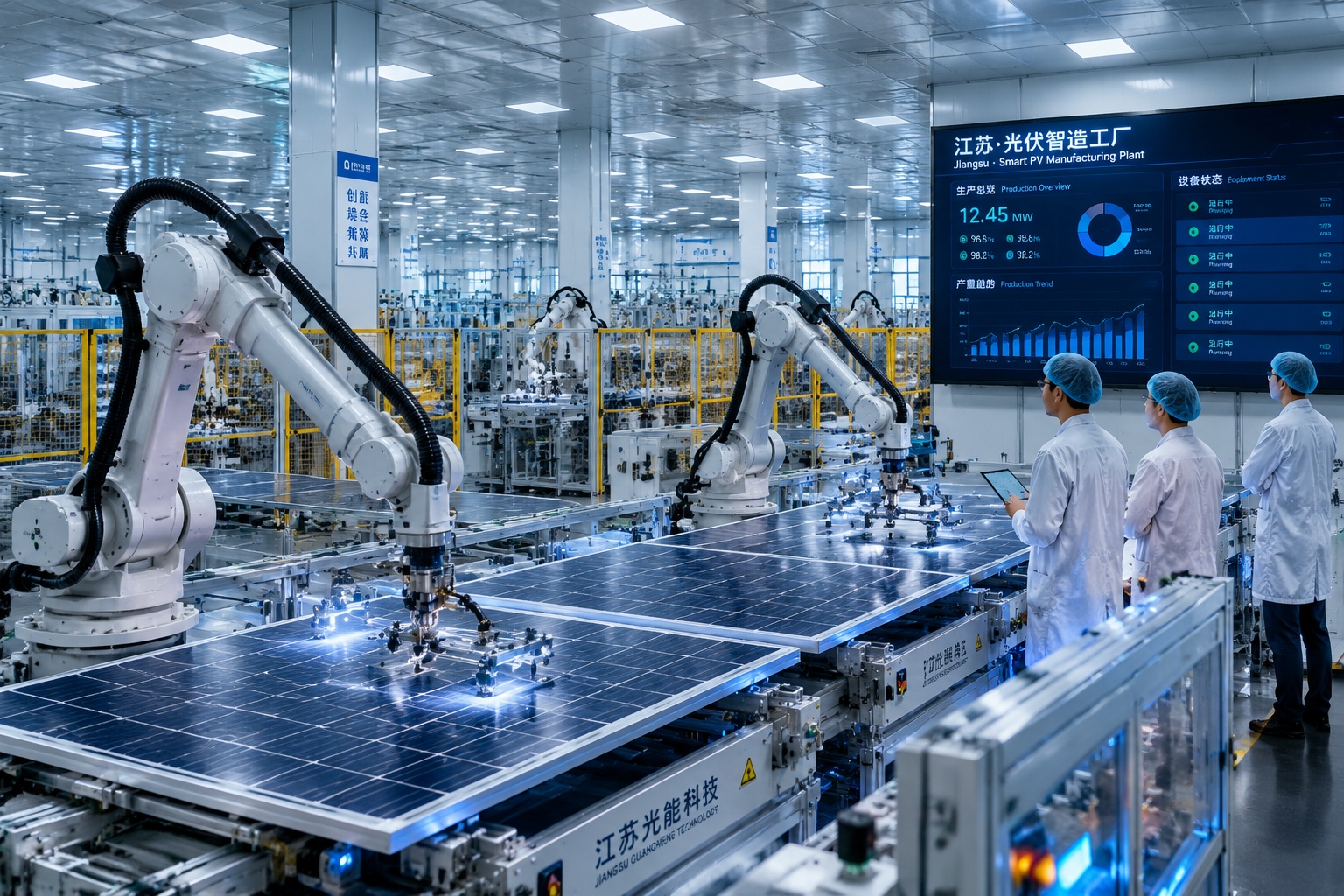
China accounts for about 80 percent of global solar module production, and Jiangsu contributes roughly 30 percent of China’s total. Simple math: nearly a quarter of all solar panels installed worldwide in recent years came from factories in this single province. In 2023, Jiangsu’s PV industry generated over 600 billion yuan (around $85 billion) in output and exported products worth more than 100 billion yuan (about $14 billion) to the European Union, Southeast Asia, and the Middle East.
These are not just assembly operations. The province makes high-purity polysilicon, ingots, wafers, solar cells, functional films, inverters, and the massive glass sheets that cover panels. Drive through the town of Chenxi in Changzhou and you’ll pass a dozen companies, each specializing in a different step of production. That proximity matters: a solar cell manufacturer can order a batch of wafers in the morning and receive it by the same afternoon.
Why Jiangsu? Clusters, Costs, and Coaching
Jiangsu’s dominance didn’t happen by accident. It started in the early 2000s, when local governments, supported by national renewable energy policies, offered cheap land, tax breaks, and fast-tracked approvals to photovoltaic companies. Many early firms relocated from other Chinese provinces because they could find engineers, equipment, and suppliers all within a short drive.
The cluster created its own momentum. When a new generation of solar cells—like TOPCon—required different production equipment, Jiangsu’s machine makers designed and delivered the machinery quickly. When factories needed skilled operators, nearby technical colleges trained them in clean-room procedures. The result is an ecosystem where an idea can move from lab to factory floor in months, not years.
Today, the province is dotted with ‘solar towns’ where factories are packed so tightly that the skyline looks like a continuous row of rooftops. Local officials are often former businessmen themselves, which helps them understand what investors need: fast construction permits, reliable electricity, and a workforce that shows up on time.
The Tech Race: From PERC to TOPCon and Beyond
Chinese firms in Jiangsu, such as Trina Solar in Changzhou and Canadian Solar in Suzhou, have become global names in solar technology. They invest heavily in R&D. Trina Solar holds world records for solar-cell conversion efficiency in its labs, and its rivals are not far behind.
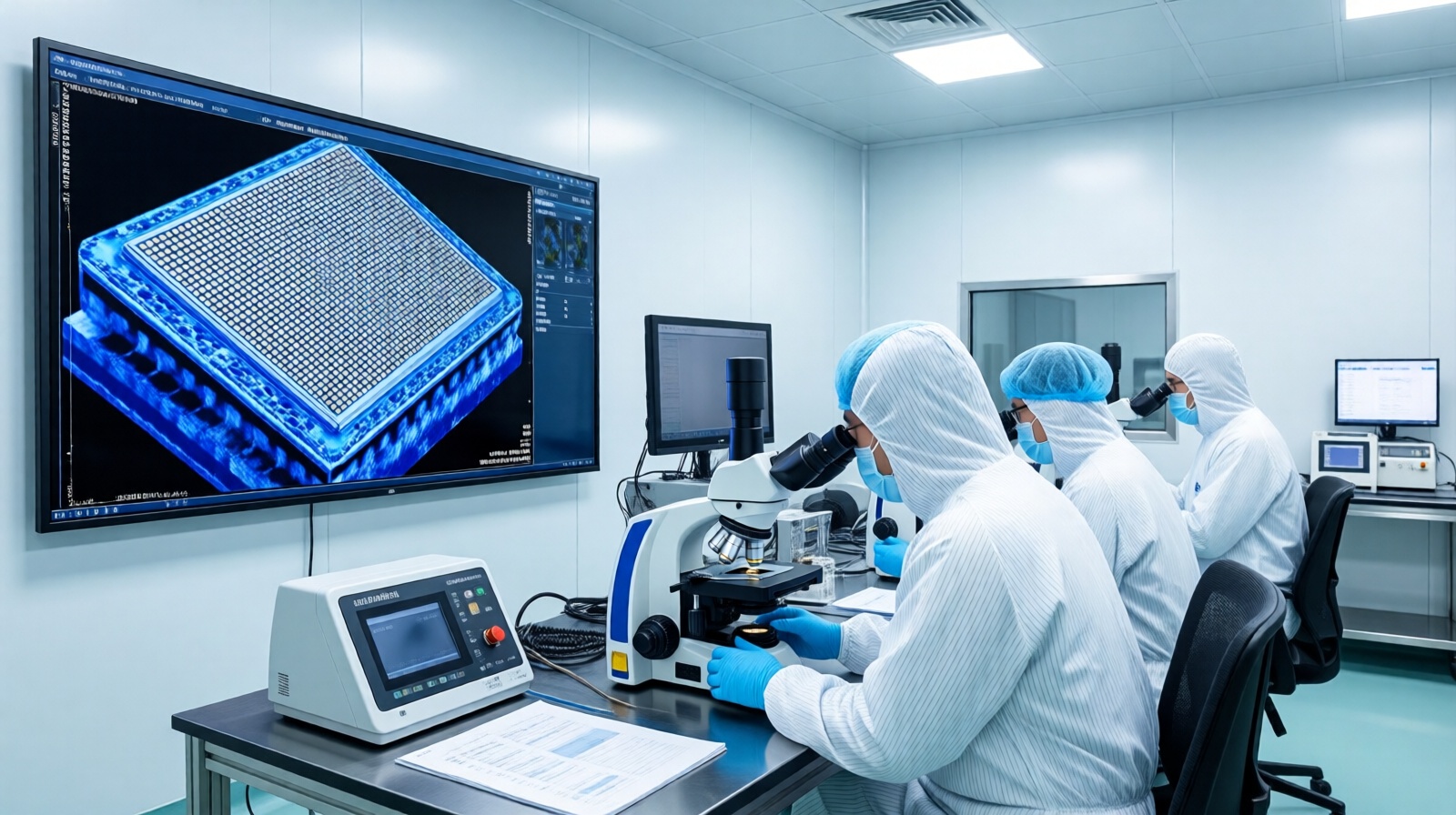
The region is now shifting to advanced cell architectures that squeeze more power from each square meter. At a Trina R&D center in Changzhou, engineers work on tandem cells that combine silicon and perovskite materials, aiming for laboratory efficiencies above 33 percent. In factories, the focus is on TOPCon (tunnel oxide passivated contact), which offers a low-cost efficiency boost over the older PERC technology. By mid-2024, more than half of Jiangsu’s module capacity is believed to be TOPCon-based, according to industry analysts.
This constant innovation is the main reason Jiangsu remains competitive despite wage increases and soaring land costs elsewhere. It’s not about cheap labor; it’s about engineering speed and supply chain proximity.
From Jiangsu to the World: Exporting Sunlight
Jiangsu’s solar products are everywhere. They cover the roofs of warehouses in Germany, float on reservoirs in Vietnam, and power irrigation pumps in Morocco. The European Union is the largest buyer, followed by the Middle East and Latin America. Many European utility companies specify Chinese panels because they deliver the lowest cost per kilowatt-hour. Even with shipping, tariffs, and the occasional anti-dumping investigation, Jiangsu-made modules remain the most cost-effective option on the market.
Ports like Lianyungang and Shanghai (within an hour’s truck drive) make export easy. Customs clearance has been streamlined; a container can be processed and loaded in a single day. For the global solar industry, Jiangsu is the engine room.
Jobs, Skills, and the Human Side of the Solar Boom
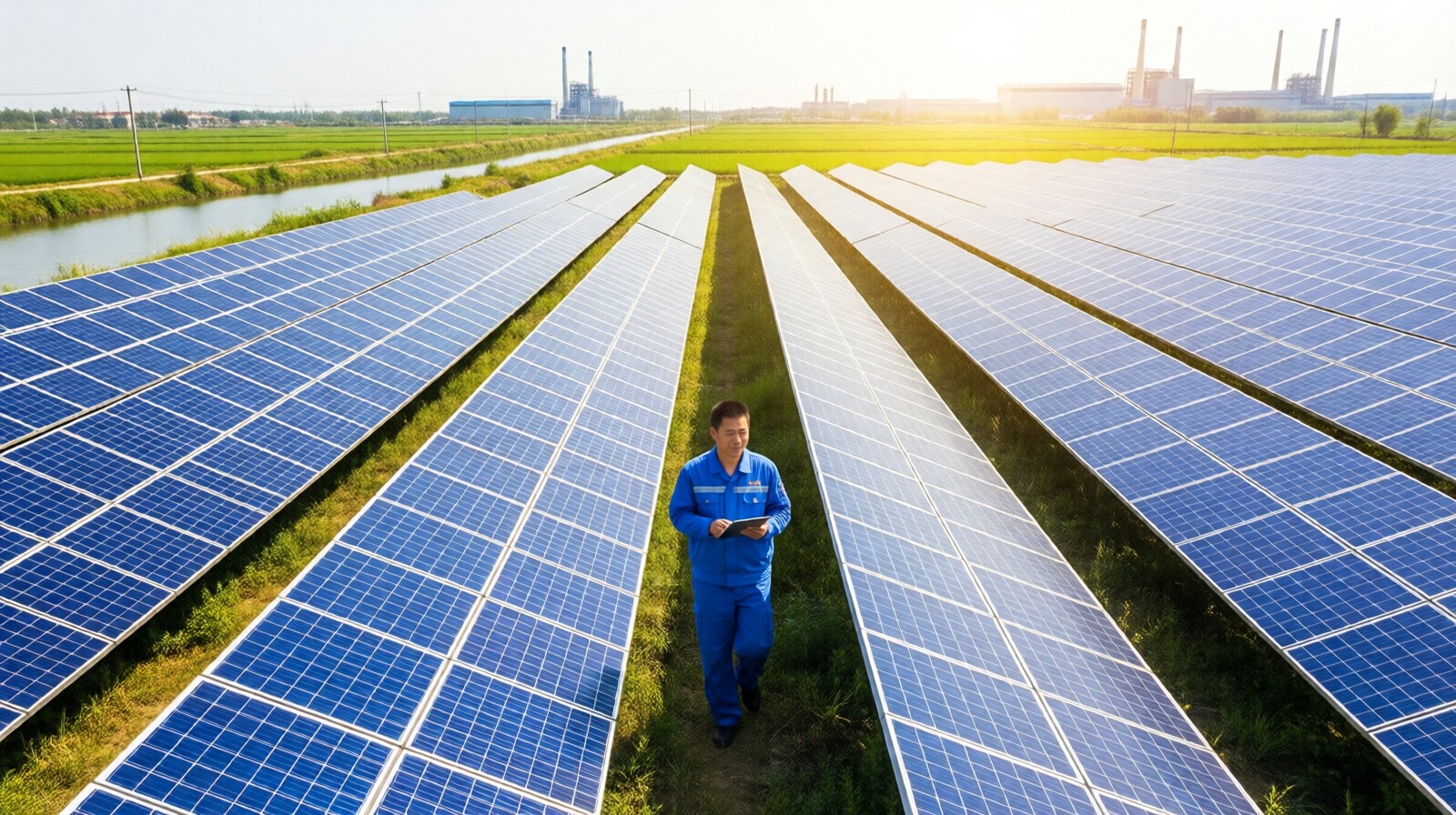
This industrial machine directly employs more than half a million people. On a typical morning, thousands of workers in blue uniforms and face masks stream into factories in Suzhou, Wuxi, and Changzhou. Some operate machinery, others do quality checks. More than a few are engineers in their 20s and 30s, trained at nearby universities like Southeast University or Soochow University.
“In my first year at a solar-cell plant in Yancheng, I learned how to read transmission electron microscope images,” says Liu Yang, a 27-year-old process engineer. “Now I lead a team that experiments with laser cutting methods.” Liu’s story points to a broader trend: work in solar is no longer mere assembly. Many positions require deep knowledge of semiconductor physics, optics, or automation.
Local governments also run vocational retraining programs for older workers who previously toiled in steel mills or textile plants. They learn to handle the chemicals used in PV material plants or to operate precision screen printers. The shift from heavier industries into clean tech is one of China’s most significant—and often overlooked—job transitions.
Still a Rough Road: Tariffs, Oversupply, and Competition
The industry is not without pain. Trade disputes, especially with the United States and the European Union, have disrupted supply chains. American tariffs on Chinese photovoltaics prompted many Jiangsu firms to open plants in Vietnam, Thailand, and Malaysia to bypass restrictions. The EU, after a brief anti-dumping episode, now imports most of its Chinese-made panels without extra duties—but that could change.
Oversupply is another problem. So many companies ramped up production that global panel prices fell by more than half in 2023 and 2024. Some smaller factories are struggling to break even. In Jiangsu, the stronger players respond by consolidating smaller rivals and pushing into high-efficiency premium products. Innovation is not a luxury; it’s a survival strategy.
There is also the environmental footprint. Manufacturing solar panels is energy-intensive, and Jiangsu still relies heavily on coal-fired electricity. For all the clean energy they produce, silicon factories leave a carbon trail. The province has started to power these plants with renewable energy, and some industrial parks use rooftop solar to offset part of their own consumption.
Conclusion: A Key Player in the Global Energy Shift
Jiangsu’s solar economy is not a simple success story. It is a complex, competitive, and globally connected manufacturing system that has genuinely changed the economics of renewable energy. Panels made here are cheaper, more efficient, and more reliable than they were a decade ago, making solar the fastest-growing power source on Earth.
Without Jiangsu, the global energy transition would be slower and far more expensive. The province is a bridge between ambitious climate goals and real-world infrastructure costs. It has its own contradictions, but its ability to produce at scale and drive down prices remains something the world still depends on.
Start the discussion at forum.chinacomes.com