
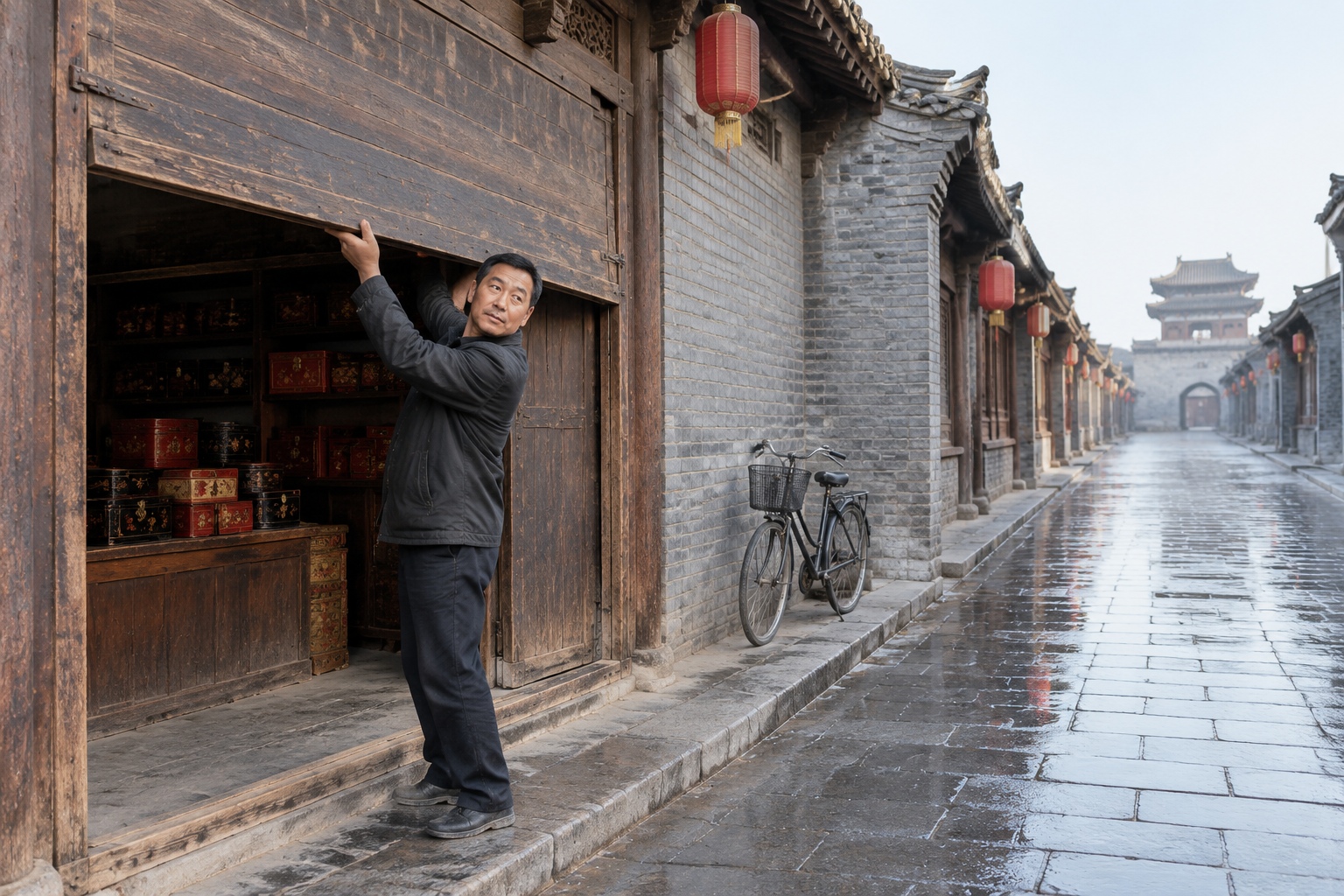

At 8:40 on a Tuesday morning, the stone slabs of Xi Dajie — West Avenue — are still wet from the bucket of water a shopkeeper has just thrown across his doorstep. He drags a wooden shutter up along its rail, and the sound carries the whole length of the empty street. Inside, a woman in a blue apron is laying lacquered boxes out in rows. What drifts past the doorway is Shanxi aged vinegar, sharp enough to sting your eyes, mixed with something frying in oil.
Ten minutes later a tour group in matching red caps turns the corner and the street fills with noise. Then they move on, and it is quiet again, apart from one electric scooter and a vendor’s speaker looping the same nine words about Pingyao beef.
Most people come here to photograph a wall. What is easy to miss, walking these lanes, is that this small town in Shanxi province ran something close to a national banking system a century before most Chinese had ever used the word “bank”.
A walled city with people still living inside it
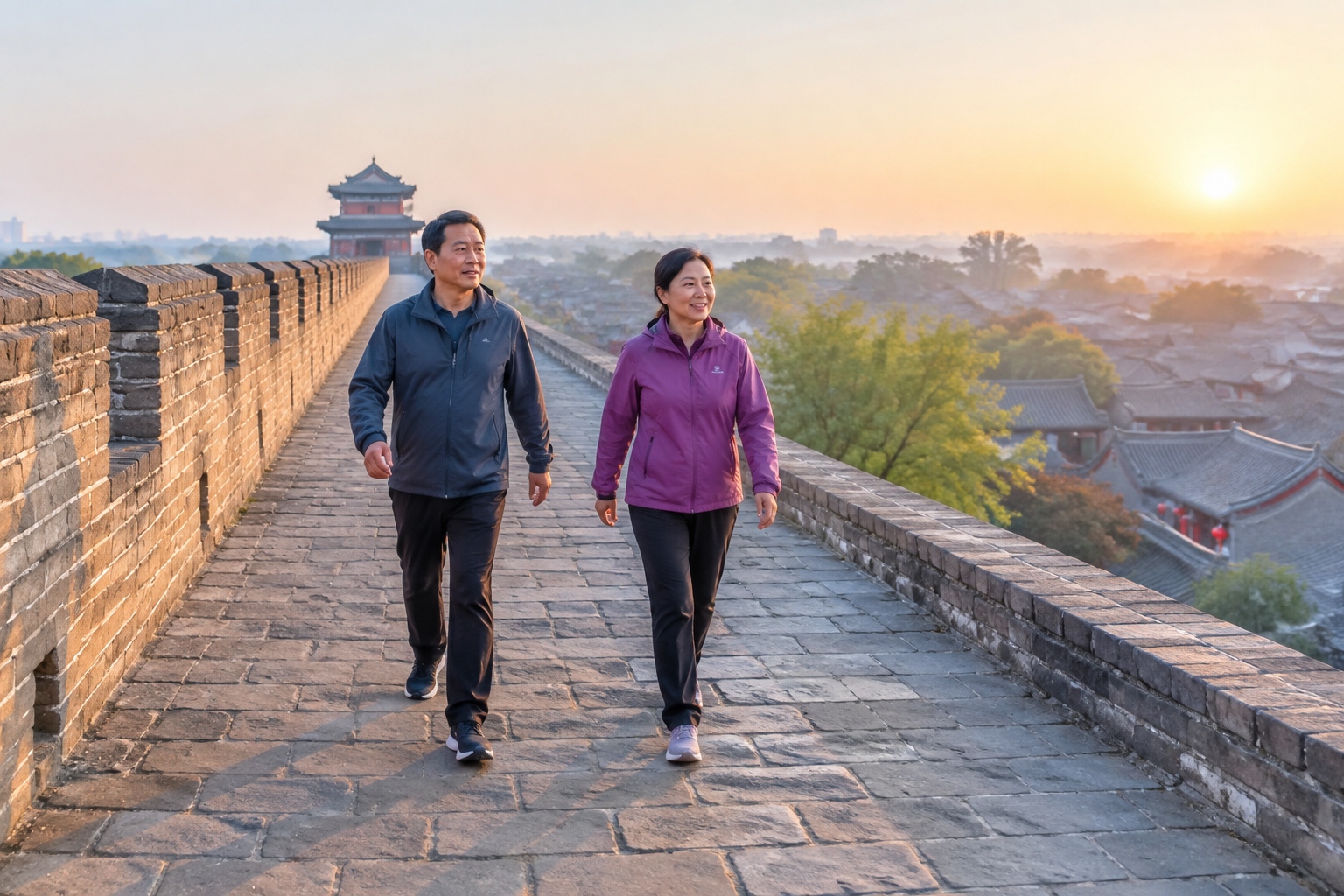
Pingyao sits roughly 90 kilometres southwest of Taiyuan, the Shanxi provincial capital. The wall you see is a 6.4-kilometre loop of rammed earth and grey brick, largely rebuilt in 1370, in the third year of the Ming Hongwu era, and repaired again in 1703. It carries 72 watchtowers and 3,000 battlements — numbers chosen to match the 72 disciples and 3,000 students attributed to Confucius.
UNESCO listed the old town in 1997. What that listing protects is unusual: this is not an emptied film set. Around 10,000 people still live inside the walls. Most lanes are too narrow for private cars, so mornings run on bicycles, handcarts, electric tricycles and delivery scooters, and on the flat local accent of people whose families have lived in the same courtyard for four generations.
West Avenue was China’s financial street
In the 19th century, Pingyao was a trading town in the middle of the Shanxi merchant network — the Jinshang — who moved tea, silk, cotton, salt and iron across the empire. Business was done in silver weighed by the tael, and moving silver was physical, dangerous work. Armed escort agencies, called biaoju, hauled chests of it along the roads with carts and swords. They were expensive, they were slow, and they got robbed.
One of those escort agencies, Tongxinggong, still stands on the same street. You can walk into its courtyard and look at the weapons. But the building that put it out of business is 200 metres away.
Rishengchang: a dye shop that turned into a bank in 1823
Rishengchang started life as a pigment and dye business called Xiyucheng. The owner was Li Daquan, the manager Lei Lutai, and the problem they solved was an everyday one. Shanxi merchants working far from home wanted to send money back. Hiring an escort was costly, so instead they handed silver to the dye shop’s Beijing branch and had their families collect the equivalent in Pingyao, with a small commission going to the shop. That was the product.
In 1823 the firm converted entirely into a draft bank — a piaohao — under the name Rishengchang, “prosperity rising day by day”. Its opening capital was about 300,000 taels of silver, an enormous sum at the time. The mechanism was simple enough to describe in one sentence: a merchant paid silver into a branch in Beijing and received a draft, a single sheet of paper; he travelled with it, or sent it by courier, and collected silver in Yangzhou or Guangzhou, minus a fee of roughly one per cent. No silver moved. Only paper did.
At its peak Rishengchang had branches in more than 30 cities. By the end of the 19th century China had around 51 draft banks, and 22 of them were headquartered in Pingyao. For a few decades, this was one of the places where Chinese money was decided.
The security system was a poem
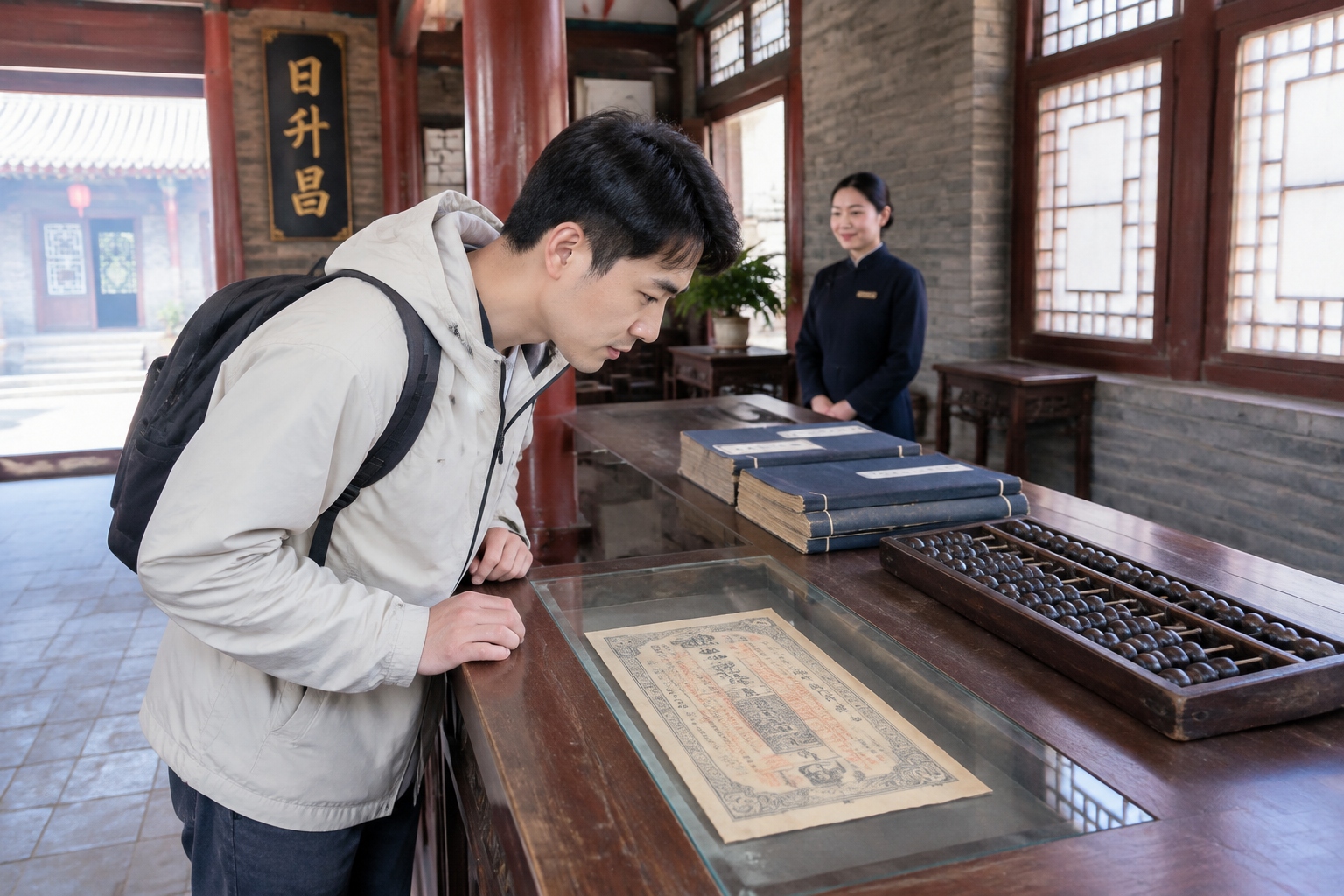
There was no central bank, no deposit insurance, and no hotline to call if a branch in another province refused to pay out. So the draft itself had to be impossible to fake. The museum displays the toolkit: special paper with watermarks, seals carved in hairline detail, and miya — secret codes built out of characters taken from a poem.
One line of characters stood for the twelve months. Another stood for amounts. A clerk in Lanzhou would glance at the note, run the characters through his head, and know whether it was worth 3,000 taels or 30,000, and when it had been issued. The code was changed every few months, or the moment a branch suspected a leak. Paying clerks also recognised one another’s handwriting. And the whole thing rested on shared reputation: if a branch stalled on payment, merchants’ guilds in other cities could make life very difficult for every Pingyao trader in town.
The vault you can still walk into
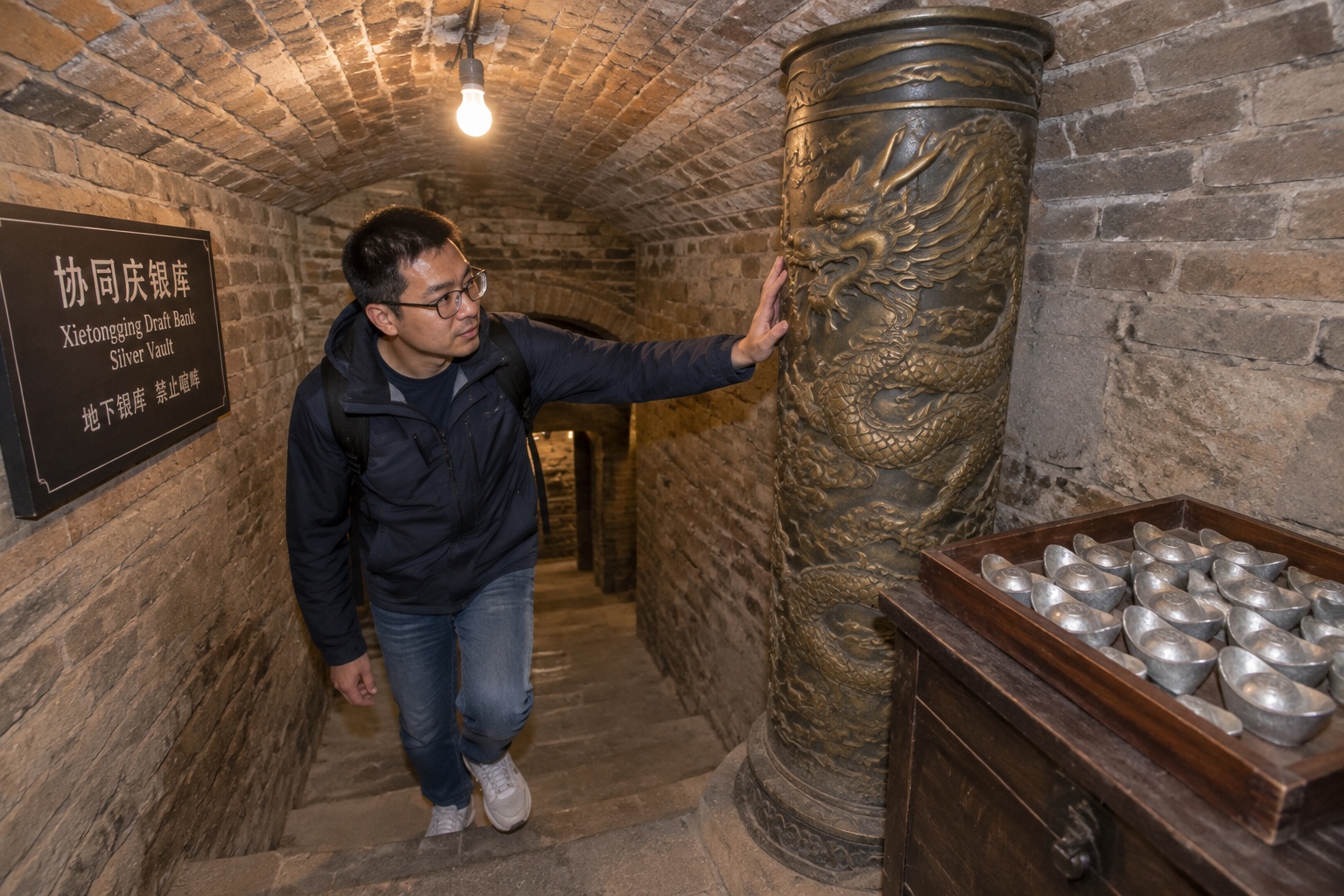
A few minutes south of the Market Tower, another draft bank called Xietongqing has opened its cellar to visitors. You go down a narrow brick staircase — the ceiling is low enough that a tall adult has to duck — into a dim room where silver ingots were kept. At the bottom stands a bronze pillar carved with dragons, and a queue of visitors waiting to touch it, because every guide says it brings money.
Sit with the details for a moment. Guards slept above the vault. The entrance opened inside a working shop. And as long as the paperwork said the silver did not have to move, the silver never left the province at all.
Why the whole thing ended
Three things arrived at once. The telegraph, laid across China from the 1880s, made information travel as fast as paper money. Railways and steamships made moving actual silver cheaper. And a new kind of institution appeared: joint-stock banks on the European model, starting with the Imperial Bank of China in 1897 and the government’s Hubu Bank in 1905, later the Da Qing Bank. Banks could lend to industry, take deposits and issue notes backed by the state. The draft banks, meanwhile, had lent heavily to the Qing government and to officials.
When the Qing dynasty collapsed in 1911, much of that money vanished with it. Rishengchang closed in 1914, and the last Pingyao draft banks shut in the 1930s. In the museum the story is told with little romance: they invented a brilliant answer to a problem, then failed to change that answer when the problem changed.
Meanwhile, the street is doing what streets do
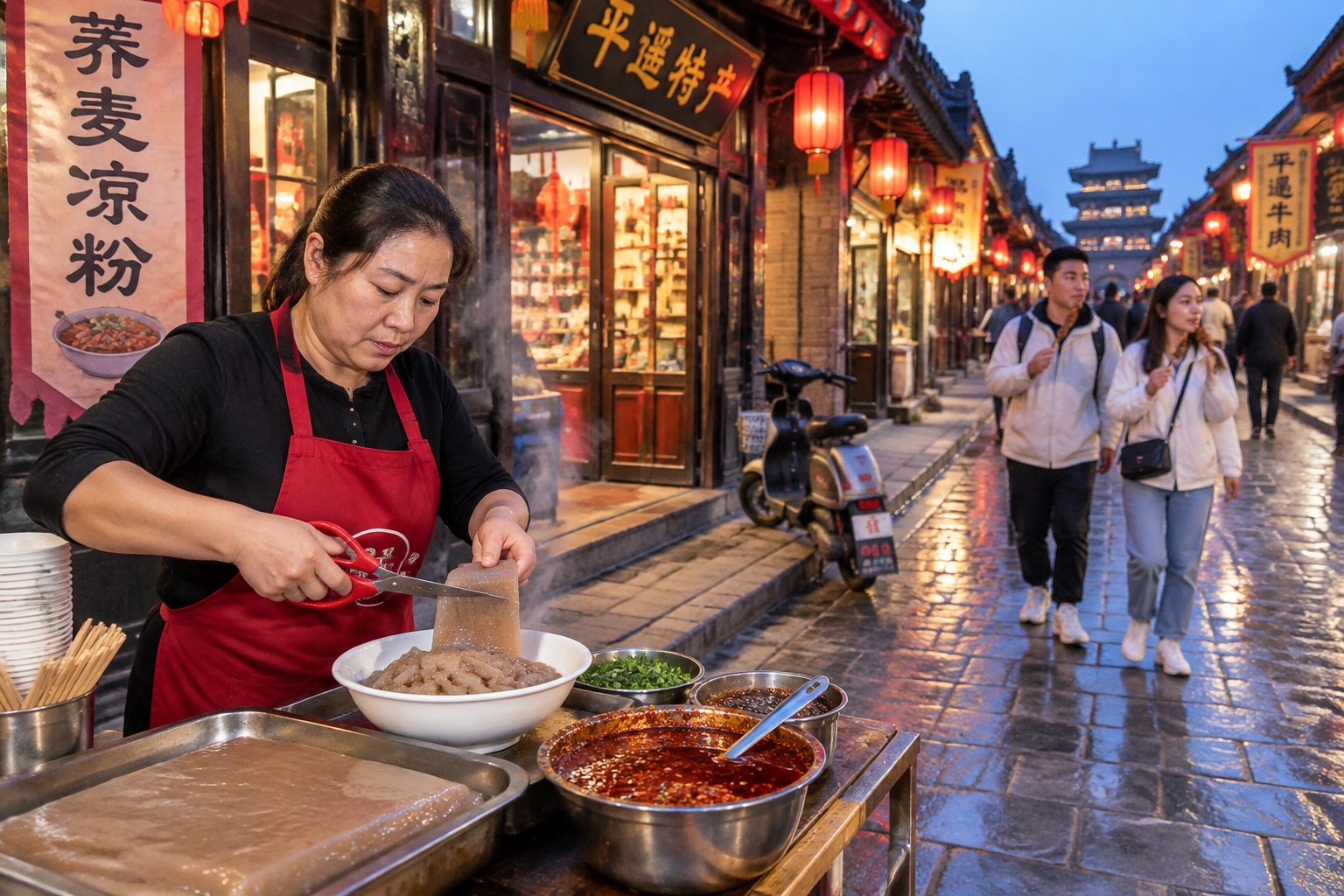
Outside the museums, South Avenue sells Pingyao beef — braised with salt and spices, chilled, sliced thin, sold vacuum-packed — and wantuo, buckwheat jelly cut with scissors into cold noodles and dressed with vinegar and chilli oil. Lacquerware shops stack boxes and jewellery cases finished by tuiguang, a polishing process done partly by hand, layer after layer. Half a dozen stores rent Ming- and Qing-style robes so visitors can pose in doorways.
Two modern events use the town as a venue: the Pingyao International Photography Festival, running since 2001, and the Pingyao International Film Festival, founded by director Jia Zhangke in 2017, which screens films in a converted 1970s diesel engine factory outside the walls.
Some honesty is worth having here. By 10 a.m. in high season, the main lanes are shoulder to shoulder, and the souvenir shops repeat the same inventory for 500 metres. But walk five minutes off South Avenue — toward the north gate, or along Shaxiang Street — and you find laundry strung across the lane, vegetables drying on a windowsill, a man repairing a bicycle, and nobody selling you anything at all.
If you go
Pingyao sits on the high-speed line between Taiyuan and Xi’an. Direct trains reach Pingyao Ancient City Station from Taiyuan in about 40 minutes, from Xi’an in about three hours, and from Beijing in roughly three and a half to four. The high-speed station is about 9 km from the walls, a 20-minute taxi ride. The old Pingyao station, on the slower line, is a 15-minute walk from the north gate.
A combined ticket, around 125 yuan, covers about 22 sights, including Rishengchang, the Xietongqing vault, the county government office and the wall itself. A wall-only ticket costs less. Prices change, so confirm at the gate or online before you go.
The county office stages a short mock court session most mornings. It is loud, brief and popular with domestic tour groups, which is part of the fun. Stay inside the walls if you can: courtyard guesthouses range from basic to beautifully restored, and being inside at 7 a.m. or after 6 p.m. is the entire point. Wear shoes with grip — the stone is polished smooth and uneven underfoot.
Two hours either side of opening and closing is the real difference. At 8 a.m. the town smells of vinegar and frying dough. By noon it smells of sunscreen.
What you are actually looking at
Stand in the courtyard of Rishengchang at the end of the day, when the groups have gone and the light turns orange on the grey brick, and it stops being a museum. It is a 200-year-old answer to a question every economy still asks: how do you get two people who have never met to trust each other with money? Pingyao’s answer was paper, ink, a poem and a reputation. It worked for about ninety years, and then the world changed underneath it. Which is, if you think about it, the most modern thing in this old town.
Start the discussion at forum.chinacomes.com