

A flat grey road, 295 metres above the river
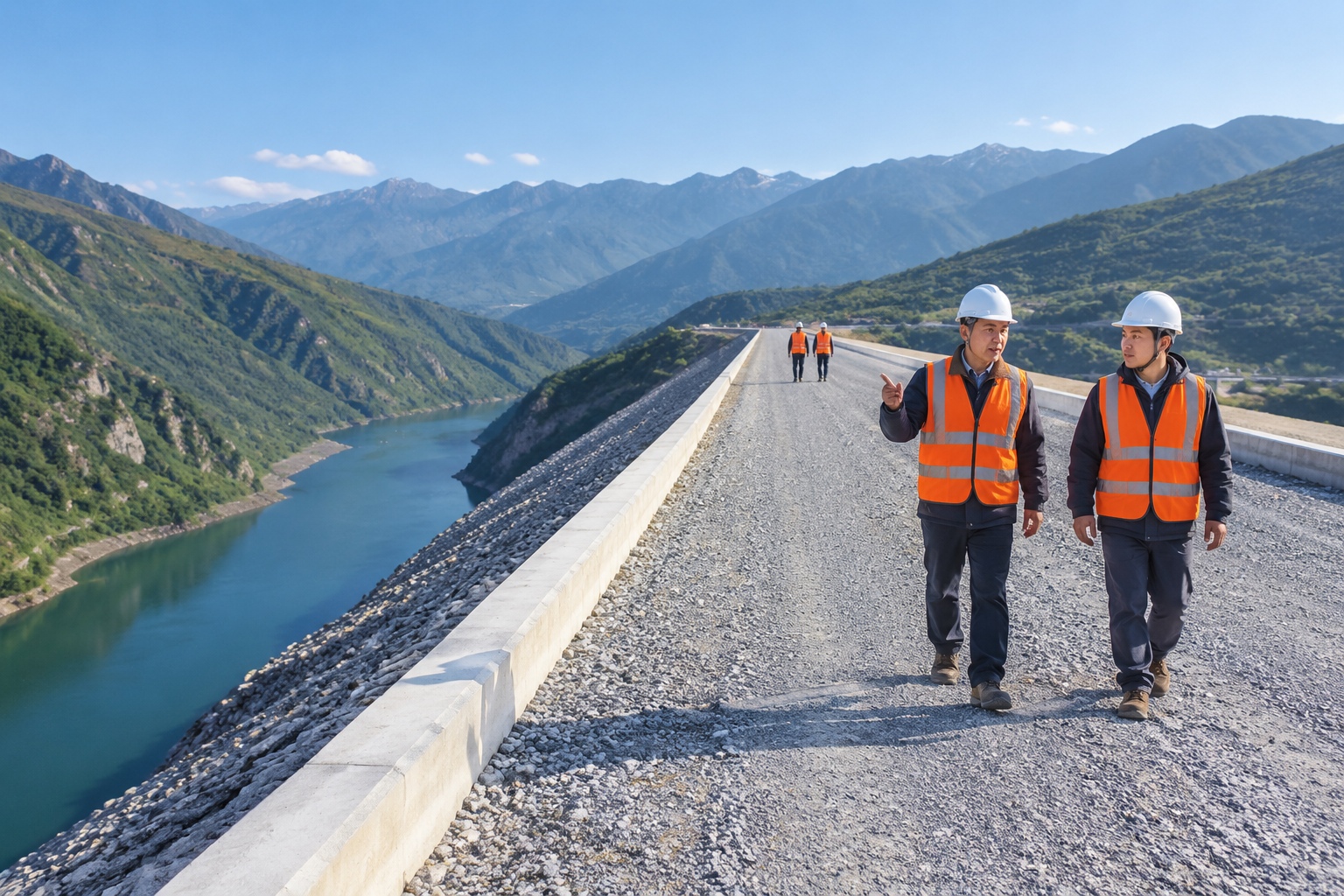
Drive west from Kangding for a few hours, climbing through the river canyons of western Sichuan, and you reach a place where the air is thin enough that a short flight of stairs makes you stop and breathe. Below, the Yalong River runs green and fast. At 2,875 metres above sea level, a flat grey road wide enough for two trucks cuts across the ridge.
That road is the top of a dam.
Lianghekou is not the white concrete arc most people picture when they hear “big dam”. It is about 43 million cubic metres of rock and compacted gravelly soil, piled 295 metres high — roughly 60 metres taller than the Eiffel Tower, and the tallest dam of its kind anywhere. Six generating units sit in a powerhouse cut into the rock on the left bank. The first began operating in September 2021; by March 2022, all six were running.
The project in numbers
Lianghekou means “the mouth of two rivers”, and that is exactly where it sits: the point in Yajiang County, western Sichuan, where the Xianshui River meets the Yalong. The Yalong runs about 1,500 kilometres and is the biggest tributary of the Jinsha, which becomes the Yangtze. It is one of China’s main hydropower corridors, with a long-term basin plan listing more than twenty stations and combined capacity above 30 gigawatts.
The reservoir holds 10.8 billion cubic metres, of which roughly 6.5 billion can be drawn down and refilled. That gives Lianghekou an unusual capability in China: multi-year regulation, meaning it can hold water through a wet year and release it in a dry one.
Installed capacity is 3,000 megawatts — six units of 500 MW — and average annual output is about 11 billion kilowatt-hours. That number explains why storage matters. Eleven billion kWh spread across 8,760 hours equals 1.26 gigawatts running flat out all year, from a plant rated at three. The rest of the time, the water is being held back for the moment the grid needs it.
Why you would build a dam out of soil and rock
A rockfill dam with a central core is a layered structure, and the layering is the idea. At the centre sits a core of compacted gravelly soil — gravel, sand, silt and clay blended to a controlled recipe. Either side are filter and transition zones, graded so fine particles cannot migrate out of the core into the rockfill. Then the outer shells, hundreds of metres thick, built from hard rock quarried nearby. The core does the sealing; the rockfill does the holding.
Engineers pick this design for practical reasons. It uses materials the valley already has, which matters when the nearest city is a day’s drive and every tonne of cement has to climb a mountain road. It is also flexible: the site lies in a seismically active part of the Hengduan Mountains, and an embankment can deform under shaking in ways a concrete structure cannot.
The record is a matter of scale. At 295 metres, stresses inside the core run far higher than in the 200-metre class of dams built before it, and the core compresses more than the rockfill around it. If that difference is not managed, cracks can open along the core’s edges — paths for water.
Building it as a data problem
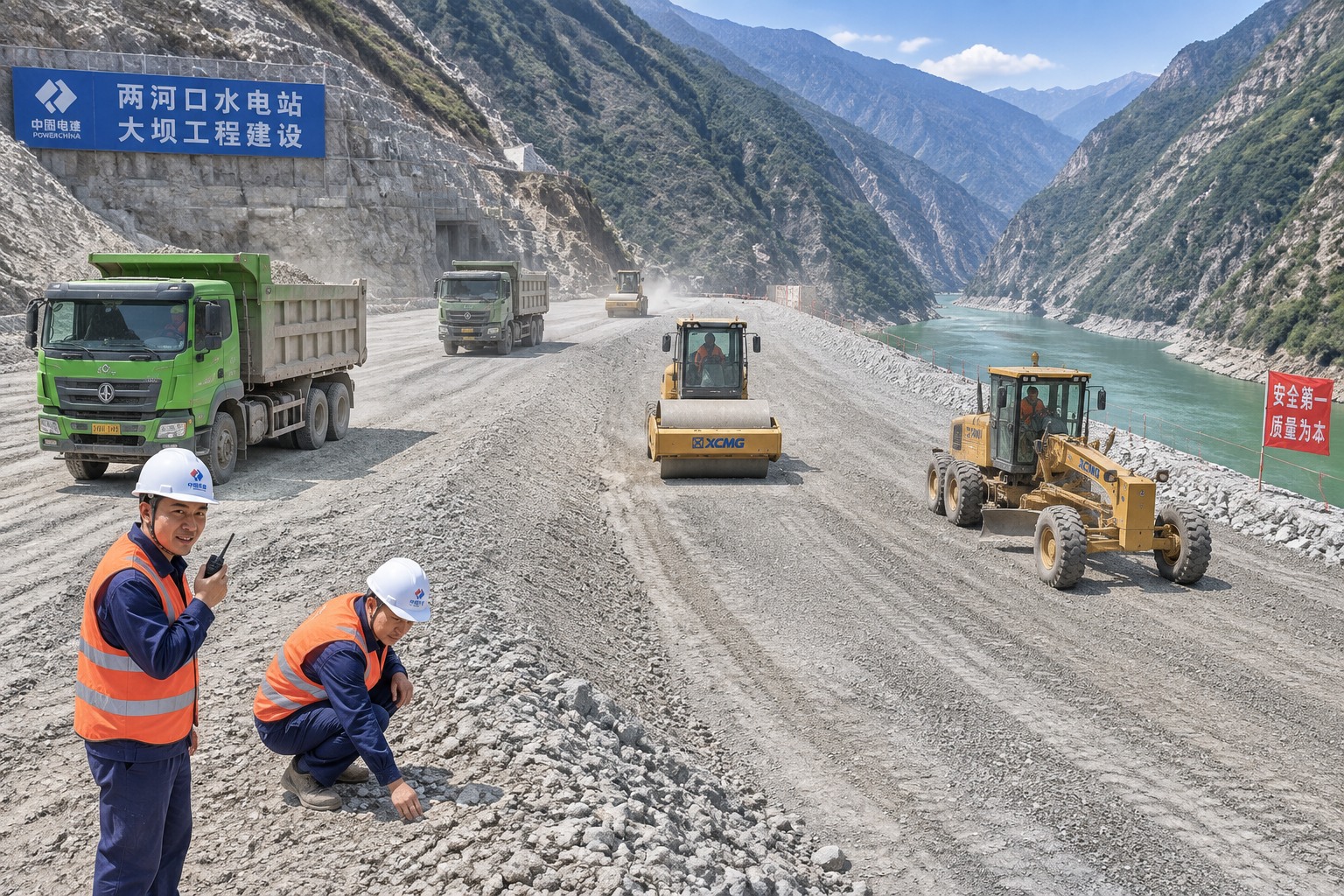
About 43 million cubic metres of material went into the dam, laid in 30- to 40-centimetre layers and compacted by rollers. A few percentage points too dry and the soil will not bind; too wet and it will not compact. On a plateau where snow, sun and rain can arrive in the same week, holding moisture steady across millions of cubic metres was the hardest daily problem on site.
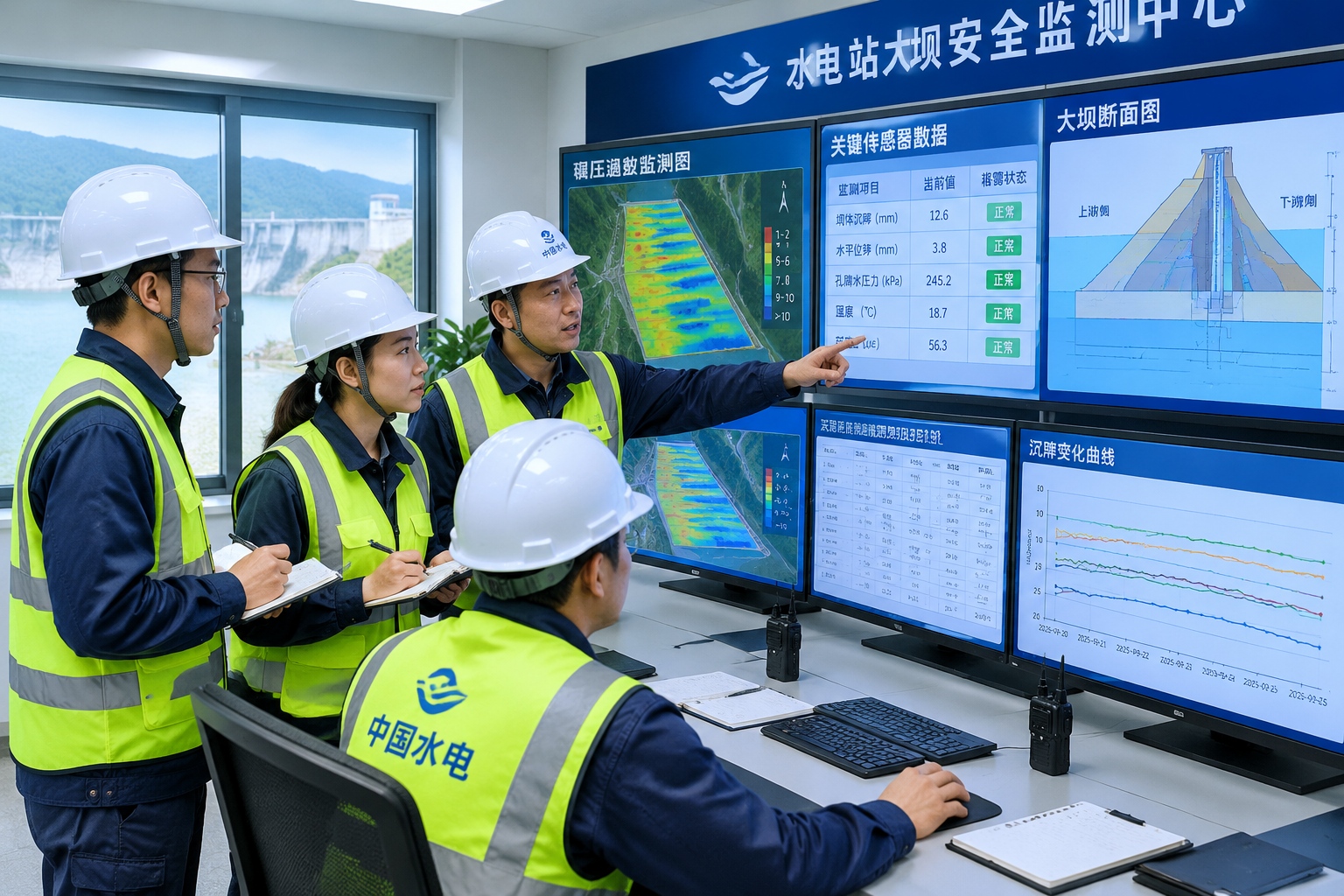
The answer was instrumentation. Every roller carried a GPS unit, streaming its position, pass count and layer moisture into a central platform. Supervisors watched screens instead of walking the fill, and the system flagged areas that had been rolled too few times. More than a thousand sensors — settlement gauges inside the core, inclinometers, seepage monitors, thermometers buried in the fill through winter — reported continuously. Engineers describe the result as an intelligent dam: a structure that reports on itself rather than being inspected after the fact.
The site sits at roughly 2,900 metres, and the crews lived with headaches, breathlessness and cold. The project built oxygen supply points and health monitoring, rotated workers and scheduled core work around frost windows, because frozen fill does not compact properly.
What FIDIC is, and what the award recognises
FIDIC — the Fédération Internationale des Ingénieurs-Conseils, or International Federation of Consulting Engineers — was founded in Geneva in 1913. It is best known for something unglamorous and enormously consequential: the model contracts, the Red Book, Yellow Book and Silver Book, that decide who carries risk on international construction projects. When engineers from three countries argue about a late payment on a bridge on the other side of the world, they are usually arguing about FIDIC wording.
The federation also runs a project awards programme, judged each year at its annual conference. Size alone does not win. Panels weigh engineering excellence and innovation, environmental performance, social value and project management — including how the work was delivered under international contracting practice.
Lianghekou won in the 2023 round. The 295-metre record is the obvious reason, but a record rarely carries an entry by itself. What the judges saw was a project where technical risk was actively managed: GPS-controlled compaction at a scale nobody had attempted, continuous monitoring of a core that must stay watertight for a century, and a design that slots the station into a system of wind and solar rather than treating it as a plant standing alone.
A battery made of water
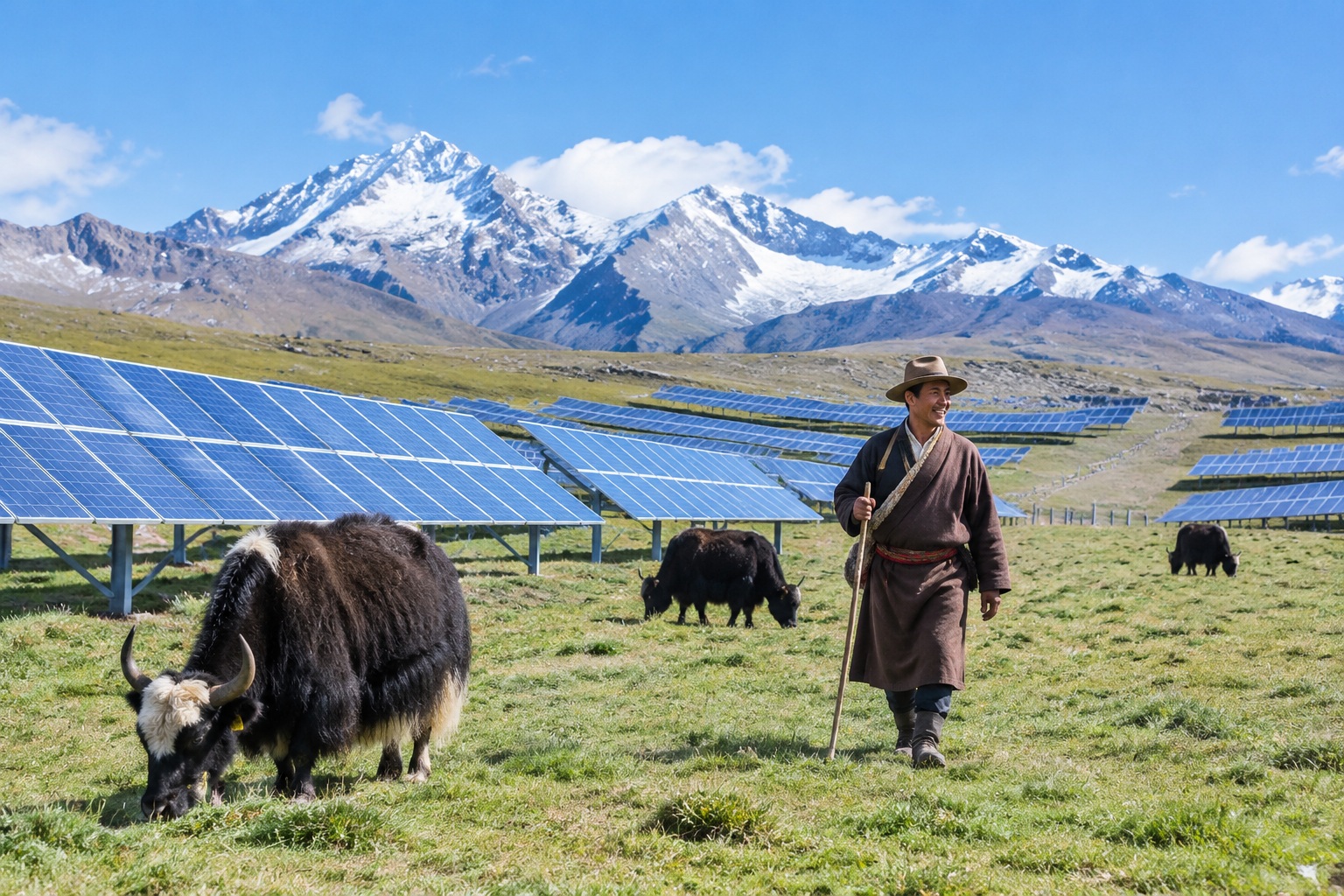
Thirty kilometres away on the same plateau is the Kela solar plant: one gigawatt of panels at 4,000 to 4,600 metres, among the highest large installations anywhere and billed by its developers as the world’s largest hydro-solar complementary project. It shares a transmission hub with Lianghekou.
The pairing works because solar and wind are intermittent and a reservoir is not. Panels generate at midday and nothing at night; wind rises and falls without warning. Six and a half billion cubic metres of usable storage can respond within minutes, absorbing the peaks and filling the gaps — a battery measured in water rather than lithium.
The electricity then travels. Yalong River power heads east on the Yazhong–Jiangxi ultra-high-voltage direct current line, a ±800 kV link running since 2021 that carries power roughly 1,700 kilometres to Jiangxi province. UHVDC is the technology China relies on to move large blocks of power over long distances at relatively low losses. For grid operators elsewhere, the interesting part is not the height record. It is the operating model: firm, dispatchable hydro smoothing variable renewables so that a city a thousand kilometres away can count on the power arriving.
What the river pays
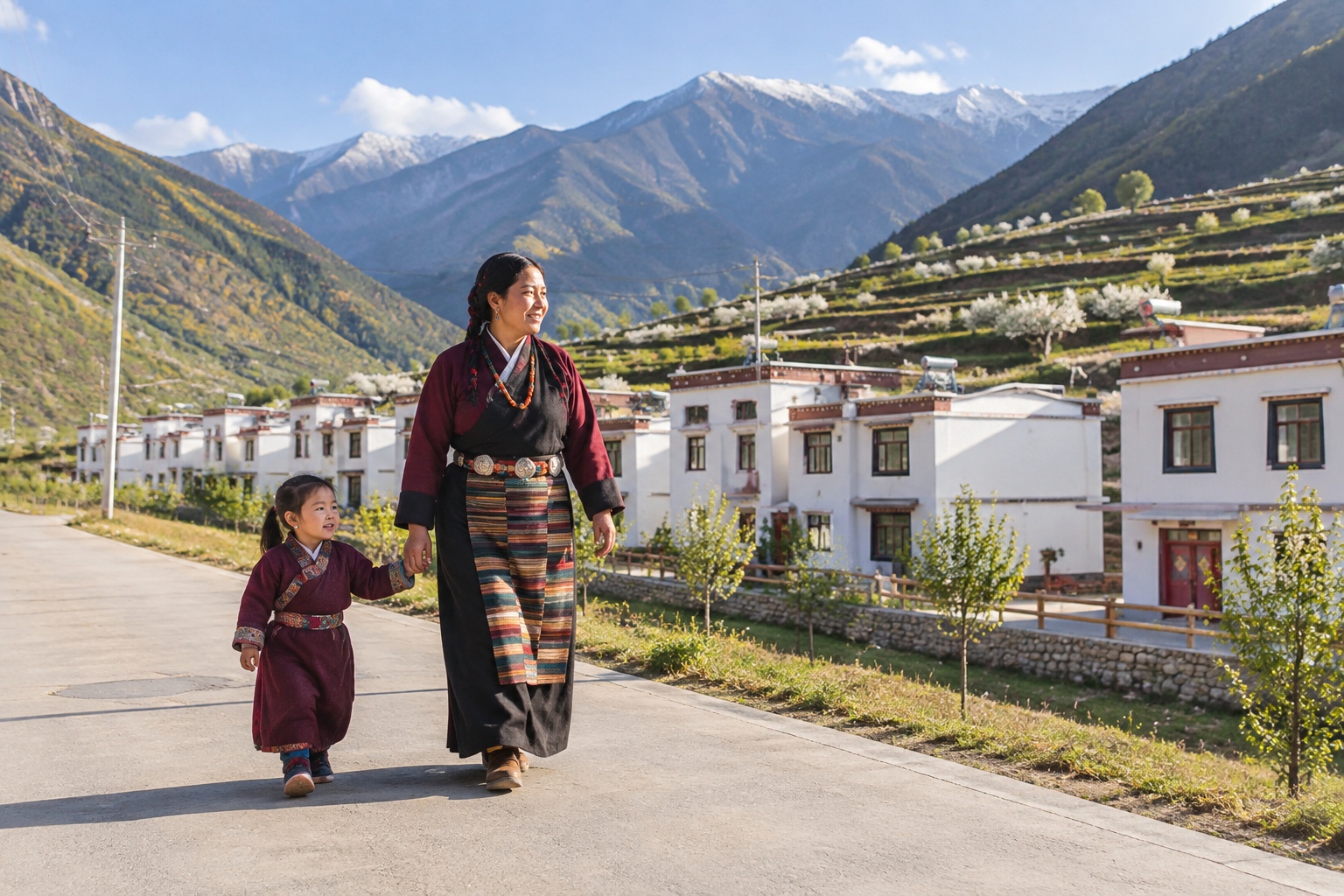
A reservoir holding 10.8 billion cubic metres floods valley floor, and the villages on it were resettled — mostly Tibetan farming and herding households, moved into new housing with piped water, electricity and road access, compensated for land, and in some cases employed in construction or services. Resettlement is the hardest part of a dam project to judge from outside, because everything depends on detail: whether new fields are as productive as the old ones, whether the new houses are close enough to a market, whether young people stay.
The Yalong also has fish. Native species such as snowtrout swim upstream to spawn, and a 295-metre wall ends that. The operator runs a fish breeding and release station, raising native fry and returning them to the river — genuine mitigation, and incomplete, because hatchery fish and wild populations are not the same thing. Sediment tells a similar story: large reservoirs trap silt, and the water released downstream is cleaner than the river was used to, a change with no tidy fix.
On the plateau, low temperatures and a short growing season mean ground recovers slowly from construction. Plants from the flooded area were moved into nurseries, and new ground disturbance is kept to a minimum. The fair way to describe all of it is that it offsets part of an impact that cannot be undone. Anyone who says a dam this size leaves a river as it was is telling you something untrue.
What the record actually proves
The headline here is height, and the headline is correct. But the more useful lesson is quieter. The height became possible because the construction process was turned into something measurable — every roller tracked, every layer recorded, every sensor logged — so that a problem surfaced in a day rather than a decade. And the station matters beyond Sichuan because it does not stand alone: it exists to turn intermittent solar and wind into power a grid can schedule.
Both of those ideas travel well. The dam, of course, does not.
Start the discussion at forum.chinacomes.com