

Introduction
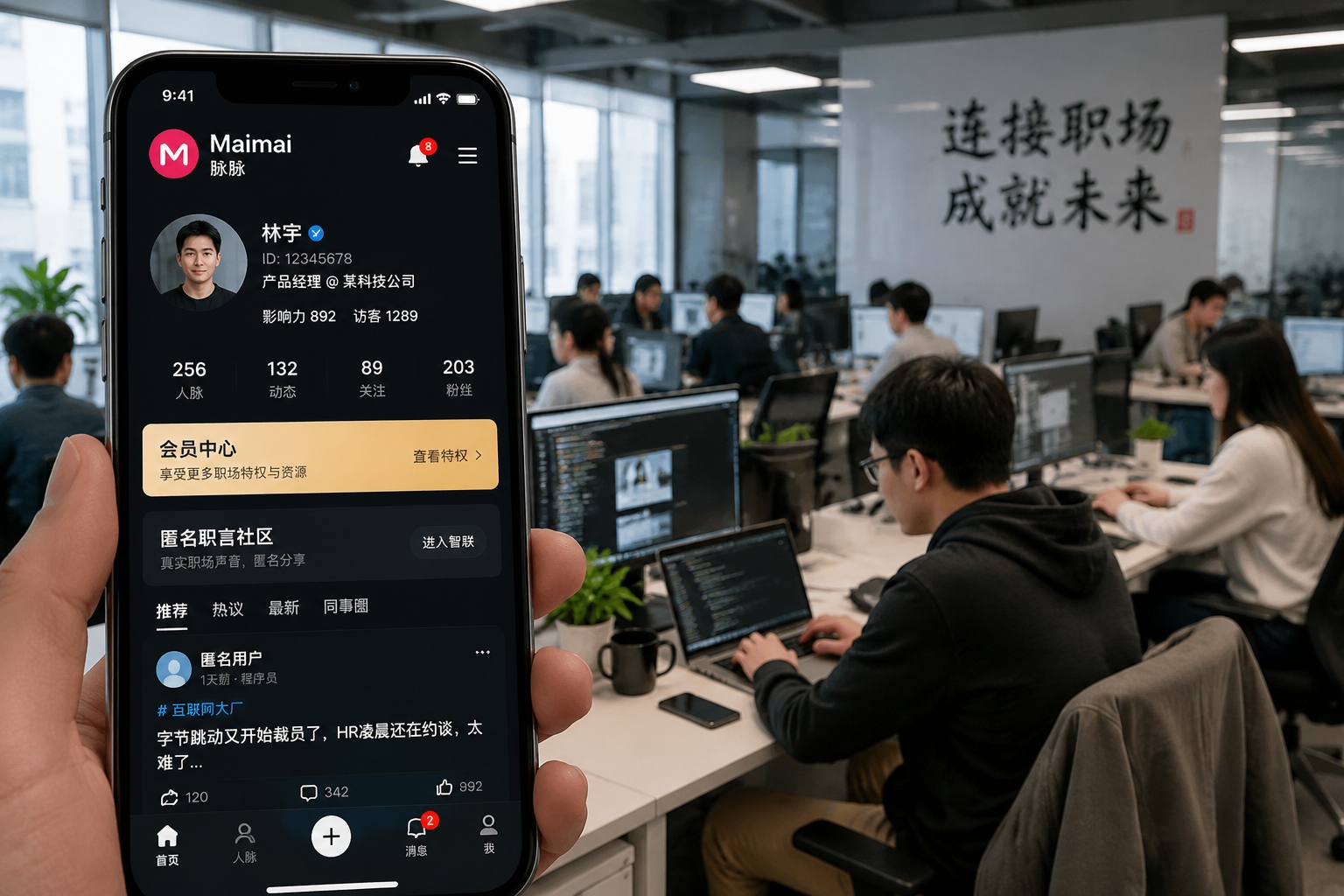
On a Tuesday afternoon in Beijing, a 28-year-old software engineer opens Maimai, the Chinese app often called “LinkedIn with a dark side.” She first checks her professional profile—a polished resume with endorsements from former colleagues. Then she clicks into the anonymous forum, known as “Zhilian” (Job Talk). There, she reads a post from a self-proclaimed employee at a major tech company claiming the firm is about to lay off 20% of its staff. The post has already racked up thousands of comments, some verifying the rumor, others calling it fake. She scrolls, shrugs, and moves on to a salary leak thread where users anonymously compare bonuses. This is Maimai: a platform that simultaneously serves as a career builder, a recruitment tool, and a gossip-fueled battlefield.

What Is Maimai?
Founded in 2013, Maimai (脉脉) has evolved into China’s largest professional social network. As of 2023, it claims over 110 million registered users, with monthly active users estimated at around 30 million. The platform’s core offering resembles LinkedIn: users create detailed professional profiles, connect with colleagues and industry peers, follow companies, and browse job postings. However, Maimai’s killer feature is its anonymous community, Zhilian, where users can post and comment without revealing their identity. This dual nature—public networking plus anonymous venting—sets Maimai apart from any Western counterpart.
The Anonymous Forum: Where Workplace Secrets Come Out
Zhilian is a magnet for workplace gossip. Employees from major Chinese companies—Alibaba, Tencent, Huawei, ByteDance—regularly share internal memos, salary details, and behind-the-scenes stories. In 2021, a post allegedly from a Pinduoduo employee detailing the company’s brutal overtime culture went viral, sparking a nationwide debate about the “996” work schedule (9 a.m. to 9 p.m., six days a week). The company later sued Maimai to force the disclosure of the anonymous user’s identity, but the platform refused, citing user privacy. Lawsuits like this are common; Maimai has been involved in dozens of legal battles over anonymous posts. Yet the company maintains that Zhilian provides a safe space for workers to speak out about harassment, unfair pay, and toxic management—issues that are often taboo in China’s hierarchical workplace culture.
For companies, the forum is a double-edged sword. Some monitor it obsessively, using fake accounts to defend their brand or attack competitors. Others hire public relations firms to “manage” their reputation on Maimai. The platform itself has tried to curb misinformation by introducing a fact-checking feature and allowing companies to request removal of defamatory content. But the line between free speech and libel remains blurry.

Professional Networking: The Real LinkedIn Function
Despite the chaos, Maimai’s professional networking side is genuinely useful. Recruiters actively use it to headhunt candidates, especially in tech, finance, and marketing. The platform’s algorithm suggests connections based on shared schools, previous employers, and industry groups. Users can also give “endorsements” for skills, similar to LinkedIn. Many Chinese professionals treat Maimai as their primary job-search tool, because it offers more transparency than traditional recruitment sites: you can see who has viewed your profile, directly message hiring managers, and read candid employee reviews of companies. In fact, Maimai’s company review feature—where current and former employees rate their employer on salary, culture, and work-life balance—has become a powerful resource for job seekers. A 2023 survey on Maimai found that 78% of users said company reviews influenced their decision to apply for a job.
Why Anonymous? The Cultural Context
To understand Maimai’s success, you need to understand China’s workplace culture. Openly criticizing your employer is risky; contracts often include non-disparagement clauses, and the social expectation of “saving face” discourages direct confrontation. Anonymous forums offer a release valve. Workers can share salary info—which is often a secret in Chinese companies—to negotiate better pay. They can warn others about toxic bosses or failing startups. In a country where labor rights are still evolving, Maimai’s Zhilian acts as a grassroots watchdog. However, the anonymity also fuels harassment and false rumors. The platform has been criticized for allowing cyberbullying and violating privacy, especially when users post screenshots of private messages or internal documents.
Practical Tips for Navigating Maimai
If you’re a foreign professional or company looking to engage with China’s job market, here are some actionable insights:
- For job seekers: Create a complete Maimai profile with a professional photo, detailed work history, and skills. Join industry groups and participate in discussions (non-anonymously) to build visibility. Use the company review section to vet potential employers, but take anonymous posts with a grain of salt—some may be exaggerated or posted by disgruntled ex-employees.
- For recruiters: Maimai’s search filters allow you to find candidates by company, school, title, and location. Consider buying a paid recruiter account for advanced analytics. Be aware that candidates may be cautious about direct messages, so follow up with a personalized note.
- For companies: Monitor your brand’s presence on Maimai. Respond professionally to negative reviews when possible. Consider creating an official company page to share updates, job openings, and positive culture stories. Some firms also designate a team to engage with the anonymous forum, though this can backfire if perceived as astroturfing.
Conclusion: A Mirror of China’s Workplace
Maimai is not simply a Chinese version of LinkedIn. It is a reflection of the anxieties, ambitions, and frustrations of China’s modern workforce. It provides a rare space for candid talk in a culture that often discourages it. But it also struggles with the same problems that plague any anonymous platform: misinformation, harassment, and legal grey areas. For anyone trying to understand how Chinese professionals really think about their jobs, Maimai is an essential—and often entertaining—window. Whether it’s a tool for career advancement or a digital watercooler depends on how you use it.
Start the discussion at forum.chinacomes.com