

It Starts With a Midnight Craving
At 11:30 p.m., in a shared apartment in Beijing, Li Wei closes his laptop. He’s been coding for nine hours, and his dinner was a forgotten sandwich. Now his stomach growls. He reaches for his phone, opens a food delivery app, and types “烧烤” (BBQ). The options are dizzying: lamb skewers, roasted eggplant, buttered corn, spicy chicken wings. He adds a large bottle of iced tea to the cart. His order total is 42 yuan — about $6. The app says “预计送达时间:20分钟” (estimated delivery: 20 minutes).
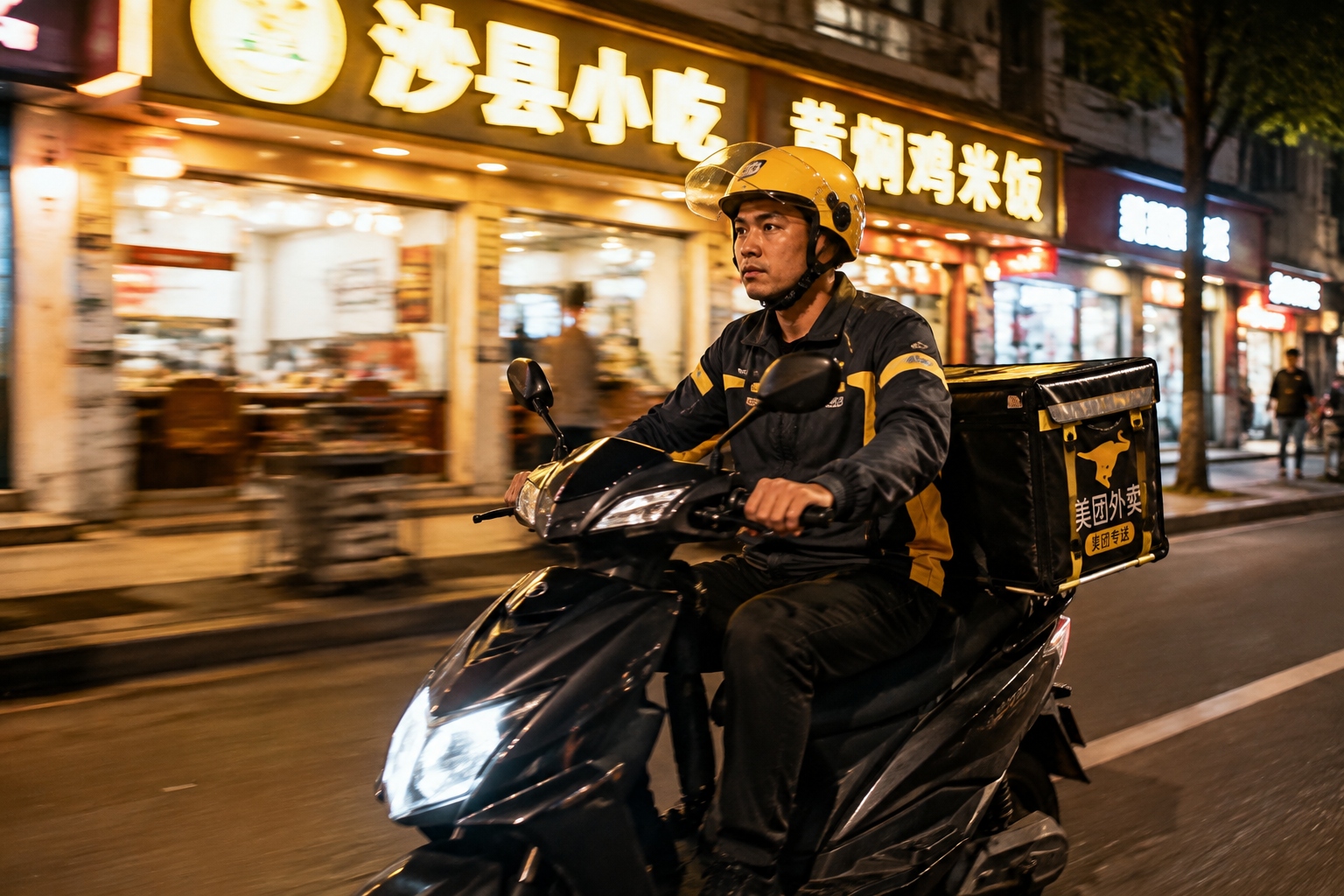
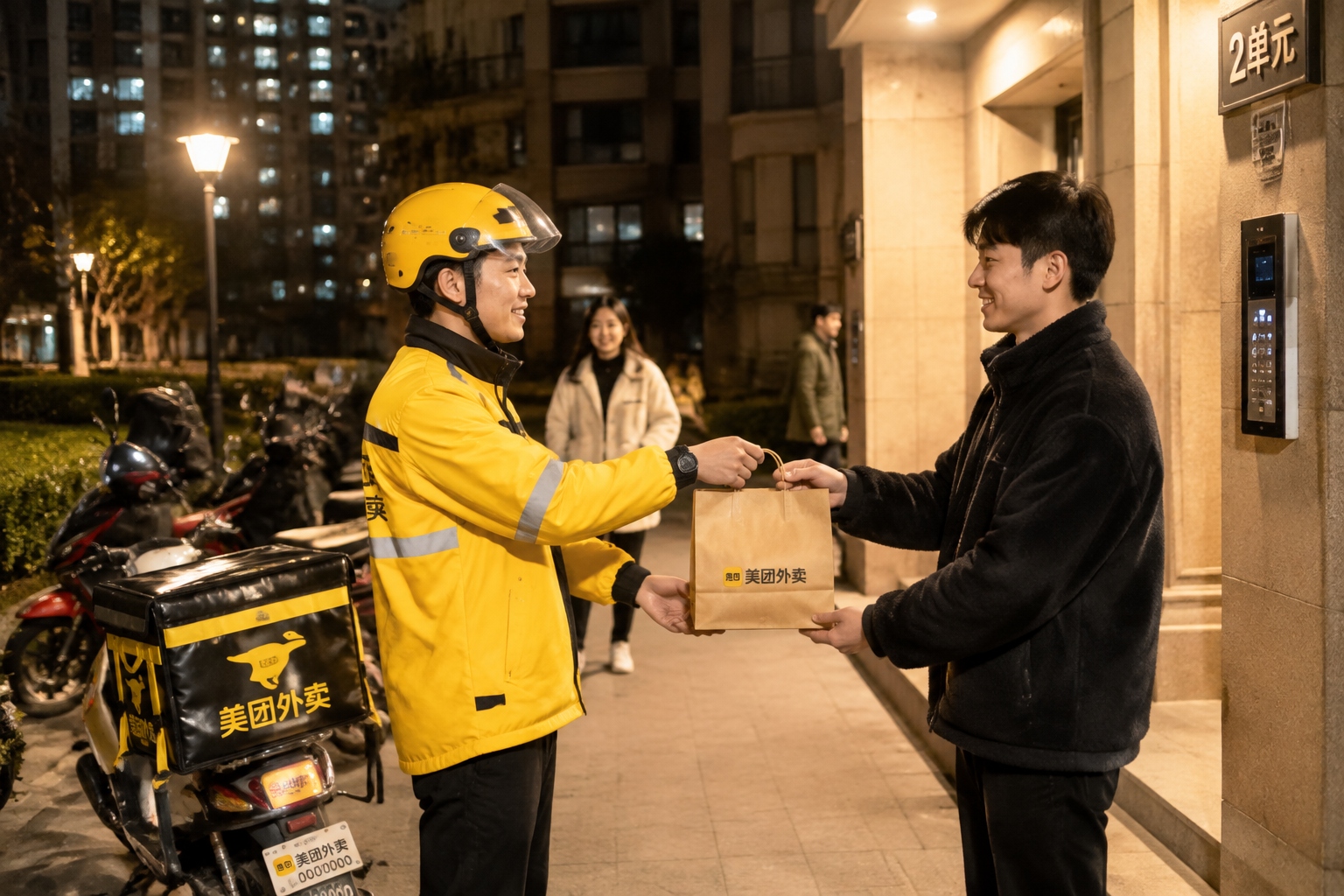
Twenty-one minutes later, a scooter rumbles to a stop outside the apartment complex. The courier, a man named Zhang Qiang, checks the bag’s seal, calls Li Wei, and leaves the food at the lobby pickup point. By midnight, Li Wei is biting into a warm, cumin-scented lamb skewer. He posts a photo to his WeChat moments with the caption: “The best part of working late.”
This scene plays out tens of millions of times every night across China. For anyone who has lived in a Western city, the speed and choice can seem almost improbable. How does a hot, freshly-grilled meal arrive at your door in 20 minutes? The answer lies in a tightly choreographed system that blends technology, human effort, and a culture that takes eating seriously — even after midnight.
How 20 Minutes Is Possible: Inside the System
Fast delivery is not a magic trick. It’s the product of layers of logistics designed around one principle: everything is staged in advance. The speed isn’t a new luxury; it’s become a baseline expectation. A 2019 Meituan survey found that almost 60% of urban users expect delivery within 30 minutes, and many now check the estimated time before ordering.
Mills of Meal Pre-Making
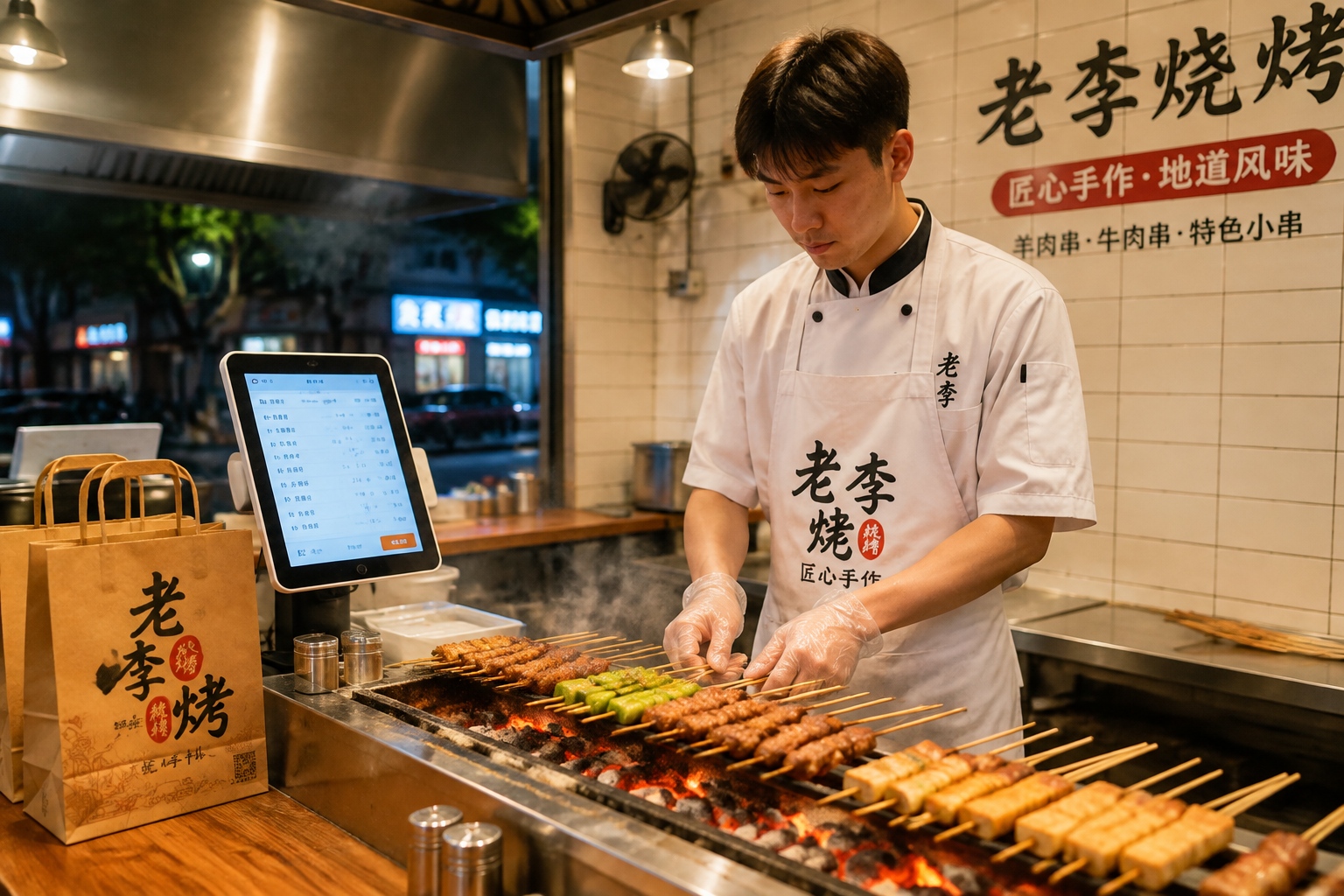
Most serious BBQ restaurants in Chinese cities have a special “night kitchen” workflow. They don’t wait for orders to start grilling. Instead, popular items like lamb skewers are partially grilled in the evening rush and then kept warm. When a midnight order pops in on the restaurant’s tablet, a worker only needs to finish the last 3–4 minutes of grilling, pack it in insulated bags, and hand it to the courier who’s often already waiting outside. This is why a skewer can taste almost as good as it would in the restaurant.
The Algorithm on Wheels
Then there’s the courier. Delivery platforms like Meituan and Ele.me use algorithms that know which couriers are available, where they are, and what direction they’re heading. Orders are not assigned randomly. When Li Wei’s order arrived, the algorithm likely found a courier who was within 800 meters of the restaurant, delivering another order nearby. The platform batches orders so a single trip can cover two or three nearby homes. The route isn’t always a straight line. The algorithm might decide to deliver a second order first if it shaves minutes off both deliveries. It’s a live puzzle that recalculates as traffic conditions change.
Couriers work on piece rates — each delivery earns them a few yuan, with bonuses during bad weather or late nights. A good courier in a busy downtown area can complete 30 to 40 orders across a 12-hour shift. It’s demanding work, and many are migrant workers who count on this income. The speed isn’t just about algorithms; it’s about tens of thousands of people pushing hard to meet impossible-sounding deadlines.
Restaurant, Courier, and a Smart Ordering Screen
The restaurant’s side is equally optimized. Order flow is digitized. A dedicated printer spits out the order with prep time. The kitchen receives notification even before the customer confirms payment — there’s a “grace period” during which the customer can cancel, but in practice most items start cooking immediately. The bag is sealed with tamper-proof tape. The courier scans a code on the bag when picking it up, and the customer’s app shows that it’s on the way, tracking the courier’s route in real time.
This ecosystem is not just about software. It’s built on China’s population density and the concentration of small restaurants in residential areas. A typical Beijing neighborhood has dozens of eateries within a one-kilometer radius, so fresh food doesn’t have to travel far. The system exploits proximity — and that’s something a sprawling suburb in Texas or a rural part of England simply doesn’t have.
What China Eats at Midnight
While the platform is universal, the menu varies wildly by region. In northern cities like Beijing and Xi’an, BBQ skewers are the undisputed king: mutton, chicken wings, grilled garlic, and mantou (steamed bread) slathered in cumin and chili powder. In Shanghai, you’re just as likely to see soup dumplings (xiaolongbao) being delivered after 1 a.m., alongside hot and sour noodles. In the southern city of Guangzhou, midnight treats often mean congee (rice porridge) with youtiao (fried dough sticks), or a warm bowl of rice noodles in broth. Chongqing loves spicy hot pot — yes, some places deliver a whole hot pot set with a portable stove. And in the last few years, “mala tang” (a spicy soup with skewers of vegetables and meats) has become a national favorite because it’s cheap, customizable, and arrives hot.
These aren’t just snacks. For many night-shift workers, this is dinner. Nurses, security guards, ride-hailing drivers, and night-shift employees of logistics centers — their day ends at 2 a.m., and a hot meal is a basic comfort. For them, delivery is a lifeline.
More Than Food: A Connection After Dark
Beyond logistics, there’s a social layer to late-night delivery. In big cities, where many young people live alone, the arrival of a courier can be the only human interaction they have after returning from work. The courier’s call — “Your order is at the front desk, please come grab it” — is a tiny, transactional conversation, but it still breaks the silence.
Some couriers go the extra mile. A heartwarming story from last year: a courier in Shanghai noticed that a regular customer ordered the same bowl of noodles every night and left a handwritten note on the bag: “Remember to eat, don’t overwork.” The customer posted the note online, and it went viral. These small gestures are the human texture that makes a high-tech system feel less cold.
Then there are the shared rituals. In many residential communities, a night-time pickup point becomes a mini social hub: a few couriers park their scooters, compare routes, and trade tips on which restaurants are fastest. They might share a cigarette and complain about traffic. For a moment, the digital platform fades, and you see the human network underneath.
How It Compares With the West
If you live in the US or Europe, the idea of getting a BBQ meal delivered at 11 PM might make you laugh. Most small restaurants close by 9 or 10. Late-night options are usually limited to fast food chains like McDonald’s or Domino’s, and even those can take 45 minutes to an hour, if they deliver at all. In some European cities, food delivery after midnight is a myth.
The difference isn’t just about technology. It’s about urban density, consumer habits, and competition. The pricing model also plays a role. In the U.S., delivery fees and service charges can turn a $10 burger into an $18 purchase, which discourages impulse late-night orders. In China, many apps offer free delivery during late-night hours or charge only a few yuan, making the midnight snack a casual, affordable habit.
There’s also a different cultural approach to nightlife. In many Western cities, late-night eating is centered on going out to bars and diners. In China, eating at home is more common — partly because apartments are smaller, and partly because socializing often happens over shared meals, but not necessarily away from home. The delivery app effectively extends the street food culture into the living room.
More Than Fast: A Window Into Modern China
Twenty years ago, if you were hungry at midnight in a Chinese city, you’d walk to an alley to find a street vendor, or boil instant noodles in a shared kitchen. Today, you tap a screen and watch a scooter move on a map. The underlying hunger hasn’t changed, but the way it’s satisfied has become a defining feature of urban Chinese life.
Midnight BBQ delivery isn’t a statement about technology conquering nature. It’s a very human trade-off: we accept a slightly smaller selection than what you’d get at a sit-down restaurant, and in exchange, we get a hot meal at a moment’s notice. The system isn’t perfect — couriers work under pressure, and food quality sometimes suffers. But the fact that millions of people use it daily tells you something real about today’s China: it is fast, pragmatic, and deeply connected.
So the next time you see a photo of a drone flying over a Chinese city or a glowing screen with a tracking route, remember the simple scene: a guy in a yellow helmet handing a bag of skewers to a tired student. That’s the pulse of a country that figured out how to make the night a little warmer.
Start the discussion at forum.chinacomes.com