
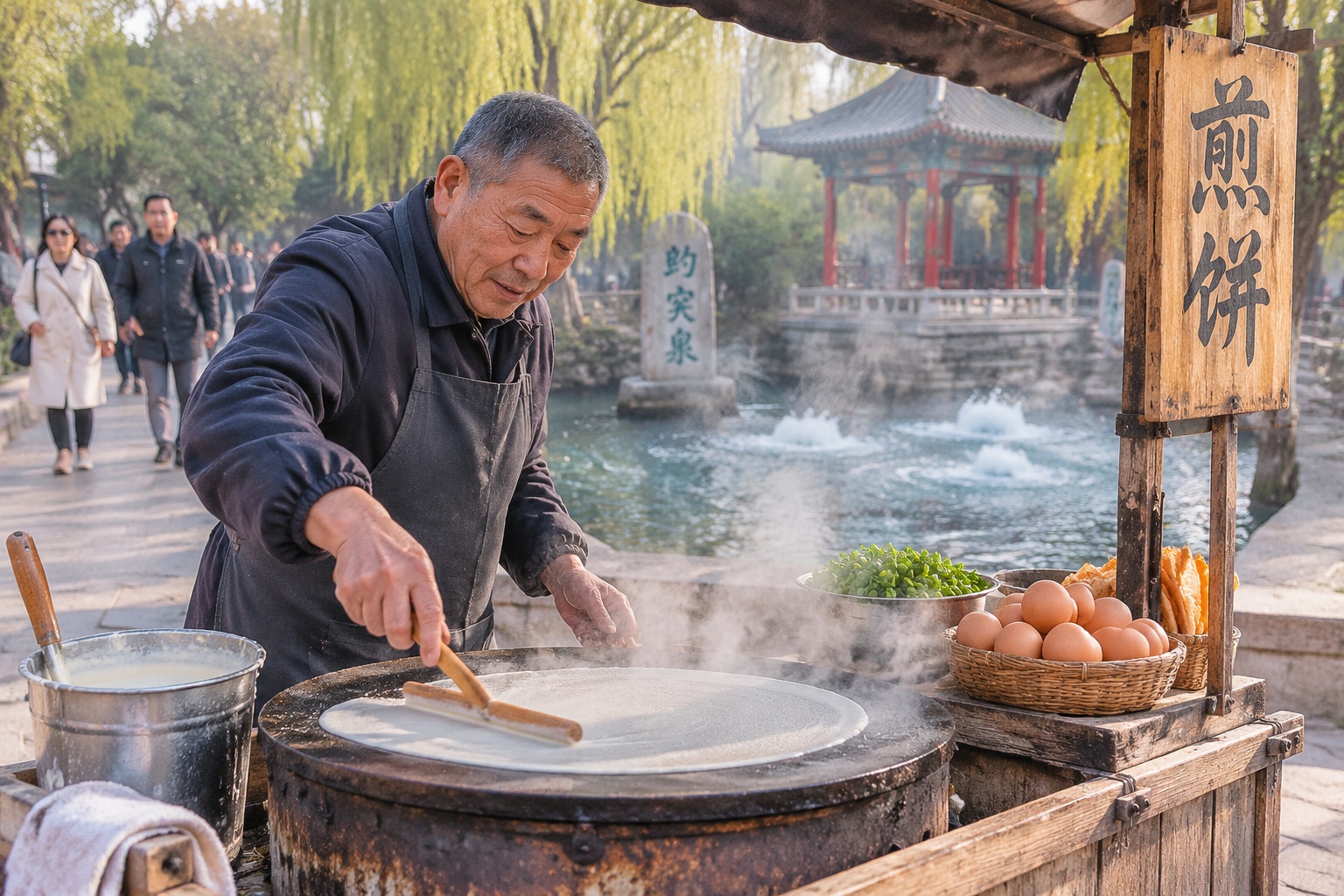

At 6:30 AM, the air in Jinan’s Old Town District is thick with a specific scent: roasted grain mixed with sharp, fresh scallions. It rises from a small cart parked near Baotu Spring, one of China’s most famous natural artesian springs. The steam from the boiling soy milk mixes with the cool morning mist rising off the water. For Mr. Zhang, 58, this is his office. He has been spreading batter on a round iron griddle here for twenty years.
The Morning Ritual at the Water’s Edge
Jinan, the capital of Shandong Province, is known as the “City of Springs.” While tourists flock to Baotu Spring and Black Tiger Spring to photograph the bubbling water, locals have a different relationship with these landmarks. They are community hubs. By 7:00 AM, the area around the springs is alive not just with sightseers, but with residents exercising, chatting, and eating.
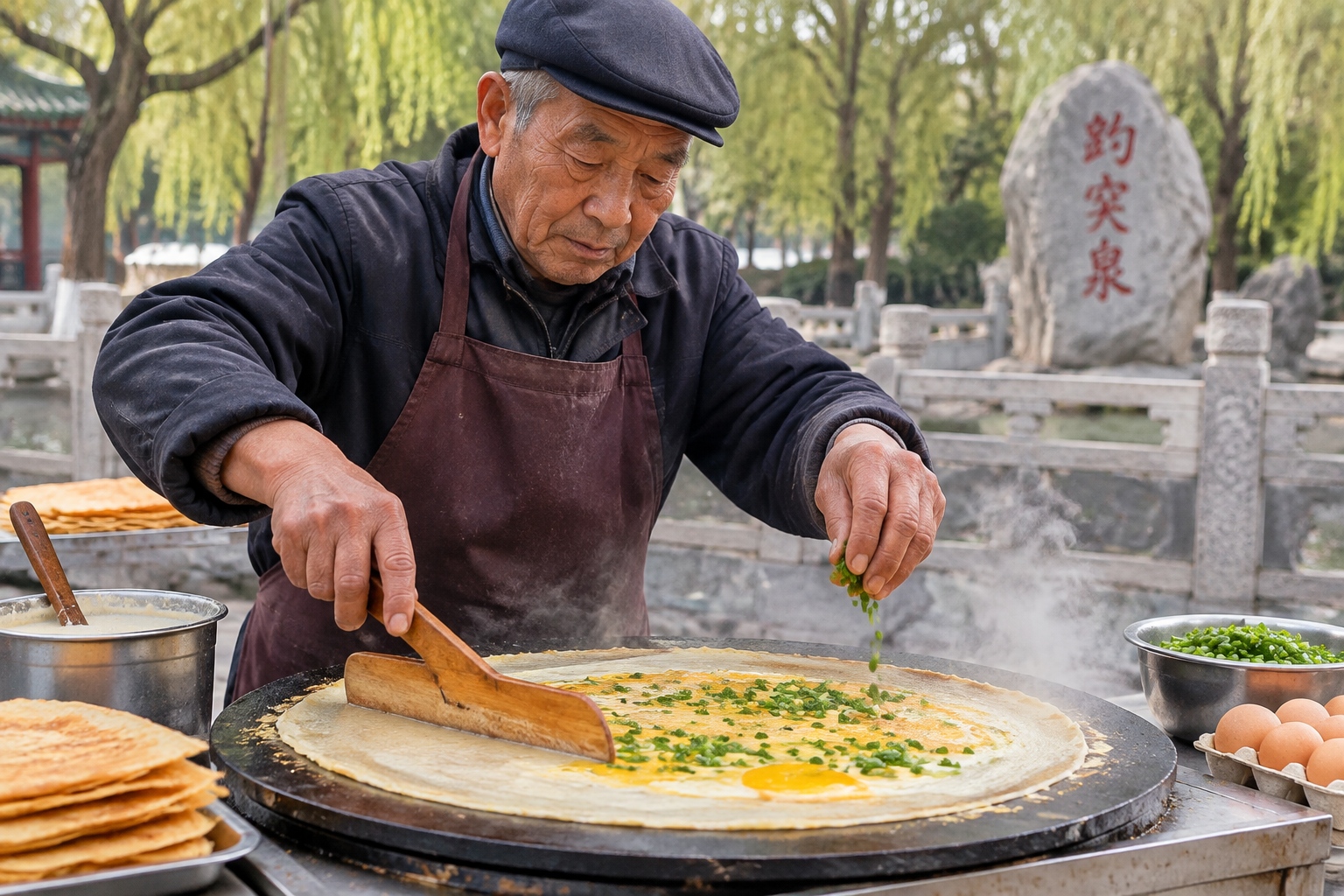
Mr. Zhang’s hands move with practiced rhythm. A ladle of millet flour batter hits the hot surface. He spreads it in a perfect circle with a wooden rake. Two eggs crack open, yolk spreading across the thin crepe-like base. Then comes the scallion—a whole stalk, thick as a finger, chopped into rings but kept long enough to provide crunch. A smear of sweet bean paste, a sprinkle of cilantro, and a pinch of salt. The pancake is folded into a tight cylinder.
“The spring water changes the taste,” Mr. Zhang says, pointing to a nearby pipe where residents still collect water in plastic jugs. “We use filtered tap water now for hygiene standards, but we remember when the dough tasted different because it was made with the spring itself.”
From Street Snack to Cultural Symbol
To an outsider, Jianbing Guo Dacong (scallion pancake wrapped around a scallion) might look like simple street food. But in Shandong cuisine, it is a staple of identity. The wheat and millet blend represents the agricultural heartland of northern China. The scallion is not just a garnish; it is a main ingredient, eaten raw for its pungent, sweet bite that cuts through the savory paste.
For decades, these carts were ubiquitous in Jinan’s alleyways. As the city expanded, many were removed during urban renewal projects aimed at cleaning up streets and improving sanitation. Some vendors moved into sterile food courts or modernized kiosks. But near the historic springs, a few have retained their mobile carts under strict municipal management.
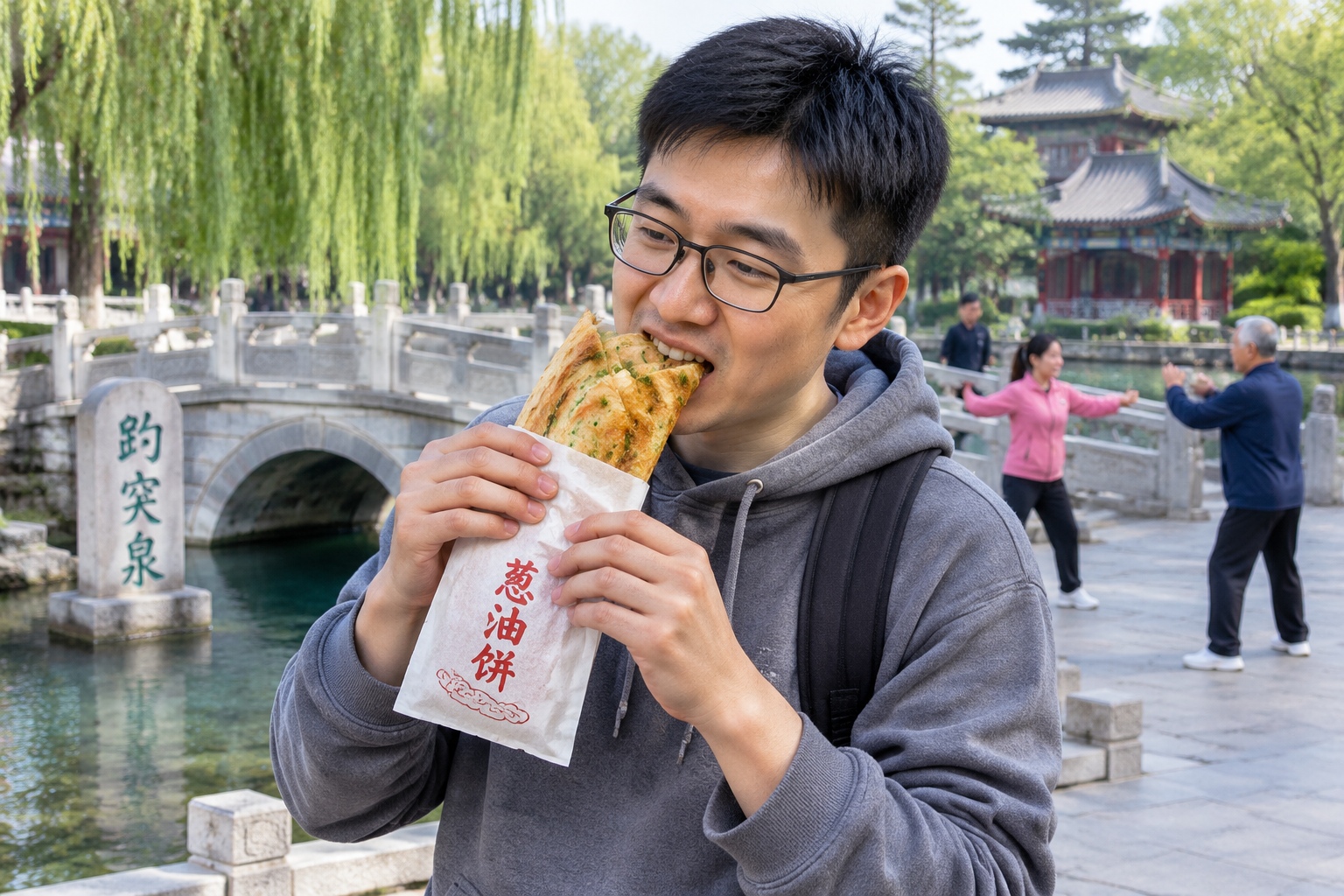
Li Wei, a 28-year-old software engineer working in Jinan’s new Hi-Tech Zone, stops by Mr. Zhang’s cart twice a week. “I eat Western breakfasts or chain-store sandwiches most days,” Li says, taking a bite that results in a cascade of scallion bits. “But when I’m near the old city, this is what I crave. It tastes like my childhood. My grandmother used to make these at home. The smell takes me back before we moved to the apartment blocks.”
Urban Change and the Persistence of Taste
Jinan has undergone significant transformation in the last decade. High-rise buildings have replaced many low-rise courtyards. Subway lines now connect the historic center to sprawling suburbs. The city is pushing for a “smart city” image, with digital payment codes displayed prominently even on the smallest food carts.
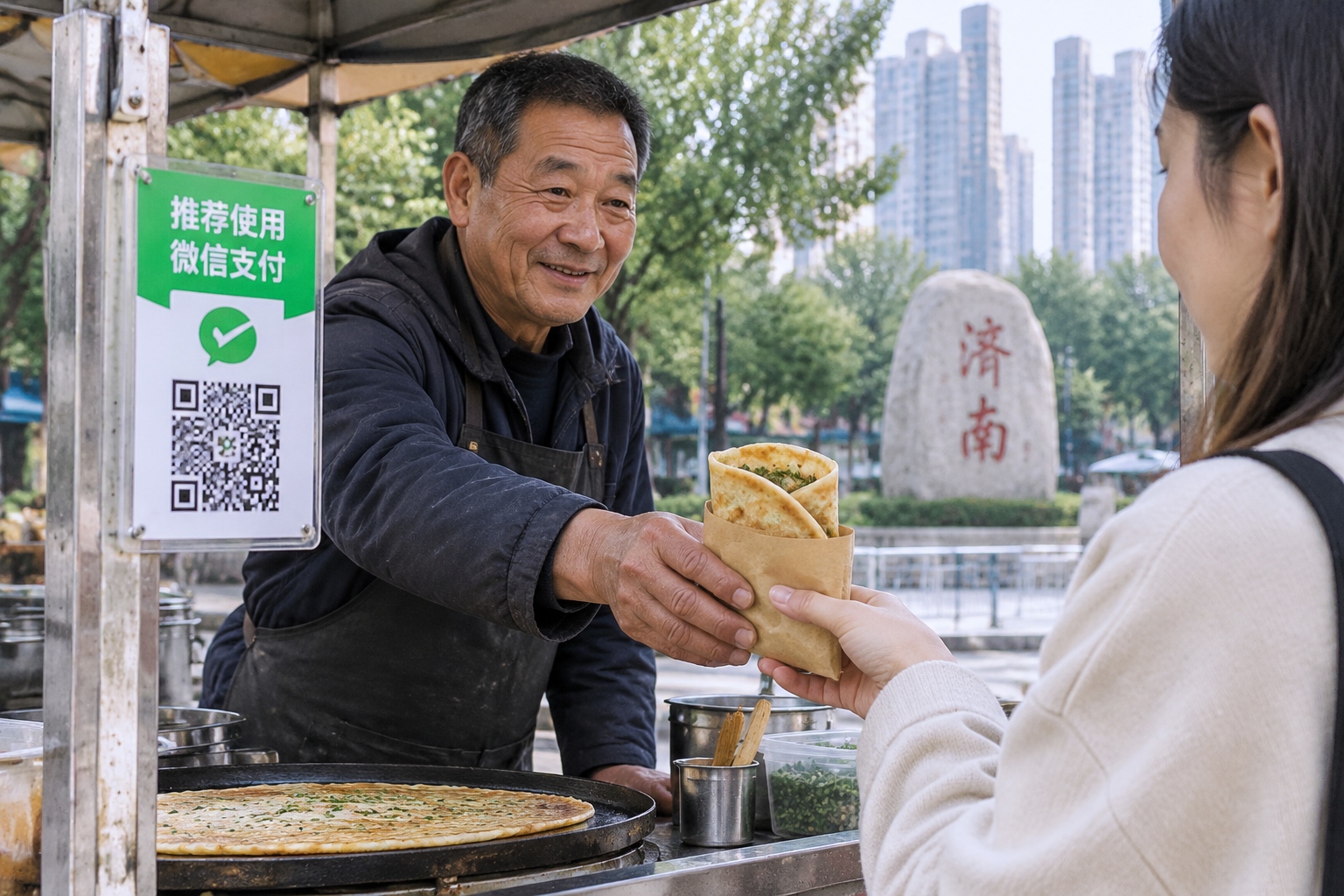
Mr. Zhang accepts WeChat Pay and Alipay. His cart has a QR code laminated against the heat. But his method remains analog. He doesn’t use pre-made wrappers or industrial pastes. The contrast between the high-tech payment system and the artisanal cooking process is a microcosm of modern China: rapid digital adoption layered over deep-rooted traditional habits.
Younger entrepreneurs are also experimenting. A few blocks away, a startup called “Neo-Jinan” sells scallion pancakes with truffle oil or cheese, targeting the Instagram-savvy youth demographic. Some purists criticize this as an insult to tradition. Mr. Zhang shrugs. “Food changes,” he says. “If young people eat it, they remember the scallion. That’s enough.”
Public Space and Social Connection
The space around Jinan’s springs functions less like a tourist attraction and more like a living room for the city. During the day, elderly residents play chess on stone tables near the water, arguing loudly about moves while sipping tea made with spring water. Vendors sell roasted chestnuts, sugar figurines, and yes, scallion pancakes.
This public accessibility is crucial. In many Chinese cities, rapid urbanization has privatized spaces or turned them into commercial zones where only consumption matters. Jinan’s preservation of the spring areas allows for a mix of social classes to interact. A CEO might stand next to a sanitation worker, both waiting for their breakfast.
“It’s about continuity,” says Dr. Chen, a local urban planner who walks this route daily. “When you demolish an old neighborhood, you lose the spatial memory. But if you keep one food stall, one public square where people gather, you keep the soul of the place. The pancake is just the medium. The real product is community.”
Conclusion: Eating Through Time
As the sun climbs higher, the mist lifts off Baotu Spring. Tour groups arrive with cameras, seeking the perfect shot of the water jets. Mr. Zhang wipes his griddle clean, ready for the lunch rush. The line of locals has already dispersed to offices and schools.
For those who eat here, the scallion pancake is not just a meal. It is a way to taste history in a city that is constantly rewriting its own map. In the crunch of the raw scallion and the warmth of the grain, there is a resistance to forgetting. Jinan changes fast, but some tastes remain stubbornly, deliciously the same.