

The Myth of the “Spicy Nation”
Ask an average person in New York or London what Chinese food tastes like, and you will likely hear two words: spicy and oily. This perception is not accidental. For decades, Sichuan cuisine and hotpot have been China’s most successful culinary exports, dominating overseas menus with their vibrant red oils and numbing chilies. It has created a monolithic image of Chinese flavor—one where heat is the primary currency.
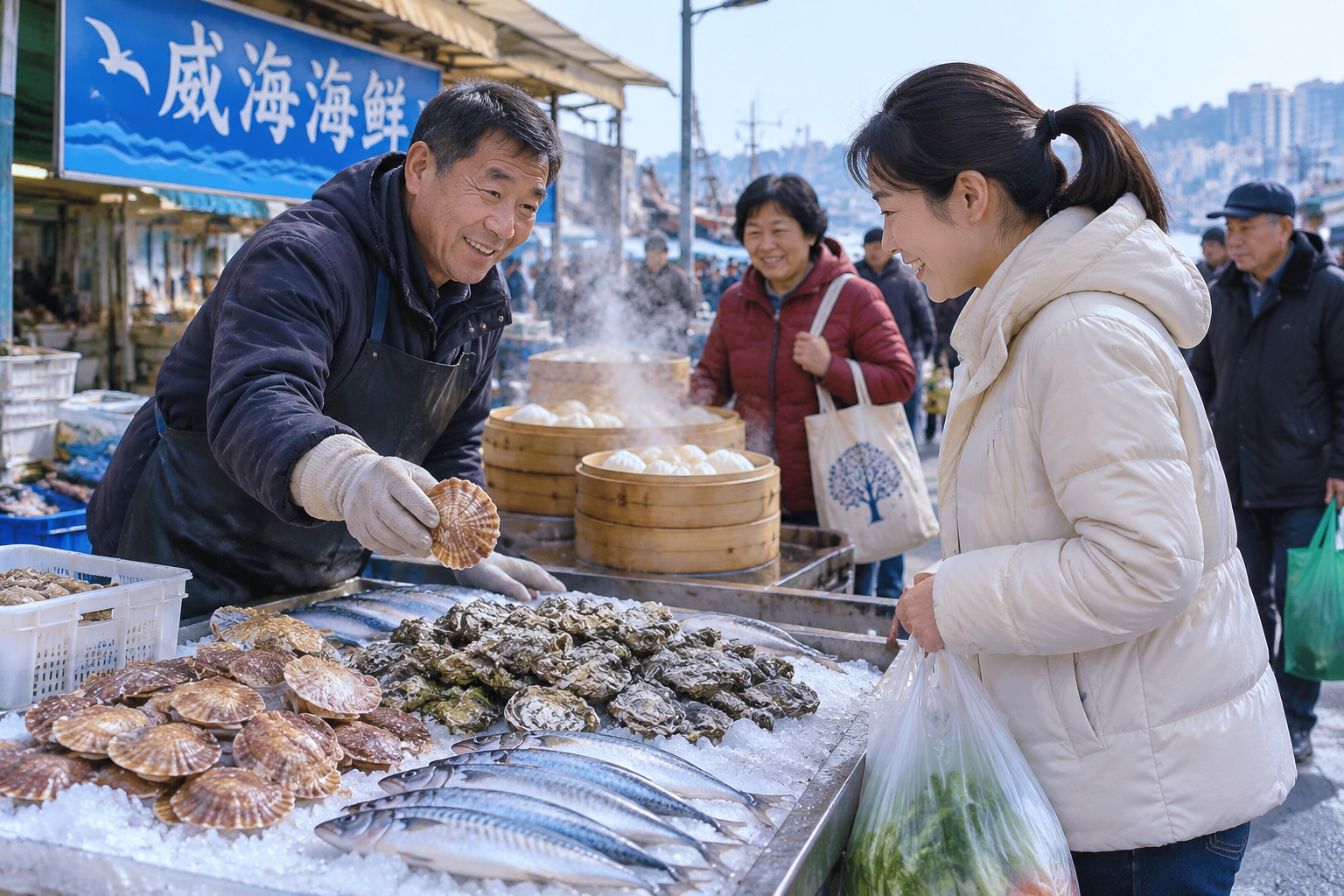
But walk into a breakfast stall in Weihai, a quiet coastal city on the Shandong Peninsula, and that stereotype dissolves instantly. Here, the air smells not of cumin and dried chili flakes, but of steamed dough, ocean brine, and garlic. The local concept of “foodie” satisfaction—often loosely translated as “no spice, no life” (bu la bu huan)—is misunderstood abroad. In Weihai, the “spice” isn’t capsaicin; it’s the intense, sharp freshness of ingredients that have never seen a freezer.
Geography Dictates Flavor: The Coastal Advantage
To understand why Weihai tastes different, you must look at a map. Shandong is China’s third-most populous province and its agricultural powerhouse, but Weihai sits at the tip of its eastern peninsula, surrounded by the Yellow Sea. This geography creates two distinct forces that shape the local palate: temperature and access.
First, climate. Southern China is hot and humid. Historically, heavy spices like chili, ginger, and garlic were essential tools for preservation and appetite stimulation in sweltering weather. Weihai, however, has cool summers and freezing winters. There was no need to mask the taste of ingredients with aggressive spices. Instead, the culinary tradition evolved around highlighting natural flavors. The cooking method is often simple: steaming, boiling, or quick stir-frying, designed to preserve the integrity of the ingredient.
Second, access. Weihai is one of China’s top seafood producers. The cold, nutrient-rich waters yield scallops, oysters, mackerel, and abalone with a sweetness that warm-water varieties lack. In Weihai kitchens, freshness is not just a preference; it is a requirement. If a fish doesn’t taste like the ocean, it isn’t served.
Reimagining “No Spice, No Life”
The phrase bu la bu huan (no spice, no joy) is often cited by Sichuanese people. But in Shandong, locals have reinterpreted this through the lens of umami and acidity. The “kick” comes from dipping sauces, not cooking heat.
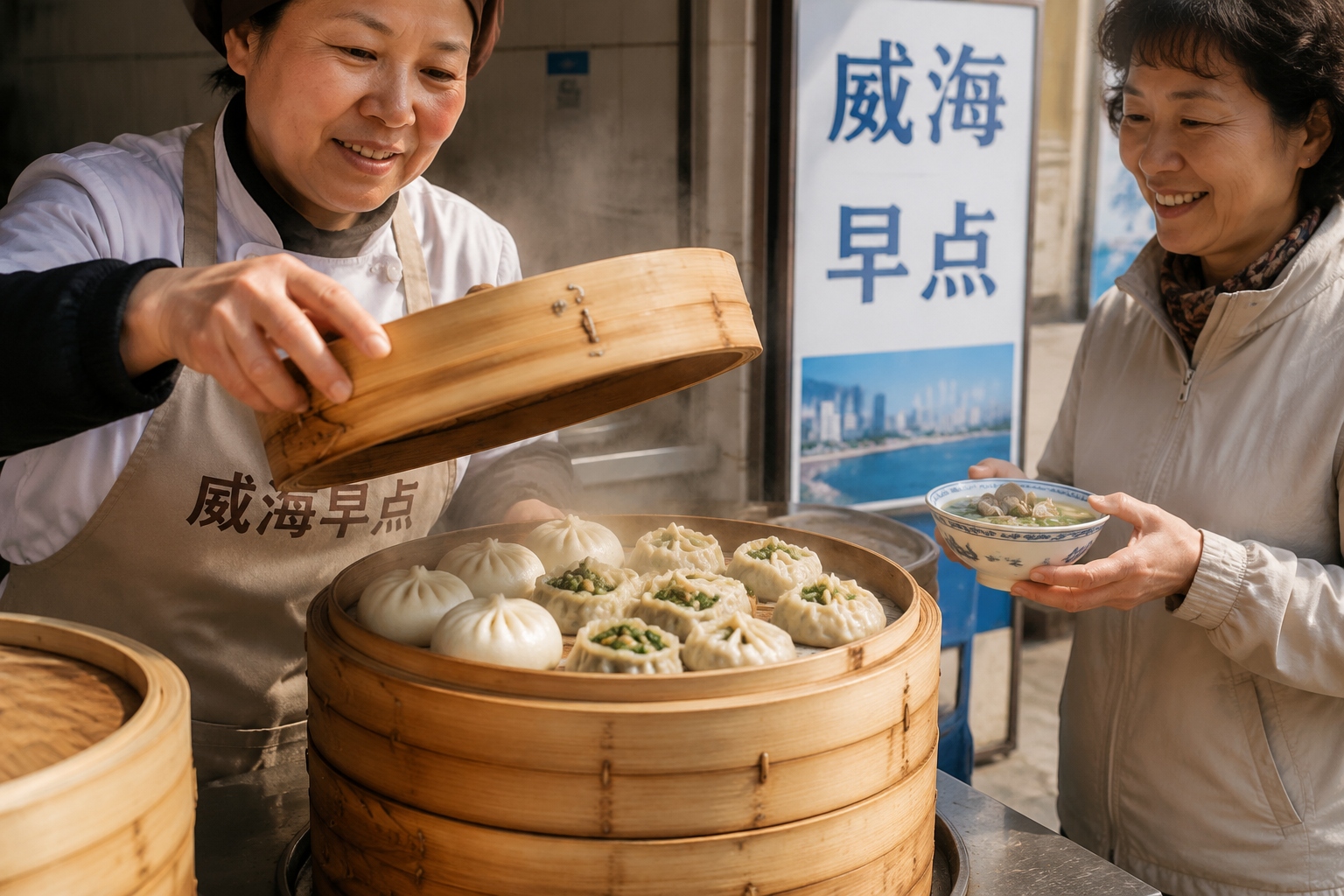
Take the humble steamed dumpling (jiaozi). In Weihai, these are often filled with mackerel or sea urchin. When you bite into one, you don’t taste chili oil. You taste a complex sauce of aged vinegar, soy sauce, crushed garlic, and sometimes a hint of ginger. The acidity cuts through the richness of the seafood, while the garlic provides a pungent sharpness that wakes up the palate. This is the “heat” Weihai locals crave: it is chemical, bright, and clean.
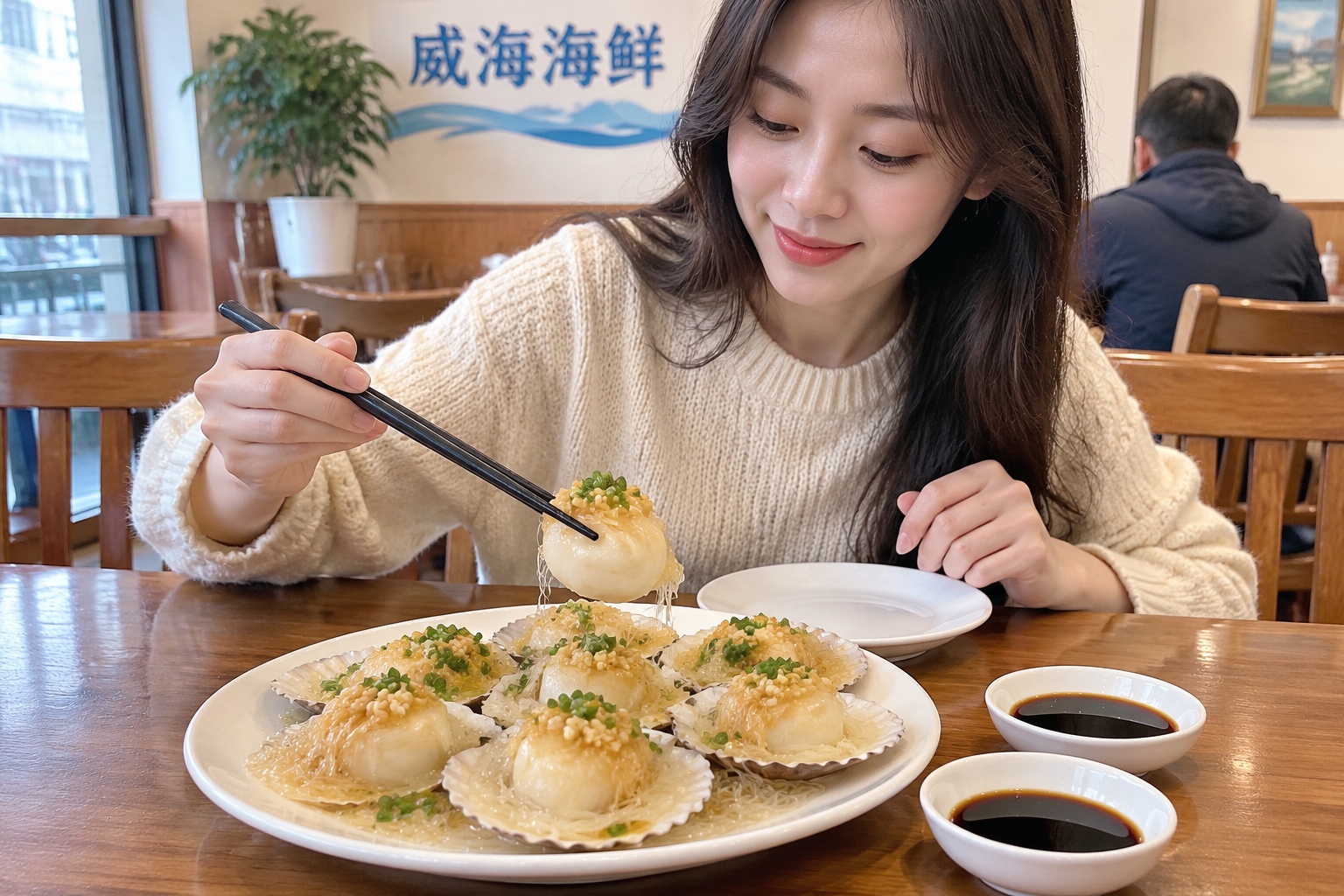
At dinner, a typical family might share a plate of boiled scallops with glass noodles (fensi). The scallop itself is cooked for exactly two minutes to remain tender. The flavor comes entirely from the natural juices released during steaming, enhanced by a drizzle of hot oil over scallions and garlic at the very end. There are no dried chilies in sight. For a foreigner expecting Sichuan heat, this can feel bland at first glance, but within three bites, the layered umami becomes undeniable.
Everyday Life: Morning Markets and Modern Trends
The diversity of Chinese cuisine is best experienced not in high-end restaurants, but in morning markets. In Weihai’s Zao Shi Chang (morning market), the rhythm of life is set by the catch of the day.
Elderly residents often shop with woven baskets, selecting fresh mackerel or clams directly from ice beds. They might buy a bag of steamed buns (mantou) filled with bean paste or red dates for breakfast. This is not just shopping; it is a social ritual. Conversations revolve around which boat landed the best catch and whether the water temperature has affected the sweetness of the oysters.
However, Weihai is also changing. Young people in the city are blending traditional Shandong ingredients with global health trends. In the Hi-tech Zone, you can find cafes serving “sea cucumber lattes” or salads featuring local kelp and sea lettuce. These young consumers are highly educated and digitally connected; they compare Weihai’s seafood with Japanese sashimi standards, demanding higher quality and sustainability.
This shift has forced traditional vendors to adapt. A street stall selling fried squid now might also offer grilled squid with a lemon-herb marinade, catering to younger tastes that prefer lighter seasoning over heavy batter. The food scene is becoming more nuanced, moving away from the “heavy oil and salt” reputation of older Northern Chinese cooking toward cleaner, ingredient-forward styles.

Beyond the Stereotype: A Diverse Culinary Map
China is not a monolith. Reducing its cuisine to “spicy” ignores the vast culinary traditions of regions like Shandong (Lu Cuisine), Jiangsu, and Guangdong. Lu Cuisine, one of China’s “Four Great Cuisines,” is known for its mastery of soup-making and seafood preparation. It emphasizes high-quality raw materials and subtle seasoning.
Understanding Weihai helps dismantle the single-story narrative of Chinese food. When an overseas visitor tries to find “authentic” Chinese food, they often end up in a Sichuan restaurant because that is what is marketed globally. But stepping into a Shandong kitchen reveals a different logic: respect for the ingredient, precision in cooking time, and a balance of acidity and umami.
For travelers and food enthusiasts, exploring non-spicy regions offers a broader understanding of Chinese daily life. It shows that “comfort food” in China can be a bowl of clear fish soup with white radish, or a simple plate of stir-fried sea clams. These dishes require no explanation for their spiciness level; they speak for themselves through freshness.
As China’s middle class grows and logistics improve, the diversity of regional cuisines is becoming more accessible even outside China. But for now, to taste the real variety, one must look beyond the red oil. Weihai offers a compelling case study: that in China, joy in food does not require burning your tongue. It can come from the cold, clean taste of the sea.