

The Morning Shift at Chateau Helan
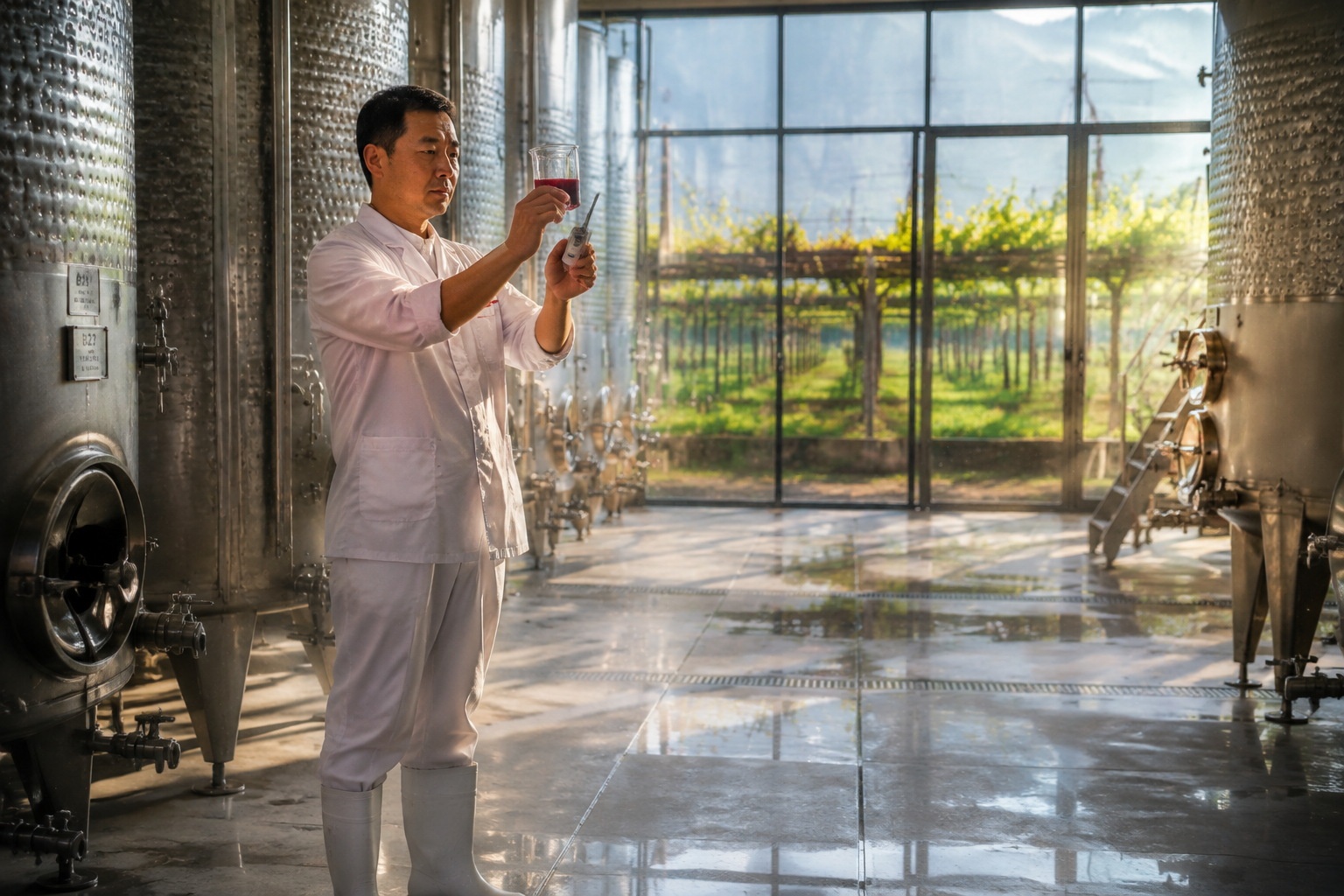
At 7:30 a.m., the fermentation hall at Chateau Helan is still cool and damp. Wang Jianguo, 45, walks between rows of stainless-steel tanks, a digital thermometer in one hand and a clipboard in the other. He stops at Tank No. 7, checks the temperature gauge, and writes down the number. Then he opens a sampling valve, lets a thin stream of ruby-red wine flow into a glass beaker, holds it up to the light, and sniffs.
Ten years ago, Wang was doing the same motion — but with a hoe in a wheat field, not a wine glass in his hand. He grew up in a small village at the foot of the Helan Mountains in Ningxia, one of China’s poorest regions at the time. Today, he is one of the first-generation winery assistants in what has become the country’s most celebrated wine region.
From Dusty Fields to Vineyards
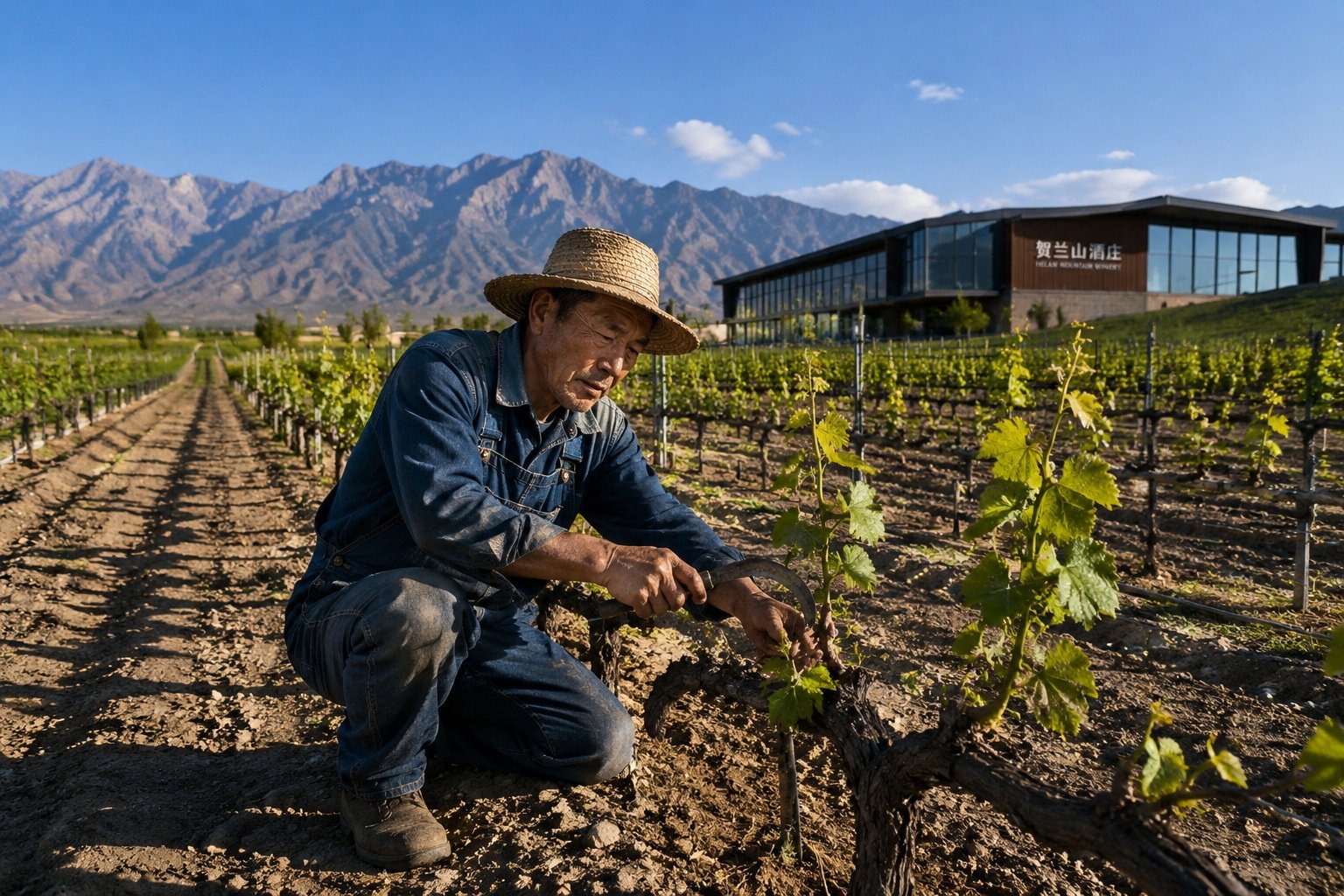
The Helan Mountain East Foothill wine region sits at the same latitude as Bordeaux, with ample sunshine, dry climate, and mineral-rich soils. But for centuries, locals relied on subsistence farming of wheat, corn, and sunflowers. Wang remembers seeing windstorms turn the land into dust clouds every spring.
In the 2000s, the Ningxia government decided to invest heavily in wine as a pillar industry. By 2023, over 60,000 hectares of vineyards had been planted, and more than 200 wineries were operating. The boom created a massive demand for labor. Local farmers, who knew the land intimately, were the natural pool of workers.
Wang first joined a winery in 2012 as a seasonal vineyard worker. His job was simple: pruning vines, tying branches, picking grapes during harvest. He earned about 80 yuan (roughly $12) a day, and only for half the year. When winter came, he went back to his fields.
A New Kind of Classroom
In 2015, the winery launched a training program in partnership with a local agricultural college. Wang was hesitant at first. “I thought wine was something only foreigners and rich people drank,” he says with a laugh. “I didn’t know it could be a career for someone like me.”
But his supervisor encouraged him to try. The program taught basic chemistry, fermentation science, and wine tasting. For someone who had left school at 16, the classroom was intimidating. Wang remembers copying down notes by hand, asking his younger colleagues to explain concepts he didn’t understand.
After six months, he passed the exam and became a certified wine-making assistant. That meant he could work in the cellar full-time, not just in the fields. His monthly income rose to 4,500 yuan (about $620) at the time, with health insurance and a pension contribution.
Inside the Cellar: Skills, Smells, and Precision
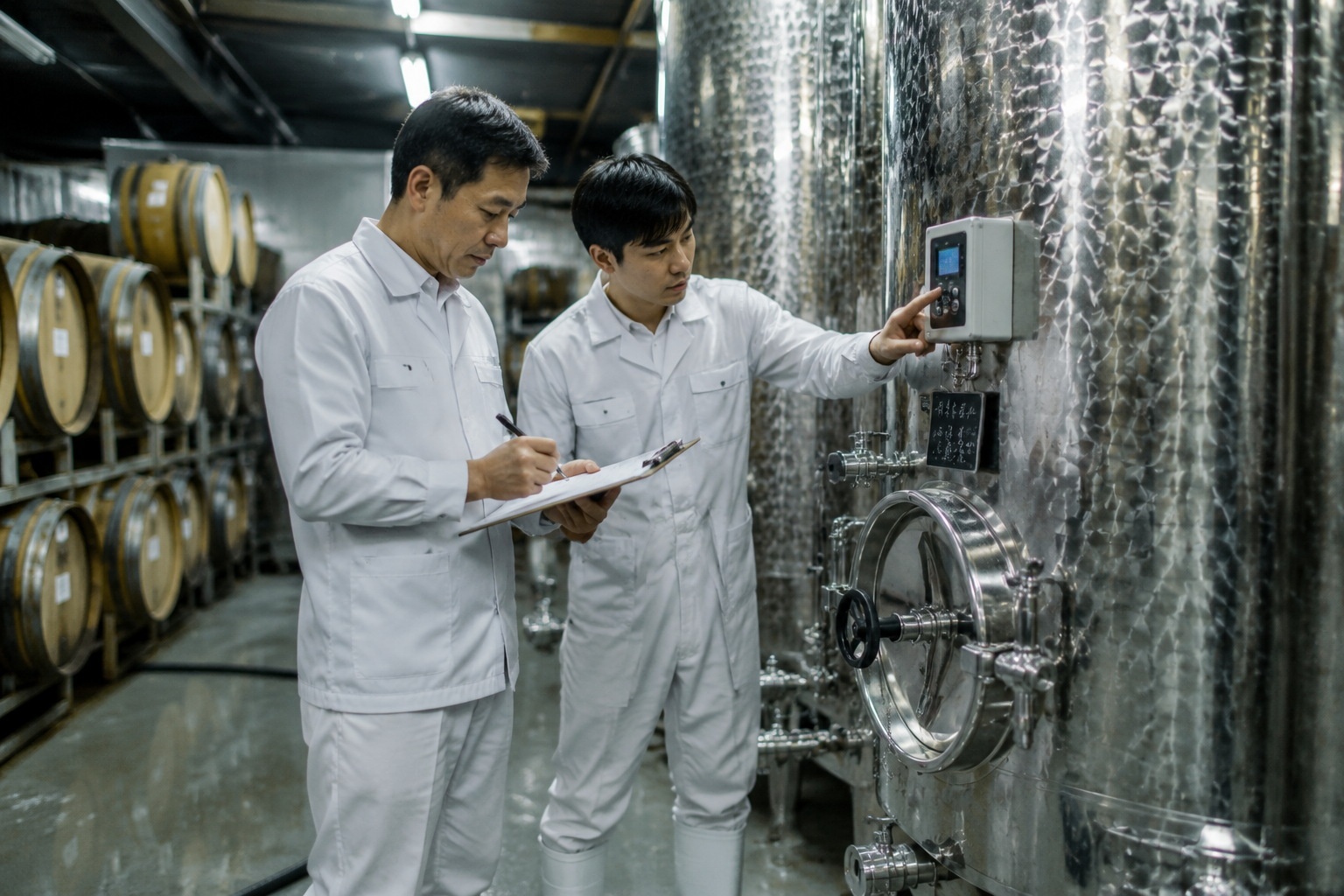
Working as a winery assistant is not glamorous. The days are long, and the work requires obsessive attention to detail. Wang’s typical shift involves checking tank temperatures every two hours, recording fermentation curves, and cleaning equipment until it shines. He has learned to recognize the difference between a healthy ferment and a stuck one by the smell — a musty, closed-in odor when something goes wrong.
“The most important lesson is patience,” he says. “Wine doesn’t rush. You have to wait for the sugar to turn into alcohol, wait for the flavors to develop. If you’re in a hurry, you ruin the batch.”
Wang’s hands are no longer calloused from the hoe. Instead, he wears a clean white uniform and washable rubber boots. His skin is pale from working indoors, a change his wife jokes about. “I used to be a farmer who looked older than my age,” he says. “Now I look like a scientist.”
Beyond Wages: A Quiet Transformation
The economy of Ningxia’s wine region has shifted, and so have the people. Wang now owns a small car and is building a two-story house in his village. His son is studying at a vocational high school in Yinchuan, the regional capital, majoring in tourism — a field tied to the growing wine tourism industry.
Wang’s story is repeated across the region. In 2023, the wine industry in Ningxia employed about 150,000 people, many of them formerly low-income farmers. According to the local government, the average annual income of wine industry workers is now around 45,000 yuan (about $6,200), roughly 20% higher than the rural average.
But the transformation is not just economic. Wang recalls the first time he tasted his own finished wine. “We opened a bottle from the year I first worked in the cellar. I didn’t know what to expect. I was nervous, like tasting my own child’s cooking.” He describes it as having a note of black cherry and a hint of licorice, something he learned to identify during training. “I couldn’t stop smiling for the whole afternoon.”
The Challenges Beneath the Gloss
Not every worker has Wang’s upward path. Seasonal laborers still face unstable weeks and housing challenges. Wineries sometimes compete for skilled workers, and local vocational schools are strained to keep up with demand. The wage gap between managers and cellar workers remains wide.
Wang is aware of these cracks. “I’m lucky,” he says. “I had the right boss and the right moment.” He now serves as a mentor to new trainees, including 20-something graduates from the vocational school. He tells them what his supervisor told him years ago: “This land can give you more than dust. You just have to learn.”
Raising a Glass at Sunset
On a late summer evening, Wang stands outside the fermentation hall after his shift. The sun drops behind the Helan Mountains, painting the sky in streaks of orange and violet. He pulls out his phone to show a video of his vineyard section from this year’s harvest — rows of vines heavy with purple grapes, golden light slanting through the leaves.
He doesn’t drink much wine, but he keeps a few bottles at home for guests. When visitors ask about his job, he doesn’t say “农民工” (migrant worker) anymore. He says, “酿酒助理” (winemaker assistant). The title doesn’t change his pay overnight, but it changes how he sees himself.
In the distance, a new tourism complex is under construction. More wineries are opening. More farmers are knocking on the cellar gates, asking for training. Wang watches the construction crane swing slowly across the green fields. “I never thought I’d be part of something this big,” he mutters. Then he heads to his car, his boots still smelling faintly of crushed grapes.
Start the discussion at forum.chinacomes.com