

Morning Soup in the Ningxia Countryside
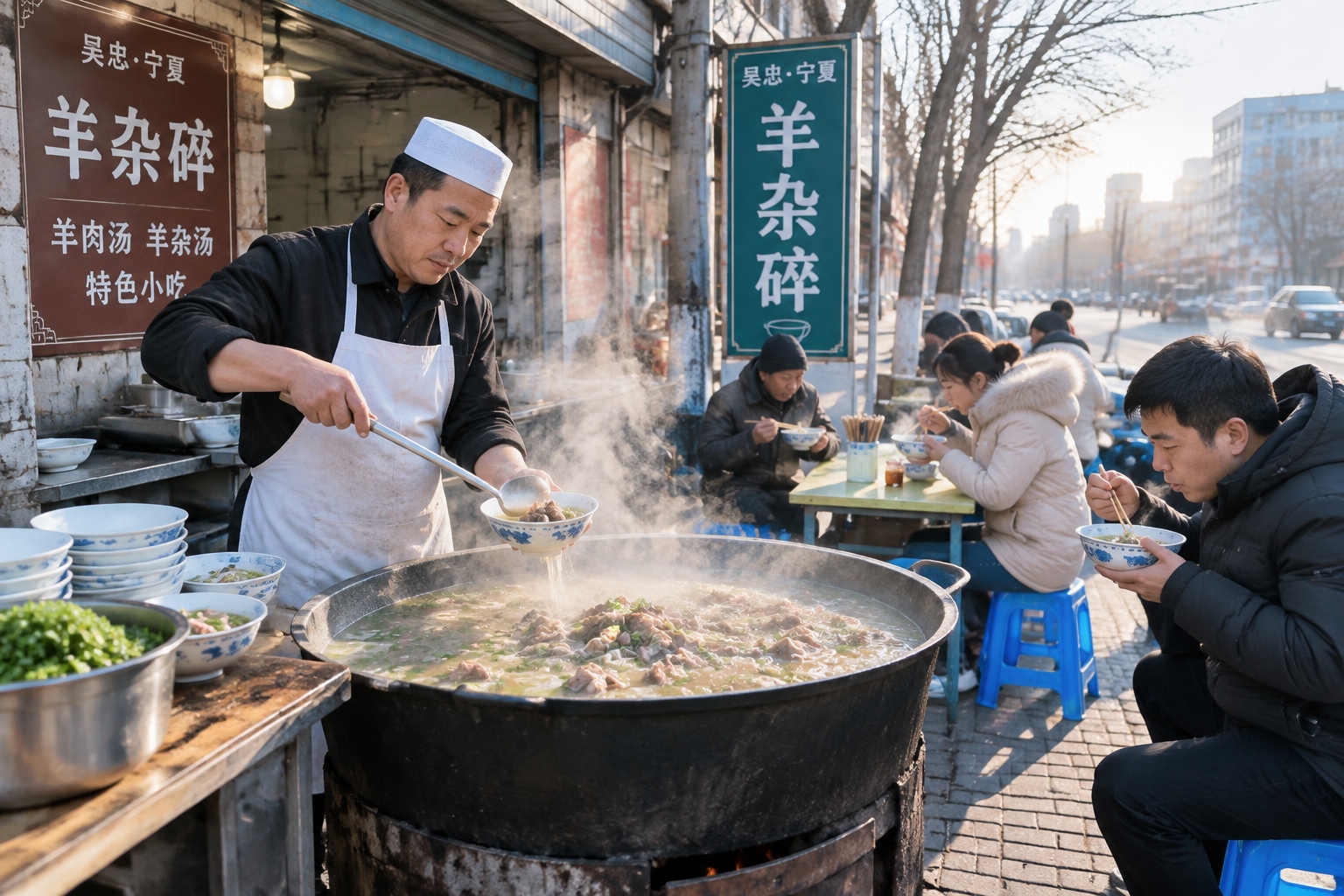
At 6:30 a.m. on a winter street in Wuzhong, Ningxia, the air is sharp with smoke and steam. A small restaurant, no more than a counter and eight plastic stools, is already crowded. The cook lifts a lid from a huge iron pot, and the smell of lamb broth mixed with cumin and chili gas hits your face. A bowl of yangzasui appears two minutes later: a muddy, rich, pale yellow soup, filled with strips of tripe, slippery pieces of liver, chunks of potato, translucent sweet potato noodles, and soft white slices of “flour lung” — a Hui specialty made by steaming wheat batter inside cleaned sheep lungs. A spoon of chili oil floats on top. This is the breakfast that has kept northwest China’s workers warm for a hundred years.
If you have tasted Middle Eastern lamb soups, like Iraqi tashreeb or Uzbek shurpa, you will recognize the bone-rich broth and the laid-back way people eat offal. But the potato, the noodles and the heavy hand with chili are pure northwest China. This is not the polished lamb stew you get in an upmarket restaurant; it is a farmer’s meal, priced at about 15 to 20 yuan (roughly $2–$3), and it has no ambition beyond being hot, filling and deeply satisfying.
What Is Hui Cuisine, Exactly?
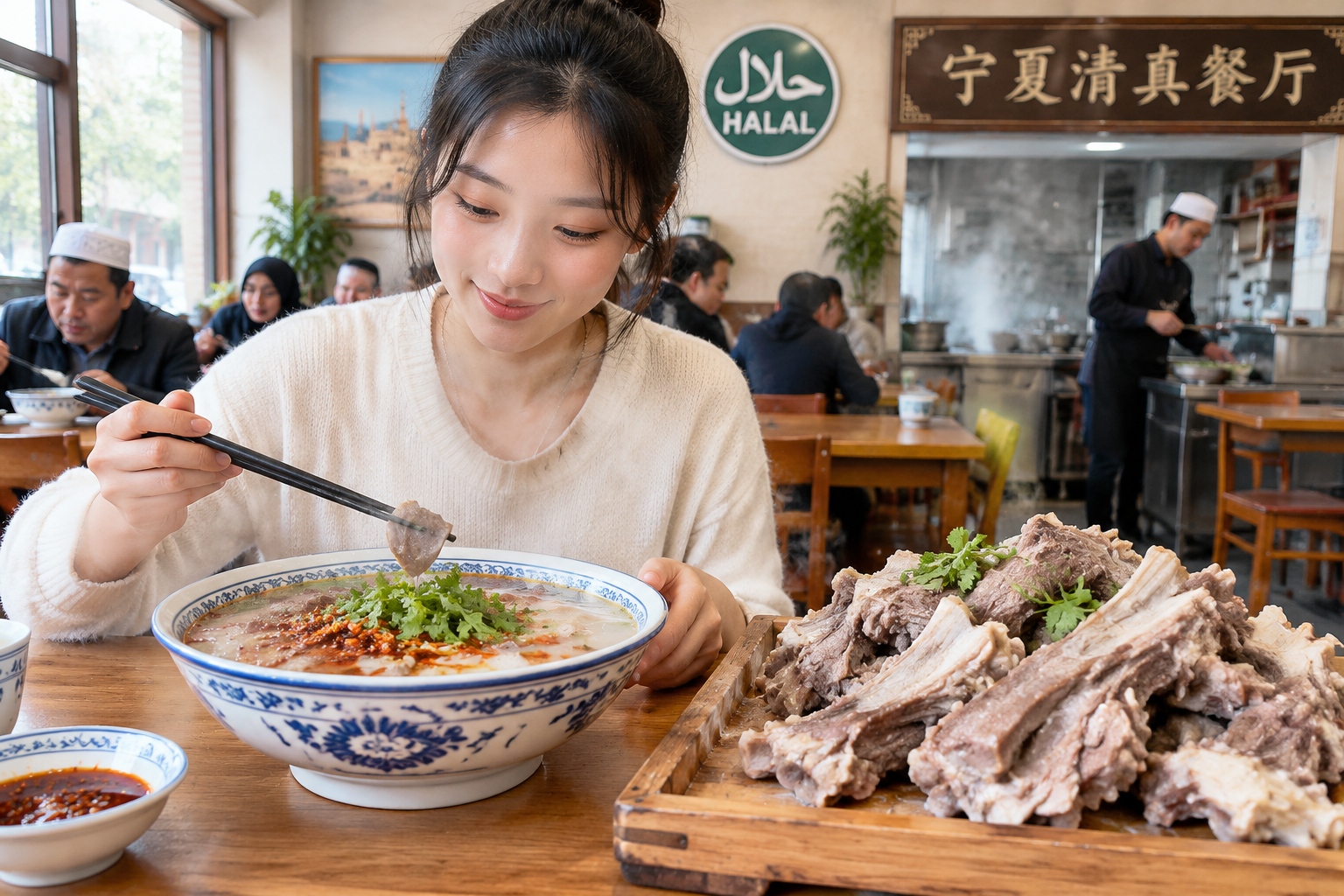
To understand these two famous dishes — sheep organ soup and hand-grabbed lamb — you need to know a little about the Hui people, one of China’s 56 officially recognised ethnic groups. Ningxia is the only provincial-level autonomous region in China established for the Hui, and it sits in the middle of the country’s dry northwest. Most Hui speak Chinese and look like other northern Chinese, but they follow Islamic dietary rules: no pork, no alcohol, and meat must be slaughtered in the halal way.
Because of that, Hui food often gets described in China as “halal food.” But that description hides a bigger, more exciting story. Hui cuisine is a fusion of Central Asian and Arabic cooking memories with northern Chinese ingredients and techniques. There is a reason the region’s food is full of cumin, lamb, wheat and salt: this is what the Silk Road left behind.
Sheep Organ Soup: A Breakfast Built for Winter
In Ningxia, sheep organ soup is usually called yangzasui, and it is a winter-only obsession. Locals say real yangzasui deserves a rough, dark-walled shop that opens before sunrise and closes when the pot is dry. By 9 a.m., the good places in Wuzhong and Yinchuan are already running low.
The soup is made by first boiling sheep bones for hours to create a thick, milky stock. Then the cook adds dozens of cooked sheep organs — tripe, liver, heart, intestine, and sometimes the special “flour lung” already mentioned. The soup is seasoned simply with salt, pepper and a big spoonful of chili oil. It is not a clever, complex dish. What matters is the freshness of the organs and the strength of the broth.
This kind of cooking will feel familiar to anyone who has eaten offal breakfasts in the Middle East or southern Europe. Someone from Britain might think of haggis or black pudding, but the Chinese version is spicier and more communal. Usually, the soup is served in one bowl, with a piece of dry baked flatbread or steamed bun on the side. You dip the bread into the soup and alternate between bread and meat. No one eats quietly.
Hand-Grabbed Lamb: The Dish That Needs No Knife
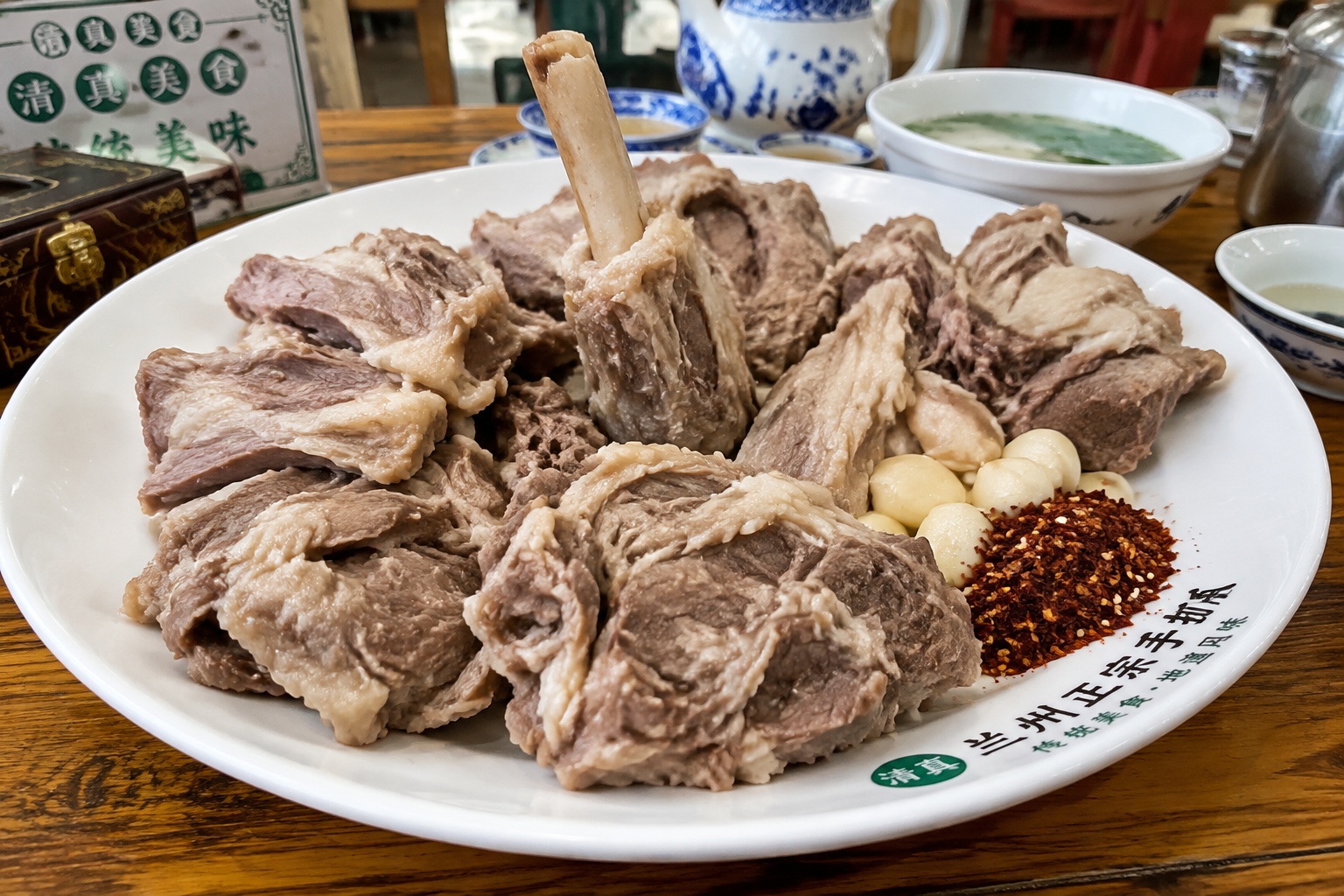
If sheep organ soup is a cold-morning meal, hand-grabbed lamb is the dish for festivals, weddings and celebratory dinners. The name “hand-grabbed” (shouzhua yangrou) is literal: you simply pick up a piece of boiled lamb with your fingers, dip it into a mixture of cumin, salt and dry chili, and eat it off the bone. Nothing is fried, marinated or roasted. The lamb is boiled in plain water with a few pieces of ginger, one or two spring onions and a little salt. That’s all. The entire reputation of the dish depends on the animal’s quality.
Ningxia has one big advantage here: the county of Yanchi, on the dry plains bordering Inner Mongolia, produces some of the best lamb in China. The sheep graze on wild desert plants like saltbush and bitter herbs, which gives the meat a clean, slightly sweet taste and very little gamey smell. Yanchi lamb is now protected as a geographical product, and you will see “Yanchi lamb” written on menus across the whole region.
When you compare hand-grabbed lamb to Middle Eastern lamb dishes, the difference in philosophy is obvious. Yemeni mandi is baked in an underground pit and heavily spiced with cardamom and bay leaves. Saudi machboos comes with a complex tomato-rice bed. But Ningxia lamb is almost ascetic. The meat is meant to taste like the grassland, not like a spice tray. The only ritual is physical: you grab with your hands and bite through the mouthwatering fat. Diners in China say the best piece is a rib with a strip of golden, soft fat that melts as soon as it touches the tongue.
Eating this dish with hands is not just tradition; it is part of why it feels so social. In a Western restaurant, knives and forks create barriers between people and food. At a Ningxia table, you watch your friend’s fingers, you share dips, you reach for the same pile of lamb. It becomes easier to talk, easy to laugh.
The Silk Road in a Bowl
Why does this corner of China have so much in common with the Middle East and Central Asia? The answer is history. Beginning in the Tang dynasty (618–907), Arab and Persian merchants entered China through the overland Silk Road. Many settled near the Yellow River and married local Chinese women. Their descendants eventually became the Hui people. Over the centuries, they kept the Islamic dietary law, but they shaped it with local wheat, millet and goat.
That is why the soups and slow-cooked lamb in Ningxia will remind you of Afghanistan, Iran or the Uyghur restaurants in central Asia’s border towns. A bowl of sheep organ soup makes sense to someone who grew up eating mastava or haleem. But if you put it next to, say, Guangzhou’s wonton noodles or Beijing’s Peking duck, you would never think they were from the same country.
There is also a strong connection between food and faith. In the Hui culture, hospitality is a duty, and serving lamb is the highest form of welcome. The head of the family chooses the biggest piece and places it in front of the guest. In many rural Hui households, guests eat first, and the family only starts after the visitors are full. This tradition is disappearing in cities, but it is still part of the memory behind every hand-grabbed lamb dish.
What to Expect If You Visit Ningxia
If you are planning a trip to northwestern China, add Ningxia to your list — even for one week. The region is relatively small, with a population of about 7 million, and its main cuisine is not hard to find. In Yinchuan, the capital, a whole street in the old city turns into a Muslim food market in the evening. Vendors sell charcoal-kebab skewers, peppered lamb chops and hot plates of chicken and potatoes.
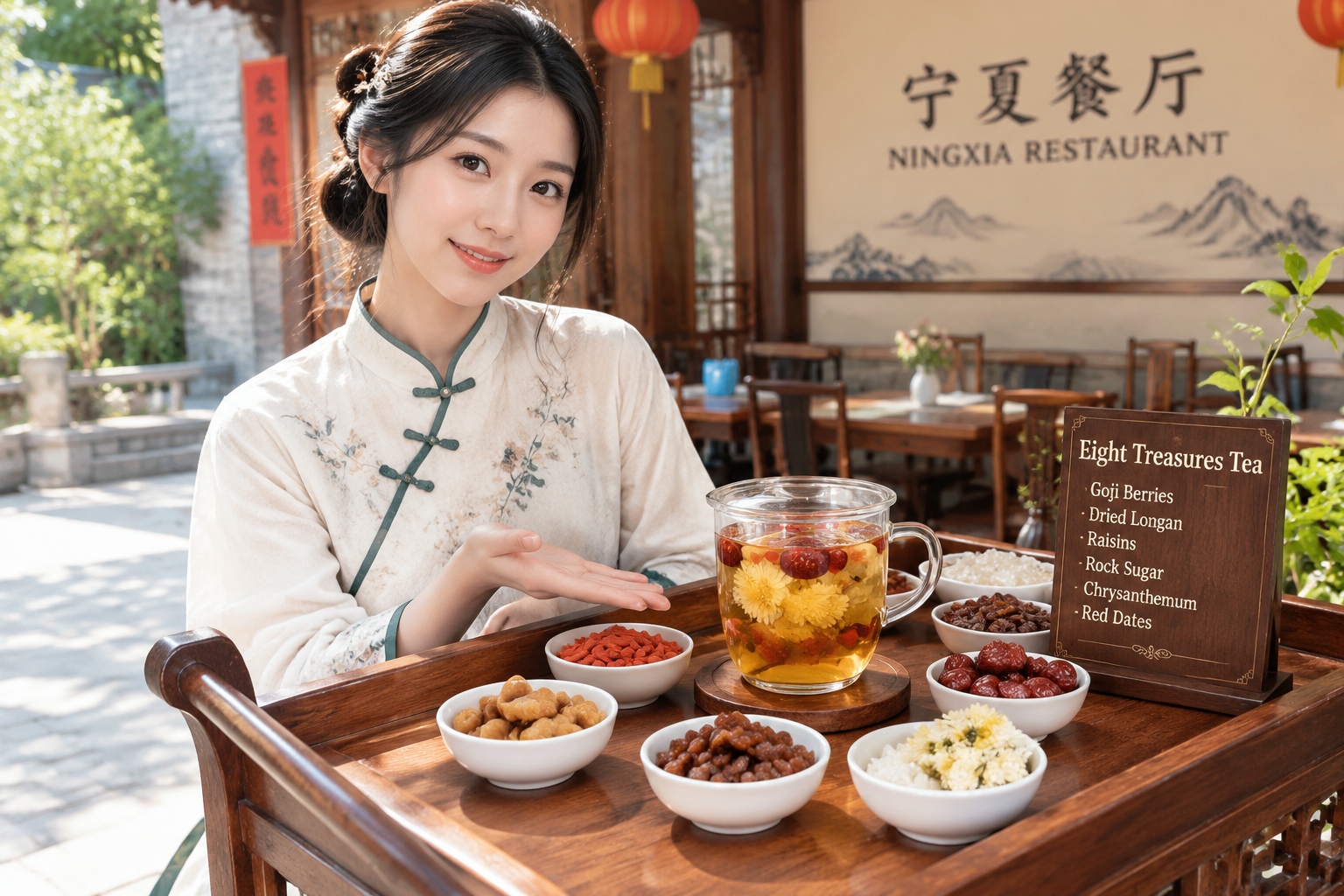
The two dishes above are non-negotiable. In the morning, go to a small shop that sells yangzasui and watch how the regulars order: “A big bowl, extra tripe, no cilantro.” At lunch or dinner, order hand-grabbed lamb and ask for it from Yanchi if you can. For a perfect local meal, pair it with eight-treasure tea — a sweet tea of goji berries, dried longan, raisins, rock sugar, chrysanthemum and red dates that cuts the richness of the meat.
One small warning: halal in Ningxia is serious. Do not bring pork snacks to a Hui restaurant or offer alcohol at the table. This is not about being politically correct; it is about respecting the local way of life. If you do, the hospitality you receive will be far warmer than you expect.
The Taste of a Place
Ningxia’s Hui food is not just fuel. It is a memory of merchants crossing deserts, a daily act of faith, and a way to stay warm in a harsh climate. The sheep organ soup tastes like sunrise in an open field. The hand-grabbed lamb tastes like family, stubbornness and pride. But you do not need to know any of that to enjoy it. All you need is a cold Wuzhong morning and a very empty stomach.
When you are ready, the northwest will hand you a bone.
Start the discussion at forum.chinacomes.com