

One Yuan, Total Freedom
I remember my first shared-bike ride in China. In the narrow, tree-lined lanes of Chengdu, I scanned the QR code on a blue bike with my phone, and the lock clicked open. That was it. No rental contract, no key deposit, no waiting in line. I pedaled away toward a nearby park, and the trip cost me around one yuan—roughly 15 US cents. For a tourist or a resident, that cheap access opens the whole city.
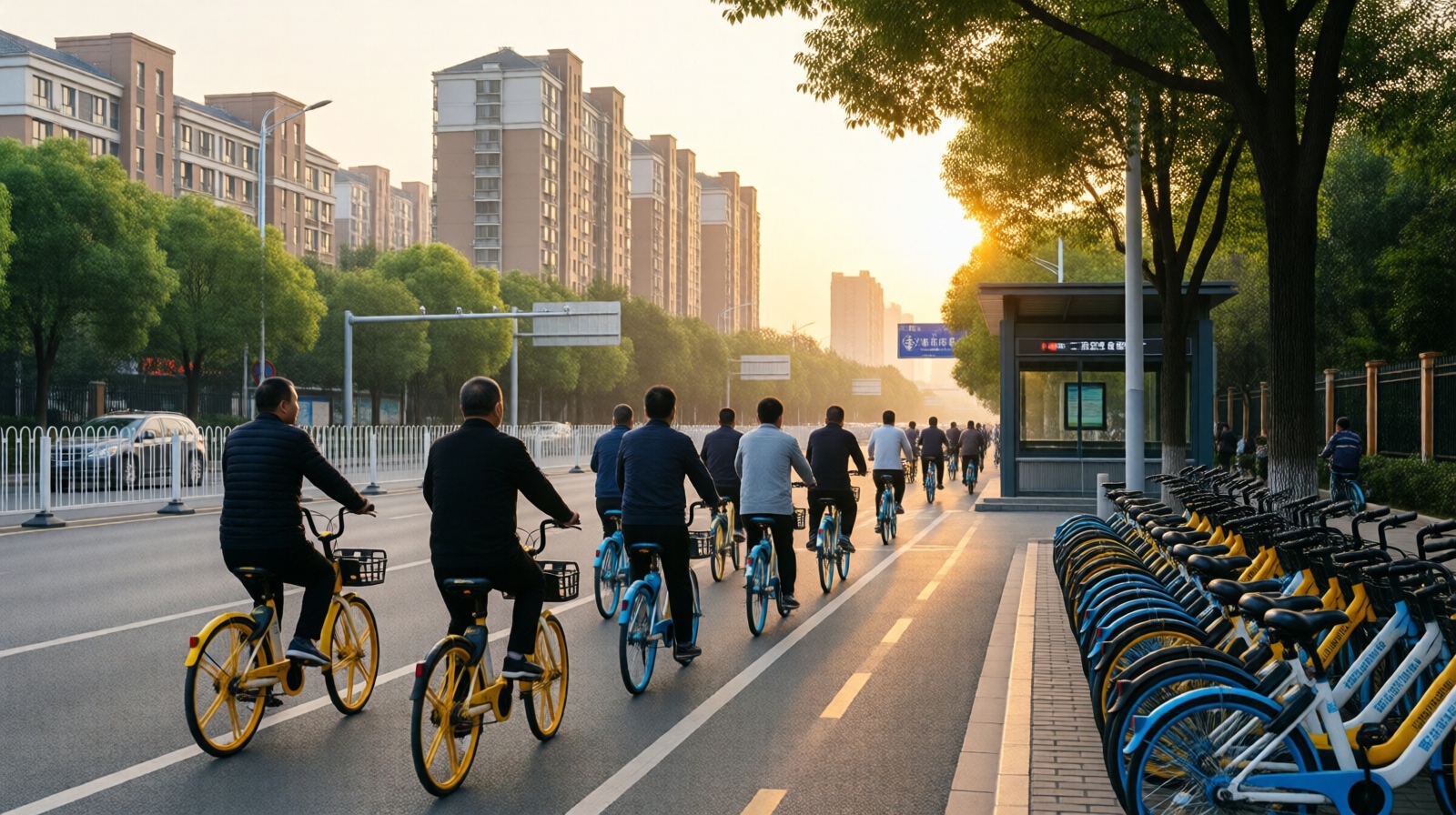
Shared bikes have been woven into everyday life across China. Yellow Meituan bikes, blue Hello bikes, and green Qingju bikes line street corners, subway stations, and residential gates. They solve the ‘last kilometer’ problem—the awkward distance between a transit stop and your destination. But beyond convenience, they’ve created a new kind of urban freedom.
The Scale of the Bike Wave
Numbers help explain the phenomenon. In Beijing and Shanghai alone, shared bikes handle millions of trips every day. Nationwide, the annual total reaches hundreds of billions of rides. For many residents, opening a bike as you exit the metro is as natural as pulling out a phone.
What surprises many visitors is the price. A typical half-hour ride costs only 1.5 yuan (about 20 US cents). Monthly passes, for around 15 to 20 yuan, make unlimited short rides even more budget-friendly. That’s why people don’t think twice before unlocking a bike for a 10-minute errand.
How to Use Shared Bikes: Step by Step
The system is designed to be easy, but knowing a few details helps, especially if you’re a first-time visitor.
Download the App or a Mini Program
There are three main operators: Meituan Bike (yellow), Hello Bike (blue), and Qingju Bike (green). You can download their apps, but the fastest route is to open a mini program inside WeChat or Alipay. These payment platforms are everywhere, so you can often start riding without even creating a new account for each bike brand.
Scan and Ride
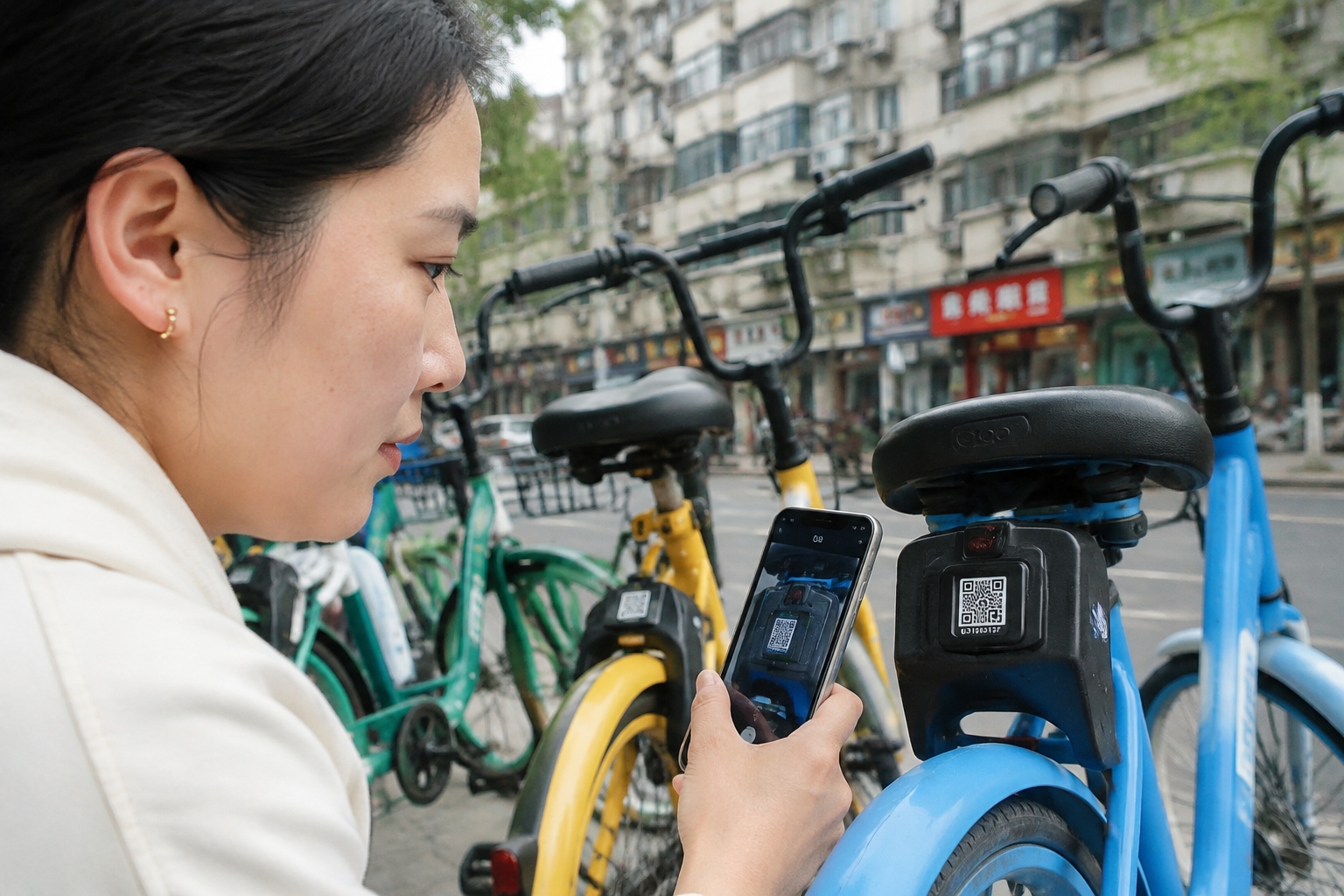
Walk up to any available bike, open the app’s scanning tool, and point the camera at the QR code on the lock or bike frame. In a second, the lock clicks and the bike is yours. The app tracks your trip and might even display your route on a small map.
Park and Pay
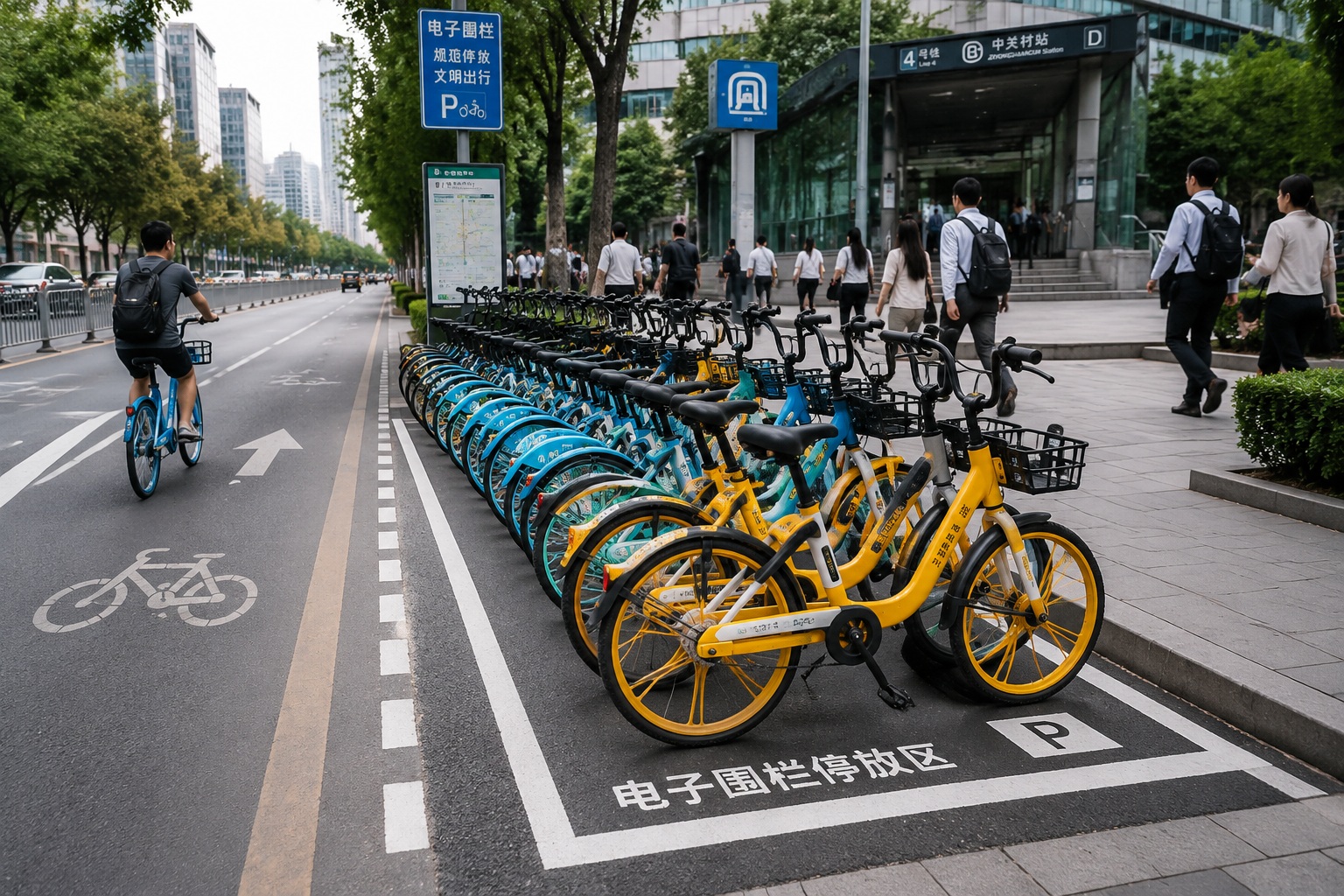
When you arrive, you need to find a designated parking spot. Open the app map and look for a large ‘P’ icon or a shaded area. Those are the legal parking zones. Once you lock the bike inside that zone, the trip ends and the fee is automatically deducted from your digital wallet. If you lock outside, you will get an extra charge, usually 5 to 10 yuan.
It’s that simple.
The Unwritten Rules: P Zones and Electronic Fences
One crucial thing that surprises foreigners is that you can’t park just anywhere. A decade ago, shared bikes were left on every pavement, causing chaos. In response, cities and bike companies introduced electronic fences, which are software-defined parking zones. Today, in most areas, you must lock the bike inside a P point.
Check the app’s map—P zones are located near subway stations, office buildings, residential neighborhoods, and shopping areas. If you see a cluster of bikes neatly arranged, that’s almost always a valid P point. Following this rule keeps streets tidy and saves you money.
Staying Safe in the Crowded Streets
Chinese city traffic can look intense, but cycling is safer than you might expect. Many cities have dedicated bike lanes, sometimes physically separated from cars. Ride in the bike lane and follow the traffic signals. At intersections, some cities have separate signals for bicycles. Cars generally yield to cyclists, but it’s wise to make eye contact with drivers at turning points.
Try to avoid riding on the sidewalk, especially where it’s crowded. Stick to the road and follow the flow. Riding with confident locals is the best way to learn.
Best Cities for a Shared-Bike Trip
Shared bikes cover almost every Chinese city, but some are especially enjoyable to explore by pedal:
- Chengdu: Flat, relaxed, and full of green bike lanes. Many cyclists call it China’s most bike-friendly big city.
- Beijing: The city is building more bike lanes every year, and riding through the hutong alleys is an unforgettable way to meet local life.
- Hangzhou: The pioneer of bike-sharing, with West Lake as a magnificent payoff.
- Xiamen: A green coastal city with a dedicated shoreline bike path. Sea breeze on both sides.
- Shanghai: The former French Concession offers shaded, elegant boulevards, and the West Bund river path is perfect for a leisurely ride.
Rider Stories: From Commuters to Explorers
The bikes belong to everyone. In Hangzhou, I watched a woman in her 50s load a bag of vegetables onto the front basket of a Hello bike. She told me she uses it every morning to buy groceries: ‘Faster than walking and cheaper than taking the bus.’
In Beijing, a commuting office worker told me he rides about ten minutes to the subway, and ten minutes again on the other side. ‘It adds up to 20 minutes of exercise a day,’ he said, ‘but it saves me 40 minutes compared to walking or waiting for a bus.’
Tourists often find the bikes addictive. A young German traveler I met in Guangzhou described how she followed the river and ended up at Shamian Island, a historical Bund area. ‘I kept stopping for iced coffee because the ride was so pleasant and cheap.’
Beyond Convenience: The Bigger Impact
Shared bikes don’t just save money. They replace very short car trips, reducing traffic congestion and carbon emissions. City planners now integrate cycling with public transport, adding bike lanes, parking hubs, and bike-friendly policies.
Of course, the system has flaws—broken bikes and overcrowded racks happen. But companies rebalance and repair fleets continuously, and the overall shift to shared bikes has made many streets quieter and more liveable.
For visitors, a shared bike is one of the easiest, cheapest ways to feel the real China. Next time you cross a Chinese city, scan a bike and join the flow. For that one yuan, you’re not just renting a ride—you’re buying a moment of freedom in the life of the city.
Start the discussion at forum.chinacomes.com