
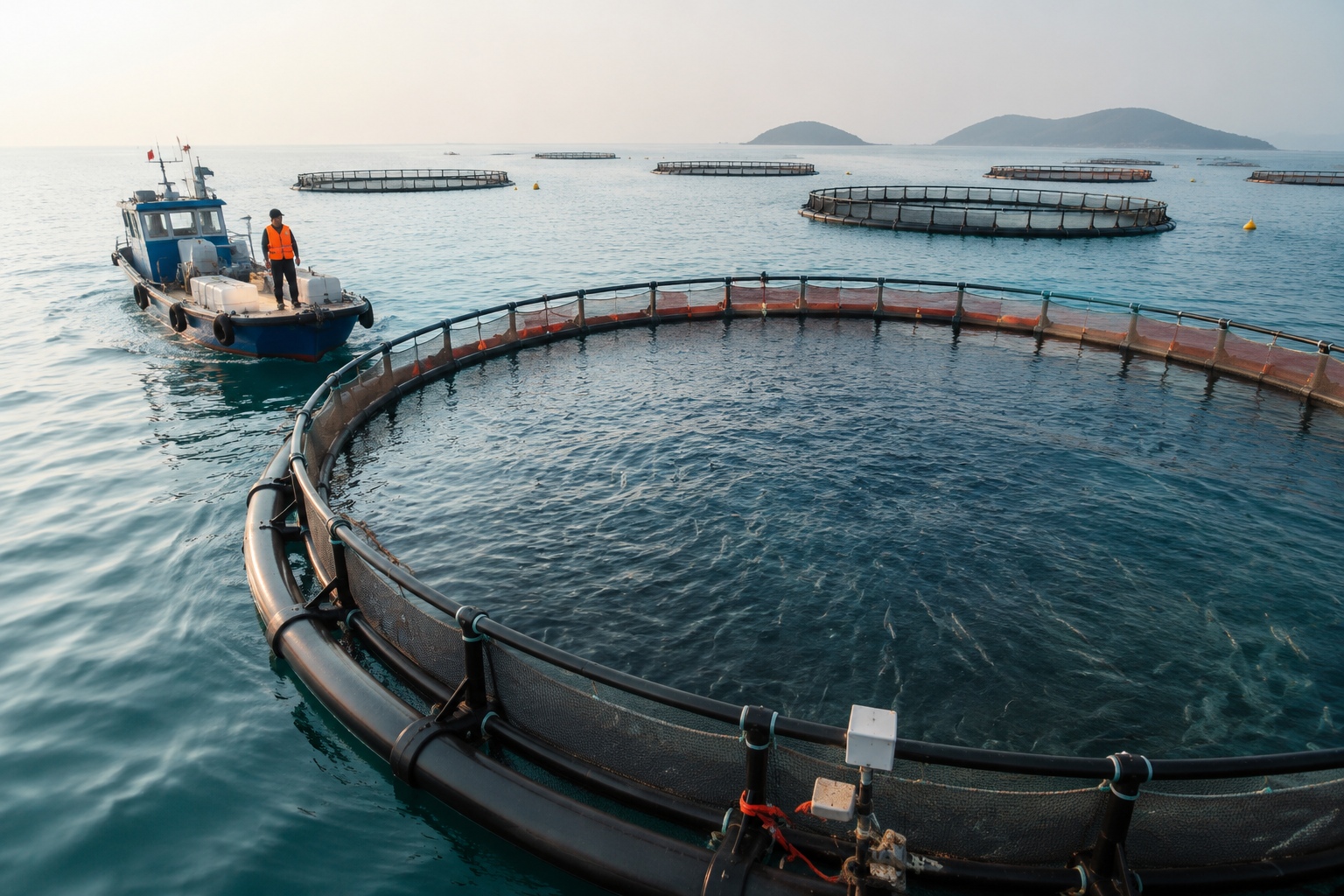

A Morning on a Modern Fish Farm
At 6 a.m., off the coast of Yantai, a fisherman named Wang Qiang checks his smartphone before he even steps onto his boat. A map on the screen shows water temperature, oxygen levels, and the position of fish tagged with sensors in cages far below the surface. A few minutes later, his boat reaches a cluster of yellow circular nets that stretch 40 meters across. With a tap on his phone, an automatic feeder scatters pellets into the water. “We used to rely on luck and hard labor,” he says. “Now we rely on data.”
This is not the China of cheap plastic toys and copycat products. It’s a different story unfolding in the ocean off Shandong Province, where the government and local communities are building what they call a “blue granary” — a massive network of marine ranches and offshore farms designed to feed a nation without emptying the sea.
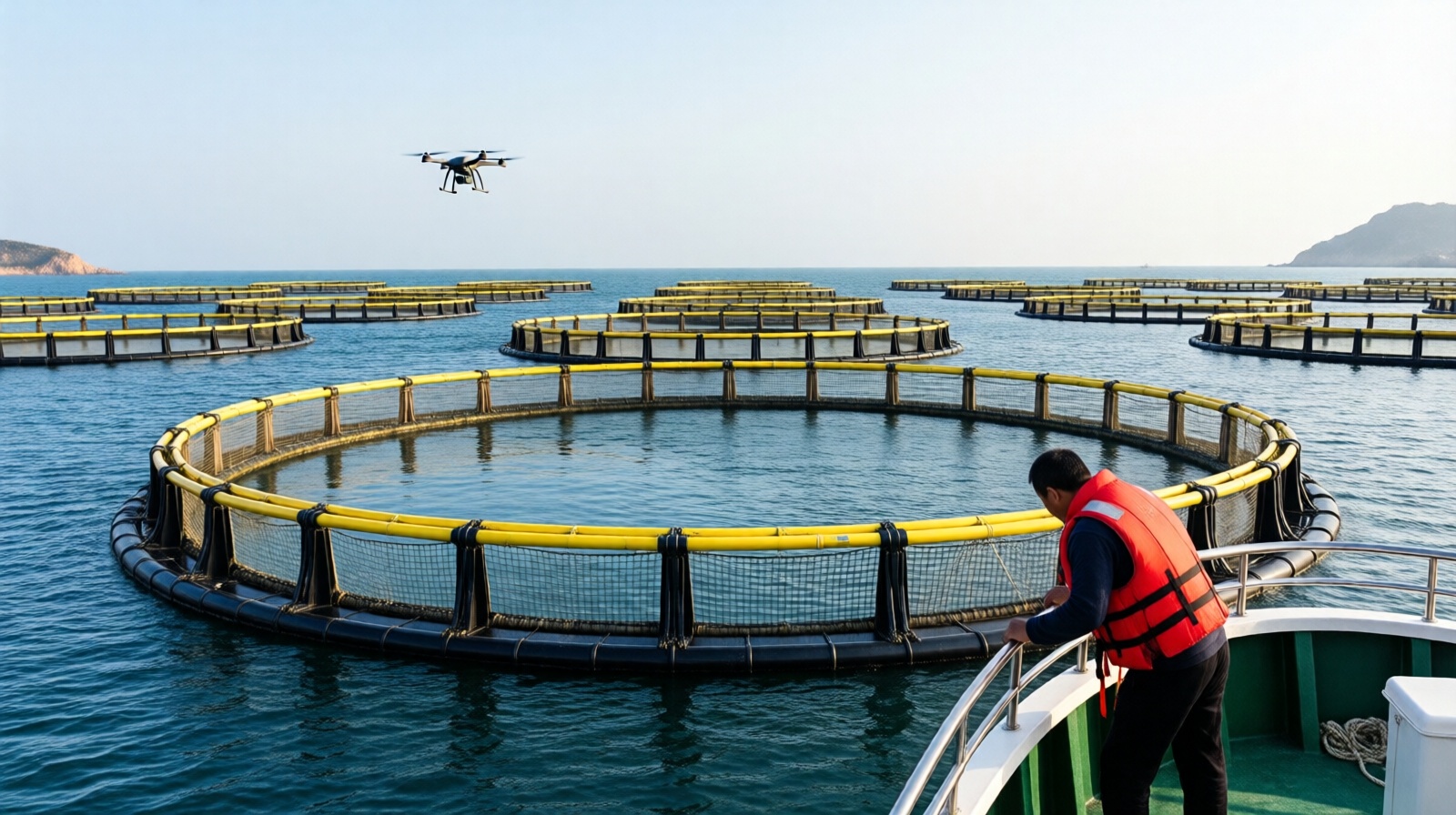
What Is a Marine Ranch?
A marine ranch is an area of ocean where humans actively manage the ecosystem to boost seafood production. It’s a mix of traditional aquaculture and modern technology. In China, these ranches often include rows of cages, artificial reefs on the seafloor that give fish places to hide and feed, and regular release of juvenile fish. Unlike old-style fish farms that pollute and overcrowd, marine ranches aim to work with nature.
Shandong is the leading province for this approach. The region has more than 60 national-level marine ranch demonstration areas, the most in China. These areas cover a coastline dotted with fishing villages, port cities, and open water.
Why “Blue Granary” Matters
The term “blue granary” comes from the idea that the ocean can be as important as farmland in feeding China’s 1.4 billion people. With pressure on land resources, the sea offers a new frontier. Fisheries already provide about 20 percent of China’s animal protein, and the ocean can produce even more if managed well.
But it’s not just about quantity. Wild fish stocks in the South China Sea and beyond have been overfished for decades. By farming in open water and restoring habitats, China wants to reduce pressure on wild populations while still meeting demand for seafood.
Shandong’s Answer: From Simple Cages to Smart Ships
Shandong’s marine ranches have evolved quickly. In the past, farmers used wooden rafts and small nets near the shore. Today, the province operates some of the world’s most advanced aquaculture equipment.
Take the “Shenlan No. 1” (Deep Blue No. 1), a giant submersible cage used to farm Atlantic salmon in the Yellow Sea. It’s anchored in open water, far from the coast, and can be raised or lowered to adjust to temperature changes. In 2018, it produced the first batch of salmon grown in China’s open waters, a technical breakthrough.
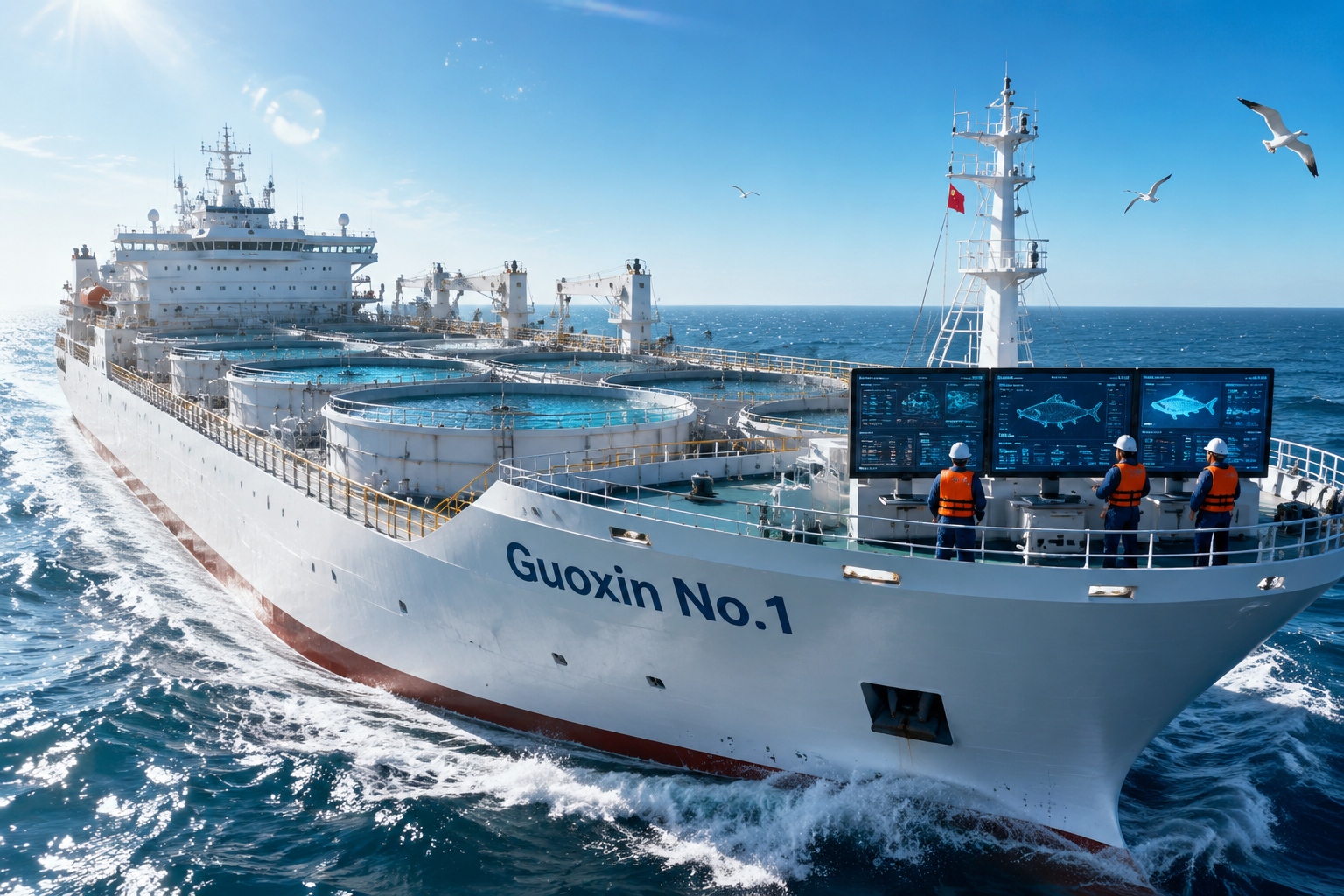
Even more impressive is the “Guoxin No. 1,” a 100,000-ton ship that acts as a floating fish farm. Launched in 2022, this ship travels around the Yellow Sea, using tanks inside the hull to raise yellow croaker. Because the ship moves, it can find the best water conditions, avoiding algae blooms and typhoons. A single ship can produce about 3,700 tons of fish per year — equivalent to the output of a mid-sized traditional fish farm.
Technology on Deck
These operations are supported by an ecosystem of tech start-ups. Drones monitor water quality from above. Underwater robots fix nets. AI algorithms predict disease risk. A growing number of young engineers are leaving office jobs in Beijing and Shanghai to work on these “farm ships.”
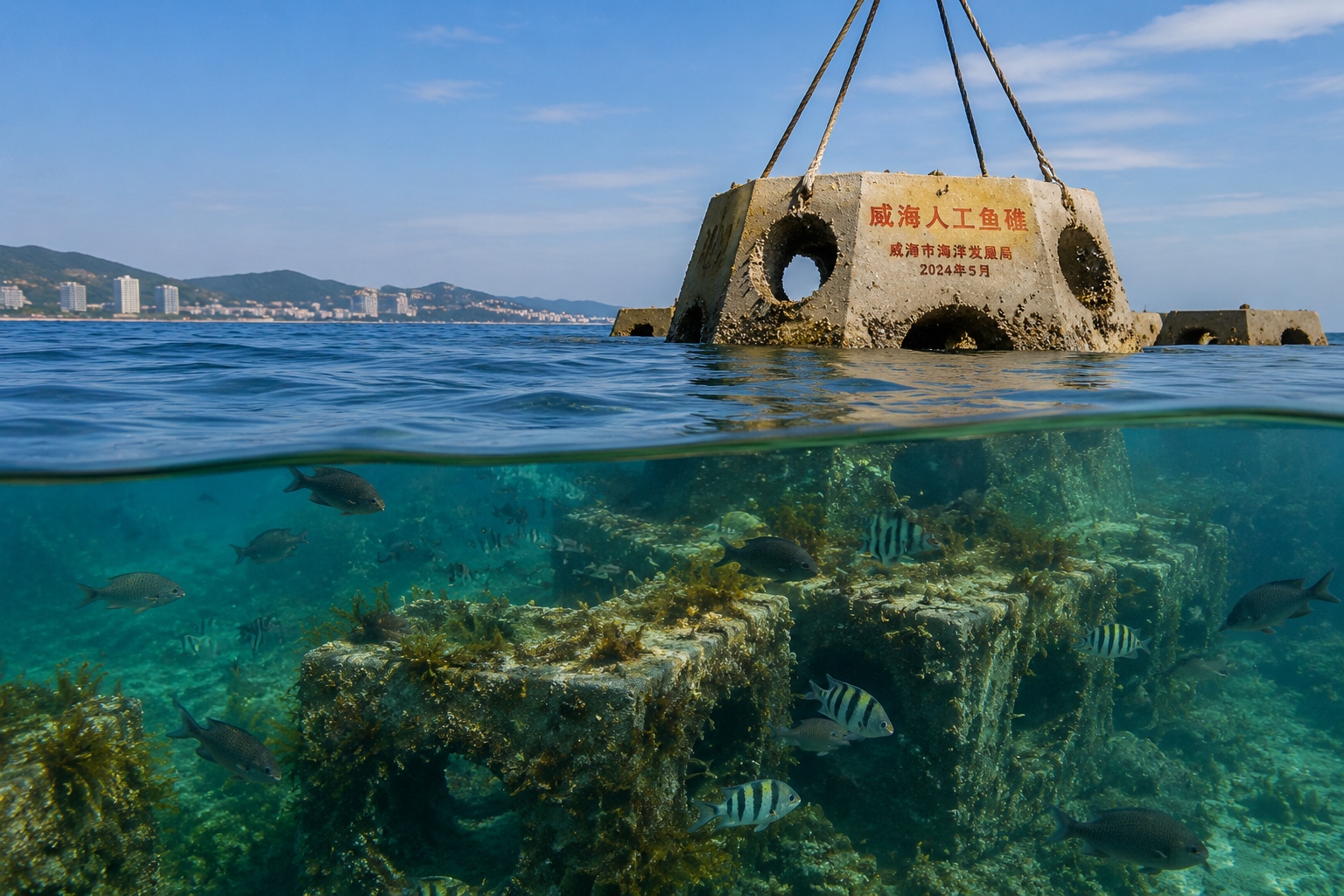
Bringing the Ocean Back to Life
Marine ranches aren’t just about cages. They also involve ecological restoration. In many areas, workers drop concrete structures and old ship hulls into the sea to create artificial reefs. Plants and animals attach quickly, turning barren sand into underwater forests. These reefs attract fish, and local fishers say their catch has improved.
Take the area near Weihai, where 500 hectares of artificial reefs have been built. Researchers found that fish numbers doubled within five years. The reefs also support seaweed and shellfish, which filter the water and absorb carbon dioxide. It’s a small but visible sign of recovery.
What This Means for Ordinary People
For residents, the blue granary means fresh seafood at the market and more jobs. In coastal villages, many people have shifted from wild fishing to controlled farming. That change has brought steadier incomes. A typical seaweed or abalone farmer can earn 80,000 to 120,000 yuan a year (roughly $11,000 to $17,000), depending on the season.
It also means tourism. Visitors can now take boat trips to marine ranch platforms, where they see how fish are raised, feed them by hand, and taste products right out of the water. This “sea tourism” has become popular with young Chinese families.
“I never thought I’d take my kids to a farm in the ocean,” one tourist from Beijing told me during a visit to a ranch near Qingdao. “They learned more about where fish comes from than any classroom lesson.”
Challenges Ahead
Despite the optimism, this transformation isn’t easy. Building and maintaining offshore equipment is expensive. A single deep-sea cage can cost tens of millions of yuan. Heat waves and typhoons, both becoming more frequent with climate change, can wipe out an entire harvest. And some environmental groups worry that even these “smart” farms can still produce waste and require wild-caught fish for feed.
“We are making progress, but we must be honest about limits,” said a marine scientist at the Chinese Academy of Fishery Sciences, who declined to be named. “The blue granary is not a magic bullet.”
The Future of the Blue Granary
Shandong’s experiment is being watched by the rest of China and the world. The province plans to expand its aquaculture area by 30 percent by 2030, with a focus on deep-sea sites. Similar projects are starting in Fujian, Guangdong, and Hainan. If these marine ranches prove that we can farm the open ocean sustainably, they could become a model for a planet that needs more protein with less environmental damage.
For now, the fishermen of Yantai are simply doing what their ancestors did — going out to the sea to bring back food. But they’re doing it with sensors, submersibles, and a rare sense of hope. The ocean has always fed China. Now, with smarter tools, it might feed even more.
Start the discussion at forum.chinacomes.com