

The Green Miracle in Winter
It is early January in Beijing. Outside, the temperature has dropped to minus 10 degrees Celsius, but in the produce aisle of a city supermarket, fresh cucumbers, plump tomatoes, and leafy greens sit in neat stacks. A shopper picks a package of cherry tomatoes, checks the label: it says “Shouguang, Shandong Province.” That is roughly 400 kilometers away, yet the tomatoes look like they were picked this morning.
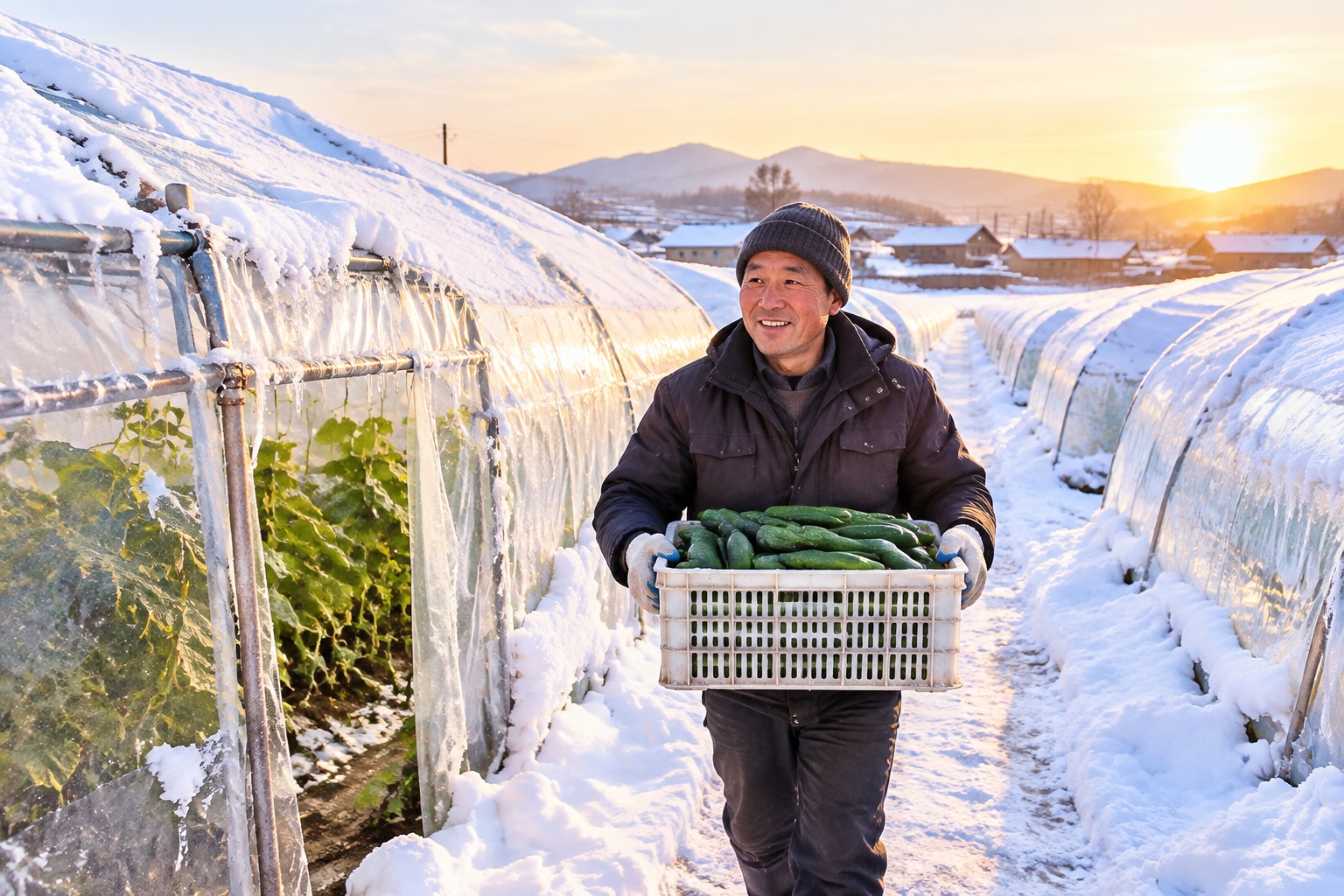
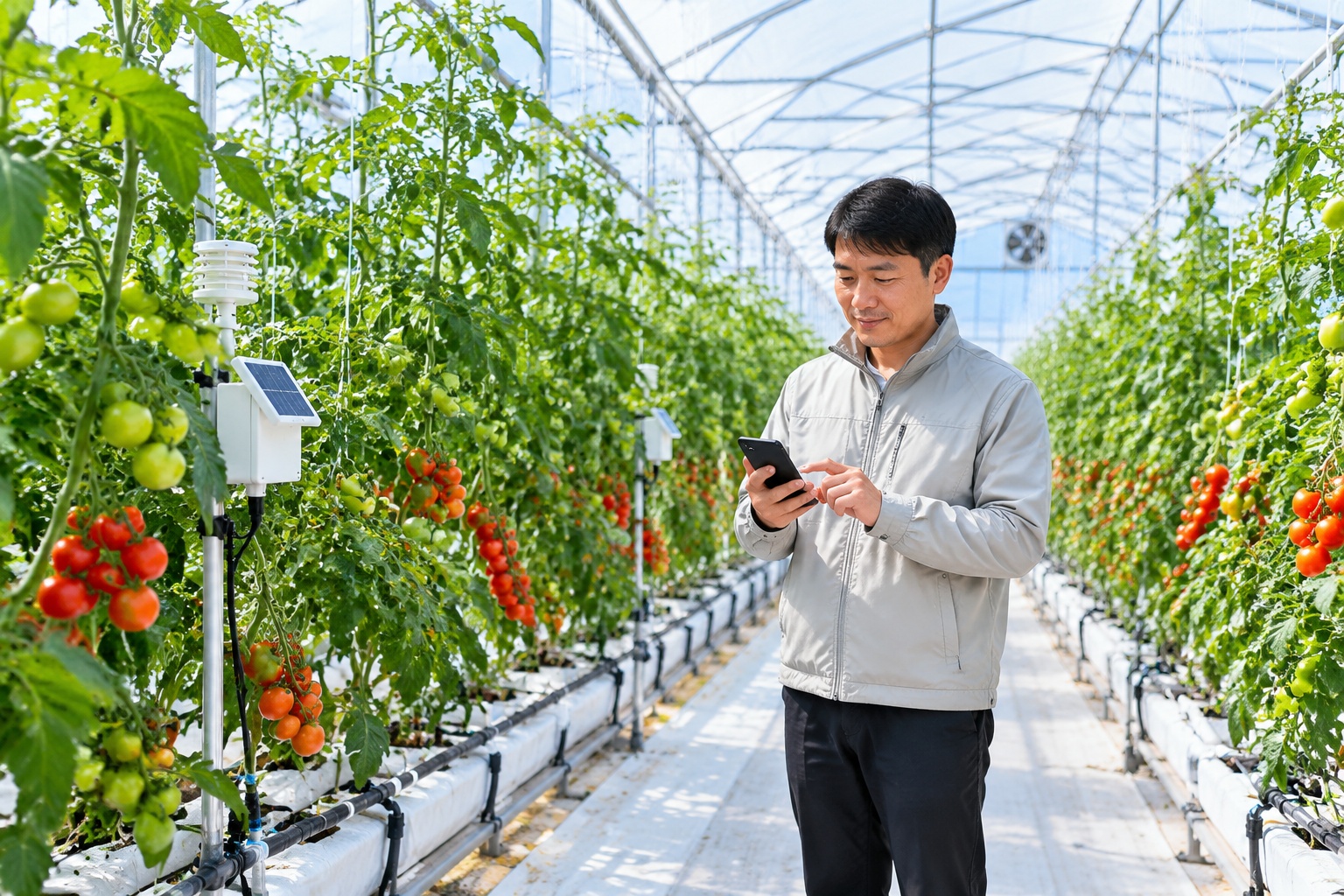
This is not a coincidence. Shandong, a coastal province in eastern China, supplies about 14 percent of all vegetables consumed in the country, according to official agriculture statistics. More important than the sheer volume is the way it is produced: millions of greenhouses, many of them in Shouguang, a county-level city often called China’s “Vegetable Capital.” These structures are not simple plastic tunnels. Many are sophisticated facilities where temperature, humidity, and light are controlled by sensors, and plants are watered and fed automatically.
The Scale of Shandong’s Greenhouse Empire
Take a drive through the flat farmland of Weifang, a prefecture that includes Shouguang, and you will see rows of white plastic arcs stretching to the horizon. In Shouguang alone, there are more than 200,000 greenhouses, covering an area roughly equal to 140,000 football fields. In total, Shandong produces over 80 million metric tons of vegetables annually; that is more than the entire amount exported by Mexico, the world’s third-largest vegetable exporter.
This scale did not happen overnight. In the 1980s, farmers experimented with low-cost plastic tunnels to grow vegetables in winter. The breakthrough came when local technicians developed a solar greenhouse that could keep growing without burning fuel, using thick brick walls to store heat during the day and release it at night. That design spread quickly across the province, and later to other parts of China.
Technology: From Simple Tunnels to Smart Greenhouses
Today, the most advanced greenhouses in Shandong are far from the improvised tunnels of the past. Inside a modern facility, sensors monitor soil moisture, sunlight, and air temperature. Data is sent to a central server, and an algorithm decides when to irrigate, when to vent the roof, and when to activate grow lights. Many operations use drone-sized robotic devices on overhead rails to spray bio-pesticides or pollinate plants. Farmers can monitor everything from a smartphone app, even if they are at home having tea.
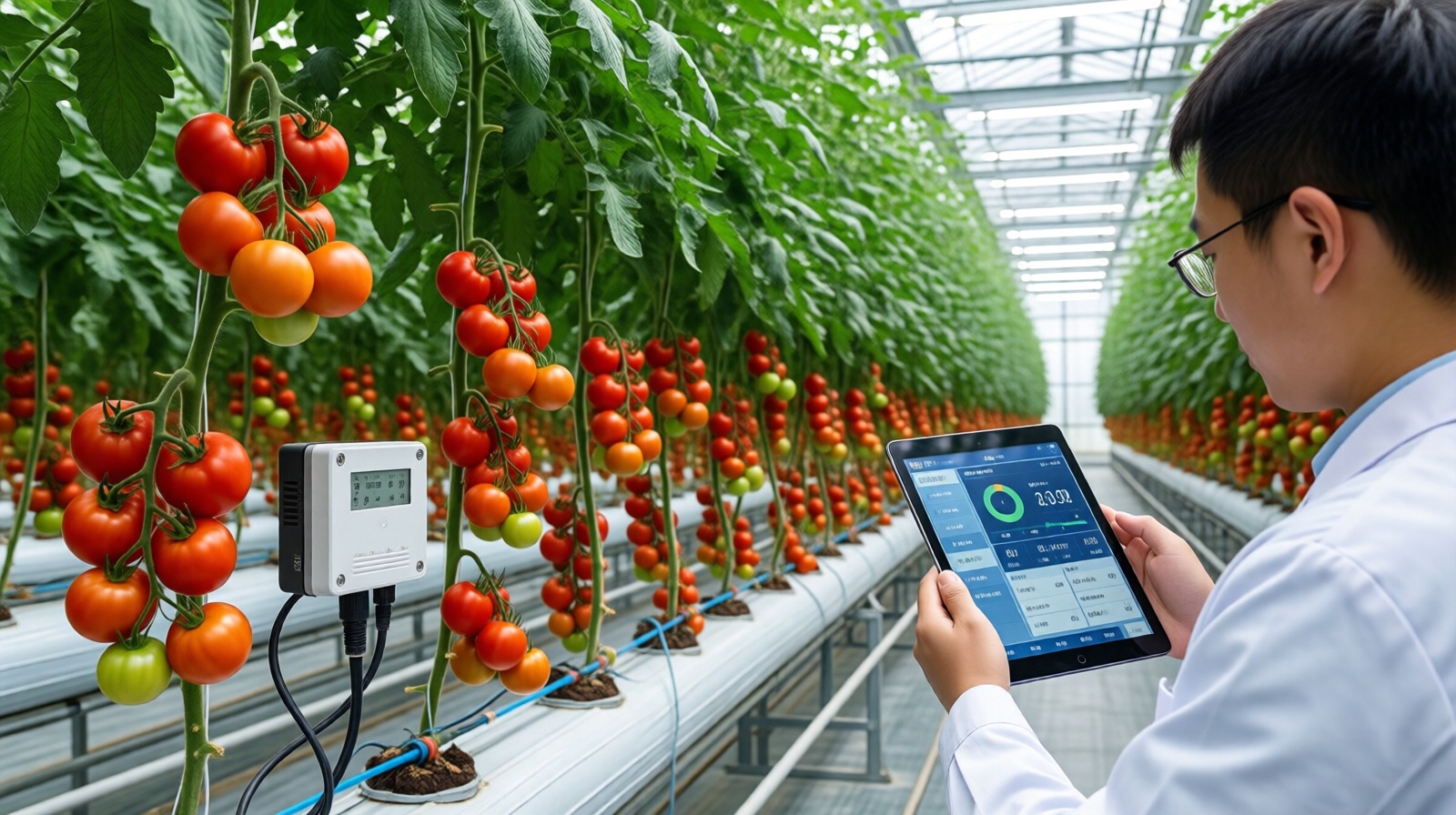
The technology is not just for show. In Shouguang, the average yield of tomatoes per hectare is about twice the national average. Water use per kilogram of vegetables has been cut by half compared with traditional open-field farming, thanks to drip irrigation and water recycling systems. And because the greenhouses are sealed, the need for chemical pesticides drops dramatically, which is good news for both consumers and the local environment.
The Logistics Machine: Getting Fresh Greens to 1.4 Billion People
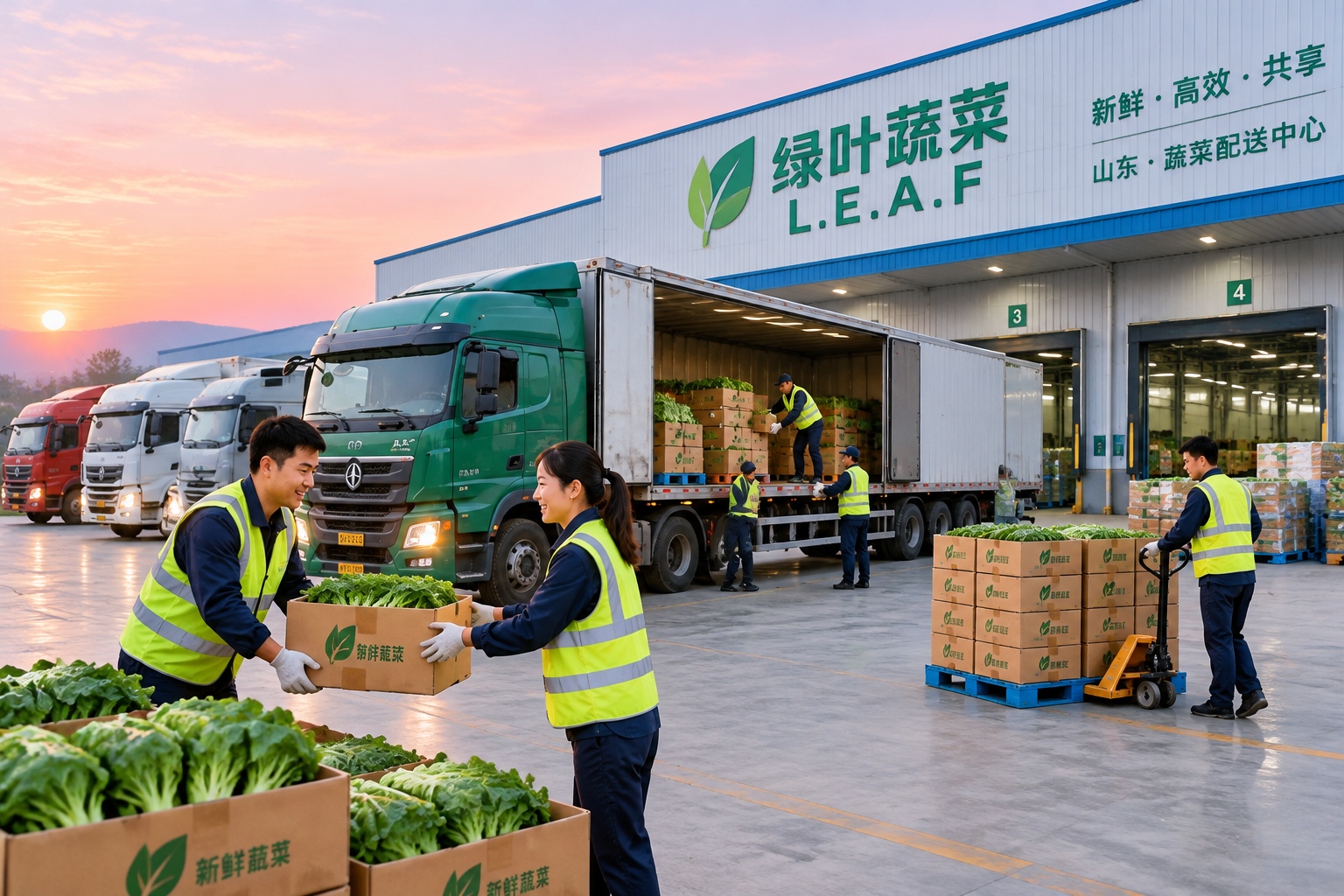
Producing vegetables is only half the story. China’s cities are huge, and the distance from farm to plate can be thousands of kilometers. Shandong’s answer is a logistics network that moves produce overnight. Every evening, trucks loaded with freshly harvested vegetables leave distribution centers in Shouguang and other growing areas, heading toward wholesale markets in Beijing, Shanghai, Guangzhou, and beyond. Many of these trucks are equipped with refrigeration units that keep the temperature at precisely 2-4 degrees Celsius.
The journey from a Shouguang greenhouse to a Beijing restaurant table takes around 14 hours. On major highways, agricultural products have dedicated fast lanes, bypassing congestion. In addition, the rise of e-commerce platforms like Pinduoduo and JD.com has allowed consumers to order vegetables directly from Shandong farms, with delivery arriving within a day. One result is that fresh greens are no longer seasonal in China’s cities. Chinese people now consume an average of 400 kilograms of vegetables per person per year, one of the highest levels in the world, and they can usually find 30 different kinds of vegetables in any urban supermarket, regardless of season.
The People Behind the Glass
Behind this giant food system are millions of farmers who have turned greenhouse work into a skilled profession. In Shouguang, many farming households have been growing vegetables for three decades. They know when to adjust the angle of a vent or how to spot a nutrient deficiency from the color of a leaf. Professional teams are often hired to plant, prune, and pick, because greenhouse work is labor-intensive. Wages for greenhouse workers have risen in recent years, reflecting a shrinking rural workforce and the need for tech-savvy labor.
There are also younger returnees, university graduates who grew up on farms and came back with new ideas. They build “smart greenhouses” with loans from local governments and use livestreaming to sell their produce directly to consumers. One such farmer, Wang Yang, 29, started a small greenhouse in 2021 after working as a software engineer in Shenzhen. He shows off his phone: three taps after an app tells him to increase the soil acidity, and the drip irrigation system automatically adds a mild acid solution. “I grew up in a mud-walled greenhouse,” he says. “Now I grow vegetables with algorithms.”
Challenges and the Road Ahead
The greenhouse industry is not without problems. Early greenhouses often caused soil salinization because the same land was used again and again without rotation. Some areas face water shortages, forcing farmers to invest in water-saving systems. And the sector relies heavily on migrant workers, many of whom are older. As China’s population ages, finding enough hands for greenhouses is becoming harder.
To address these issues, Shandong is pushing toward “green and intelligent” agriculture. Old greenhouses are being upgraded with soil-less cultivation techniques, such as hydroponics and aeroponics. New industrial parks combine greenhouses with solar panels on the roof, generating clean energy while growing crops below. The province is also training a new generation of agricultural technicians through specialized schools and certification programs.
What This Means for the World
Shandong’s vegetable system offers a window into how China feeds itself on a massive scale. It is not just about agriculture; it is about the integration of technology, infrastructure, and market demand. While other countries may not adopt the exact same model, the underlying lesson is clear: with the right investment and innovation, a region can turn natural disadvantages like cold winters into opportunities for year-round production.
For consumers around the world, the images of snow-covered greenhouses in Shandong may be a reminder that the empty supermarkets during the early pandemic were not because of food shortages, but because of supply chain hiccups. Today, that supply chain has become even more robust. The next time you bite into a crisp cucumber in winter, take a moment to think about the thousands of greenhouses humming with data cables and water pipes across the plains of Shandong, quietly making sure the world’s most populous country never goes hungry.
Start the discussion at forum.chinacomes.com