
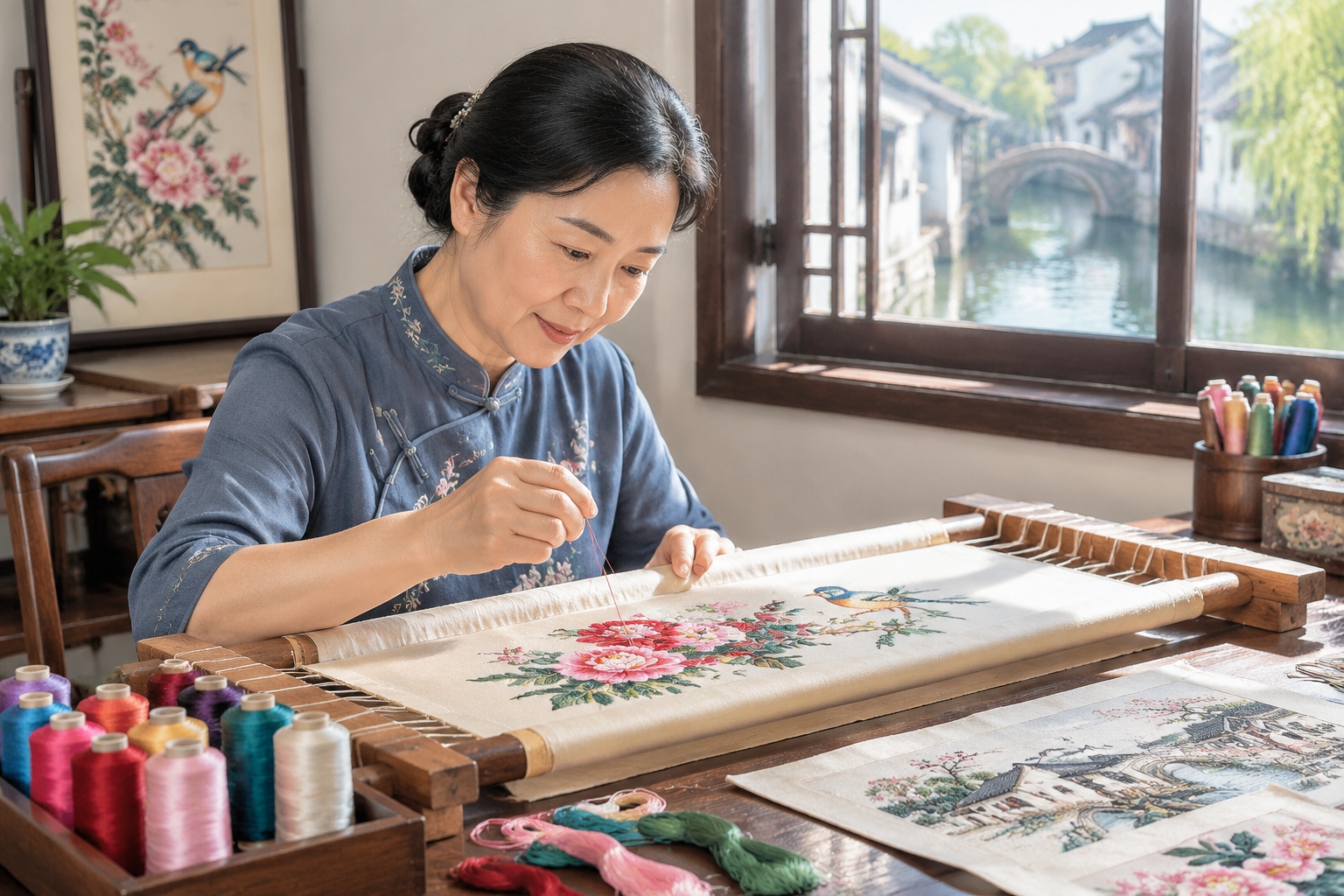

A Morning at the Embroidery Frame
The light in Chen Yan’s tiny studio in Zhenhu comes in slanting through the window at nine, just as she sits down at her frame. Around her, half-finished koi fish shimmer on silk, their scales catching a thread of sun. Chen, 34, has been embroidering since she was 12, following the rhythm of her mother’s hands. “My mother used to say that a good embroiderer must be a little like a fisherman — patient, quiet, and always watching for the moment something moves.”
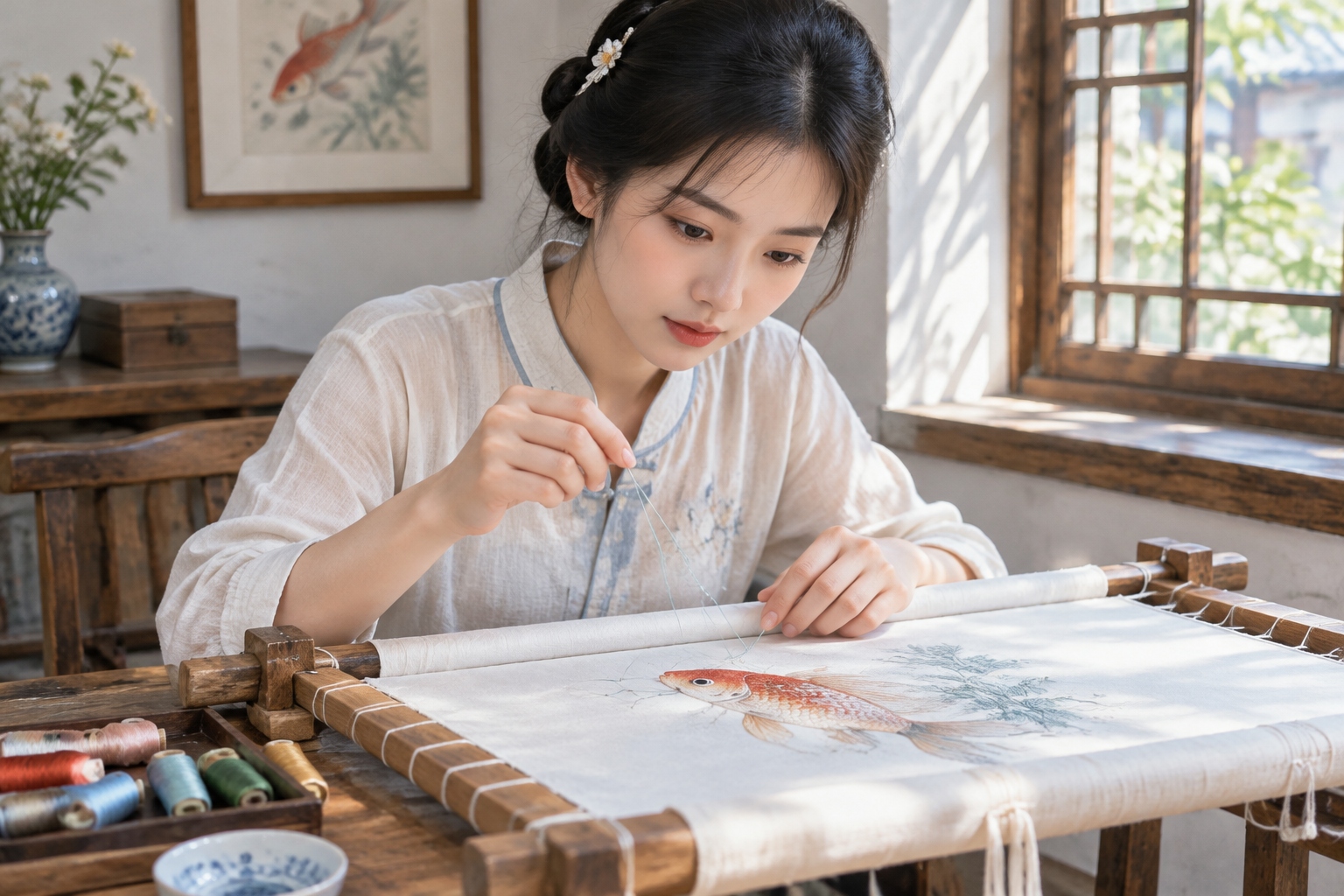
Chen’s home is in Zhenhu, a town on the southern edge of Suzhou that is famous for producing some of China’s most delicate needlework. For centuries, this region has supplied silk embroidery to the imperial court, and the craft still runs in the blood here. But today, it’s not just tradition. It’s a livelihood, an identity, and a surprisingly robust piece of Jiangsu’s modern cultural economy.
What Makes Suzhou Embroidery Special
Ask any embroiderer in Suzhou what sets their work apart, and they’ll start talking about patience. Suzhou embroidery is known for its fine, even stitches, its use of pale, lustrous silk threads, and a technique called “double-sided embroidery” where the back of the work looks as clean as the front. To get those floating, translucent petals or the glint of fish scales, the artist often splits a single silk thread into dozens of finer strands — each one barely visible to the eye.
- More than 40 stitch techniques are used.
- A single piece can take weeks or months.
- The best works are treated like paintings, not clothes.
The art traces its lineage to the Song dynasty, when Suzhou’s humid climate and mulberry groves made it a natural silk-producing hub. By the Ming dynasty, local embroiderers had developed a distinctive style marked by “flatness, evenness, fineness, and density.” The imperial court ordered robes and decorations from Suzhou workshops, and the region’s reputation grew. In the early 20th century, a new technique emerged: double-sided embroidery, where the image appears on both sides of the silk with no visible loose threads. It requires extraordinary skill and has become a signature of the craft.
In 2006, Suzhou embroidery was listed among China’s first batch of national intangible cultural heritage. But UNESCO recognition, as local artisans will tell you, doesn’t pay the electricity bill. What keeps the art alive is something less obvious: a quiet, thriving market for handmade things.
The Handmade Economy Behind the Art
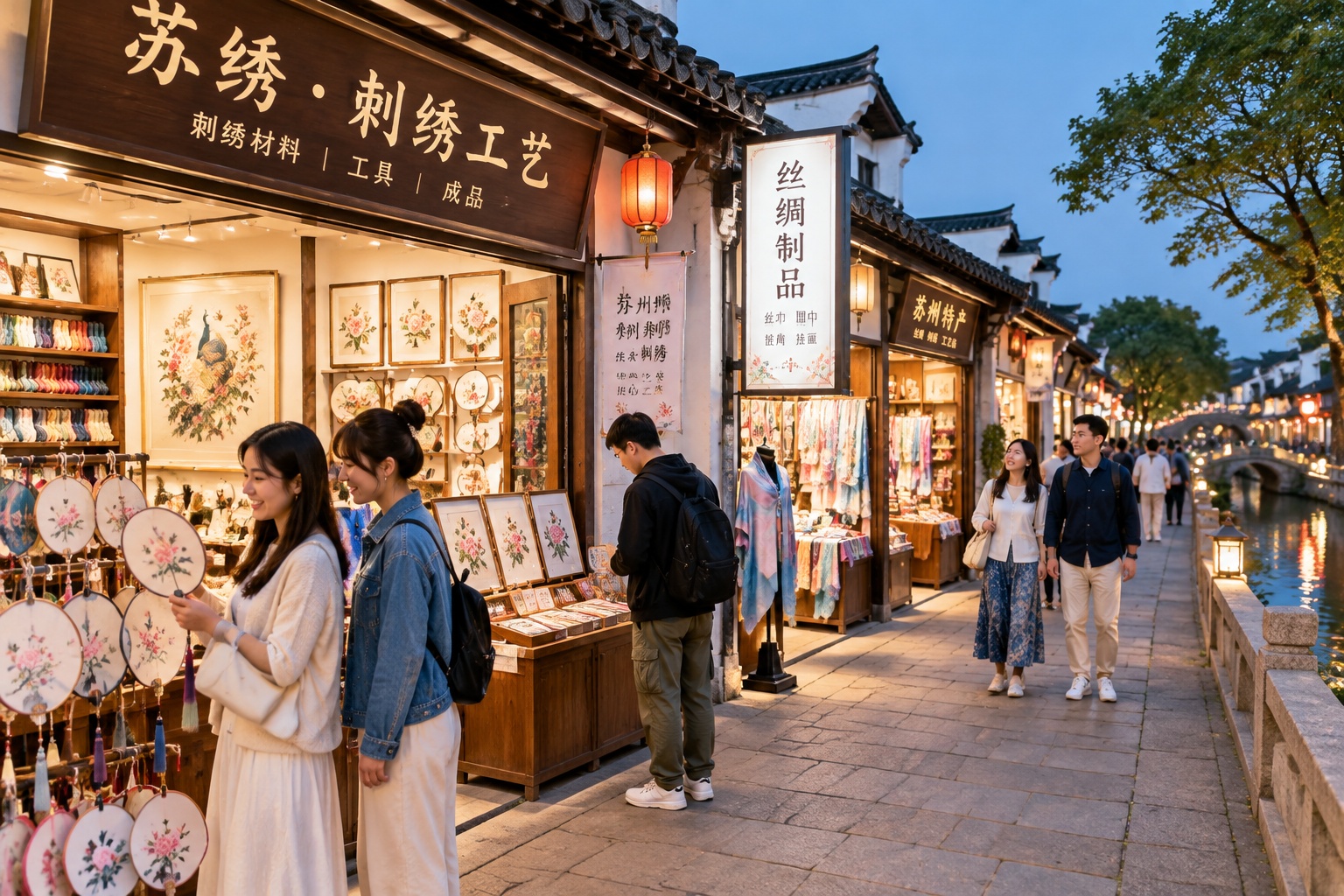
Zhenhu’s main road is lined with shops selling silk fabrics, kits, frames, and finished works. Behind them, thousands of homes have small workshops where mothers, daughters, and grandmothers work on commission. The town’s embroidery industry is estimated to employ more than 30,000 people, according to local government reports, generating an annual output value in the billions of yuan.
Chen Yan belongs to a new generation of embroiderers who sell directly online. She still makes traditional pieces, but she also takes custom orders from young couples who want a modern abstract design on a canvas hoop, or brides who ask for their wedding invitation embroidered as a keepsake. “People buy emotion,” she says. “The craft is the same as my mother’s, but the packaging is different.”
The handmade economy here is not confined to the town. Nearby studios in Suzhou’s old city have turned embroidery into a high-end cultural experience. Visitors can book a half-day class, learn a few stitches, and take home a small hoop as a souvenir. Some workshops offer tea and calligraphy while you stitch, turning a traditional factory-floor skill into an immersive experience for urban dwellers and tourists.
From Local Craft to Global Brand
Suzhou embroidery has been shown at international exhibitions from the Venice Biennale to the Shanghai Expo. It appears in couture collections, luxury hotels, and concept stores from Paris to Tokyo. Jiangsu’s provincial government has helped promote the craft as a cultural brand, sending delegations to trade fairs and giving subsidies to apprentices who sign on for multi-year training.
One notable example is the “Suzhou Craft” label, developed by local art institutions, which certifies authentic hand-embroidered products. It allows buyers to tell a genuine piece apart from a cheap machine replica, and it lets embroiderers charge a fair price for their labor. The certification program, paired with modern packaging and online storytelling, has helped raise awareness beyond China’s borders. A silk fan embroidered with a peony can now be found in a boutique in Los Angeles; a custom portrait in thread might hang in a living room in Milan.
Can the Art Survive the Machine Age?
Yes, machine-made embroidery is faster and cheaper. A simple machine-stitched panel can cost one-tenth of a handmade work. But many buyers still seek out the human touch. The slight unevenness, the play of thread tension, even the hours of a person’s life buried in every square inch — these make the artifact feel alive.
Younger people are returning to the craft with new energy. Chen’s apprentice, 24-year-old Lin Wei, is an art school graduate who now runs her own studio selling embroidered products on social media. “My friends initially thought I was crazy to come back to the small town,” Lin says. “But I see more freedom here than in a city office. And people around the country want what I make.” Her clients include a young Shanghai couple who commissioned an embroidered map of their first trip together, and a Beijing café that ordered a set of embroidered coasters for its interior.
The Evening Hustle and the Living Culture
When evening falls, Zhenhu’s main street fills with tourists taking photos of shopfronts glowing warm against the dusk. In a local teahouse, an older woman teaches a group of schoolgirls how to hoop their first stitches. She isn’t a certified teacher; she’s just a neighbor who knows the old ways. And that, perhaps, is the real strength of this handmade economy. It doesn’t live in a museum behind glass. It lives on kitchen tables, in small workplaces, and on the phones where a craftswoman shows her newest piece to a customer thousands of miles away.
A few blocks away, Chen Yan is still at her frame, turning a strand of thread into movement. She works slowly, savoring each stitch. “Every time I finish a piece, I think of my mother’s hands,” she says. “I don’t know if I can teach that to a machine. But I can teach it to a person.”
Start the discussion at forum.chinacomes.com