

A Morning in the Mountains
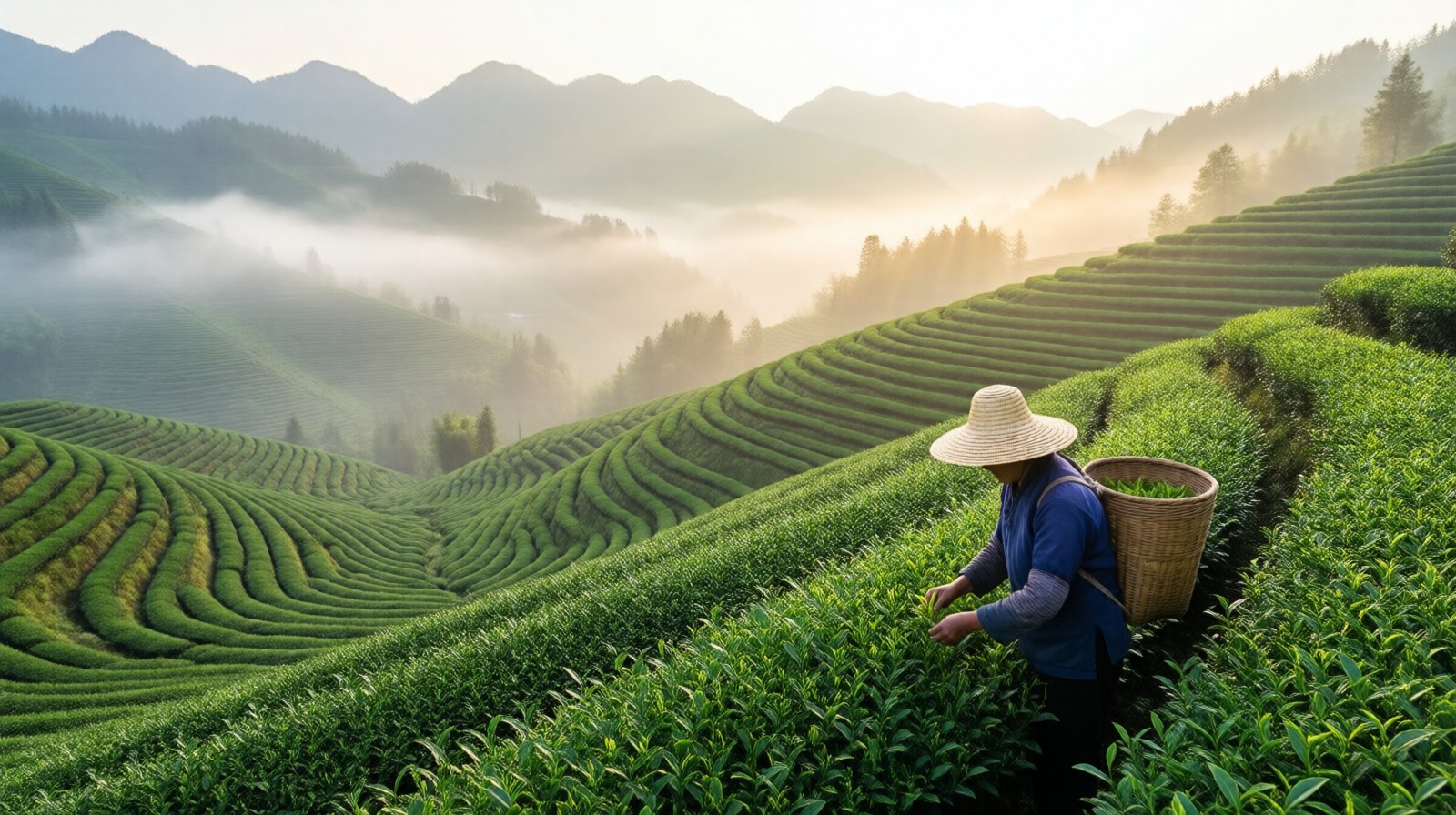
The alarm goes off at 5:30, but Liu Fang is already awake. She pulls on a thin jacket and walks out into the cool, damp air of the Guizhou hills. The sun hasn’t risen over the ridges yet, and the tea bushes are still wrapped in mist. Liu doesn’t have to rush. She knows that the best tea leaves are picked in the early morning, when the dew is still fresh and the leaves are full of life.
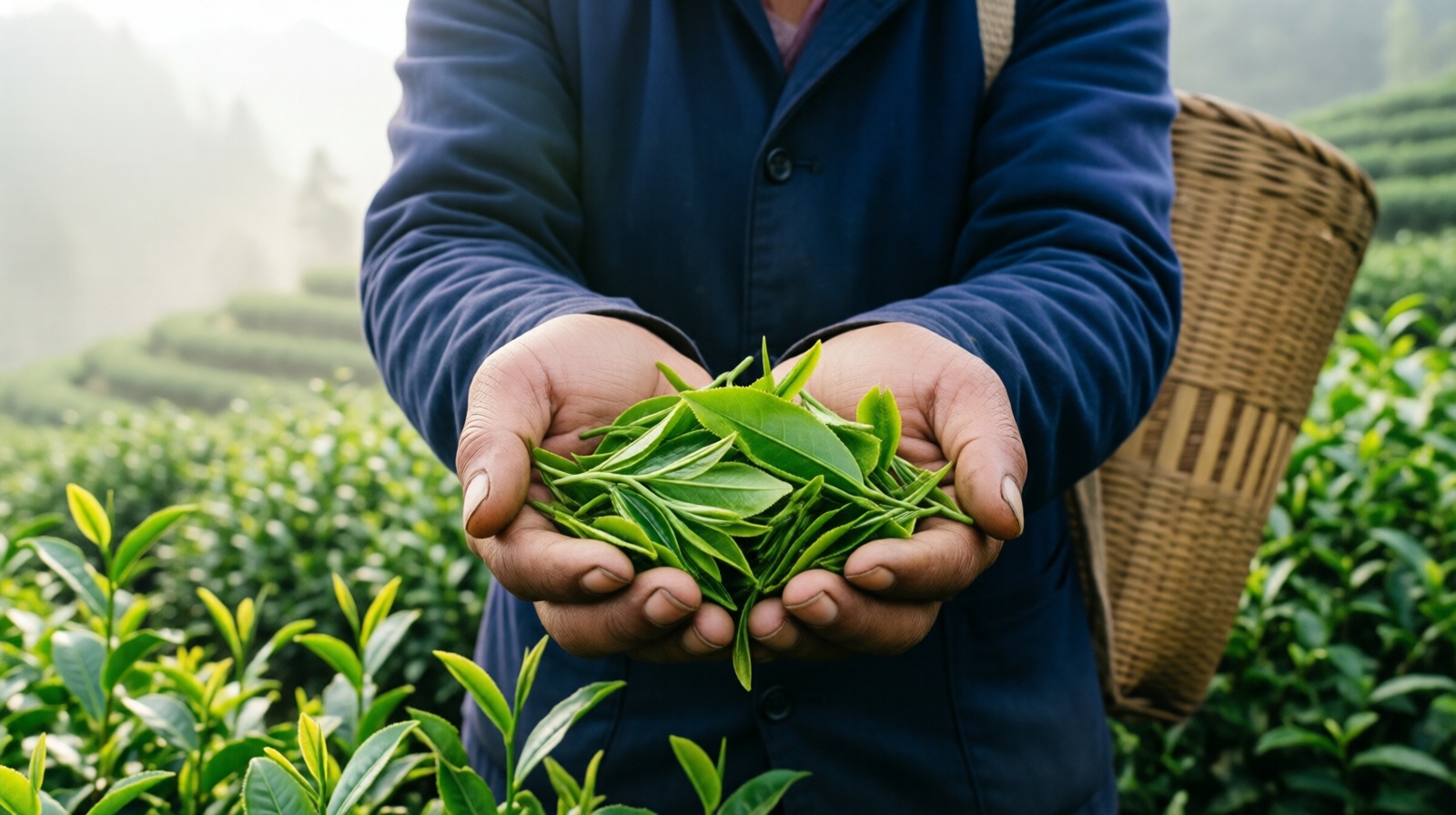
Liu is one of millions of tea farmers in Guizhou, a province that has become China’s largest tea-growing area by acreage—with over 7 million mu (about 470,000 hectares) of tea gardens. Her own family owns about 30 mu, a little over 5 acres. The main varieties are Fuding Dazhong, a common green tea cultivar, and a few local strains that grow only in this corner of the province. She uses a simple hand-picking method: one bud, one leaf for the highest grade, two or three leaves for the everyday harvest. Each plant is pruned in the winter to keep the shoots tender.
But you won’t hear her brag about the size of her plantation. Instead, she points to the ground between the tea rows. ‘Look, this soil is loose and full of earthworms,’ she says. ‘We haven’t used chemical pesticides or herbicides in years. That’s what makes our tea clean.’
What Does ‘Clean’ Actually Mean?
In China, the word ‘clean’ when applied to tea has two layers of meaning. On the surface, it refers to the absence of chemical residues. But for drinkers, it also describes a taste—a pure, unadulterated flavor that lets the leaf speak for itself. Guizhou’s tea industry has built its entire reputation on this dual promise.
In practice, this means strict rules. Since 2014, the provincial government has pushed a ‘Clean Tea’ campaign, banning chemical herbicides across the entire province. Farmers use mechanical weeding or hand-plucking instead. Yellow sticky traps and insect pheromone cards dangle from branches, replacing spraying. The result: some of the strictest European Union pesticide standards are often met—not because of any legal requirement, but because it’s become a point of pride.
Guizhou was the first province in China to declare a total ban on chemical herbicides in tea gardens. The ban came with support: the government offers free technical training and subsidies for organic fertilizers. Farmers who break the rules risk losing their sales contracts, which are now the main channel for their crop.
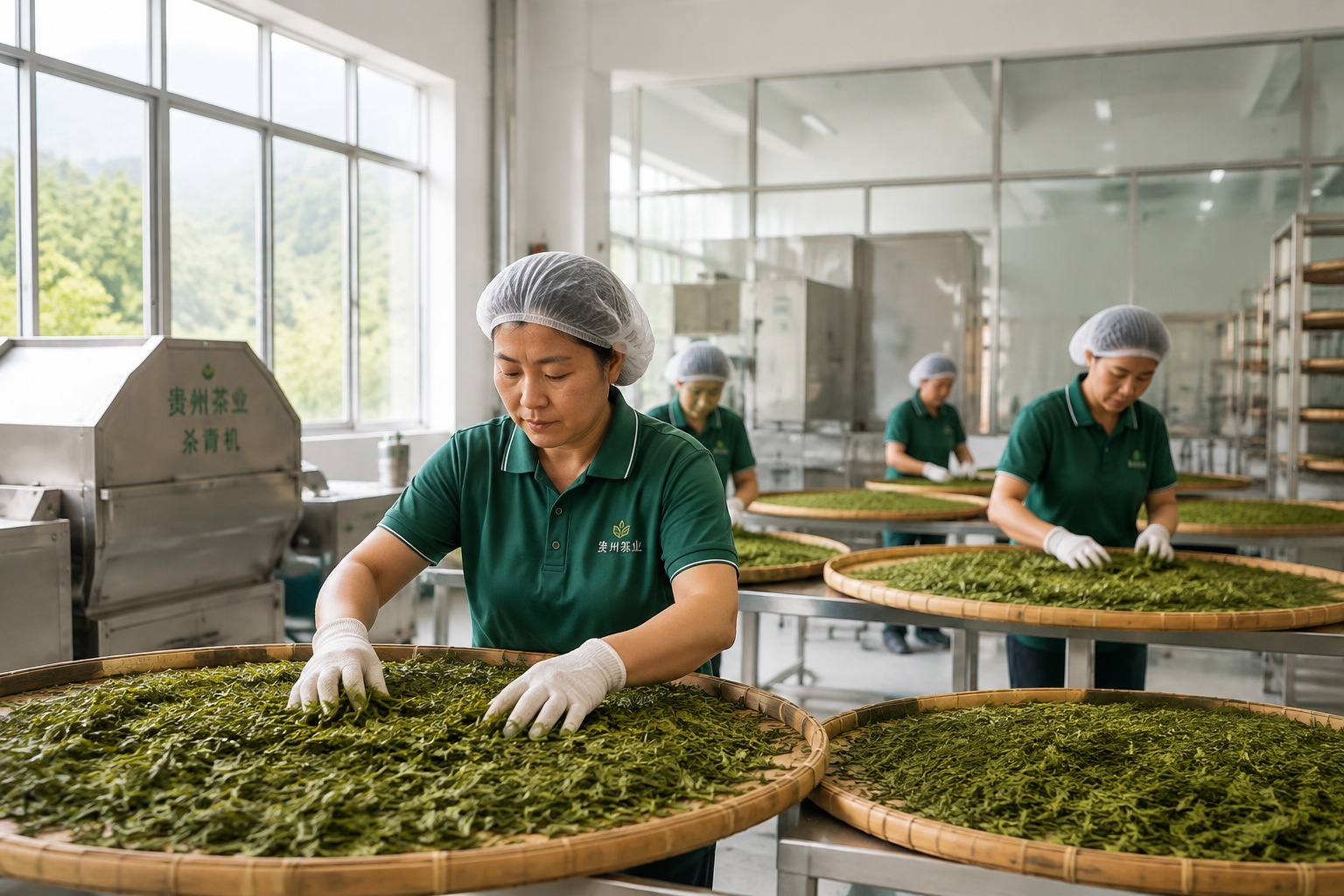
Cleanliness also applies to the processing stage. Tea leaves are never thrown directly on the floor in Guizhou’s modern factories. They rest on bamboo trays in well-ventilated rooms. Workers wear gloves and hairnets. After each batch, the machinery is cleaned with water and a mild herbal solution—and that’s not a marketing gimmick. It’s a habit that’s been drilled into every employee, just like washing your hands after the bathroom.
The mountains themselves help. Most of Guizhou sits at an altitude of 800 to 1,800 meters, where the daily mist shields the bushes from too much direct sunlight. This slows down leaf growth, allowing the leaves to build up amino acids that add a natural sweetness. In other words, the tea doesn’t need chemical flavor enhancers to taste good.
For decades, Guizhou was known as a poor, mountainous province with stunning scenery but little economic attention. Agriculture was traditional, and tea was just one of many crops. The ‘clean tea’ movement, however, has turned that legacy into an advantage. The province’s late-development act now allows it to start from a cleaner slate, without the pollution that plagues some eastern industrial regions. Rivers are clearer, soil tests come back with lower heavy-metal traces, and even the air is fresher. This natural baseline is something no factory can replicate.
From Leaf to Cup: Building Trust
But how can a consumer hundreds of miles away know that the tea in their cup is really clean? Guizhou has answered with transparency. Every pound of premium tea that leaves the province carries a traceable code. A quick scan with your phone reveals which village, which farmer, and even which patch of hillside picked those leaves.
This year, the province launched a smart tea management app that lets consumers watch real-time video from participating farms. You can see the mist rolling over the hills, the pickers moving slowly through the rows, and the leaves being steamed in the factory. It’s not high-tech theater—it’s simply a better way to show what has always been true.
At the tea processing factory, each batch is tested before it’s packaged. Liu remembers a time when buyers would visit her farm and ask to take soil and leaf samples. ‘They were surprised that we had nothing to hide,’ she laughs. ‘Now, the same buyers come back every year and bring their friends.’
Traceability goes beyond a simple label. Each code links to a detailed log that includes the date of harvest, the weather that day, and the name of the person who picked it. Consumers can even view photos of the specific tea garden. Local officials have also set up third-party testing laboratories at major wholesale markets. Samples are taken randomly, and results are posted online. This level of scrutiny would make many food industries blush.
To earn the right to use the ‘Clean Tea’ logo, tea companies must pass an annual audit that checks everything from the storage warehouse to the drinking water for workers. The audit includes a review of the past year’s test reports. Companies that fail simply don’t get the label.
The trust is also personal. In the eastern city of Hangzhou, tea lovers often refuse to believe that such a clean product can come from a less-famous province. But when they taste a cup of Guizhou green tea—or the province’s signature jasmine pearls—many say it has a clarity that rivals the classics. That’s the result of a province-wide obsession with doing things carefully.
The Rewards of Patience
Shifting to clean growing hasn’t been easy. In the late 2000s, Guizhou tea was mostly cheap bulk leaves used to blend with stronger-flavored teas. Farmers earned little, and young people left for cities. But the ‘clean’ rebranding has changed the economics. High-quality, eco-grown tea now sells for two to three times the price of conventional tea, and some specialty varieties fetch even more.
In the local tea market, a kilogram of transition-to-organic green tea can sell for 600 to 1,000 yuan (roughly $85–$140), compared to 200 yuan for regular tea a decade ago. The premium is enough to keep small farmers in business and to lure young people back.
Liu’s own income has doubled over the past five years. Her two sons, who once planned to work in factories in Shanghai, have returned to help her manage the growing online orders. ‘They didn’t believe there was a future here,’ she says, wiping a leaf between her fingers. ‘Now they talk about organic certifications and e-commerce like city boys.’
There are intangible rewards too. Liu says she sleeps better at night, knowing that her soil is alive and her children are breathing clean mountain air. ‘My grandmother used to say that a good cup of tea should taste like the place it came from,’ she says, pouring a small cup for me. ‘Guizhou is cloudy, cool, and quiet. That’s the taste. We didn’t make it up—we just uncovered it.’
Coming Home to the Mountains
As the midday sun burns off the mist, Liu shows me a small plot she’s experimenting with—an old variety that nearly disappeared in the 1990s. She’s brought it back using seeds saved by her mother. ‘People think ‘clean’ is about technology, but it’s also about memory,’ she says. ‘We’re growing the taste that my grandparents knew.’
Back at her house, her two sons are packing boxes for online orders. Each box contains a leaflet explaining how to scan the traceability code and a small note from Liu herself. ‘We want people to know that this tea is not just a product,’ she says. ‘It comes from a person’s hands, from a particular slope, from a certain season. And it’s clean.’
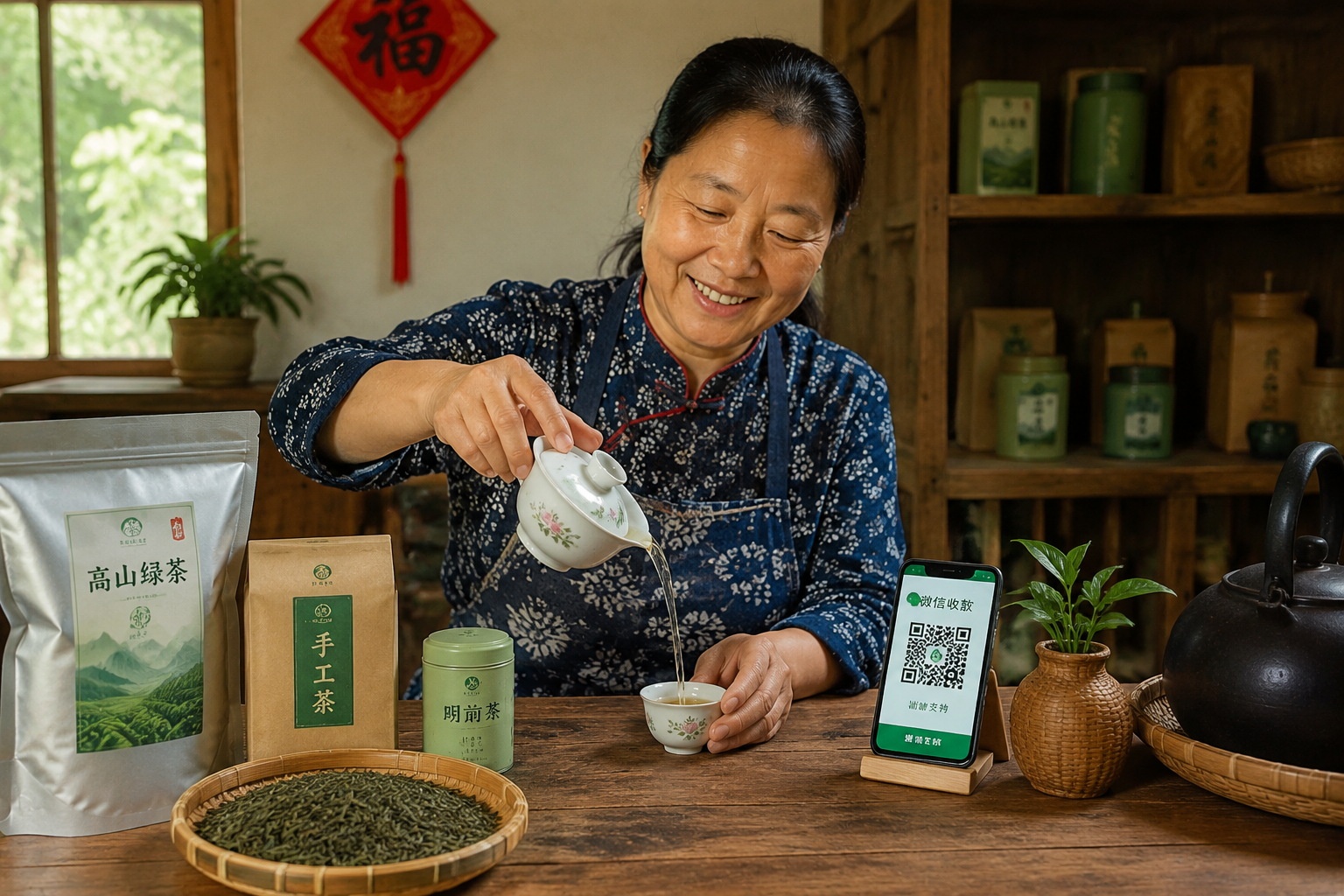
That combination of terroir and integrity is hard to argue with. As I drive down the winding mountain road, I see tea sellers by the roadside with fresh-picked leaves spread on woven mats. They wave, smiling, as if to say: don’t just take our word for it—taste the mist.
Start the discussion at forum.chinacomes.com