
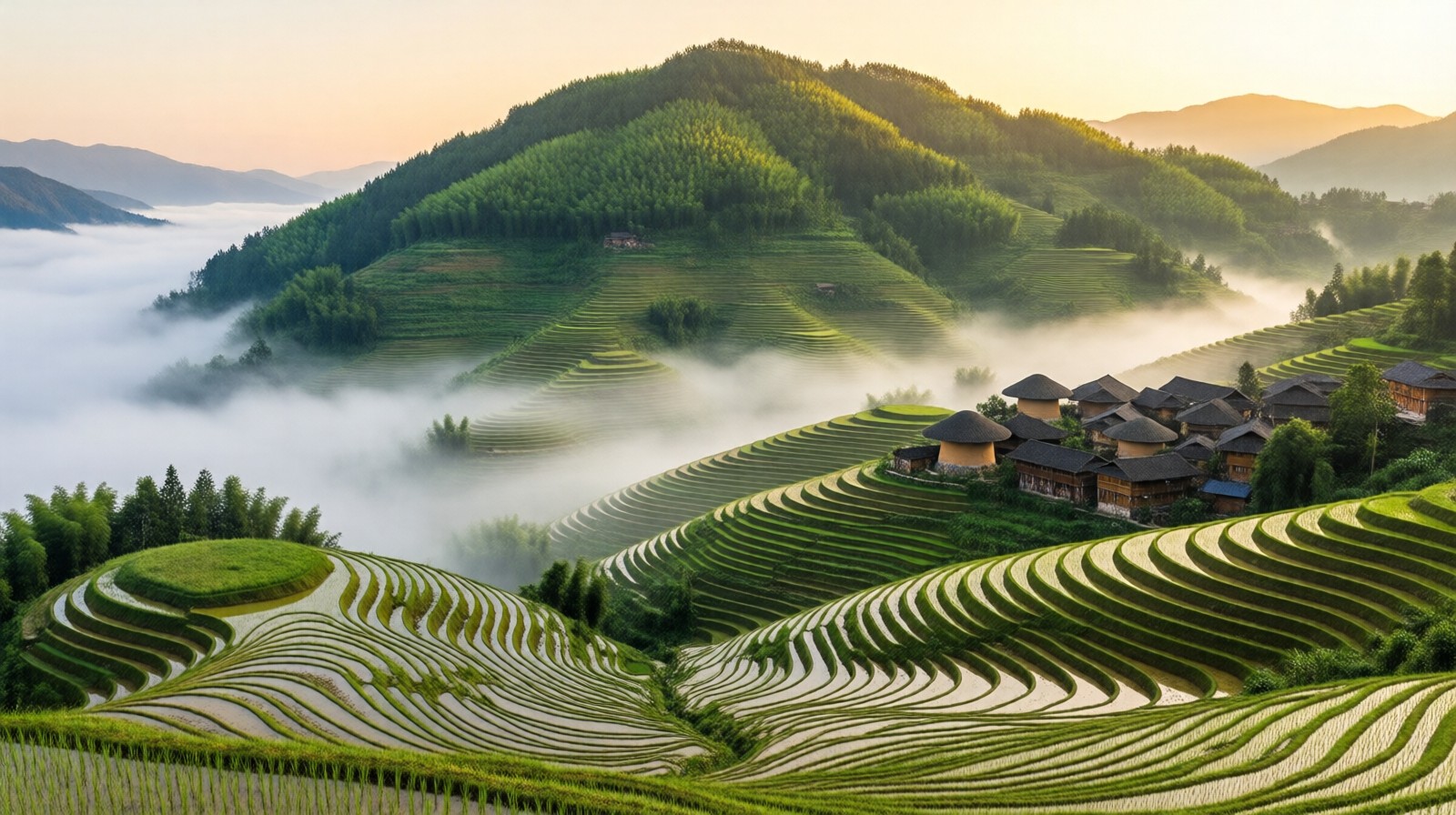

Sunrise over the Stairway to Heaven
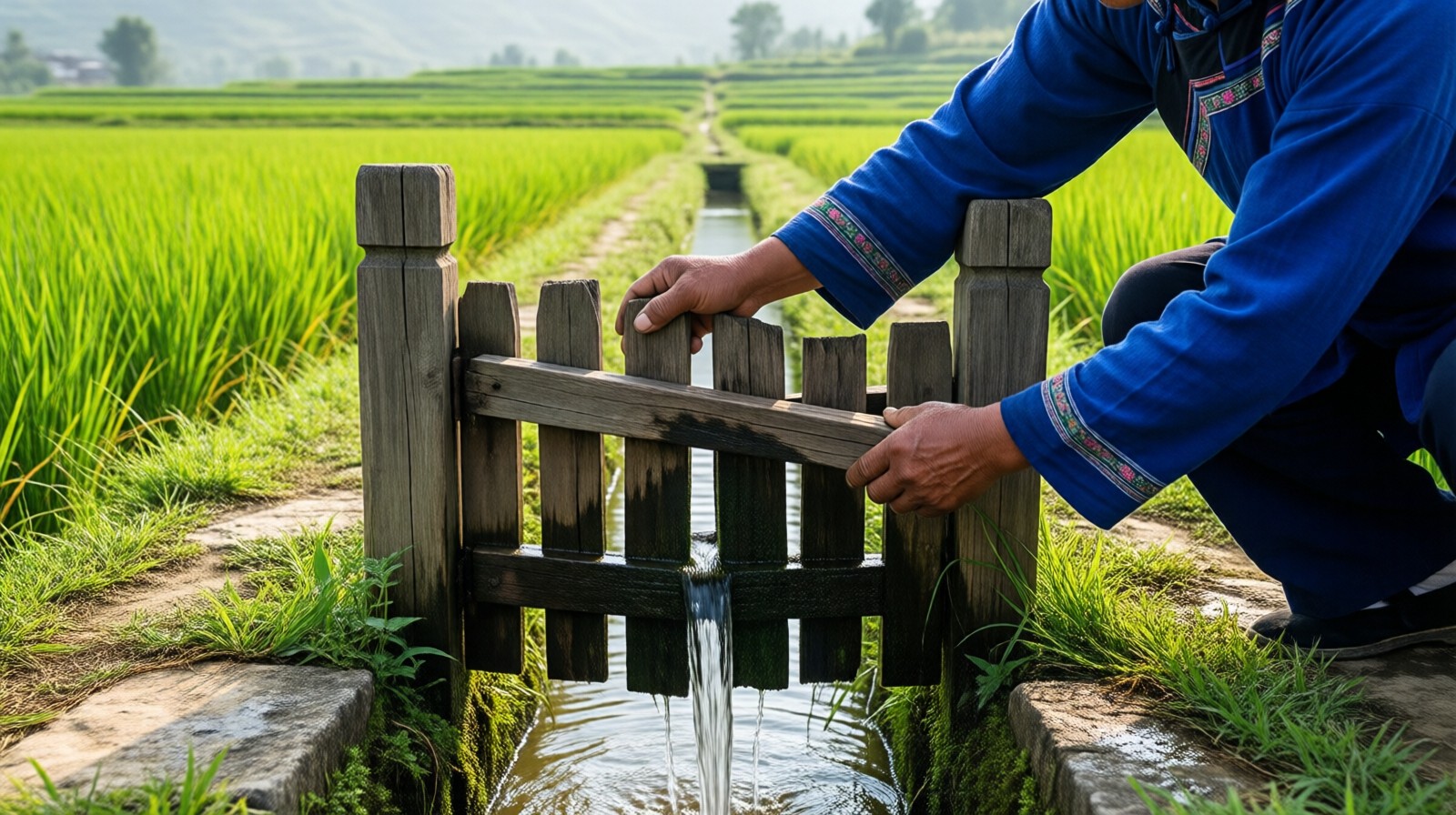
In the early morning light, a Hani farmer in Honghe County, Yunnan, opens a wooden sluice gate on a narrow irrigation channel. Water flows down into a patch of terraced rice fields that cling to the mountain at a 60-degree angle. He has done this a hundred times, but the gesture is the same one his great-great-grandfather made. The terrace system beneath his feet has been feeding his family—and millions of others—for 1,300 years without exhausting the soil.
The Lasting Inheritance of a Vertical Kingdom
The Hani Rice Terraces stretch across the southern slopes of the Ailao Mountains in Yunnan, China’s southwestern province bordering Myanmar, Laos and Vietnam. The core scenic area, which became a UNESCO World Heritage Site in 2013, covers more than 16,000 hectares of continuous rice paddies from an altitude of 144 meters in the river valleys to over 2,000 meters on the mountain tops. It’s often said that the terraces have more than 3,000 layers—a stairway to heaven worn into the land by generations of Hani, Yi and Dai people.
At first glance, the terraces look like a colossal work of sculpture. But they are one of the most efficient water-saving farming systems ever invented. The secret is not in the rice, but in how the water moves.
The Genius System: Forest, Village, Terrace, River
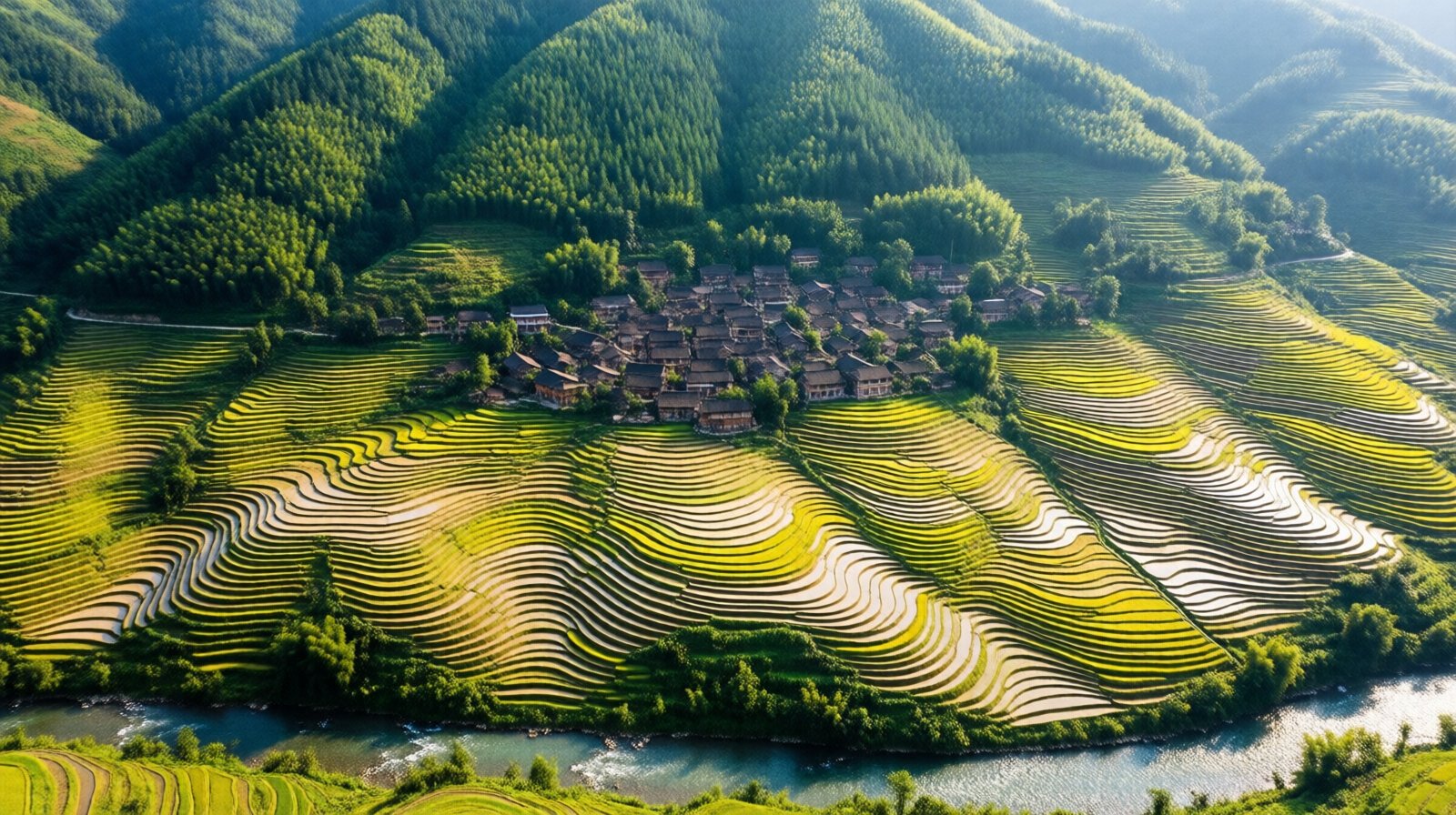
Walk up the mountain, and you’ll see a perfectly orchestrated order. At the summit, thick virgin forest absorbs rain and morning fog. Below the forest, around 1,200 to 1,600 meters, lie Hani villages with their mushroom-shaped houses. Below the villages, the hillside is carved into thousands of rice terraces. And at the bottom, rivers such as the Honghe (Red River) run through the deep gorge. This is no accident. The Hani deliberately arranged their living space according to a simple principle: forest above, village next, terraces in between, river below.
The forest acts as the sponge. Rainfall and fog drip through the tree canopy, feeding dozens of tiny streams. The Hani built an extensive network of channels—some over 10 kilometers long—to divert this water into the highest terraces. From there, water floods each paddy and slowly cascades downhill terrace by terrace, nourishing every rice plant on its way. Finally, the excess water drains into the river at the bottom. The river water evaporates under the tropical sun, forms clouds, and returns to the forest as rain. Nothing is wasted.
Managing this system is not a free-for-all. Each village appoints a “water manager” who follows a traditional rule called muke fenshui (wooden notches for water distribution). At critical diversion points, wooden bars with carved notches of different widths determine how much water each family receives, proportional to the size and need of their fields. The rules are enforced by the community, and disputes are settled by elders. It’s a system that resembles modern water rights, but it’s been operating since the Tang Dynasty.
Why It Still Works While Banaue Collapsed
If you’ve ever traveled to the Philippines, you may have seen the Banaue Rice Terraces—a UNESCO World Heritage Site that is often called the “Eighth Wonder of the World.” But Banaue is in crisis. An estimated 25-30% of the terraces are abandoned, irrigation systems are falling apart, and younger Filipinos are moving to cities instead of caring for the paddies. Several factors have contributed: earthquakes, typhoons, and the loss of traditional farming culture.
Why hasn’t the Hani system met the same fate? The reasons are a mix of geography and social policy. First, the Hani terraces are located in a climate with high rainfall and constant fog, while Banaue depends on a more fragile volcanic soil. Second, the Hani have maintained a compact social structure: water-sharing rules are still practiced, and every family is expected to contribute to clearing channels before each planting season. Third, Chinese agricultural policies have actively supported terrace rice farming since the 1980s, subsidizing inputs and later creating a premium market for red rice. In recent years, the Chinese government invested millions of dollars in repairing ancient water channels, and the UNESCO listing in 2013 paved the way for eco-tourism and premium branding.
As a result, Hani farmers can earn a decent income from rice, fish and duck farming, plus tourism-related jobs. In Banaue, the income from rice is too low to attract youth back to the fields. This difference is a lesson for heritage conservation: preserving ancient agricultural landscapes works best when farming itself remains profitable.
Daily Life on the Terraces
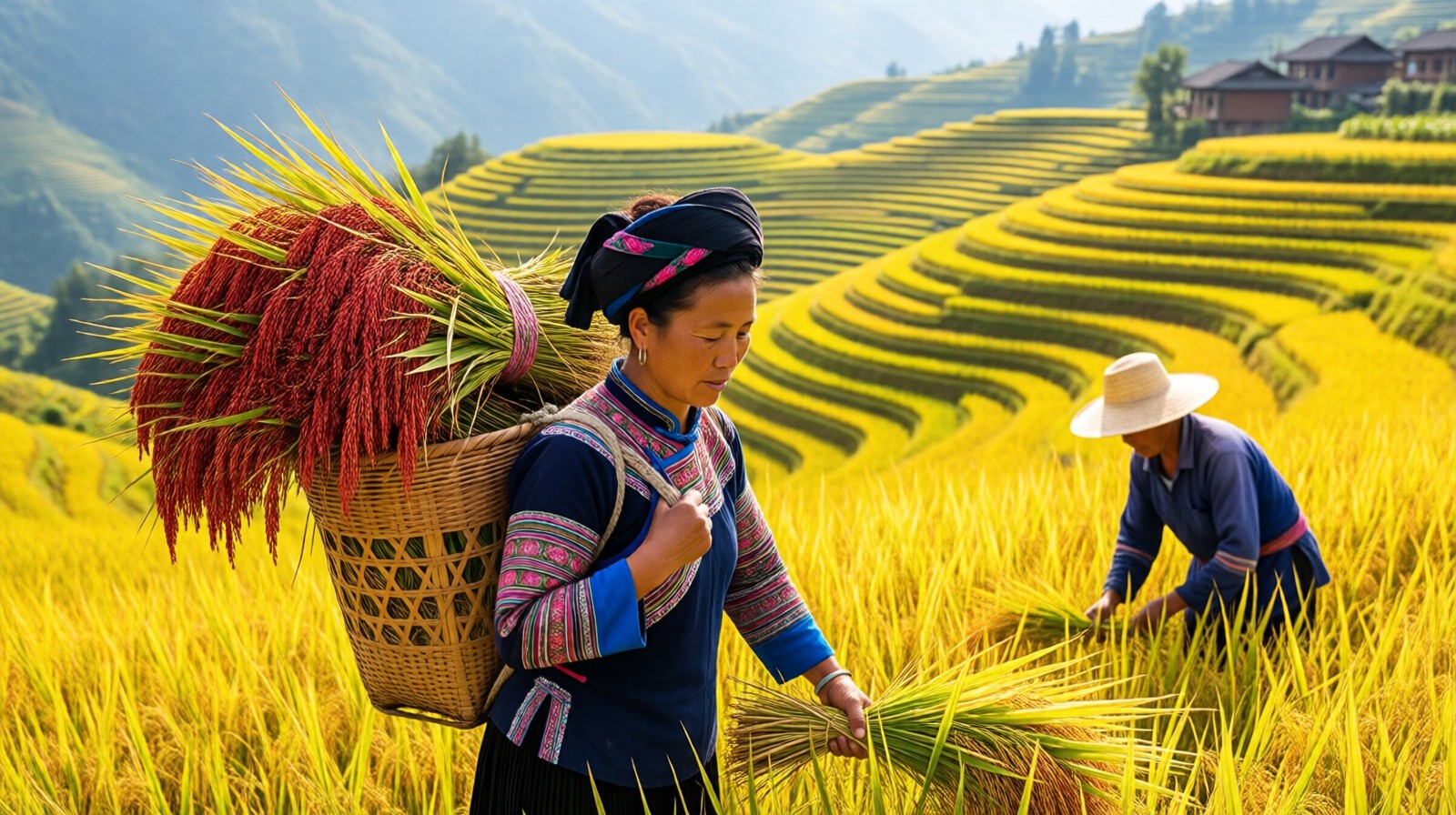
In the village of Yakou, a Hani farmer named Yang Lihe spends his days tending his 3 mu (about 0.2 hectares) of terraced fields. He grows a local red rice variety, which gives a deep burgundy color to the cooked grain and packs more fiber and amino acids than standard white rice. The terraces also host fish—the classic “rice-fish system” common across southern China. Yang raises carp in the flooded paddies; the fish eat weeds and insects, and their waste fertilizes the rice. Ducks do the same job on the upper terraces. This means each field produces rice, protein, and natural pest control at once.
New business models are emerging. Local cooperatives help farmers brand and sell their red rice online. A kilo of premium Hani red rice can sell for 15-20 yuan (about $2-3), three times more than ordinary white rice. Eco-tourists pay for homestays and guides. In some villages, young people are returning because they can earn more than in factory jobs—while living in one of the most beautiful places on Earth.
Climate, Tourism, and the Road Ahead
The Hani terraces are not without problems. A severe drought in 2019 hit the region, and climate change is making rainfall less predictable. Tourists leave trash and hotels for water. Some outer terraces have been abandoned, especially those far from water sources.
To keep the tradition alive, the local government launched a “rice-fish-duck” ecological model that boosts farmers’ income per hectare by up to 30%. It has also started a digital monitoring system for water channels, using sensors to track water levels in remote areas. But the real innovation continues: farmers and officials are collaborating on ways to make terrace farming as attractive as city work.
For the world, the Hani Rice Terraces are a case study in sustainable agriculture. In a time of global warming and food insecurity, the Hani show that a low-tech, community-managed water system can feed millions for over a millennium. It’s not a museum piece. It’s a work in progress.
A Living Lesson
Standing on the edge of a terrace, you see the valleys filled with cloud-like mist and the green cascades disappearing into the distance. The Hani people have done something remarkable: they’ve built one of the world’s most resilient food systems, not with steel and pumps but with knowledge passed down through 60 generations. They prove that the smartest agriculture often uses the least technology.
Start the discussion at forum.chinacomes.com