
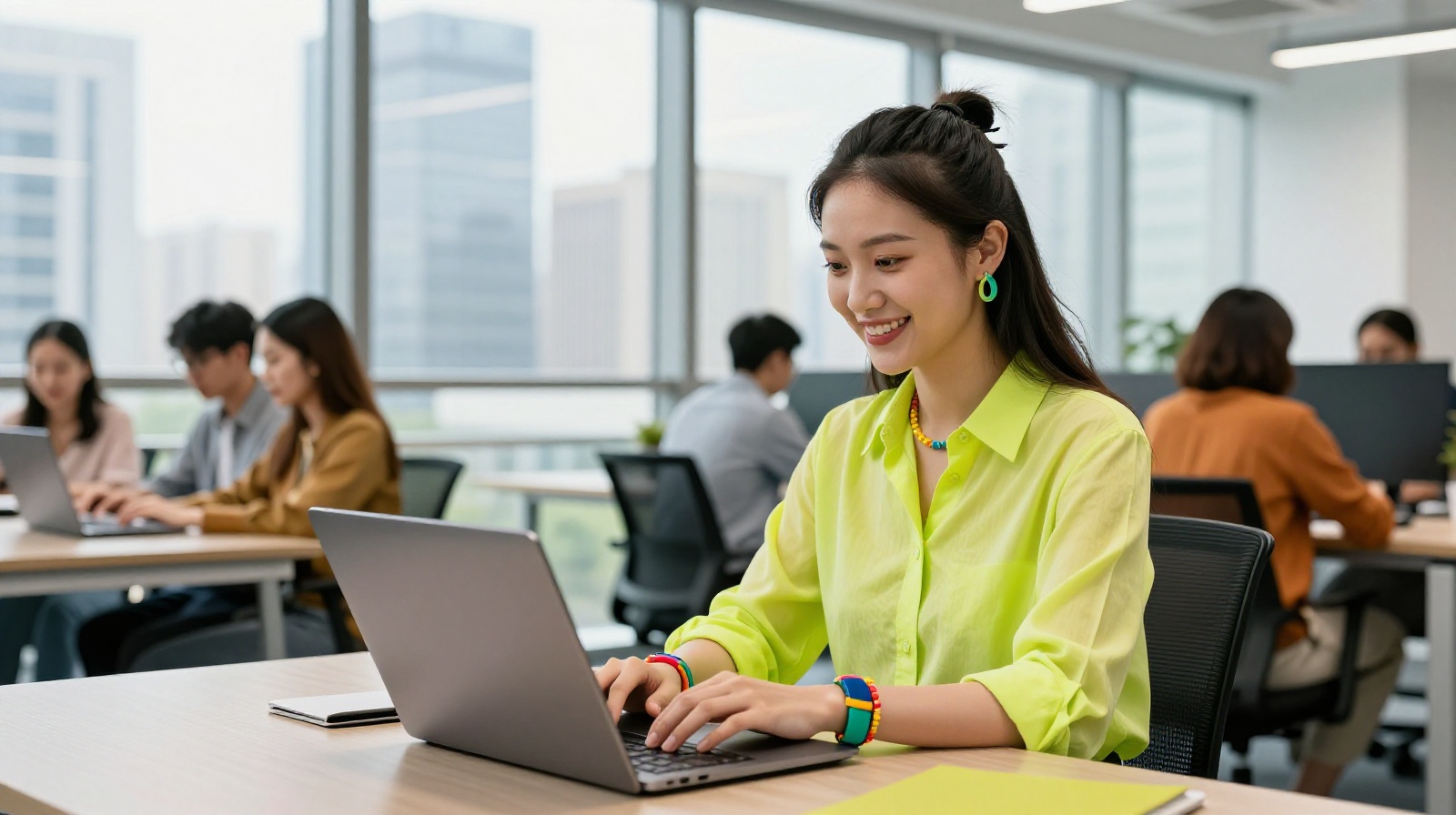

The Gray Cubicle Meets the Rainbow Suit
On a typical Monday morning in Beijing’s Zhongguancun district, the air conditioning hums at a constant 22 degrees Celsius. Outside the floor-to-ceiling windows, the city is a haze of gray concrete and glass. Inside, however, the scene is shifting. Instead of the sea of black suits and navy blazers that defined Chinese corporate culture for decades, you are more likely to see a lime-green blouse, a cobalt blue tie, or a sunset-orange cardigan.
This is the “Dopamine Dressing” trend, a phenomenon that has moved from TikTok-style short videos to actual office desks. For Gen Z and millennial workers in China, wearing bright colors is no longer just about aesthetics; it is a quiet rebellion against the monotony of the “996” work schedule (9 am to 9 pm, 6 days a week) and a psychological tool to survive the Monday blues.
More Than Just Fashion: A Psychological Shield
Li Na, a 26-year-old product manager at a tech startup in Shenzhen, remembers when she felt drained by her gray wardrobe. “Black and white are safe,” she says, “but they also feel like a uniform I didn’t choose.” Last year, she started buying one brightly colored item a week—a yellow scarf, electric blue socks, or a magenta skirt. The change was immediate.
Psychologists call this “color psychology.” Bright hues like orange and yellow stimulate the brain’s reward system, releasing dopamine. In a high-pressure environment where employees often feel like cogs in a machine, these colors serve as a visual anchor. They remind the wearer that they are an individual, not just a job title.
This shift is visible even in traditional industries. In state-owned enterprises, where dress codes were once strictly formal, younger hires are introducing subtle pops of color. It’s a way to soften the rigid hierarchy and inject humanity into sterile office spaces.
The Divide: Startups vs. Traditional Corporations
However, the acceptance of Dopamine Dressing is not uniform across China. There is a clear divide between different sectors.
In the tech and creative industries, the dress code has effectively vanished. Companies like Alibaba, Tencent, or smaller internet firms in Hangzhou encourage individuality. Here, neon colors are celebrated as a sign of creativity and energy. It’s common to see colleagues debating the shade of purple on a colleague’s shirt over coffee, breaking the ice in a way that formal meetings rarely do.
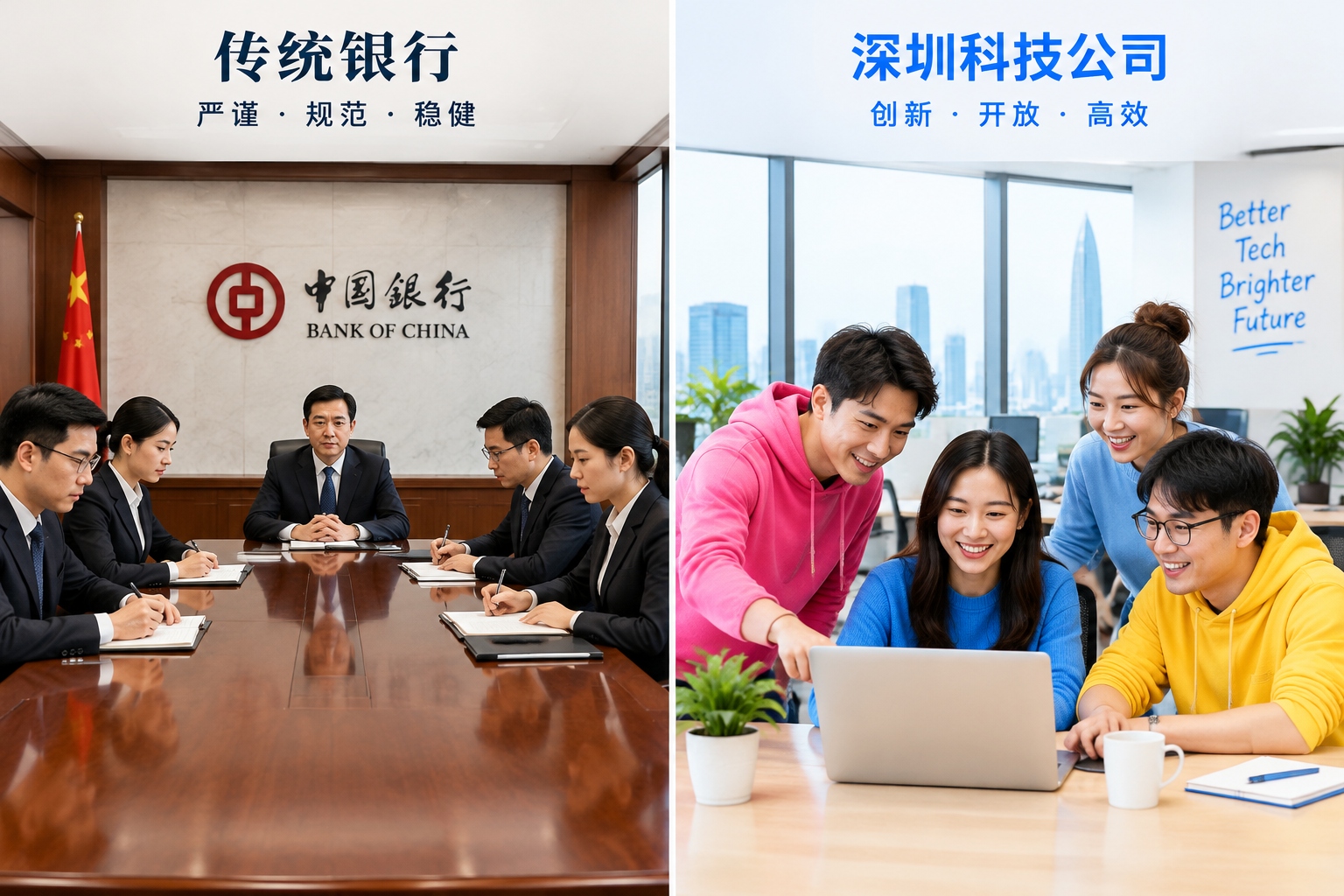
Contrast this with the financial sector or government-affiliated institutions. In Shanghai’s Lujiazui financial district, dark suits remain the armor of choice. While younger bankers might wear brighter ties or pocket squares, fully embracing neon colors can still be seen as unprofessional or disrespectful to clients. The unwritten rule here is: “Look competent, not colorful.”
Why Now? The Search for Authenticity
Why has this trend exploded now? The answer lies in the changing values of Chinese youth. After years of intense competition and the pandemic’s disruptions, many young people are prioritizing mental health and authenticity over traditional markers of success.
Wearing bright colors is a low-cost, high-impact way to assert control over one’s life. If you can’t change the workload, you can at least change what you wear. It’s a small act of self-care that signals: “I am still here, and I still have my personality.”
This trend also reflects the rise of domestic fashion brands in China. Local designers are creating affordable, high-quality clothing that appeals to young consumers, making vibrant colors accessible to the average office worker. You no longer need a luxury budget to look happy.
Conclusion: Color as a Coping Mechanism
The “Dopamine Office” is not just about looking good; it’s about feeling alive in a demanding world. For young Chinese professionals, dressing in color is a subtle but powerful way to navigate the tension between collective expectations and individual desires. It’s a reminder that even in the grayest cubicle, there is room for a little bit of rainbow.
As one office worker put it: “My work is serious, but my socks don’t have to be.”
Start the discussion at forum.chinacomes.com