
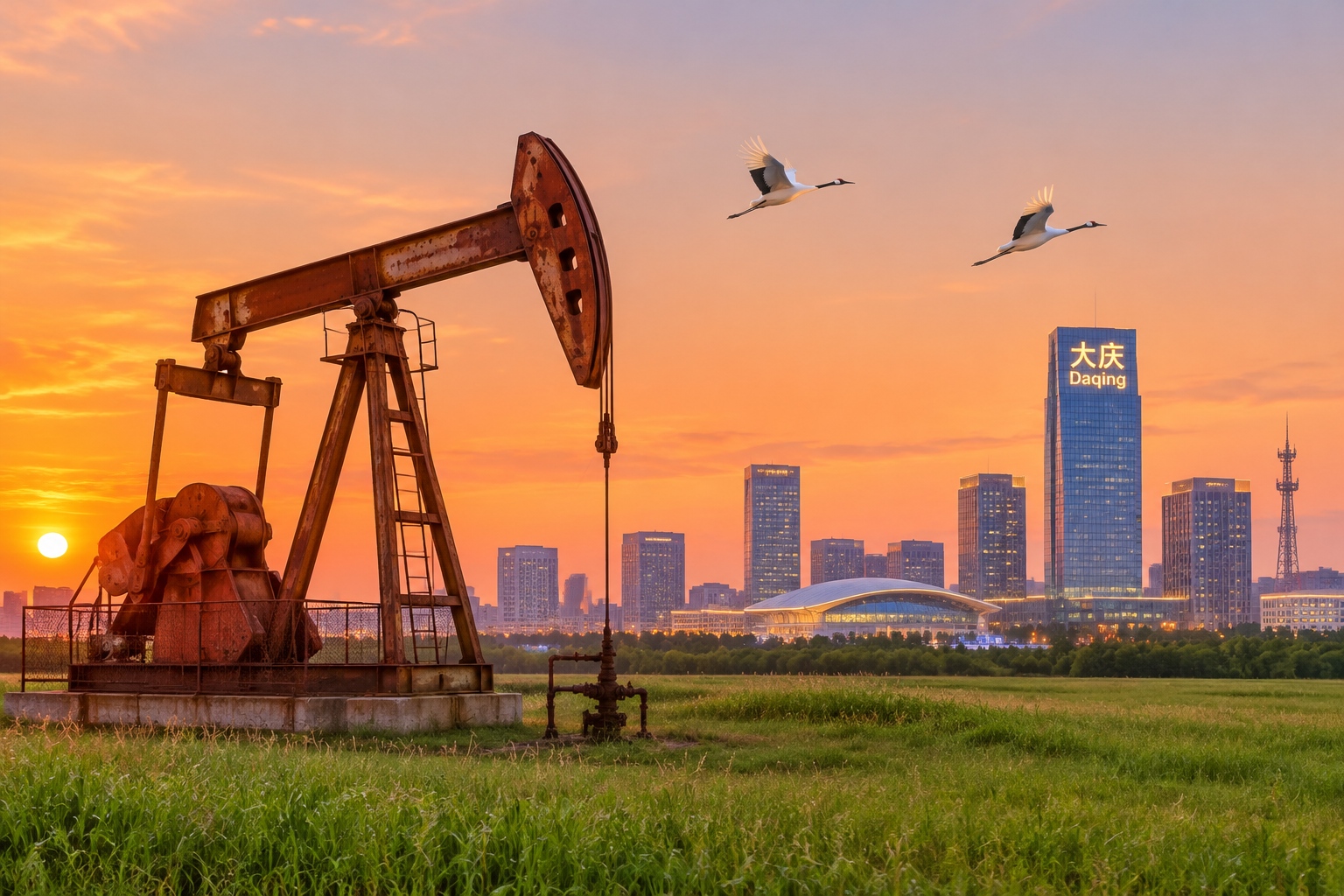

Dawn on the Oil Field
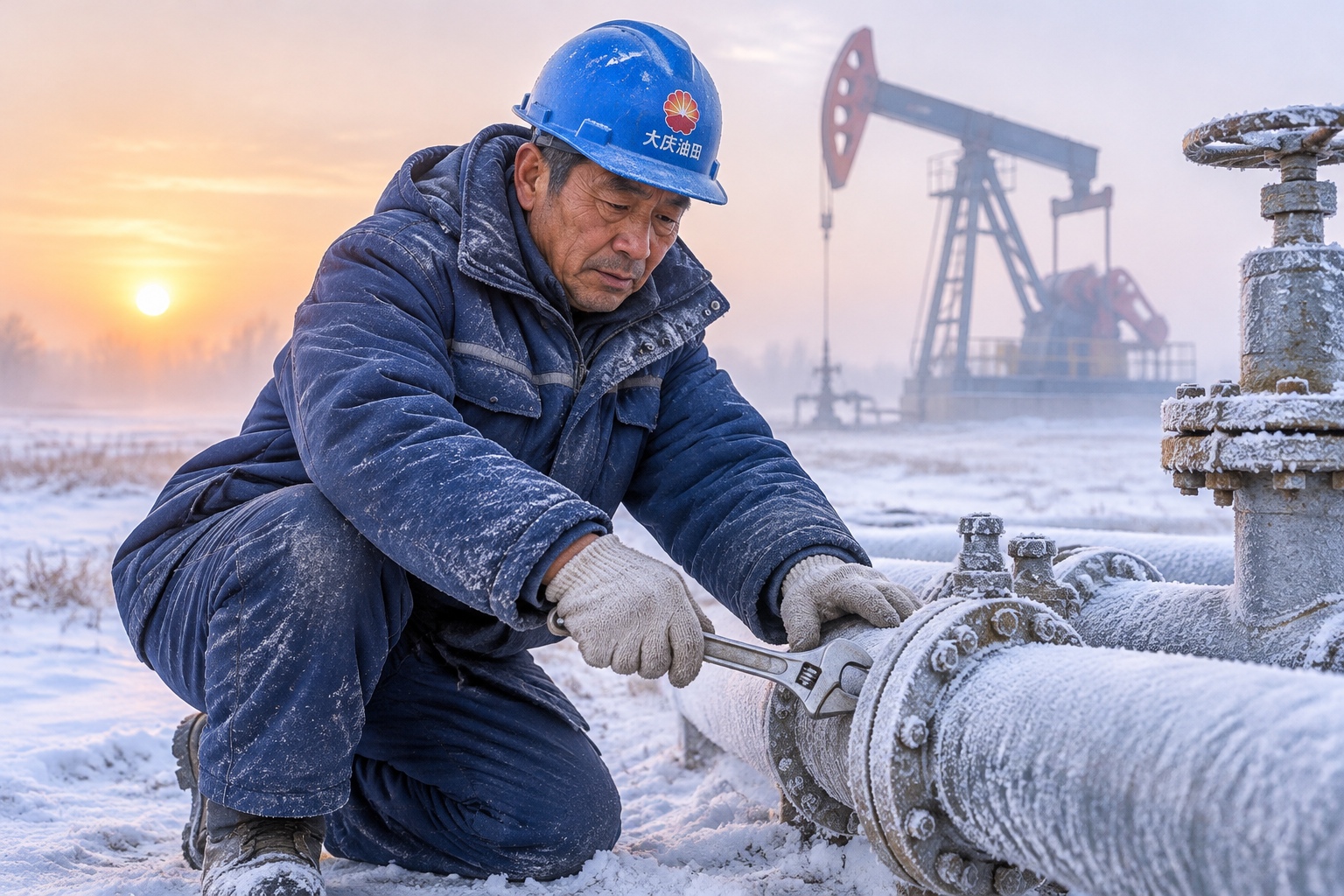
The ground trembles slightly as the pumpjack swings down, drawing crude from six thousand meters below. Frost covers the steel like powdered sugar. Zhang Weiming, 63, crouches beside a pipeline and runs his finger along a weld seam he first touched in 1983. “This one’s still mine,” he says. “We welded her in winter at minus 30 degrees. The metal stuck to our gloves.”
Zhang is one of the few remaining veterans at the Daqing Oilfield in China’s northeastern Heilongjiang province. Sixty years ago, this region was a frozen marsh. In 1959, the discovery of the Daqing field ended China’s reputation as an “oil-poor” country. For decades, Daqing pumped out half of the nation’s crude oil, fueling everything from tractors to jet fighters. It also gave birth to a city of 2.7 million people, where oil derricks stand beside apartment blocks and office towers.
The Golden Age Built by Hand
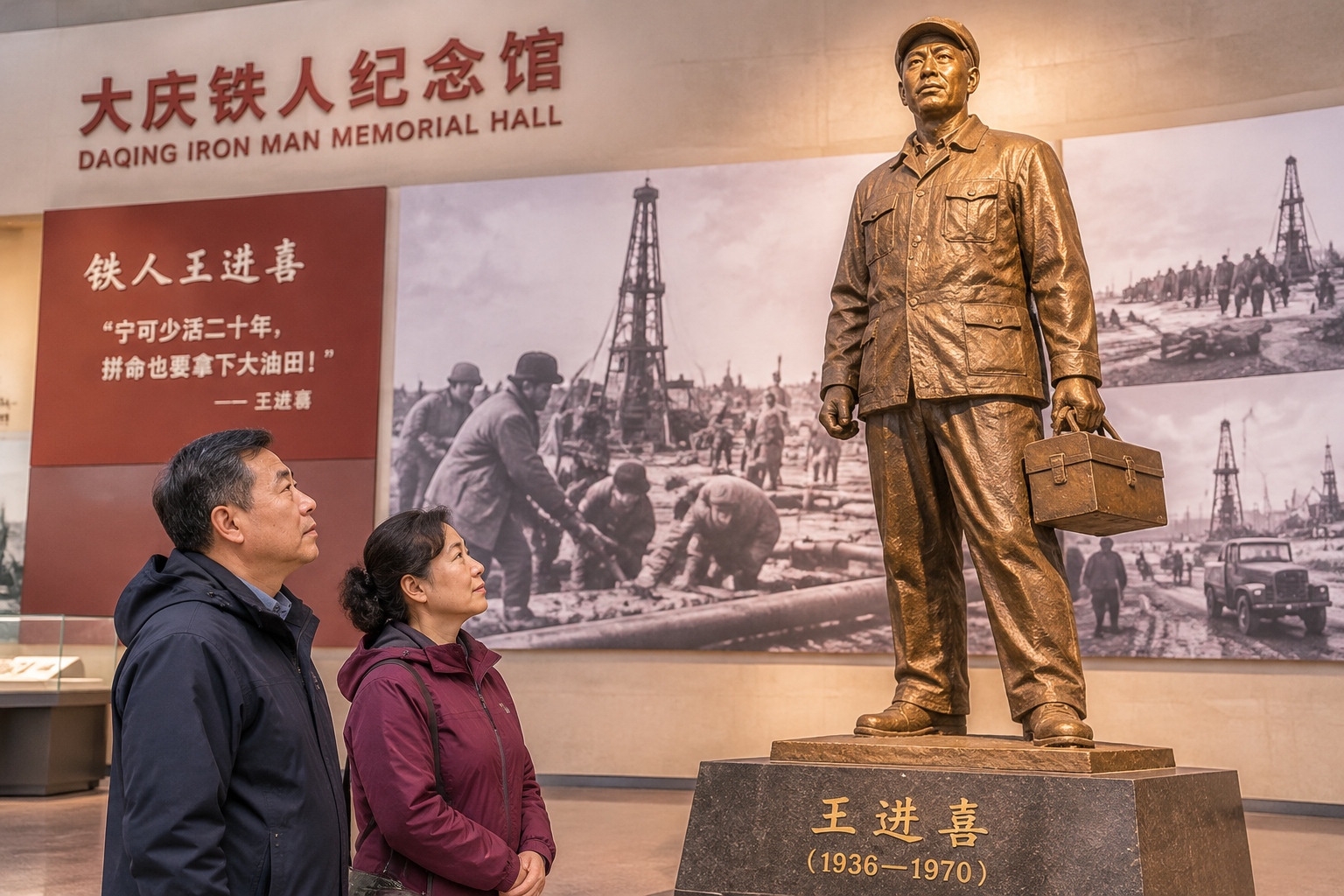
At the Daqing Iron Man Memorial, a bronze statue of Wang Jinxi, the legendary driller, faces the horizon with a wooden toolbox under his arm. Wang and his team built the first well using ropes, pulleys, and sheer muscle, setting the tone for a generation of workers. Zhang remembers his own father listening to broadcasts about the Iron Man on a crackling radio. “When I came to Daqing in the 1980s, the old-timers still spoke about carrying 50-kilo drive pipes on their shoulders,” Zhang says.
The city grew like a tentacle, expanding with each new drilling site. Dormitories, schools, and hospitals were built beside the rigs. A carousel of flavors—dumpling stalls, Soviet-style brick houses, even a bowling alley—sprang up inside the oil camp. For many, Daqing was a promised land: high wages, secure housing, and a sense of national importance.
What Happens When the Oil Runs Thin
Today, Daqing’s crude oil output has plateaued, and then declined slightly. The field is 60 years old; many wells produce more water than oil. Lifting oil requires expensive technology like polymer injection and microbial flooding. The easy days are gone, and so are the dreams of quick fortune. But the city has not collapsed. Instead, it is quietly transforming.
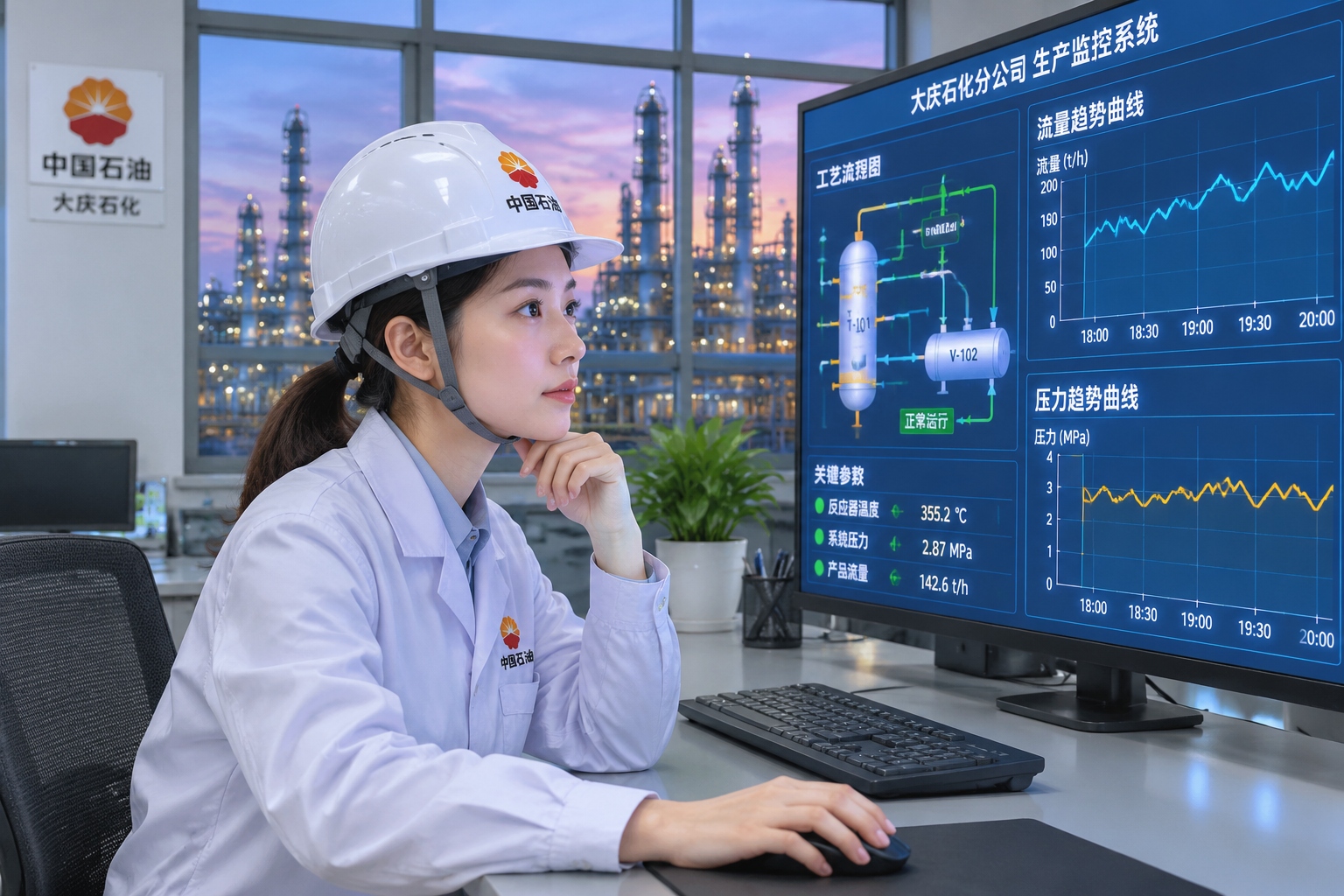
In the suburbs, bright red signs mark the original test sites that now belong to a new kind of industry: petrochemical derivatives. A facility on the edge of town converts raw oil into functional chemicals for plastics and adhesives. Nearby, a Chinese-EU joint venture makes synthetic rubber. “We’re no longer just shipping crude,” explains Liu Yan, a 29-year-old chemical engineer. “We’re turning each barrel into a smart molecule, and selling value.”
The most visible changes are environmental. The Longfeng Wetland, once drained for oil exploration, is now a national park. In May, cranes and herons nest among reeds, and cyclists glide along a solar-lit bike path. “Some day, people will come to see birds, not wells,” says a local ecologist.

The New Faces of an Oil Town
Like many resource towns, Daqing faces a demographic challenge. Young people often leave for big cities. But some are returning, attracted by cheaper housing and a calmer rhythm. Li Wei, 34, grew up here, left for Shanghai, then came back two years ago. He now runs a data analytics startup that monitors drilling equipment using AI. “The oil industry is still the biggest customer in this town,” he says. “I use my skills to make it safer.”
Other newcomers have no oil connection at all. Wang Fan opened a specialty coffee shop in a converted workers’ hall, with latte art and bluegrass records. Her shop often hosts events for freelancers and tech workers. “I want to show my kids that Daqing isn’t just a closed industrial relic,” she says. “It’s a place where you can invent a life.”

Reinventing an Industrial Icon
Daqing’s transformation is not wholehearted or complete. The old industrial core still dominates public budgets, and switching careers is not easy for workers in their 50s. But there are signs of a genuine ecosystem. In the High-tech Industrial Development Zone, companies working on robotics, new energy storage, and biotech receive tax breaks and subsidies. One manufacturer exports heat pumps to Sweden.
The city is also testing hydrogen energy using exhausted wells. A pilot plant converts by-product hydrogen from the refinery into fuel for buses. “We’ll never be a Silicon Valley,” admits a local official. “But we can be a smart, green version of an oil city. That’s a future not many towns get.”
An Ear to the Ground
At dusk, Zhang Weiming walks the same pipeline he welded decades ago. Now tools are lighter, sensors watch the metal, and young workers talk about carbon footprints. “Change is slow,” he says. “But the steel was here before us, and it will be here after. What matters is what we do with the time in between.”
In the distance, a pumpjack still bows to the earth. Beyond it, the blue glass of a new shopping mall reflects the sunset. Daqing is not a city of ghosts; it is a city learning to grow another kind of flower from stone.