
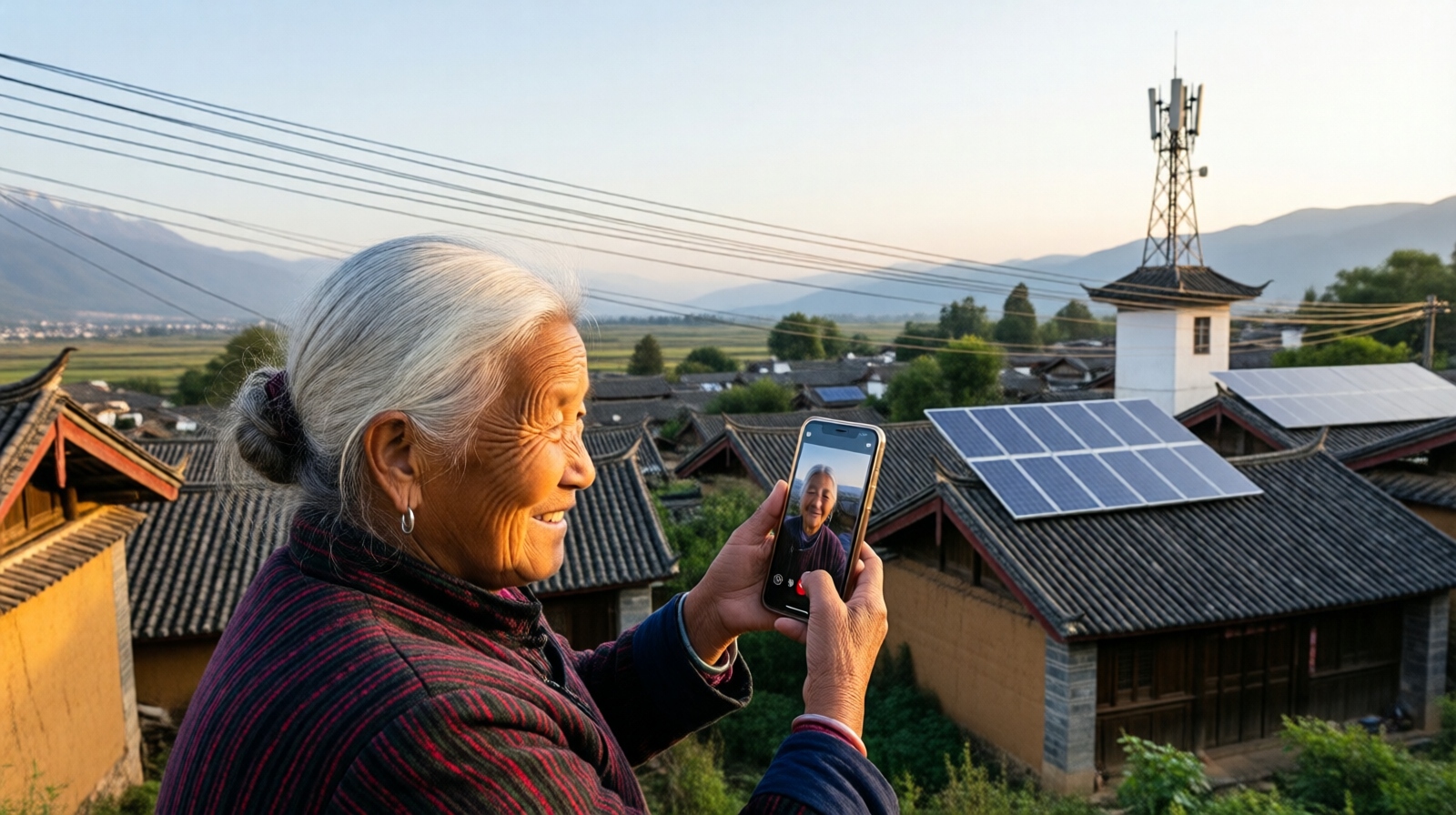

Introduction: A Video Call from a Mountain Village
In 2021, a 72-year-old grandmother in a remote village of Yunnan province held a smartphone for the first time. Her granddaughter, who worked in a city 2,000 kilometers away, had mailed the phone and taught her how to use it via a neighbor’s internet. When the screen lit up with her granddaughter’s face, the old woman cried. She had never seen her granddaughter in person—the girl had left for work before the grandmother owned a phone. That moment, made possible by three things: reliable electricity, cellular signal, and affordable data, represents a quiet revolution that has reshaped life for 1.4 billion people.
China’s infrastructure achievement is often measured in jaw-dropping numbers: 16,000 kilometers of high-speed rail, 5G base stations covering over 90% of villages, 99% of the population with access to electricity. But behind these numbers is a story of how a developing country tackled the most basic human needs—food, water, power—while simultaneously building a digital backbone that connects even the most remote corners. This is not a tale of top-down directives alone; it is a story of how millions of ordinary people changed their daily lives.
Food Security: From Empty Stomachs to Balanced Diets
In the early 1980s, China struggled to feed its population. The per capita grain output hovered around 300 kilograms, barely enough for survival. Today, that figure has risen to over 470 kilograms, well above the world average of 380 kilograms. But the real change is not just quantity—it is what people eat.
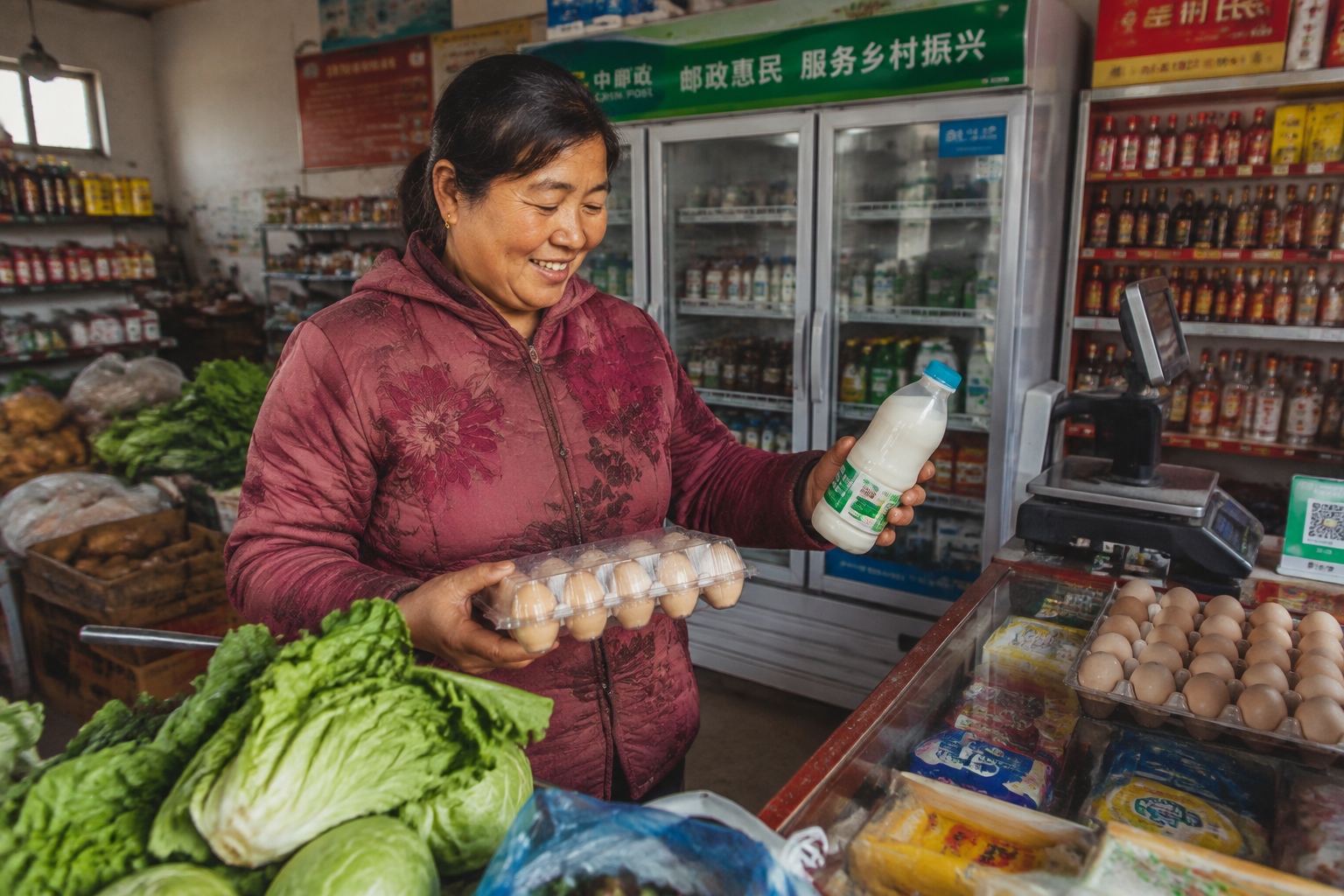
Walk into any supermarket in a mid-sized Chinese city today, and you will find fresh vegetables from greenhouses, beef from Inner Mongolia, and tropical fruits flown in from Hainan. In rural areas, government nutrition programs have shifted from simply providing calories to promoting balanced diets. Take the example of Wang Li, a farmer in Gansu province: in 2010, her family’s meals were mostly noodles and pickled vegetables. By 2023, she regularly buys eggs, milk, and chicken from the village store, thanks to a combination of agricultural subsidies, improved logistics, and rising incomes. The “Food Security” chapter of China’s infrastructure story is not just about silos and irrigation—it is about cold chains, fertilizer supply chains, and rural roads.
Compared to many developing countries, China’s approach has been integrated: the state invested heavily in agricultural research (hybrid rice, drought-resistant wheat), constructed the world’s largest network of irrigation canals, and built roads that connect farms to markets. The result is that hunger has been largely eliminated, and dietary diversity has improved dramatically. Yet challenges remain: food waste is high, and obesity is rising. But the foundation is solid.
Water and Electricity: The Last Mile to Every Home
In 2020, China announced that it had achieved universal access to electricity and clean drinking water. But how do you electrify a village perched on a cliff in the Himalayas? The answer is a combination of mini-grids, solar panels, and long-distance transmission lines. In the Tibetan plateau, for example, the central government invested in small hydropower stations and photovoltaic systems, bringing light to nomadic herders who had previously relied on yak dung fires.
Similarly, water infrastructure has transformed rural life. In the 1990s, many villages in the karst regions of Guizhou had to carry water for hours each day. The government drilled wells, laid pipes, and built rainwater collection systems. Today, over 85% of rural households have access to tap water, up from less than 50% two decades ago. The impact is immediate: children no longer miss school to fetch water, and women have more time for work or education.
Comparatively, in many parts of Sub-Saharan Africa, water access remains below 60%. China’s success is not just about money—it is about political will and a bureaucratic system capable of coordinating thousands of projects simultaneously. However, the cost of maintaining these systems in remote areas is high, and water quality in some regions still needs improvement.
Internet: A Digital Spine for the Countryside
If water and electricity are the basics of physical life, internet is the basic of modern social and economic life. China’s internet coverage is staggering: 99% of administrative villages now have broadband, and 4G/5G signals reach over 95% of the population. This was achieved through a massive state-subsidized program that pushed fiber-optic cables to the most remote hamlets, often at a loss for telecom companies.
The result is visible in everyday scenes. In a village in Hunan, a young woman surnamed Chen uses her smartphone to livestream her family’s orange harvest. She earns more in one season than her father did in a year of farming. In a county hospital in Xinjiang, a doctor consults with a specialist in Beijing via video call. In a school in Sichuan, children attend classes taught by top teachers in Shanghai.
Beyond the feel-good stories, the internet infrastructure has enabled a wave of economic inclusion. China now has over 700 million rural internet users, and e-commerce platforms like Taobao and Pinduoduo have created a “village-to-consumer” supply chain that bypasses traditional middlemen. Mobile payment (Alipay, WeChat Pay) is used even in the smallest stalls, allowing farmers to receive payments instantly. This digital layer is built on top of the physical infrastructure—electricity and water—and it amplifies the benefits manifold.
How All the Pieces Fit Together: An Interlocking System
The four pillars—food, water, electricity, internet—are not independent. They reinforce each other. Food security provides a stable workforce that can build and maintain the other systems. Electricity powers the pumps that deliver water, the computers that run the internet, and the factories that process food. The internet enables precision agriculture, remote monitoring of water quality, and digital education for rural children. In turn, a healthier, better-connected population contributes to higher productivity, which funds further infrastructure investment.
This virtuous cycle is what separates China’s experience from many other countries that have focused on one sector at a time. For example, India has made significant progress in electrification but still struggles with water access and internet connectivity in rural areas. Brazil has extensive hydropower but faces distribution challenges in the Amazon. China’s simultaneous push is a matter of political expediency: the government treats infrastructure as a unified system, planning roads, power lines, and fiber optics together.
Challenges and the Road Ahead
Despite the achievements, the system is not flawless. Rural-urban gaps persist: the quality of tap water in some villages is still lower than in cities; internet speeds in remote areas can be slow; and the cost of maintaining extensive infrastructure in sparsely populated regions is a long-term burden. Moreover, climate change poses new threats: droughts threaten water supply, and extreme weather damages power lines.
Technological upgrades are also needed. 5G is still not widely available in many rural areas, and the transition to renewable energy (solar, wind, hydro) requires massive grid modernization. China is investing heavily in Smart Grids and ultra-high-voltage transmission, but the scale of the task is enormous. The next decade will test whether the country can maintain the momentum while balancing environmental goals.
Conclusion: A Quiet Miracle, Seen in Daily Life
When you ask a Chinese farmer what has changed in the last 30 years, they rarely mention GDP growth or high-speed rail. They talk about how their children no longer go hungry, how they can turn on a tap for clean water, how a light bulb works even during a storm, and how they can video call a relative miles away. These are the real metrics of infrastructure.
China’s infrastructure miracle is not a flawless story, but it is a story of how a developing country managed to solve the most basic human needs simultaneously while building the digital infrastructure of the 21st century. It is a story worth telling, not because it is perfect, but because it offers a model of integrated development that other nations can learn from—and because it reminds us that infrastructure, at its core, is about giving ordinary people the tools to live better lives.
Start the discussion at forum.chinacomes.com