
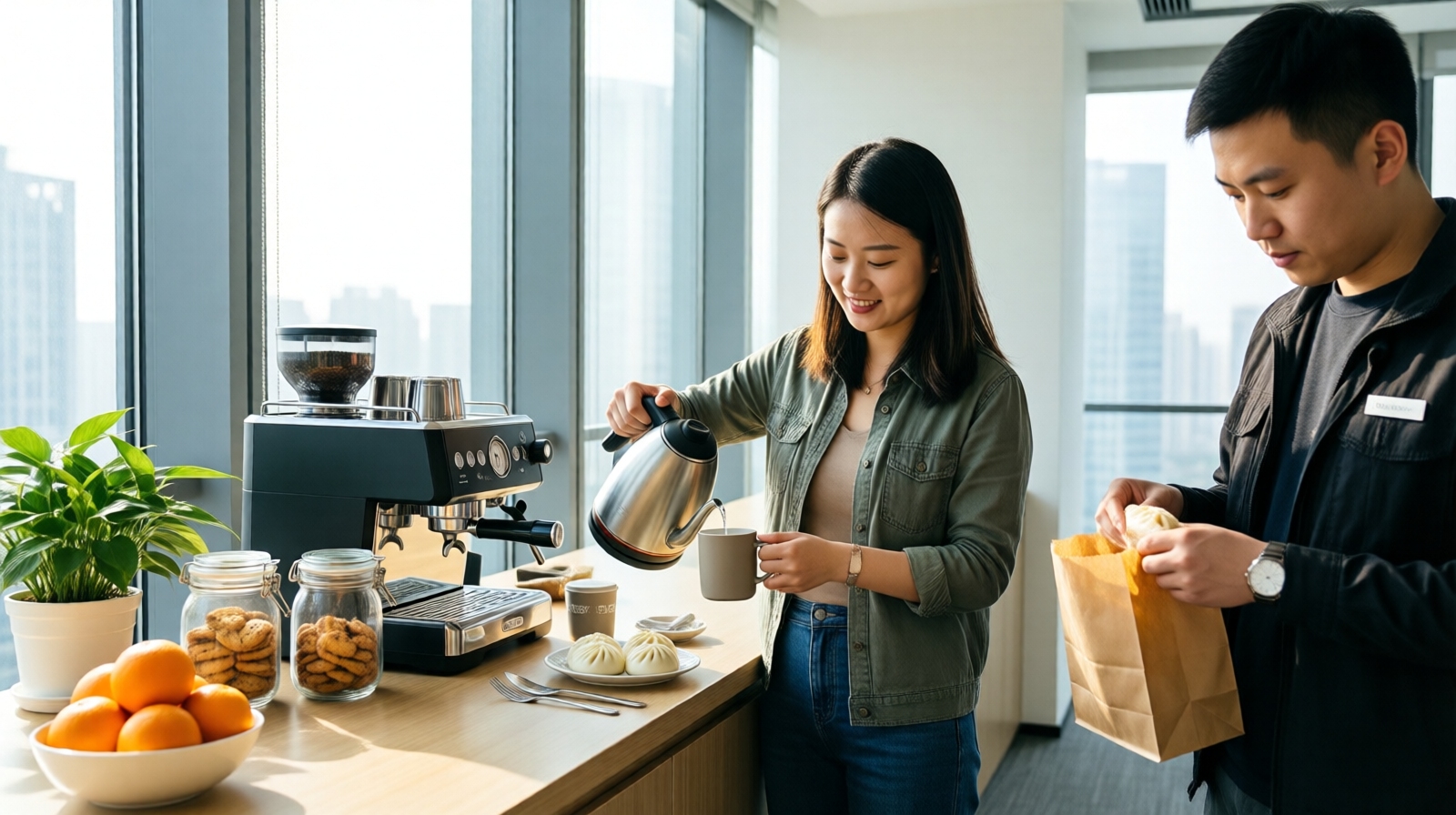

The Morning Ritual in the Pantry
At 8:30 a.m. in a Shanghai internet company, the kettle in the pantry has just started to hum. A young product manager, Li Na, waits for her coffee while another colleague reheats a pork bun in the microwave. They exchange the usual morning greetings—”how did you sleep,” “did you catch the game last night”—but the real conversation doesn’t begin until the hot water flows.
The pantry, or jian shui jian as it’s called in Chinese, was once just a corner with a water dispenser and a few instant noodles. Today, in most Chinese offices, it’s a transformed space: a sleek counter with an espresso machine, a fridge stocked with yogurt and ice cream, and a shelf of tea bags and dried fruits. But the most important thing that’s brewed there isn’t coffee—it’s relationships.
Shared Snacks and Group Orders
By mid-morning, Li Na’s phone buzzes. A colleague has posted a group order link for milk tea in the office group chat. “Who’s in?” The question is a daily ritual. Within minutes, five or six names appear. Someone calculates the total, another takes charge of delivery. By 3 p.m., a plastic bag of iced drinks arrives at the front desk, and individual cups are distributed to desks with a mix of “thank you”s and small talk.
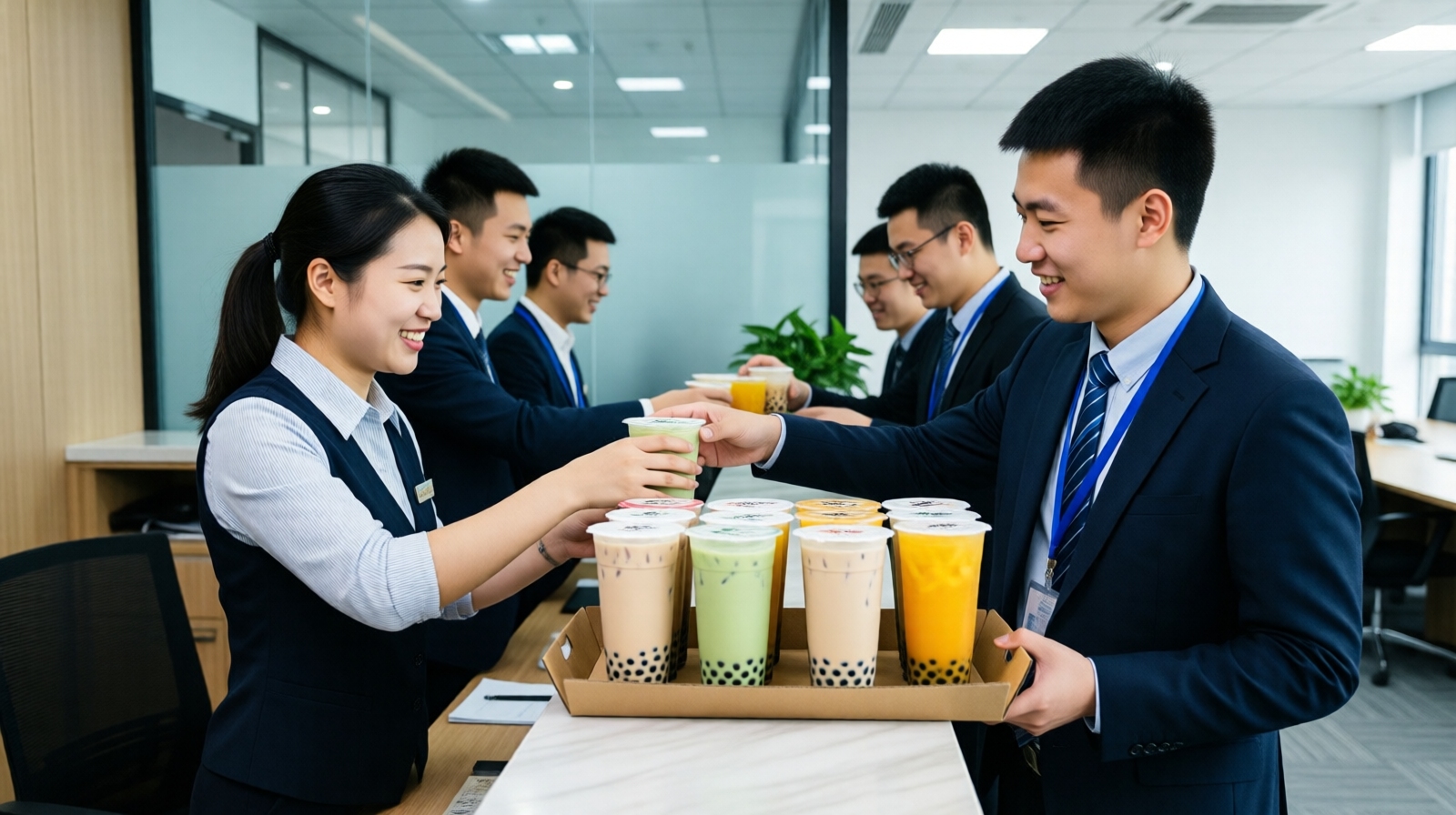
This is the “pin dan” (group order) culture, and it’s everywhere in Chinese workplaces. Offices have dedicated groups for afternoon tea, snack buys, or even groceries during big sales. The system is simple: one person initiates, others join, and everyone saves on delivery fees. But the real value is social. When you join an order, you’re signaling that you’re part of the group. When you decline too often, you risk being seen as distant.
The Social Currency of Snacks
Snacks themselves are more than food—they’re a form of social currency. A person returning from a trip might bring back local pastries. A colleague who receives a bonus might treat the team to fruit. These gesture-oriented exchanges are rooted in the Chinese concept of renqing, or reciprocal obligations. If someone shares her carefully-bought cherries with you, you are expected to reciprocate someday—not immediately, but at the right moment.
One engineer I spoke to, Chen Wei, keeps a drawer of individually wrapped chocolates. He admits he rarely eats them. “When I need someone’s help with a technical issue, I first offer a chocolate. It’s not bribery—it’s a way of opening a conversation,” he says, smiling.
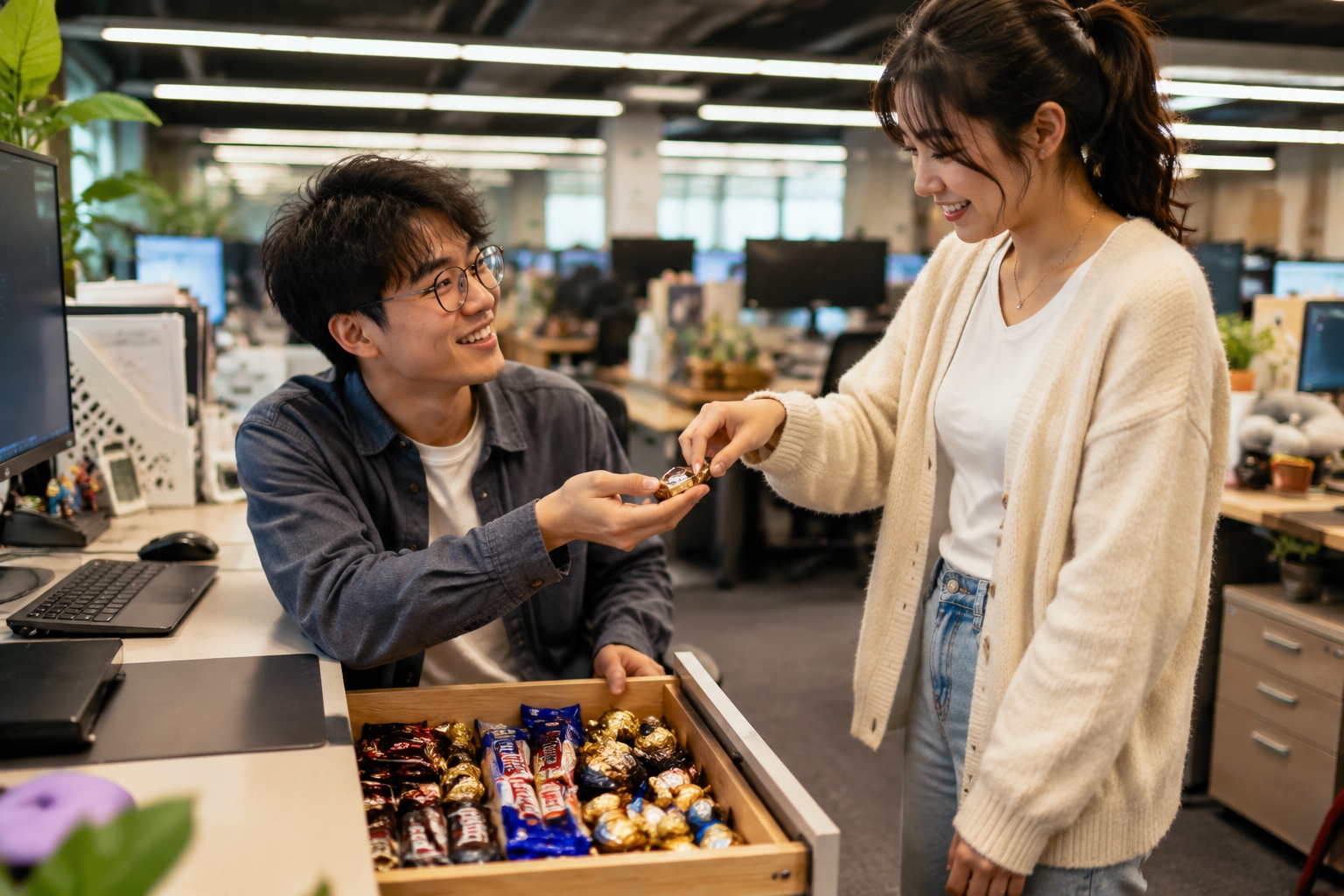
For newcomers, this can be confusing. But most foreign workers quickly learn the code: accept the first snack, praise it, and offer something in return within a week or two. It’s not about the cost—a box of cookies or some tropical fruit works—but about the gesture.
The Unspoken Rules of Annual Leave
For many Chinese professionals, however, annual leave is a more delicate topic than snack sharing. Despite generous statutory leave (at least five paid days after one year of service), many workers don’t take all their days. Why? The reasons are layered, and the pantry often becomes a place to voice them.
“If I take leave, my projects pile up and my teammates have to cover for me,” says Zhang Yu, a 29-year-old operations manager in Shenzhen. “So I usually end up working during my off-days anyway.” Others talk about “leave shame”—a feeling that taking time off signals a lack of dedication. In some offices, managers discourage leave during busy seasons, and even during downtime, there’s unspoken pressure to stay available on WeChat.
This pressure is slowly changing. Younger employees now negotiate for better work-life balance, and some companies have adopted “unlimited leave” policies. But old habits persist. In the pantry, a coworker might say, “I have 15 days saved up, but I haven’t taken one this year,” with a mix of pride and complaint.
Tiny Signals in Everyday Interactions
The pantry is also a stage for unspoken workplace dynamics. Watch who stands closest to the coffee machine. In many offices, senior managers usually enter first; they also tend to be the ones who leave first. Who fills the water pitcher? Who wipes the counter? Such small behaviors highlight hierarchy.
Relationships play out in other ways. Colleagues who regularly share lunch tables often form informal alliances. Those who walk together to the pantry with their own mugs might be closer than those who stay glued to their desks. Even the way people talk—standing near the door vs. by the window—signals whether they’re in a hurry or ready to chat.
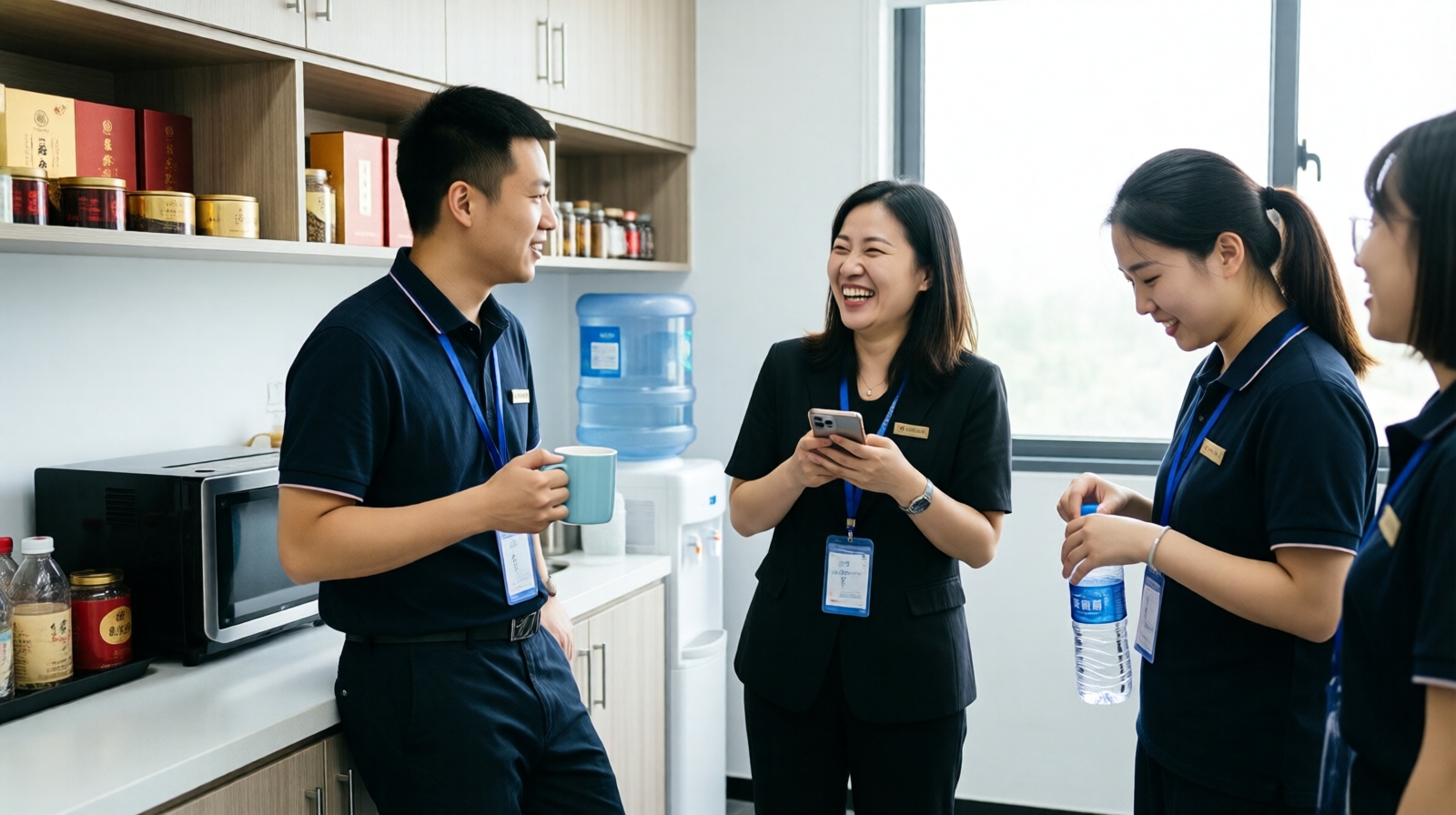
How to Read Chinese Office Culture from the Pantry
For expats and international friends working in China, the pantry is a natural entry point for understanding office culture. Here are a few practical observations:
Join a group order at least once a week. It shows you’re accessible, and you’ll get to know colleagues outside formal meetings. If you’re new, bring a box of regional snacks from your hometown—it’s a universally accepted icebreaker. When you receive a treat or help, keep mental notes; reciprocity matters more than immediacy. And when colleagues bring local specialties, ask about them. Showing curiosity about their hometown food is a compliment in itself.
Remember that the pantry isn’t just a place for coffee—it’s a place where formal hierarchy softens and genuine personalities surface. In a culture where direct confrontation is often avoided, the pantry is a space where jokes, complaints, and even difficult messages are exchanged in a lighter register.
So next time you’re in a Chinese office, don’t just grab your cup and leave. Stay a little longer. The water may be boiling, but the real conversation is just beginning to warm up.
Start the discussion at forum.chinacomes.com