

Introduction: A City Seen from a Tower
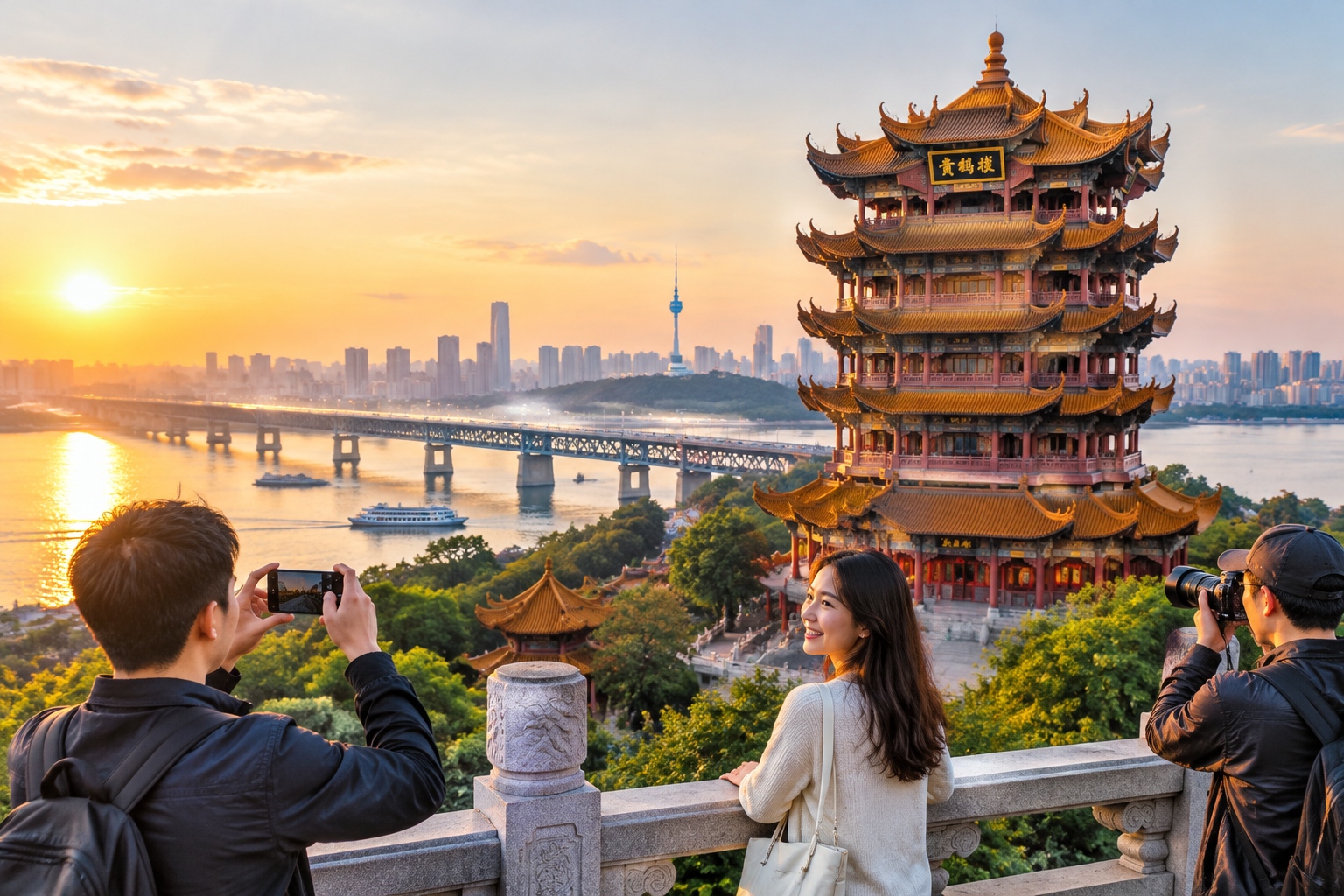
The Yellow Crane Tower has been a symbol of Wuhan for more than a millennium. Rebuilt eleven times since its first stone was laid in 223 AD, it now stands on Snake Hill, overlooking the junction of the Yangtze and Han rivers. On a typical Saturday morning, the ticket queue stretches hundreds of meters before the gates open at 8 a.m. Visitors, mostly Chinese domestic tourists, arrive with selfie sticks, kids in matching T-shirts, and grandparents who quote Tang dynasty poetry from memory. For many, climbing this five-story tower is a pilgrimage.
But what happens below the tower is where the more interesting story lies. Wuhan, a city of 11 million people, is in the middle of a quiet transformation driven by tourism. The boom is not just about historic landmarks—it’s about how ordinary streets, markets, and neighborhoods are being rediscovered, renovated, and reimagined. For an outsider, especially from Europe or North America, the scale and pace of this change can be astonishing.
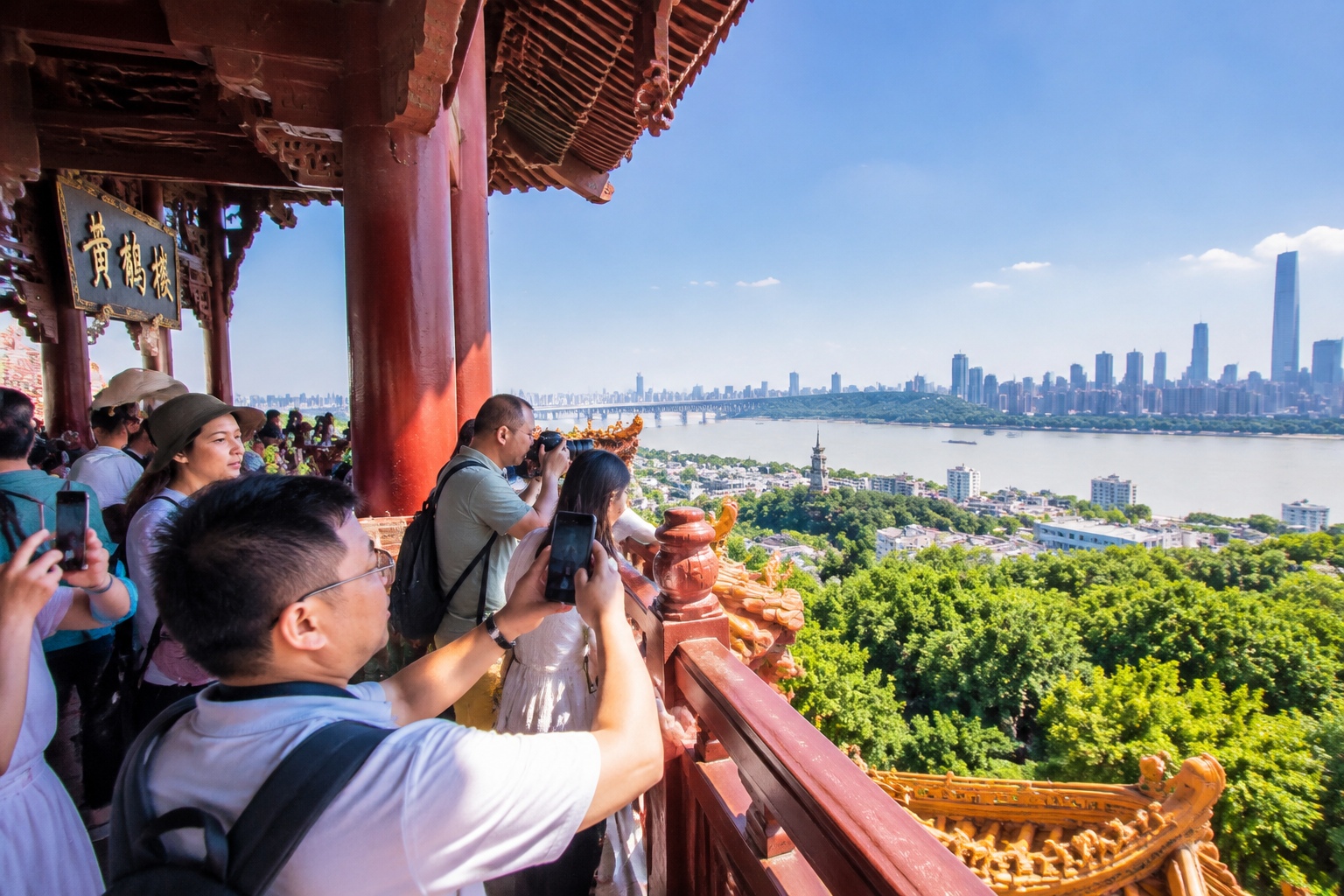
As you stand on the top floor of the Yellow Crane Tower, you don’t just see a river or a bridge. You see the city’s past and future colliding: the old ferry docks below, the sleek new skyscrapers of the financial district, and the green belt of the riverside parks. In the West, a tower like this might be isolated in a curated historic zone. Here, it is the center of a sprawling, living metropolis whose citizens go about their daily routines in plain sight.
Beyond the Tower: How Locals Actually Live
Ask any Wuhan local what they love about their city, and they won’t start with Yellow Crane Tower. They’ll start with breakfast. The local term is guozao, which literally means “to make breakfast” but in practice means a chaotic, delicious street ritual. From 5 to 9 a.m., the city’s sidewalks are lined with stall owners who serve hot dry noodles (re gan mian), sesame paste, fried dough sticks, and soy milk. Queues are short, turnover is fast, and many regulars eat standing up.
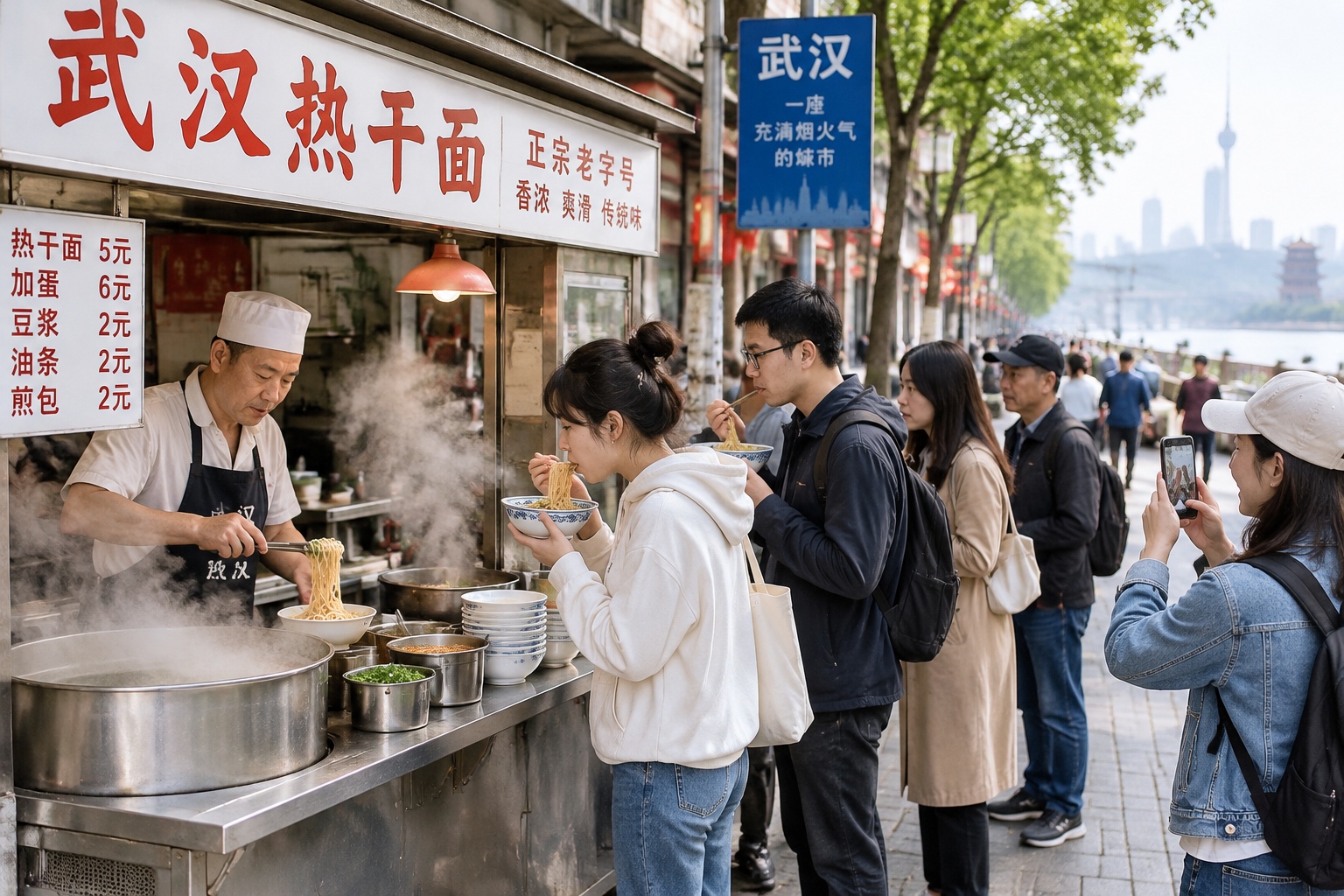
This is the kind of daily scene that tourism has helped preserve and even amplify. Food vlogs and online reviews have turned these humble stalls into must-try destinations. But unlike a food court in a shopping mall, these stalls are still the real deal—they serve locals, they close when they run out, and they’ve been doing it for decades. A Western visitor might initially find the noise and plastic tables off-putting, but after a few minutes, the friendliness of the stall owners and the punch of the flavors win you over.
Ferry Rides and River City Rhythms
Another essential Wuhan experience is the cross-river ferry. For just two yuan (about thirty cents), you can ride from the Wuchang side to the Hankou side, crossing the Yangtze. For many tourists, this is a scenic adventure; for locals, it’s a daily commute. The ferry deck is a cross-section of Wuhan society: office workers checking phones, elderly couples with folding chairs, delivery riders on e-bikes, and young parents pushing strollers. The juxtaposition of the old wooden benches and the flashing skyline views is strangely magical.
Compared to the Seine or the Thames, where tourist boats are pricey and separated from commuter traffic, Wuhan’s ferry is both a functioning transit line and an authentic sightseeing tour. It’s a pattern you see across China: the practical and the touristic are not always separate. That overlap is part of the charm—and part of what makes the city feel alive rather than staged.
Urban Renewal: Old Streets, New Consumption
Tourism money has accelerated a wave of urban renewal in older neighborhoods. Take Tanhualin, a hundred-year-old street near the old city wall of Wuchang. A decade ago, it was a rundown alley with crumbling walls. Now it’s a lively stretch of art galleries, independent bookstores, boutique coffee shops, and craft workshops. The facades have been restored, but many buildings still house their original residents. You can see laundry hanging from balconies above a vintage clothing store—a sight that delights many tourists who worry about overly polished heritage sites.
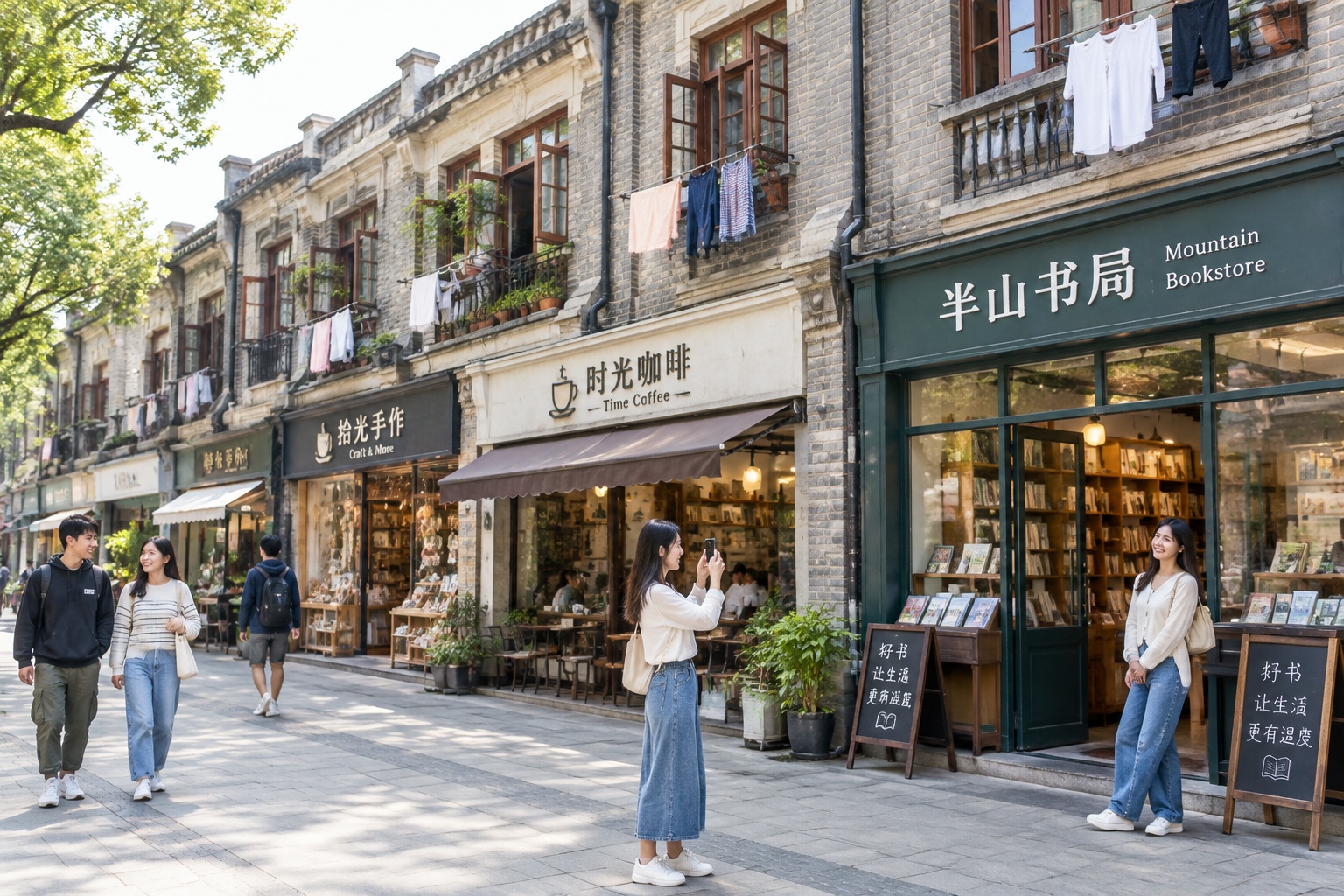
Similarly, Li Huangpi Road in Hankou has become a favorite for its early-20th-century architecture, once the site of foreign concessions. Today, the red-brick buildings hold craft beer bars, designer studios, and Sichuan-style bistro. On weekends, the sidewalks fill with young people taking photos against the old walls. This mix of history and hipster culture is comparable to what you might find in a European quarter, but with a distinctive Chinese flavor—more people, more neon signs, more energy.
The economic effect is measurable. Wuhan’s tourism revenue has grown at a double-digit annual pace since the pandemic, and the city government has invested heavily in improving tourist facilities. According to the Wuhan Municipal Bureau of Culture and Tourism, the city welcomed over 300 million visitors in 2024, a record that pushes the city to think carefully about how to manage growth.
Technology and Convenience: The Smart-Travel Revolution
If you arrive from a country where cash or cards still dominate, Wuhan’s digital economy will be one of the biggest shocks. Almost every transaction, from a five-yuan bowl of noodles to a museum ticket, happens through QR code scans on a smartphone. The Yellow Crane Tower itself uses a time-slot reservation system that splits the day into hourly slots. This both controls capacity and helps visitors avoid long waits. You can book your ticket while still in the metro on the way there.
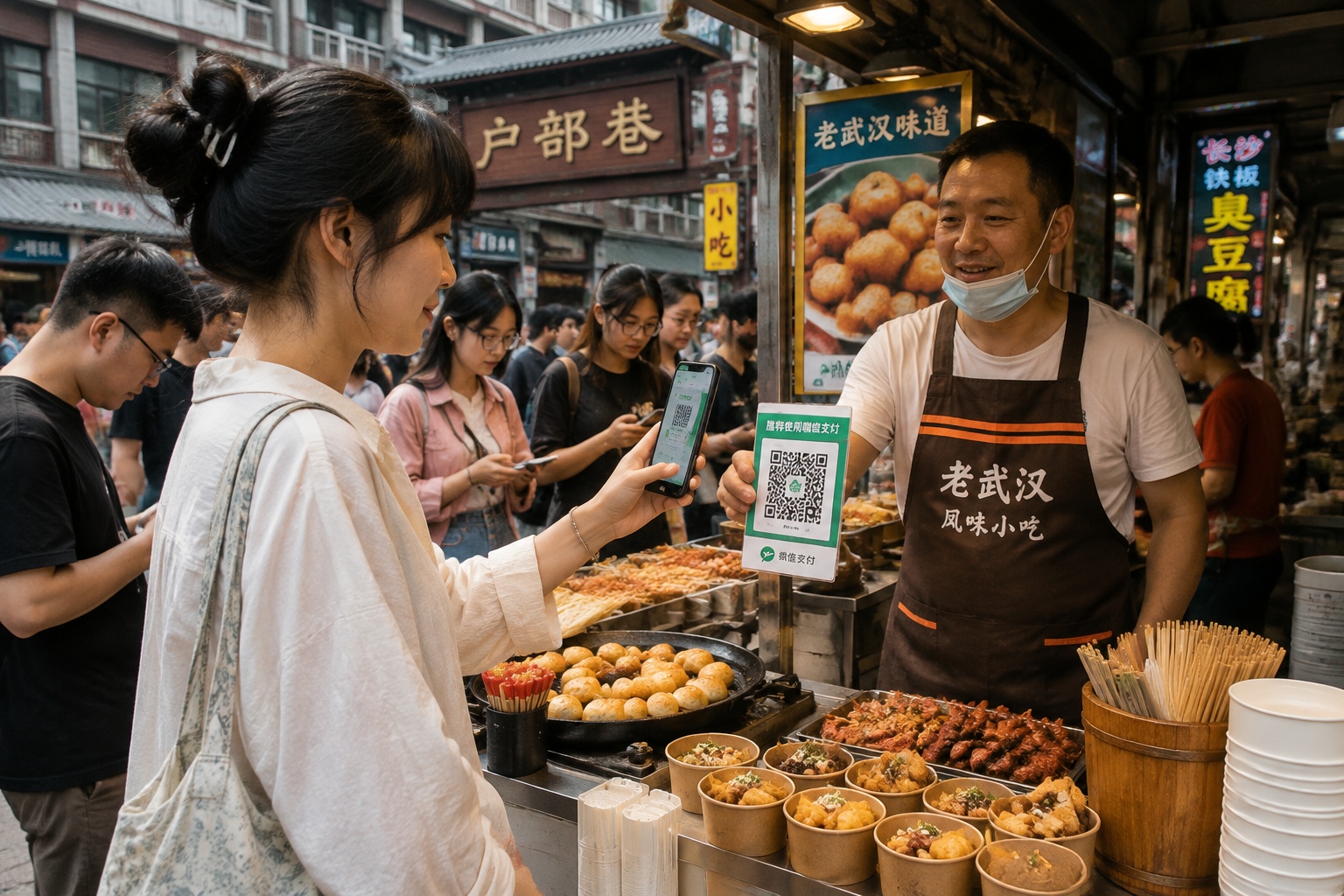
For international travelers, setting up Alipay or WeChat Pay with a foreign passport is a small hurdle. Once you’re in, the convenience is remarkable. The same apps are used to check into hotels, order taxis with no cash needed, pay utility bills, and even reserve tables at restaurants. A visitor from Europe might wonder how older locals navigate this, but the answer is simple: many do, and the system is designed with fallbacks like cash options at ticket counters and manual service windows.
This digital infrastructure is why domestic tourism in China runs so efficiently. Not only does it reduce friction, it generates data for cities to anticipate crowd surges. When a popular cherry-blossom festival began drawing overwhelming crowds, Wuhan used its digital platform to issue real-time alerts and staggered entry. It’s a different philosophy from the open, walk-in approach common in many Western cities, but in a country of 1.4 billion people, the need for coordination is obvious.
Stories from Everyday People
To understand how tourism is reshaping Wuhan, it helps to hear from the people who live in it. Chen Fang has been a licensed tour guide for eight years. She says the way visitors approach the site has changed dramatically. “A few years ago, people asked about the Tang dynasty poems or when the tower was rebuilt. Now they ask me where I live, how much rent I pay, what my kids are studying. They’re curious about my life, not just the history.” This shift reflects a broader trend in Chinese tourism: travelers want authentic connection with locals, not just photo spots.
A Tour Guide’s Shifting Questions
Chen also notes that many of her clients now come from smaller cities or rural areas, which wasn’t true a decade ago. The surge in domestic travel has democratized the experience. She now designs very personal tours, including a stop at a local noodle shop where she introduces regular customers by name. “Tourism isn’t a performance,” she says. “It’s a way to open a door.”
Noodle Stalls and New Opportunities
Uncle Li has run a noodles stall near the tower for over twenty years. His father started the business in the 1980s. When tourism boomed, he noticed more strangers coming to take photos of his bowls. Online food bloggers reviewed his stall, and soon he had loyal followers from as far away as Shanghai and Beijing. He hasn’t changed his recipe or raised his price by much. But he’s added an Alipay QR code and a small English menu. “I’m not trying to be a cultural relic,” he jokes, “but I don’t mind if people enjoy the old flavors.”
A Young Entrepreneur in Tanhualin
Zhang Wei, 27, grew up in a town about two hours from Wuhan. After graduating from a local design college, he set up a small studio in Tanhualin, selling hand-illustrated postcards and prints of Wuhan street scenes. When I spoke to him, he was busy packing orders to ship to other cities. “The tourists found me first,” he says. “Now I have repeat clients online all over China.” The commercial community built around tourism has given him a platform he likely wouldn’t have had in a pre-tourism era. Still, he worries about rent increases and the risk of homogenization. “I hope the street keeps its soul,” he says.
Challenges: Balancing Tourism and Daily Life
Not everything about the tourism boom is rosy. Long lines, noise, and waste are common complaints from residents near major attractions. During national holidays like Golden Week, the Yellow Crane Tower can be so crowded that visitors can’t move, and locals avoid the area altogether. Rising rents driven by tourist traffic have pushed out some long-standing businesses in favor of chain stores.
Wuhan isn’t the only city facing this. Amsterdam, Barcelona, and Kyoto all grapple with overtourism. But the Chinese context is distinct: the sheer scale of domestic tourists is enormous, and many attractions are publicly managed with targets for visitor numbers and revenue. The city government has responded with restrictions and management tools. The Yellow Crane Tower’s reservation system caps daily visitors at 36,000, still a huge number but lower than pre-pandemic peaks. Some streets have banned new chain stores to preserve character.
There’s also a deeper tension between commodification and authenticity. When a neighborhood becomes popular on social media, shop owners start catering to Instagram tastes, and the original daily character fades. The best safeguard, as many locals see it, is to keep residents in place and support their livelihoods. That means affordable housing policies and small-business protections. It’s a delicate dance, and Wuhan, like any city, is still figuring out the steps.
Conclusion: A Window into China’s Urban Change
The return of the Yellow Crane Tower as a world-class tourist destination is really a story about the rebirth of a city. It’s about how a place that once suffered heavy industry decline and pandemic lockdown can reinvent itself through a combination of heritage, technology, and creativity. For the traveler, Wuhan offers more than just a historical site; it offers a live portrait of urban China’s relentless motion.
When you leave the tower and walk down into the old streets, you’ll see the tourists and the residents side by side. The noodle steam rises, the ferry whistle blows, and life goes on. Tourism is the lens, but the image is of a society that is confident, messy, and endlessly energetic. Climb the tower, eat the noodles, ride the ferry. That is how you learn what Wuhan is really made of.
Start the discussion at forum.chinacomes.com