

A Stove That Roars
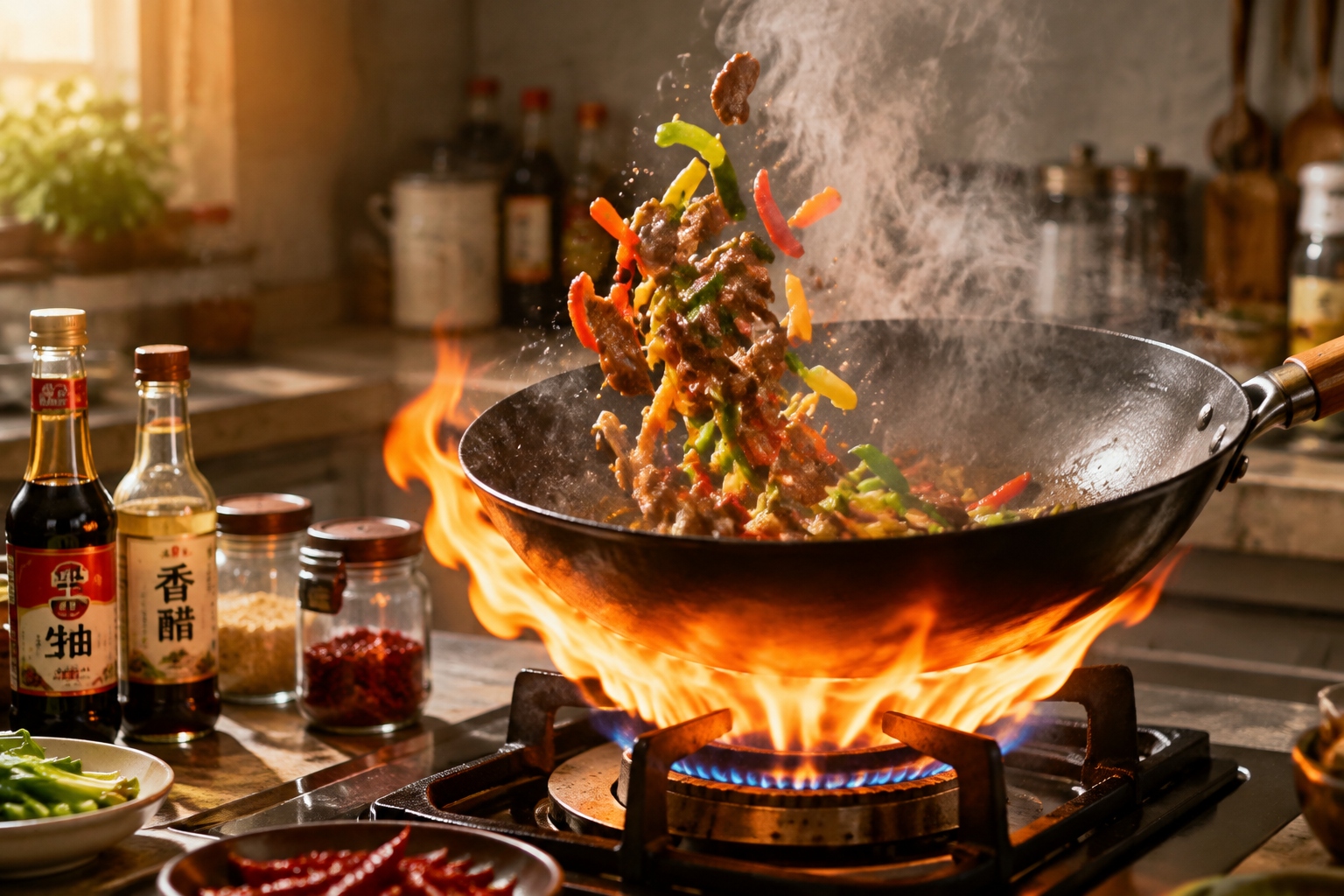
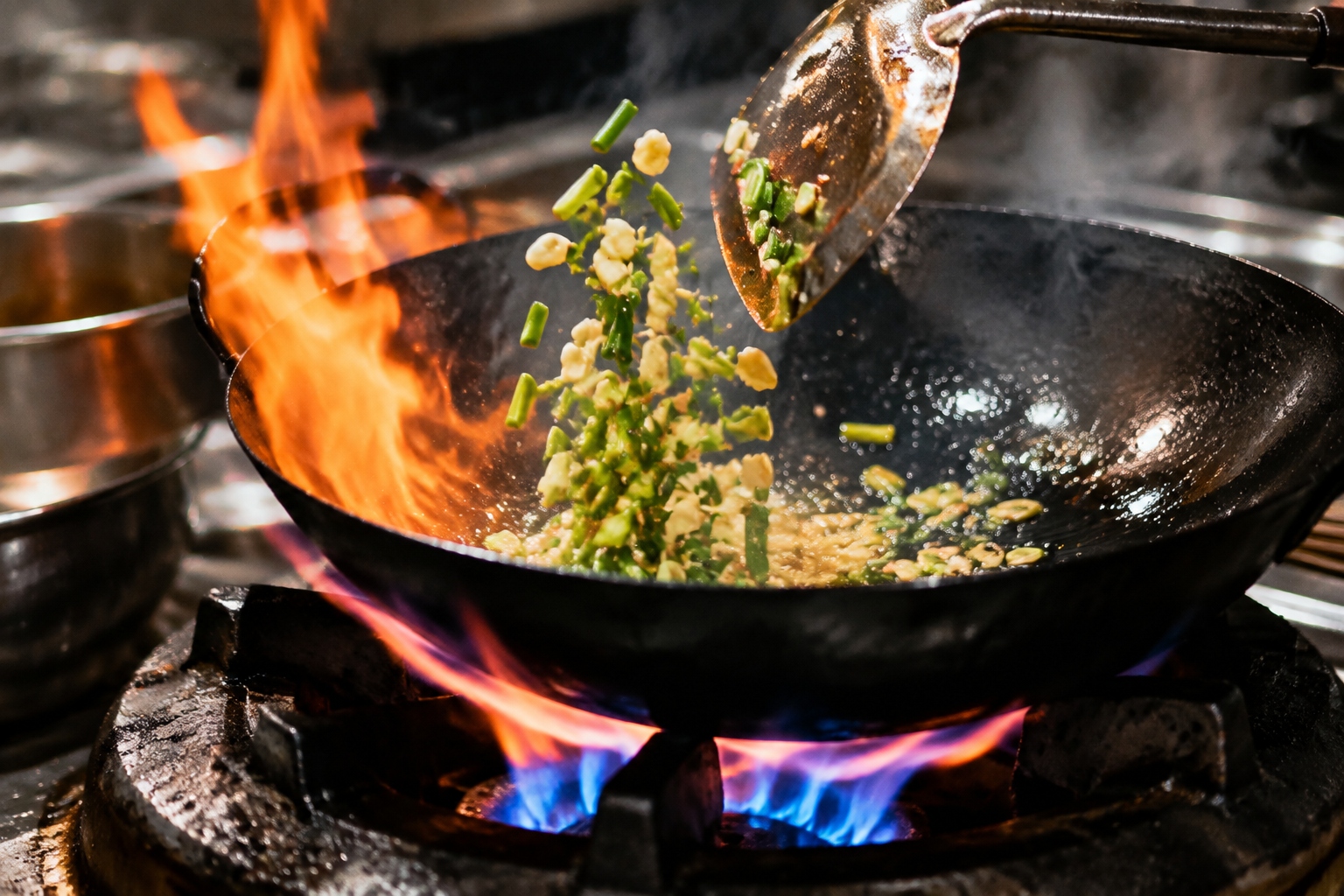
The first time I stood in a Chinese friend’s kitchen, I thought the stove was broken. The burner let out a low roar, and a blue-orange flame climbed halfway up the sides of the wok. My friend tossed in chopped scallions and garlic; they hit the hot oil and sizzled like rain on a tin roof. Within seconds, a pile of leafy greens went in, the wok shook, flames licked the food, and before I could ask a single question, dinner was on the plate. “That’s just how we cook,” she said.
That experience is familiar to anyone who has cooked in a Chinese home. The kitchen counter might be small, the cabinets simple, but the stove is often the star. Compared to the burners in many Western kitchens, the flame here is enormous. A typical home gas burner in China pushes out 4 to 5 kilowatts of heat, and some premium models go up to 5.2 kW. By contrast, a standard Western home burner is usually between 2 and 3 kW. This power difference isn’t for showing off—it’s the foundation of an entire cooking style.
What Is Wok Hei and Why Does It Matter?
If you’ve eaten stir-fry in a good Chinese restaurant, you know the difference between food that’s just hot and food that tastes alive. That elusive quality is often called wok hei in Cantonese, which translates roughly to “the breath of the wok.” It’s the smoky scent, the charred edges, and the intense caramelized flavor you get when ingredients hit a white-hot wok and move fast.
Wok hei is not just about temperature. It’s about chemistry. When food touches a wok heated above 200°C (around 400°F), the proteins and sugars on its surface go through the Maillard reaction, creating hundreds of new flavor compounds. This is the same reaction behind grilled steak, toasted bread, and roasted coffee. But in a wok, the effect is layered and quick. The high heat also vaporizes tiny droplets of oil, which can ignite in the air and add a smoky, complex note to the dish. That’s why a proper stir-fry tastes and smells like more than the sum of its ingredients.
Home cooks in China don’t always consciously aim for wok hei, but they know that a flame that reaches the right strength makes everything taste better. Vegetables stay crisp while getting lightly charred. Meat gets browned on the outside while staying juicy inside. Sauces reduce to glossy glazes rather than turning watery. The bottom line: high heat changes texture and taste in ways a low-powered stove simply cannot replicate.
The Holy Trinity: Soy Sauce, Vinegar, and Cooking Wine
Fire gets the glory, but a Chinese kitchen’s second secret is a trio of simple seasonings. Walk into almost any home in China and you’ll find these three bottles sitting near the stove: soy sauce, Chinese vinegar, and cooking wine. Their roles are distinct, and together they form the backbone of countless dishes.
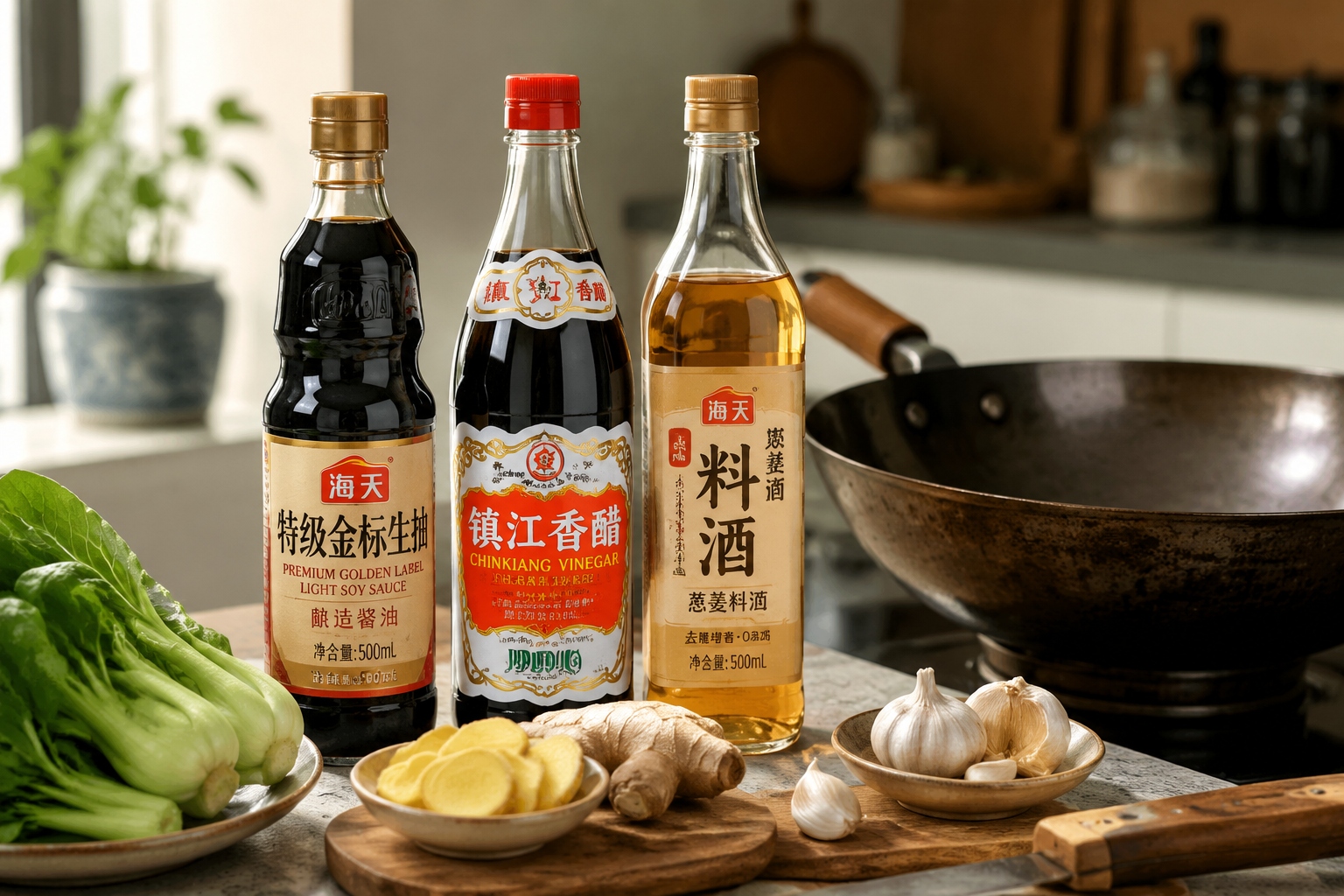
Soy sauce is the salt, the color, and the umami provider. There are two main types: light soy sauce, which is saltier and adds flavor, and dark soy sauce, which is sweeter, thicker, and used for color. Most home cooks use light soy sauce as their default, adding a splash of dark for braised dishes. In a stir-fry, soy sauce is often drizzled along the side of the hot wok, where it sizzles and caramelizes instantly, releasing a deep, savory aroma.
Chinese vinegar is more fermented and less sweet than balsamic. The most common are black vinegar (often made from rice or sorghum), Chinkiang vinegar, and white rice vinegar. A teaspoon added at the end of a dish gives a bright lift, cutting through grease and balancing saltiness. It’s not about making food sour—it’s about making flavors pop.
Chinese cooking wine, usually a type of yellow rice wine called huangjiu, is used to remove unwanted smells from meat and seafood and add a subtle floral sweetness. When you see a chef splash a clear liquid into a hot wok and the flames flare up, that’s usually cooking wine. It’s harmless, and the alcohol evaporates during cooking, leaving only the aromatic depth behind. In a pinch, dry sherry or mirin can work, but the flavor isn’t quite the same.
These three seasonings work as a team. Soy sauce gives salt and umami, vinegar adds acidity and lift, and wine contributes complexity and aroma. You don’t need a six-level spice rack to cook great Chinese food at home. Just these three, plus salt, sugar, and perhaps a little oil for seasoning, are enough for most weeknight meals.
Why Electric Cooktops Just Don’t Get There
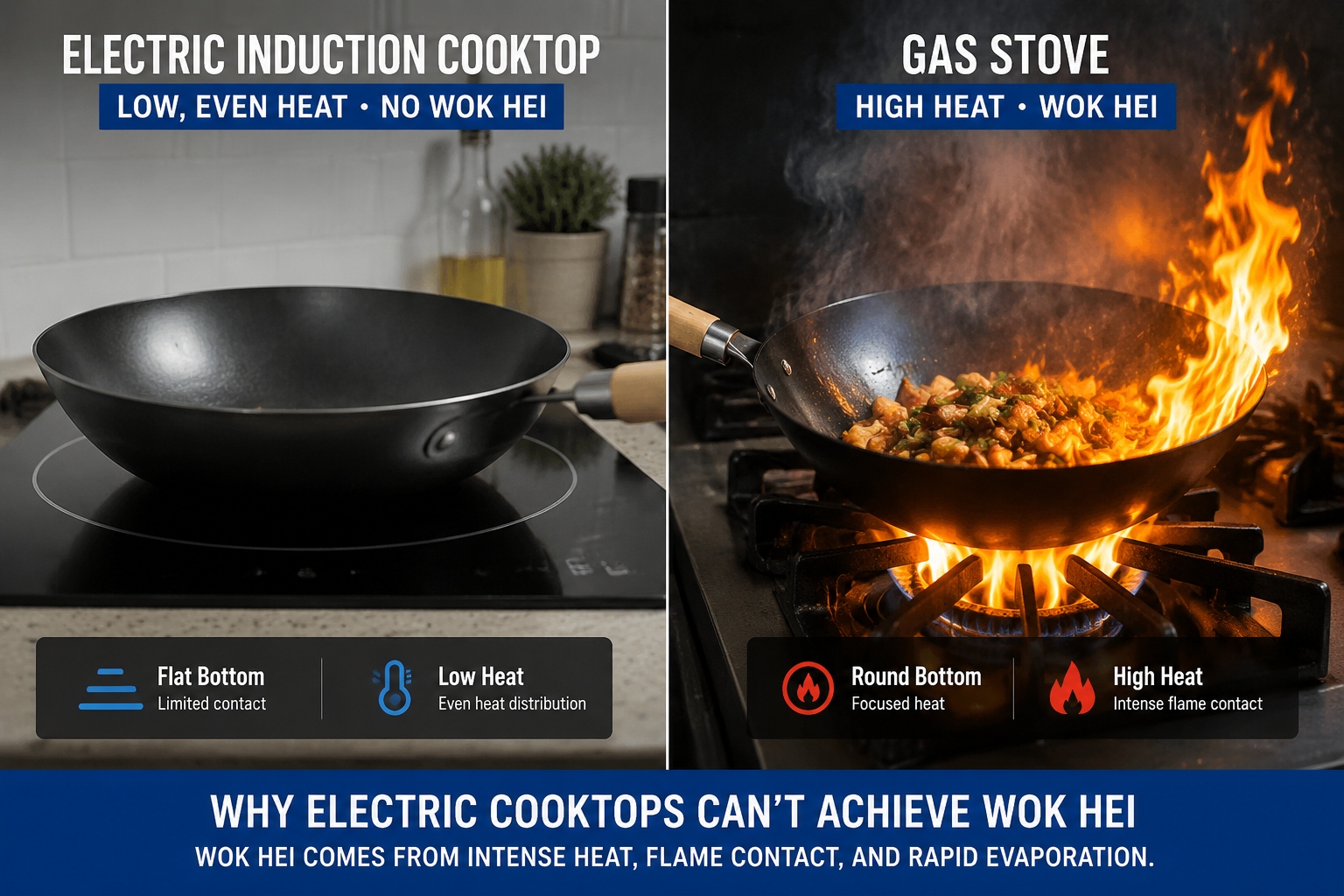
Many visitors to China are impressed by the stove power, but when they return home and try to stir-fry on an electric cooktop, they quickly hit a wall. Why does the food come out steamed or soggy instead of smoky and crisp?
The main problem is power delivery. A typical induction cooktop has a maximum output of 2 to 3 kW, which is half or even less than a Chinese gas burner. On paper, that might not sound like a huge difference, but in practice it’s enormous. A wok needs rapid, sustained heat to keep the food moving without lowering the temperature too much. Electric cooktops often cycle on and off to maintain a set temperature; when you add cold meat or vegetables, the heating element pulls back, and the pan cools down. Gas burners, on the other hand, respond instantly. The flame can stay on full blast, delivering consistent energy to the wok.
Another issue is the shape of the wok. Traditional Chinese woks have a rounded bottom that sits directly in the flame, collecting heat over a large curve. Electric and induction cooktops need a flat bottom, which changes how heat is distributed. The flat bottom creates hot spots and doesn’t allow the same kind of constant stirring and tossing that gives food that charred, smoky look.
There’s also the thermal capacity. A wok is typically made of carbon steel, which is lightweight and doesn’t hold onto heat like cast iron. It relies on the flame to recover temperature quickly. With a weak burner, the wok stays cold, and food ends up boiling in its own juices rather than frying.
How to Get Closer to Wok Hei on a Regular Stove
Not everyone can install a five-kilowatt monster burner at home. But you can still get surprisingly close to restaurant-quality stir-fry if you adjust a few variables. Here’s a practical checklist for cooking on an ordinary gas or induction stove.
1. Use the hottest setting and wait before adding food. This seems obvious, but many people add oil at medium heat. Let the wok (or a heavy stainless steel skillet) preheat until it just starts to smoke. That’s when you know it’s properly hot. On an induction hob, use the boost function if available, and keep it pressed until after the ingredients are in.
2. Choose the right pan. A flat-bottomed carbon steel wok is a good compromise for Western stoves. It heats quickly and can take a beating. If you only have a frying pan, use one with a heavy base and high sides. Avoid nonstick pans rated for low heat—they won’t get hot enough without releasing chemicals.
3. Cut food into small, uniform pieces. Smaller pieces have more surface area and cook faster, which means they spend less time on the stove and retain more crunch. Try matchstick carrots, thin strips of meat, and small florets. The goal is to minimize the temperature drop when the food hits the pan.
4. Cook in small batches. If you pile too much food into a wok, it steams. Even with a powerful stove, a crowded wok can’t get hot enough. Cook in batches if necessary, and if a recipe calls for adding lots of liquid, spread it out or reduce it separately.
5. Don’t stir constantly. It’s tempting to keep things moving, but constant stirring lowers the pan temperature and prevents browning. Let the food sit for 10–15 seconds before turning the wok or flipping the ingredients with a spatula. A few charred spots are exactly what you want.
6. Drizzle sauces along the edge of the pan. Instead of pouring soy sauce or wine over the top, let it run down the hot side of the wok. This instantly heats the liquid and releases a burst of aroma, similar to what happens with a good steak.
7. Consider a portable gas burner if you’re serious. In many countries, small butane canister stoves are cheap and safe to use outdoors or next to a window. They can produce 2.5–3 kW, which is close to a built-in gas wok burner. Camping stores often sell them. Just be sure to use them in a ventilated area and away from curtains.
A Word About Videos
A written explanation can only go so far. If you search for “wok hei” or “锅气” on short-video platforms like Douyin, Xiaohongshu, or YouTube, you’ll find countless clips showing dramatic flames and heady smoke. The difference between a proper restaurant stir-fry and a home attempt is easy to see—and easy to aspire to. If you’re building your own Playbook on cooking Chinese food, bookmark a few videos that show how chefs toss the wok and control the fire. Slow-motion clips can help you see exactly when the sauce gets added and how the flame flares up.
The Takeaway
The secret weapons of a Chinese kitchen aren’t imported gadgets or expensive countertops. They’re the intense heat of a stove designed to mimic the fires of a professional restaurant, and three humble seasonings that have been doing the job for centuries. Understanding these tools is the first step. The second step is to adapt them to your own kitchen, even if your stove is small. Once you feel that the heat is truly high and the smoke rises from fresh ingredients, you’ll understand why Chinese home cooks treat their stove like a trusty old friend. It’s not about perfection—it’s about energy. And anyone can add a little more of that to their cooking.
Start the discussion at forum.chinacomes.com