
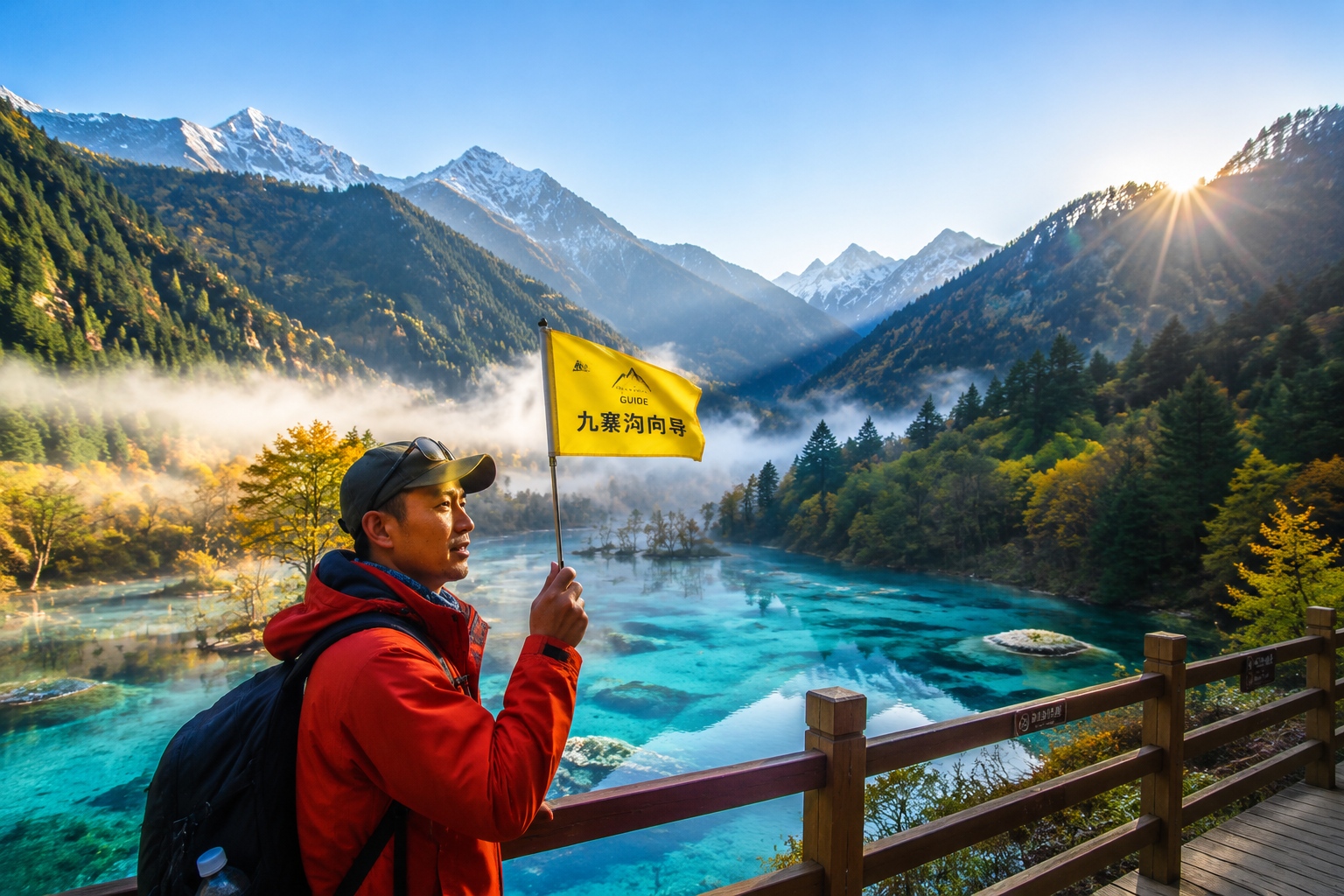

Morning at the Gate
At eight in the morning, the air at Jiuzhaigou’s entrance sits thin and cold, around 2,000 meters above sea level. Tsewang, a Tibetan guide in his early forties, holds a yellow pennant and waits for a small tour group from Shanghai. His face is weathered, and he smiles easily beneath a pair of sunglasses. Around him, other guides check clipboards and vans hum quietly in the parking lot.
A woman from the group asks where the best photo spot is. Tsewang tells her in calm, accented Mandarin: “Be patient. The water is clearest after the morning mist lifts.” It is the same advice he has given hundreds of times, but he still says it with a kindness that makes tourists feel they have discovered something private.
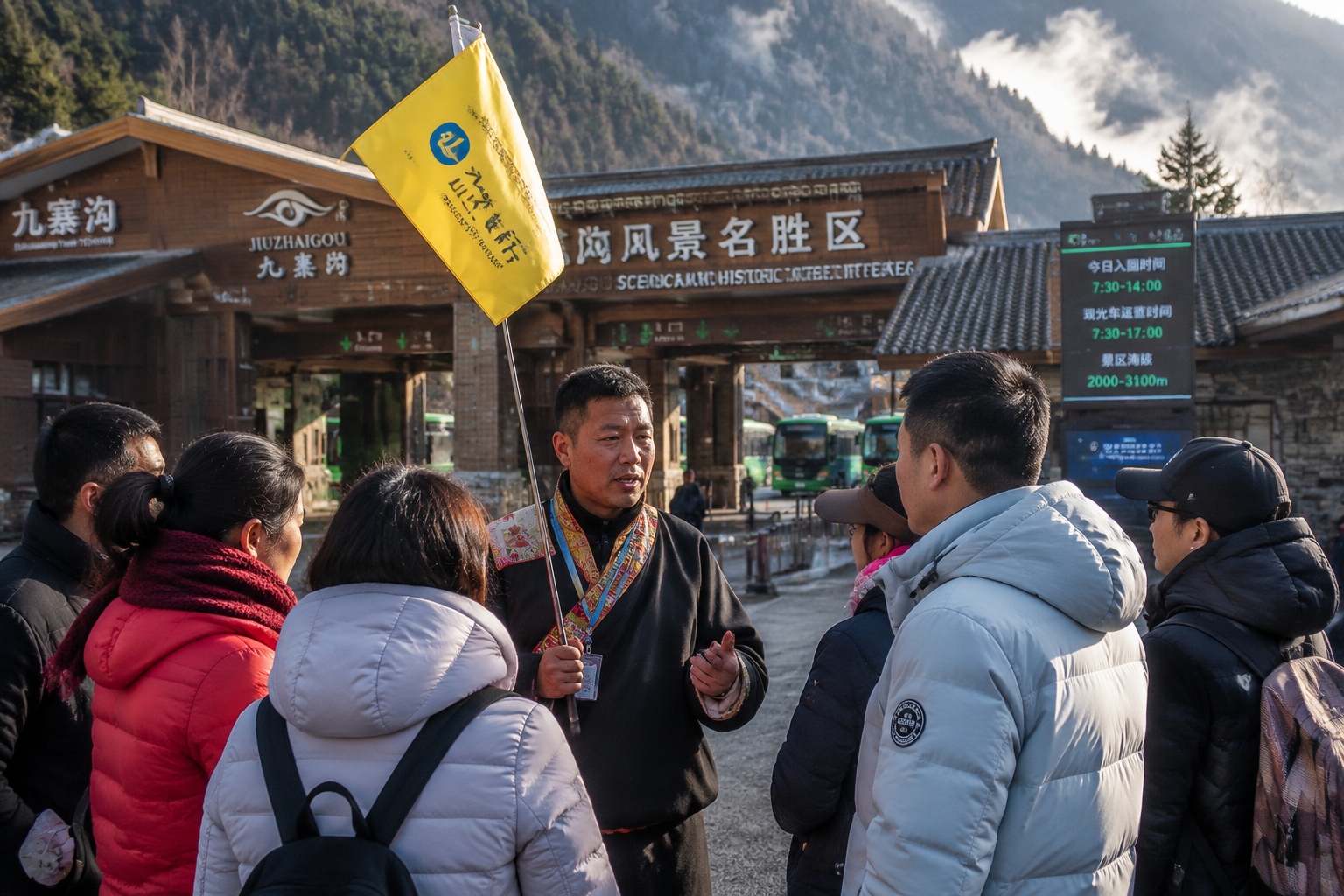
A Valley That Changed Everything
Jiuzhaigou, meaning “nine villages valley,” is a complex of lakes, waterfalls, and forests in northern Sichuan. Its turquoise pools, colored by dissolved calcium carbonate, have made it one of China’s most famous natural scenes. The valley was listed as a UNESCO World Heritage site in 1992, and since then, tourism has flooded in. But the landscape is fragile, and local authorities now cap daily visitors at around 40,000 during peak season, requiring everyone to use shared shuttle buses.
Tsewang grew up in Shuzheng Village, one of the original Tibetan settlements inside the valley. As a boy, he herded yaks with his grandfather and knew the names of every peak and pool. “When we were young,” he says, “we went to the lakes only for water and for our herds. Nobody imagined that people would fly halfway across China to look at them.”
The change did not happen overnight. In the 1990s, residents began to rent out spare rooms; later, hotels and shops multiplied. In the early 2000s, a stricter conservation plan relocated most families to a new town outside the reserve, with compensation and jobs in the tourism company. “My grandfather was worried we would lose the village,” Tsewang recalls. “But the new houses are warm, and the children can go to school all year.”
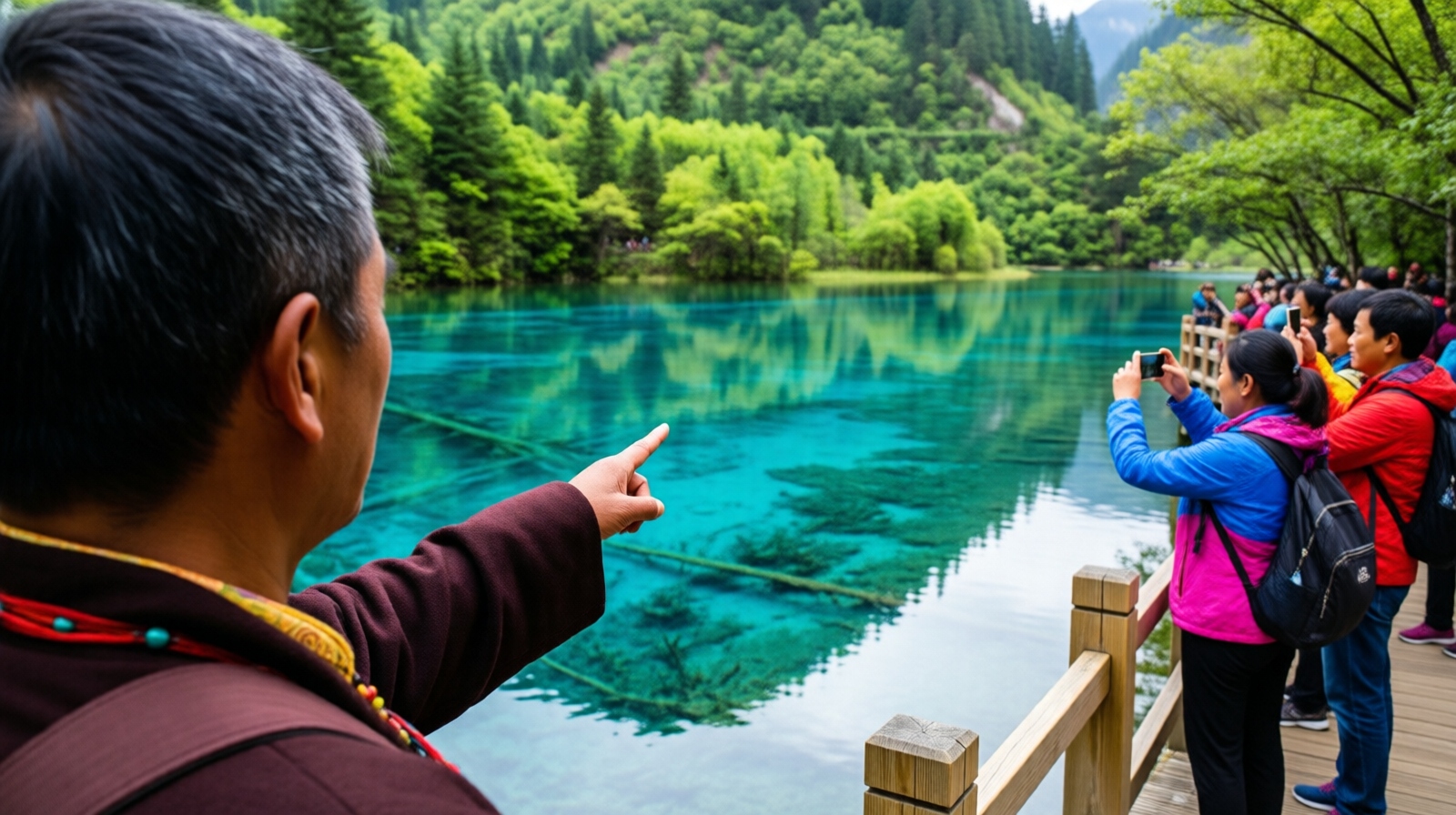
A Guide’s Daily Bite
His working day is a rhythm of walking, explaining, and listening. He leads his group past the boardwalk above Nuorilang Falls, where water crashes with a sound that drowns conversation. At the colorful Reed Lake, he tells the legend of the female mountain god who struck a bell to chase away demons. “Every place in the valley has a story,” he tells the kids in the group. “If you don’t hear the story, it’s just a pretty photo.”
Tourism has changed his Tibetan food habits, his language, and even the way he thinks. He used to speak only Tibetan and a local Sichuan dialect; now he speaks fluent Mandarin and enough English to count tickets and share the bus schedule. His brother, Nima, left for Chengdu to run a logistics company. His sister operates a guesthouse near the entrance, booked mostly on smartphone apps.
During the lunch break, he sits on a sun-warmed bench and eats a cold steamed bun. A colleague offers a cigarette, but he declines and pulls out a thermos of barley tea. “My grandmother used to say that all things have a soul,” he says, looking at the lake. “Now, when I guide, I try to carry that soul in my words.”
Becoming a guide was not automatic. In his early twenties, Tsewang worked as a construction laborer, then as a hotel dishwasher. When the valley reopened after a long conservation review, he decided to study for the provincial tourist guide certificate. He spent nine months memorizing trail names, plant lists, and emergency procedures. The exam was hard, but the hardest part was learning to speak in public. “I was shy in school,” he laughs. “Now I can lecture a lake.”
A teenager in his group asks whether Tibetans still believe in gods and spirits. Tsewang stops and says yes, but not in the way people might think. “It is not about bowing to a statue. It is about listening to the mountains, recognizing that we are guests here.” This small lecture makes the group quiet for a moment.
These choices are not obvious. Some young Tibetans prefer to stay, while others leave for big cities. “One generation makes a choice,” Tsewang says. “My father carried tourists’ luggage up the mountain for money. I guide them with a flag. My son, who is ten, wants to be a video blogger.”
The Limits of Tourism
Tourism has brought money, but it has also brought rules. Visitors can no longer walk wherever they wish; protecting the calcified pools means staying on elevated paths. In 2017, an earthquake damaged parts of the valley, leading to a 22-month closure for repairs. When it reopened, the authorities further tightened access, using online registration and strict time slots. Tsewang says most guides support the limits: “We want people to see it for a hundred more years, not just for a season.”
Walking along the Pearl Shoal, he stops to pick up a small piece of plastic a tourist accidentally dropped. He says nothing, just places it in his jacket pocket. Later, he explains to the group: “The lakes are sacred to Tibetan Buddhism. To my grandmother, the water was a protector. Now science also tells us that these travertine pools are fragile. Both reasons are the same.”
Scientists who monitor the valley have noticed that some pools have become less clear after heavy rainfall, and the water temperature rises a little year by year. Locals worry that climate change is a slower, more patient threat than mass tourism. In response, the park has planted native trees and banned single-use plastics. Guides like Tsewang have begun to talk about these issues openly. “A tourist may come once. We live here all our lives. We need to protect the water even from ourselves.”
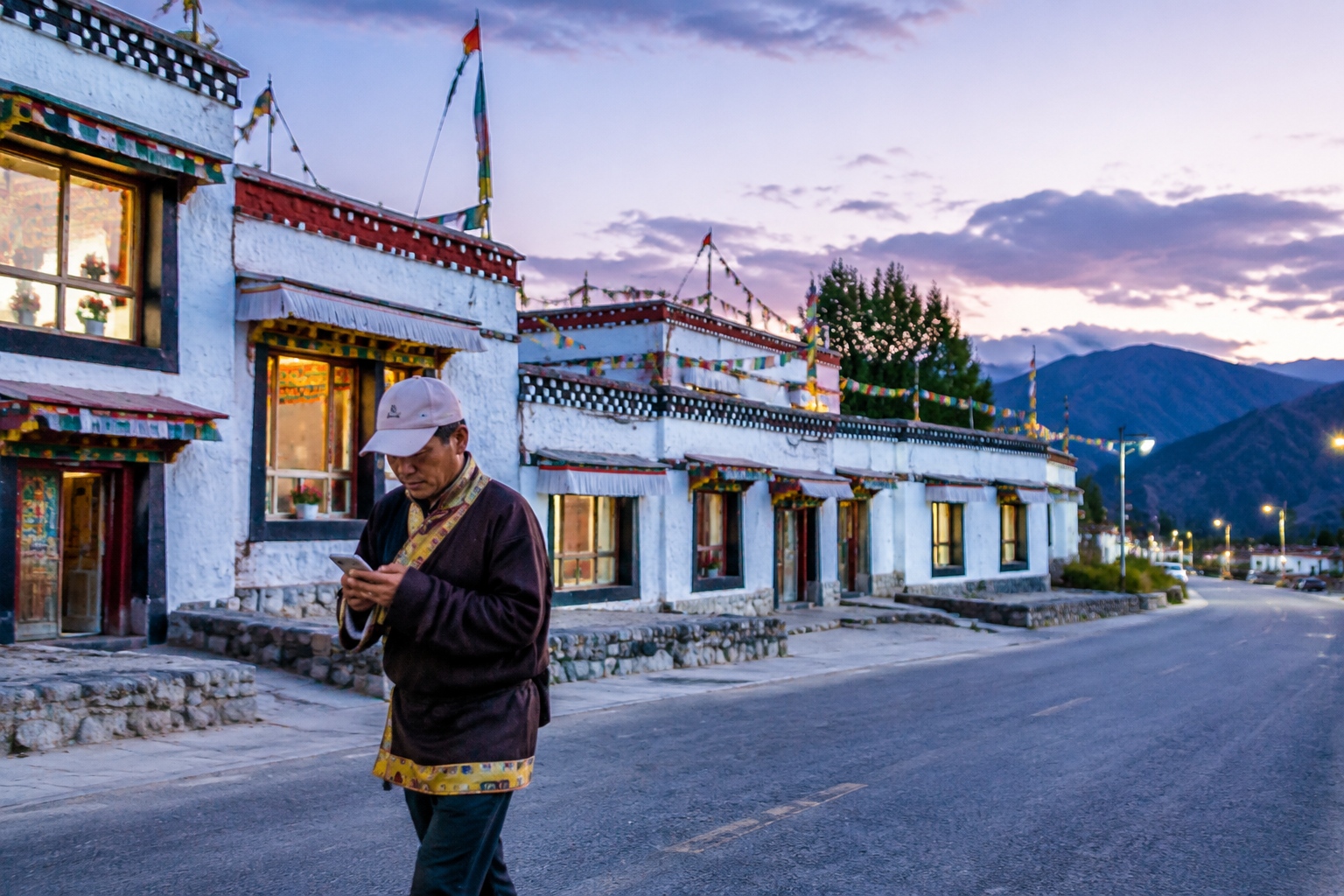
Evening in the New Village
By six in the evening, the site is almost empty. Tsewang delivers his group back to the entrance. The sun is low, and the valley walls glow in orange light. He takes off his cap and rubs the back of his head, tired but content. His phone buzzes; his son sends a voice message from school, reciting an English phrase. Tsewang laughs and saves it.
He walks to the parking lot where his battery-powered scooter waits. In the new town nearby, his family’s apartment looks out onto a row of replica Tibetan-style villas, some converted into homestays. A few old men still wear the traditional wool robe, but most young people wear jeans and puffer jackets. The smell of yak butter tea comes from the kitchen, mixed with the beep of a video call from his brother in Chengdu.
His son, Tenzin, is learning English at school and Tibetan calligraphy at a weekend class in the cultural center. Tsewang hopes the boy will not forget the language his grandfather sang in. He also knows that a guide’s work may one day be replaced by automated audio tours and self-driving shuttles. “Maybe the next generation chooses a different trade,” he says. “But they will still carry the mountain in their memories.”
What has really changed? Tsewang says the biggest change is not the buildings or the number of visitors, but the way people talk to each other. “When I guide,” he says, “I bring my tradition out of the valley and tie it to someone else’s point of view. That is what my grandfather could never do.”
He looks at the mountains one last time before the light fades. “The mountains stay the same. It’s us who carry them differently.”
Start the discussion at forum.chinacomes.com