
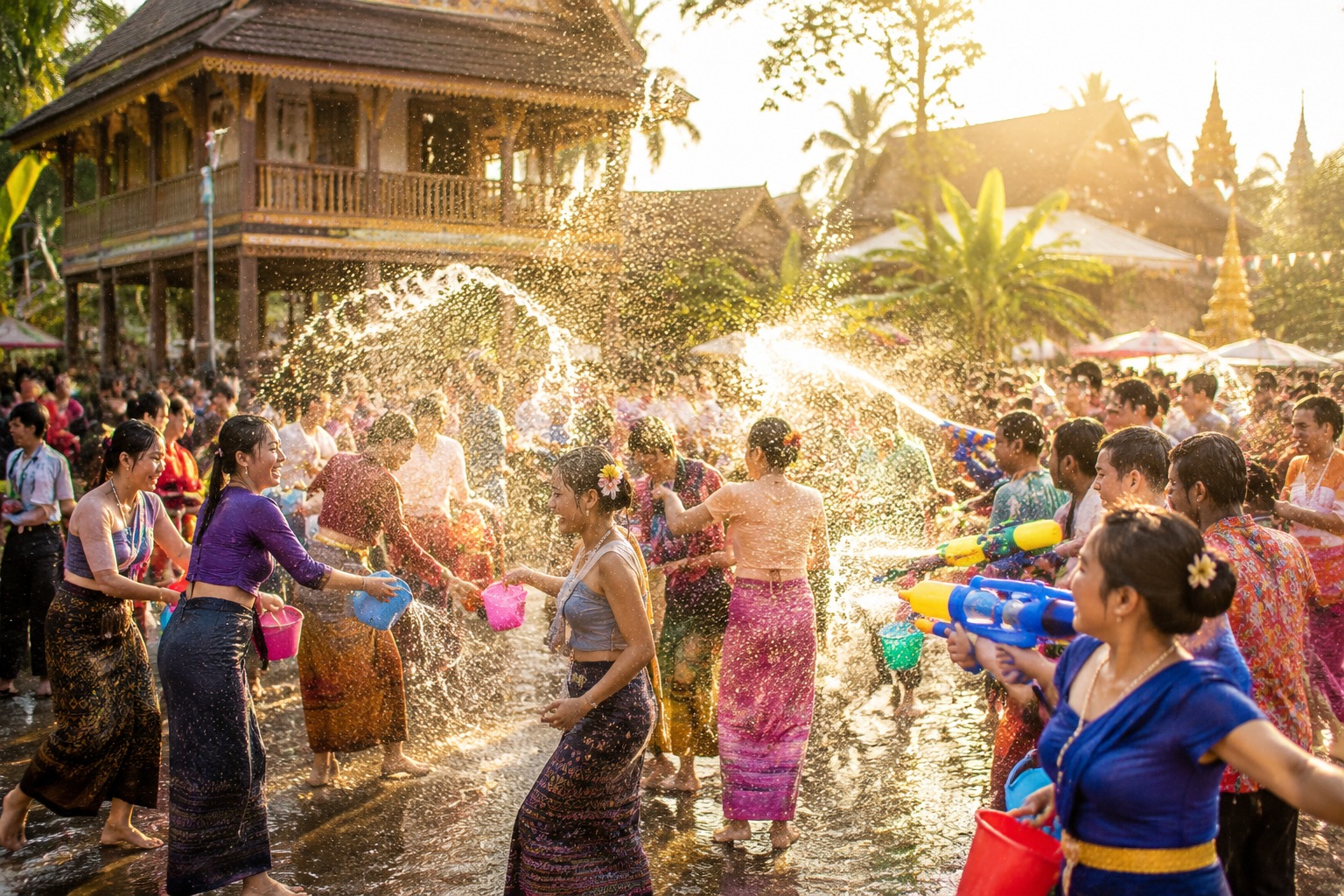

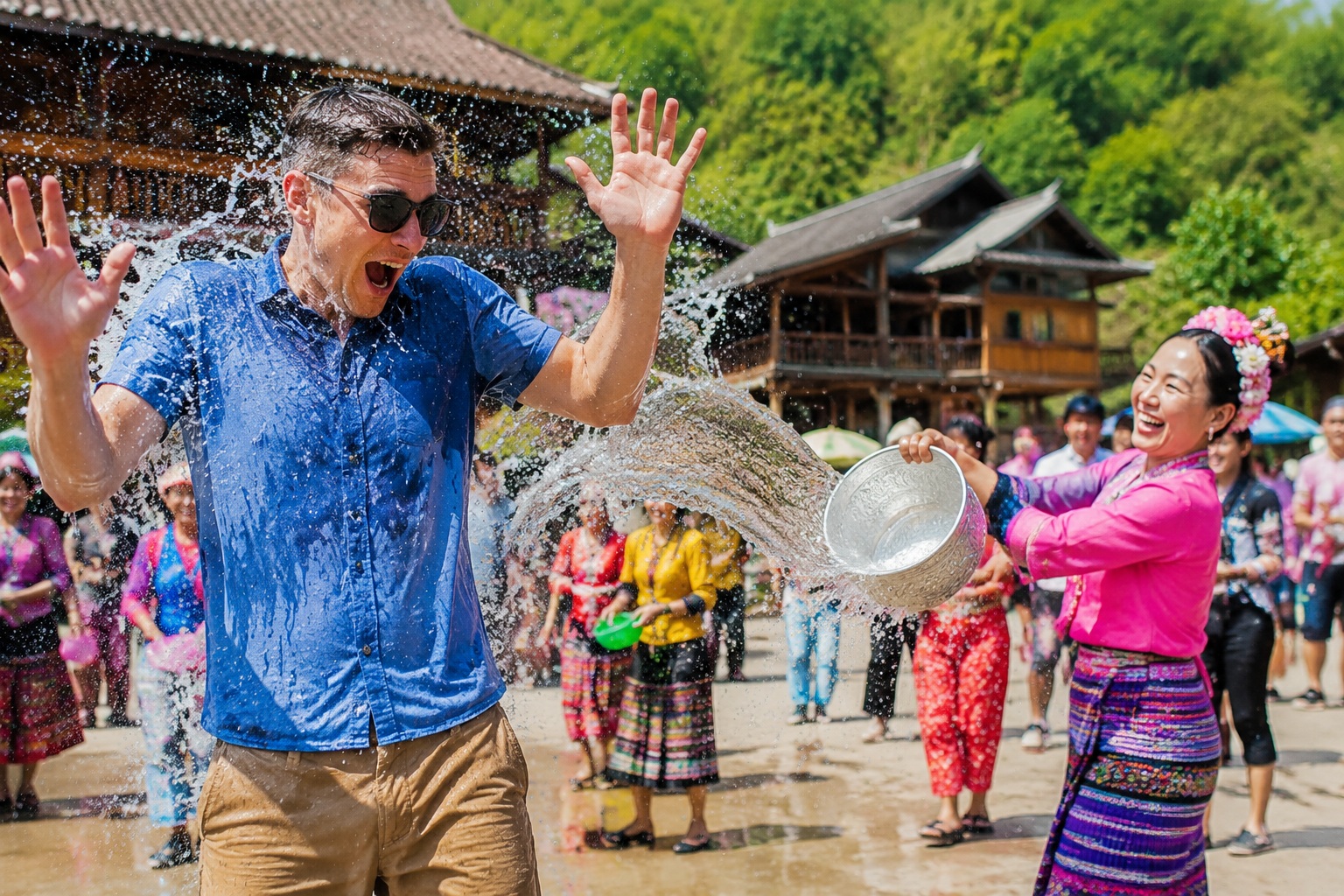
You step off the minibus in a small Dai village in Dehong, Yunnan, and before your feet hit the ground, a bucket of water catches you square in the chest. Your sunglasses become a waterfall. Your phone, thankfully, is inside a waterproof pouch. The woman who soaked you is laughing so hard she almost drops her basin. “Welcome to our New Year!” she shouts. That is your introduction to the Water Splashing Festival.
Most travelers know Yunnan’s more famous Xishuangbanna for its version of this festival. But Dehong, in the province’s far west, offers something rarer: a celebration in towns and villages where you are still a novelty, not another face in the crowd. The Dai people have lived along the Ruili River for centuries, and their New Year — celebrated in mid-April — is one of the most joyful, chaotic, and genuinely inclusive festivals you will ever attend.
Dehong is a border region where Myanmar sits just across the river, tropical fruit stalls spill onto the streets, and gold-tipped pagodas poke above the treeline. The festival here feels less like a stage show and more like a village fair on steroids. It is noisy, wet, unapologetically messy, and completely alive.
Why Water? The Blessing Behind the Splash
To the Dai, water means cleansing and renewal. During the festival, people pour water over Buddha statues, bless each other, and wash away the troubles of the past year. The tradition used to involve dipping a branch into water and sprinkling it gently on a friend’s shoulder. Today, high-pressure water guns, buckets, and garden hoses have taken over. But the meaning remains the same: the wetter you are, the luckier you are.
A local monk in Mangshi told me, “Dry clothes are overrated. If you leave the festival dry, you have no blessings.” So the splashing is not a nuisance; it is a shared prayer.
The Village: Where the Festival Gets Unforgettable
The first rule of Dehong’s Water Splashing Festival is that refusal to get wet is not an option. The second rule is that you will get wet, no matter how strategically you hide. Visitors are prime targets. Kids especially love to drench a foreigner, and they appear from nowhere, armed with water balloons and squealing with pure joy.
In a quiet village near Mangshi, I met a farmer named Ai. He watched me wring out my T-shirt for the tenth time and took pity. He invited me under his porch, handed me a traditional wooden bucket, and showed me the polite way to splash: a small branch of jasmine leaves, dipped into water, then gently flicked on another person’s shoulder. “First the shoulder, then a smile. That is good water,” he said.
Within ten minutes, I was using my branch on Ai’s grandchildren, who pretended to be horrified before chasing me with a leaky hose. We were all strangers an hour earlier. But water, it turns out, is the fastest glue for friendship.
Beyond the Buckets: Food, Dance, and Temple Hours
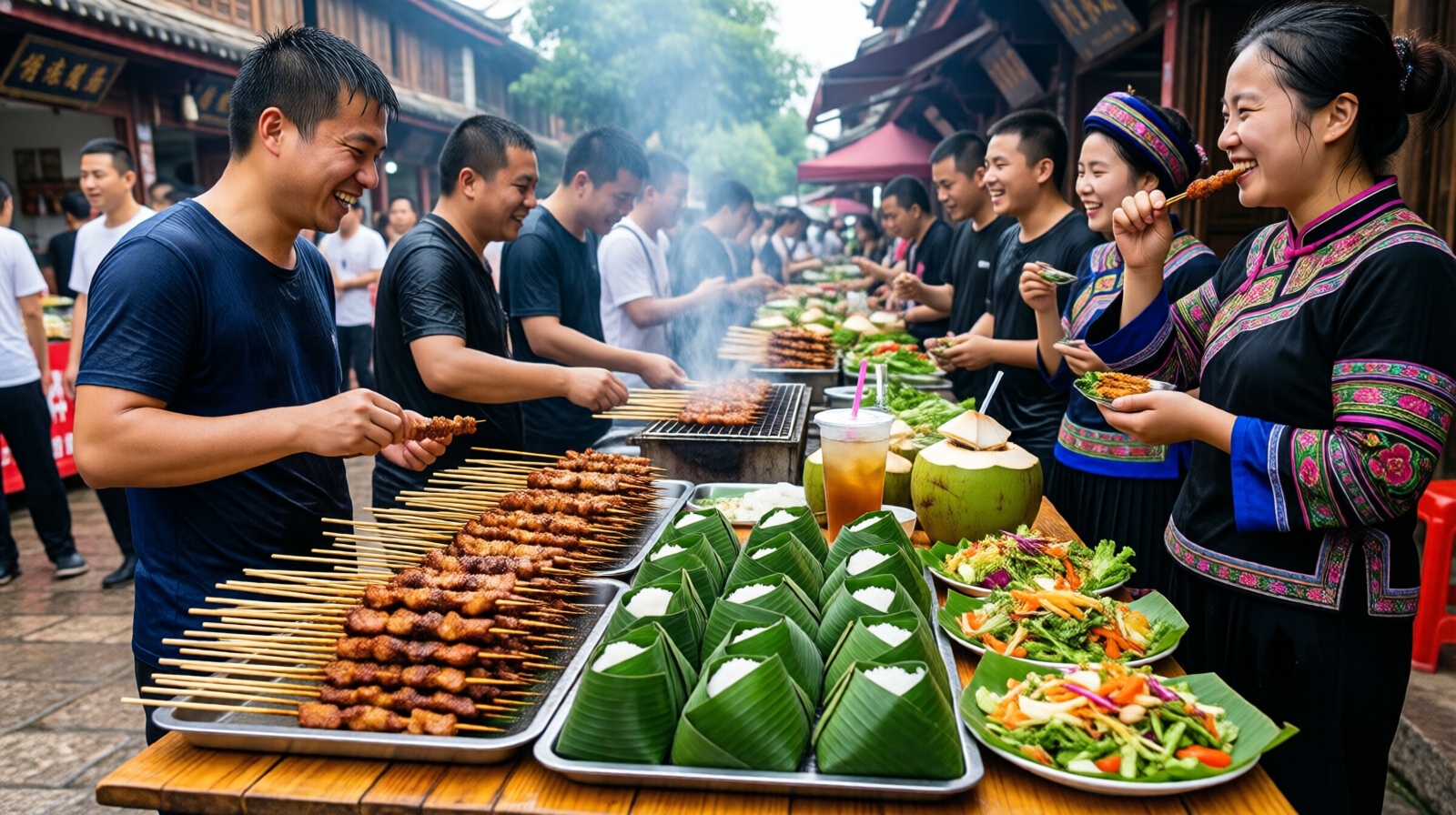
The splashing is only part of an older, richer celebration. Mornings begin at the village temple, where families line up to pour clean water over a Buddha image, small bowls clinking and praying hands weaving through the steam of incense. Then the fair begins, and the streets fill with bamboo grills stacked with chicken wings, grilled banana flower salads, sticky rice in coconut milk, and the famous sour-spicy Dai-style pickled shrimp.
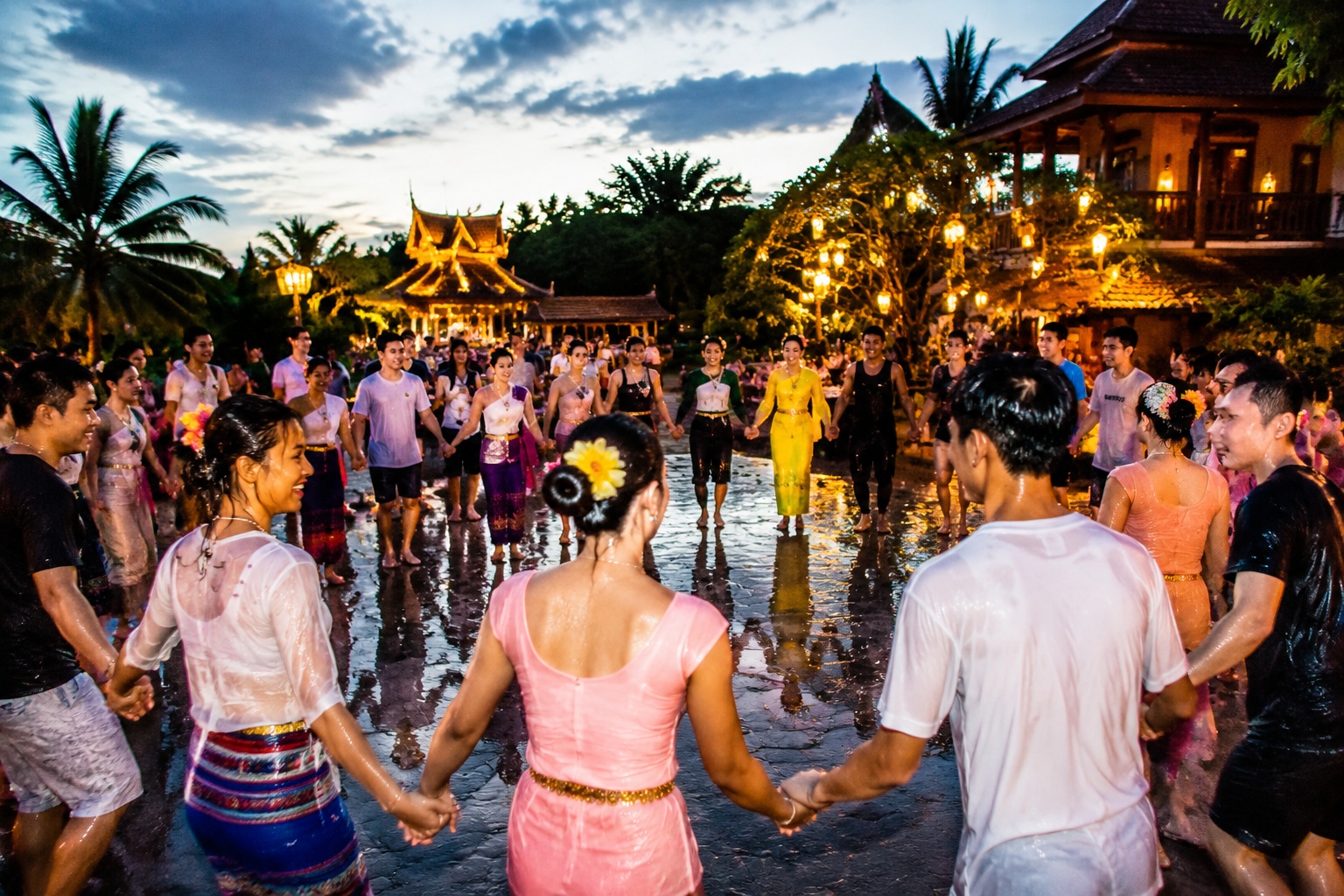
By late afternoon, the dancing starts. If you think you are too shy to dance, Dehong will disabuse you. An elderly Dai grandmother or a cheerful young woman will grab your wrist and pull you into a circle. You will attempt the peacock dance — arms flapping, wrists bent backward in a way that human wrists were not designed to do. Everyone around you will laugh, not cruelly, but with you. The joke is universal, and your embarrassment becomes the celebration.
I ended up dancing wildly with a group of Dai teenagers and a German backpacker. We communicated in broken English, broken Chinese, and very enthusiastic gestures. Somewhere in the middle of a two-hour circle dance, the language barrier dissolved completely. Video call home? Optional. The moment feels already like a cherished memory.
The Shared Memory: Who Creates the Festival?
Ask a local whether the festival is for tourists or for them, and they will look at you confused. The Water Splashing Festival in Dehong is not a staged performance. It is a community’s genuine New Year, and the fact that outsiders show up makes it better, because sharing happiness is a Dai value. In a way, visitors do not just watch the festival; they become part of its fabric. The laughter of a stunned tourist is part of the celebration’s emotional landscape.
During the festival, locals still do the things they have always done: paying respects at temples, cooking for families, visiting friends. But they also invite guests to their tables. A grandmother might hand you a piece of grilled fish and nod approvingly as you eat it with your hands. A young boy might teach you the most effective water gun ambush point behind a motor scooter. In that exchange, the line between host and guest blurs. The village creates the festival, and the visitors co-create the memory.
Smart (and Dryer) Tips for First-Timers
Getting soaked can be wonderful only if you are prepared. Here are some hard-won lessons:
- Wear quick-drying clothes. Jeans become heavy, shapeless armor that drags you down. Shorts and light hiking pants work best.
- Bring a waterproof phone case. A plastic bag for your shoes is also wise. There is no dry safe zone.
- Respect the boundaries. In smaller villages, elderly people and monks are not splashed. Let them initiate, and never aim at babies or the elderly.
- Eat, eat, eat. The water burns energy, and the festival food is fantastic. Try the sour-spicy shredded papaya salad and the coconut sticky rice.
- Go off the beaten path. While ruins and big city events are fun, truly immersive water fights happen in the rural villages around Mangshi, Ruili, and Yingjiang. Rent a minibus and hop off at any dusty village that looks festive.
A Final Soak
As the sun sets and the last water balloon explodes on a stray dog (who does not seem to mind), you will find yourself tired, sticky, and grinning ear to ear. The streets are littered with plastic buckets and puddles reflect the pink sky. A child runs past, high-fives your wet palm, and runs off.
You do not know his name. He does not know yours. But for one afternoon in a corner of Yunnan, you were both part of each other’s New Year. The Water Splashing Festival is not something you watch. It is something you become part of. And if you let it, it will splash itself into your memory forever.
Start the discussion at forum.chinacomes.com