
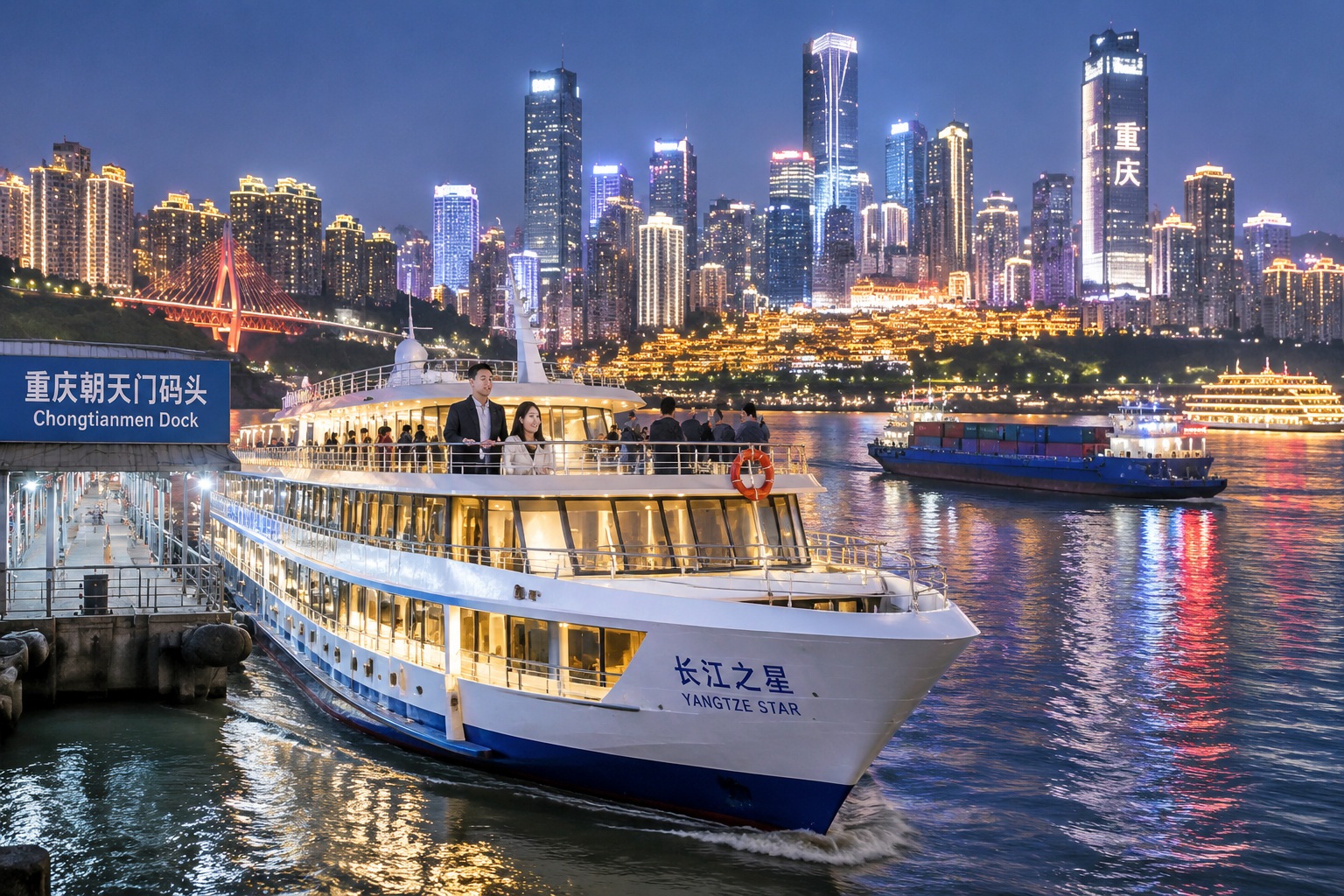

Boarding at Chaotianmen: Where the Mountain City Meets the River
It is nine in the evening when I walk up the ramp of a cruise ship at Chaotianmen Dock in Chongqing. Against the steep hillside, the city glows like a stack of gift boxes. Many passengers are here for the famous night view of the Yangtze and Jialing rivers meeting below the old city walls. I am here for a different reason. As a business traveler, I want to understand China’s interior economy — not from an Excel spreadsheet or a boardroom presentation, but from the decks and docks where goods, people and ideas actually travel.
Chongqing is a natural starting point. The municipality has about 32 million residents and an economy that exceeds 3 trillion yuan, or roughly 420 billion US dollars. It is one of China’s largest centers for cars, electronics, pharmaceuticals and machinery. Behind the neon skyline lie dozens of industrial parks that ship out laptops and auto parts to Europe and Southeast Asia. But reaching the sea from this mountain city used to be slow and expensive. The Yangtze changed that. For centuries, it was the only efficient route east.
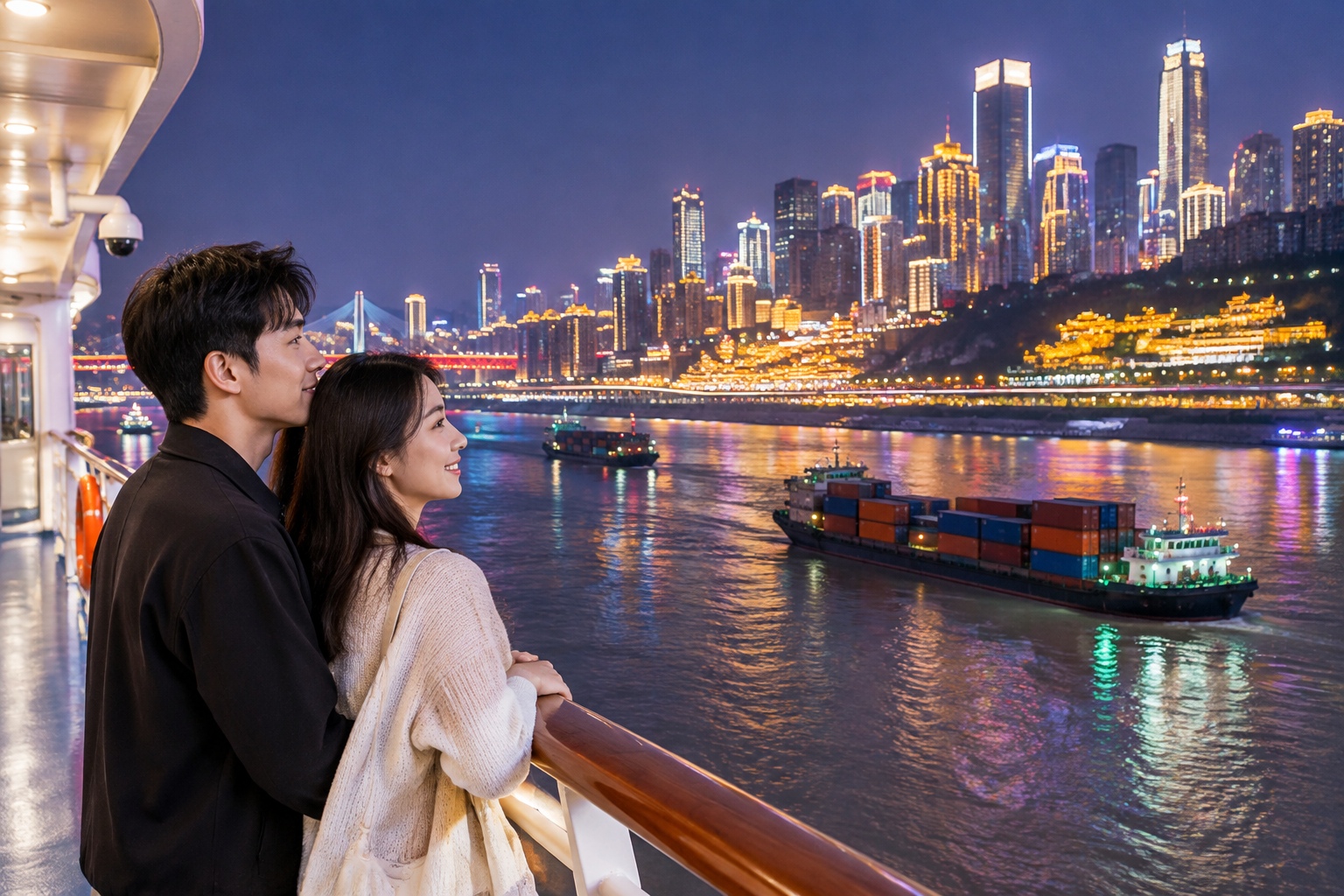
As our ship pulls away from the dock, I notice the usual fleet of river cargo barges moving through the night, their lights tracing long lines along the dark water. A Chinese business traveler at the rail tells me that many of the boxes stacked in containers on those barges will end up at Shanghai’s Yangshan Port, then on large ocean ships to destinations around the world.
Through the Three Gorges: Where Scenery Meets Shipping
By early morning, the city has melted into narrow valleys. This is the stretch that cruise brochures sell as the most beautiful scenery in China: Qutang Gorge, Wu Gorge, Xiling Gorge. Steep limestone cliffs rise on both sides. Waterfalls appear out of nowhere. The boat slows so people can take photos of the mountains that inspired classical Chinese poetry.
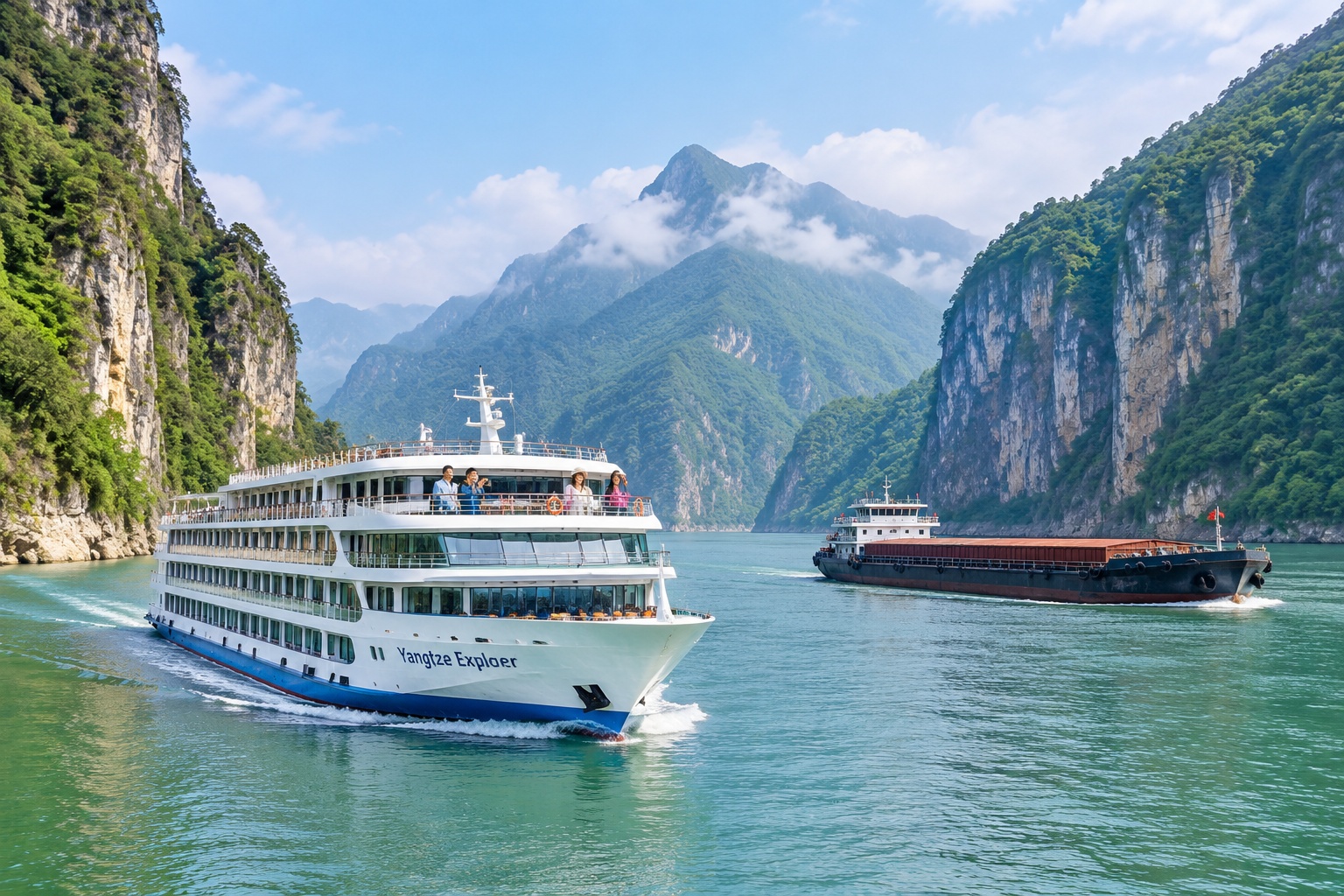
But look past the scenery, and you see a densely engineered transit corridor running beside it. The Yangtze is not just a tourist attraction. It is the world’s busiest inland waterway. In recent years, the river has carried close to 4 billion tons of cargo annually — more than any other river system in the world. This cargo includes over 200 million tons of coal and ore, vehicles, steel, cement, timber and containers. For a business traveler, the key insight is not the volume itself, but what it reveals about China’s internal geography. The Yangtze connects the advanced factories of Chongqing and Chengdu with the resource-hungry coastal provinces of Wuhan, Nanjing and Shanghai, forming what policymakers call the Yangtze River Economic Belt.
While our cruise ship glides at a comfortable speed, freighters loaded with 10,000 tons or more move steadily alongside. Sometimes they are grouped in convoys of four or five barges, pushed by a single tugboat. When you observe them at such close range, you understand how much of China’s supply chain still runs on rivers, not just trains or trucks. River freight is significantly cheaper per ton-kilometer than rail or road transport, which lowers the cost of transporting heavy industrial goods from inland factories to coastal markets.
Yichang and the Three Gorges Dam: A Water Project That Redrew the Map
After almost two days and two nights on the river, we reach the Three Gorges Dam. This is where the cruise experience changes character. The ship enters the five-step ship lock system, and passengers gather on the balconies to watch the water level rise, lifting the vessel like a slow elevator.
The engineering scale is difficult to grasp. The dam is about 2,300 meters long and 181 meters high, creating a reservoir more than 600 kilometers long. Its power station produces about 100 terawatt-hours per year — roughly the same amount of electricity consumed by the entire coastal city of Shanghai for several months, or one of the largest hydroelectric projects ever built. It was designed not only for electricity but also for flood control and, critically for my interests, navigation. By raising and regulating the water level of the upper Yangtze, the dam allows large freight ships to sail directly from Yichang to Chongqing, a distance of about 650 kilometers that was once far too dangerous for heavy cargo traffic to pass quickly.
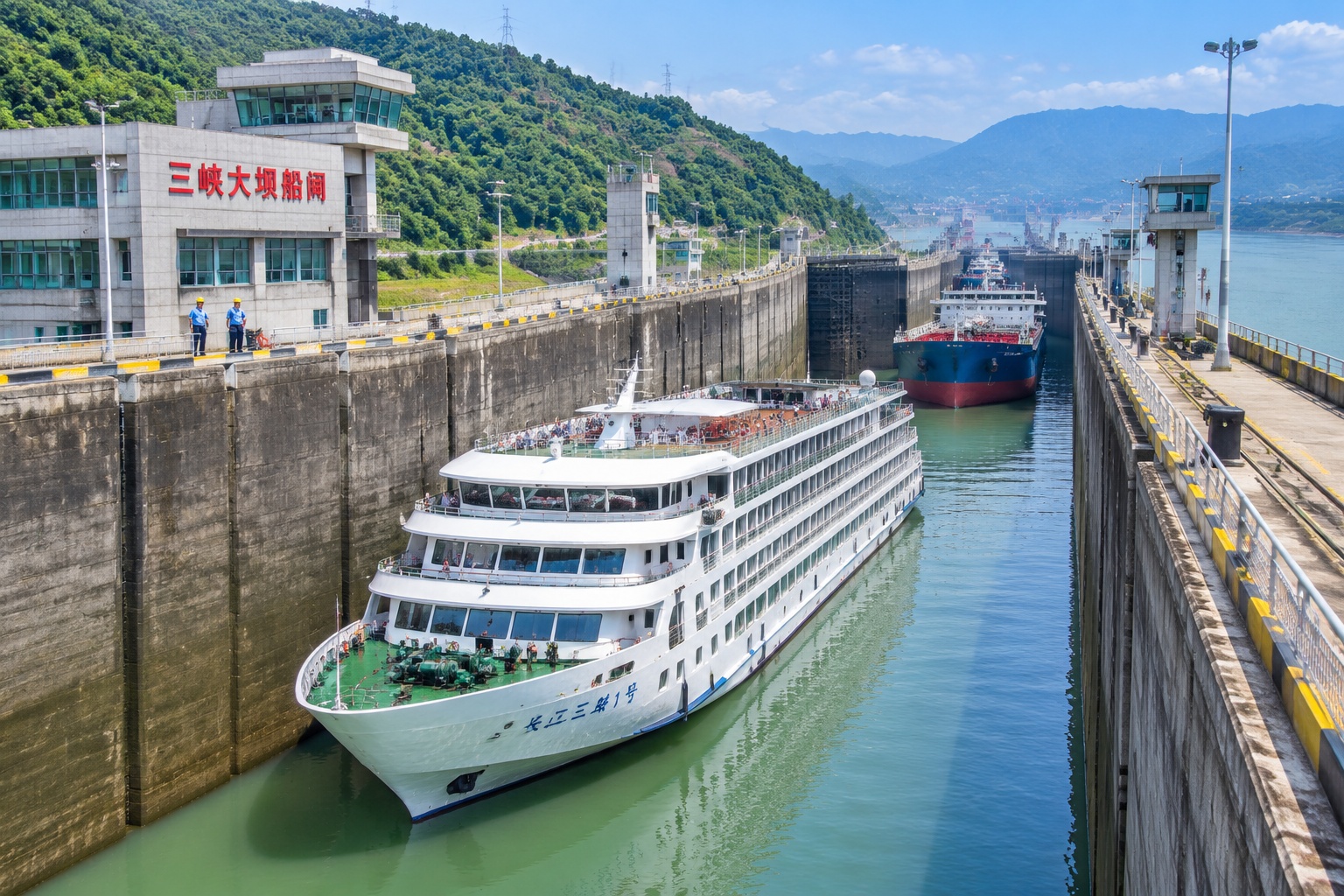
But for every benefit, there is a complexity. The ship lock passage is time-consuming. Even our cruise waits in line. Freight waiting at the locks can extend shipping schedules by hours or days. This is a real cost that business planners need to factor in, and it explains why China has invested heavily in a parallel ship lift and new rail routes to relieve congestion. Standing on the deck with a group of engineers, I listen to them discuss the balance between flood control, energy generation and shipping efficiency. For them, the dam is not a piece of tourist infrastructure, but the most complex logistics chokepoint in the Yangtze system.
Ports, New Towns and Tourism: Reading Industry Along the Shore
As the ship continues downstream, we stop at a series of small ports. These are not listed as tourist highlights in the cruise brochure. At Fengdu, a port that once served the nearby county seat, the quiet afternoon is punctuated by the sound of cargo cranes. There is a railway connection nearby, and the containers on the docks look newer than the buildings on the hillside. A local woman who runs a noodle shop near the port tells me that her suppliers now deliver ingredients by container every two days, whereas in the past they had to wait for a weekly passenger boat.
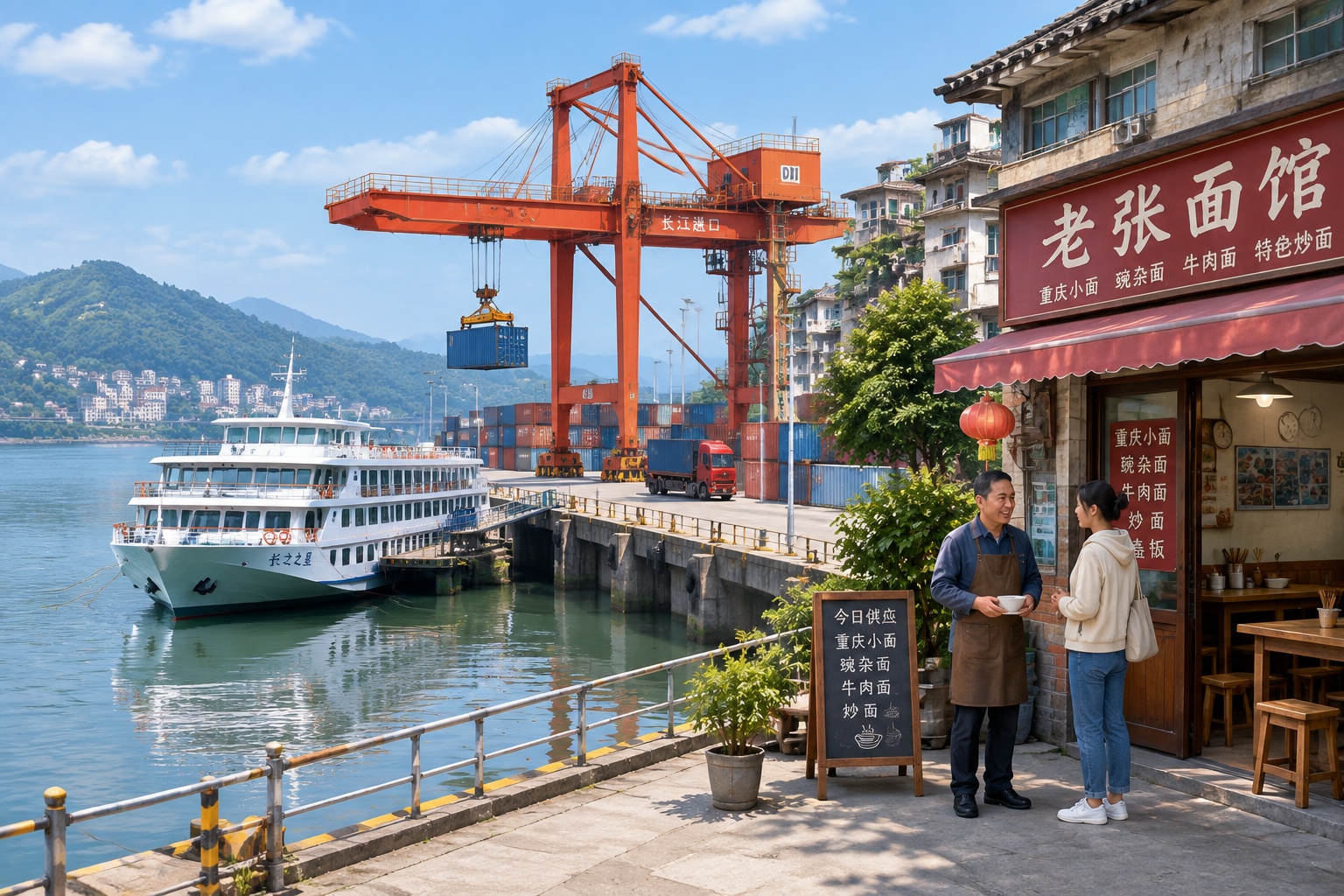
This mix of traditional and modern is visible all along the route. At Yichang, a rapidly growing city of more than 4 million people, the cruise terminal is flanked by new apartment blocks and a highway network that connects to the nearby industrial zone. The city is a major hub for the chemical and food-processing industries, and its port has expanded into a modern container facility.
But the Yangtze’s story is not just about industrial parks and port redevelopment. In small towns such as Baidicheng and Wushan, I watch older residents doing tai chi on the embankments as cruise ships arrive. I talk to a local guide whose family was relocated when the reservoir filled the old valleys. Her family now lives in a government-built apartment in a new town, and she says the scenery is prettier than before, but the shared memories of the old houses are still heavy. It is a reminder that every infrastructure project in China creates winners and losers, and the narrative of progress is never seamless.
For the business traveler, these stops are useful windows into the changing labor market. In many river towns, the tourism industry has created seasonal jobs in hotels, restaurants and souvenir shops. At the same time, the expansion of ports and logistics facilities has brought younger workers back from coastal cities. Several young waiters I spoke with returned to their hometowns because the cruise industry offered a stable income. They told me it was not as high as wages in Shanghai, but the cost of living was much lower, and they could live near their parents.
What the Yangtze Teaches a Business Traveler
The four days on the river end in Yichang, where I take a bullet train to Wuhan and then on to Shanghai. The contrast between rail speed and river pace is sharp, but for a business traveler, the river offers a different kind of education. It shows how China’s economic geography is more than a handful of coastal megacities. The interior is not a periphery. It is the place where raw materials are processed, where machinery is made, and where the massive investments in infrastructure are changing the daily lives of millions of people.
You also come away with a more realistic sense of opportunity and friction. The Yangtze ships goods efficiently, but bottlenecks at locks, the weight of cargo and the cost of labor all shape how businesses make decisions. Chinese companies have learned to control their inventories by coming up with increasingly sophisticated logistics plans, often combining river, rail and road transport. Watching the flow of barges and trucks along this river makes the workings of that intermodal system visible in a way that no slide presentation could capture.
Ultimately, the Yangtze River cruise, when taken with a business mindset, is not about avoiding work or enjoying luxury. It is about seeing China’s lifeline from the water — where clouds and container ships, ancient gorges and new factories, live side by side. For any foreign executive, policymaker or analyst who wants to understand the real China, this crossing is as close as you can get to reading the country in motion.
Start the discussion at forum.chinacomes.com