

Morning at the Gorge
I’m Lao Zhou, a local guide from Songpan. At the moment I’m standing at the entrance to the Huanglong Scenic Area, looking up at the mountain trail that winds through the pines. It’s early spring, and the air still has a bite to it. I’m waiting for a small group of travelers who have booked a guided hike with me. I have been doing this for more than a decade, ever since I moved back to my hometown from Chengdu. But that day, I felt the same quiet excitement I always do before taking someone to see the famous pools for the first time.
Huanglong, which means “Yellow Dragon,” is tucked away in the Aba Tibetan and Qiang Autonomous Prefecture in Sichuan, at about 3,000 to 3,500 meters above sea level. It is a UNESCO World Heritage Site, but unlike the giant panda reserve or the crowded squares of Chengdu, it remains a place where you can hear your own footsteps and the water murmuring over the rocks.
What Makes Those Pools So Strange and Beautiful
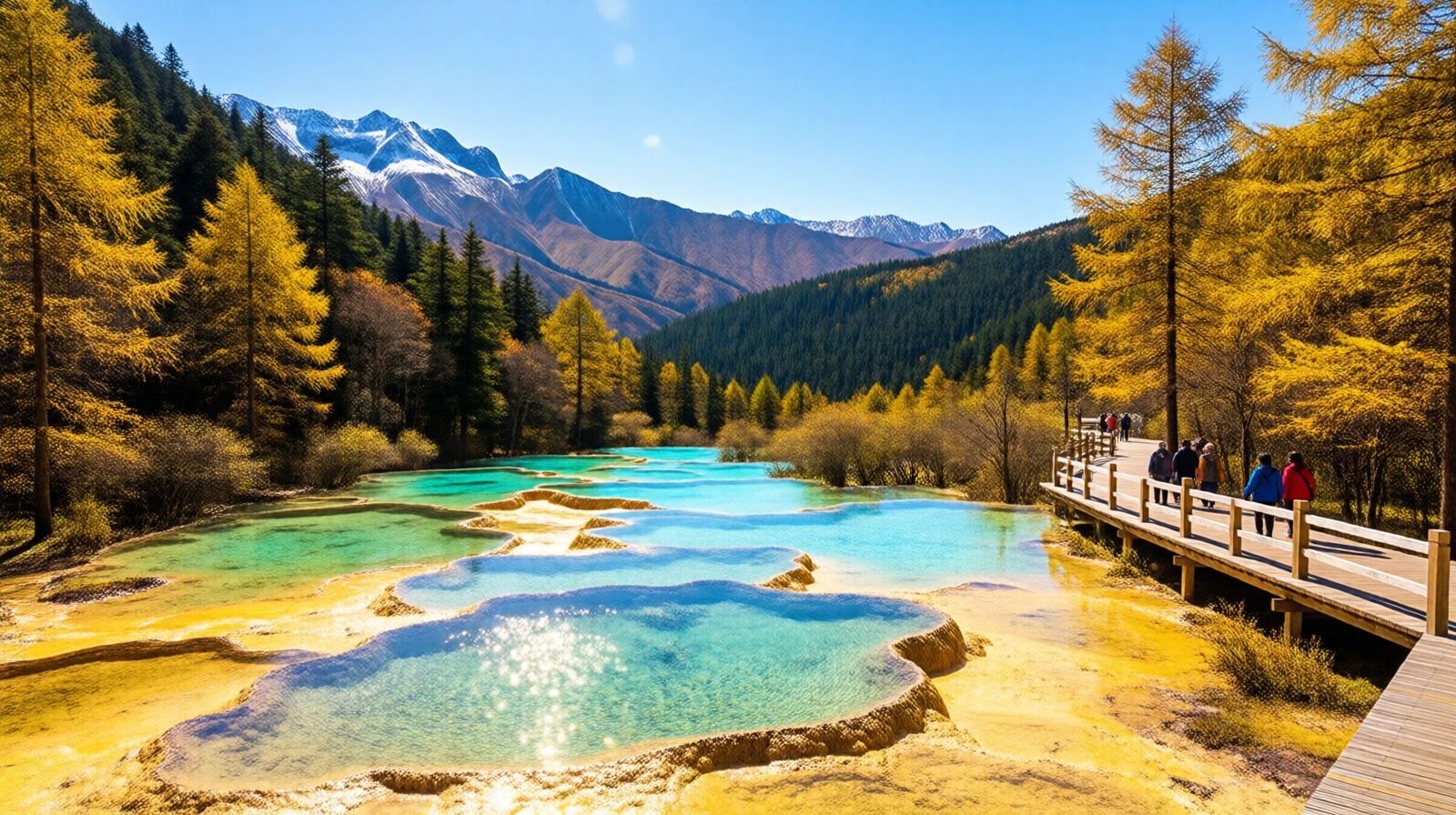
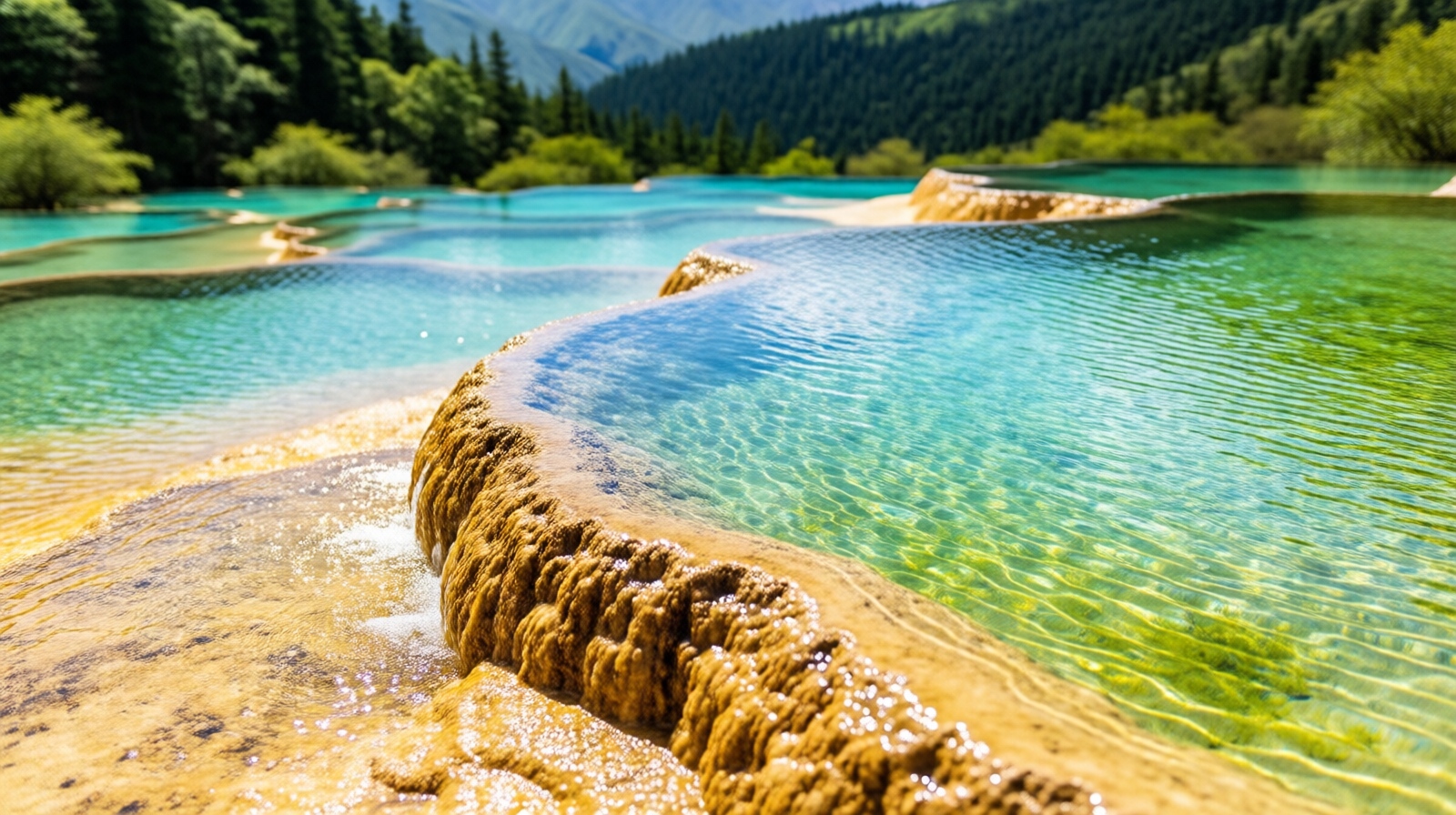
The pools at Huanglong are not typical mountain lakes. They are formed over thousands of years by water dissolving limestone and then depositing it as calcite. As the water flows down the slope, it creates a series of natural terraces, each with a thin lip of white or yellowish rock holding back a shallow layer of water. The result looks like a giant staircase filled with jewels.
The color changes depending on the time of day and the season: turquoise and deep blue when the sky is clear, greenish if clouds are low, and sometimes golden when the afternoon sun hits the mineral deposits just right. It feels almost unreal, like the water is dyed.
A Day in the Life of a Local Guide
Most of my guests arrive from the nearby city of Jiuzhaigou, which is about an hour away by car, or from Chengdu. We usually start the hike from the lower entrance and walk the full loop, which takes around four hours including stops. I carry a small pack with water, snacks, and an oxygen canister, because the altitude can be tough for people who aren’t used to it.
I’ve learned to read the signs: a pale face, heavy breathing, or a headache means we need to slow down and take breaks. Over the years, I’ve also learned that the best moments are the unexpected ones—a blue sky breaking through clouds, a group of monkeys moving through the trees, or the way a visitor from the humid tropics stares at the dry, crisp Himalayan air in puzzlement.
Four Seasons, Four Versions of Huanglong
Spring: Snow, Rhododendrons, and Quiet
Spring comes late here. In early May, the snow is still deep on the trail, and the rhododendrons along the boardwalk haven’t opened fully. The pools are a cold, pale blue, and the mountains are still white. It is the quietest time to visit—almost no crowds, only a few walkers and the sound of ice cracking in the forest. The weather switches quickly: one hour of sunshine, then a flurry of snow. I always tell guests to dress in layers and carry a rain jacket, even in April.
Summer: Green Peaks and Warm Evenings
Summer is the busiest season. The forest turns deep green, and the pools fill to brimming. I like to start my hikes at 7 a.m., when the sunlight first hits the water and the colors are most intense. By midday, the boardwalks are packed with tour groups, and the paths can feel crowded. But if you move a little faster and take the higher route, you can still find a quieter stretch. On clear days, you can see the snow-capped peaks of the Minshan range above the pines.
Autumn: The Golden Hiking Season
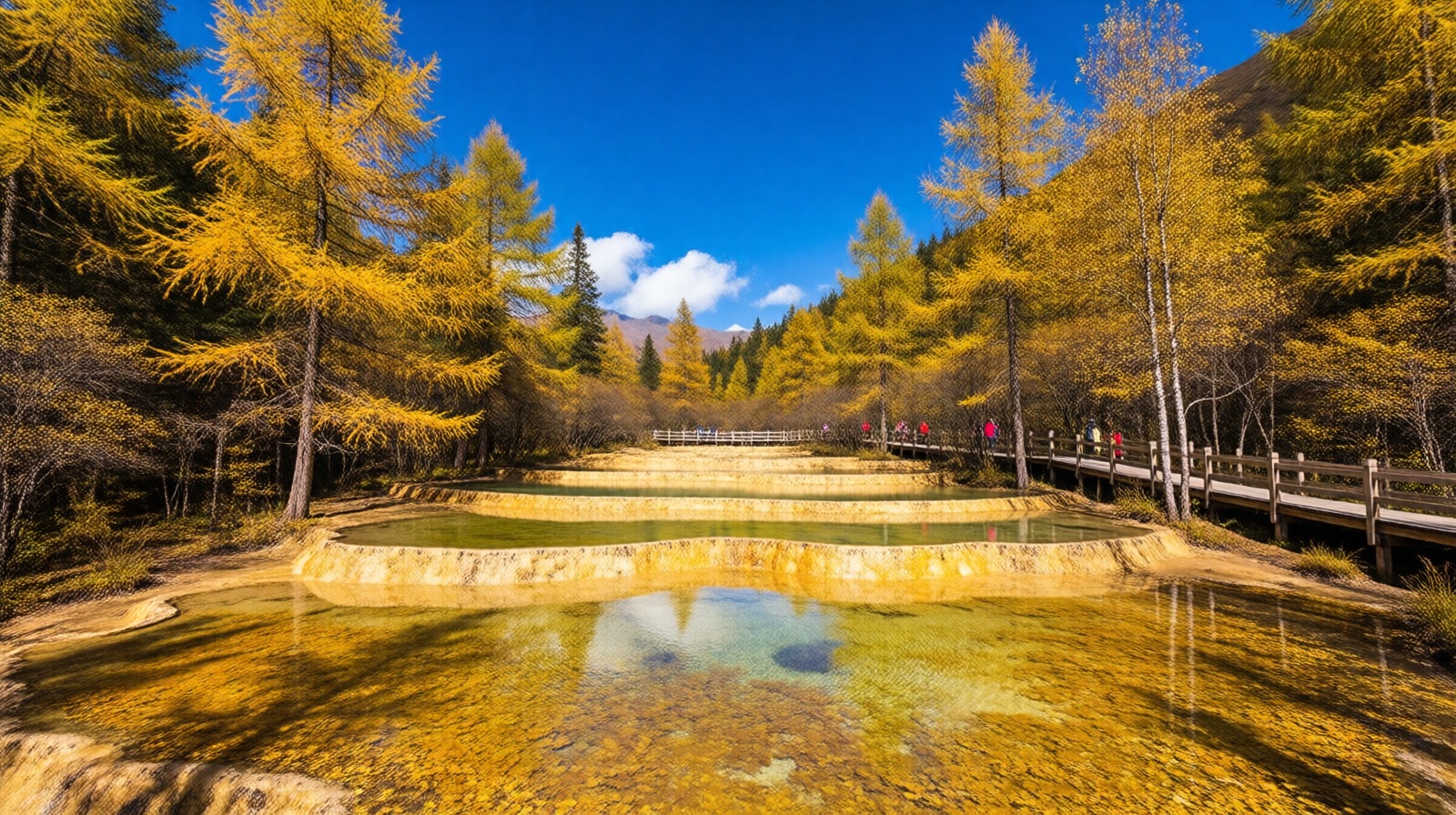
Autumn is the classic time for hiking in Huanglong. Between late September and late October, the birch and larch forests turn a bright gold. The sky is usually a clean, deep blue, and the air is crisp. The pools reflect the yellow leaves, creating a mosaic of color. On any October weekend, you’ll find photographers lining the wooden walkways, trying to capture the same impossible scene. This is also the season for local festivals, and if you visit a nearby village like Songpan, you might catch a piece of Tibetan horse racing or a dance by the town square.
Winter: The Silent Fairy Tale
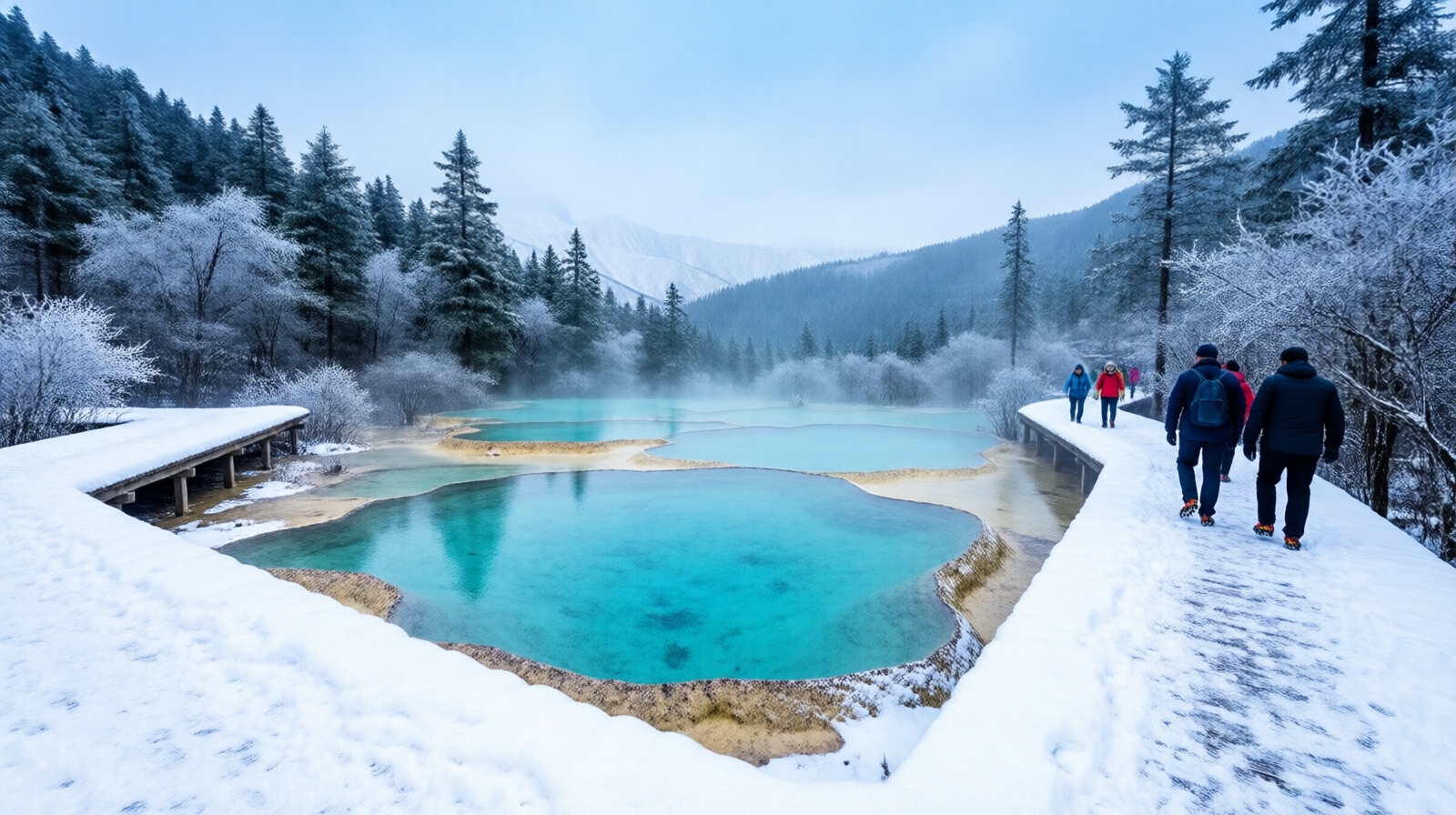
Winter is the secret season. Few travelers know that Huanglong remains open, although you need to be prepared for cold temperatures and slippery steps. The mineral-rich water keeps the pools from freezing completely, so you see steamy, liquid pools surrounded by snowbanks. The contrast is otherworldly. On snowy days, the boardwalk can be dangerous, so I carry crampons for guests and walk slowly. It’s not the easiest time to visit, but it’s the most magical if you can handle the quiet and the cold.
Living With the Mountain
For me, Huanglong is not just a scenic area. It’s a calendar, a source of income, and a piece of my family history. My grandmother used to herd yaks on these slopes before the area was opened to tourism. Now, my son is considering becoming a guide himself. The local economy has changed a lot. A dozen new hotels and restaurants appeared in the town, and many young people who used to go to big cities to find work have come back to run guesthouses or sell local honey and herbs.
But there are also restrictions. The park management limits the number of daily visitors, and some sensitive pool areas are fenced off to protect the calcite formations. Rangers patrol the trails to make sure nobody leaves the boardwalk or drops trash. These measures have been controversial among some visitors who want to touch the water or take “a little souvenir.” I understand both sides, but after years of watching a tiny crack in a pool edge grow into a deep scar, I’ve become a supporter of strict protection. We can still enjoy the place, but only if we walk carefully and leave no trace.
Practical Advice for Your Own Visit
If you’re planning to hike Huanglong, here’s what I tell my guests every week:
First, take a few days to acclimatize in Chengdu or Songpan before you come up. Altitude sickness is real, and the only cure is time and a slow pace. I always recommend the full walking loop rather than the cable car, because the cable car drops you too quickly near the top, and that’s when people get dizzy.
The best months are May–June and September–October, when the weather is stable and the colors are dramatic. But even in summer, pack a light down jacket or a warm fleece—the temperature drops sharply after sunset. Good walking shoes are essential, and I always suggest a pair of wool socks. Finally, don’t just look at the pools. Look up at the kites and crows circling above, smell the pine sap, and listen to the Buddhist prayer flags flapping at the edge of the trail.
The Hike That Stays With You
By the time we reach the last viewpoint before descending, most of my guests are quiet. The full spectacle of the golden terraces and the deep green forest stretches below, and the far peaks seem close enough to touch. I don’t have to explain anything. It all lives in that view.
One visitor from the Netherlands once asked me, “How do you not get bored of it?” I laughed and said, “The mountain changes every day. The light, the water, the leaves—none of it is ever the same.” That’s why I still do this job. I never really see the same Huanglong twice.
Come early, walk slowly, and let the mountain talk. That’s the Huanglong I know, and the one I want to share with you.
Start the discussion at forum.chinacomes.com