

A Bridge Full of Snow White, Warriors, and Princesses
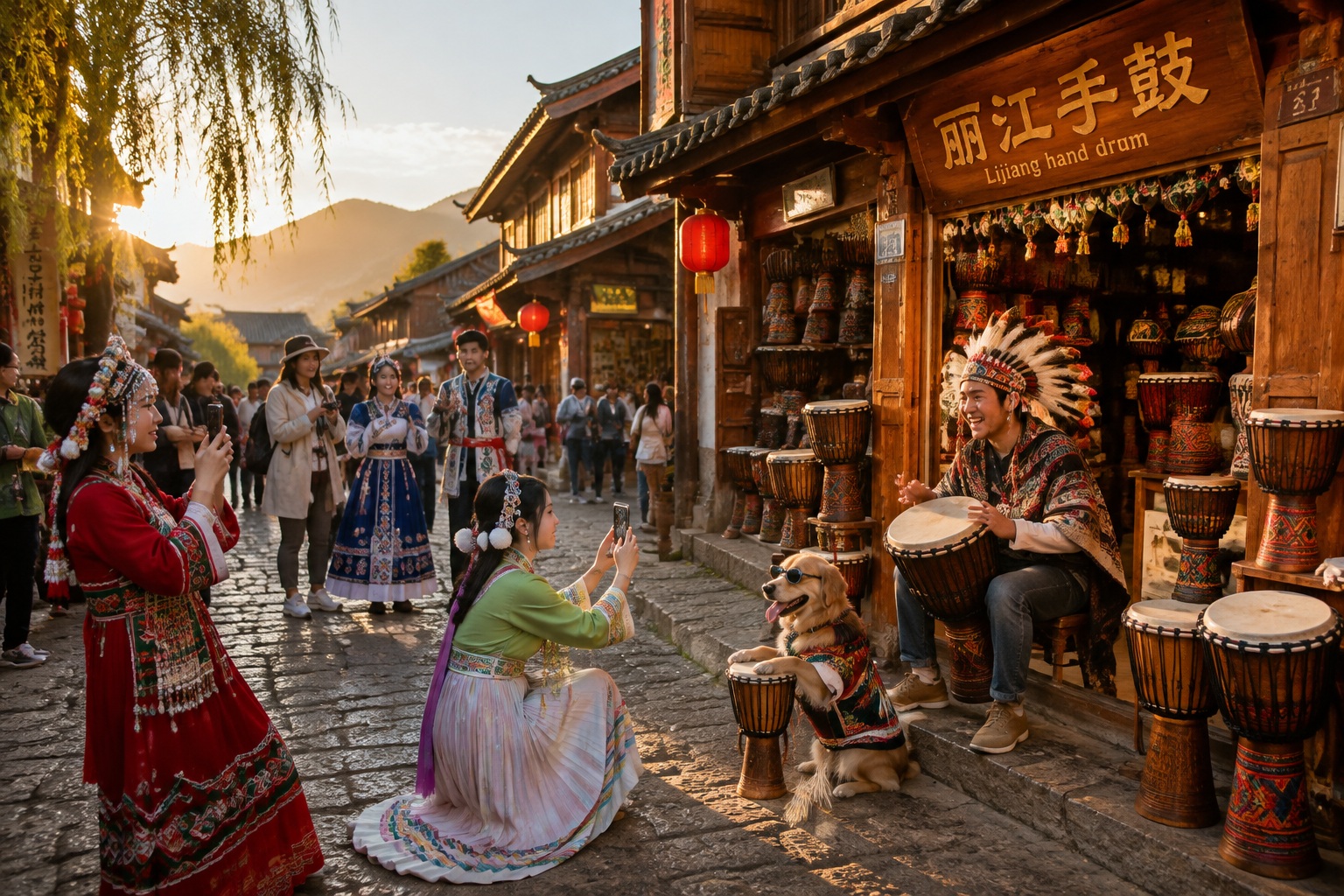
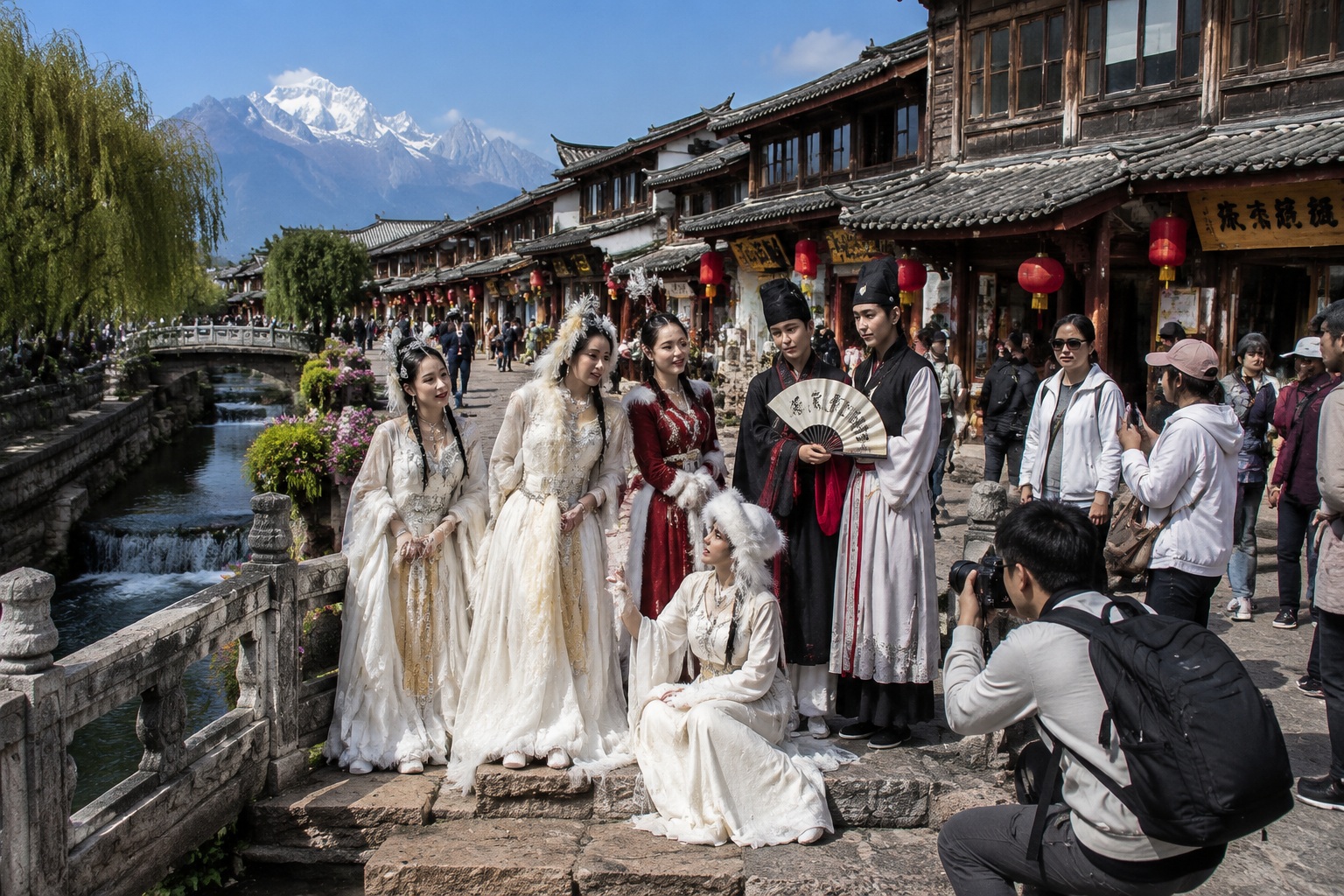
It’s 3 PM on a Tuesday in Lijiang, and I’m standing on a small stone bridge that crosses a canal in the old town. Below me, the water is clear enough to see goldfish. Above me, a queue of people in heavy costumes are waiting their turn to strike a pose. One wears a white Tibetan-style gown with a fox-fur collar—even though it’s 20°C. Another is dressed like a Tang dynasty princess, holding a fan. A third carries a long sword that glints in the sun, looking like she just walked off a wuxia movie set. None of them are locals. All of them are paying for the chance to look like they belong to this 800-year-old Naxi town.
Welcome to Lijiang, the “internet celebrity hotspot” of Yunnan province—and arguably all of China. It’s a UNESCO World Heritage site, a former trade stop on the Ancient Tea Horse Road, and today, one of the most-visited tourist destinations in the country. People come for the cobblestone lanes, the tile-roofed houses, the snow-capped Jade Dragon Snow Mountain in the distance. But most of all, they come to take pictures. And the town has become a giant open-air photo studio.
What Makes an Old Town So Very “Internet Celebrity”?
First, the visuals. Lijiang’s old town is beautifully constructed: winding canals, wooden bridges, stone walls covered in bright orange trumpet flowers, and the Black Dragon Pool reflecting the mountain. Every corner looks like a postcard. But the real reason it’s called a “wanghong” (internet celebrity) hotspot is that it is extremely “photogenic” for social media. A short video filmed here—with the right filter and background music—gets tens of thousands of likes. Before you know it, everyone wants to stand on the same bridge, feed the same fish, and wear the same costume.
In the 2010s, Lijiang became famous as a symbol of “slow life”—a place to escape the big city, write in a journal, and listen to folk songs in a café. Then short-video apps like Douyin (China’s TikTok) came along. Suddenly, anything that looks pretty falls into the category of “check-in spot.” Lijiang was an absolute goldmine.
The Travel Photography Craze
The biggest visual phenomenon is “lüpai”—travel photography. Walk into any of the hundreds of shops that rent traditional outfits and you’ll find racks of colorful Han dynasty dresses, Tibetan robes, Miao silver headpieces, and even the qipao. For a few hundred yuan, you get hair, makeup, and a “photographer” who knows every prime spot in town. He’ll tell you to tilt your chin, look up at the nonexistent moon, and flick your sleeve for dramatic effect. A friend who manages one such shop told me that on a busy day, they outfit more than 100 tourists. “Summer is crazy. The whole town looks like a movie set,” she said.
The irony is that most of these costumes are not Naxi at all. Naxi traditional dress is more understated: aprons, sheepskin capes, hats with seven stars. But who cares? In the world of internet fame, a Tibetan warrior princess posing in front of Naxi architecture is just another beautiful cultural remix.
What the Shopkeepers Are Really Selling
Beyond costumes, there are the “three treasures” of Lijiang’s old town: hand drums, flower cakes, and bar crawls. Almost every business sells either one of these—or a combination.
The Hand Drum Shop: One Song, Ten Years
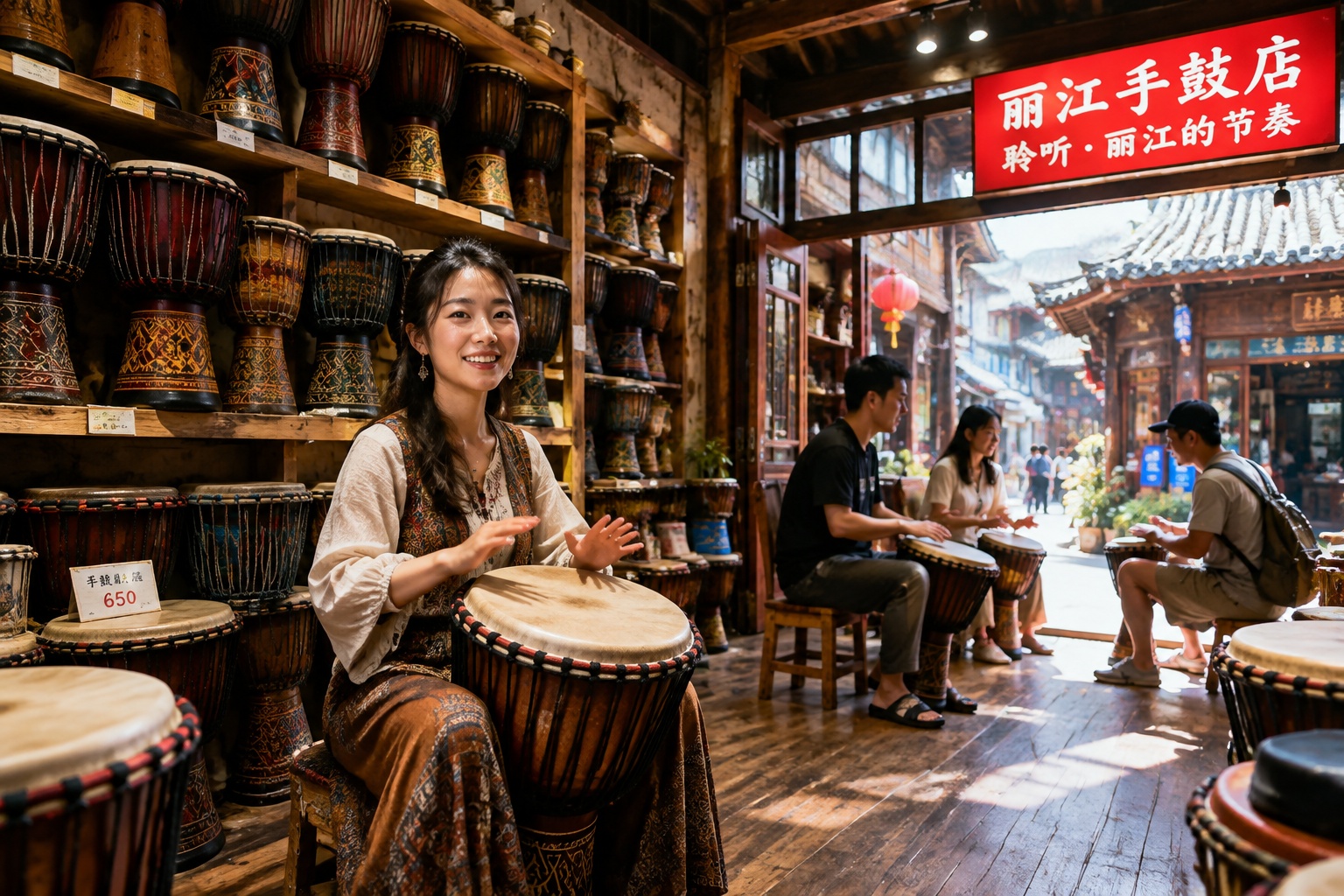
Walk down the main street and you’ll hear it before you see it: a rhythmic pounding of African djembes accompanied by a woman’s voice singing a catchy, repetitive tune. It’s called “Xiao Baobei” (Little Baby), a cheerful track by a local band. The song is so ubiquitous that a Chinese internet joke says: “If you enter Lijiang and don’t hear that song, you might be in the wrong town.”
I chatted with a woman named Ying, who has sold hand drums in Lijiang for seven years. “We play the song during business hours. It attracts people. When it stops, customers think we’ve closed,” she laughed. She also sells classes: 30 minutes for 50 yuan, enough to learn a basic rhythm. The drums themselves cost anything from 200 to 1,500 yuan. Some tourists buy one, then realize it’s hard to carry it up the airport escalators. But that’s after the fact.
Flower Cakes: Fresh or Factory?
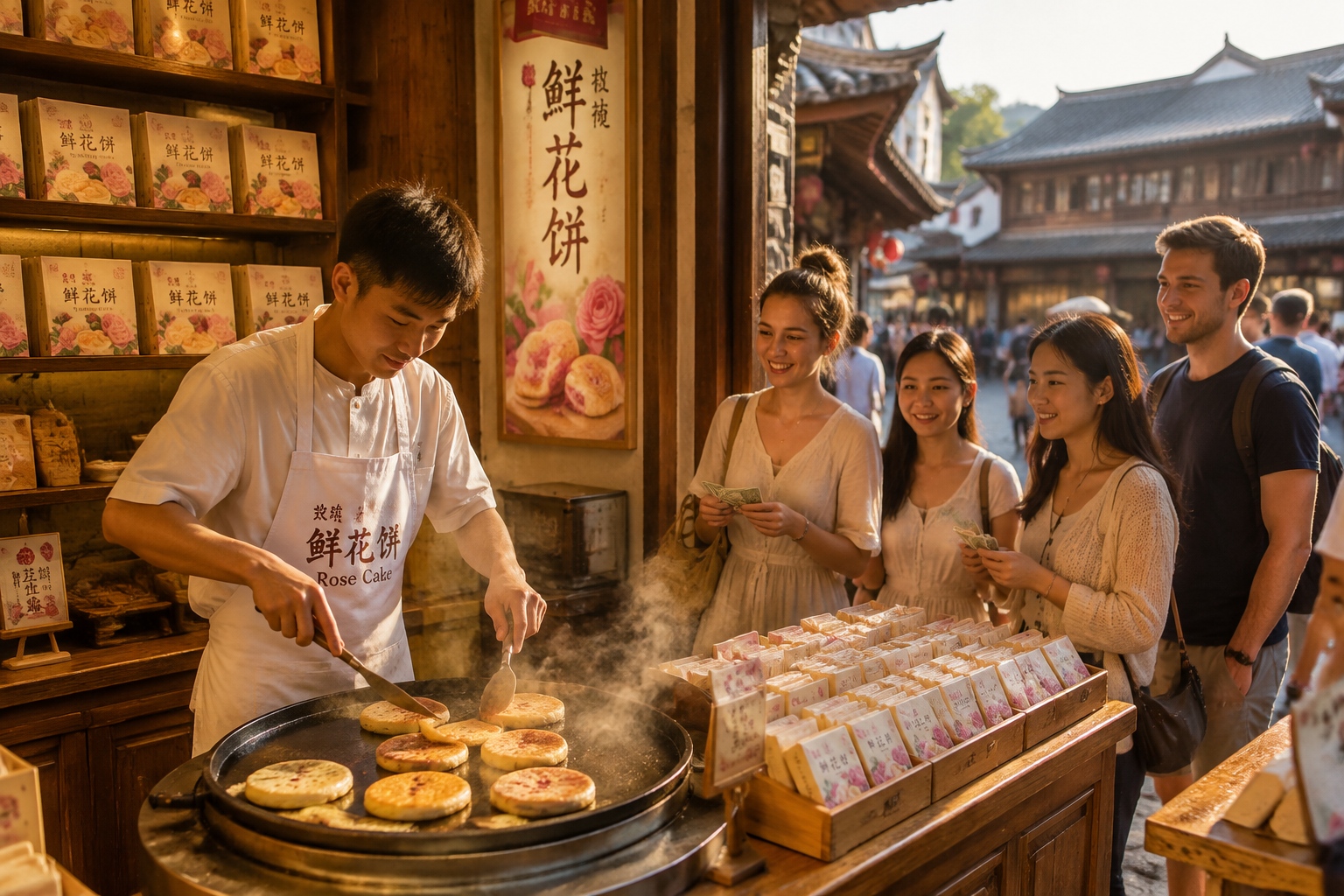
A few steps later, you’re likely to see a round pancake being pressed on an iron griddle, filled with rose petals and sugar. That’s a “xianhua bing” (flower cake). The label “Yunnan specialty” is on every stall. Many shops bake them on-site, and the smell of pastry and rose is irresistible. But here’s the not-so-secret secret: around 80% of flower cakes sold in Chinese tourist towns are actually made in central kitchens in Kunming and shipped frozen. Only a few shops in Lijiang still grind the wheat, pick fresh roses from the nearby fields, and bake in front of you. Those are the ones with long lines. I joined one such line, paid 8 yuan for a single cake, and ate it while walking. It was warm, flaky, and mildly sweet—the good kind. It also felt like a small act of resistance against the industrial tourism machine.
Bar Street: Once Quiet, Now Loud
Come nightfall, the old town transforms into a karaoke wonderland. The two main streets along the canal turn into “Bar Street”—a riot of neon signs, loud bass, and bars with names like “Party Time” and “The Legend.” One minute you’re looking at a traditional Naxi courtyard, the next a DJ is playing a remix of a Chinese pop song while a dancer in a plastic qipao does a routine on stage. Locals may roll their eyes, but the bars are packed with tourists who want to drink cheap beer and meet strangers.
An old friend who grew up in Lijiang once told me: “Before, people came to Lijiang to sit quietly by a stream and think about life. Now they come to drink and sing. I can’t tell if it’s better or worse.”
Where Did the Real Lijiang Go?
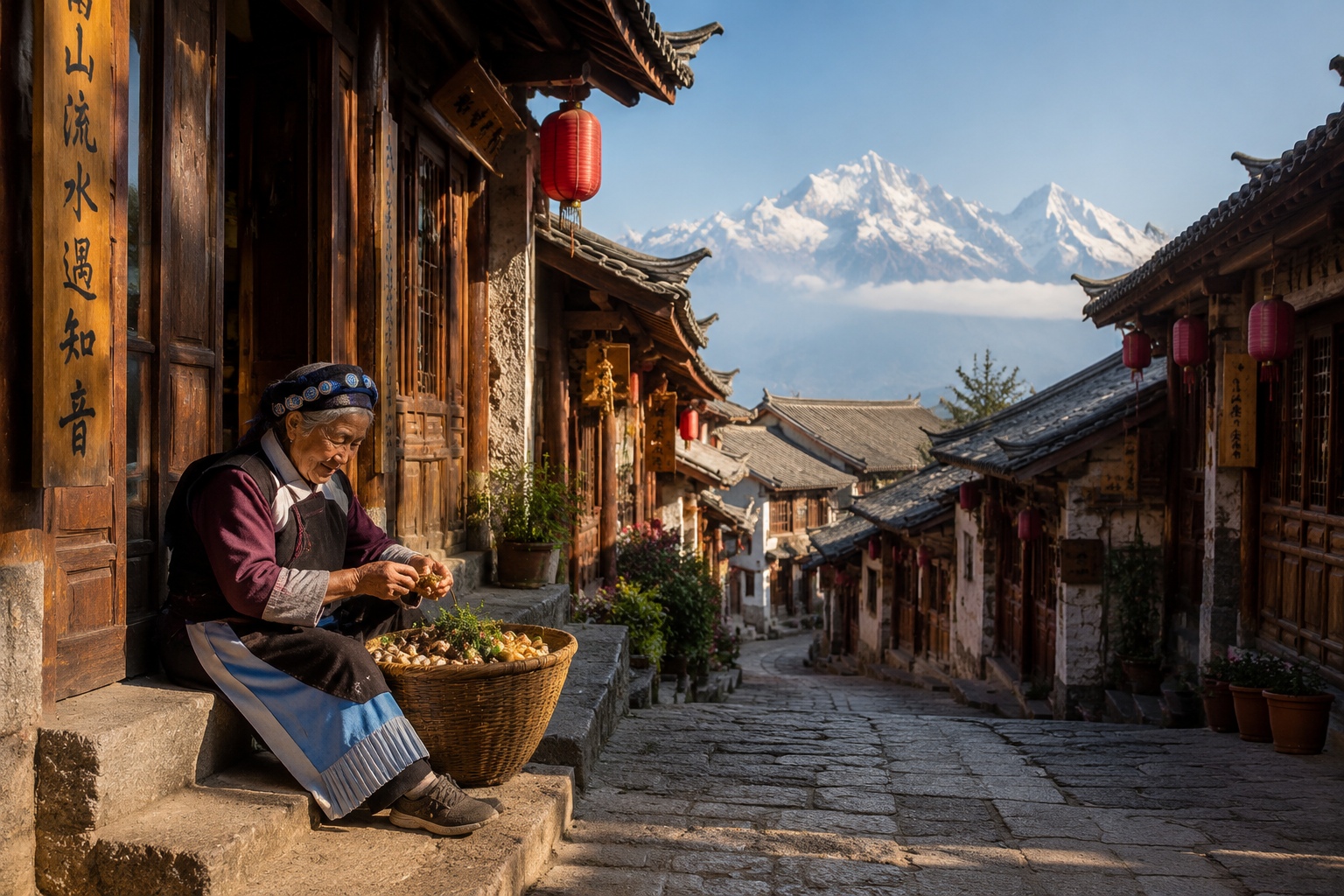
Surprisingly, the real Lijiang isn’t completely gone. You just have to look where the tourists aren’t. Wake up early, around 7 AM, before the group tours arrive. The square in front of Sifang Street is empty except for a few vendors setting up. Old Naxi women in their blue aprons sit by the bridge selling fresh vegetables, green beans, and mushrooms from their farms. The scent of wood-fired breakfasts drifts through the alleys. A barber sets up a chair with a mirror hanging on a tree. This is the town before it was “discovered”—or at least, the closest to it that still exists.
Even in the commercial center, some locals remain. I met a man who owns a small guesthouse tucked away in a quiet lane. He complains about the rising rent, the constant noise, and the fact that his grandchildren don’t speak Naxi anymore. But he also admits that tourism has brought schools, roads, and a better hospital. “I just wish they’d turn the music down,” he says, half-laughing.
The Double-Edged Charm of a “Wanghong” Town
So why is Lijiang a “wanghong” hotspot? Because it offers the perfect backdrop for the modern tourist’s primary need: a good photo. It also offers the comfort of predictability—you know what you’re going to get: the drums, the cake, the bars, the costumes. It’s a stage that everyone inhabits together. The town morphs to fit the crowd, and the crowd morphs to fit the town.
For shopkeepers, the internet celebrity label is both a blessing and a curse. It brings an endless stream of customers, but it also forces them to keep up with trends. As soon as something new goes viral elsewhere, they drop everything and imitate it. Two years ago, it was “strawberry milk” in bamboo bottles. Last winter, it was “local-style Lijiang puffer jackets.” And yet, despite the chaos, many of them are making a living, supporting families, and even enjoying the buzzing rhythm of the crowd.
As I walked out through the south gate, I noticed a group of tourists filming a video. They were all wearing the same white Tibetan costume. Each one took a turn in front of a fading fresco on an ancient wall, striking a pose. The others cheered, clapped, and then immediately reviewed the footage. The wall itself looked indifferent. It had been standing for centuries, long before anyone called this place an “internet celebrity hotspot.”
Maybe the real beauty of Lijiang is that it doesn’t care what you post. It just is—a thousand-year-old town that also sells plastic swords. And that, somehow, works.
Start the discussion at forum.chinacomes.com