
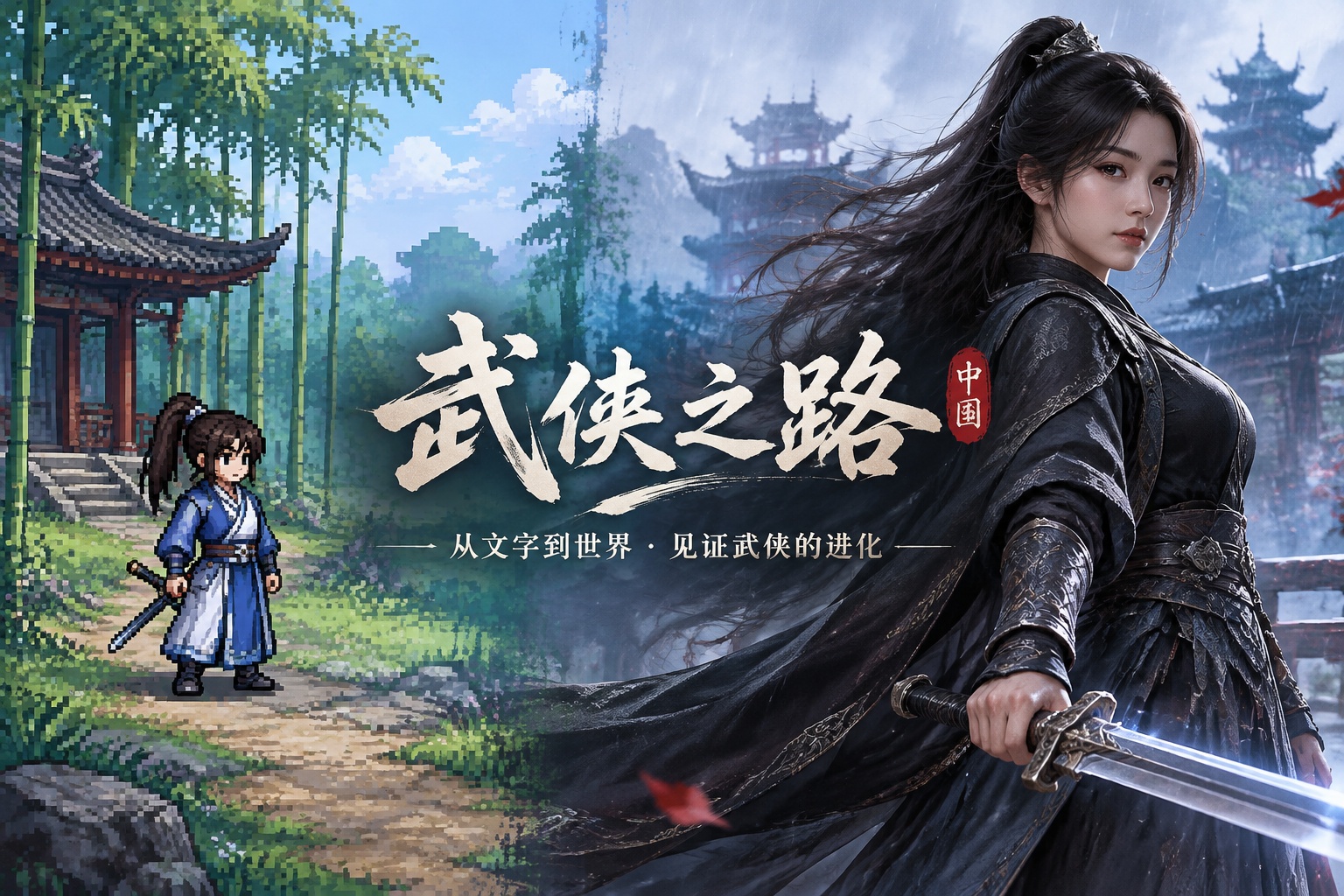

The Jianghu You Could Only Read
For many Chinese gamers over thirty, the first time they “entered” a wuxia world wasn’t through graphics. It was through text.
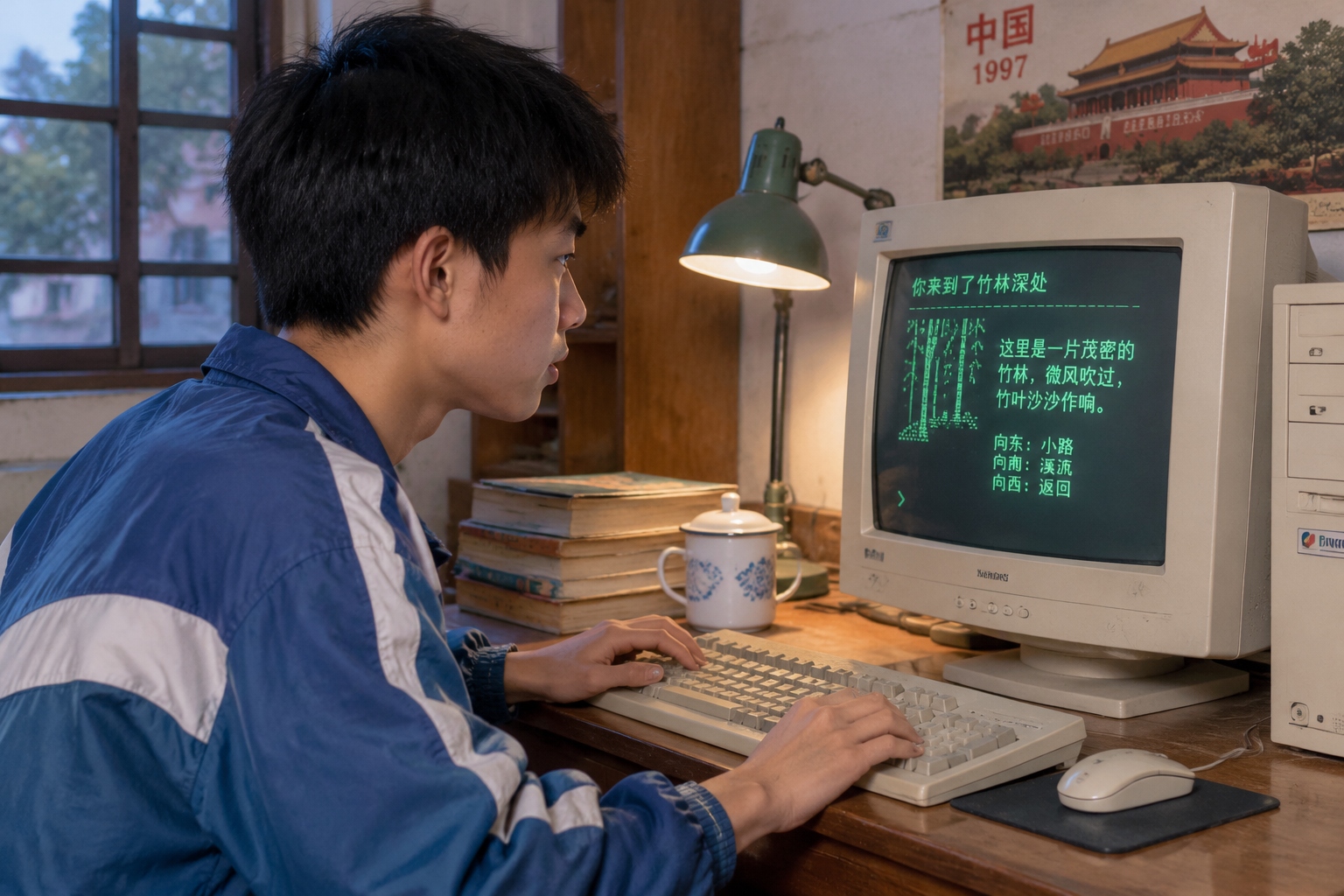
In the late 1990s and early 2000s, Multi-User Dungeons (MUDs) were the gateway. Imagine a chat room where you type commands like go north or attack enemy. The screen was black, filled with green or white text describing your surroundings: “You see a bamboo forest. The wind rustles the leaves.” You had to imagine the sword fights, the martial arts moves, and the intricate social politics of the Jianghu—the world of martial heroes.
Then came Jin Yong Qun Xia Zhuan (The Legend of the Condor Heroes Ensemble), released in 1996. It was a landmark. Suddenly, you could see pixelated characters moving across maps based on Jin Yong’s famous novels. You could meet iconic heroes, learn secret techniques, and choose your own path through a chaotic martial world. For a generation raised on paperbacks and TV dramas, this was the first time they could play their favorite stories.
The Shift from Watching to Doing
For decades, wuxia games remained largely narrative-driven. You read about kung fu; you watched cutscenes of flying swordsmen. But the core loop was often simple: click here, go there, talk to this NPC, fight a random encounter.
The desire for something more visceral grew with the players. Chinese audiences, deeply familiar with the aesthetics of wuxia films—from wire-fu choreography to the quiet tension of a teahouse confrontation—started asking: Why can’t I feel the weight of the sword? Why can’t I dodge in real-time?
This gap between cultural familiarity and interactive limitation is what modern Chinese game developers are now closing. They aren’t just adapting stories; they are translating physics.
Technology Meets Tradition: The Unreal Engine Era
The turning point came with the adoption of advanced engines like Unreal Engine 5. Developers realized that to make wuxia feel “real,” it couldn’t just look Chinese; it had to move like kung fu.
Take Black Myth: Wukong, which, while based on Journey to the West, shares the same high-fidelity aesthetic DNA that wuxia games are now pursuing. It showed the world—and Chinese gamers—that traditional mythology could be rendered with photorealistic detail. Fur, armor, and misty mountains were no longer backdrop textures; they were interactive elements.
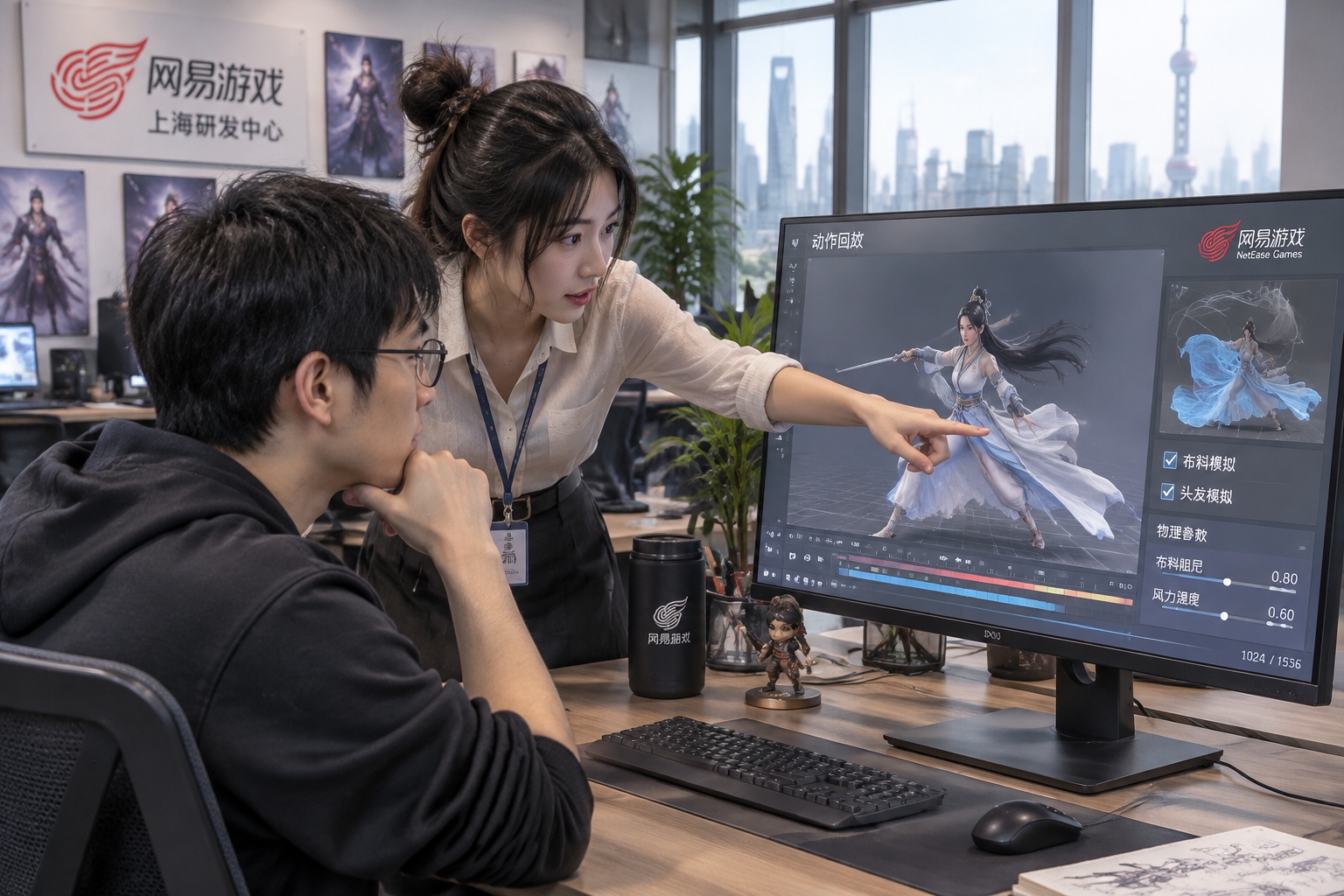
Now, look at Phantom Blade Zero, developed by S-GAME. This is pure wuxia, but stripped of the fantasy magic often found in earlier RPGs. It’s grounded, gritty, and fast. Using motion capture technology refined over years, the combat isn’t just animation; it’s martial arts performance.
What Does “Interactive Jianghu” Feel Like?
In a modern wuxia action game, the difference is immediate. You don’t press “attack.” You swing the mouse or tilt the controller to slash. You don’t just “dodge”; you lean your body into the screen’s perspective to avoid a blade.
Consider the tea house scene in Phantom Blade Zero. In older games, you’d click a button to start a dialogue. Here, you walk through a crowded room. You hear snippets of conversation. You see a man’s hand twitch near his dagger. The tension is built through spatial awareness, not text boxes.
This shift mirrors how Chinese society consumes culture today. Gen Z in China didn’t grow up only reading Jin Yong novels; they grew up watching high-budget wuxia dramas on streaming platforms like iQiyi and Tencent Video, where camera angles and fight choreography are cinematic. They expect their games to match that visual language.
Global Appeal of a Local Myth
Why does this matter outside China? Because the “Jianghu” is no longer just a Chinese metaphor for society’s underbelly or heroism. It’s becoming a global gaming genre, similar to how samurai culture was exported through Japanese games like Sekiro or Ghost of Tsushima.
Western gamers are increasingly drawn to the depth of martial arts philosophy—the balance between offense and defense, the importance of precision over brute force. When a player in New York or London picks up a controller and executes a perfect parry in a wuxia game, they aren’t just playing a game; they’re engaging with a cultural system that values rhythm and discipline.
The Human Side of the Pixel
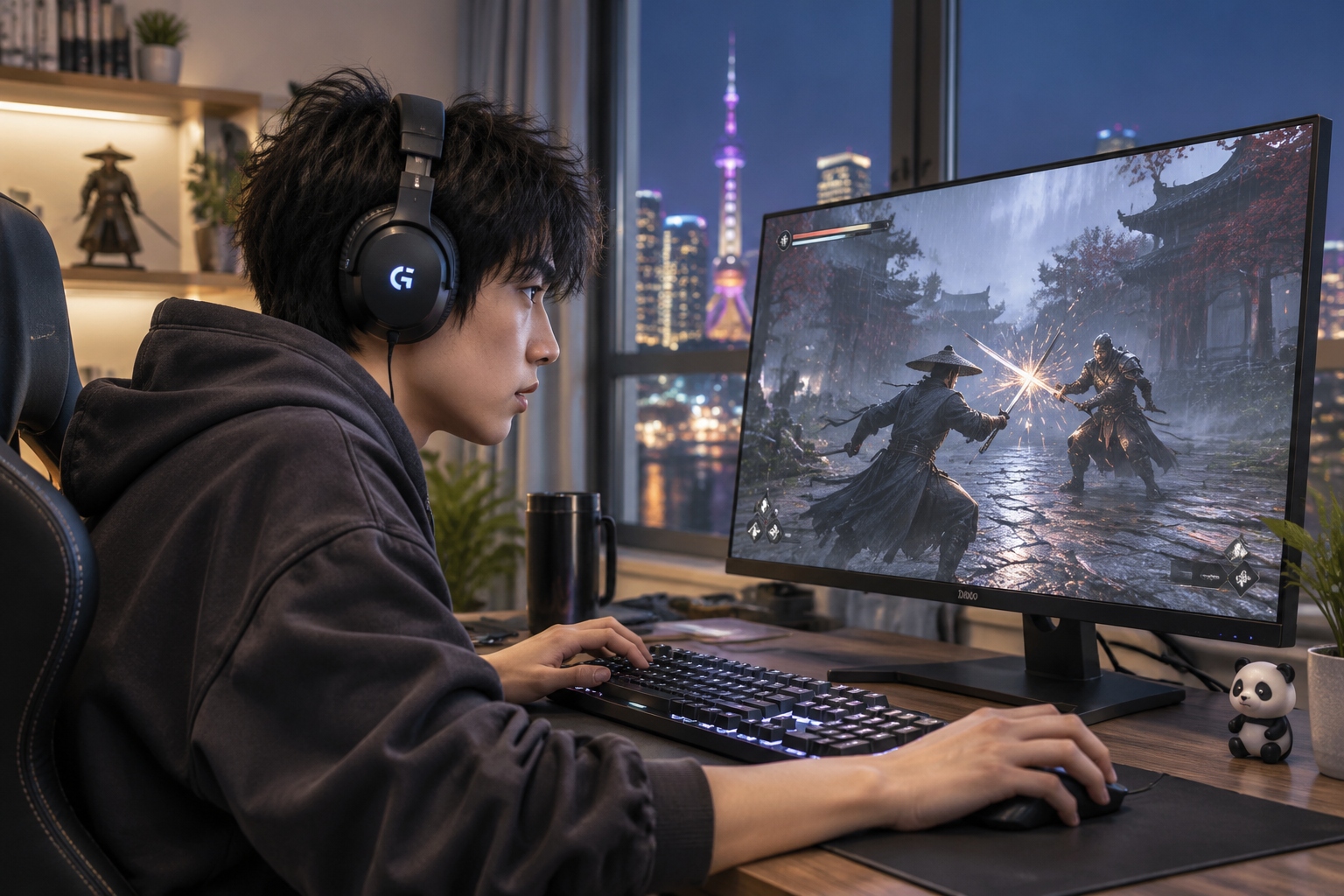
Behind these high-tech experiences are small teams of passionate developers in cities like Shanghai and Chengdu. Many of them grew up playing those early text MUDs or watching Jet Li movies. They carry a specific cultural memory: the feeling of being an outsider, a xia (hero), navigating a complex world with honor.
For them, making wuxia games isn’t about selling exotic content to the West. It’s about preserving and updating a childhood language. They want their kids—and players worldwide—to feel what they felt when they first read “The Legend of the Condor Heroes,” but with the power to change the story themselves.
The Jianghu has always been about freedom: freedom from societal constraints, freedom to right wrongs. Now, through interactive technology, that freedom is tangible. You don’t just watch the hero jump over the wall. You press the button. You feel the wind. You land on the other side.