
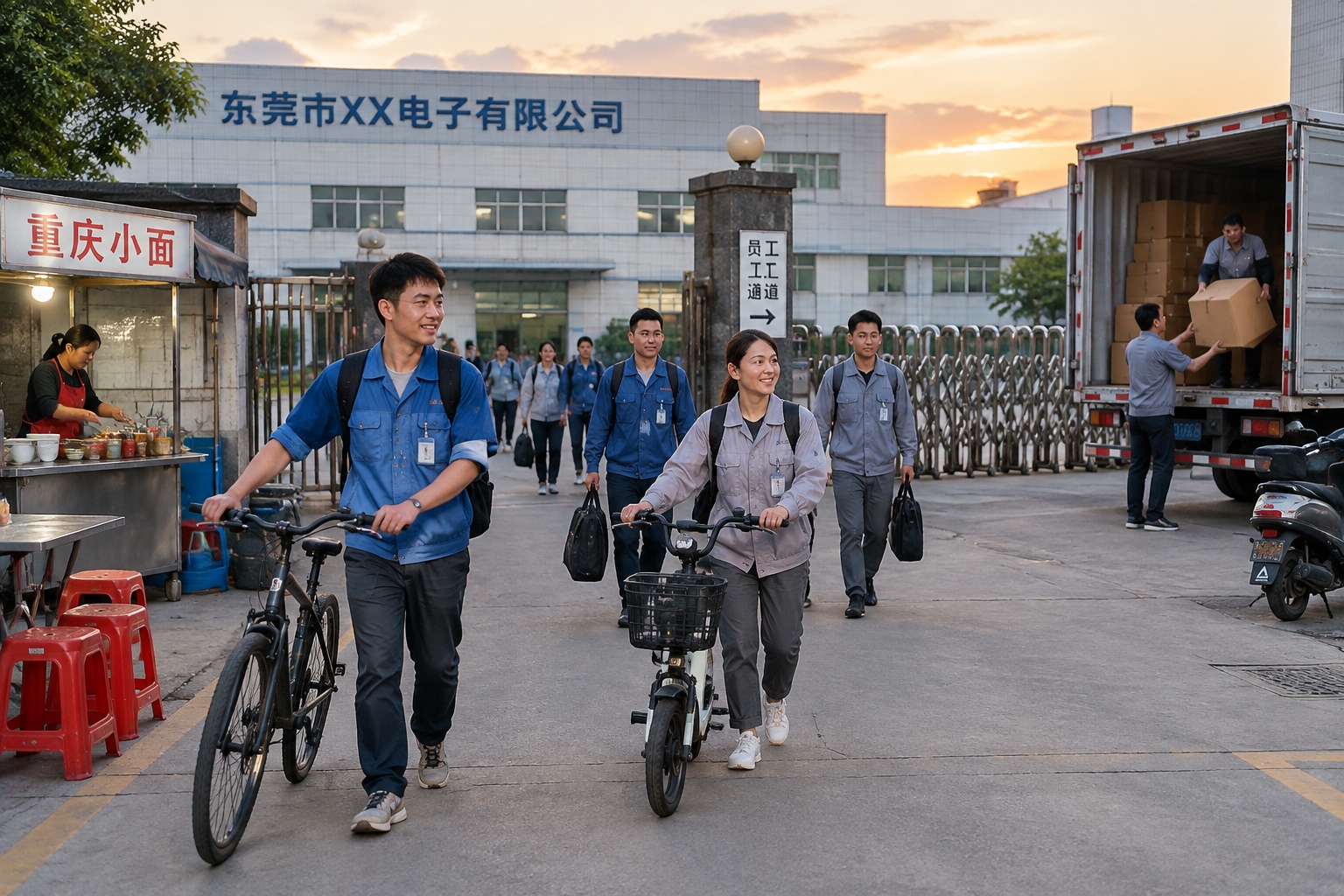

The last container of plush toys
On a Tuesday morning in early March, Chen Weiguo stood on the loading dock of his factory in Chang’an, a manufacturing town in Dongguan, Guangdong, and watched workers seal a container of plush toys bound for Rotterdam. The order was worth about 1.2 million yuan, or roughly $165,000. The margin was under 6%.
Chen had been making stuffed animals and plastic toys for export for 17 years. His 600 workers turned out four million pieces a year. Five years ago that was a good business. Now rising wages, shrinking order sizes and buyers moving simple toy work to Vietnam and India had pushed him into a corner. Half of Hall B sat idle.
That same week, a Shenzhen brand he had worked with for years asked a question that rearranged his whole month: could he build 40,000 Wi-Fi smart speakers in six weeks?
He said yes on the spot. Then he went back to his office and asked his production manager how on earth they were going to do it.
Names of the factory and its owner have been changed. The timeline, costs and yield figures reflect how changeovers of this kind typically work in Dongguan’s contract manufacturing sector and the publicly documented structure of the Pearl River Delta supply chain.
Why a toy factory was already halfway to being an electronics factory
Dongguan is not a city most foreigners can place on a map. It sits in the Pearl River Delta between Guangzhou and Shenzhen, and its economy is worth roughly 1.1 trillion yuan — about $150 billion, comparable to the whole of Hungary. Tens of thousands of factories operate here, most of them invisible to consumers.
Chen’s plant already had a lot of what a speaker needs: injection molding machines, assembly lines, an incoming-inspection team, export paperwork and 600 people who knew how to hit a daily target. What it did not have was acoustic testing, firmware, or anyone who understood radio frequency.
That gap — big enough to be hard, small enough to close in a month — is what makes the story interesting.
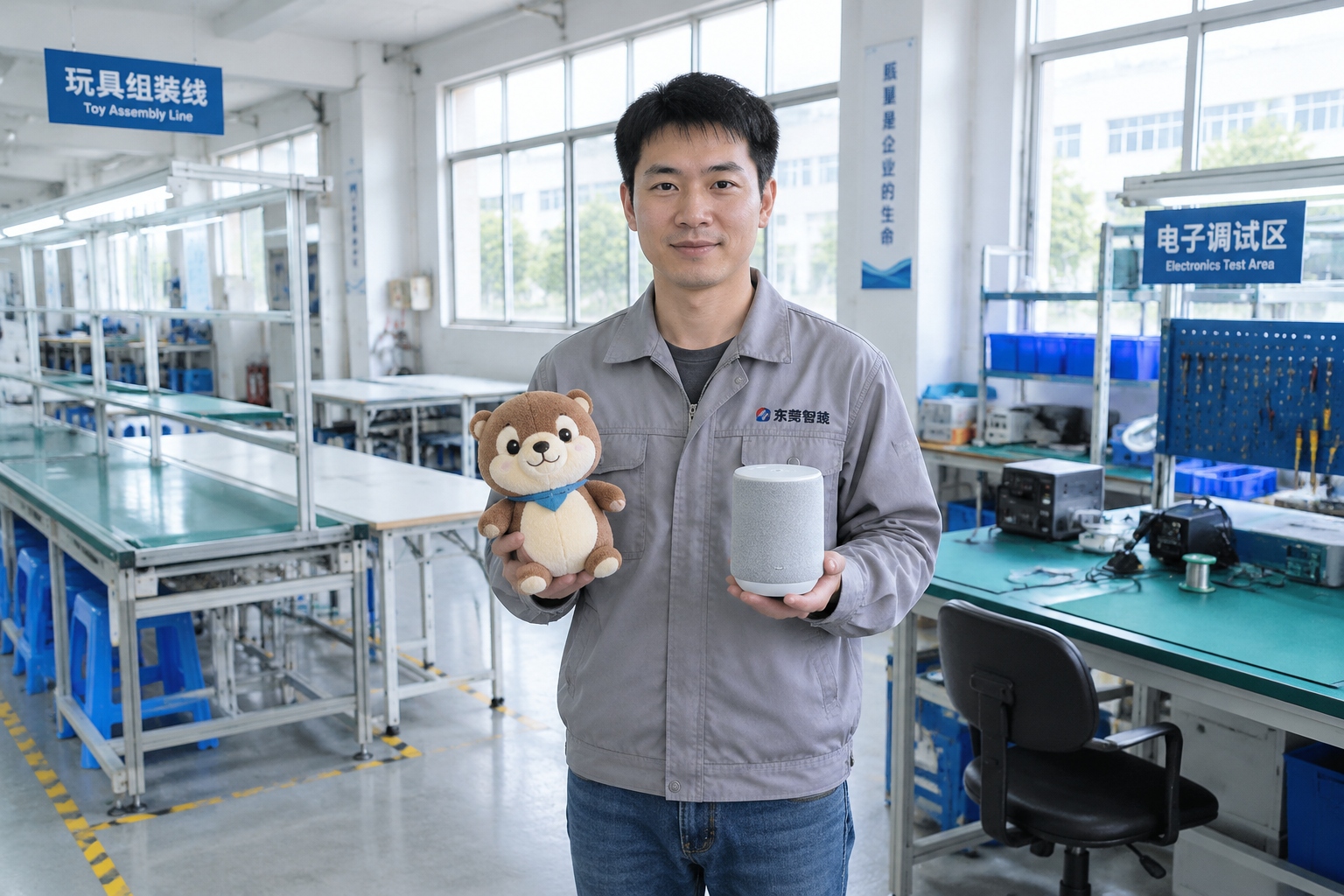
The 30-day changeover, day by day
Here is how the month actually broke down.
| Timeline | What happened |
|---|---|
| Day 0 | The brand’s request: 40,000 Wi-Fi smart speakers in six weeks |
| Days 1–3 | Choosing between two enclosure designs; locking the bill of materials |
| Days 4–10 | Tooling change, injection machine setup, 41 components ordered and delivered |
| Days 11–18 | 240 workers retrained; line layout and workstations rebuilt |
| Days 19–26 | 500-unit pilot run; fixing rattle, Wi-Fi pairing failures and a firmware bottleneck |
| Days 27–30 | First 4,000 units shipped — to the domestic market, not for export |
Days 1–3: choose a product that fits the machines you already own
The brand sent two designs. The flagship model — a fabric-wrapped speaker with a 12-piece shell — needed brand-new tooling. The mold shop quoted 45 days. That alone killed it.
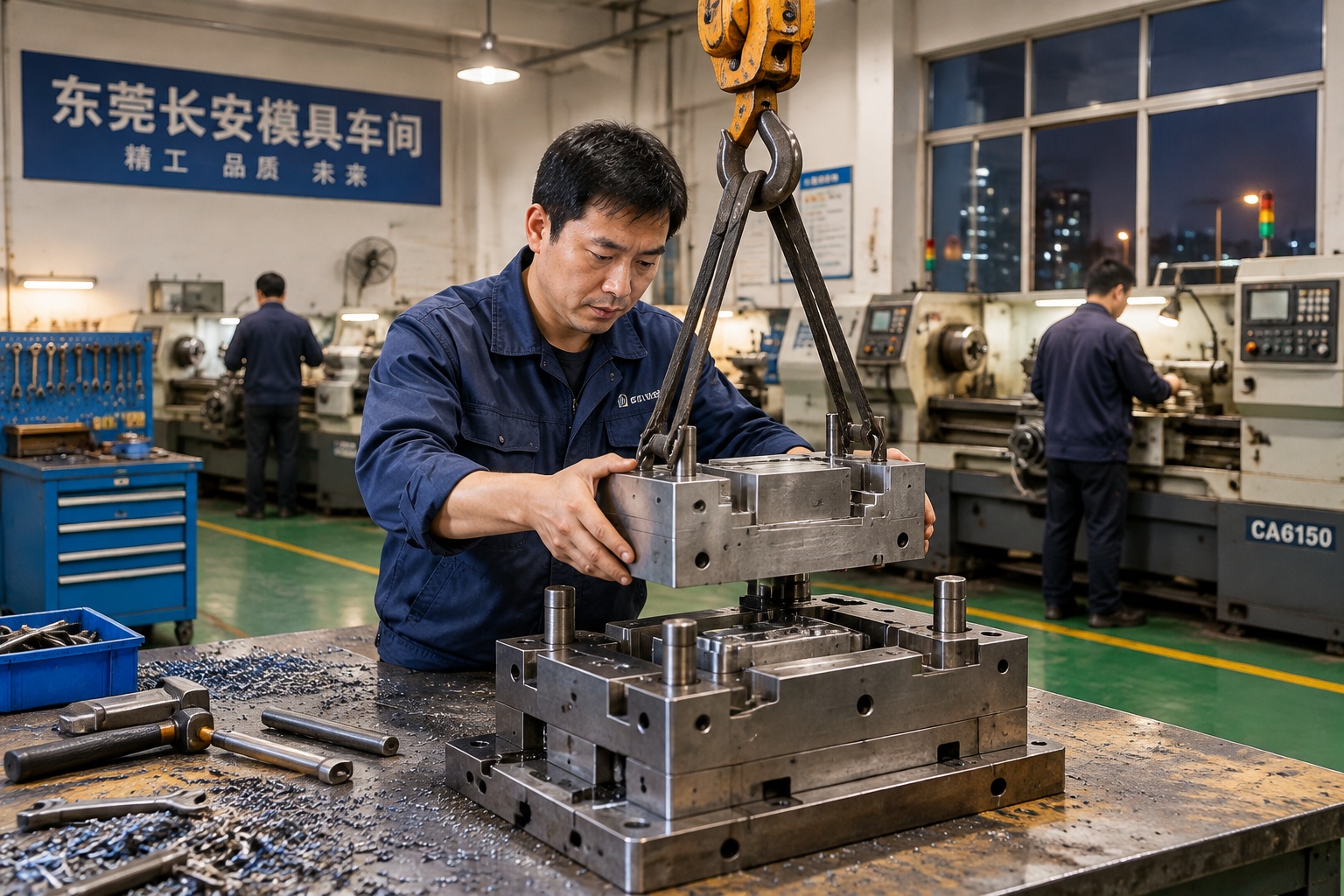
The second design was a mesh cylinder. Its housing could be made from an existing mold base with a new insert, which cut tooling from 45 days to nine. It was slightly less elegant and slightly heavier. It shipped.
Chen’s rule of thumb, in his own words: “Never let the mold decide your deadline. Change the design.”
Days 4–10: the tooling is the clock, and everything else waits on it
Once the housing was fixed, the bill of materials came together fast: 41 components. Thirty-four of them came from suppliers within a 90-minute drive. Speaker drivers from Huizhou. Wi-Fi module and chips from Shenzhen, an hour away. Bare circuit boards from a partner plant 20 minutes down the road. Power adapters, screws, foam and cable — all standard, all in stock.
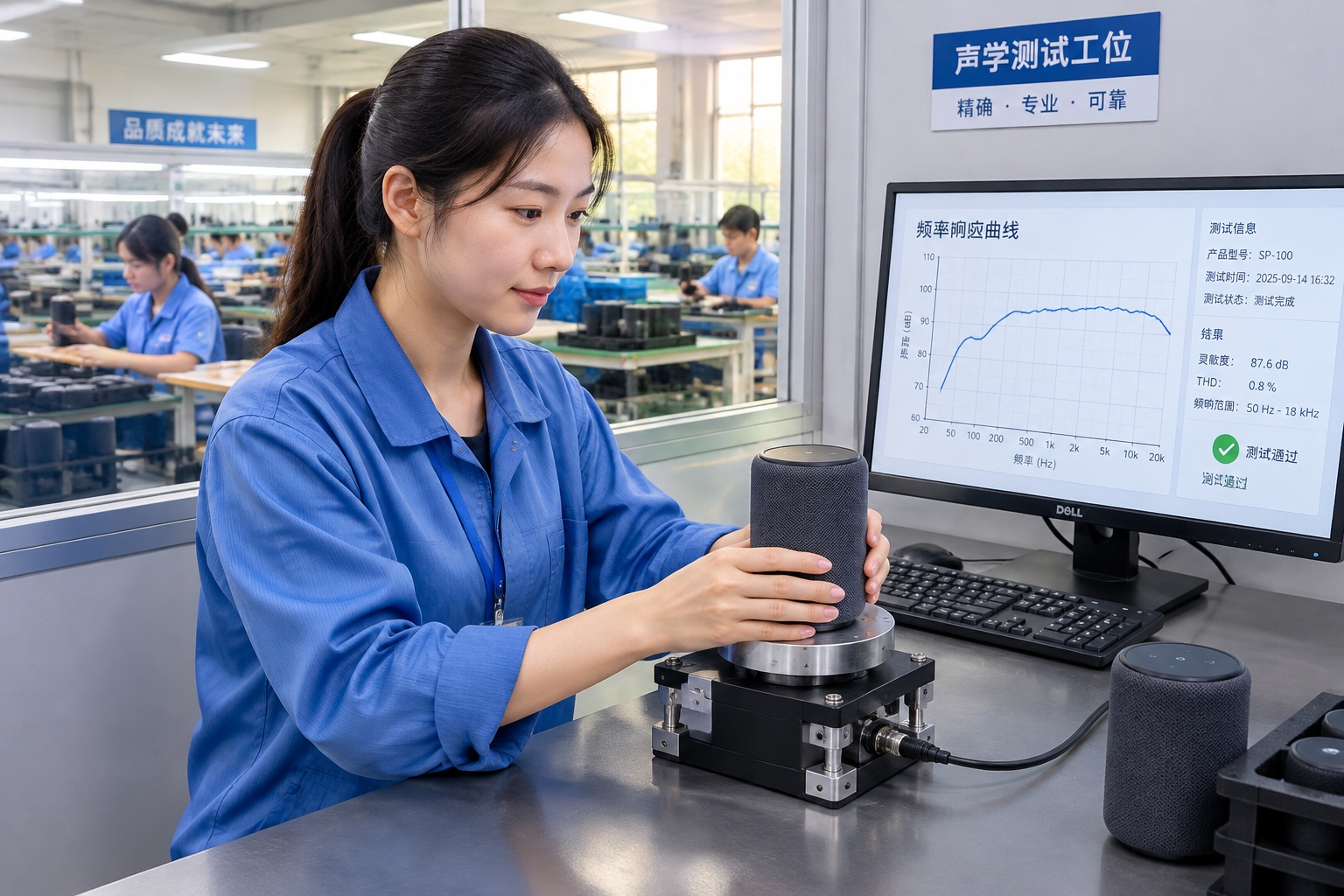
The mold shop in Chang’an ran nights and weekends. Injection machines got new inserts. A small room in Hall B was sealed, air-conditioned and turned into a listening test booth.
This is the part outsiders usually underestimate. In the Pearl River Delta, one factory rarely builds a whole product. It coordinates one. The supply chain does the rest, and it responds to a phone call rather than a purchase-order system.
Days 11–18: retraining 240 people in eight days
Chen moved 240 toy-line workers onto the new line. Most had spent years sewing plush fabric or hand-painting plastic eyes. None had ever flashed firmware.
The company broke every job into steps and asked one question: which of these are genuinely new? The answer was about 20%. Routing a cable, seating a driver with a torque screwdriver, running an acoustic test — new. Standing at a station for eight hours and keeping pace — not new at all.
So they trained for the 20%. Two days of classroom practice, then a buddy system in which a “red vest” mentor shadowed each new worker for three days. At every station a laminated photo card showed the correct assembly at each step, and connectors were chosen so they physically could not go in the wrong way.
Pay mattered too. Line workers in Dongguan take home roughly 5,000 to 6,500 yuan a month — about $700 to $900 — with overtime. For the ramp-up month, Chen added a 300-yuan skill bonus and free late-night meals. Of 240 people, 11 quit. He counted that as a win.
Days 19–26: the first 500 units fail, which is the whole point
The pilot run was 500 speakers. Almost none were good enough to sell.
Three problems surfaced. Rattle: at high volume the housing buzzed, because a foam gasket was missing and dust had gotten into the acoustic chamber. Wi-Fi: one unit in five failed its pairing test on the first attempt, because a metal screw sat too close to the antenna. Bottleneck: the firmware flashing station took 90 seconds per unit and became the slowest point on the line, until someone brought in a programmer that handled eight units at once.
None of these were design failures. They were the ordinary friction of moving from a hand-built sample to a line that is supposed to make 1,200 units a day. First-pass yield climbed from 78% on day 19 to 96% by day 26.
Days 27–30: the first pallet
The line shipped its first 4,000 units on day 30. Not to Europe — to the domestic market. Export versions needed CE and FCC marks and Bluetooth certification, and that paperwork takes weeks no matter how fast your factory is. The brand already held certificates for its own model, so early batches stayed inside China while the documents caught up.
It is the least glamorous and most useful detail in the whole story: you can retool a factory in a month. You cannot retool a regulator.
Before and after: the same floor, a different business
| Item | Toy line | Smart speaker line |
|---|---|---|
| Factory-gate unit price | 18–25 yuan ($2.50–3.50) | 210–260 yuan ($29–36) |
| Gross margin | 5–7% | 14–18% |
| Line headcount | 300 | 240 |
| Order size that makes sense | 100,000+ pieces | 5,000+ units |
| New-product lead time | 45–60 days | 30 days, this run |
| Relationship with the customer | Anonymous OEM | Joint development |
| Hardest thing to outsource | Almost nothing | Acoustic testing and firmware |
So what is “flexible manufacturing,” really?
It is not robots. Chen’s factory has almost none — human hands still do the delicate work, because for runs of a few thousand units, people are cheaper and faster to redeploy than machines.
Flexibility here means five unglamorous things: product designs that reuse existing tooling; suppliers close enough to visit in an afternoon; workers who can be retrained in days rather than months; managers who can make a decision without a committee; and a tolerance for a messy first batch.
A useful analogy: this is not one giant machine that can build anything. It is a kitchen that can change its menu overnight because the pantry, the butcher and the greengrocer are all on the same block.
A playbook you can steal
- Start from your tooling, not your wish list. Ask which designs your existing molds, fixtures and machines can almost handle. The answer usually saves weeks.
- Treat the mold as the critical path. Book the tooling first, then schedule everything else around it. Assembly, training and packaging can all be compressed. Steel cannot.
- Train for the 20% that is genuinely new. Do not retrain the whole job. Identify the unfamiliar steps, drill those, and write the rest down on a laminated card at the station.
- Budget for a bad first batch. Expect 75–85% first-pass yield on a pilot run and plan the rework shift in advance. A pilot that passes cleanly usually means you tested too gently.
- Check certification before you check capacity. CE, FCC and Bluetooth approvals decide which market you can actually sell into, and they run on their own clock.
- Keep the old line running. Chen kept the toy line alive in Hall A for the whole month; that revenue paid the wages of the people learning to build speakers. Fast changeovers rarely fail on engineering. They fail because the cash runs out first.
What this story does not mean
Three honest caveats.
Not every factory can do this. Chen already had injection molding, clean assembly space and 17 years of export discipline. A factory that only sews or only paints would have needed a partner, much more time, or both.
The factory does not capture most of the value. The brand owns the design, the firmware and the customer. Chen’s share is a 14–18% gross margin on someone else’s product — better than toys, but not a business he controls.
The 30 days cost something. They cost a mold shop working nights, 240 people on overtime and managers sleeping in the office. The model is repeatable, but it is not free, and it is not relaxed.
Where the story stands now
Sixty days after that first phone call, the Chang’an line was building about 1,100 speakers a day. In Hall A the toy line was still running — plush animals, smaller orders, thinner margins — because Chen is not betting the company on one product again.
Standing outside the new listening booth, he was asked whether he would do it all over. He laughed. “For the right customer, in a heartbeat. But next time I want 45 days.”
Start the discussion at forum.chinacomes.com