

A Queue That Forms Before the Doors Open
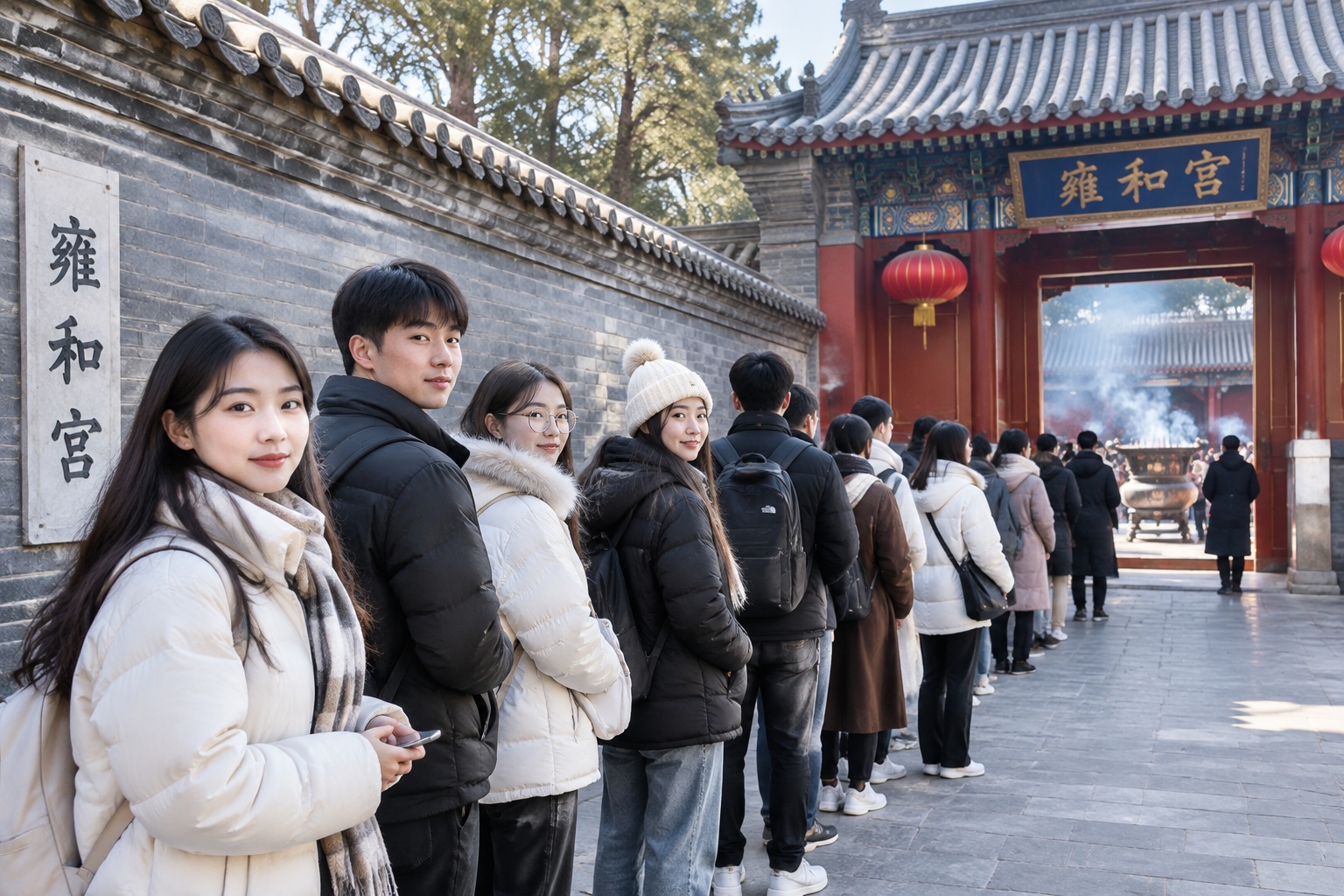
It is 7:40 on a Saturday morning in Beijing, and the line outside Yonghe Temple already runs along the grey courtyard wall. The temperature is close to freezing. Almost everyone waiting looks like they came straight off a subway car: puffer jackets, chunky sneakers, canvas tote bags, a phone in one hand.
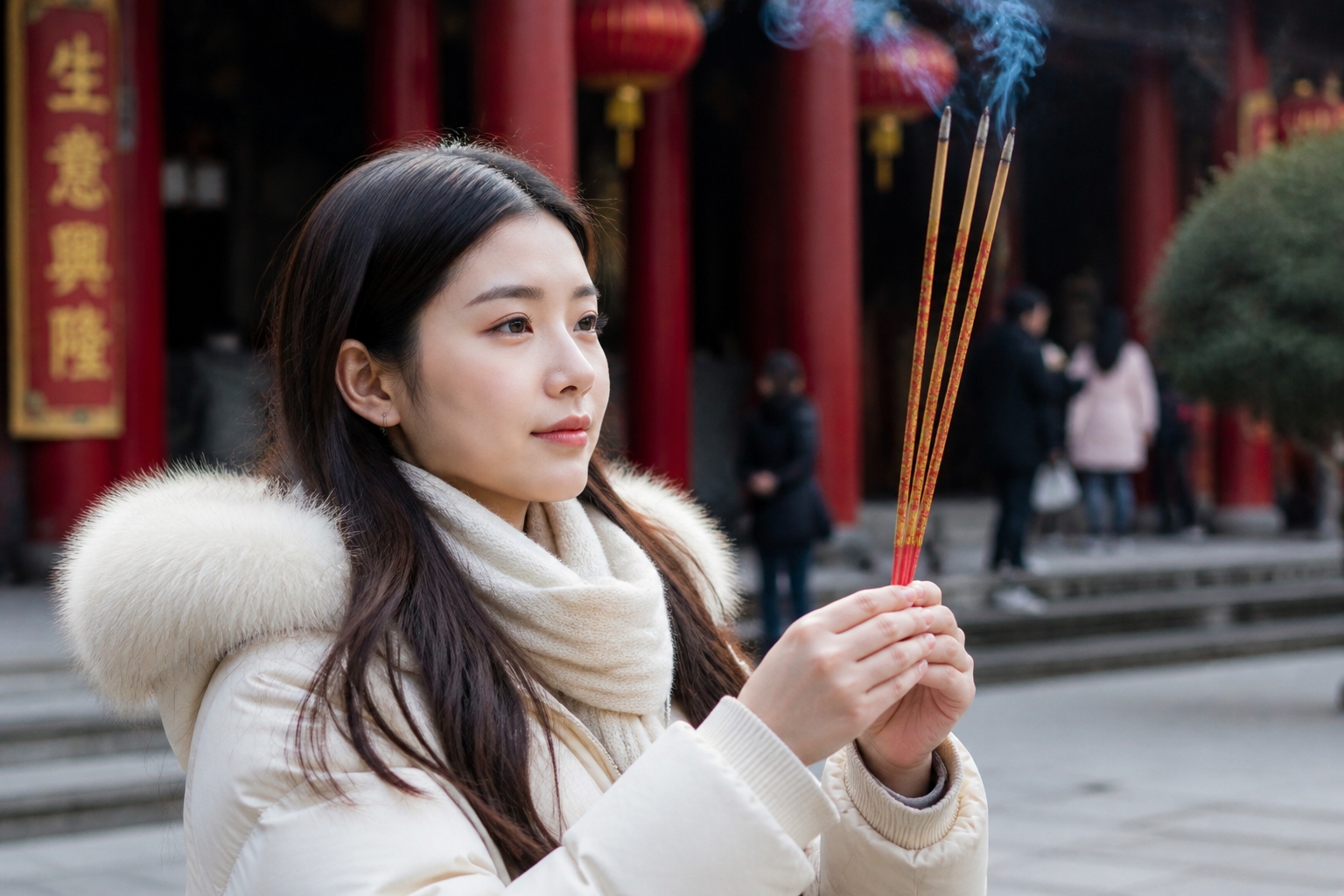
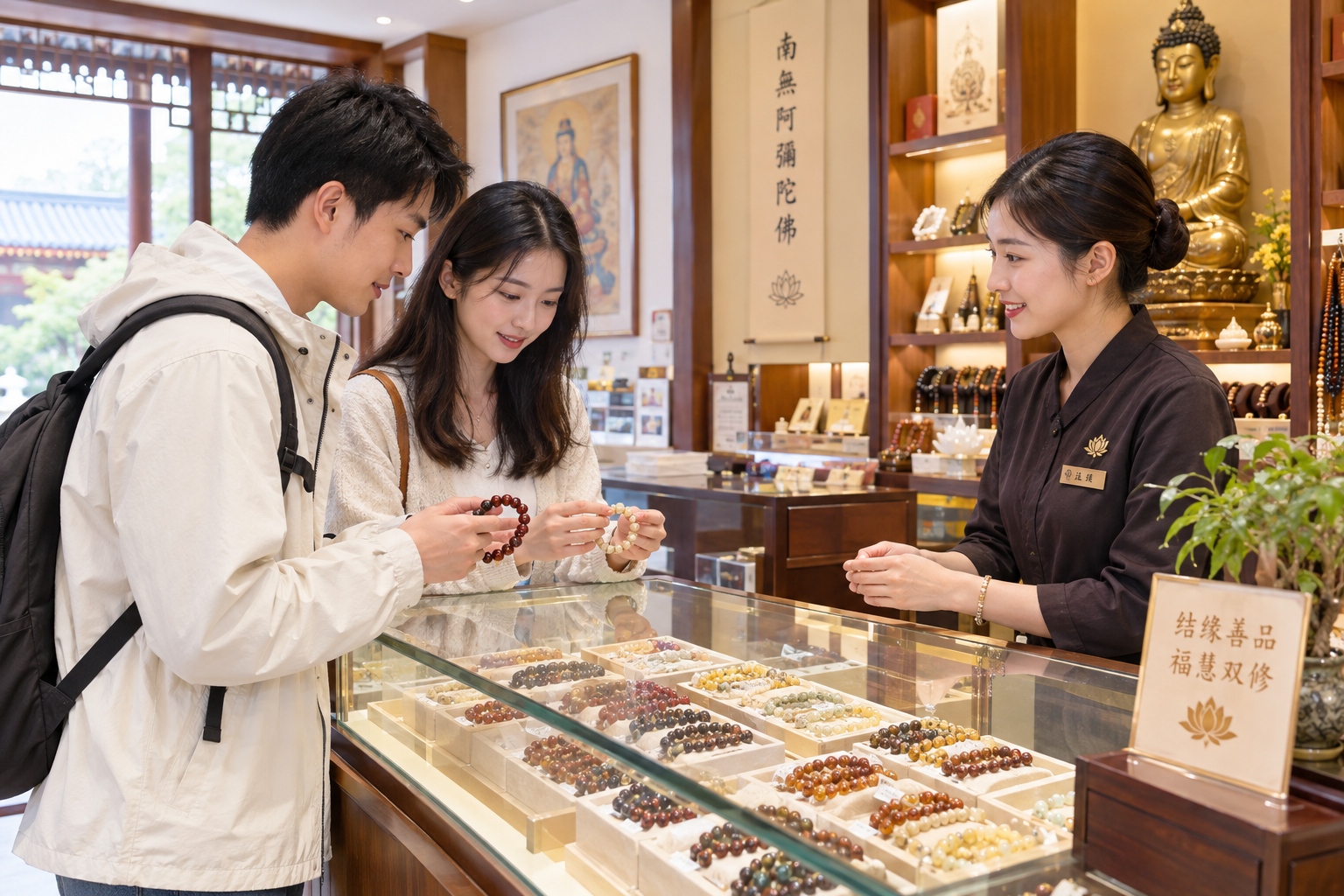
When the doors open, two things happen quickly. In the courtyard, people light three sticks of incense and bow. At the dharma-goods counter on the far side, a much longer line forms for beaded bracelets. The ones everyone wants are glazed with incense ash — cloudy grey, faintly iridescent, a few hundred yuan each. They often sell out before noon. On Xiaohongshu, China’s cross between Instagram and Pinterest, a post explaining where to queue for one can collect tens of thousands of likes.
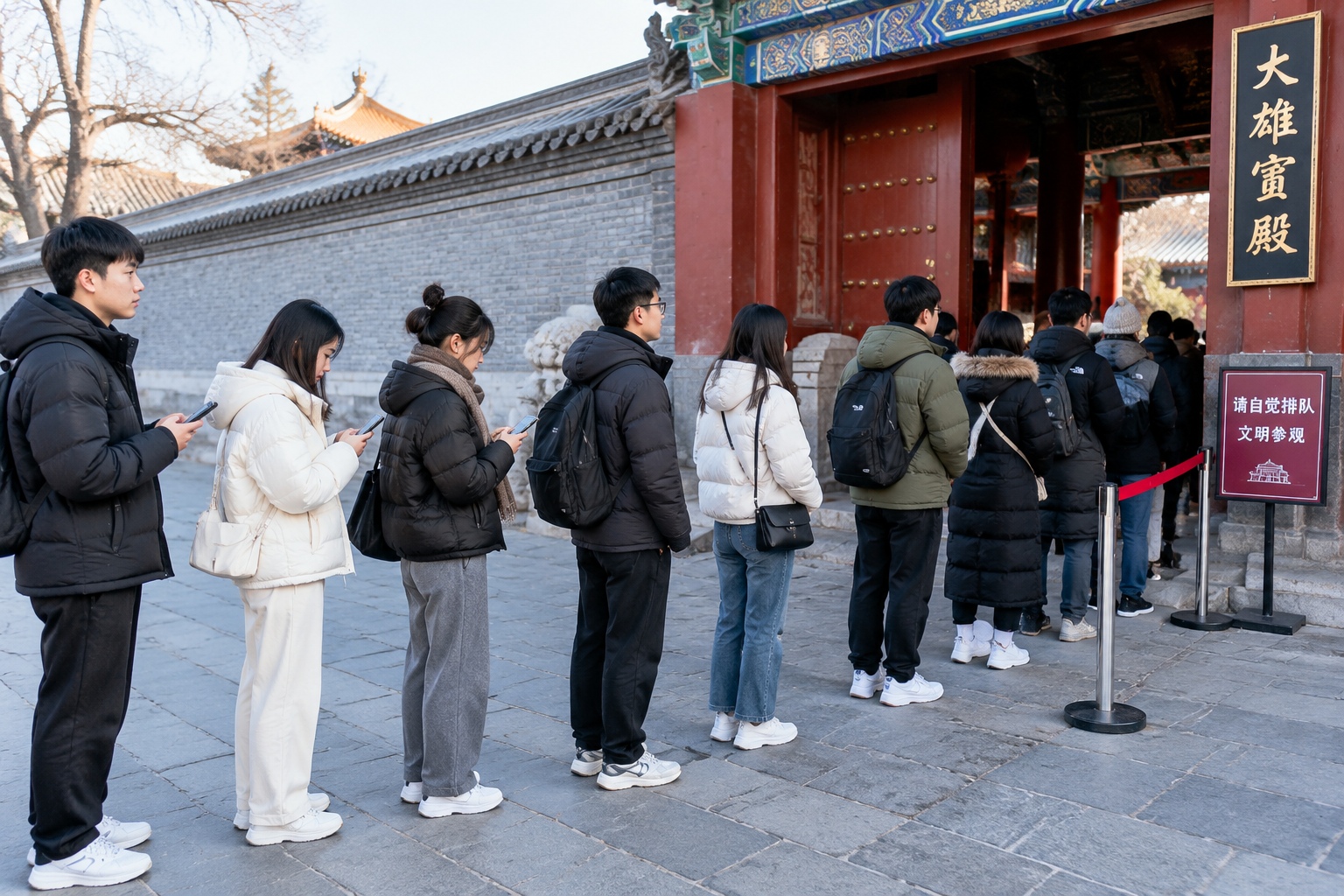
For many foreign visitors, this is a confusing scene. Temples are supposed to be for grandmothers, and prayer beads are supposed to be religious. What is a 24-year-old in a down jacket doing here at dawn?
Temple Tourism in China Is No Longer a Niche
The numbers catch up with the picture. Ctrip, one of China’s largest travel platforms, reported that bookings for temple-related tickets in the first months of 2023 jumped more than 300 percent compared with the year before, and that visitors born in the 1990s and 2000s made up roughly half of them. The pattern repeats across the country: Yonghe Temple in Beijing, Lingyin Temple in Hangzhou, Wenshu Monastery in Chengdu, Hanshan Temple in Suzhou. On weekends and public holidays, the biggest ones now use timed reservations, the same as major museums.
The joke that circulates online captures the mood better than any statistic. 在上进和上班之间,我选择了上香 — “Between pushing myself to get ahead and showing up for work, I chose to burn incense.” It is funny because it is a small surrender. Nobody in that courtyard believes three sticks of incense will produce a job offer.
The Word in the Background: Neijuan
To understand why this trend landed now, you need one Chinese word: neijuan (内卷), usually translated as “involution.” It describes competition that keeps intensifying without producing more reward — everyone studies harder, works longer, and the ranking stays the same. The gaokao, the university entrance exam, is the original example. Then come the graduate-school exams, the civil-service exams (in 2024, about 3 million people applied for roughly 40,000 central government posts), the 996 schedule in tech, and a property and platform economy that stopped hiring in a straight line around 2022.
Youth unemployment, measured one way, passed 20 percent in mid-2023 before the government changed how it was counted. Even for those with stable jobs, the feeling is not scarcity of effort. It is scarcity of certainty. When effort no longer maps neatly onto outcome, people look for something else to do with their hands.
If You Are Reading This From Europe or the US, Think Crystals Before You Think Superstition
The easiest mistake is to file incense-burning under “superstition” and move on. A more useful comparison sits much closer to home. Millions of Americans and Europeans who would never call themselves religious still buy crystals, keep a meditation app subscription, check Co-Star, read a horoscope on the subway, or pay for a weekend yoga retreat. Nobody seriously expects a piece of rose quartz to fix a landlord dispute. The point is the ritual, and the small pause it creates.
Temple incense functions in a similar register, with two differences that matter. First, it is cheap — often free, or the price of a metro ticket. Second, it is public and shared, which counts for a lot in a country where counselling is expensive, unevenly distributed and still carries some stigma. China has roughly four psychiatrists per 100,000 people, a fraction of the rate in the United States or Western Europe. Fifty minutes with a private counsellor in a big city can cost 300 to 800 yuan, which is a real decision for someone earning 8,000 a month. In 2025 the government rolled out a nationwide mental-health hotline, 12356 — which tells you both that the need is acknowledged and that supply is still catching up.
A courtyard full of incense smoke is not a substitute for a therapist. But it is affordable, it is quiet, and nobody asks you to explain your childhood.
How Guochao Turned Prayer Beads Into Accessories
Timing matters too. The last five years saw the rise of guochao (国潮), the “national trend” — a shift in which Chinese consumers, especially younger ones, started preferring domestic design and traditional references over Western logos. Hanfu on weekends, new Chinese style clothing, teahouses, incense and ceramics in apartments: all of it moved from niche to normal.
That is how a mala-style bracelet travelled from a religious object to something you wear with a hoodie. Celebrities were photographed in them, jewellery brands copied the format, and temples responded with their own retail. Hangzhou’s Lingyin Temple runs a café whose name puns on a Buddhist word for compassion and sells takeaway coffee that ends up in a lot of photographs. For many young visitors, the aesthetic arrives first. Belief sometimes follows; sometimes it does not.
What People Actually Do Inside
Spend an hour in a temple courtyard and the behaviour is less exotic than the headlines suggest. Visitors take three sticks of incense, bow in a few directions, and put the phone back in their pocket. Some write a wish on a wooden tag and hang it on a rack. At temples with a hall of 500 arhat statues, people count statues until they land on a number, then look up what that number is said to mean. They photograph the red wall, the ginkgo leaves, the roof line against a hard winter sky.
And then there is the unphotogenic part that rarely makes it into the trend pieces: sitting on stone steps. Not praying, not scrolling, just sitting. In a city of 22 million people, a temple is one of the few places where nobody expects you to be productive.
The Parts That Are Harder to Celebrate
The story has friction. Yonghe is a working Tibetan Buddhist temple with resident monks; for actual believers, a crowd of tourists with selfie sticks is a mixed blessing. Religious practice and photo opportunity coexist awkwardly, and temple staff spend a lot of energy on crowd control.
There is also a commercial edge. The popular bracelets get resold on second-hand platforms at several times the retail price, and the temple has at times limited purchases to one per person. Some young Chinese are openly sceptical, calling the whole thing consumerism with a Buddhist filter, or resignation dressed up as calm. Others never go near a temple at all — they run marathons, play games, see a therapist, or simply sleep.
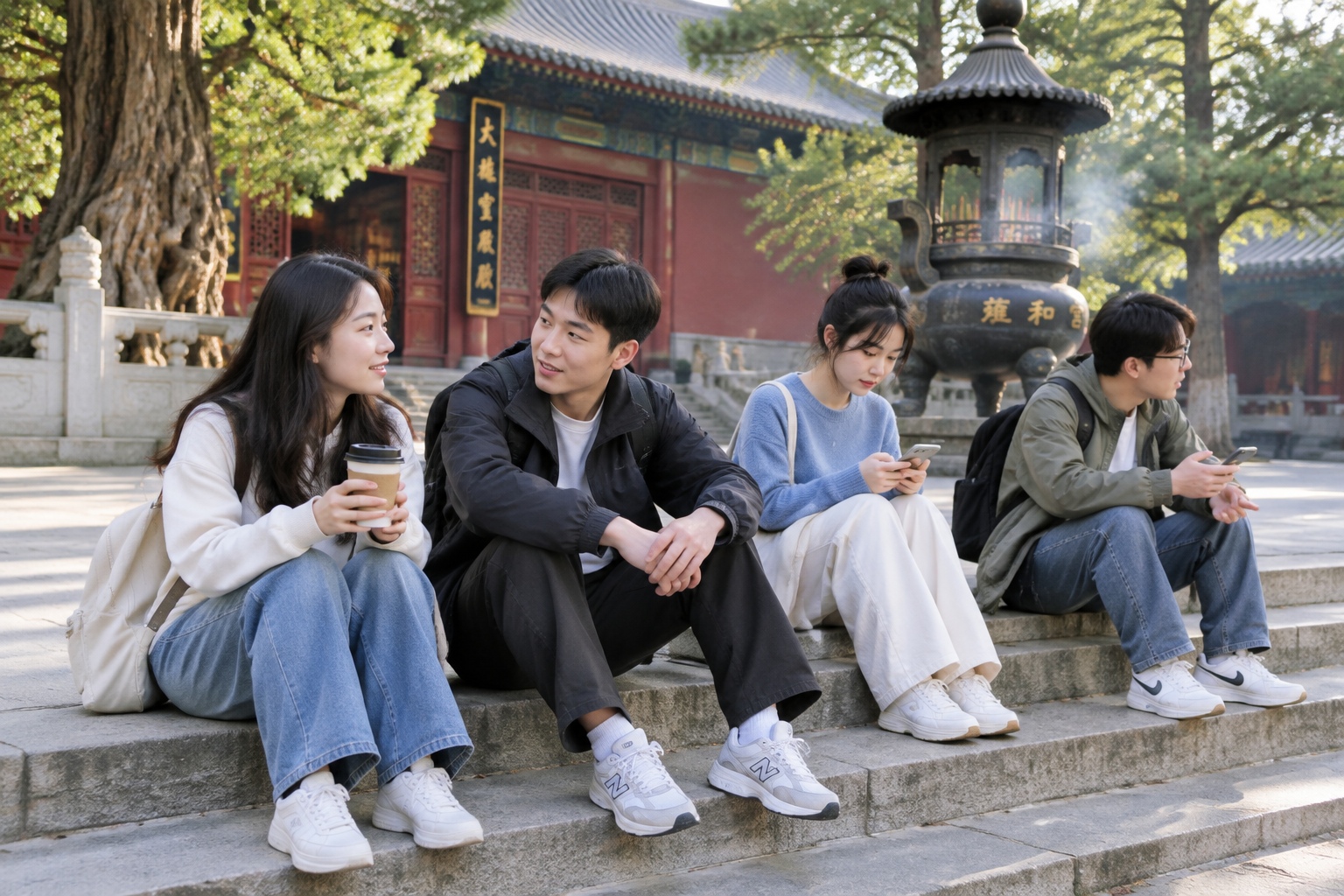
A Small, Affordable Way to Hold Uncertainty
So what is really happening? Not a religious revival, and not a generation giving up. Something in between: a low-cost, low-commitment way of handling a decade that feels louder than it should.
Incense does not answer anything. It buys ten quiet minutes and a brief sense that the future is not entirely yours to control. For people raised on the promise that effort always pays off, that is a strange and rather comforting thing to admit.
Start the discussion at forum.chinacomes.com