
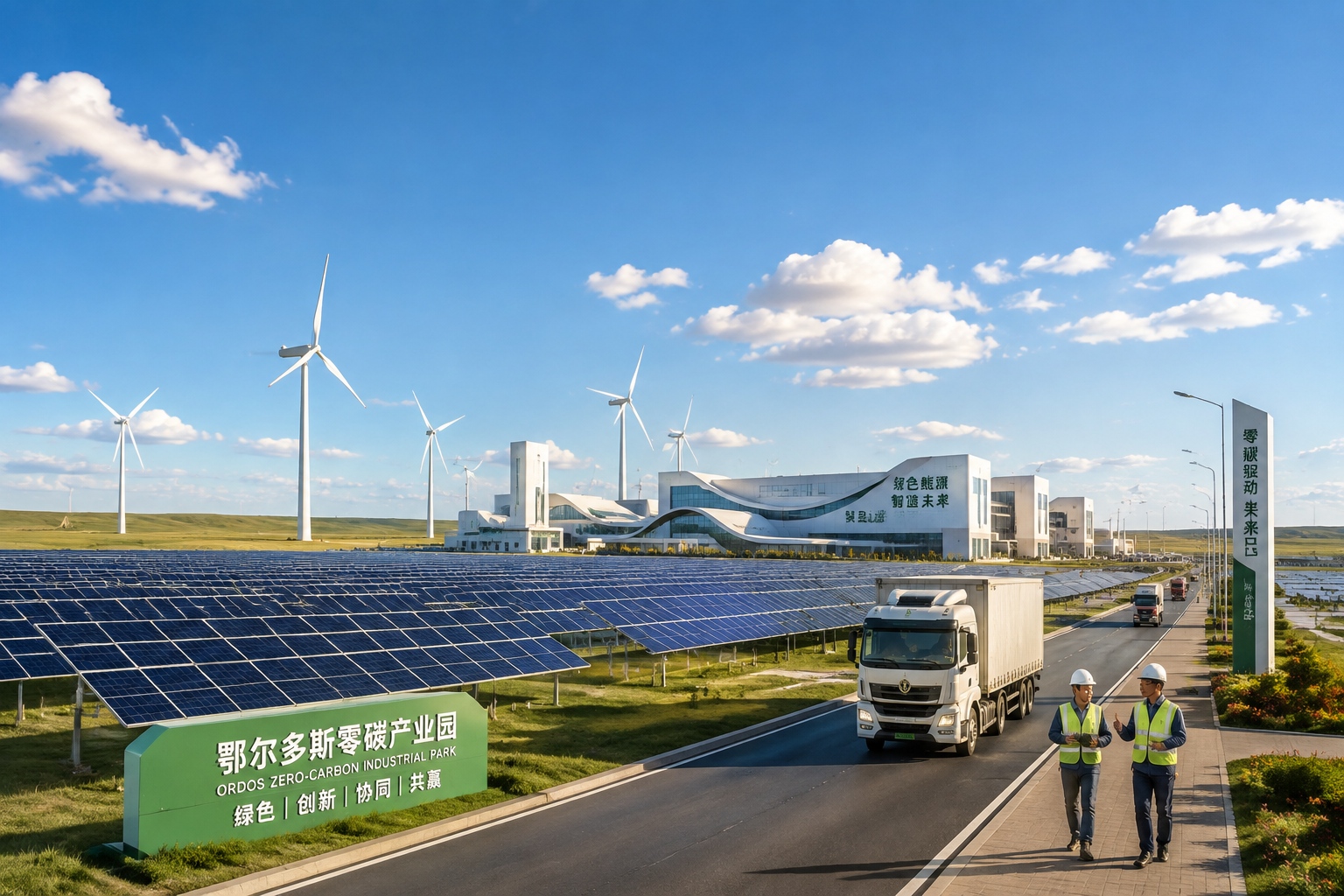

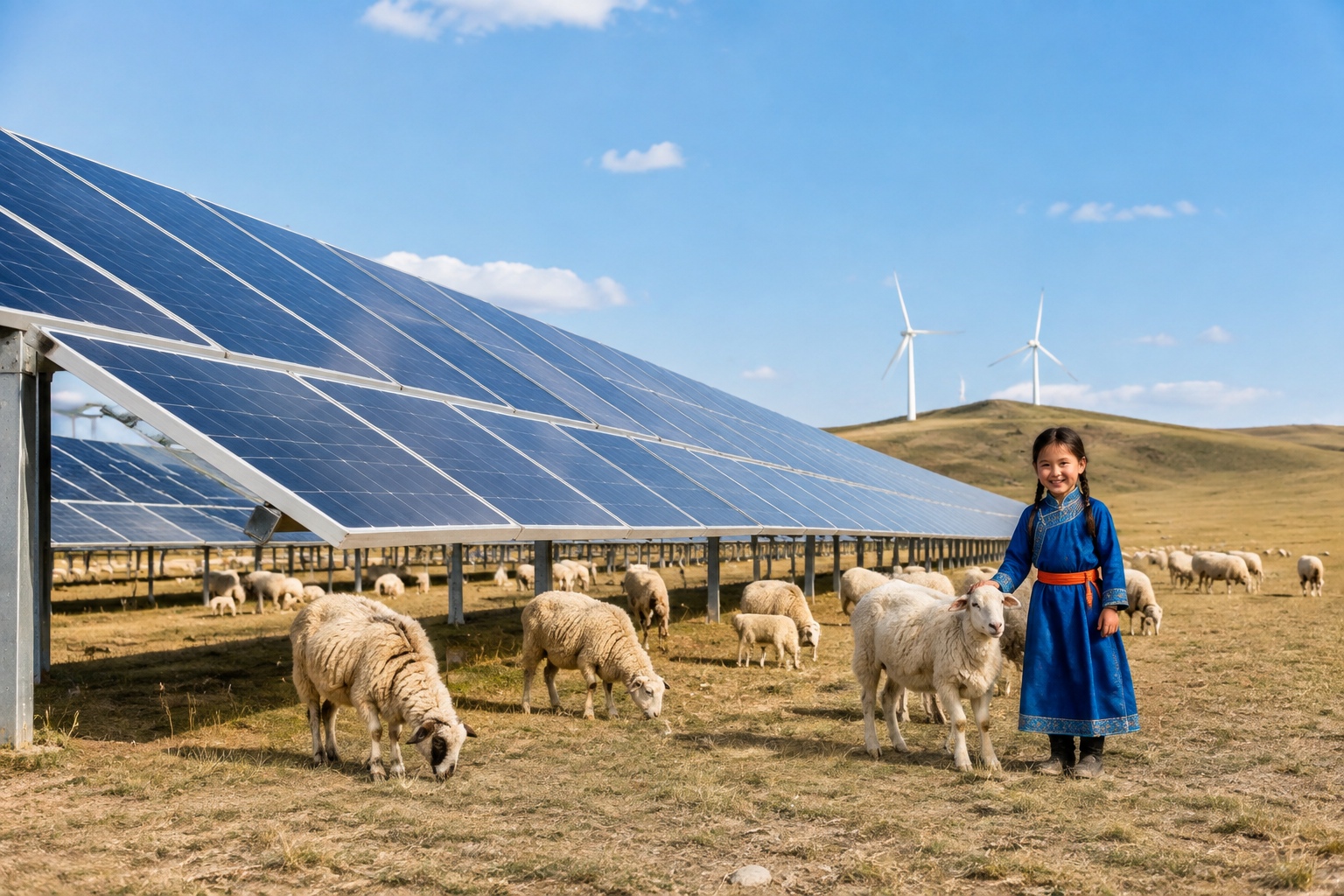
About an hour’s drive west of Baotou, the empty landscape starts to change. Sand dunes and scrub grass give way to rows of blue solar modules that stretch across the horizon like metallic oceans. Wind turbines spin slowly in the dry air, their blades casting rotating shadows on herds of sheep grazing below. This is the outskirts of Ordos, a city that still mines coal but now also hosts one of China’s most ambitious attempts to leave it behind.
The area is home to the Ordos Zero-Carbon Industrial Park, a purpose-built zone where factories, storage, and energy generation are designed as a single system. Its goal is simple: industrial production without net carbon emissions. I joined a tour group that included engineers, a local official, and a group of students. We wanted to see what China’s 2060 carbon neutrality target actually looks like when it’s being built on the ground.
What the “Dual Carbon” Goal Actually Means
In September 2020, China announced two numbers that would shape its energy policy for decades: peaking CO2 emissions before 2030 and achieving carbon neutrality by 2060. The shorthand “dual carbon” (shuangtan) quickly became part of the national vocabulary.
For outsiders, the pledge sounds abstract. A 2060 deadline is further away than most people’s professional careers. But walking through this industrial park, it becomes clear that the plan isn’t just a PowerPoint promise. It is being translated into factory floor designs, power purchase contracts, battery deployment, and permits.
Inside the Zero-Carbon Industrial Park
Wind, Sun, and a Shared Grid
The park’s energy supply relies on a mix of on-site wind and solar farms connected to a local microgrid. Unlike conventional grids that burn coal or gas, this one is managed by an AI-powered dispatch system that balances supply and demand in near real time. A smart control room in the middle of the park tracks output from wind turbines and photovoltaic arrays spread across the surrounding grassland.
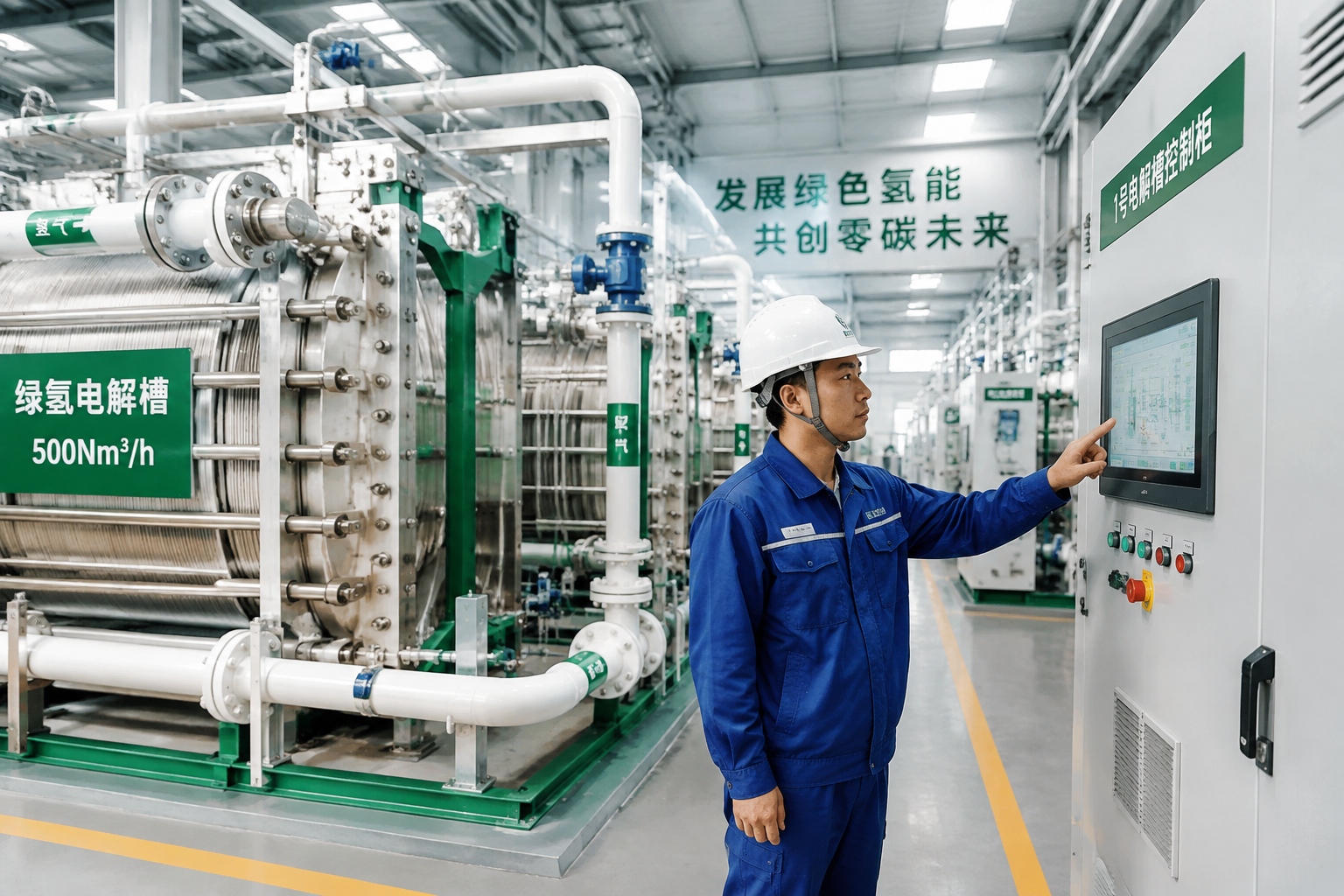
“We used to worry about the intermittency of renewables,” said Zhang Yuan, a senior engineer with the park’s operator, Envision Group. “Now we treat it as a solvable puzzle, using storage and flexible load shifting. When the wind stops, we draw on batteries. When there’s excess power, we run electrolyzers to make hydrogen.”
Green Hydrogen: The Missing Piece
Ordos is better known as China’s coal capital. The region sits on some of the world’s largest coal seams. Yet the zero-carbon park has chosen a different raw material: green hydrogen produced from renewable electricity. The park hosts a 20 MW alkaline electrolyzer system that splits water into oxygen and hydrogen. The hydrogen is then piped to nearby chemical plants, replacing fossil-derived gas to produce synthetic ammonia and methanol.
From Factory Roof to Electric Forklift
The first tenants are mainly manufacturers of wind turbines and electric-vehicle batteries. Their production lines use large amounts of electricity, but the park’s design helps them stay clean. Rooftops are covered with solar tiles. Warehouse ceilings are fitted with automatic power-saving systems. Forklifts are electric, and factory loading docks have high-power charging stations for heavy trucks.
Managing the Microeconomy of Carbon
Perhaps the most striking part is the digital carbon account attached to each tenant. Every kilowatt-hour of electricity, every liter of hydrogen, and every ton of waste is tracked and turned into a carbon ledger. This not only helps companies report their emissions but also lets them sell any surplus carbon credits on China’s national emission trading registry.
The Numbers Behind the Transition
The Ordos park is not an isolated experiment. It’s part of a larger roll-out that is visible in China’s energy statistics. At the end of 2023, renewable energy—excluding nuclear—accounted for roughly 50% of the country’s total installed power capacity. Solar capacity had reached about 650 GW and wind about 440 GW, far ahead of what most analysts expected a decade ago.
In 2023 alone, China added roughly 290 GW of renewable capacity—more than the entire electricity capacity of the UK. The growth is driven by both government mandates and falling costs. Solar panel prices have dropped by roughly 90% over the past decade, making solar cheaper than coal in most parts of the country.
Meanwhile, China’s national carbon market, which began trading in July 2021, has expanded to cover more than 2,000 power companies and about 45 billion tons of CO2 emissions per year. The market is still tightening, but it gives a price tag to carbon and creates a financial incentive to cut emissions.
What About Coal?
Coal is far from gone. It still generates more than half of China’s electricity, and new coal plants occasionally get approved to meet demand spikes. But in many regions, coal plants now run at less than half of their capacity, serving mostly as backup when wind and solar dip. The Ordos park is an example of how local systems can push coal further to the margins.
How Ordinary People See the Change
Solar on Rooftops
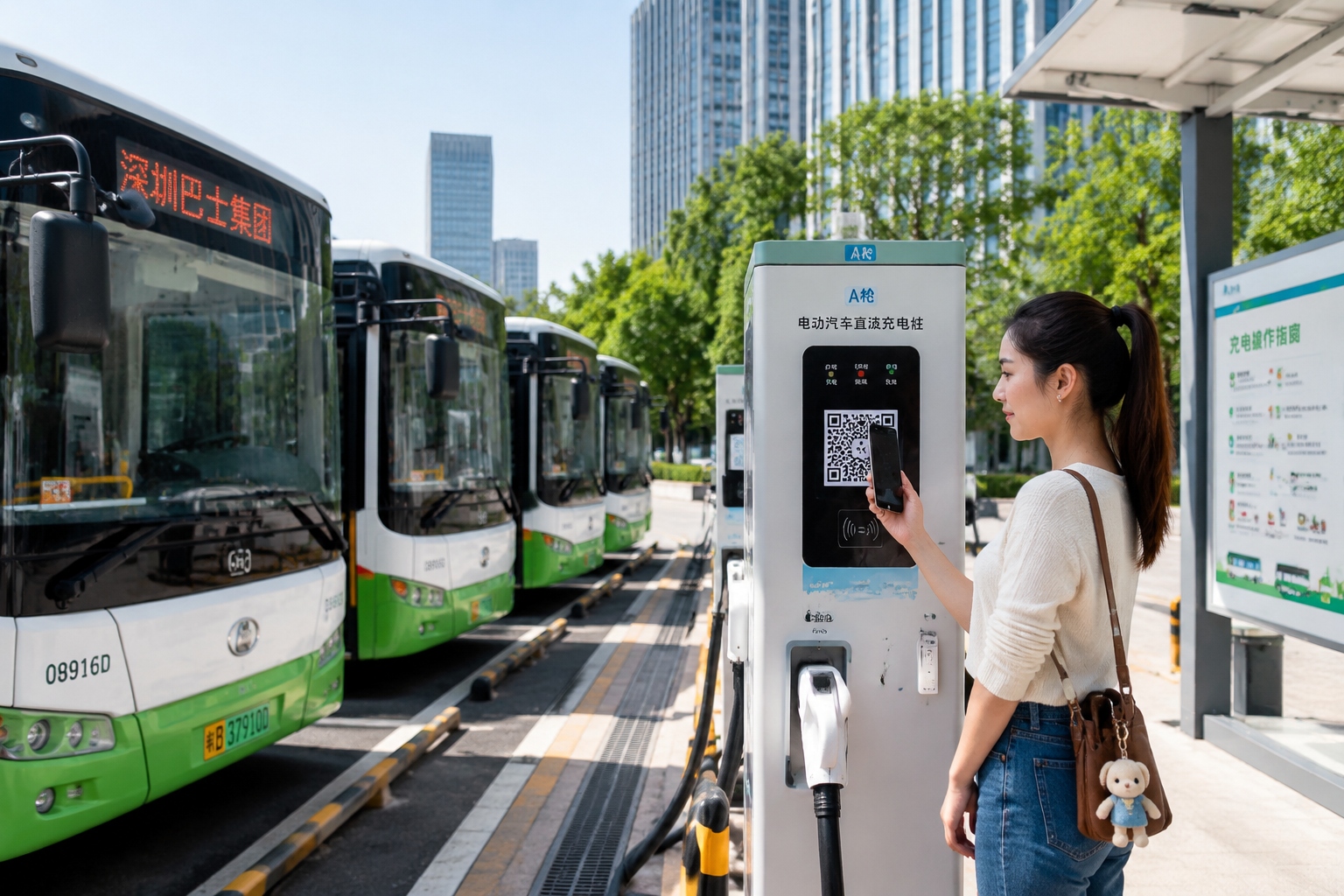
The most visible signs are not in industrial parks. In rural Shanxi, whole villages have installed rooftop solar panels. Homeowners are paid for electricity they feed back into the grid. In cities, electric buses and two-wheelers are common, and new office buildings often include EV charging stations as standard equipment.
The Cost of Going Green
For consumers, the transition can mean cheaper energy in some respects—electric vehicles cut fuel costs—but also higher costs for more efficient appliances. The government has tried to smooth this path with subsidies and a clean energy price mechanism. But the shift is felt most directly in jobs. Hundreds of thousands of workers in the coal industry are being retrained for positions in renewable energy, hydrogen, and equipment manufacturing.
Challenges That Remain
It would be misleading to ignore the roadblocks. The Achilles’ heel of renewables is intermittency. Solar panels produce nothing at night, and wind turbines often idle during heat waves. China is investing heavily in energy storage, including giant battery parks and pumped-hydro projects, but the growth of non-fossil power is still faster than the grid can upgrade its transmission lines.
There is also the human side. Some regions that have relied on coal for generations fear the economic shock of pivoting. Local governments in the coal-producing province of Shanxi, for instance, have been negotiating for years over how to speed the transition without leaving workers behind. And there are persistent concerns about the carbon market’s limited scope and low prices, which some analysts say are still too weak to compel heavy polluters to cut deeply.
A Plan That Is Already Running
Standing at the top of a wind tower in Ordos, looking over the sprawling industrial park and the shepherds moving their flocks between the solar arrays, you get a sense that this is not a distant future scenario. It’s a working, evolving project. The 2060 deadline is long, but the systems being built today—from microgrids to carbon accounting—will shape China’s energy mix long before then.
The lesson from the field is that China’s carbon neutrality commitment is more than a target on a whiteboard. It’s a construction site, a data center, and a daily decision for millions of people. The plan is not complete, and it may not be perfect, but it is undeniably in motion.
Start the discussion at forum.chinacomes.com