
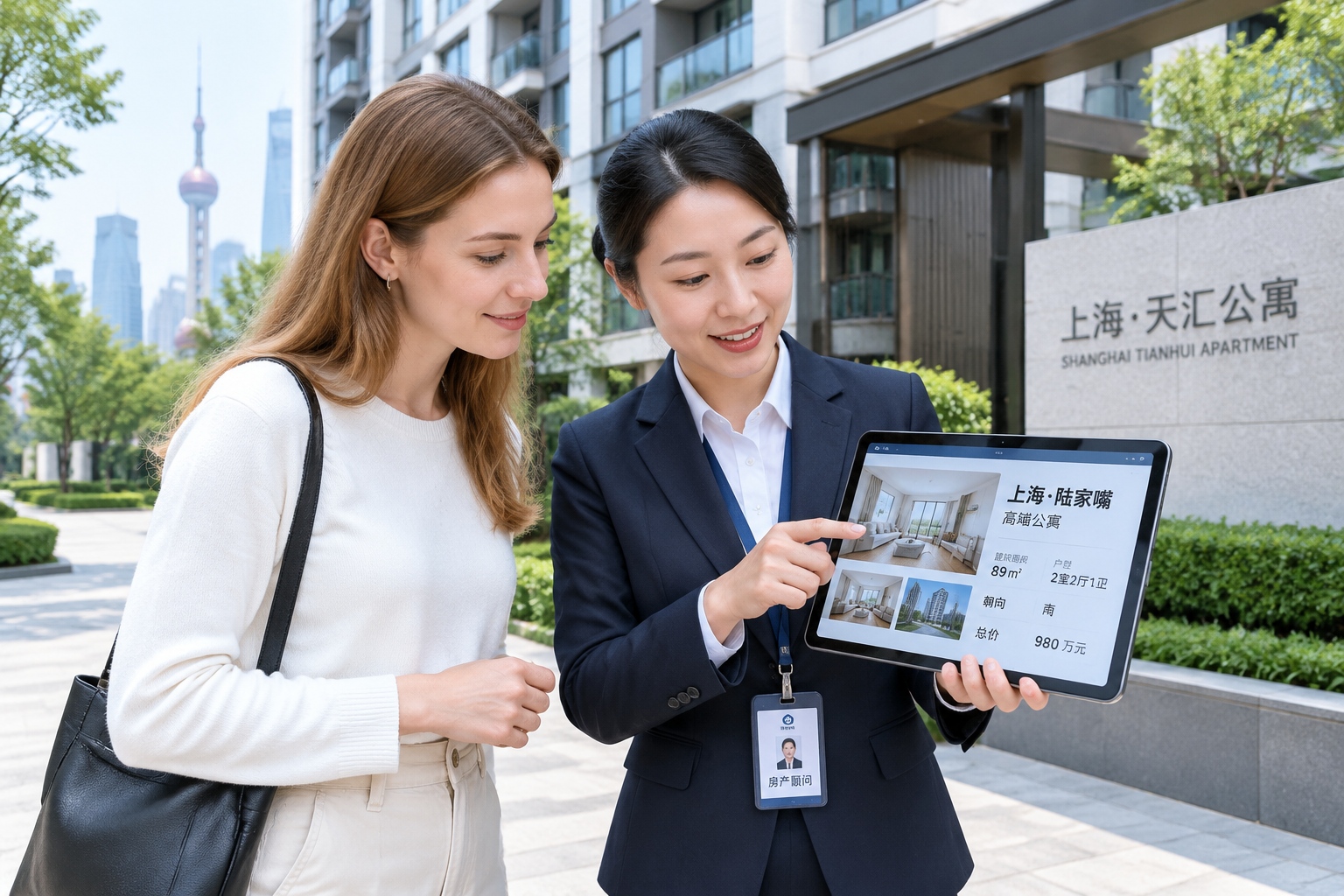

Julien, a 34-year-old French industrial designer, has lived in Shanghai for three years. He works for a mid-sized design studio near Jing’an Temple. His rent for a one-bedroom apartment in a 1990s building is 9,000 RMB a month. He likes the neighborhood, the breakfast stalls, the coffee shops. So last month he asked me: “Can I just buy a place here? I have a work visa, I pay taxes. Is it possible?”
The short answer is yes. But the longer answer is: only if you meet a specific set of conditions that most foreigners don’t know about until they try. China does allow foreigners to buy residential property, but the rules are tight, and they vary by city. This guide explains the actual rules, the process, and the real-world obstacles, based on current policies and conversations with agents, lawyers, and buyers.

Who Can Buy? The Three Basic Conditions
China’s national regulation on foreign home buying dates back to 2006, with a few updates since. The core rule is simple: a foreigner can buy one residential property in China for self-use, provided they have worked or studied in China for at least one year. Let’s break that down.
1. You need a valid visa and residence permit
You must hold a valid passport and a Chinese residence permit for work, study, or family reunion. A tourist visa or a business visa won’t work. The residence permit must be current when you sign the purchase contract and register the property.
2. You need at least one year of work or study in China
This is the most common stumbling block. The one-year period is usually counted from the date your work permit or student status began. You must provide proof: your work permit, employment contract, and tax records showing you’ve paid individual income tax in China for at least 12 months. Some cities accept social security records instead. If you’ve been here for only six months, you generally can’t buy.
3. You can only buy one home, and it must be for self-use
The property must be for you to live in. You cannot buy multiple apartments, and you cannot buy for investment or rent it out. The law says “self-use,” and while enforcement varies, the intent is clear: this is not a backdoor for real estate speculation. If you buy and then rent it out, you risk fines or being forced to sell.

The Purchase Process: What Actually Happens
If you meet the conditions, the process is similar to what a Chinese citizen goes through, but with extra paperwork. Here’s a step-by-step look.
Step 1: Qualification pre-check
Before you even look at apartments, go to the local housing authority (房产交易中心) in the city where you want to buy. Bring your passport, residence permit, work permit, tax records, and a letter from your employer. They will check if you qualify and issue a certificate that allows you to buy. This certificate is usually valid for a few months. In Shanghai, for example, you also need to sign a declaration that you own no other property in China.
Step 2: Find a property and sign the contract
You can work with a real estate agency. Many agencies in big cities have experience with foreign buyers, but not all. Make sure the property is a residential apartment (住宅), not commercial or office space. Commercial property has different rules and is generally off-limits for foreign individuals. Once you agree on a price, you sign a sales contract. The contract should be in Chinese; if you don’t read Chinese, get a certified translation.
Step 3: Pay taxes and register the property
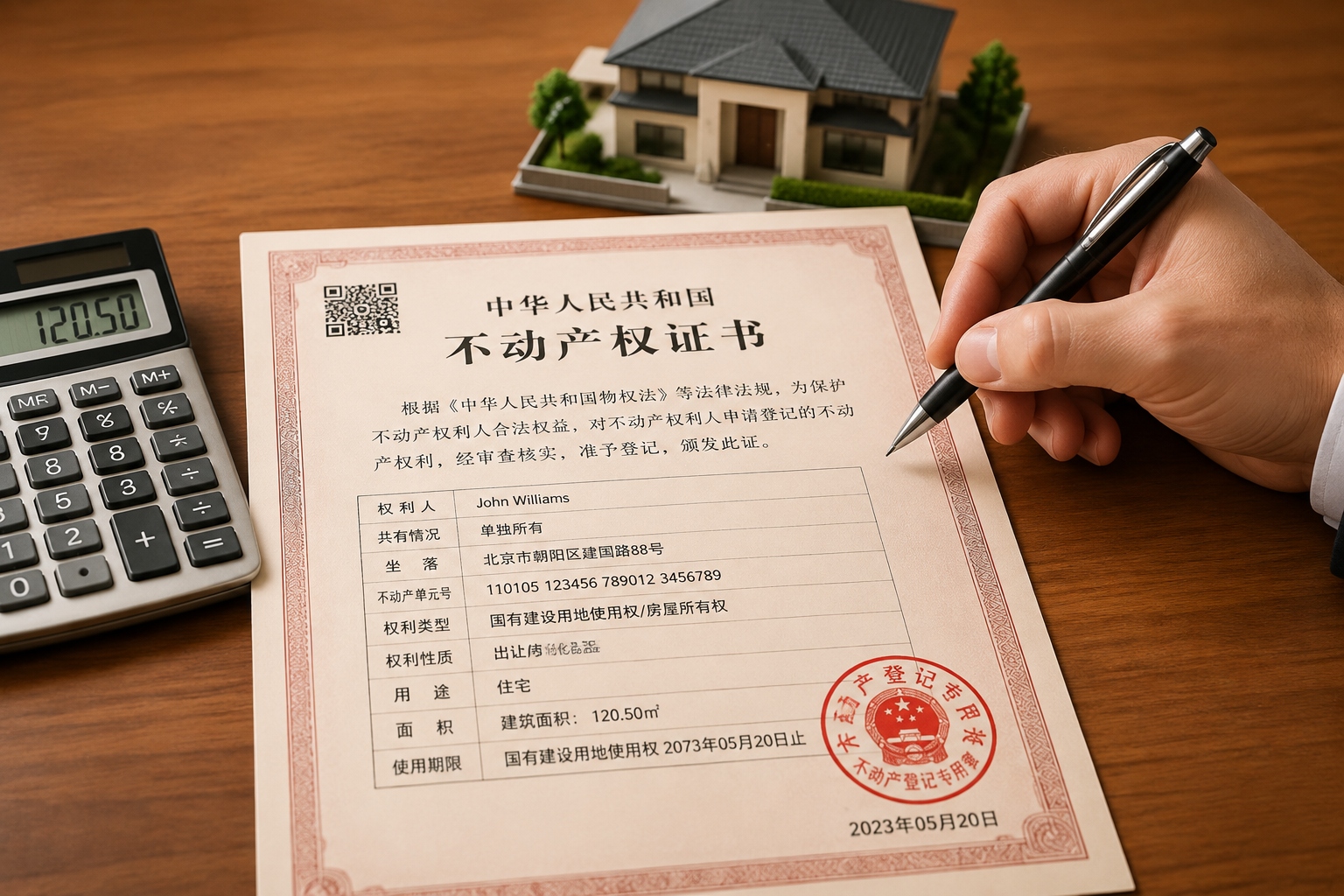
You pay the deed tax (契税) at the local tax bureau. For a first home under 90 square meters, the rate is 1%; for larger homes, it’s 1.5% to 3%. Then you take the contract, tax receipt, and your documents to the property registration center. They will issue a property ownership certificate (房产证) with your name on it. The whole process can take a few weeks to a couple of months.
Loans, Taxes, and Ongoing Costs
Can foreigners get a mortgage in China? Yes, but it’s harder. Banks will typically require a down payment of 30% to 40%, compared to 20-30% for locals. They also want to see a stable income, and they prefer income earned in China. Some banks may not accept foreign income or foreign credit history. You’ll need to provide your passport, residence permit, work contract, tax records, and bank statements. Interest rates are similar to those for Chinese citizens, but the approval process is slower.
Beyond the purchase price, budget for these costs:
- Deed tax: 1-3% of the purchase price, paid at registration.
- VAT (增值税): If you sell within two years, you pay 5% VAT on the sale price. After two years, it’s exempt for residential property.
- Individual income tax: If you sell and make a profit, you pay 20% tax on the gain, unless it’s your only home and you’ve held it for five years.
- Agent fees: Usually 1-2% of the price, paid by the buyer.
- Maintenance fee: Monthly, varies by building, often 5-15 RMB per square meter.
Regional Differences: Why Beijing and Shanghai Are Not the Same
The national rule sets the baseline, but cities add their own layers. This is where many foreigners get confused.
In Beijing, a foreigner must have worked or studied in Beijing for at least one year, and they must provide proof of continuous income tax or social security payments for that year. They also must declare they own no other property in China. The process is strict and slow.
In Shanghai, similar rules apply, but the city also requires that the property be for self-use and that the buyer has no other residential property in Shanghai. Some districts ask for an extra letter from the employer.
In smaller cities like Chengdu, Xi’an, or Kunming, enforcement can be more relaxed. The one-year rule still applies, but the paperwork may be less demanding. In some cities, you might not need to show tax records if you have a work permit and a residence permit. However, the rules can change quickly, so always check with the local housing authority.
One more thing: foreigners cannot buy land or rural property (宅基地) in China. Only urban residential apartments are allowed.
Real Obstacles and How to Handle Them
Even if you qualify, you’ll face practical hurdles. Here are the most common ones and some strategies.
Language and paperwork. All official documents are in Chinese. You will need a certified translator for your passport, visa, and tax records. Some agencies offer translation services, but it’s better to hire an independent translator.
The “one home” restriction. If you already own a property in another Chinese city, you may not be able to buy in a new city. The systems are not fully connected, but major cities check. If you buy through a Chinese spouse, the property might be registered under their name, which can create legal risks in a divorce.
Currency controls. To buy, you need to bring money into China. China has strict currency controls. You can bring in foreign currency, but you must convert it to RMB through a bank and keep the records. When you sell, you can only take out the original purchase price in foreign currency, not the profit, unless you get special approval. This is a major concern for long-term investors.
Exit strategy. If you plan to leave China, selling can take time. The market in first-tier cities is liquid, but in smaller cities it may be slow. Also, the tax on profit can be significant.
Final Advice: Buy for Living, Not for Investment
The system is designed to let foreigners who live and work in China have a home, not to let them speculate. If you plan to stay for many years, buying can make sense. You lock in your housing cost, you can renovate, and you have a place that feels yours. But if you’re thinking of buying as an investment, think again. The carrying costs, taxes, and currency controls make it a poor bet compared to many other countries.
For Julien, the French designer, the answer was yes. He qualified, found a 60-square-meter apartment in Putuo District, and bought it with a 35% down payment. It took him four months from pre-check to keys. He says the hardest part was gathering the tax records and getting everything translated. But now he pays a mortgage instead of rent, and he has a small balcony where he grows herbs. “It’s not a dream home,” he says. “But it’s mine.”
So if you’re a foreigner in China wondering about buying, the rules are clear enough. Check your city’s specific requirements, prepare your documents, and be ready for a slow but doable process. And remember: self-use only.
Start the discussion at forum.chinacomes.com