


Do you need to tip in China? Short answer: no. Long answer: no, with a couple of very small caveats. If you are used to adding 15–20 percent to meals in other countries, this might feel oddly liberating. In almost every Chinese restaurant, taxi, hotel, delivery order and barber shop, the price you see is the final price. No hidden service fee. No tip jar. No need to calculate anything at the end.
The baseline: no, tipping is not expected
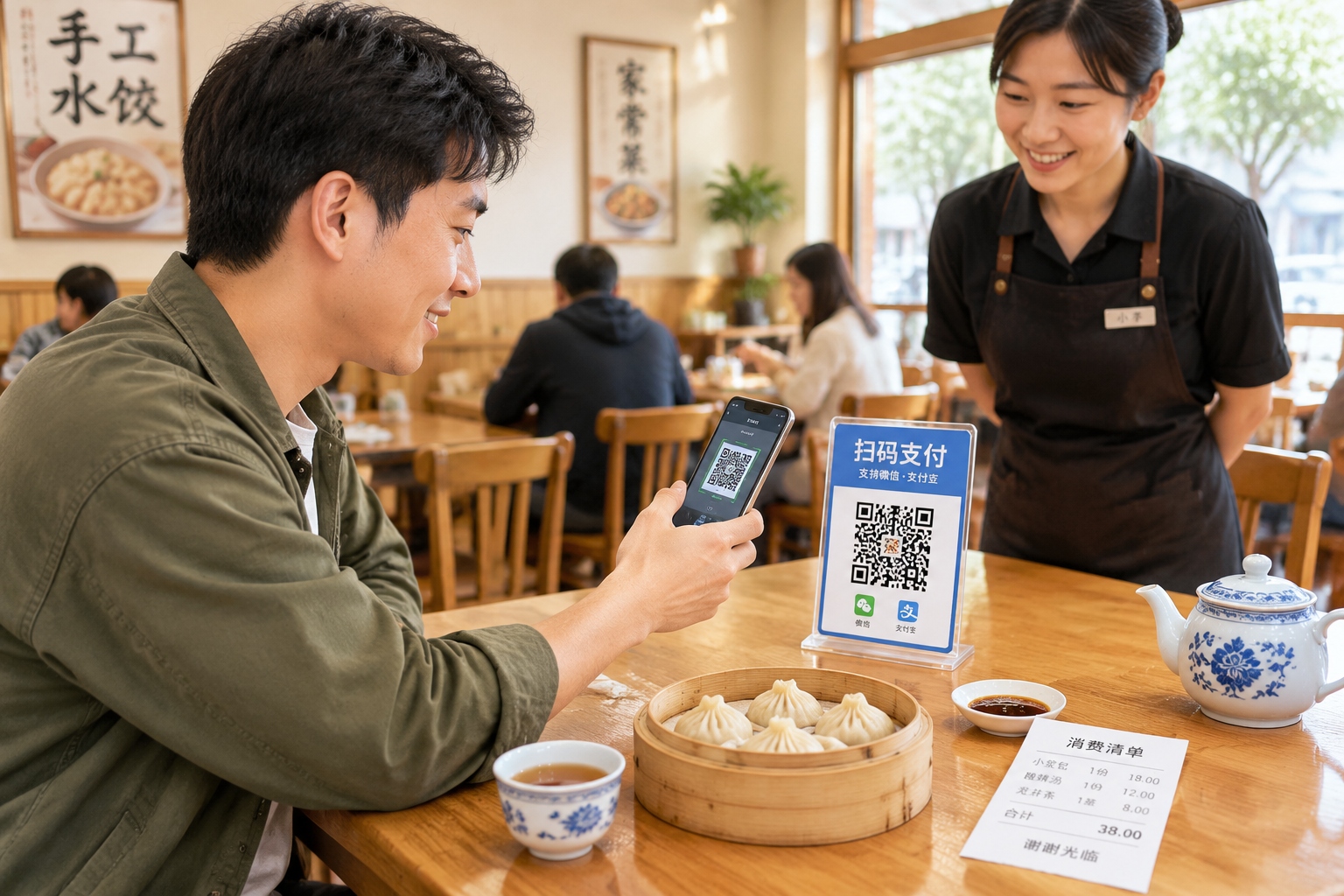
Restaurants cause the most questions. In a typical local restaurant, your table gets a printed bill or a QR code. You either walk to the counter or scan the code with your phone. The server doesn’t stand beside the table while you work out a tip. The receipt has no line marked “tip.” If you leave money on the table and walk out, staff will probably chase you down to give it back. Foreigners do this all the time, and it has become a travel joke: in China, staff assume you made a mistake.
This isn’t limited to food. Taxi drivers round down, not up. Delivery riders hand you change or ask you to scan a code. Even your hairdresser will give you a receipt for exactly the price on the mirror. The social rule is that buying a service is a finished transaction. Good service is normal, not an excuse for extra payment.
Why China doesn’t do tipping
The habit grows out of history and practical reality. Service charges have long been included in listed prices; you’ll rarely see a separate “service charge” added at the bottom of a bill. Modern Chinese service culture also inherited a tradition from state-owned shops and dining halls, where employees earned fixed wages. Customers didn’t tip, because there was no concept to borrow. When private restaurants and hotels exploded in the 1980s and 90s, they grew within that same framework.
Digital payments then made tipping even less relevant. In urban China, almost everyone pays by scanning a QR code with Alipay or WeChat Pay, and these payment pages usually show only the exact order amount. There is no built-in “add a tip” function. Cash is the second layer: prices are rounded to the nearest yuan because small change is uncomfortable to carry. Even if you want to tip one or two yuan, you’ll struggle to make it feel natural.
The real exceptions: when a tip is appreciated but never required
Luxury hotels and high-end services
International five-star hotels and high-end restaurants see a lot of foreign guests, so staff there are more familiar with tipping culture. A 20–50 RMB note for a bellman who brings up your bags or a housekeeper who genuinely goes the extra mile is fine. But it’s not an obligation. You can check in and out without paying a single “extra” yuan.
Tour guides and private drivers
This is the area where tipping is most noticeable, especially on multi-day tours. If you have a dedicated tour guide and driver, they are not depending on tips to survive, but a voluntary tip at the end of the trip is welcomed. Many travelers leave 50–100 RMB per day for the guide and about half that for the driver. On one-off airport or hotel runs, drivers won’t expect anything. If you want to be kind, buy them a cold drink or a bottle of water—especially useful in Chinese summer heat.

Friends who insist on paying
This is not tipping, but it will happen. If a Chinese friend, colleague, or business partner picks up the bill and waves away your money, they are not being polite in a formal way; they’re showing that they value the relationship. The correct move is to thank them warmly and let them pay. You can return the gesture with a small gift from your home country or by treating them the next time. This relationship-based courtesy is far more rooted in Chinese society than a gratuity.
What actually happens if you try to tip in China
Try not to make a performance out of it. Let’s say you’re in Shanghai and your noodle bill is 82 yuan. You hand over a 100 yuan note and say “keep the change.” The waiter will probably pause, look at the note, and ask if you’re sure you counted correctly. If you insist, some waiters will accept to avoid embarrassment, but many will run after you with the 18 yuan change. In smaller cities, the reaction is even stronger because foreign visitors are rare.
Taxis also push back. If a ride-hailing trip costs 38.50 yuan and you say “round it up to 40,” the driver may hand you 1.50 yuan before you reach the door. Later, the app might allow you to add a small tip. That is reserved for exceptional circumstances, like a rainy night, an extremely short ride, or a driver who helps with heavy luggage—and even then, Chinese users mostly don’t bother.
How to handle bills and show gratitude without tipping
Restaurants and QR code payment
Pay the exact bill amount. If the cashier’s screen says “please enter amount,” type the exact total. There is no tip line to worry about. In some modern restaurants, you scan the QR code on your table, and the payment screen opens with the amount already filled in—no box for extra money.
Cash rounding on the street
At a market or street cart, it’s fine to say “bú yòng zhǎo líng” (“don’t bother with the change”) if you’re paying in cash and the change is a few jiao or yuan. Locals do this too, usually to avoid carrying coins. It shouldn’t be said as a grand gesture.
Hotels and services
Don’t leave loose change on the pillow in a hotel. It will confuse housekeeping. Instead, if you want to thank someone, tell the front desk that your room was cleaned well, or write a short private note. These signals register as respectful and personal.
Showing thanks with words and actions
The most common way to show thanks is to say “xiè xie” (“thank you”). For services that felt demanding, “má fan nǐ le” (“sorry for your trouble”) sounds natural and considerate. Also leave a five-star review on the app you used, which directly helps the driver or guide more than a single tip would. In many Chinese platforms, a high rating has a real professional value.
Homestays and rural trips
If you’re staying in a family-run homestay in the countryside, a small gift from your home country—like candy or a postcard—is a beautiful substitute for money. Hosts often refuse cash. Gifts feel like friendship.
Residents and longer stays
If you’re living in China, the same rules apply to daily life. Your regular gym, landlord, community security guard, and salon receptionist do not expect tips. Domestic helpers and nannies (called “ayi”) are an exception in timing: around Chinese New Year, it’s customary to give a red envelope (hongbao) as a holiday bonus. But that’s a relationship gift, not payment for each job.
Bottom line for your trip
If you never tip in China, no one will be offended. You are simply normal. The best economy of gratitude in this country is a sincere smile, careful treatment of the people helping you, and maybe a positive review in your phone.
When in doubt, ask the local hotel staff or a Chinese friend. Almost all of them will say the magic words: “No need.” In China, that’s not fake politeness. It’s the system working the way it was designed.
Start the discussion at forum.chinacomes.com