


Every few months, the same post shows up on a Korean community forum: two maps side by side — the Korean peninsula next to China — and one line underneath. I know China is big. How big, actually?
The replies come in stages. First the jokes. Then the numbers. Then a stretch where people start typing, stop, and delete. Eventually someone writes something like: “I can’t picture it. That’s the problem.”

It isn’t a silly question. It’s a question calibrated to Korea — which is a different thing entirely. South Korea covers about 100,200 square kilometers. From Seoul, almost nothing you would call a trip takes more than three hours.
Korea’s Mental Map Fits in a Morning
The Seoul–Busan KTX covers roughly 420 kilometers of track in about two and a half hours. Drive it and you are looking at four to five hours. The country has one time zone, one broad climate band — cold, dry winters in the north, milder and wetter in the south — and one dominant language. “Far away” in Korea means a different city, not a different world.
That is the ruler most Korean readers carry around. So the answer to “how big is China” doesn’t fit on it.
96 South Koreas, and Then Some
China’s land area is about 9.6 million square kilometers. Divide by South Korea’s 100,200 and you get roughly 96. You could pour about 44 Korean peninsulas into it and still have room left over.
Population tells a similar story. China has around 1.4 billion people; South Korea, about 51 million. That is 27 times more. More revealing than the national totals: single provinces. Guangdong, on the southern coast, holds roughly 127 million residents — about the population of Japan. Shandong, on the east coast, has around 101 million, more than Germany. Each is one unit among 34 provincial-level divisions, a group that also includes autonomous regions and the four directly administered cities of Beijing, Shanghai, Tianjin and Chongqing.
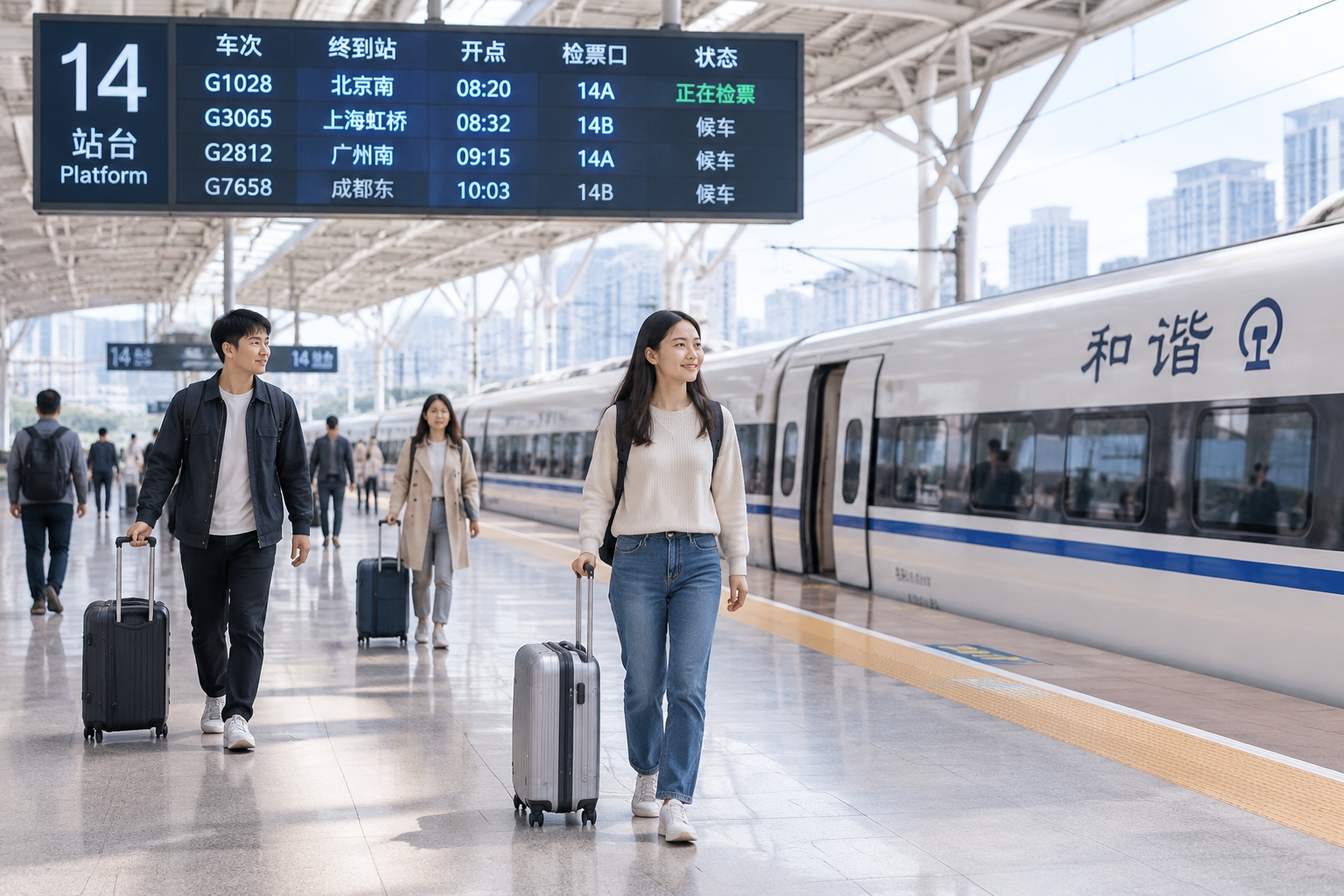
Distances do the rest. The Beijing–Shanghai high-speed line runs 1,318 kilometers in as little as four hours and 18 minutes, at speeds up to 350 km/h. That one trip equals about three Seoul–Busan runs — and it links two cities on the same coast, not the two ends of the country.
Flying from Shanghai to Ürümqi, in the far northwest, takes about five and a half hours and covers nearly 3,900 kilometers. Harbin in the northeast to Sanya, on the tropical island of Hainan, is roughly 3,700 kilometers — a flight of over five hours, and a January temperature gap that can exceed 60°C.
What the Map Doesn’t Show
Numbers give you a shape. They don’t give you the texture. Three things tend to surprise visitors most.
One Official Time Zone, Four Hours of Sunlight
China stretches across about 61 degrees of longitude, from the Pamir region in the west to the Heilongjiang river in the east. That is roughly four hours of solar time. The country uses one clock: Beijing time, UTC+8, settled administratively in 1949 and never changed.
In Kashgar, deep in Xinjiang, that means sunrise can arrive close to 10 a.m. by the wall clock in winter, with shops and schools shifting their hours to match. Many people in Xinjiang run on two clocks informally: Beijing time for trains, flights and government offices, and a local “Xinjiang time” two hours behind for daily life.
For American readers, the comparison is precise and strange. The lower 48 states cover almost the same area as China and use four time zones. China uses one.
Winter Is Not a National Experience
In Mohe, the northernmost city, temperatures below −40°C have been recorded and the January average sits deep in the minus twenties. In Sanya, people swim in the sea in January, with afternoon temperatures in the mid-twenties Celsius. Both are domestic news, both appear on the same weather map, and neither feels like the other’s country.
Neighboring Provinces, Different Words
Mandarin is the language of schools, broadcasting and intercity business, and written Chinese is shared by everyone. Speech is another matter. Cantonese, Shanghainese, Hokkien and Sichuanese are not accents of Mandarin; a person from Guangzhou and a person from Harbin can share a keyboard and still not follow each other out loud. In Korea, regional accents are noticeable but broadly mutually intelligible. In China, “I couldn’t understand the taxi driver” happens within the same country.
If You’re From the US or Europe, Here’s Your Ruler
China is nearly the same size as the United States — 9.6 million square kilometers against 9.8 million. It is about 2.3 times the European Union. That is why a Korean thread travels further than Korea.
Europeans are used to distance coming with borders: Paris to Berlin is around 1,050 kilometers by road, and somewhere along the way the language, the paperwork and the plugs change. In China, a drive of the same length might not take you out of a single province. Same language on the signs (with local ones underneath), same ID card, same payment app, same university entrance exam.
That difference isn’t about one country being better organized than another. It is a question of what each state was built to do. China’s administration has spent seventy years treating internal distance as a problem to be engineered away. In Europe, distance between countries is a fact of history that nobody is trying to erase.
What Actually Holds It Together
The connective tissue is mostly steel and concrete. China’s high-speed rail network passed 48,000 kilometers at the end of 2024 — more than the rest of the world combined, by most counts. On October 1, 2024, the first day of the National Day holiday, the railway system carried more than 21 million passengers in a single day, a record. Across the 40-day Spring Festival travel season, hundreds of millions of rail trips are made, most of them people going home.
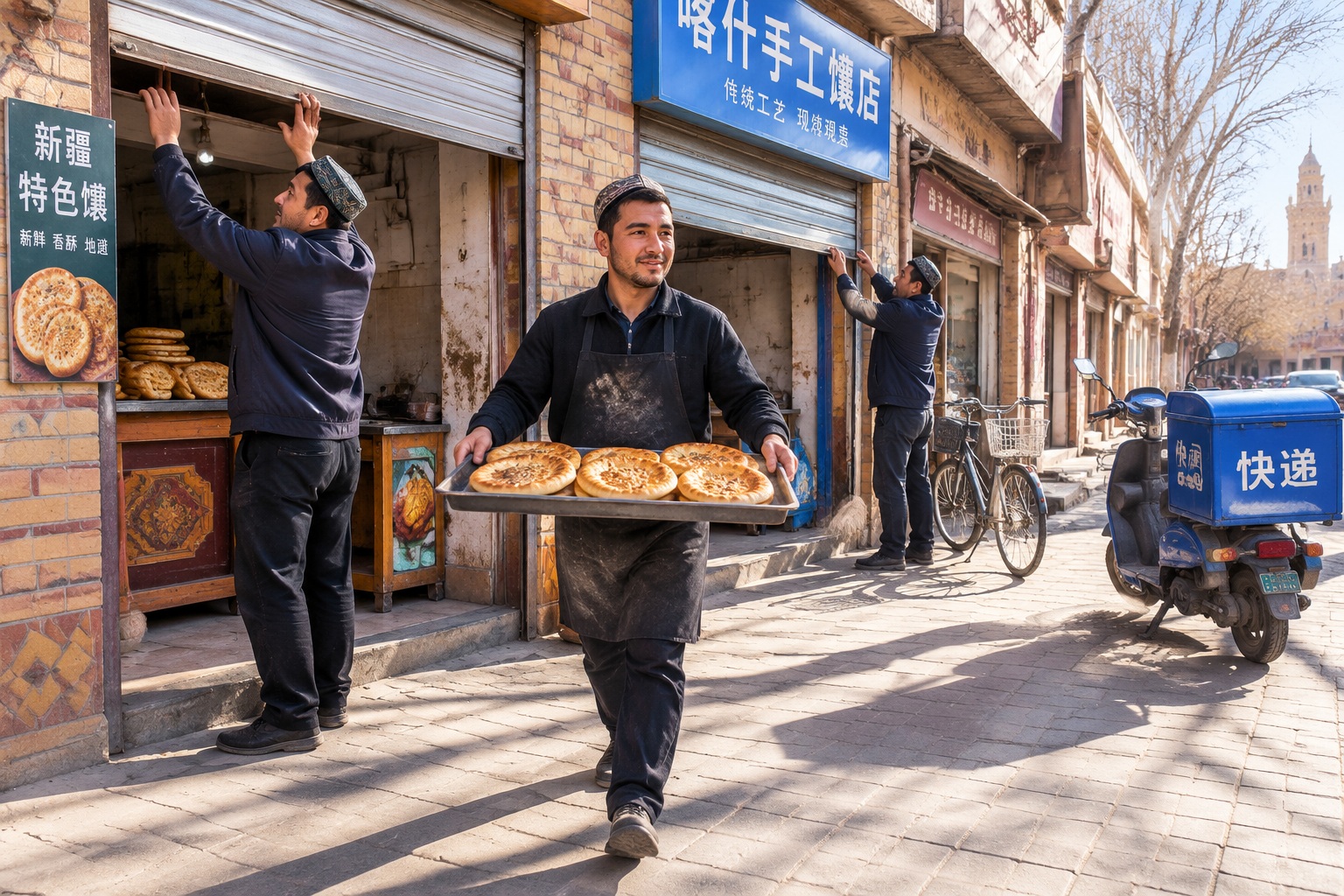
Above the tracks sits a set of shared systems: Mandarin in classrooms, one written script, a national university entrance exam, mobile payment apps that behave identically at a Shenzhen convenience store and a street stall in Lanzhou, and delivery networks that reach small towns, though more slowly than big cities.
There is a limit to how smooth all this is, and it is worth naming. Household registration — the hukou system — still ties access to local schools and some health services to where you are registered, which makes moving across the country a bigger decision than the train ticket suggests. Regional income gaps are real: coastal provinces earn several times more per person than some inland ones. And most Chinese people have seen only a small slice of their own country.
Why the Thread Went Quiet
Here is the honest version of the answer, the one that doesn’t produce a neat reply. In Korea, the country is something you can hold in your head — a shape you have driven across, a set of cities you could name in order. In China, it is something you hold in pieces.
A student from Harbin who takes a job in Shenzhen is 3,000 kilometers from home, in a city with different food, different weather and a different dialect — and it counts as an ordinary career move. A couple split between Beijing and Guangzhou are three hours apart by plane, which is close by local standards and impossibly far by Korean ones.
The Korean forum didn’t go silent because the answer was unbelievable. It went silent because the answer required a different ruler — one most of us don’t carry, wherever we happen to be from.
Start the discussion at forum.chinacomes.com