

A barge in Guigang has a long way to go
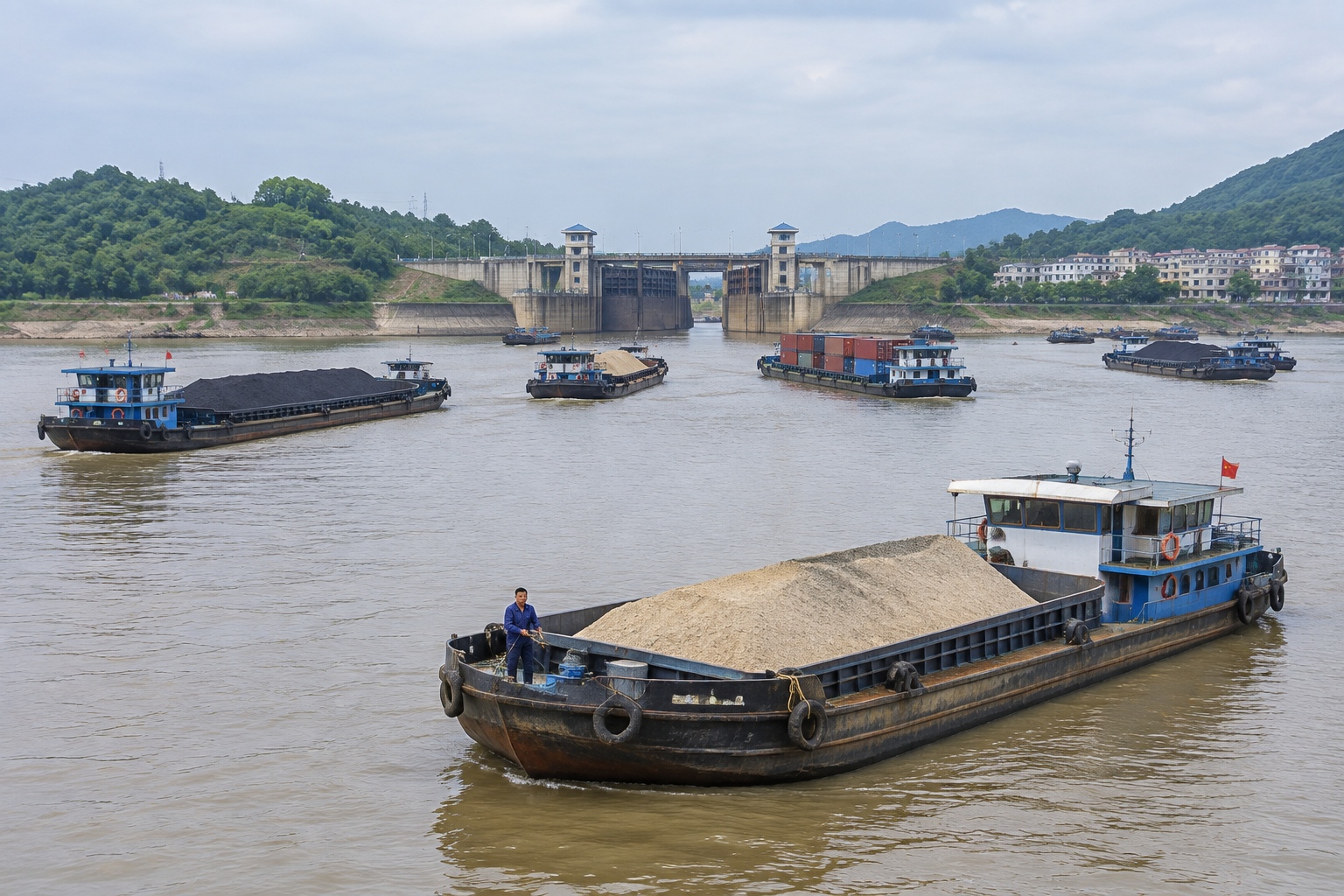
Load 5,000 tonnes of bagged cement onto a barge at Guigang, a river port city in Guangxi, and it has only one way out to sea. Head east down the Yu River. Join the Xi River. Drift past Wuzhou and Zhaoqing. Reach the Pearl River Delta near Guangzhou. Then turn southwest and sail back along the coast toward Vietnam, Thailand or Singapore.
That is roughly 560 extra kilometres of river travel, on a waterway that already carries more traffic than it handles comfortably. It also points the wrong way. Guigang sits about 200 kilometres from the Gulf of Tonkin as the crow flies.
By the end of 2026, that barge should have a second option: turn south.
The canal in plain numbers
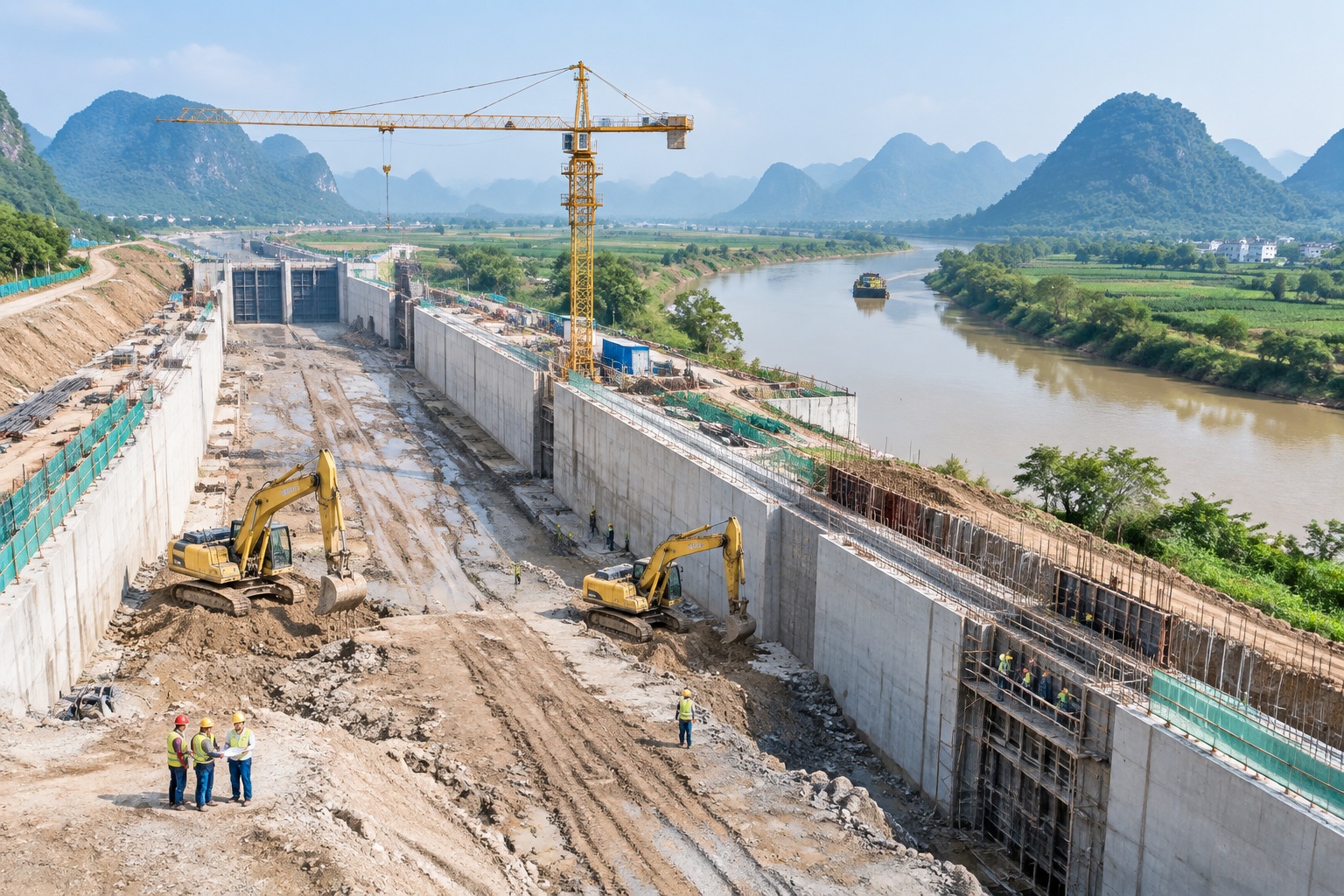
The Pinglu Canal is a 134-kilometre channel cut from the Yu River near Hengzhou, in Guangxi, south to the Qin River estuary at Qinzhou, on the coast. It is not a widened river. It is a new waterway dug across a watershed, the low ridge that separates rivers flowing east toward Guangzhou from rivers flowing south to the sea.
Four numbers explain most of it.
- 134.2 kilometres from the Yu River to the Beibu Gulf.
- About 60 metres of vertical drop. Ships leave the river and arrive at sea level. Three lock complexes, Madao, Qishi and Qingnian, handle the lifting and lowering. Madao alone deals with close to 30 metres of water-level difference, making it one of the largest lock structures built in China.
- 72.7 billion yuan, roughly 10 billion US dollars, paid mainly by the Guangxi region together with the central government.
- Ships up to 5,000 tonnes, with a planned single-direction capacity of around 89 million tonnes a year.
Construction began in August 2022 and is in its final stretch. If the schedule holds, the first commercial vessels pass through at the end of 2026.
The idea is not new. Sun Yat-sen’s 1919 development plan for China already sketched a canal linking the Xi River system to the Gulf of Tonkin. It took a century, and a very different economy, to make it worth digging.
Why the old route exists at all
Geography, mostly. Guangxi’s rivers lean east. The Yu, the Hongshui, the Zuo and the You all feed the Xi River system, which drains into the South China Sea near Guangzhou. Yunnan’s Nanpan River joins the same network. So the natural drainage of a whole region, from Guangxi through eastern Yunnan to southern Guizhou, points toward Guangdong.
For a hundred years that was fine, because Guangdong was where the buyers were. Today the buyers are often in Southeast Asia, which is in the opposite direction.
Then there is congestion. Every barge heading downstream has to pass the Changzhou lock at Wuzhou. In bad years the queue has stretched past a thousand vessels, with waits measured in days. A lock built for an earlier era of river traffic now acts like a toll booth on the region’s export route.
What actually gets saved
Water freight is cheap, and that is the whole point. Bulk cargo on a Chinese inland waterway typically moves for something around 0.05 yuan per tonne-kilometre, a fraction of rail and a small fraction of road.
Run that against the 560-kilometre detour. A 5,000-tonne barge pays roughly 28 yuan per tonne to cover the extra distance, or about 140,000 yuan a trip. That is close to 19,000 US dollars removed from the freight bill on every single voyage. A vessel making twenty round trips a year would save nearly 3 million yuan, before counting the fuel and the two or three days saved in each direction.
That arithmetic is why 72.7 billion yuan made sense to the people who signed off on it. It is not a prestige project in the way a stadium is. It is a permanent discount on moving heavy things.
What the southwest actually ships
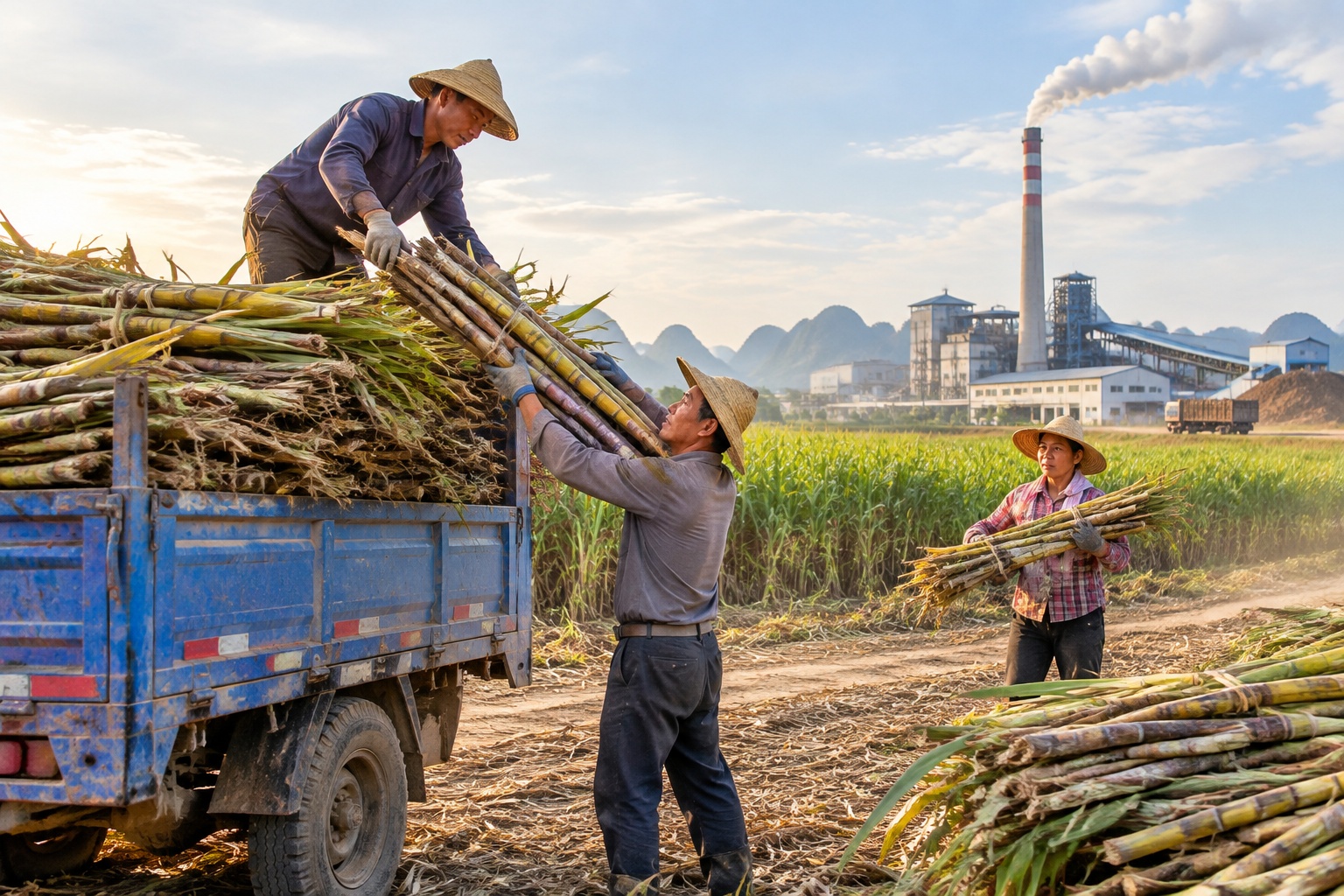
Guangxi grows about 60 percent of China’s sugar, most of it from sugarcane. It also produces cement, ceramics, aluminium and manganese, and it imports bauxite, coal and iron ore through the Beibu Gulf ports. All of it is heavy, low-value and sensitive to freight costs.
Guizhou adds coal, phosphate and bauxite, plus a distilling industry that ships a great many glass bottles. Yunnan adds phosphate fertiliser, rubber, coffee, tropical fruit and non-ferrous metals. Sichuan and Chongqing contribute something different: cars, lithium batteries and solar panels, the three product groups that have driven Chinese manufacturing growth over the past five years.
Chongqing is the most interesting case. Since 2017 it has anchored the northern end of the New International Land-Sea Trade Corridor, a rail route that sends container trains south to Qinzhou in about two days, instead of sending them 2,000 kilometres east down the Yangtze to Shanghai. The rail corridor works. But trains are expensive for anything not valuable enough to justify the trip.
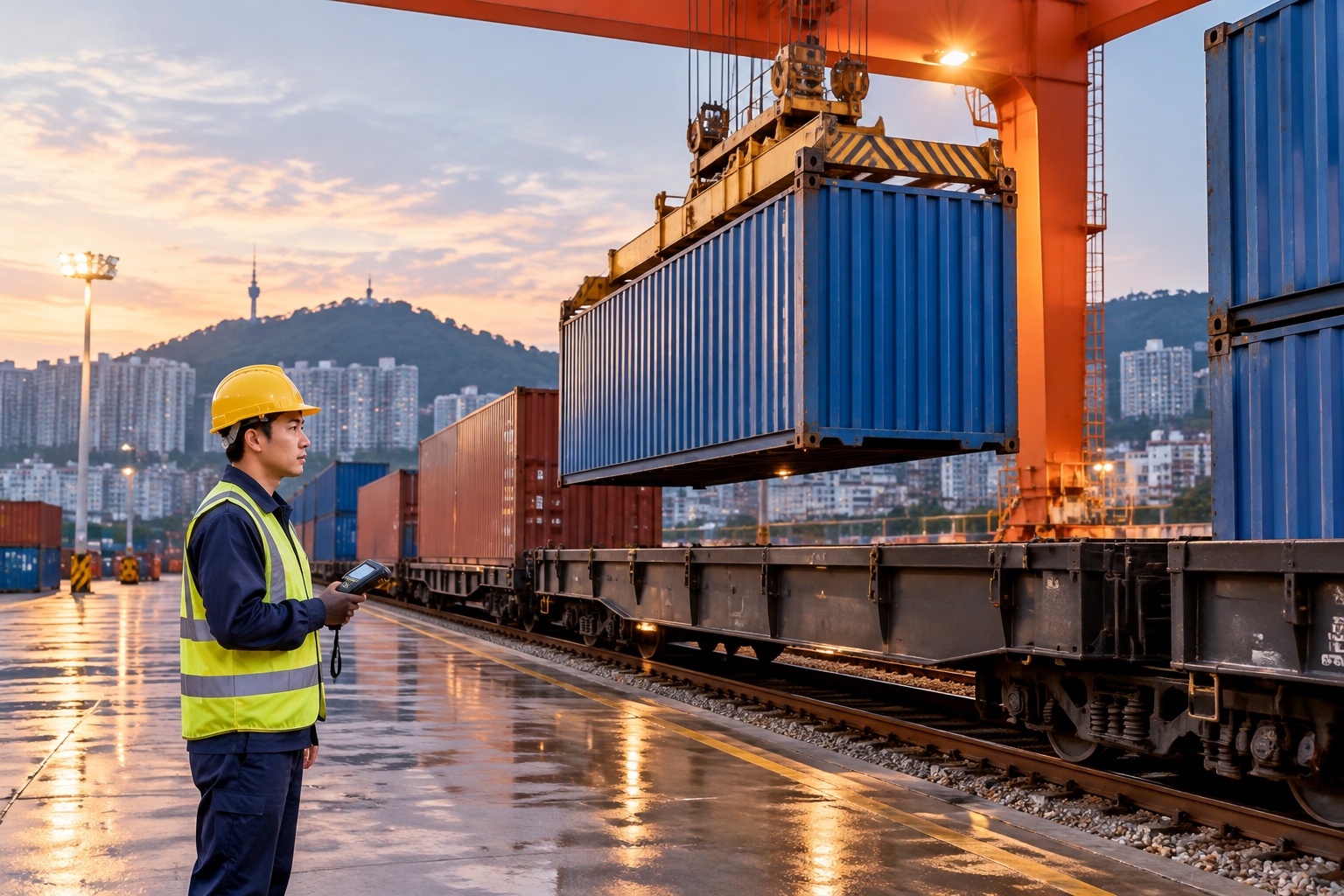
The canal gives that corridor a water version. Containers keep going by rail. Coal, ore, grain, cement and fertiliser can go by barge for a fraction of the cost.
What it means for buyers outside China
The Beibu Gulf’s three ports, Qinzhou, Beihai and Fangchenggang, sit closer to Southeast Asia than any other mainland Chinese port. They handled roughly 8 million containers in 2023. Shenzhen handles around 30 million. Beibu Gulf is not trying to beat Shenzhen. It is trying to become the natural exit for the southwest.
If river freight gets cheaper, more cargo arrives at the docks, and shipping lines respond to volume by adding services. That is the bet.
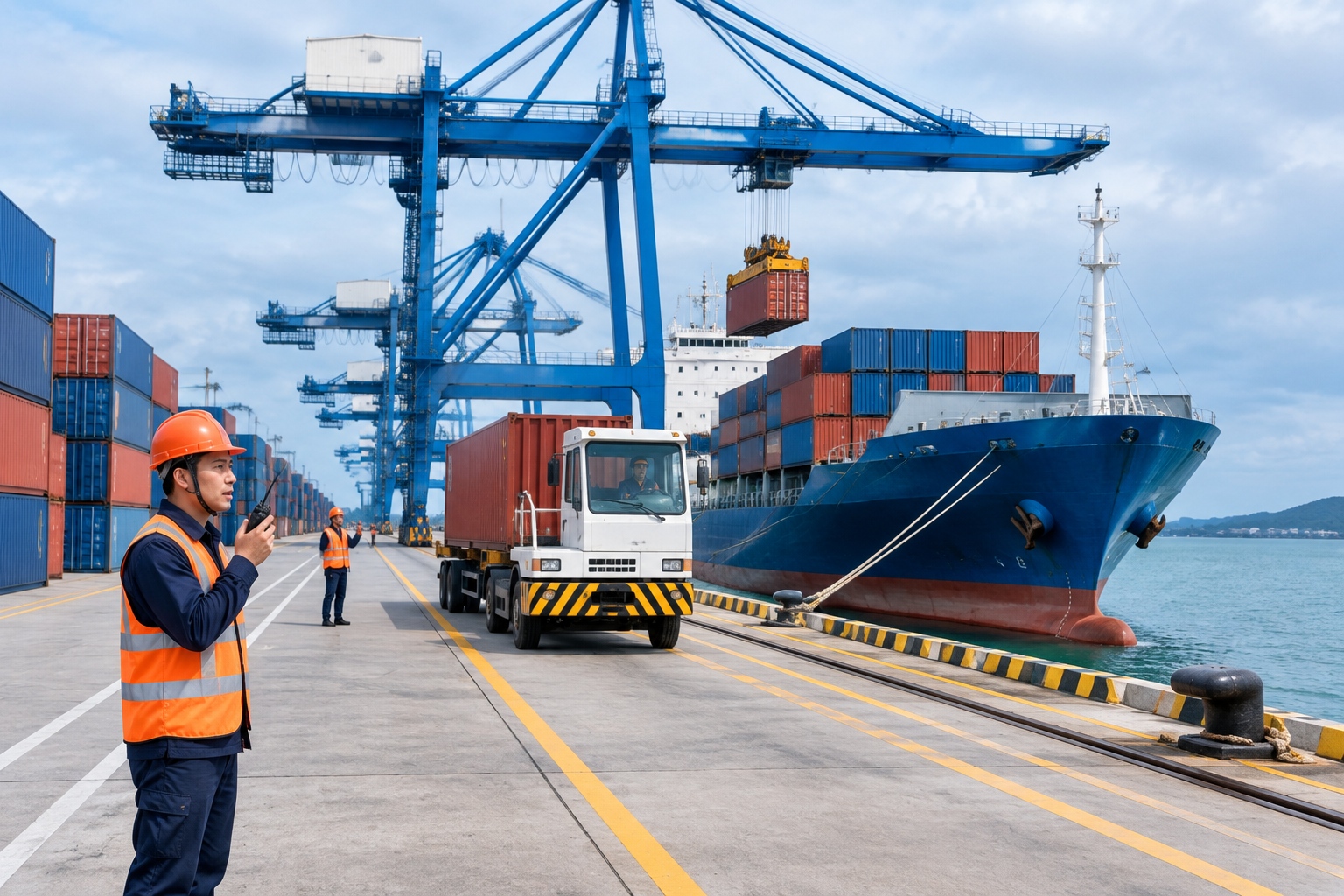
The flow runs both ways. The same canal carries imports inland: Brazilian soybeans, Australian iron ore, Indonesian coal, Vietnamese components, landed at Qinzhou and barged upriver instead of being trucked. For a factory in Guiyang or Kunming, that is a lower input cost, and eventually a lower price on whatever it makes.
The honest caveats
Three things are worth watching.
Cargo has to show up. The canal is designed for 89 million tonnes a year in one direction. Guangxi’s inland industry does not currently produce anything close to that. The planners are betting that cheap transport creates the traffic rather than follows it, which is how the Rhine and the Yangtze developed, but it is not guaranteed. Guangxi’s entire annual fiscal revenue is under 200 billion yuan, so 72.7 billion is a serious commitment for a region that is not rich.
Water. Locks need water, drawn from the Yu River. The Xi River basin has had dry years, and low water already limits how heavily barges can be loaded on existing routes. A multi-year drought would test the canal’s operating rules and the patience of everyone who built a business around it.
The environment. Cutting a channel across a watershed moves water, sediment and species between two river systems that used to be separate. Fish passages and monitoring systems were built in, and the estuary near Qinzhou includes mangrove areas that conservation groups watch closely. That is a real cost, not a footnote.
Back to the cement barge
In 2027, if the schedule holds, that barge at Guigang will head south. It will pass three lock complexes, cross a ridge that used to divide two river basins, and come out at Qinzhou two or three days after leaving the wharf. The Gulf of Tonkin will be in front of it. The Pearl River will be behind.
For a reader in London or Los Angeles, that distance is easy to miss. But the price of a tonne of aluminium, a bag of sugar or a battery cell has a freight line inside it. That line is about to get slightly shorter.
Start the discussion at forum.chinacomes.com