

Inside the “Made in China” Label
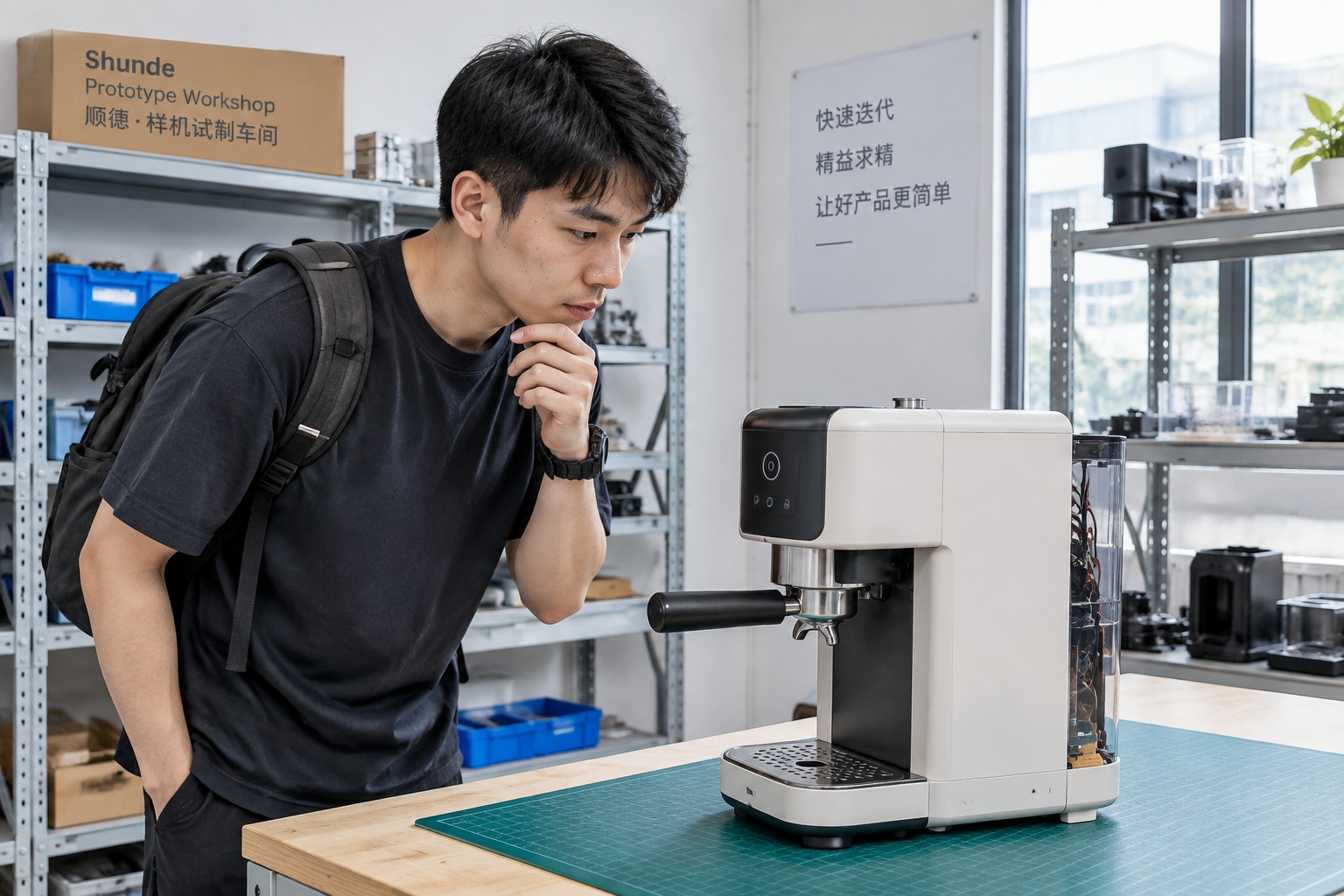
Late afternoon in Shunde, a district in southern China’s Guangdong province. A 34-year-old product engineer shuttles between tiny factories on an electric scooter. He carries a backpack full of parts: a heating element, a plastic water tank, a pressure sensor. By six o’clock, he has assembled a working prototype of a new coffee machine in a small workshop that bills itself as “design + prototyping.” By the next day, the prototype is being tested, and the bill from ten suppliers comes to less than what one Western design company would charge for a single consultancy call.
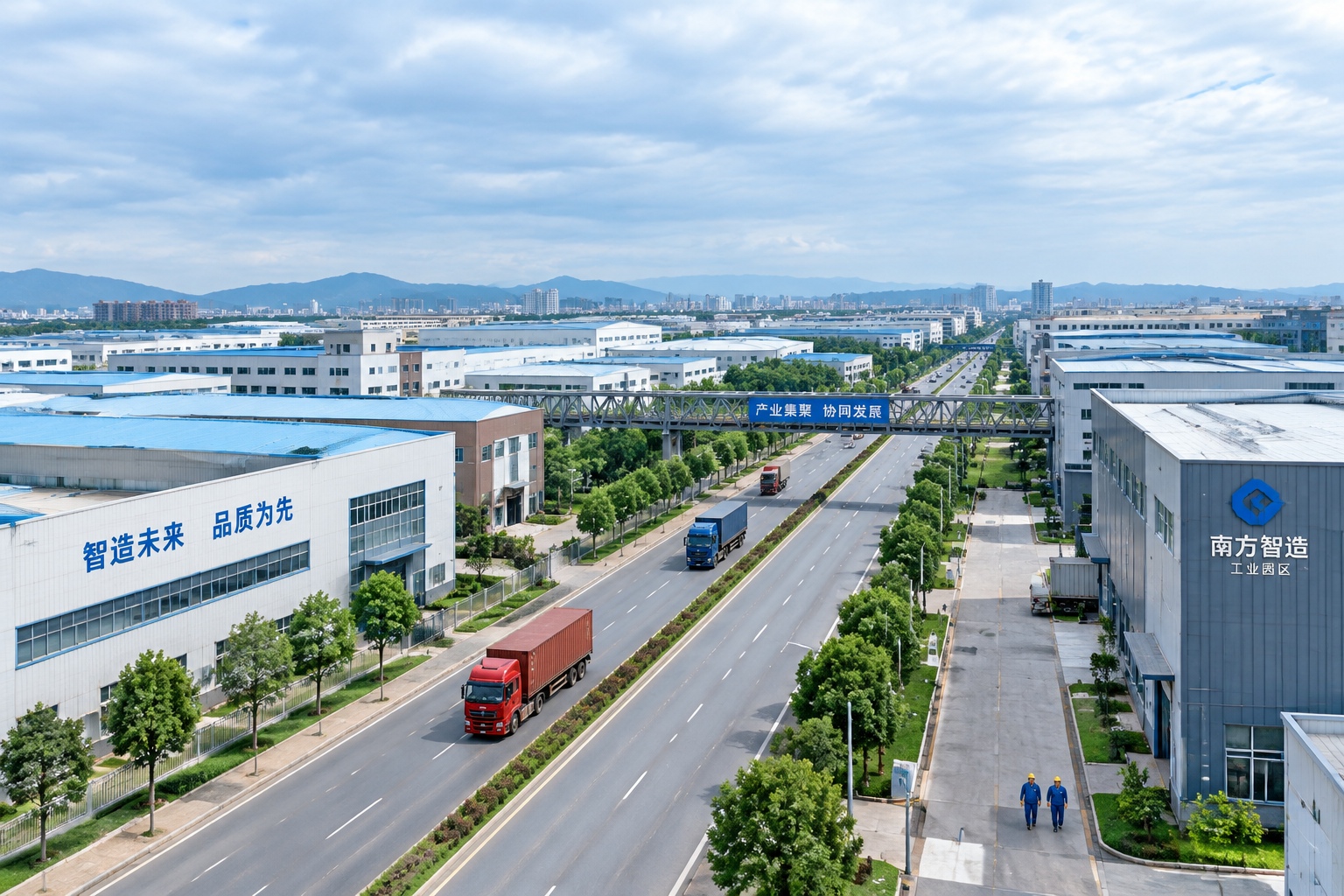
This is the world behind the “Made in China” label—a world of industrial districts, not anonymous factories. Locals often use a simple phrase for it: “one product, one city,” or sometimes “one town, one industry.”
A Geography of Specialization
In China’s manufacturing belt, it is common for a town to supply almost all the world’s demand for one niche item. Danyang in Jiangsu produces a huge slice of the world’s spectacles. The city of Zhuji in Zhejiang produces most of the world’s socks. Tiny Datang in Zhejiang has built its economy around socks. Shunde specialises in household appliances.
These concentrations are not an accident of history. They are the result of many small local experiments, the mobility of skilled workers, and local governments that supply land, roads, power and cheap tax holidays to connected companies. The process started in the 1980s, when Chinese village-run enterprises learned that concentrating on simple consumer goods gave them higher scale; the model is still alive today.
But perhaps the more important factor is the way proximity cuts information gaps. If a supplier experiences a technical problem, an engineer can interrupt lunch in the next block and get feedback in minutes. If a product must change colour or size, a team can negotiate with material suppliers all within walking distance. All these “frictions” are removed. In the e-commerce age, that seems counterintuitive—why not have a global supply chain? Yet in practice, when products change quickly and in high volume, co-location is the most efficient way to organise production.
What the Great Clusters Look Like
Shunde: The World’s Kitchen Lab
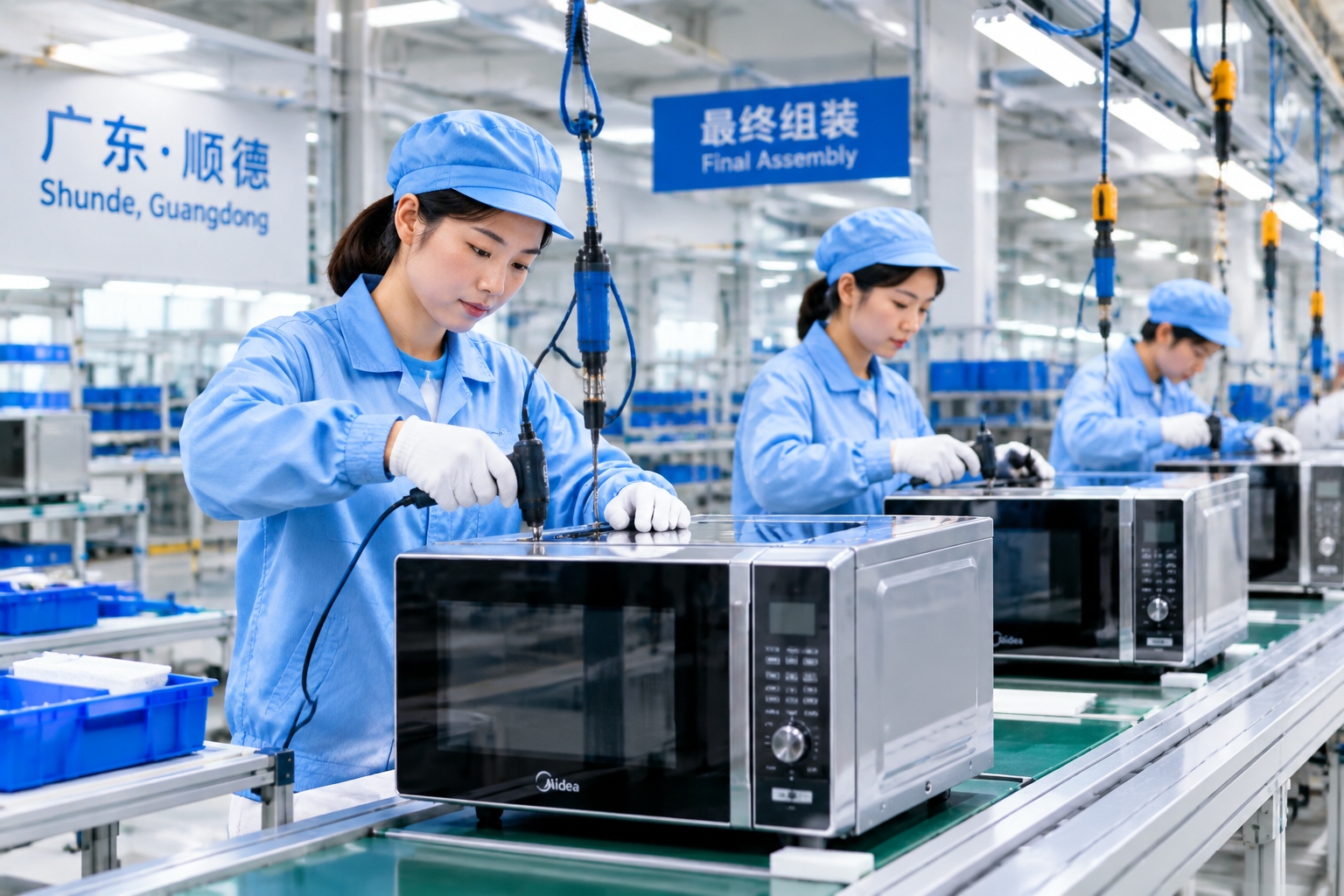
With less than 2 million residents, Shunde punches far beyond its weight. It is home base of China’s largest home appliance maker, Midea, as well as Galanz—the company known worldwide for microwave ovens. But regional stats matter less than the underlying structure. According to government data, more than 3,000 companies in Shunde manufacture electrical appliances or their spare parts. Those firms make everything from air conditioner compressors to magnetron tubes. When a global brand wants a special countertop oven for a niche country, it can find every piece and every skill within 25 kilometres.
That tightness lowers cost. On state media reports, a microwave oven’s cost dropped from over $300 in the 1990s to under $70 today, at constant quality. A European competitor cannot survive in volume against such an ecosystem.
But perhaps the more useful advantage is speed of design. A product engineer once told me that it takes eight days to make a entirely new rice-cooker mould in Shunde; in his previous job in Europe it took thirty. “But it’s not only time. Most product ideas depend on material choices, such as a special heat-resistant plastic that doesn’t smell. Here, a plastic supplier has already tested a bank of such materials and can deliver a sample within two hours.”
Shenzhen and Dongguan: A 24-Hour Electronics Compound
Move farther down the Pearl River to Shenzhen and Dongguan. Shenzhen is the country’s technology capital, the city of Tencent and Huawei. Dongguan, its neighbour, is less famous but bigger in manufacturing. Together, they create something like a giant, always-open hardware lab.
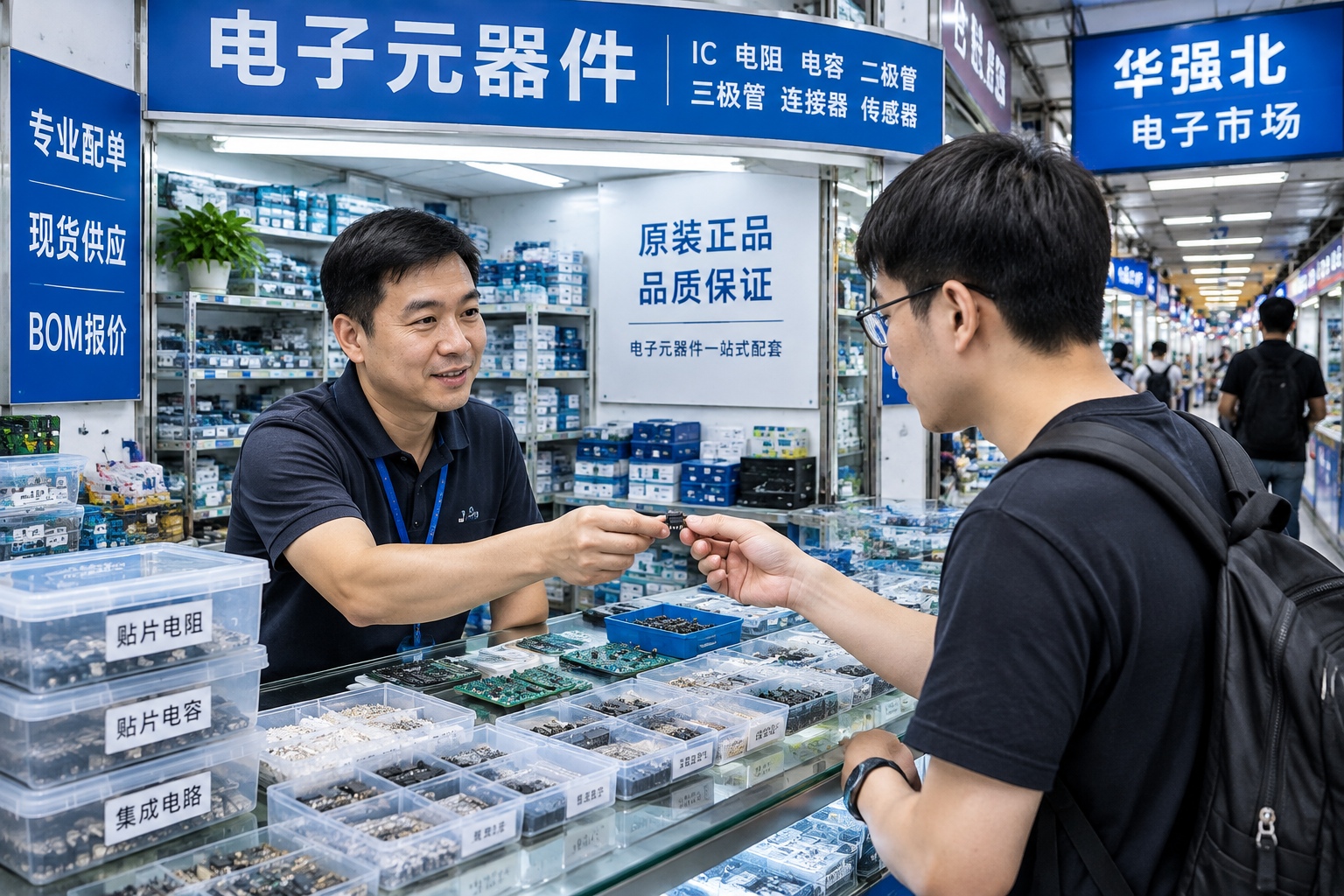
For decades, Shenzhen’s Huaqiangbei electronic markets have allowed a designer to buy any screw, capacitor or display panel that exists—or have a custom version made overnight. Dongguan’s thousands of factories then convert designs into hundreds of thousands of devices with the same flexibility. That combination has made the region the source of a staggering range of items: smartphones, drones, connected sensors, bank card readers, robotic vacuum cleaners.
Dongguan’s industrial output includes electronic components, but its real speciality is the final assembly of products that require quick turnaround. An often-cited figure in Chinese industry reports is that almost a third of the world’s smartphones are assembled in the southern Pearl River Delta, and most of that work happens within a 60-minute radius of Dongguan’s centre.
More than phones, the Shenzhen-Dongguan corridor supports entire sectors with peculiar needs. When the COVID-19 pandemic disrupted production, some western governments worried about their reliance on China’s manufacturing. Yet even as “reshoring” plans emerged, suppliers for many medical components—pre-filled syringes, portable ultrasound probes, etc.—were still brought over from the cluster, because no region in the United States or Europe had comparable access to dozens of niche suppliers in one afternoon.
Danyang: The Glasses Warehouse of the World
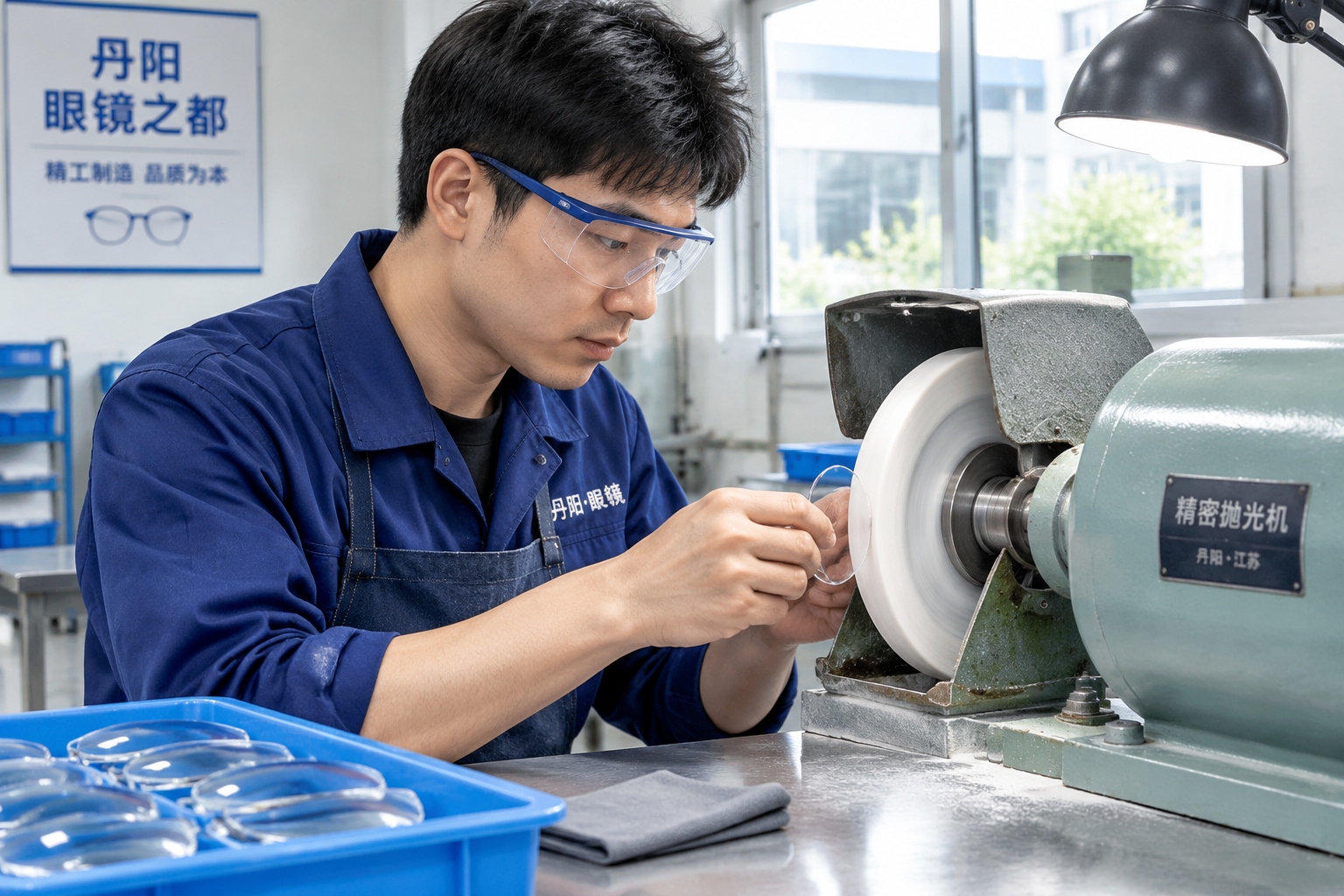
Not every cluster is a big city. Danyang in Jiangsu province is small, but it punches far above its population. According to interviews in Chinese media, Danyang produces nearly half of the world’s prescription lenses, around 400 million pairs a year. Eyewear companies from Europe and the United States set up buying offices there, and even top fashion brands quietly buy Danyang-made frames before adding their logos.
The strength of Danyang comes from long experience in optical glass polishing and coating. Dozens of specialist workshops share testing laboratories and skilled technicians. In recent years, they have improved from cheap plastic lenses to high-index lenses that are thinner and more scratch-resistant, moving up the value chain. But their secret sauce remains the same: density. If a design company needs a new lens anti-reflective coating in a specific shade, a lab 3 km away can give it a try in 48 hours.
The Price of This Efficiency
The cluster model creates its own tensions. A downturn in one global industry can devastate a city. When furniture demand collapsed during the 2008 global recession, for instance, China’s big furniture cluster in Houjie, Guangdong, saw many workshops close overnight. For the global buyer, over-reliance on one town is risky; one flood or event can stop production.
Perhaps more importantly, China’s workers are becoming older, more expensive and less willing to stand at a production line. Salaries have increased severalfold since the early 2000s. A growing number of textile and shoe workshops have already moved much of the labour-intensive sewing to Vietnam or Indonesia. Yet many high-skill clusters upgrade rather than flee.
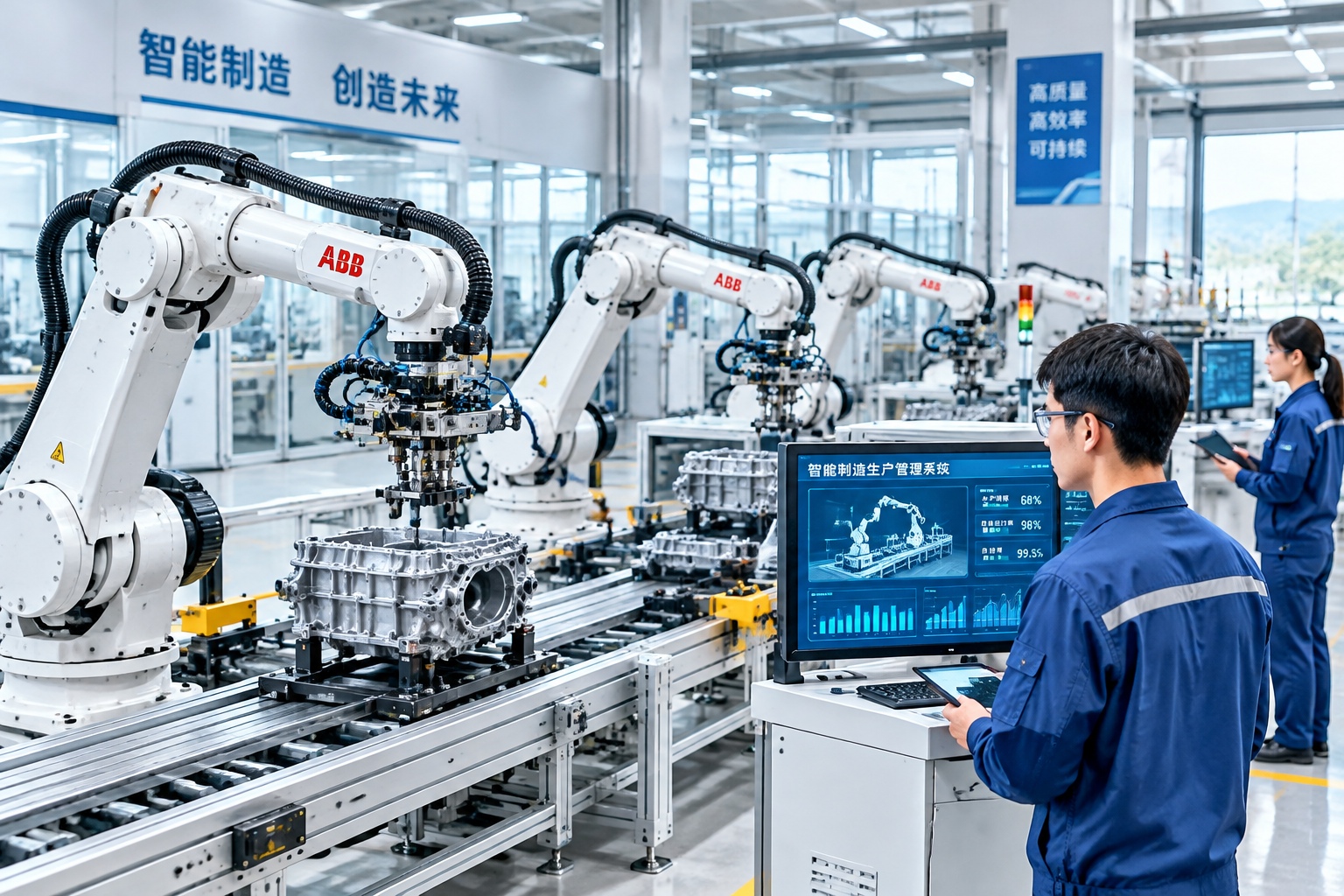
Chinese municipal governments today openly use “cluster strategy” as an industrial policy. They invest in vocational schools, subsidy schemes and shared research labs. Dongguan has built several public industrial design kitchens; Shunde now hosts robotics companies that make production lines less dependent on human hands. The goal is to shift from “one product” to “one intelligent product range,” combining hardware with artificial intelligence and services.
Are Clusters Still the Future?
Some economists argue China’s labour-cost advantage is evaporating. But cluster advantage does not rely only on cheap labour. It relies on an “ecosystem” of talent, tooling and services that cannot be recreated overnight. In aerospace, medical devices and electric vehicle components, Chinese cities are founding new clusters under national plans, again “one city, one product.” Examples include the battery capital around Ningde in Fujian province, which supplies roughly a third of the world’s electric vehicle batteries, or the robotics district in Foshan.
These newer clusters may define the next chapter of global manufacturing. They tend to involve high-value innovation, partnerships with universities and much more investment. But they still use the same model of regional concentration, close contact and relentless iteration.
The end result is that China hasn’t simply been the world’s “factory”; it has become a global system of factory towns, each intertwined as an essential node in global product architecture. For ordinary consumers, this means more products with lower prices and continuous new features. For policy-makers elsewhere, it is a reminder that building a single factory is not enough. The magic lies in building hundreds of densely connected factories that make each other better.
Start the discussion at forum.chinacomes.com