


“How many cities does China have?”
I was standing in front of a classroom in Seoul, South Korea, with a whiteboard marker in my hand. Twenty university students stared back at me. They had signed up for intermediate Chinese, and today’s topic was “places.” I wrote a simple question on the board: 中国有多少个城市? (How many cities does China have?)
Hands went up. “Fifty?” “A hundred?” One student, Min-jun, confidently said, “Maybe two hundred.”
I shook my head. “Over six hundred.”
The room went quiet. Then the whispers started. Min-jun frowned. “That’s impossible. No one can remember six hundred cities.”
“Exactly,” I said. “That’s the point.”
I didn’t always know that number. When I first started teaching Chinese outside China, I assumed there were maybe 100 or 150 cities. Then I looked it up. I was wrong. The official count is fuzzy because China’s administrative system is layered—municipalities, prefecture-level cities, county-level cities. But the commonly cited figure is over 600. Some sources say 660. Others say 687. The exact number changes as towns get reclassified. What doesn’t change is the gap between what outsiders know and what actually exists.

The experiment: list every Chinese city you know
I split the class into four groups. Each group got a blank sheet of paper. Their task: write down every Chinese city they could think of. Five minutes. No phones.
When time was up, we compiled the lists on the board. Here’s what twenty students, all studying Chinese, came up with:
Beijing, Shanghai, Guangzhou, Shenzhen, Hong Kong, Chengdu, Chongqing, Xi’an, Hangzhou, Suzhou, Nanjing, Wuhan, Tianjin, Qingdao, Dalian, Xiamen, Harbin, Macau.
Eighteen cities. And a few of those aren’t even in mainland China. No Kunming. No Changsha. No Zhengzhou. No Shijiazhuang. No Fuzhou. No Wuxi. No Ningbo. The list was a greatest-hits album—the cities that appear in international news or on travel posters.
“This is a good start,” I told them. “But you’ve just covered about three percent of China’s cities.”
So what counts as a “city” in China?
Here’s where it gets tricky. In English, we use “city” loosely. In China, 市 (shì) is an administrative unit. There are four direct-administered municipalities: Beijing, Shanghai, Tianjin, and Chongqing. Then there are provincial capitals and other prefecture-level cities—333 of them. Below that, there are county-level cities, around 400. Add them up, and you get somewhere between 600 and 700 cities, depending on how you count.
But the size range is wild. Shanghai has over 24 million people. A county-level city like Yiwu, in Zhejiang province, has about 1.5 million. And some small cities have fewer than 200,000 residents.
Min-jun raised his hand. “So a city can be a huge metropolis or a small town?”
“Yes,” I said. “In China, a city is both a place and a government. It can be a skyscraper district or a farming county with a city label.”
Why this matters for anyone trying to understand China
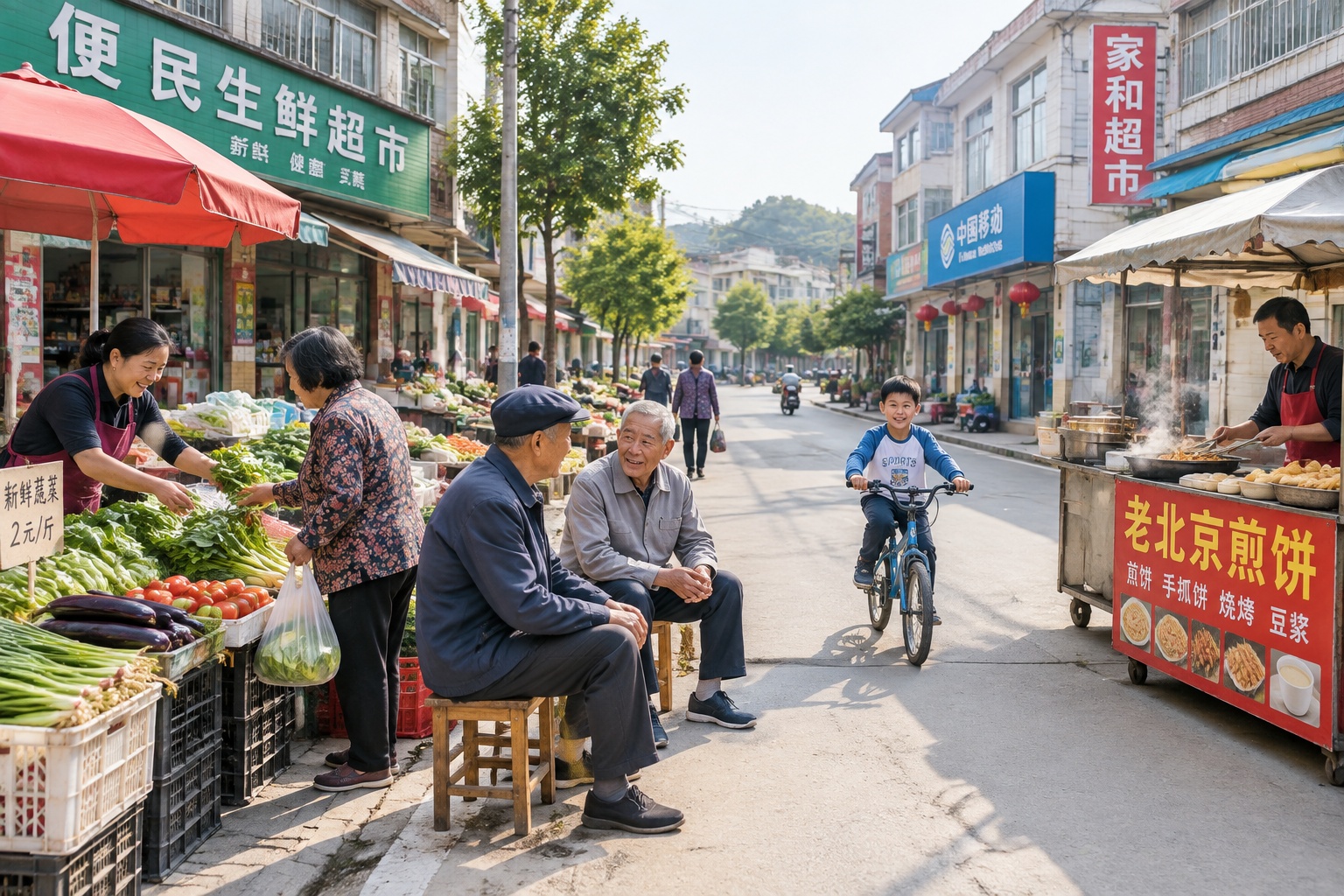
My students were surprised by the number, but I wanted them to feel the scale. So I told them about my hometown: Lengshuijiang, in Hunan province. It’s a county-level city of about 300,000 people. It has a hospital, three high schools, a train station, and a famous spicy duck dish. It’s not on any tourist map. But it’s real, and it’s home to a few hundred thousand people who live, work, and argue about the best place to get breakfast.
“Have any of you heard of Lengshuijiang?” I asked. Blank faces.
“That’s okay. Most Chinese people haven’t either. But it’s one of the 600.”
The second experiment: how many cities have over a million people?
I asked the class to guess how many Chinese cities have a population of more than one million. Answers ranged from ten to thirty. The actual number is over one hundred. More than a hundred cities in China are bigger than San Francisco, Boston, or Seattle.
Then I gave examples of cities they’d never heard of:
- Yiwu: A small city in Zhejiang that produces most of the world’s Christmas decorations and cheap goods. If you’ve bought a holiday ornament at a dollar store, it probably came through Yiwu.
- Shaoxing: Known for textiles and rice wine. Population: 5 million.
- Dongguan: A manufacturing hub in Guangdong that makes electronics for Apple, Samsung, and others. Population: over 8 million.
- Jingdezhen: The “porcelain capital” for over 1,000 years. Population: 1.6 million.
“These aren’t famous tourist destinations,” I said. “But they’re economic engines. And they’re just a few of hundreds.”
Can any Chinese person remember all 600 cities?
No. And that’s normal. Most Chinese people can name their own city, their provincial capital, the big four (Beijing, Shanghai, Guangzhou, Shenzhen), and maybe a dozen others from news, travel, or family connections. The rest are a blur.
One student asked, “So is China like Europe?”
“In some ways,” I said. “But with one language, one currency, and a high-speed rail network that connects most of it. You can take a train from Beijing to a small city in Henan in four hours. That changes how people move, work, and think.”
Another student, Ji-woo, looked at the board. “It’s like each city has its own personality, but they’re all part of one country.”
“Exactly.”
What I want my students—and you—to take away
If you’re trying to understand China, don’t stop at Beijing and Shanghai. Those are outliers. The real China is a patchwork of hundreds of cities, each with its own local food, dialect, industry, and history. Some are booming. Some are shrinking. Many are somewhere in between.
Over 60% of Chinese people live in cities, but a huge share of them live in smaller cities you’ve never heard of. That’s where you’ll find the factories that make your phone, the farms that grow your vegetables, and the families that send their kids to college for the first time.
For homework, I asked each student to pick one Chinese city they’d never heard of, research it, and present it next week. They chose places like Zibo (famous for barbecue), Quanzhou (an ancient maritime Silk Road port), and Liuzhou (known for a pungent, divisive noodle soup called luosifen).
By the end of the semester, they had learned more about China than any textbook could teach. Not because they memorized 600 names, but because they understood that the number itself is the lesson.
China is not one story. It’s 600 stories, and most of them are still being written.
Start the discussion at forum.chinacomes.com