
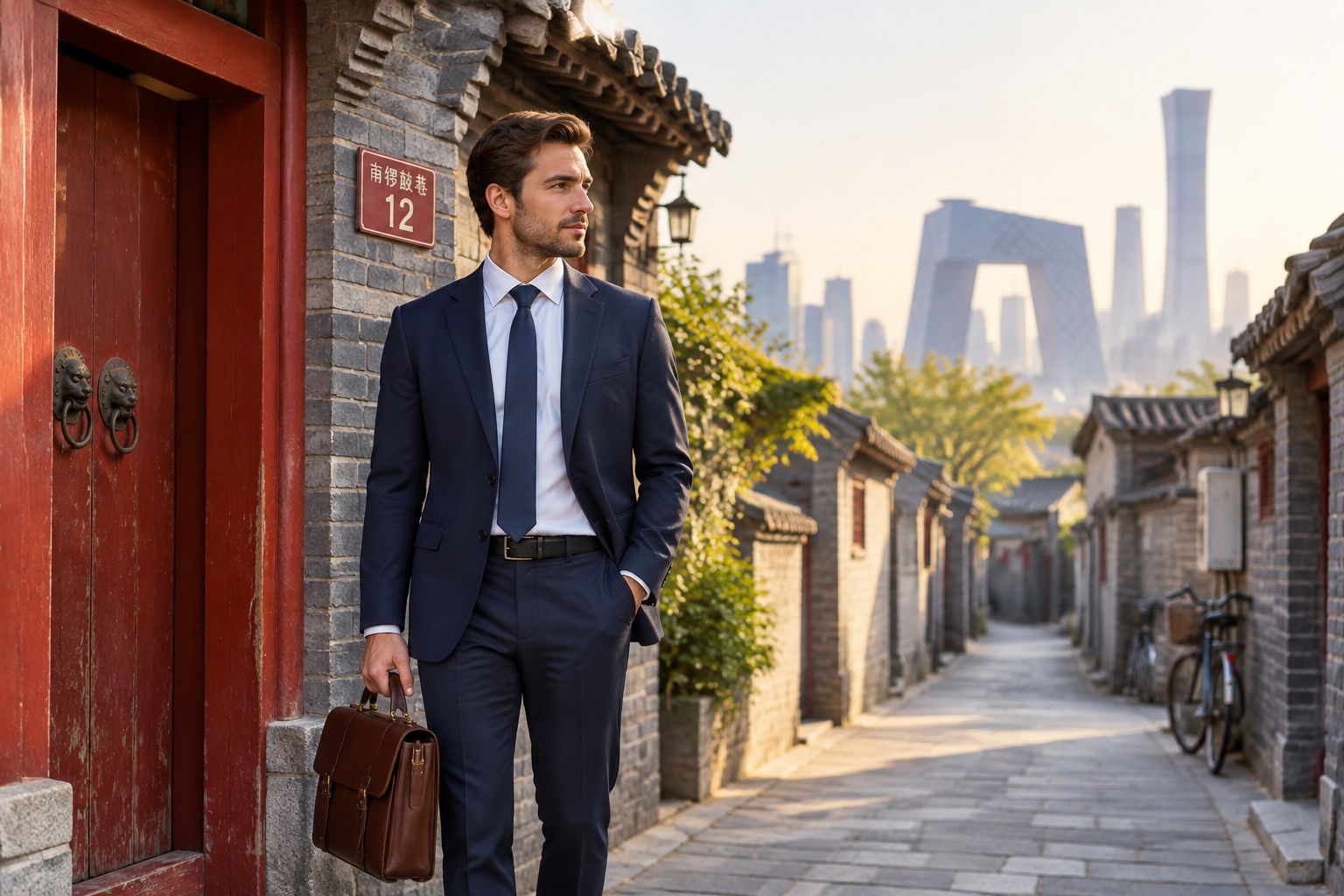

After your first meeting in Beijing, someone will probably ask: “Have you seen the Great Wall yet?” The default travel script is easy to guess—Forbidden City, Summer Palace, a quick Peking duck dinner, maybe a photo in front of Tiananmen.
But if you have seven days, a different Beijing opens up. It is not a single ancient museum. It is a city where narrow gray-brick hutongs sit right next to shiny CBD towers; where a 1950s factory complex now hosts world-class contemporary art; where a business lunch can end in a courtyard restaurant you would never find on a first-time itinerary.
The key for business travelers is to combine meetings with realistic cultural exposure—without making the schedule impossible. The days below show you how.
Why look beyond the Forbidden City
Beijing is vast. More than 21 million people live here, and it covers an area the size of the greater Los Angeles region. The city does not reveal itself from a tour bus. Locals define their lives by districts: the business towers of Guomao, the tech campuses of Wangjing, the old alleyways around Shichahai, the art district of 798.
Understanding how those pieces fit together is useful business knowledge as much as a cultural one. Your Chinese clients will talk about lifestyle, city planning, rising rents and weekend habits. The more you can join that conversation with first-hand details—not statistics—the more naturally relationships form.
This plan splits the week into three parts: business meeting blocks, cultural add-ons, and two flexible weekend days for the less-convenient destinations like the Great Wall.
Your business agenda: where meetings actually happen
Before the culture, let’s handle the work. Beijing’s main meeting zones are:
- Guomao / CBD (Central Business District) — This is where international banks, law firms and insurance companies cluster. You’ll see the CCTV Tower, China World Trade Center and gleaming malls.
- Wangjing — Northeast of the center, this is a tech and creative district. Alibaba, Meituan, NetEase and many startups have offices around Wangjing SOHO.
- Beijing Financial Street — In Xicheng, west of the city center. It looks like a walled area of financial companies and is closer to old Beijing neighborhoods like Di’anmen and the Drum Tower.
If your office or clients are in another area, do not worry: the subway network is easy to navigate, with all station names in English. Taxis and Didi (China’s Uber, which you access through a Chinese app) are common. Avoid using a private car at rush hour. Instead, plan meetings around subway lines; a 25-minute ride is normal.
Seven days that mix meetings and cultural visits
Day 1 — Arrive, stay close, and reset
Land at Beijing Capital or Beijing Daxing International Airport. From either terminal, take the airport express train or a Didi to your hotel. The fastest way to make yourself feel local is to change cashless payments: download WeChat or Alipay and link your international credit card, because almost nobody uses paper money for daily purchases anymore. In the evening, do not attempt a giant museum. Walk the streets near your hotel. If it’s near Guomao, go to Jintai Xili or the new “Lucky Street” areas to see offices workers eating at budget noodle places and bubble-tea shops.
Day 2 — CBD meetings plus an evening view
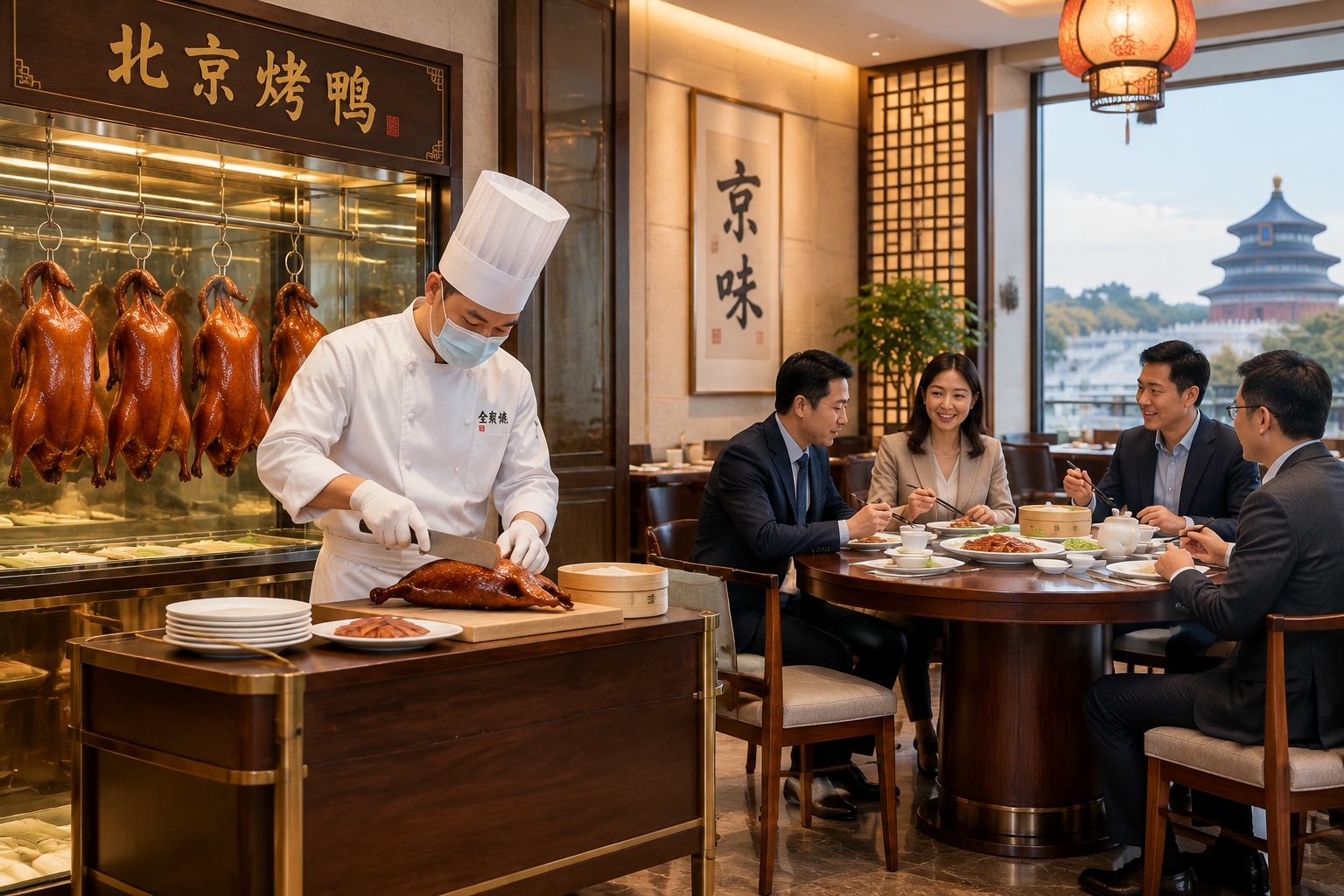
Full day of meetings around Guomao and along Jianguomenwai Street. Ask your host to recommend a nearby lunch spot—usually a high-floor restaurant with a view is easy; but a secret local choice near Chaoyangmen is better. After work, take the subway to Jingshan Park. On clear days, you’ll see the Forbidden City spread out at your feet from the artificial hill, a perfect shortcut to understanding its imperial geometry. The park closes at 9pm in summer, and usually an hour is enough. For dinner, try a refined Peking duck restaurant like Siji Minfu, which has several branches. Book before you go, or have your hotel concierge do it.
Day 3 — Wangjing tech meetings and art afterwards
Wangjing is about thirty minutes by taxi from Guomao, but close to the art district 798. Spend your morning at the tech campuses and, if you finish by late afternoon, drive the 10 minutes to 798. Galleries close around 5 or 6, but you can still walk the streets and have a drink in one of the converted factory buildings. This is exactly the kind of moment business trips should include—seeing how Chinese tech workers relax in a space that combines industry, art and commerce.
Day 4 — Financial Street and the old city
Heavy day at Beijing Financial Street. When meetings end, have your host or hotel arrange a car to Baizhifang or Meishuguan Houjie? A better idea: walk south from Financial Street to the famous “White Pagoda Temple” (Miaoying Temple), one of the few Mongol-influenced stupas in Beijing. It sits within a residential hutong area, with old trees and garden walls. This contrast—quiet monastery, global banks everywhere—says more about Beijing than any guidebook.
Day 5 — Great Wall without ropes or rope-lines
Take the full day for the Great Wall. Rather than the crowded Badaling section, which feels like a theme park, choose Mutianyu. It is about 70 minutes from central Beijing by car, has a cable car and a restored path, and on weekdays it’s often pleasantly empty. You can also take a guide and walk a non-restored “wild wall” like Jiankou, but only as a serious hiker with good shoes and a local team. Mutianyu is the practical business traveler’s choice: the condition is safe, but you still get views of dense forest rolling over steep mountain ridges.
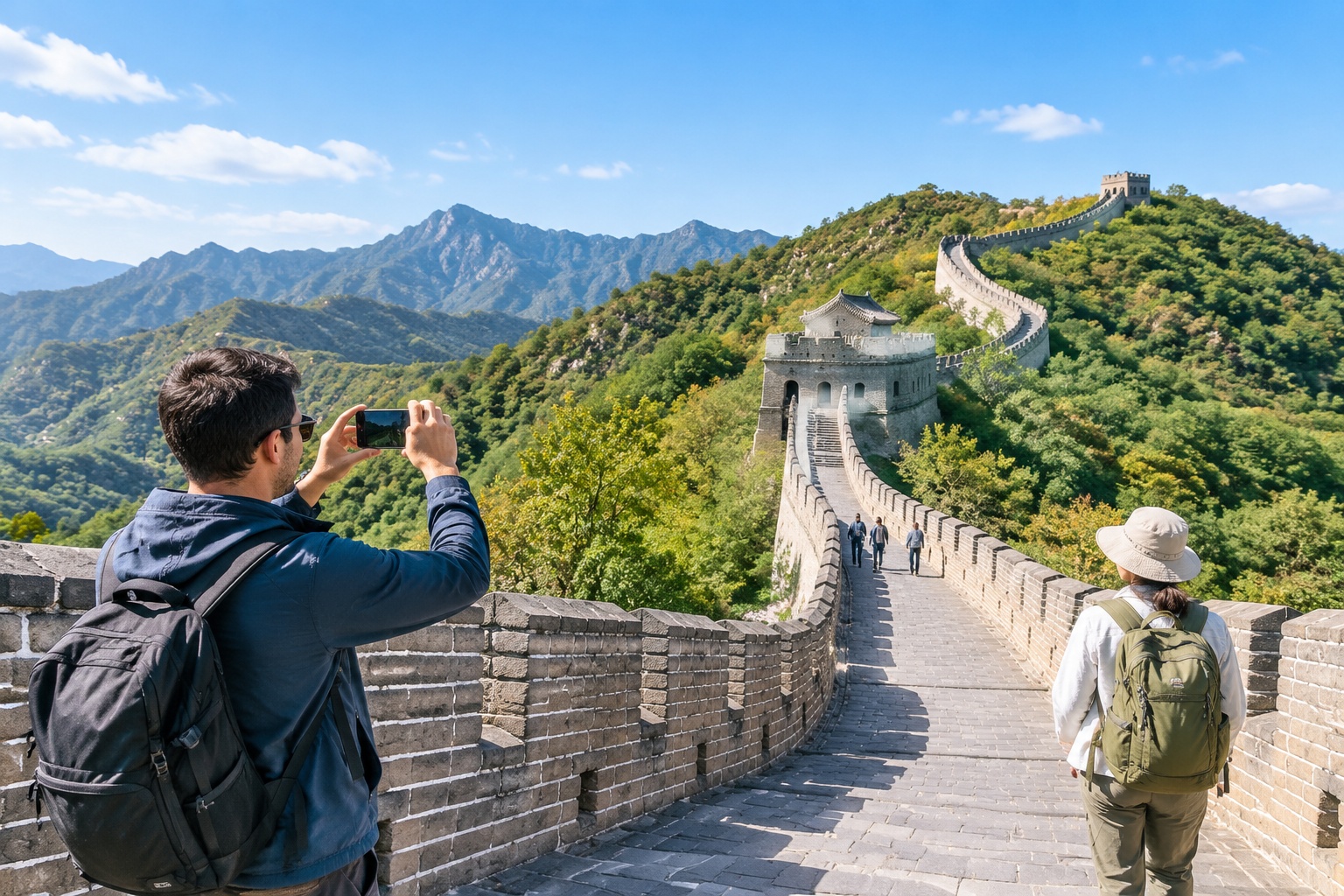
Return by late afternoon. Stop on the way at a farmhouse restaurant for country dishes with Chinese names you can’t pronounce, but are worth it.
Day 6 — Hutong walks and courtyard kitchens
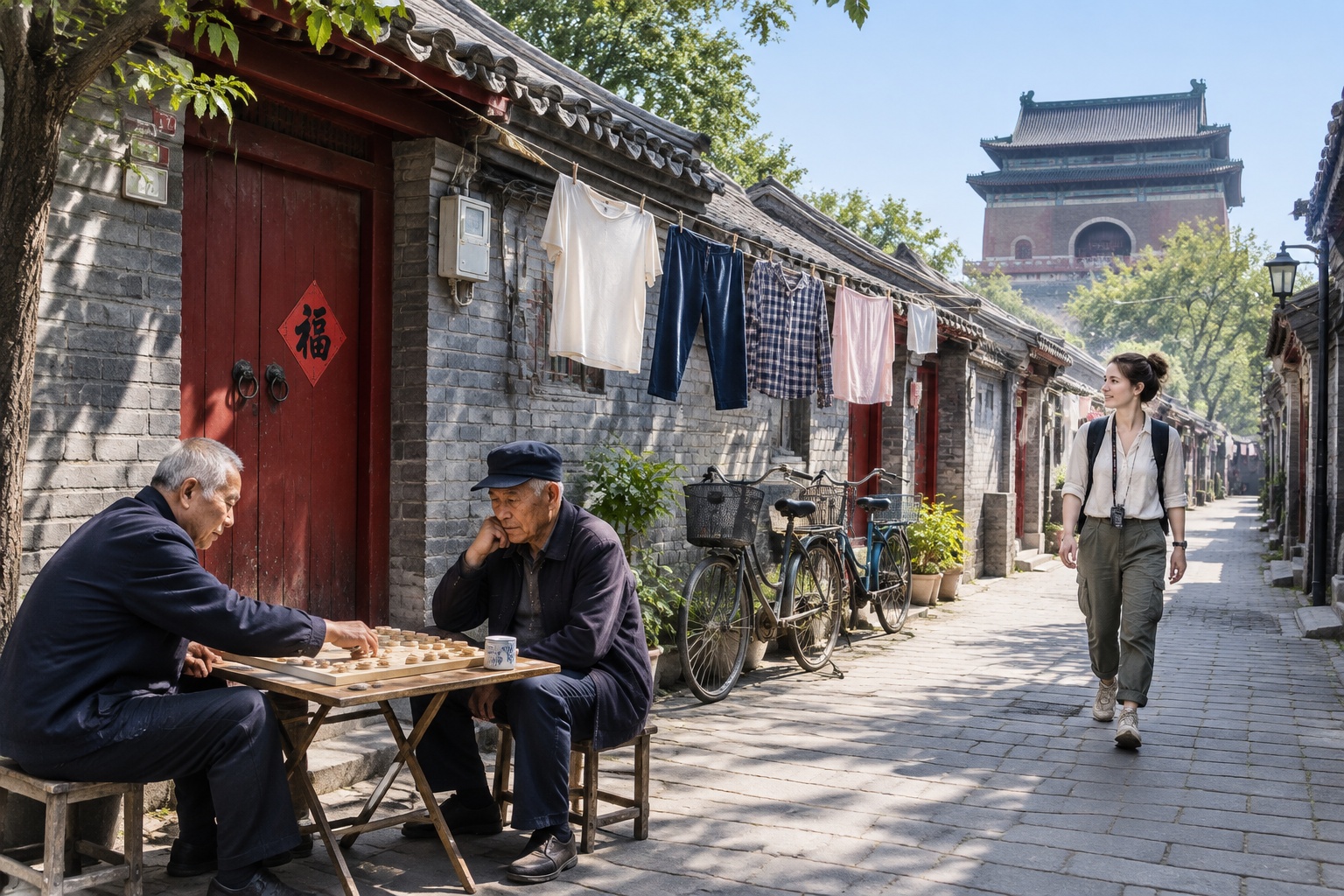
Friday is for old Beijing. Start at the Drum and Bell Towers at the north end of the city center, then wander south through the narrow lanes near Shichahai and Yandai Xiejie. Many visitors know this area, but the moment you turn two corners, you are away from souvenir stalls and into live homes: old men doing morning exercise, pigeons circling wooden coos (pigeon whistles), bikes propped against painted doors. Stop for lunch at a “jia chang cai” place—home-style cooking with simple dishes like tomato and egg, tofu with pickled vegetables, and pork with green peppers. Make sure you ask for “buddy” (not spicy) if you are not used to Sichuan heat. After lunch, visit the nearby Yonghegong (Lama Temple), one of the most beautiful temple complexes in China. It closes around 4:30, so keep an eye on time.
Day 7 — Flexible memory-making day
Before flying home, you have two strong choices. If it is morning, go to Temple of Heaven and watch retired people practice Tai Chi, ballroom dance, calligraphy on the ground with water, and sing Communist-era songs. It is the most joyful introduction to Beijing’s public culture. Alternatively, spend a relaxed morning in Panjiayuan antique market—but go early and hold your wallet. By mid-day you can be at the airport and ready to return with more than a photo in front of a red palace. You’ll have had real conversations about real Beijing.
From roasted duck to modern “private kitchens”: Beijing food scene
Food is not a side dish in Beijing, it is part of culture and negotiation. A four-hour dinner is common for an important client. If you are exhausted, that might feel intimidating, but eating together is how Chinese business people reduce formality. The classics are easy: Peking duck, boiled dumplings, and hot pot. But be aware of how things have changed. Many young Beijingers order food on their phones through apps like Meituan and Ele.me. In restaurants, expect to scan a QR code on the table to view the menu on your phone, order, and pay. This system is fast but can be confusing if your phone does not have WeChat or Alipay working perfectly. Have your hotel or Chinese colleague help you set this up.
Beijing’s contemporary art and creative scenes
If you have half a day, 798 Art District is the easiest place to access the urban side of culture. Factory buildings from the 1950s, with their old German-designed chimneys and wide concrete halls, now hold galleries, bookshops, and the UCCA Center for Contemporary Art. It is also a space where people from fashion, media and technology meet over flat whites and micro-batches. A business traveler who visits 798 sees not just art but the flexible reuse of space that defines China’s urban redevelopment. Unlike the neat But a quick reminder: 798 closes a little at 5 p.m., and art can be pricey, but entering galleries is usually free.
Practical tips for moving around like a working local
Everything you plan will fall apart if you don’t prepare your phones first. Beijing uses mapping apps that are designed for its streets; Amap (高德地图) is the most reliable. Download it while you still have Wi-Fi. For transportation, use the subway during peak hours and Didi only when off-peak or when you are carrying luggage. Make sure your hotel name is written in Chinese characters and show it to the taxi driver—showing a map screenshot often works.
Your business hosts may speak better work-English than they let on, but outside events are far more relaxed when you can say three phrases: 你好 (nǐ hǎo), 谢谢 (xiè xiè), and 好吃 (hào chī, meaning delicious). Your attempts will be appreciated, even if your pronunciation is off.
Beijing’s history books have many pages, but the history that matters for your business trip is how the city is being tested today. You can feel that by walking through an alley as much as by standing in a boardroom. Use your evenings and one weekend day to see the web of everyday life—and your business relationships will benefit from the perspective.
Start the discussion at forum.chinacomes.com