

The four minutes most passengers sleep through
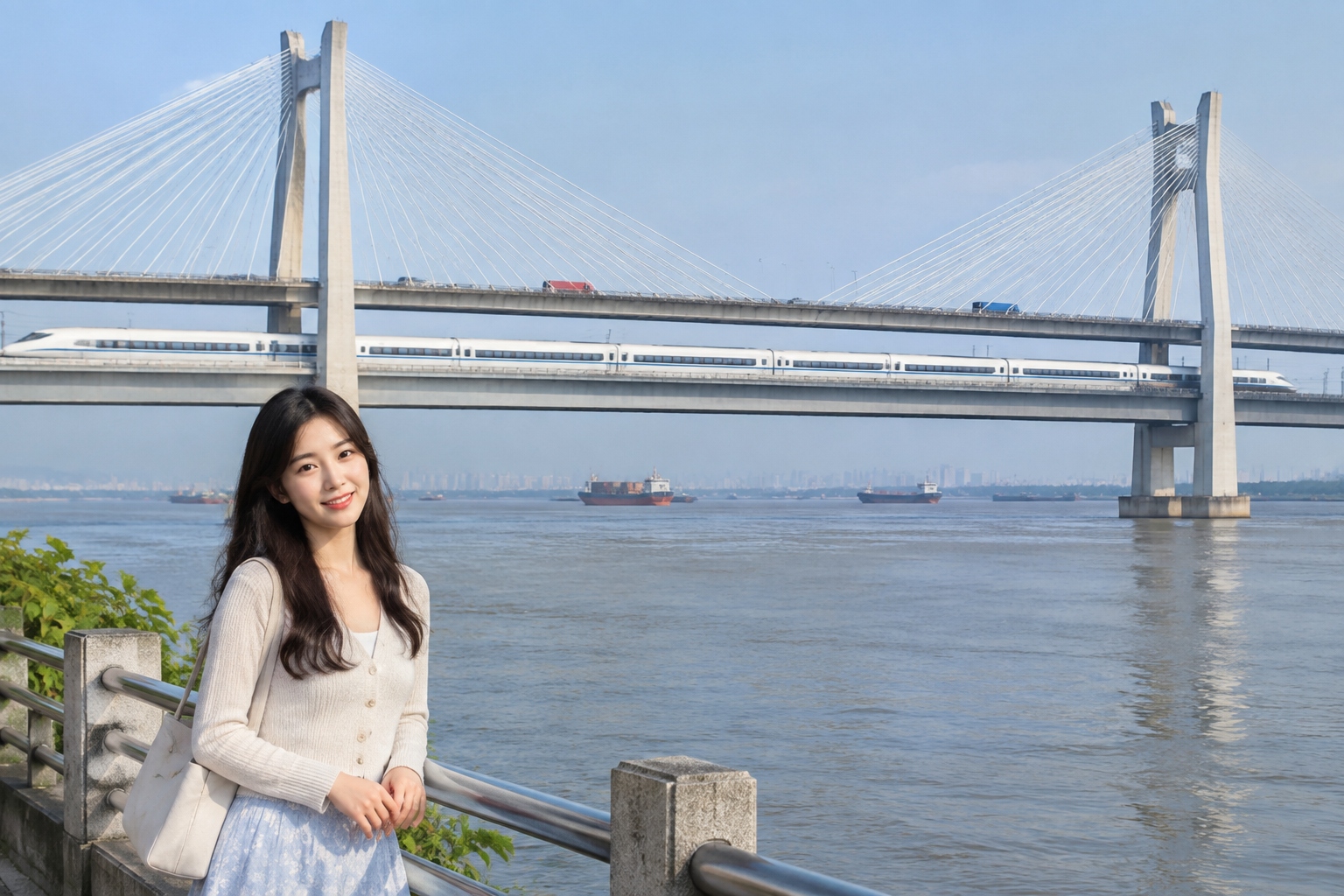
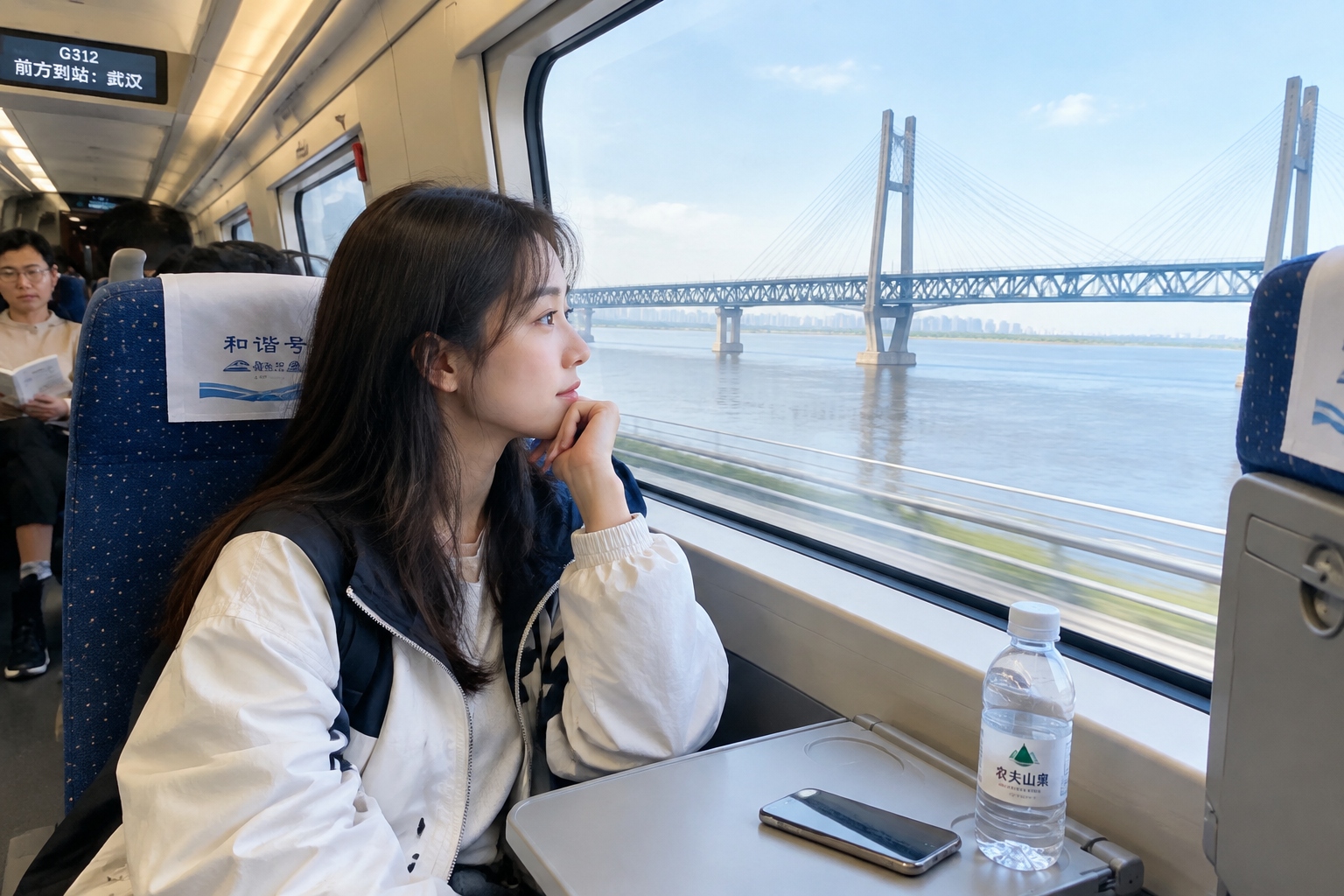
On a weekday morning, a train leaves Nantong West Station at 7:12 and heads south. For the next few minutes it runs across an 11-kilometre bridge over the Yangtze River — the wide grey water that splits Jiangsu province into a north bank and a south bank. Most people in the carriage are looking at their phones. A few glance up when the river appears, then go back to their screens.
That indifference is the story. Until July 2020, this trip did not exist in any practical form. Nantong, a city of roughly 7.7 million people on the north bank, had no railway crossing of the Yangtze. Trains bound for Shanghai swung west through Nanjing, an inland detour that turned a straight-line journey of about 100 kilometres into four and a half hours. Drivers used the Sutong Bridge, a road-only crossing that opened in 2008: two and a half to three hours when traffic cooperated, considerably longer when it did not.
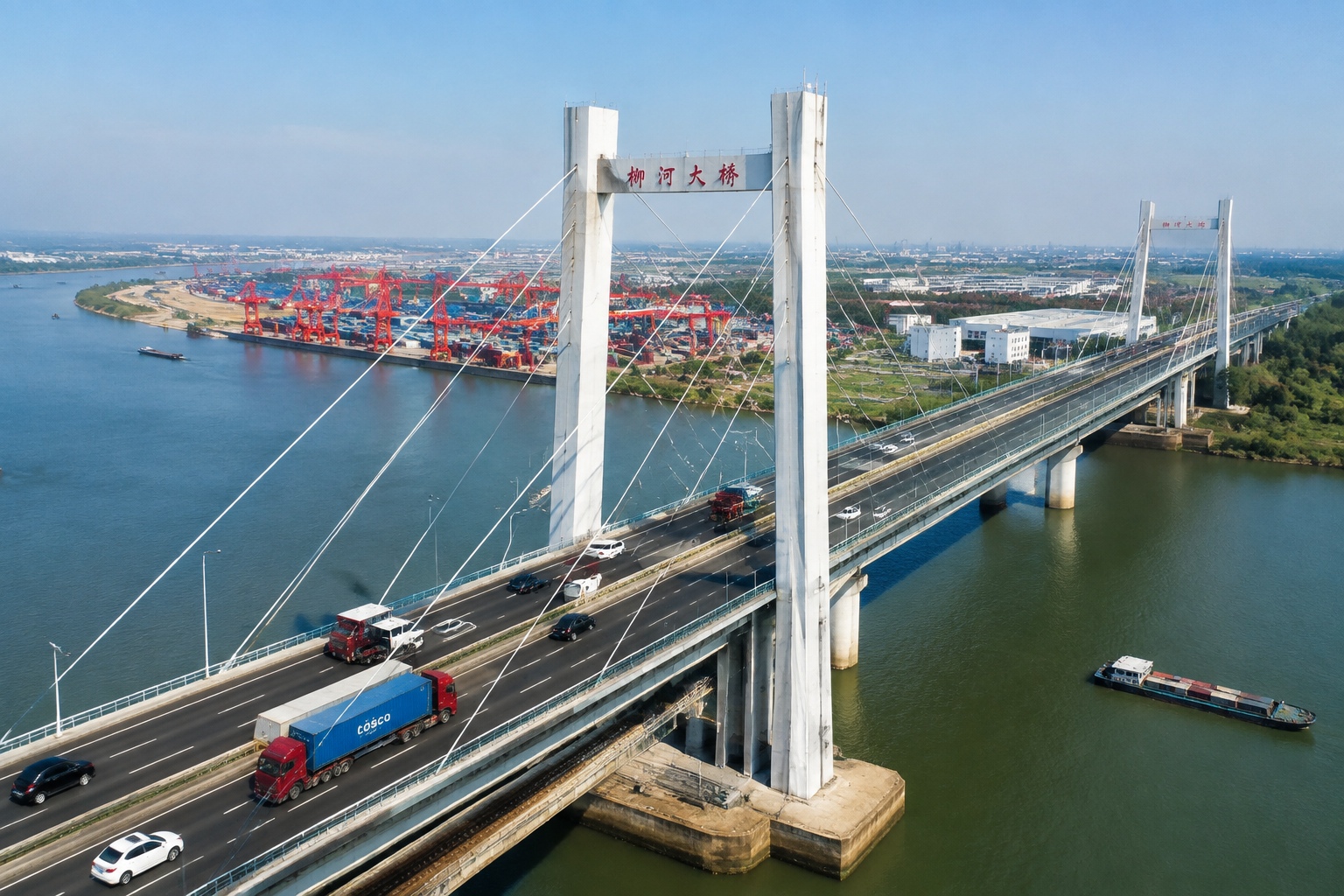
The Shanghai-Suzhou-Nantong Yangtze River Bridge — Husutong in Chinese — opened on 1 July 2020. It carries six lanes of highway on its upper deck and four railway tracks below. Its main span, the distance between the two towers that hold up the middle of the structure, is 1,092 metres. It is the first cable-stayed bridge anywhere in the world to combine road and rail traffic across a span longer than one kilometre. The previous mark for this type of bridge was around 500 metres.
Why this stretch of river was so hard to cross
Three constraints shaped the design, and they pull against one another.
The river does not stop for construction
The lower Yangtze is the busiest inland waterway on earth. More than three billion tonnes of cargo move along the river’s main stem each year — coal, steel, containers, cars, gravel. The section near Nantong is the approach to the estuary and to the port of Shanghai, and it is crowded with ships. Every pier placed in the water is a permanent obstacle to navigation and a permanent risk. The engineering answer was to leave the main channel almost entirely clear, with a single span well over a kilometre long.
The ground is mud, not rock
The estuary sits on deep, soft alluvial deposits. There is no convenient bedrock for a structure of this weight to rest on. The towers had to be founded on enormous steel caissons — hollow steel boxes, floated into position and then sunk into the riverbed, roughly the footprint of a football pitch — which were afterwards filled with concrete. Settling them accurately and evenly, in moving water, took months.
Trains are far less forgiving than cars
This is the part most people never consider. A road bridge can flex quite a lot; drivers simply do not notice. A railway cannot. Track geometry has to stay within very tight tolerances, because a train running at 200 kilometres per hour follows the rail wherever it goes. If the deck bends too much under a passing train, or if the ends of the bridge rotate even slightly, ride quality collapses and safety margins shrink. The same structure therefore had to be stiff enough for four railway tracks and light enough to span more than a kilometre without a pier in the water.
What the engineers actually built
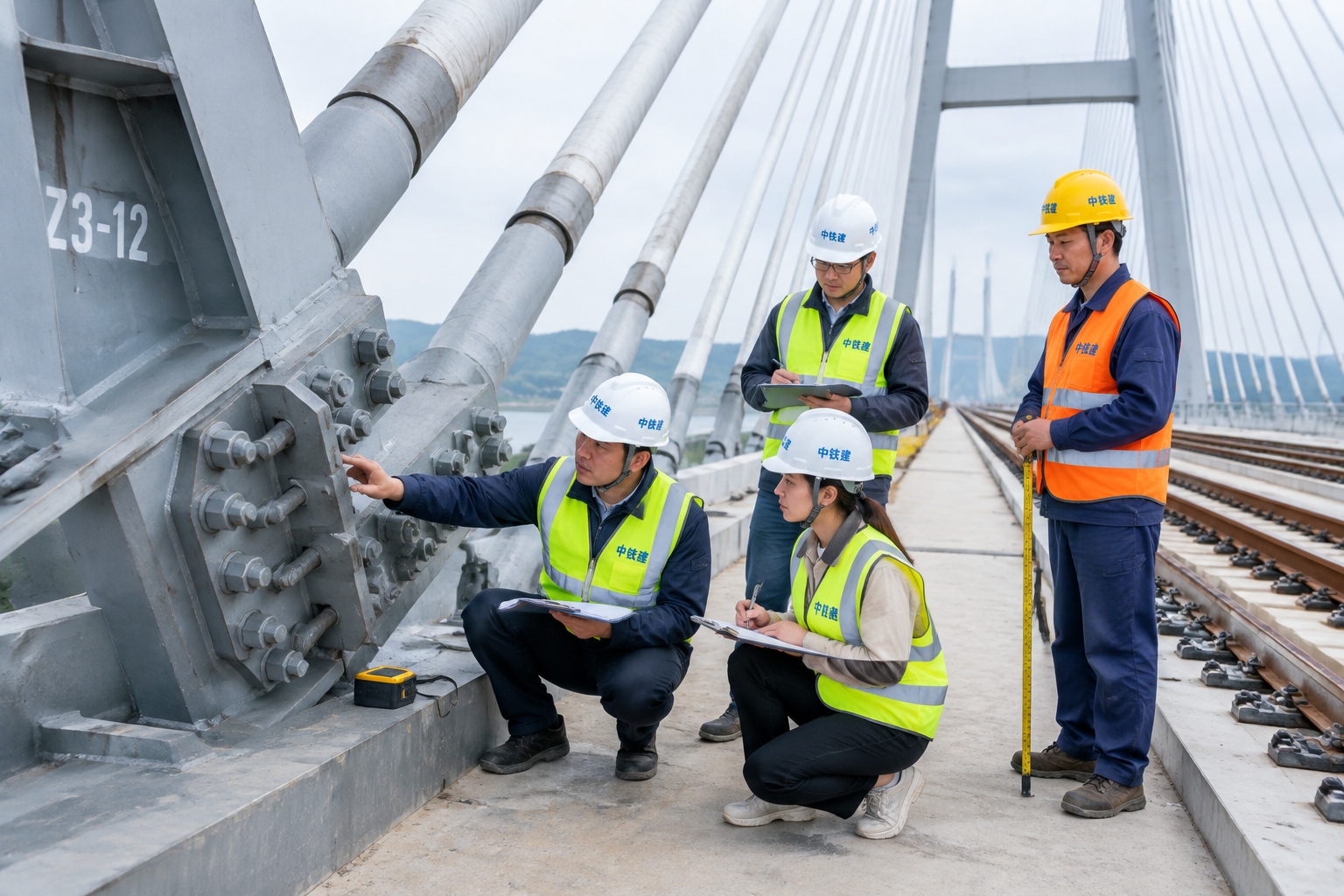
The result is a two-level structure: a steel truss — a lattice of steel members rather than a smooth box — forms the skeleton, with the rail deck slung inside it and the roadway carried on top. Two towers rise 330 metres above the water. Including its approach viaducts, the bridge runs 11.072 kilometres.
Three technical choices are worth naming, because they explain why this is a milestone rather than simply a long structure.
Steel made in China. The bridge uses a high-strength structural steel grade developed domestically, known as Q500qE. Stronger steel means less of it, which matters when every extra tonne of deck makes the span harder to hold up.
Cables with more pull per strand. The stay cables use galvanised wire rated at 2,000 megapascals — among the strongest used at scale in Chinese bridge building at the time. Fewer, stronger cables mean less weight and less surface exposed to wind.
Wind and typhoon design. The site sits in a typhoon-prone estuary. Engineers tested deck sections in wind tunnels and shaped the structure to resist both steady wind and the vibration that gusts induce. A bridge carrying high-speed trains cannot afford to sway.
Before opening, the bridge was load-tested: static weights placed on the deck, then trains run across at increasing speeds, to confirm the real structure behaved like the model. That step rarely makes the news. It is also the reason anyone should trust a one-kilometre span.
What changed for people who never think about bridges
The most direct effect is time. Nantong to Shanghai by rail is now roughly one hour to ninety minutes, depending on which Shanghai station you use. What used to consume half a day is now a morning meeting and a return in time for dinner.
The second effect is less obvious but arguably larger. Three of Jiangsu’s wealthiest county-level cities — Zhangjiagang, Changshu and Taicang — got passenger rail service for the first time. These are manufacturing centres with economies larger than many Chinese prefecture-level cities, and until 2020 they had no trains at all. Taicang, where more than 400 German companies have operations, is now about half an hour from central Shanghai. Engineers and managers who once kept an apartment in Shanghai while their factory sat across the river can commute instead.
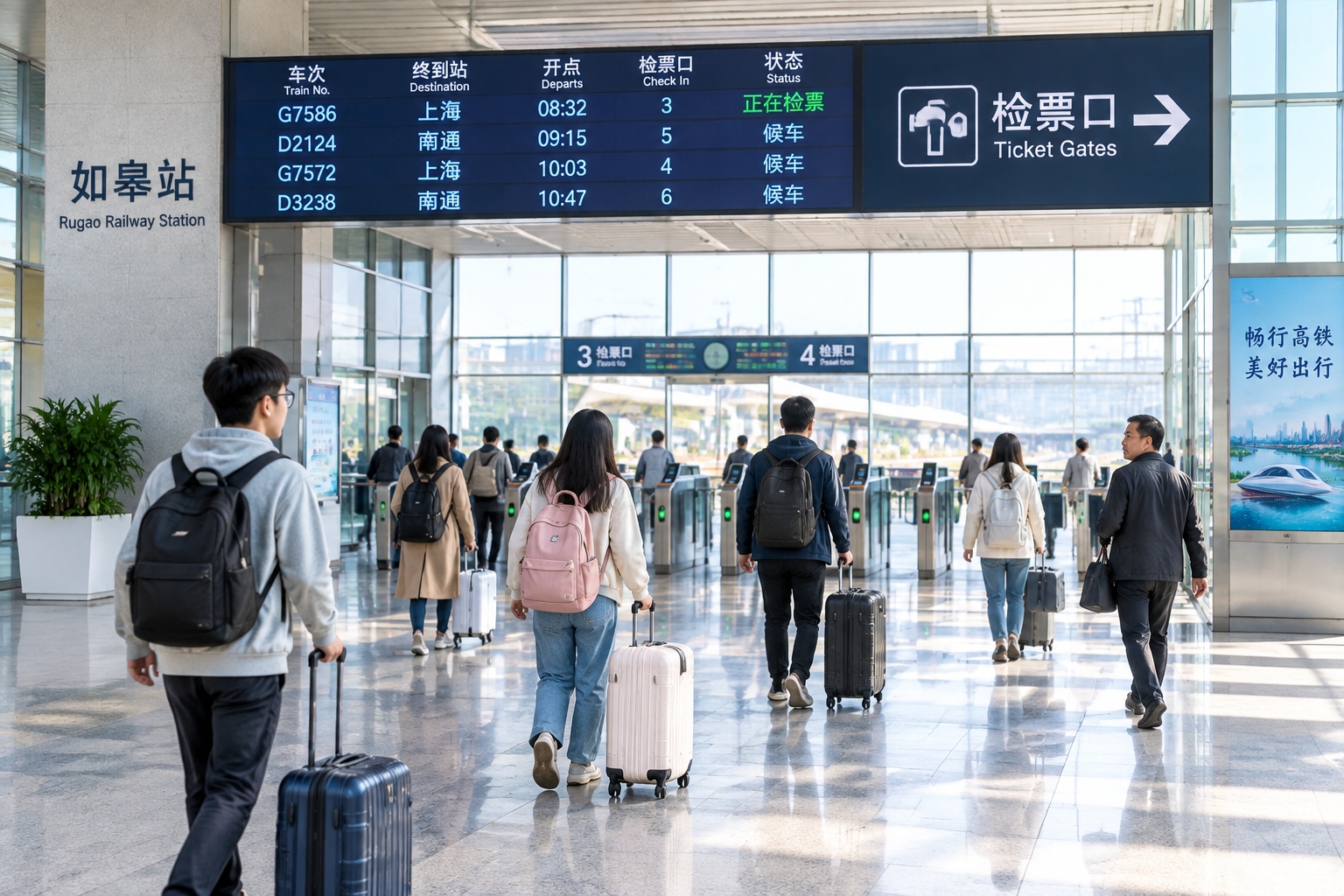
Freight matters too. The line carries goods as well as people, which pulls trucks off road crossings that were already congested. And there is a quieter kind of traffic: parents visiting children who moved south for work, patients travelling to Shanghai hospitals, students going home for the holidays, and Shanghai residents heading the other way for Nantong seafood and the hot springs outside the city.
The bridge is a link, not a monument
It is easy to treat a record-breaking bridge as a standalone achievement. In practice it is a component. The Husutong line forms part of the coastal corridor in China’s railway plan, pointing north towards Yancheng, Lianyungang and eventually the Shandong peninsula. Its lower deck already has two spare tracks carrying nothing yet, reserved for traffic that does not exist — a standard move in Chinese infrastructure, and the reason a bridge can absorb growth instead of immediately becoming a bottleneck.
The larger frame is the Yangtze River Delta: Shanghai plus Jiangsu, Zhejiang and Anhui, home to roughly one-sixth of China’s population and about a quarter of its economic output. In this region, the Yangtze has long functioned as a practical border. Cities on the north bank — Nantong above all — were cheaper, less connected and widely considered a step behind. Nantong’s GDP passed one trillion yuan in 2020, the year the bridge opened, joining a group of roughly twenty Chinese cities at that level. Growth has many causes, but a river crossing that turns four hours into one is among the more tangible ones.
What the bridge does not fix
The limits deserve equal precision. “One hour” is station to station, and Nantong West Station is not downtown; a door-to-door journey is longer. Tickets cost money, and daily commuting only adds up for people with Shanghai salaries or flexible schedules. Holiday congestion on the highway deck is still real, and the new bridge did not so much remove traffic from older crossings as redistribute it.
A bridge also does not transfer hospitals, universities or wages. Nantong’s property market moved when the line opened, as markets do, but the deeper question — whether a north-bank city can keep its skilled young people rather than export them — depends on jobs and schools, not on a 1,092-metre span.
The measure of good infrastructure
There is a particular moment in the life of any large public project when it stops being news and simply becomes background. The Husutong bridge reached that point quickly. On the morning trains, the few minutes over the Yangtze pass without comment.
That is the most useful way for an outside observer to read it. The achievement is not the record statistic, though the record is real. It is that a river which once organised daily life in Jiangsu — who could take which job, where children went to school, how fast a factory could ship — has quietly become something a commuter crosses while checking email.
Start the discussion at forum.chinacomes.com