

A morning at the ship lock in Yichang
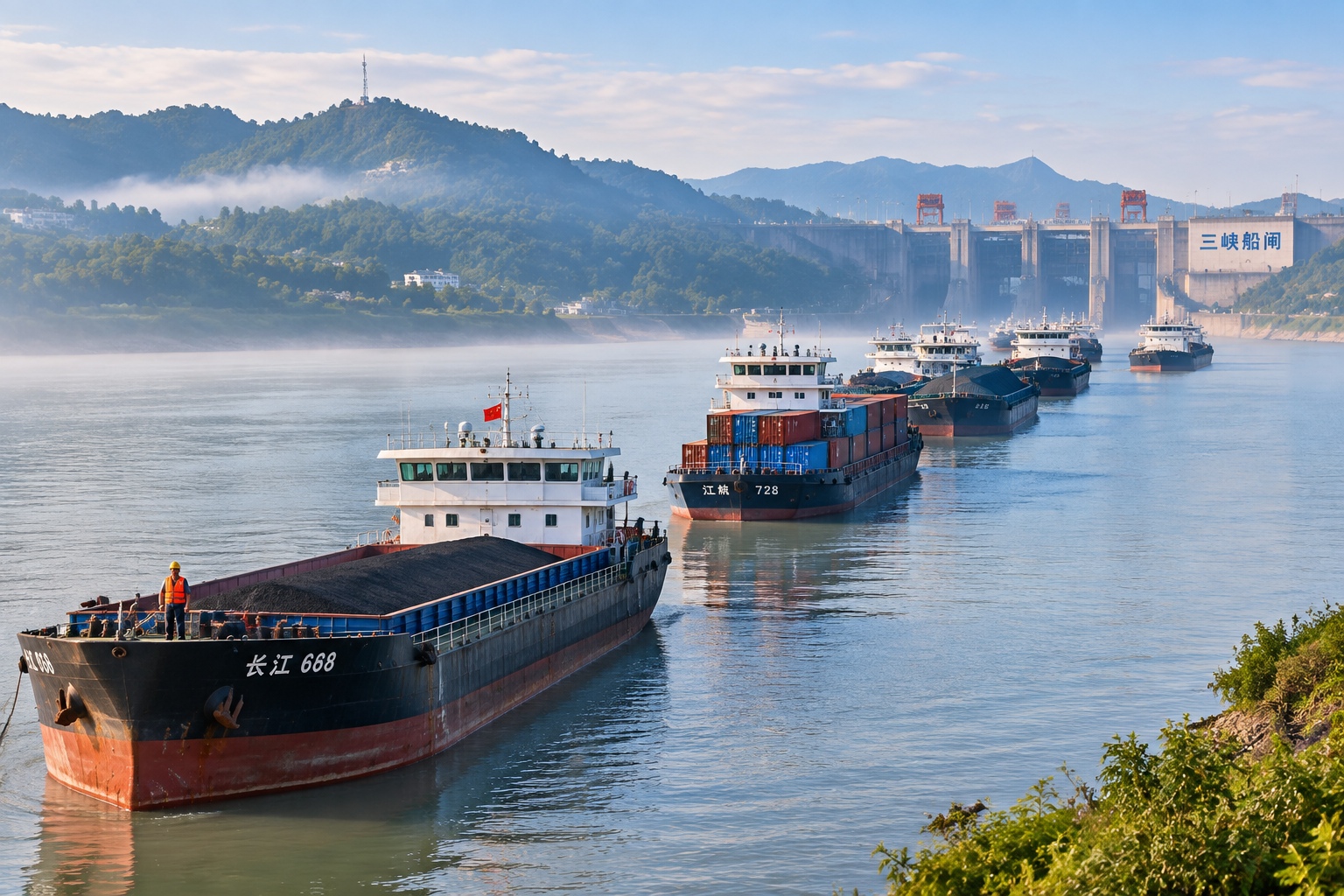
Shortly after 6 a.m., the upstream approach to the Three Gorges ship lock is already crowded. Bulk carriers loaded with gravel and coal, container barges, car carriers and a couple of tankers sit in a loose line, engines idling, waiting for their slot. Over the next few hours each vessel will be guided into a concrete chamber with a few others, tied to floating bollards, and lifted or lowered about 113 metres — the height of a 35-storey building — in five steps.
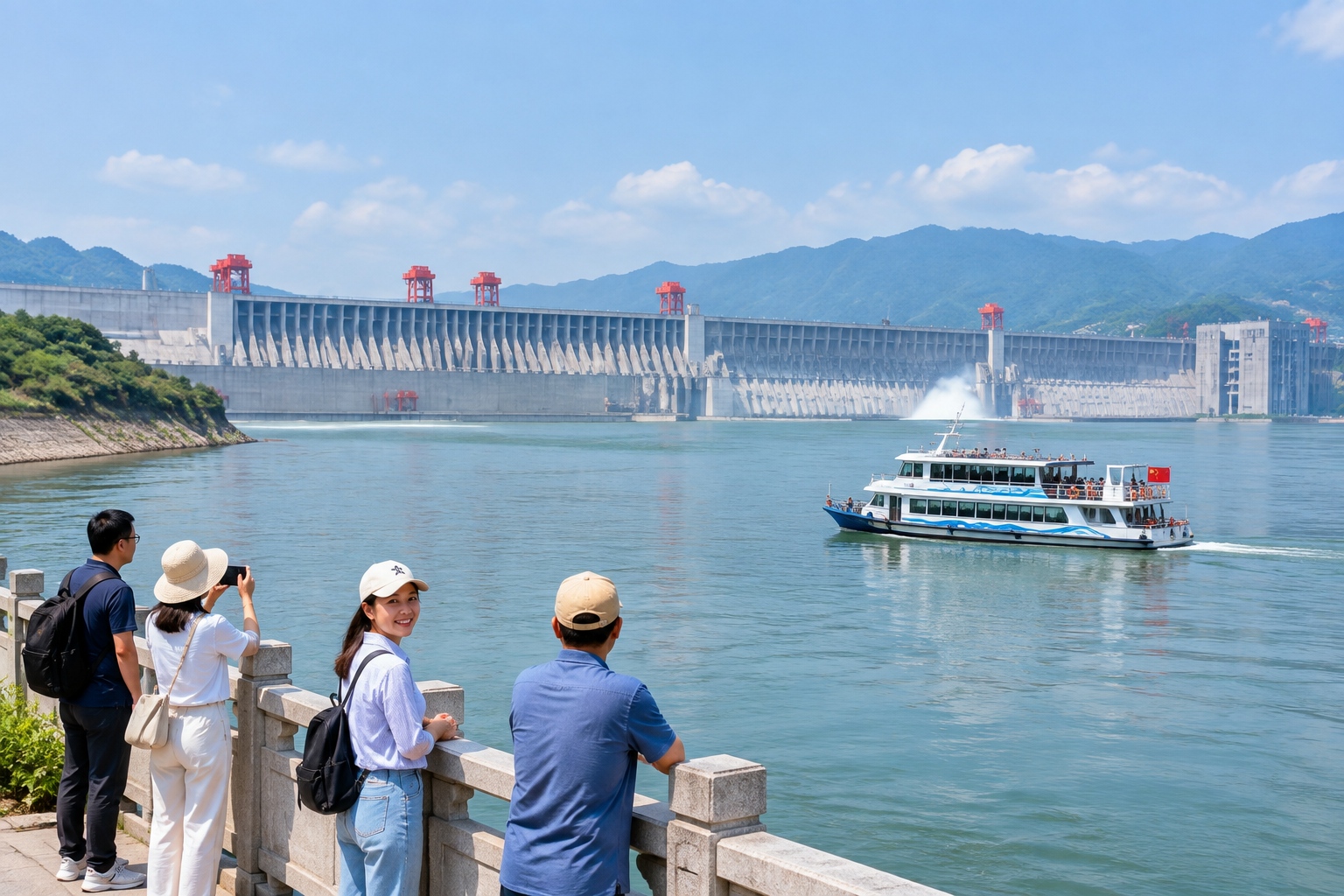
That staircase of water is the least photographed part of the Three Gorges Project, and the part that thousands of people along the Yangtze deal with every day. The dam itself is what the world has seen: 2,309 metres of concrete curving across the river at Sandouping, in Hubei province. What it actually does — hold back floods, generate electricity, move ships — becomes clearer when you follow the water and the wires rather than the photographs.
The project in numbers
The Chinese government approved the project in 1992, after a debate that had been running since the 1910s. Construction began in 1994, the reservoir started filling in 2003, and the last of the main turbines went into service in 2012. A vertical ship lift for smaller vessels opened in 2016.
Some figures are worth keeping in your head, because almost every argument about the dam comes back to them:
- Dam: 2,309 metres long and 185 metres tall, at Sandouping near Yichang, Hubei province.
- Reservoir: normal water level of 175 metres above sea level, with roughly 39.3 billion cubic metres of total storage, of which about 22.15 billion cubic metres is kept empty for flood control.
- Power: 32 main turbines of 700 megawatts each plus two smaller units — 22.5 gigawatts of installed capacity, the largest of any power station in the world. Typical annual output is 90–100 terawatt hours; the record was about 112 TWh in 2020.
- Navigation: a five-chamber lock on the north side of the dam with a total lift of 113 metres, plus a separate vertical ship lift.
- People: roughly 1.3 million residents were relocated, most of them in Chongqing municipality and Hubei province.
For scale: 100 TWh is about a third of all the electricity the United Kingdom uses in a year. That output is not stored in the dam. It goes into the grid the moment it is generated.
Flood control: the reservoir is emptied before the water arrives
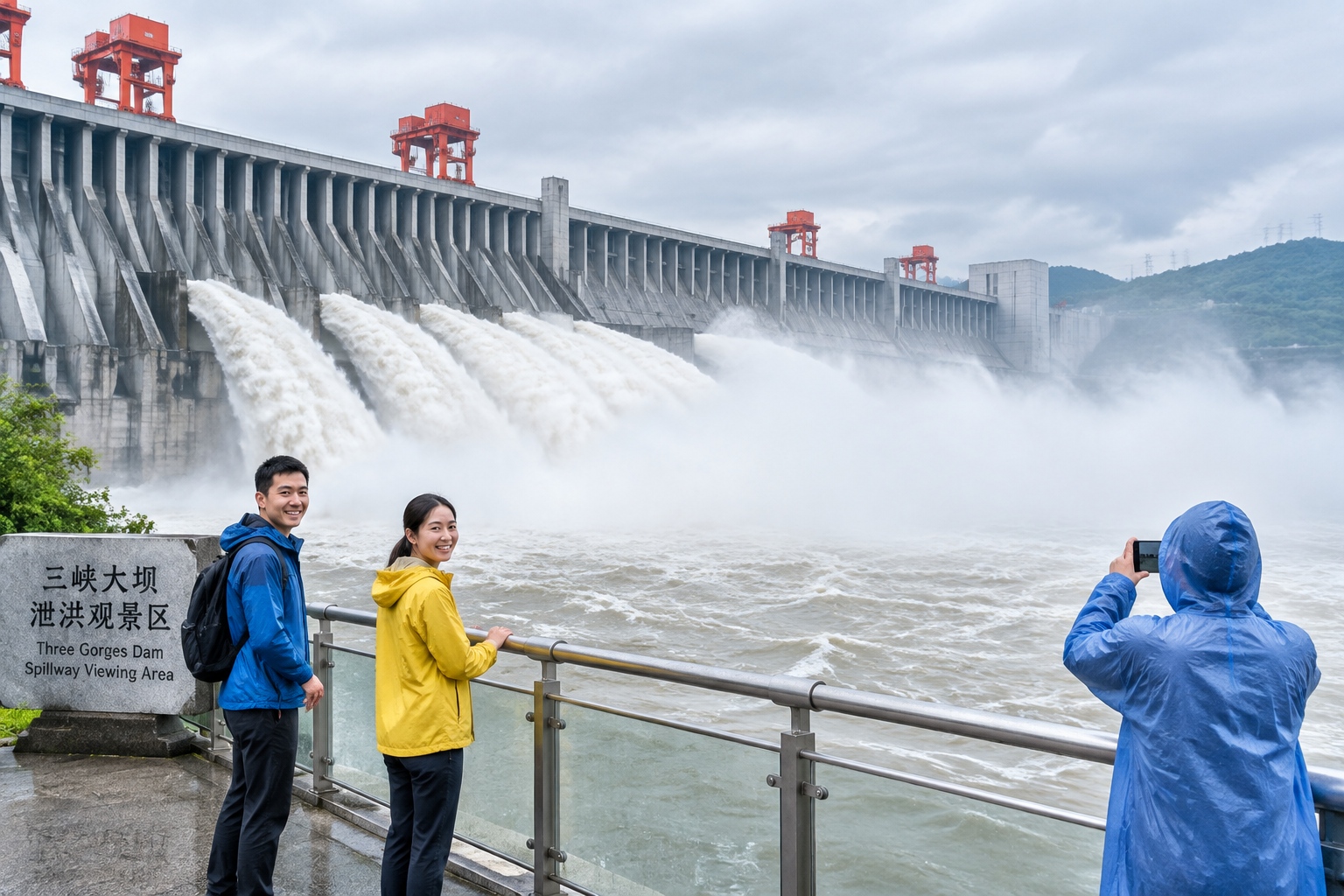
The most common misunderstanding about the Three Gorges reservoir is that it fills up during a flood and stays full. In practice, the opposite is true. Every year, from around January to early June, the operators release water to bring the reservoir down from 175 metres to the flood-control level of 145 metres. That drawdown creates the empty space — those 22 billion cubic metres — that a flood peak can be absorbed into.
When a peak arrives, the dam does not try to stop the flood. It stretches it out. Inflow is stored while outflow is released at a rate the downstream cities can handle, then released more slowly again after the peak has passed.
The stretch that matters most is the Jingjiang reach, the low-lying land between Yichang and Yueyang, where the river drops onto the plains and has historically broken through its banks. Before the dam, that section was protected against roughly a once-in-ten-years flood. With the reservoir in place, engineers put the standard at a once-in-a-hundred-years flood, and at once-in-a-thousand-years when the flood diversion areas are also used.
The 2020 flood season was the clearest recent test. On 20 August 2020, inflow to the reservoir peaked at 75,000 cubic metres per second. Outflow was held to about 49,000 — cutting the peak by roughly a third as it moved toward Wuhan and the rice and cotton country below. That was still a severe flood year in the middle and lower Yangtze: heavy rain fell on the basin below the dam and around Poyang Lake, and no dam can reach that rain. Flood control here is a system — embankments, diversion zones, lakes and a chain of reservoirs — and the Three Gorges is one large piece of it, not a wall that ends the problem.
Power: 22.5 gigawatts, and where the wires go
Electricity from the dam leaves Yichang on dedicated high-voltage lines. Direct-current links carry power east to Shanghai and Jiangsu, south to Guangdong, and north into central China’s grid. Together, the areas served cover roughly a third of the country’s population.
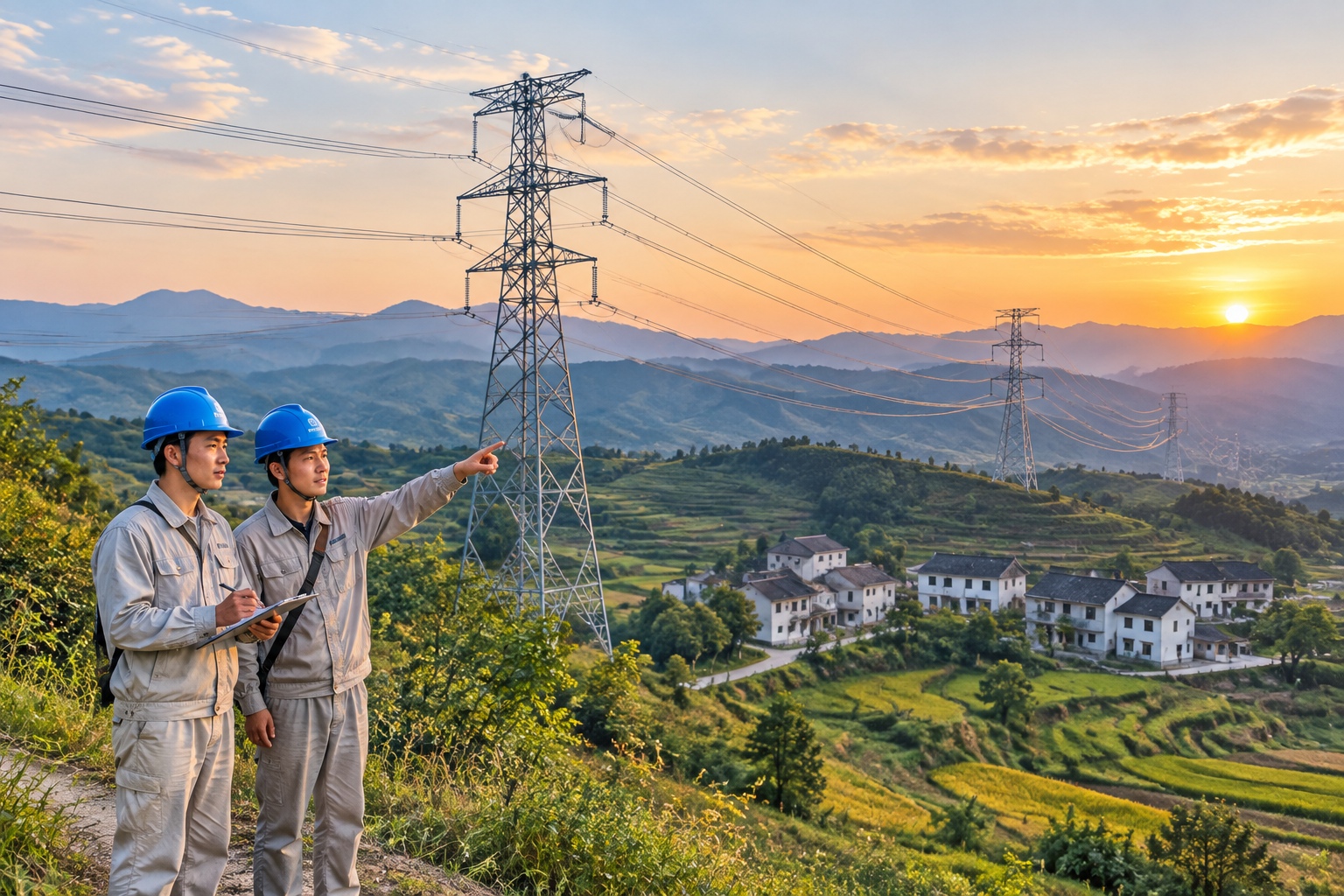
For a household, the link is indirect. Homes do not buy “Three Gorges electricity” off a shelf. The dam feeds the same grid as coal plants and wind farms, and retail prices are set by national and provincial authorities rather than by the dam. What people notice is the effect on the system: fewer summer brownouts than in the 1990s, when factories in Guangdong and Zhejiang were told to shut down on rotation, and a grid that can shift power from the hydropower-rich west to the coastal east.
There is a second, less discussed job. Hydro turbines can change output within minutes, which makes the dam useful for balancing wind and solar farms whose output rises and falls with the weather. On a windy night in Gansu or a cloudy afternoon in Jiangsu, the Three Gorges is one of the things that keeps the grid frequency steady.
On emissions, the operator, China Three Gorges Corporation, estimates that the project displaces roughly 30–50 million tonnes of coal a year, and the carbon dioxide that would come with it. Some independent researchers argue the climate benefit is smaller than headline figures suggest, because reservoirs also release methane as flooded vegetation decomposes in the first years. Both estimates appear in the literature. What is not in dispute is that the dam is a very large, very cheap source of low-carbon power that will keep running for a century.
Shipping: a staircase and an elevator for the river
Before the dam, the upper Yangtze above Yichang was shallow, fast and dangerous. A 1,000-tonne vessel counted as large, and insurance rates reflected the risk. The reservoir raised water depths for hundreds of kilometres upstream, and the locks made the passage routine. Chongqing, about 660 kilometres upstream, became a working river port for containers.
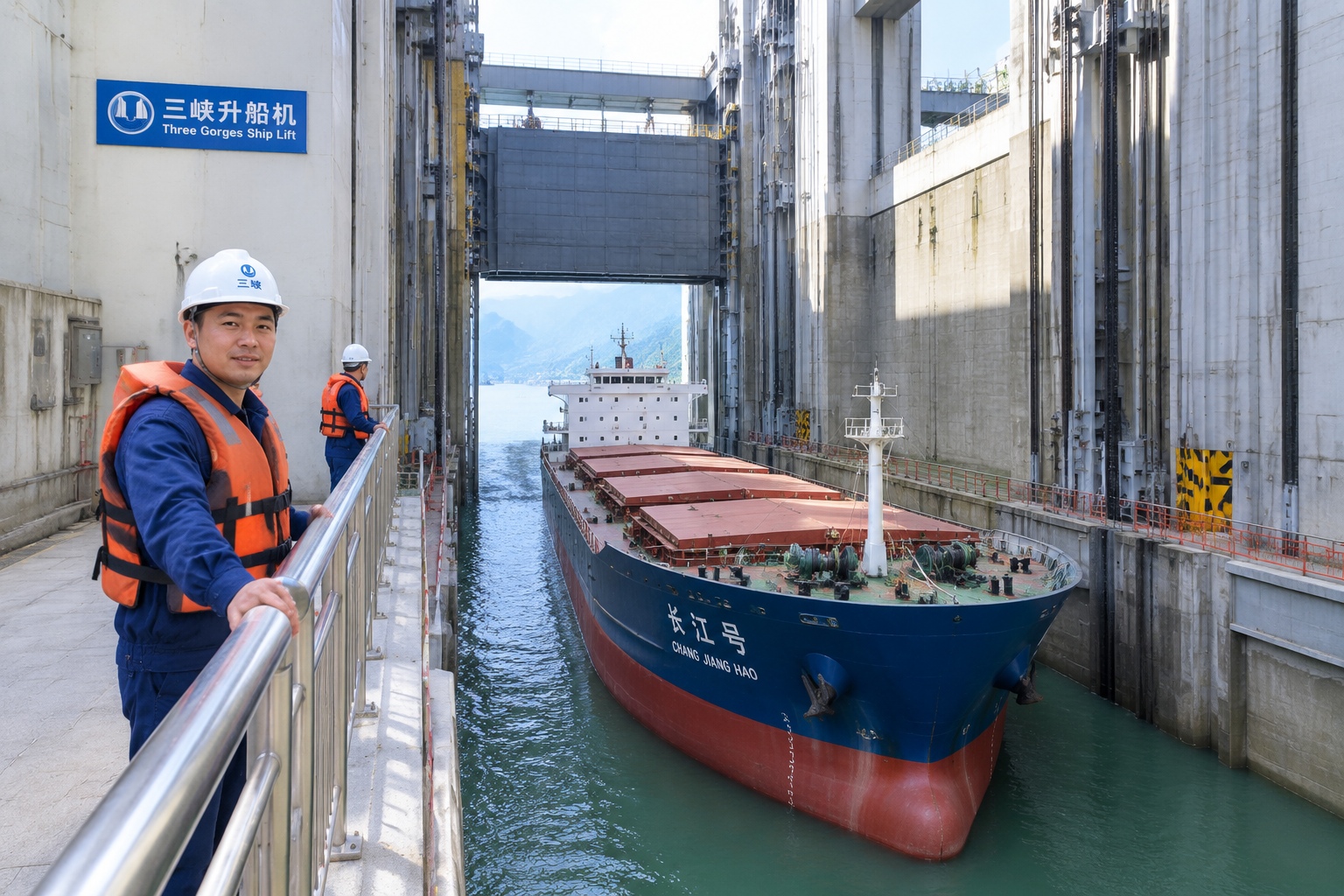
The five chambers on the north side of the dam work like a staircase. Each chamber is 280 metres long, 34 metres wide and 5 metres deep — big enough to hold several vessels at once. A ship enters, the gate closes, and the chamber fills or drains until the water level matches the next step. The whole climb takes about three to four hours.
Smaller vessels can take the elevator instead. Since 2016, the vertical ship lift has raised and lowered ships of up to 3,000 tonnes in a single movement, in about 40 minutes, inside a caisson that travels up the face of the dam. It is the largest and heaviest ship lift in the world, and it was built mainly for the many small cargo ships and tourist boats that were clogging the lock queues.
Those queues have not disappeared. Cumulative cargo passing through the locks passed 2 billion tonnes in 2023, and annual volumes now run at roughly 150–170 million tonnes, close to the design ceiling. In peak season, ships can wait a day or two for a slot. A second lock or a larger ship lift has been discussed for years; so far the answer has been better scheduling and letting the lift handle more traffic.
The questions that have not gone away
Three issues have followed the project since construction began, and they still shape how it is managed.
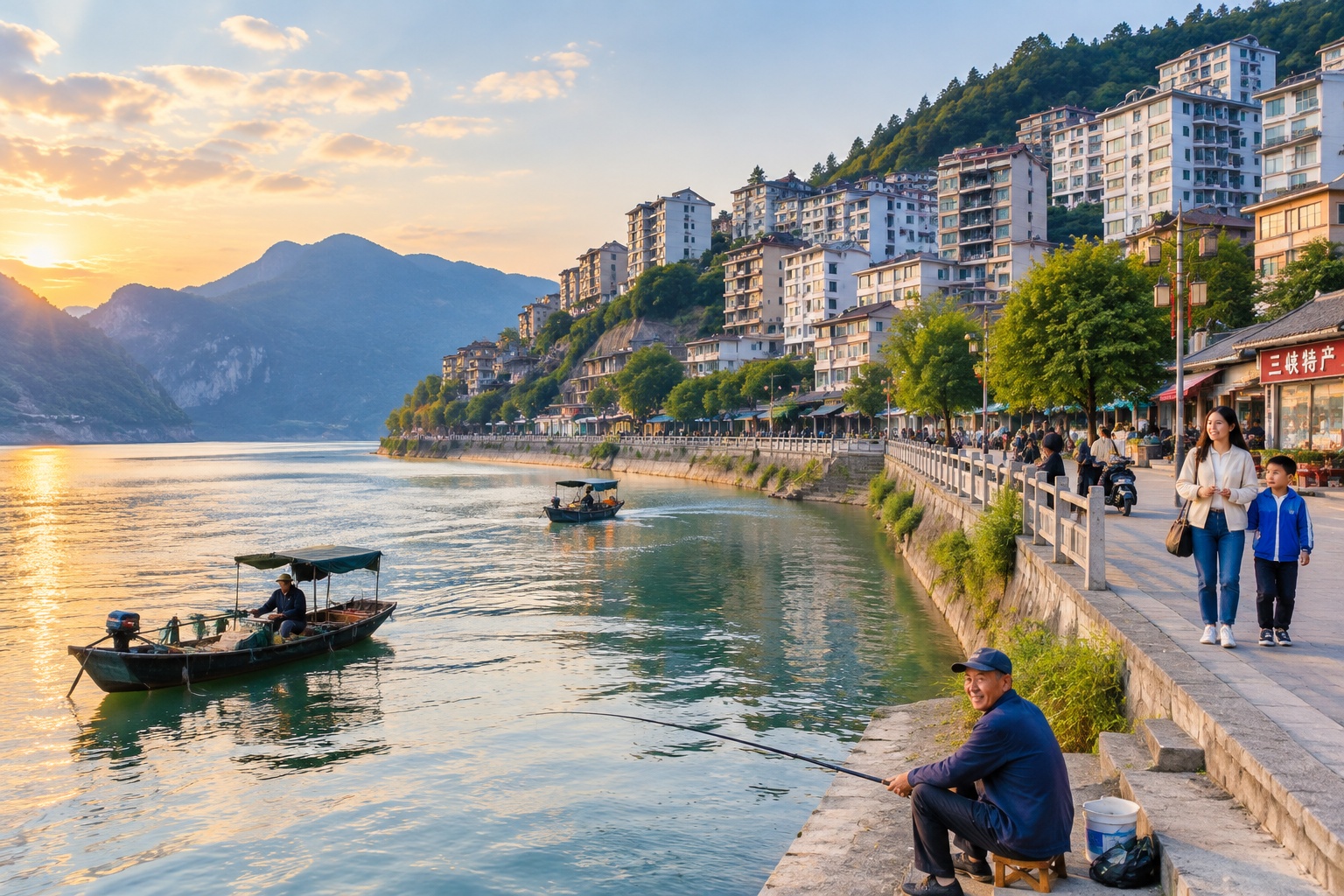
Resettlement. About 1.3 million people moved — the largest peacetime relocation in modern history. Most were resettled nearby on higher ground and given new housing; some were moved to other provinces. Towns such as Badong and Zigui were rebuilt above the new waterline. The hardest part was not the housing but the farmland. People who lost fields and orchards had to find work in towns, in tourism, or on the water. A 2011 government audit found misuse of resettlement funds, and follow-up programmes for the later stage of resettlement have continued for two decades.
Sediment. Every dam on a silty river eventually silts up, and engineers in the 1990s projected that the Three Gorges reservoir would lose a significant share of its storage within decades. The actual numbers have been better than expected, largely because the dams built upstream — Xiluodu, Xiangjiaba, Wudongde and Baihetan — now trap much of the sediment, and because reforestation in the upper basin reduced erosion. Downstream of the dam the water is now “hungry”: it carries little sediment, so it scours the riverbed, which lowers water levels and can weaken embankments. This is monitored and partly offset by bank protection works.
Ecology. The dam cut a migration route. Natural spawning of Chinese sturgeon below the dam has largely stopped, and the species is now sustained by hatcheries; the Baiji dolphin, a Yangtze resident, was declared functionally extinct in 2006. Since 2011, the operators have run “ecological operation” experiments, releasing artificial flood pulses in late spring to trigger spawning among the four major species of Chinese carp in the middle Yangtze. In 2021, a ten-year fishing ban took effect along the whole river — an admission that its fish stocks needed a decade without nets.
Who runs it today
The dam is operated by China Three Gorges Corporation, a state-owned company that now also runs the giant Baihetan and Wudongde stations upstream. Flood-control decisions are not made by the company alone. The Yangtze River Commission, under the Ministry of Water Resources, coordinates the six large reservoirs on the upper Yangtze as a single system, deciding which one holds water and which one releases, based on forecasts for the whole basin. The Yangtze River Protection Law, in force since March 2021, wrote basin-wide coordination and ecological protection into law.
That is probably the right way to see the Three Gorges Project today: not a finished monument but a machine that is adjusted every year — emptied each spring, refilled each autumn, watched for sediment, fish and the towns rebuilt above the water. The people who understand it best are not the ones photographing it from the viewing platform. They are the ones waiting at the lock at six in the morning.
Start the discussion at forum.chinacomes.com