
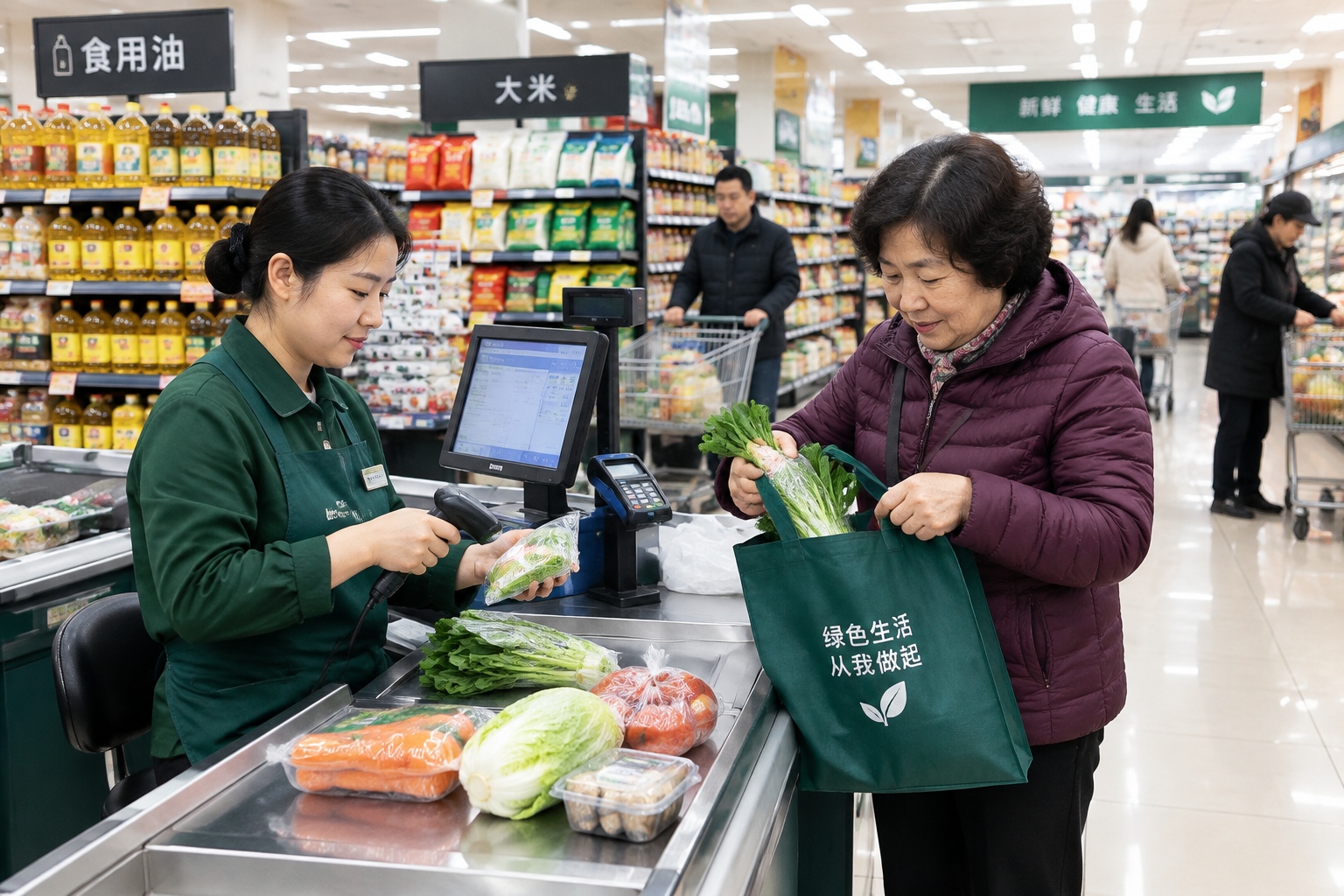

A supermarket where the cashiers sit down
In most Chinese supermarkets, cashiers stand through an eight-hour shift. At the Pang Dong Lai store in Xuchang, a mid-sized city in central Henan province, they sit. The chain closes every one of its stores on Tuesdays so staff can rest. An employee who gets shouted at by a customer can claim what the company calls a grievance bonus.
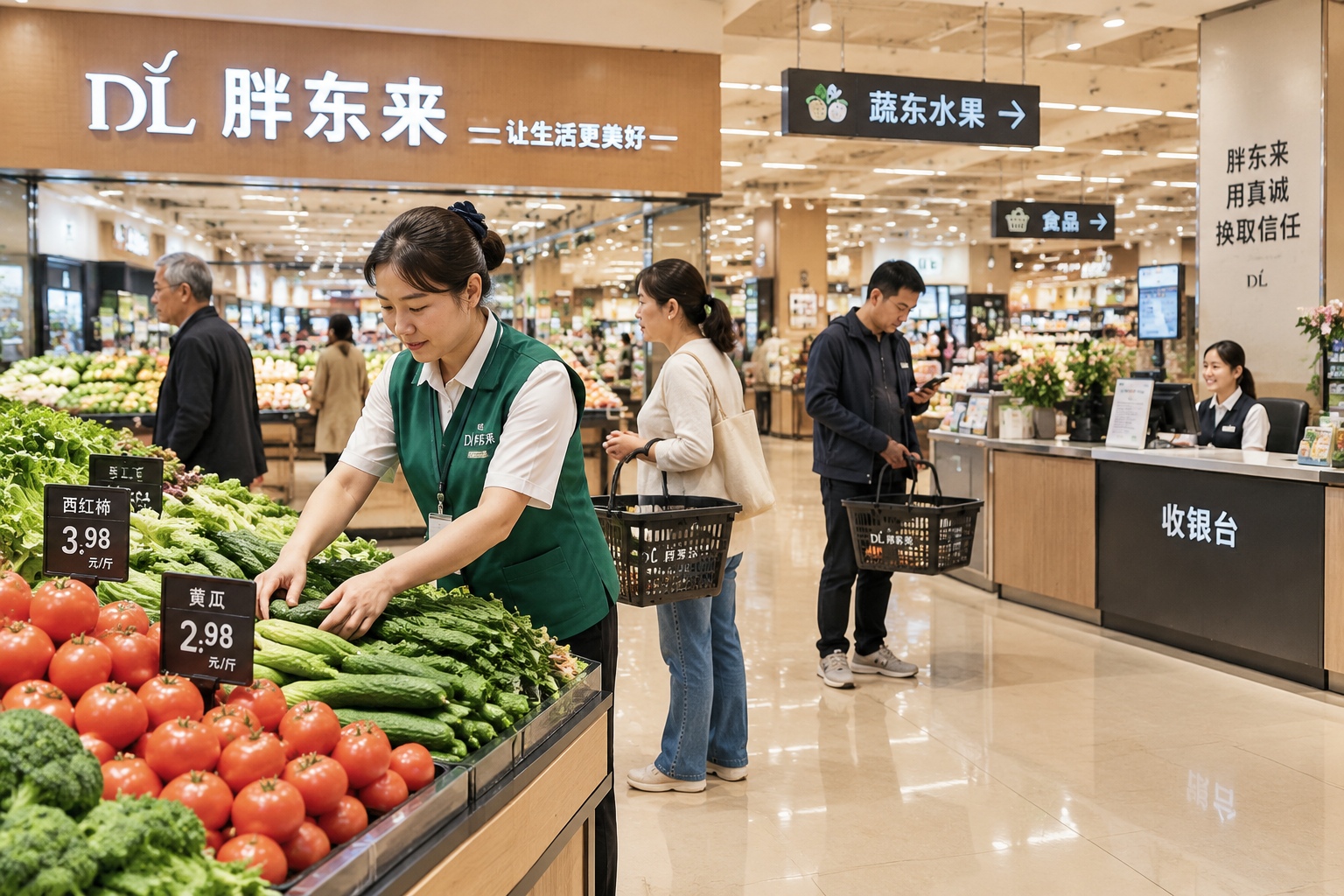
Those are the details that turned Pang Dong Lai into a national curiosity in 2024, when clips of its food hall and staff canteen spread across Chinese social media and tourists began treating a supermarket in a city of about 4.4 million people as a travel destination. The more consequential story, though, is one step up the supply chain, in clauses most shoppers never see.
What the supplier rules actually say
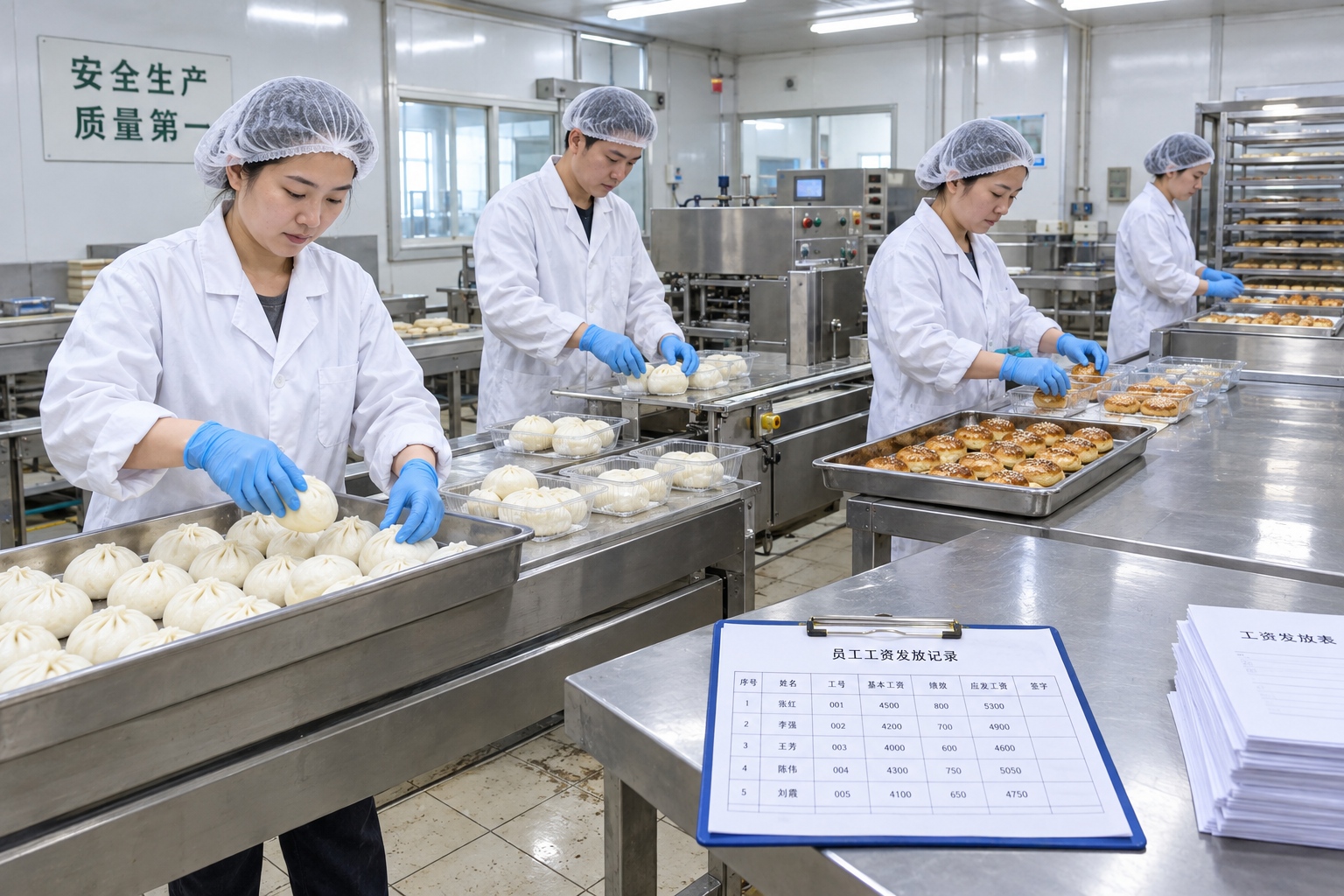
According to Chinese business media reports, Pang Dong Lai has been tightening the terms it imposes on the companies that make its private-label food, baked goods, packaged snacks, textiles and household goods. The core requirements are unremarkable on paper and unusual in practice:
- Every worker on the Pang Dong Lai account must be enrolled in social insurance — the five statutory insurances plus the housing fund that Chinese law requires, and that many smaller suppliers underpay or skip.
- Staff get two rest days a week, and working hours stay inside legal limits: a 40-hour week, with overtime capped at 36 hours a month under Chinese labor law.
- The retailer checks. Not once at signing, but periodically — payroll records, social insurance payment receipts, attendance and shift data. Suppliers that fail and do not fix it reportedly face termination of the contract.
For readers outside China, social insurance is worth unpacking. It is not a private perk. It is a statutory contribution covering pension, medical, unemployment, work-injury and maternity insurance, plus a housing fund, usually split between employer and employee. It is also the single most contested cost item in Chinese employment. A factory that pays it in full adds a meaningful percentage to its labor bill. A factory that does not can undercut a competitor by that same percentage. That gap is why enforcement has always been uneven, especially among the small and mid-sized suppliers that fill supermarket shelves.
The two-day weekend is the other half of the story. In Chinese white-collar offices, a Saturday and Sunday weekend — shuangxiu — is normal. On factory floors, in logistics, in restaurants and in small workshops, one day off, or none, is still common. Writing two rest days into a purchase contract reaches a part of the labor market that labor inspections rarely touch.
Why a supermarket can dictate labor terms
Pang Dong Lai is not a national chain. It runs roughly a dozen stores, all in Xuchang and nearby Xinxiang. It employs more than 10,000 people. Its 2024 sales came in at just under 17 billion yuan, about 2.3 billion US dollars — revenue in the same bracket as chains with hundreds of outlets, because individual Pang Dong Lai stores do extraordinary volume.
That volume is the leverage. For a food processor or a garment workshop in Henan, a Pang Dong Lai order can be the difference between running one shift and running three. The chain also pays suppliers quickly and does not lean on the slotting fees and rebates that dominate Chinese retail, which makes its contracts unusually attractive and its conditions unusually hard to refuse.
The internal logic runs the same way. Pang Dong Lai pays store staff well above the local retail average, grants long paid leave and shuts on Tuesdays. Management’s public argument is blunt: rested, secure employees sell better. Extending a version of that standard to suppliers is a way of making sure the product on the shelf is not cheap because somebody else’s workers were squeezed.
The uncomfortable part: someone pays for it
The rule is easy to applaud and harder to operate. A Henan snack manufacturer with 200 workers that has been paying social insurance on a partial base faces a real cost increase; for many small manufacturers, full compliance means a rise of roughly 5 to 10 percent in total costs, sometimes more. Some suppliers will decline the contract and keep selling to buyers who do not ask. Others will comply and then push back on price. Supermarket margins in China are thin, so part of that cost eventually surfaces on the shelf.
There is a measurement problem too. Auditing social insurance compliance at a large factory is doable. Auditing it at a 30-person workshop that supplies packaging on a seasonal basis is a paperwork nightmare, and third-party labor agencies — the companies that supply temporary workers — are the hardest part of any Chinese supply chain to see into.
Pang Dong Lai has not published a full audit methodology, and it does not release a list of suppliers it has dropped. The strongest claim that can be made is therefore a limited one: a retailer with real purchasing power is putting labor standards into commercial contracts and acting on them, in a market where that has been rare.
It is not only one company
Context matters here. In 2025, some of China’s largest employers started moving in the same direction, partly because regulators and courts pushed them. On September 1, 2025, a judicial interpretation from the Supreme People’s Court took effect: any agreement in which a worker voluntarily gives up social insurance is void, and employers can be held liable for unpaid contributions plus penalties. That closed a loophole millions of small firms had been using.
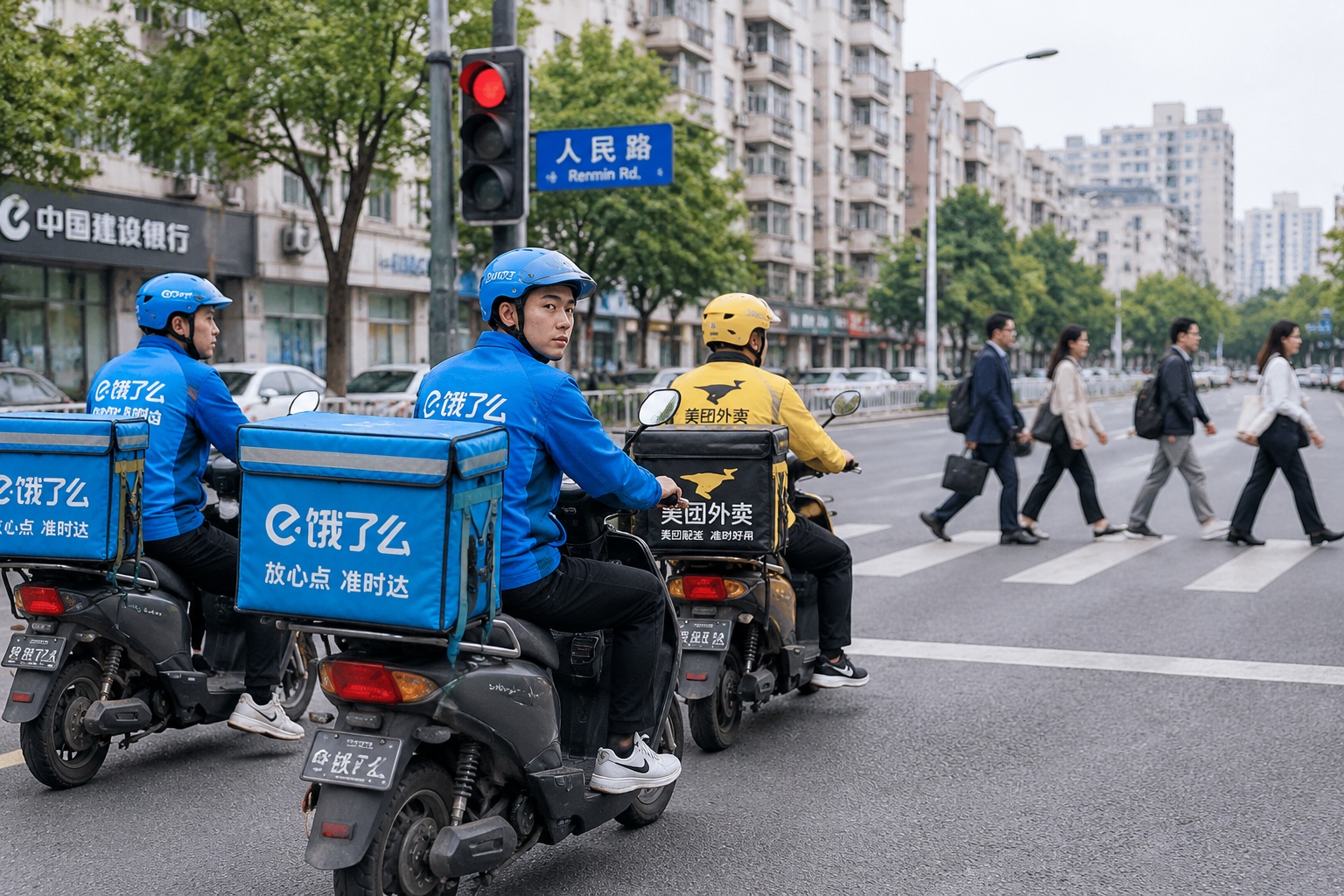
In the same year, JD.com said it would pay social insurance for its full-time delivery riders, and Meituan announced a plan to extend coverage to full-time and long-serving part-time riders — a change touching hundreds of thousands of people in the gig economy. Manufacturers went after overtime instead: drone maker DJI told staff to stop working after 9 p.m., and home-appliance giant Midea reportedly requires office employees to leave by 6:20 p.m. Beijing has its own framing for this, an anti-involution campaign aimed at ending the price wars and endless hours that have been grinding down margins and workers at the same time.
Export pressure pushes the same way. European rules on supply chain due diligence and forced labor, and the scrutiny aimed at Chinese-made goods sold through platforms such as Shein and Temu, have turned labor documentation into a commercial requirement rather than a moral one for any supplier that also sells abroad.
What to watch next
Three things will decide whether this becomes a template or stays a marketing halo.
First, scale. A dozen stores can supervise a supplier base closely. A chain with 300 stores cannot do it the same way; it needs a standardized audit, published standards and consequences that survive the departure of a charismatic founder. Yu Donglai, who built Pang Dong Lai from a single tobacco-and-snacks shop in 1995, is 59 and has spoken publicly about succession and stepping back.
Second, transparency. So far, most details of the supplier code have reached the public through leaks to Chinese media and supplier chatter. Published criteria, an audit checklist and a list of terminated contracts would turn a good story into a system other retailers could copy.
Third, whether the math holds. High labor standards, low prices and rapid growth is a combination that has broken a lot of companies. Pang Dong Lai’s answer has been to stay small and dense instead of expanding, which is exactly what makes its supplier rules enforceable — and exactly what makes them hard to export.
Still, the direction is worth noticing. For two decades, the standard advice to a Chinese supplier was to cut costs faster than the factory down the road. Now one of the country’s most admired retailers is handing out contracts that say the opposite, and shoppers in Xuchang are buying the results every day of the week except Tuesday.
Start the discussion at forum.chinacomes.com