

A Tuesday Morning in Chengdu’s People’s Park
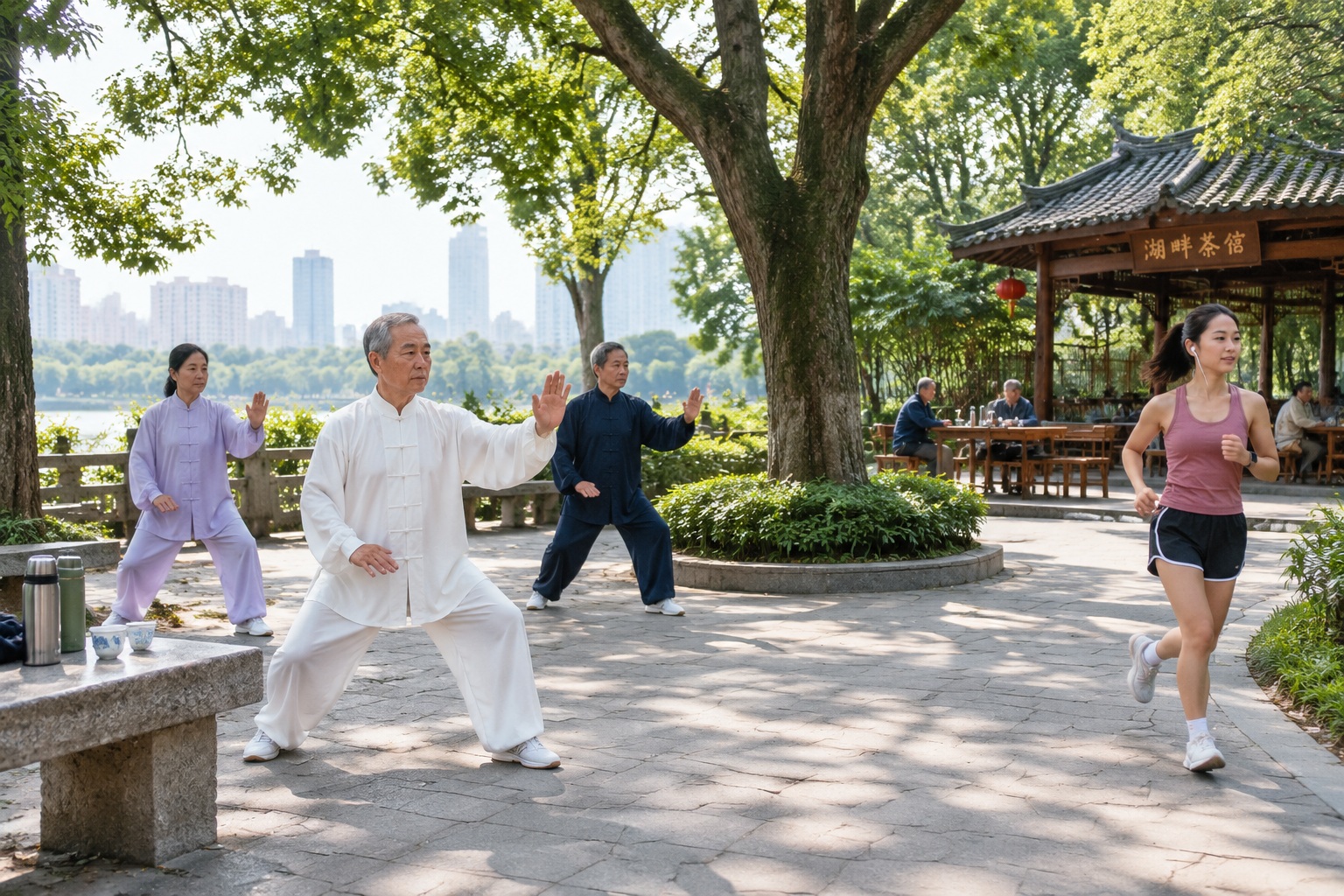
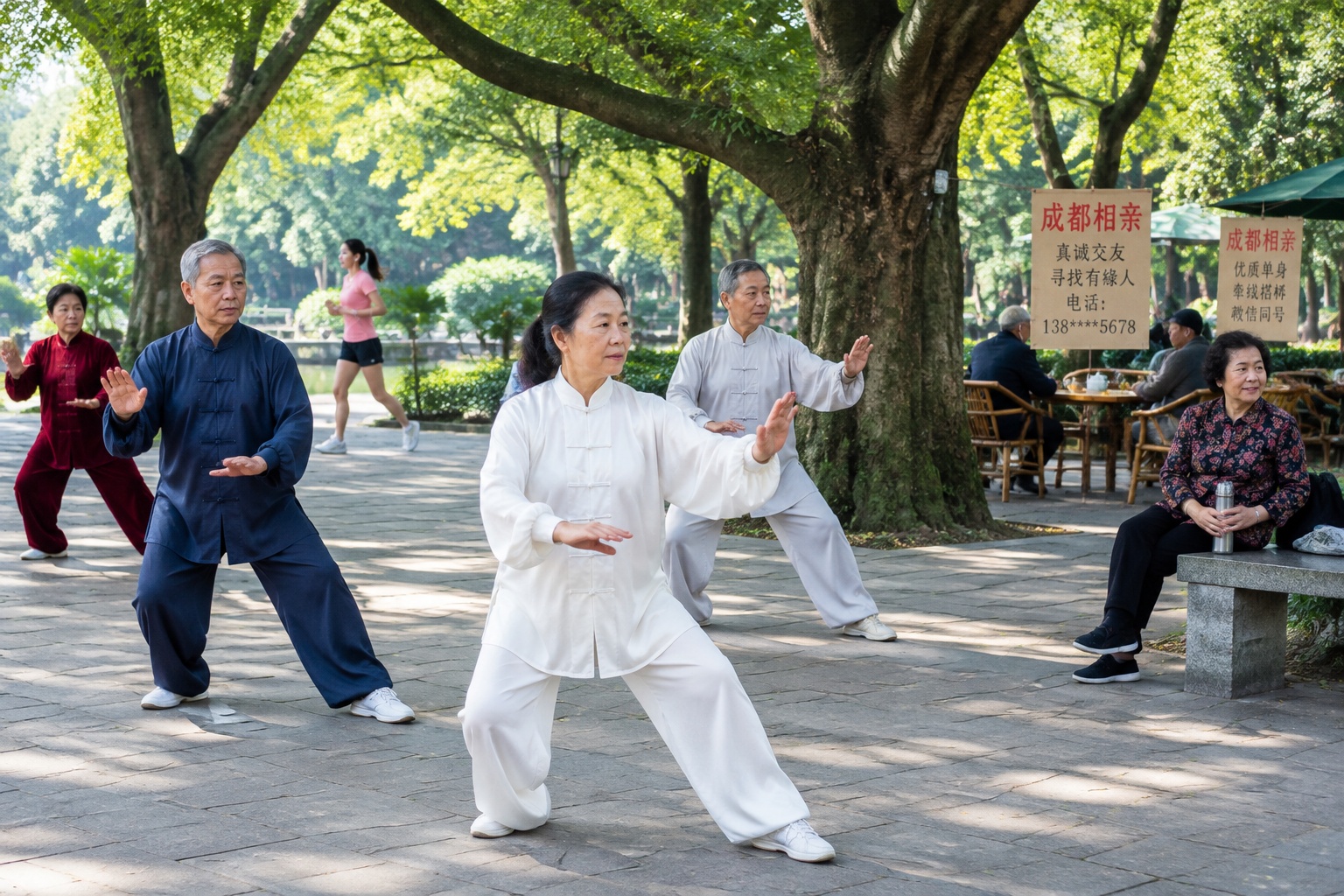
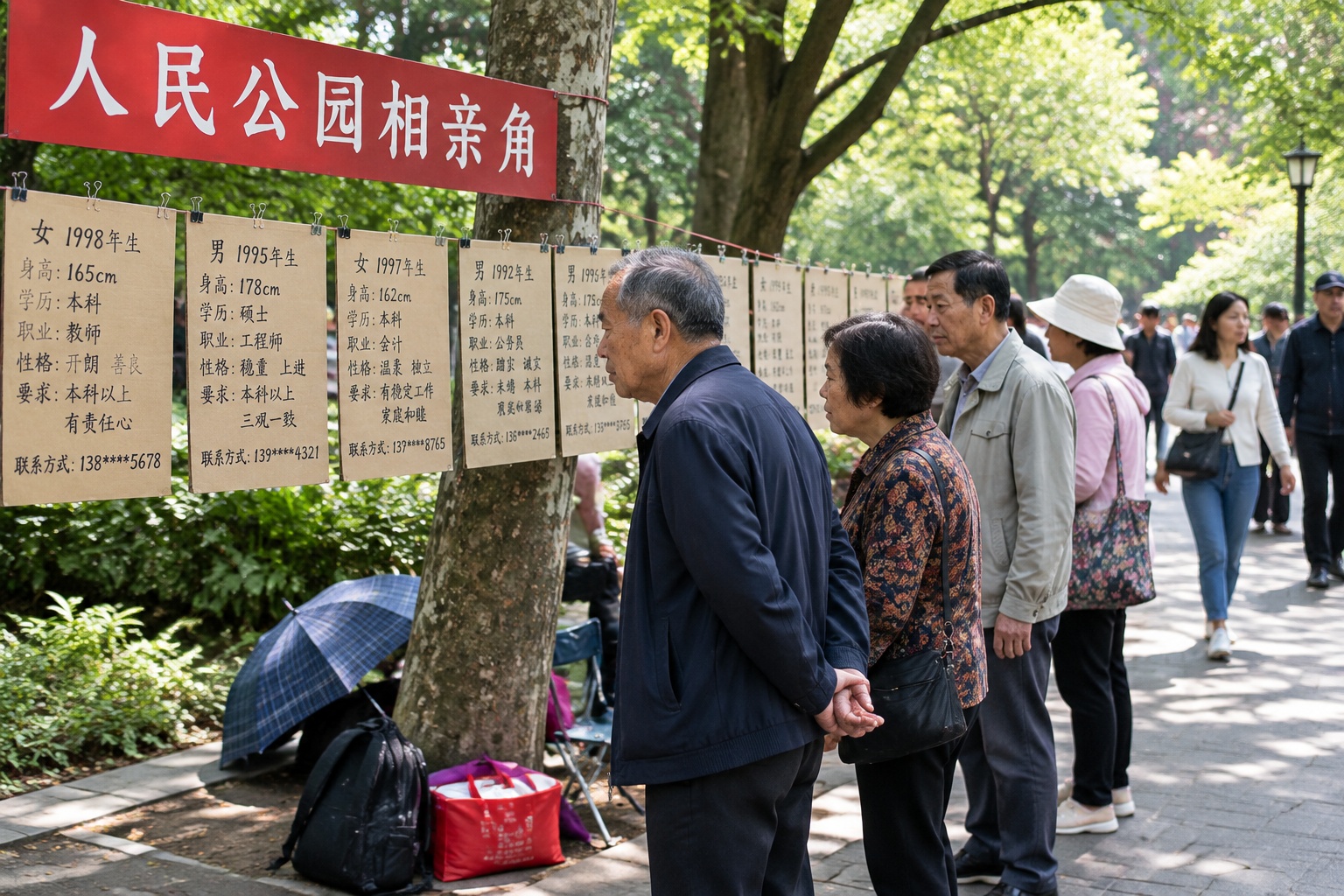
At 6:40 a.m., Chengdu’s People’s Park is already full of small negotiations. A retired factory worker named Li Wei sets her thermos on a stone bench and joins a dozen people doing tai chi under the camphor trees. A few meters away, a 24-year-old in running shoes loops around the pond, earbuds in. By 8 a.m., parents have begun unfolding cardboard signs near the north gate for the marriage market, each one listing a child’s age, height, salary, and apartment status. At Heming Teahouse, waiters carry thermoses of jasmine tea to tables that have been occupied since the 1920s. Nobody has to buy a ticket. Nobody has to buy a drink, though many do. The park is not an event. It is a habit.
For an American visitor, this can feel like a glimpse of something lost. In the United States, the phrase community is dying has moved from academic books into ordinary conversation. The surgeon general warned in 2023 that loneliness and isolation carry health risks comparable to smoking. Churches, bowling leagues, union halls, and neighborhood bars no longer anchor daily life for many people. Chinese parks do not solve every version of that problem. But they offer a working example of what social infrastructure looks like when it is free, walkable, and used by different generations at the same time.
The American Third-Place Problem
Sociologist Ray Oldenburg called cafes, pubs, libraries, and parks third places — neither home nor work. In the U.S., these places have become harder to reach. Suburban sprawl made many neighborhoods car-dependent. Private clubs, gyms, and coffee shops replaced free gathering spots. A 2023 Gallup survey found that Americans’ church membership had fallen below 50% for the first time. Volunteering rates have also declined. The result is not just sadness. The U.S. surgeon general linked social disconnection to a 29% higher risk of heart disease, a 32% higher risk of stroke, and a 50% higher risk of dementia in older adults.
American cities still have great parks. New York’s Central Park, Chicago’s Millennium Park, and Portland’s Forest Park are civic treasures. But their use is often scheduled, seasonal, or tied to an event. A weekday morning in many American parks can be quiet. The people who need company the most — retirees, freelancers, stay-at-home parents, new immigrants — may not have a reason to go. In China, the park is built into the rhythm of the day. The difference is not that Chinese people are naturally more social. It is that the public space is closer, cheaper, and more ordinary.
What a Chinese Park Actually Does
China has tens of thousands of urban parks, and most are free. Shanghai had more than 800 parks by 2023, with plans for more. Beijing, Chengdu, Guangzhou, and Shenzhen have turned riverbanks, highway edges, and old industrial land into public green space. Shenzhen, often called a city of parks, has more than 1,200. The design is rarely perfect, but the social function is broad. In the morning, parks host tai chi, badminton, ballroom dance, and chess. Around noon, retirees bring lunch and play cards. After school, grandparents watch children on slides while parents finish work. In the evening, square dancers arrive with speakers, and runners weave around them.
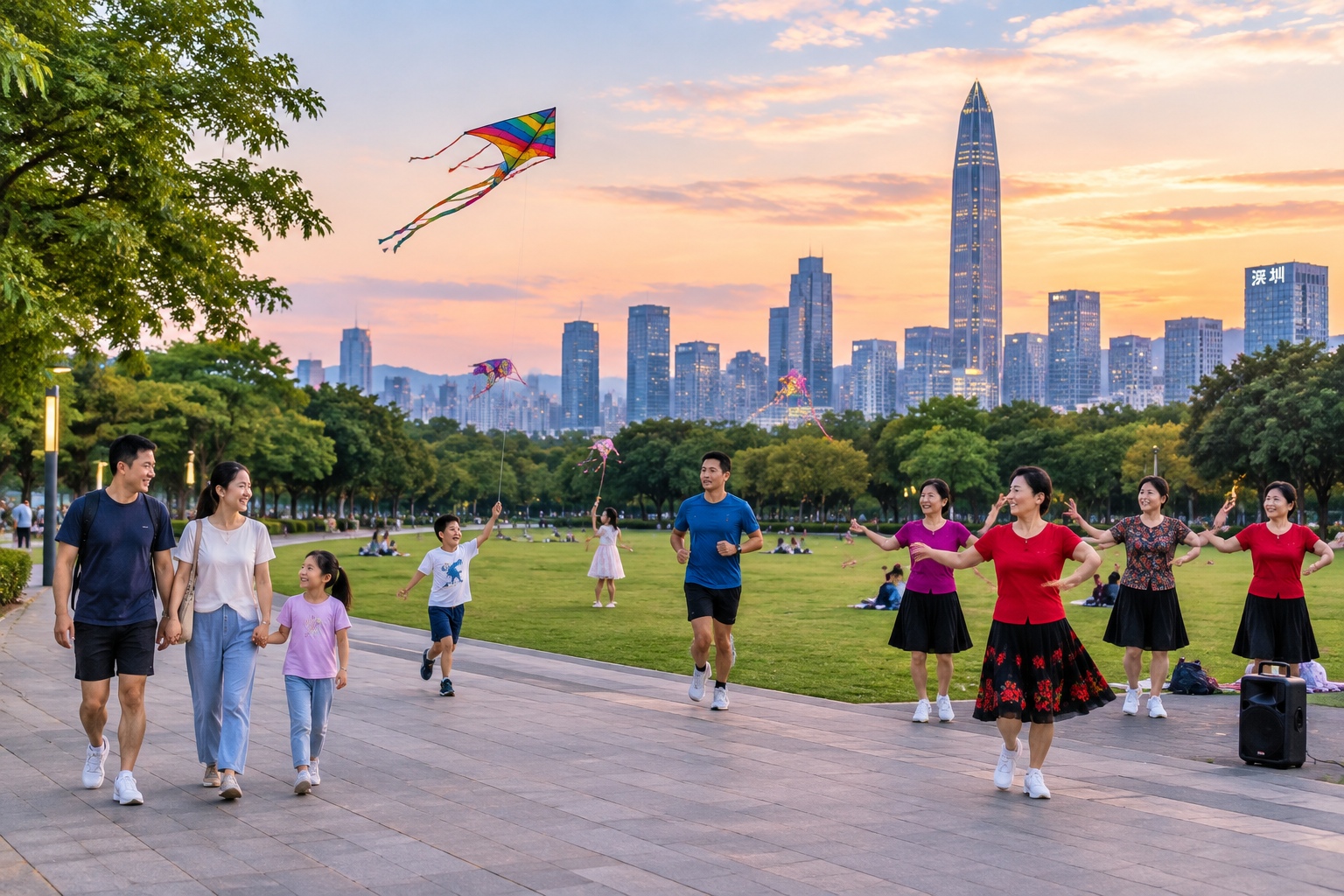
The park also works as a low-cost living room. You can sit for hours without buying anything. Public toilets, lighting, security cameras, and benches make it possible for older people to stay. Mobile payment means a bottle of water costs a few yuan and takes ten seconds. WeChat groups coordinate dance teams, hiking clubs, and parents’ meetups. The park is not a charity for lonely people. It is a piece of urban infrastructure that produces weak ties — the kind of familiar strangers who make a city feel less anonymous.
Why This Model Took Root in Chinese Cities
The explanation is partly physical. Chinese cities are dense. Most residents live in apartment buildings, often within a 10- or 15-minute walk of a park, subway station, or wet market. Streets are busy, and public transport is cheap. That density makes repeated encounters likely. In American suburbs, a retiree may need a car to reach a coffee shop. In Chengdu, she walks downstairs.
Policy matters too. Chinese city governments treat parks as public goods, not profit centers. Land is often allocated for green space even when it could be sold for housing. Park management is not always gentle — fences, rules, and security guards are common — but the entry price is usually zero. Community committees and volunteers organize some activities, especially for older residents. China’s population is aging fast: at the end of 2023, 297 million people were 60 or older, about 21% of the population. For many of them, the park is not a hobby. It is a daily appointment with other human beings.
There is also a cultural layer. Group activity is normal in Chinese public life. Dancing, singing, and exercising in public do not carry the same stigma they sometimes do in the U.S. That does not mean everyone loves it. It means the default assumption is that public space belongs to everyone, including people without money to spend.
The Friction Nobody Should Pretend Away
Chinese parks are not a utopia. Square dance noise has produced thousands of complaints in cities like Shanghai and Beijing. Younger residents sometimes resent the volume. Older dancers say they have few other places to go. Some parks feel dominated by retirees, while teenagers and young adults look for quieter corners or commercial spaces. Management can be heavy-handed, and cameras are everywhere. In winter, northern parks empty out; in the south, heat and mosquitoes shape the schedule. Not every park is safe or welcoming, especially for women at night or for people with disabilities.
There is also a limit to the comparison. The U.S. cannot simply copy Chinese parks. American cities have different land markets, tax systems, and racial and class histories. A free park in a segregated neighborhood may not create connection if people do not feel safe crossing boundaries. Chinese parks work because they are part of a broader system: dense housing, public transit, street markets, and a state that sees public space as part of social stability. Americans may admire the result without being able to import the whole machine.
What Americans Might Learn Without Copying
The useful lesson is smaller and more practical. Community does not require a grand plan. It often grows from a bench, a shade tree, and a reason to show up at the same time every day. American cities already have libraries, schoolyards, pocket parks, and vacant lots. Some are experimenting with opening school gyms after hours, turning parking lots into plazas, or funding community land trusts. The Chinese park suggests three design rules: keep it free, keep it close, and allow more than one generation to use it at once.
It also suggests a shift in how we measure success. A park’s value is not only acres of green or property values nearby. It is the number of unplanned hellos. The retiree who nods at the same jogger every morning. The mother who learns which grandmother has grandchildren the same age. The teenager who finds a chess table. These weak ties are not sentimental. They are the tissue of public life.
The Bench as Social Infrastructure
Back in Chengdu, Li Wei does not know everyone in her tai chi group. She knows their faces, their health complaints, and which ones bring extra oranges. After practice, she walks to the teahouse, where the same waiter has worked for years. She may complain about the noise from a nearby dance group. She may leave early to avoid the crowd. But she will come back tomorrow. That return is the answer to a question many Americans are asking. Community is not always a movement or a membership. Sometimes it is a park bench that expects you.
Start the discussion at forum.chinacomes.com