
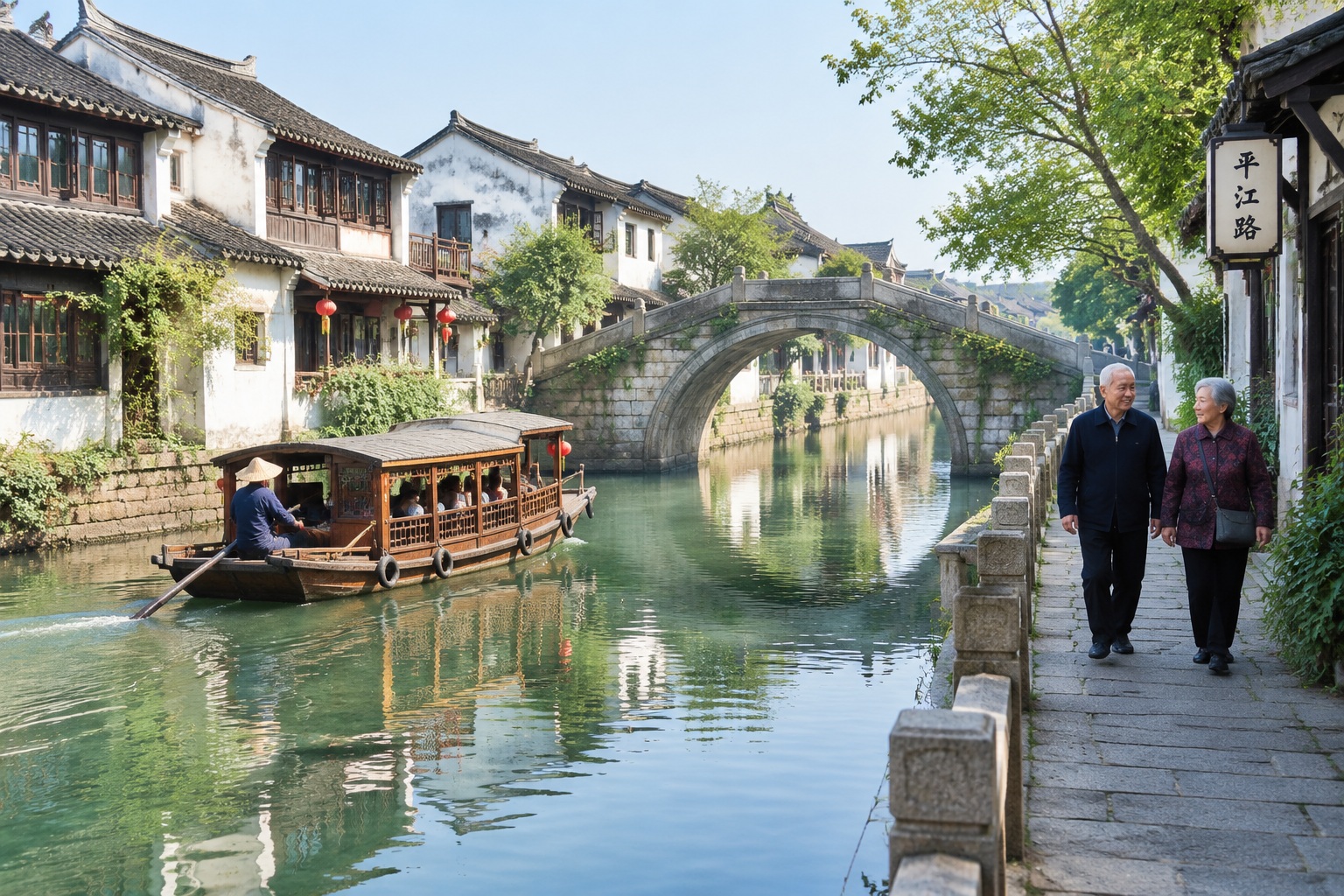

In 2005, walking down Pingjiang Road in Suzhou meant smelling the water before you saw it. The narrow canal running beside the ancient stone street had turned a dull grey-green, thick enough in places that you could not see the bottom. Residents along the bank had learned to keep their windows shut in summer.
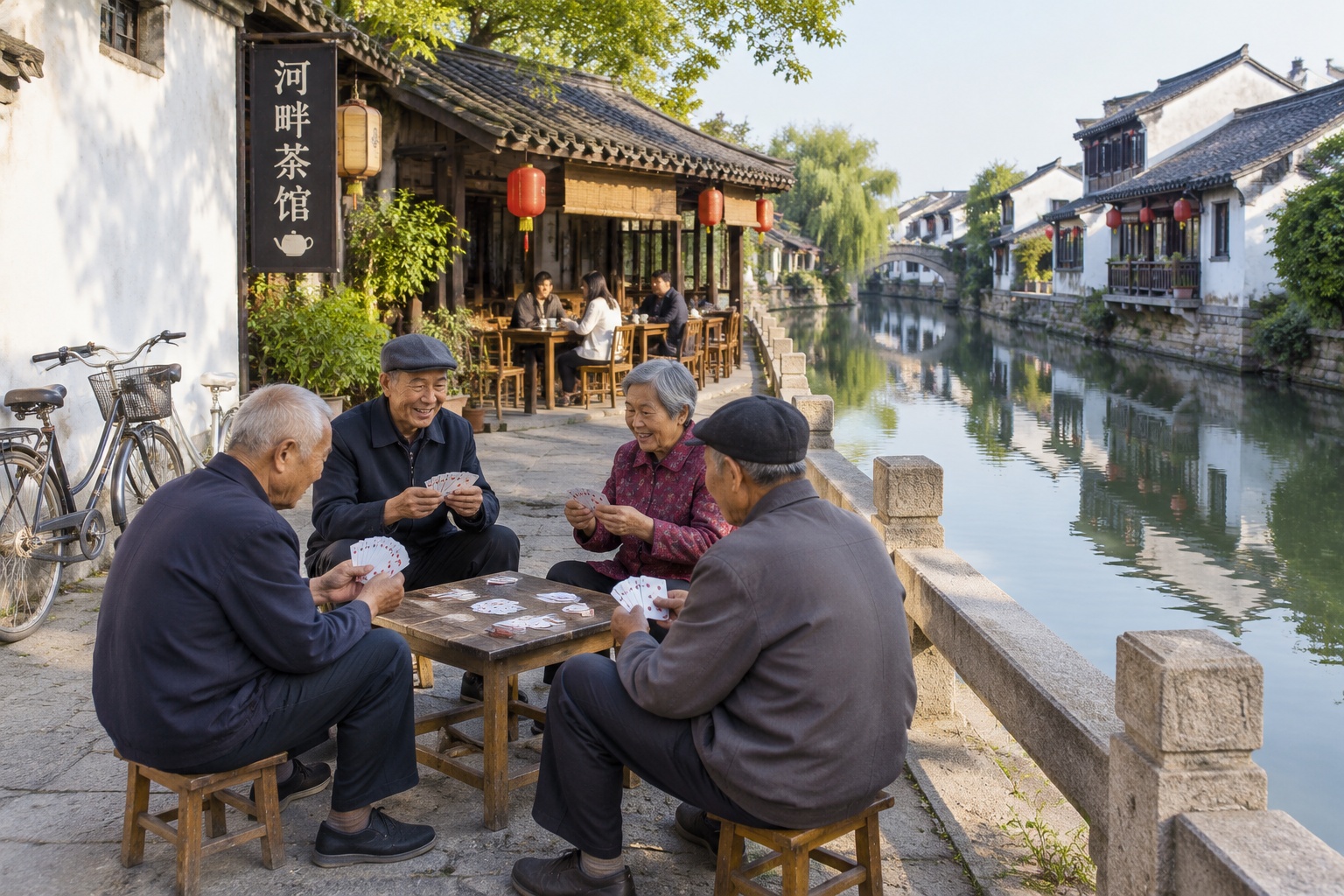
On an ordinary morning this April, the same canal looked like a different body of water. It was clear enough to watch small fish turn near the stones. A woman crouched on the steps, filling a long-handled ladle to water her potted plants. Tourists on wooden boats held up their phones to catch the reflection of the arched bridge.
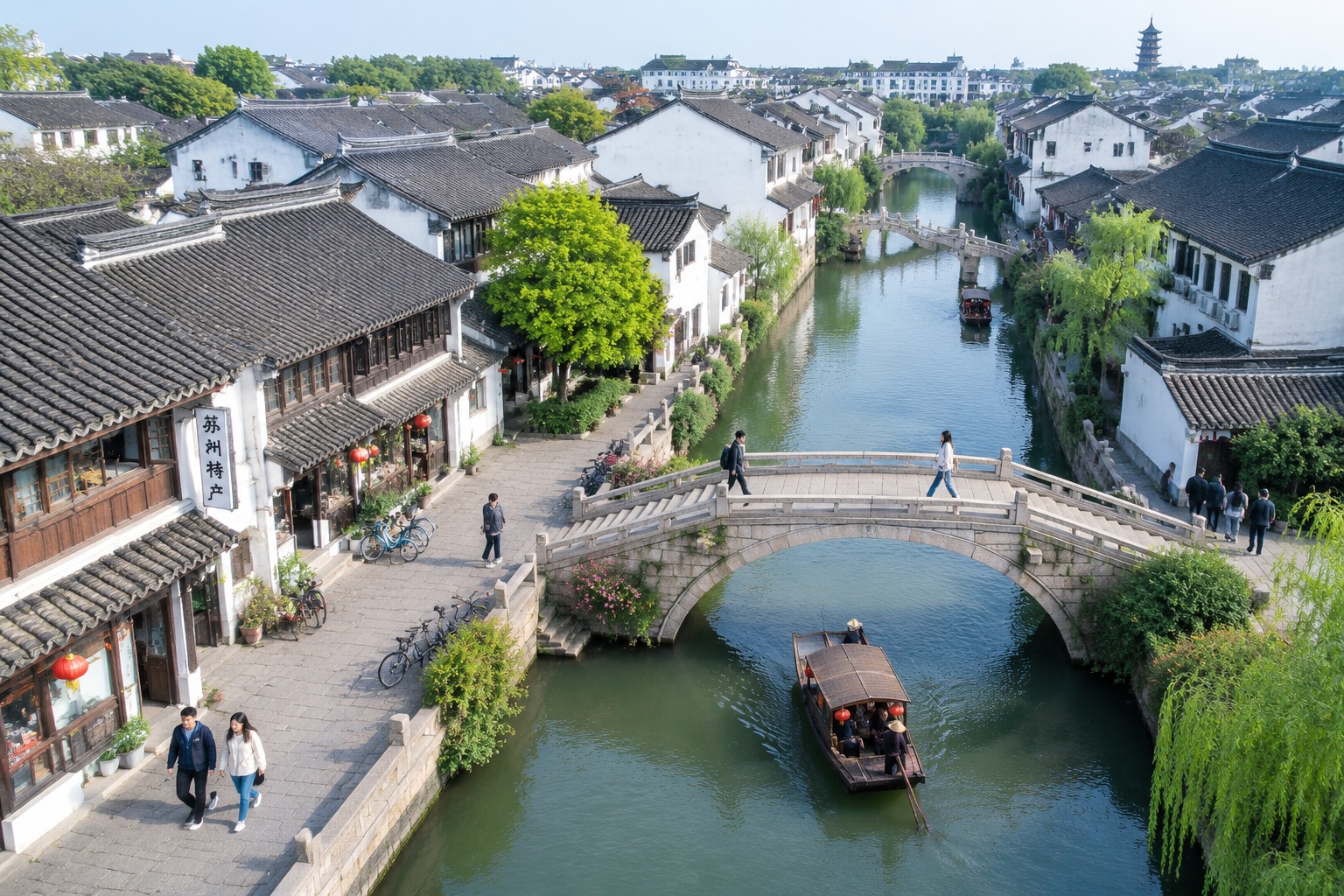
Suzhou is not a small town with an easy problem. It is one of China’s largest industrial cities, home to roughly 13 million people and a manufacturing base that runs from electronics to high-end textiles. Its old city sits on a network of more than 21,000 rivers and canals, with water covering about 40 percent of the municipal area. If a city this size can bring its waterways back, the lessons travel.
A Network of Open Sewers
Suzhou was built on water more than 2,500 years ago, during the Spring and Autumn period. Its historic core, about 14 square kilometres inside the old moat, was laid out around a ‘three horizontal, four vertical’ grid of canals. For most of its history, that grid served as the city’s roads, its drainage, its laundry, and its market.
That changed fast in the 1980s and 1990s. As factories spread across the Yangtze River Delta and the population grew, untreated household sewage and industrial runoff went straight into the canals. By the early 2000s, many of Suzhou’s smaller waterways had become what locals called ‘black, odorous rivers’ — heichou he. Chinese environmental officials still use the phrase today.
The real turning point came in 2007. That May, a massive blue-green algae bloom on nearby Lake Tai contaminated the drinking water supply for the city of Wuxi, just to the northwest. Millions of residents could not drink from the tap for days. The crisis made water quality a topic of public alarm across the region, and it pushed Jiangsu province into a set of policies that later went national.
Not a Cleanup — a Rebuild
What Suzhou did over the following decade was not a single dredging project. City engineers describe it as a rebuild of the plumbing underneath the old city.
The first step was jiewu naguan — intercepting sewage and putting it into pipes. Around the historic core, crews laid separate lines for rainwater and wastewater, then built intercepting mains along the canal banks. The goal was simple: stop wastewater from reaching the river at all. Households, restaurants, hotels and shops in the old town were required to connect their discharge to the municipal sewer network rather than the nearest canal.
The second step was dredging. Decades of contaminated sediment at the bottom of the canals had been releasing nutrients and odour back into the water. Suzhou removed that layer section by section, reinforcing the stone embankments at the same time.
The third step was circulation. Still water does not stay clean, so the city built a system of gates and pumping stations designed to keep water moving. Inside the old city, operators can raise or lower water levels and push treated, oxygen-rich water from outside through the canal grid. Think of it as a heart pumping blood through a set of old veins.
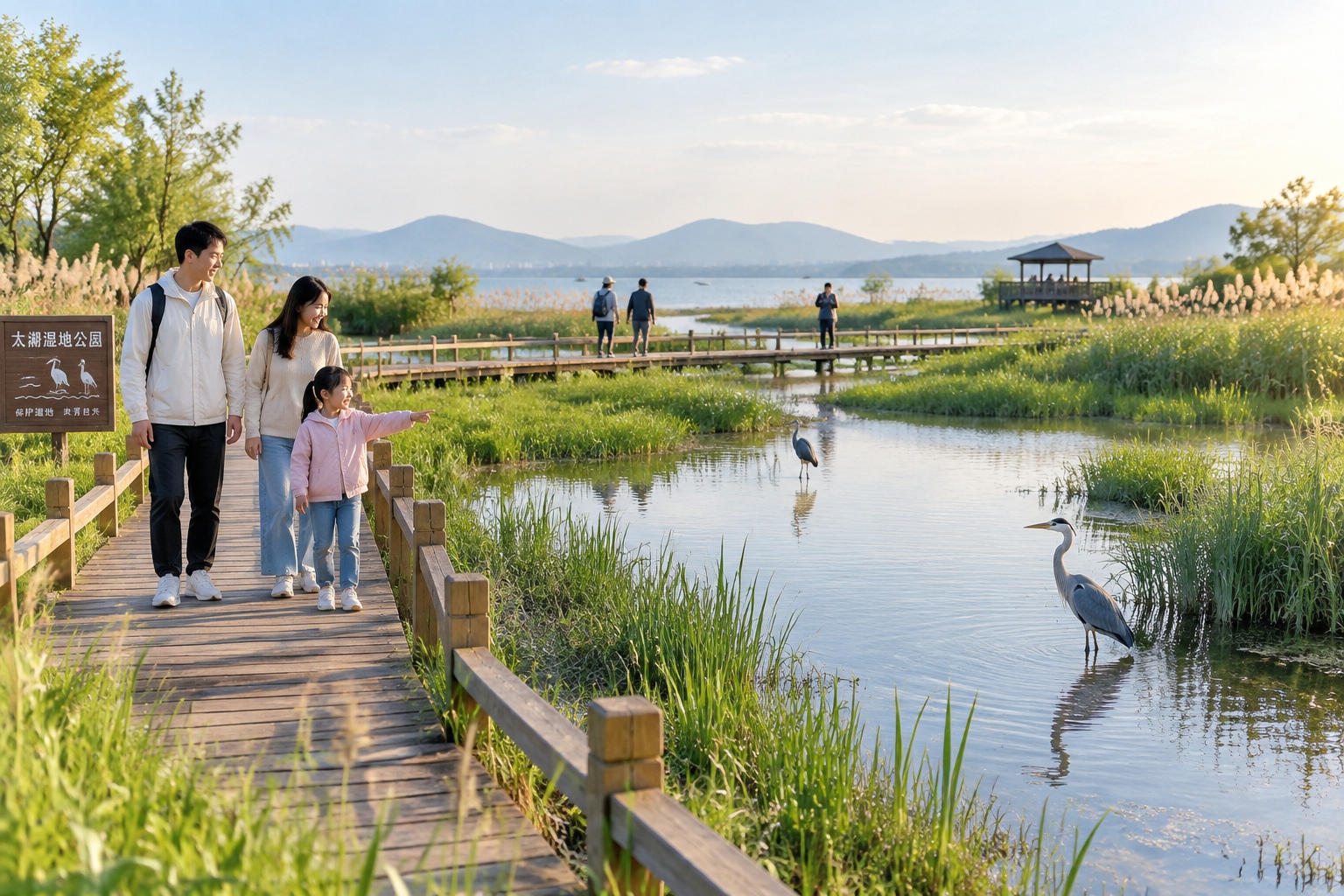
The fourth step is nature. Suzhou has expanded wetlands along Lake Tai and around the city’s edges, including the Taihu lakeshore wetland park and the wetlands around Sanshan Island. These work as natural filters, absorbing nitrogen and phosphorus before water reaches the canals. By the 2020s, Suzhou had built or restored tens of thousands of hectares of wetland, and the city started treating wetlands as infrastructure rather than scenery.
River Chiefs, Sensors and Drone Patrols
Engineering alone does not hold a river clean. Someone has to be responsible.
That is the idea behind the River Chief system, which Jiangsu introduced in 2007 after the Lake Tai crisis and which China’s central government rolled out nationwide in 2016. Under the system, every significant body of water in the country is assigned a named official — a ‘river chief’ — whose job includes water quality. Nationwide, more than 1.2 million river and lake chiefs have been appointed, according to the Ministry of Water Resources.
In Suzhou, this shows up on small signs posted beside canals. Each board lists the river’s name, the chief’s name, their rank, and a phone number for complaints. In practice, a resident who sees dark discharge or a dead fish does not need to find a ministry. They call a person.
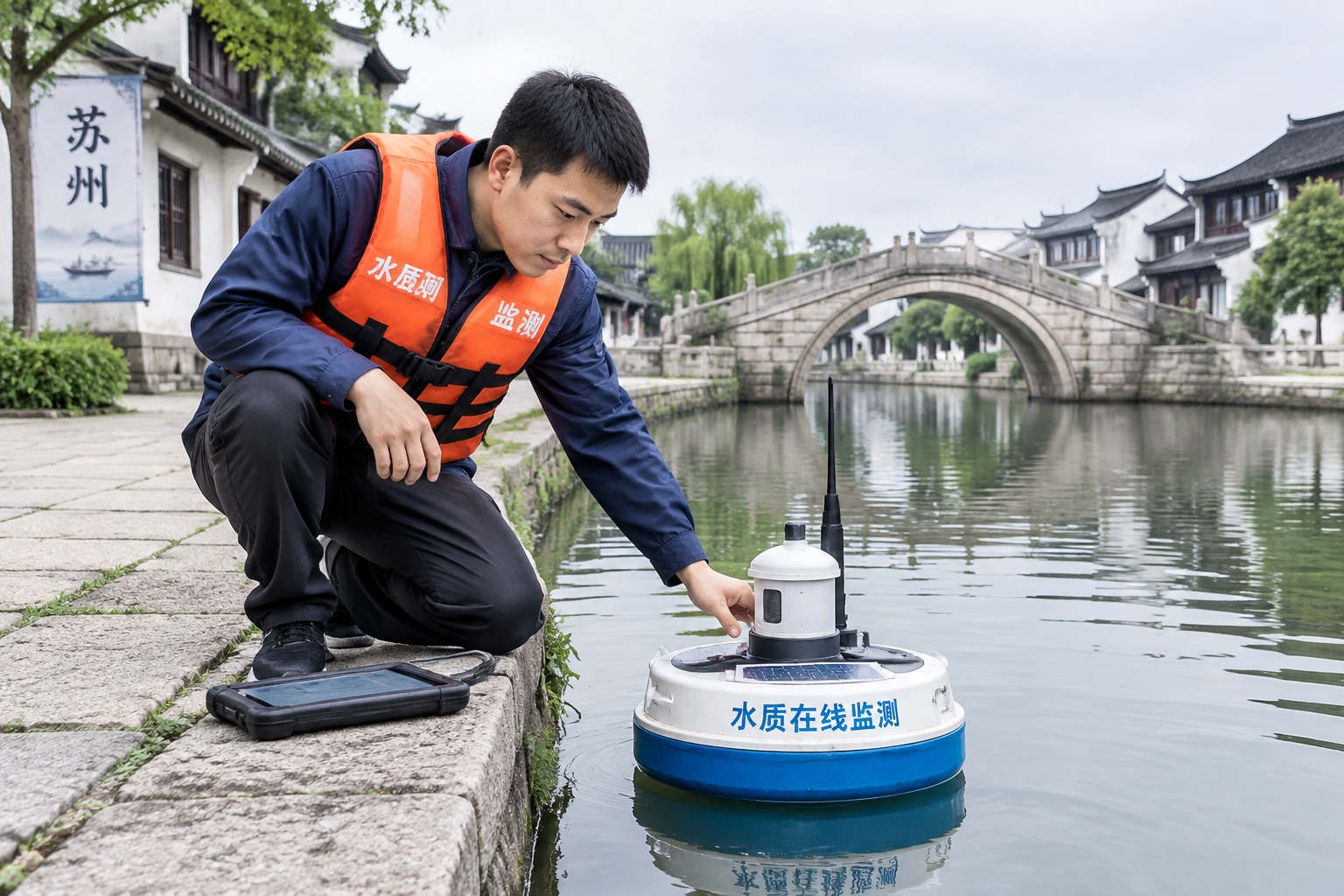
The modern layer of this is data. Suzhou’s water authority runs a network of automated monitoring stations along canals and lakes, using internet-of-things sensors that continuously measure dissolved oxygen, ammonia nitrogen, pH and temperature. When a reading moves outside the expected range, the platform flags it to district and street-level staff. Drones fly over the old city to spot illegal pipe outlets or floating debris in places that are hard to reach on foot.
None of this replaces a person walking the bank. It just tells that person where to walk first.
How the People on the Banks Changed
The hardest part of the transition was not technical. It was the habits of people who had lived with the canal as a drain for a generation.
In the alleyway neighbourhoods of Pingjiang and Shantang, residents used to wash mops in the canal, dump cooking water, and let washing machines drain onto the lane. Older residents describe the shift as partly enforcement and partly shame — the water became visibly clean, neighbours began to notice, and dumping turned into something socially embarrassing.
Shops along the historic streets now have to meet discharge rules as a condition of their licences. Boat operators on sightseeing routes are barred from discharging anything into the canals. Volunteer river protection teams, often made up of retired residents, patrol the banks and report problems through the same app that connects to the River Chief platform.
The payoff shows up in daily life. In the early morning, groups of older residents practise tai chi on the canal-side walkways. Tea houses set tables against the stone railings. The city’s water buses, once a novelty, are now part of how people move around the old town in tourist season. Real estate agents openly list ‘canal view’ as a selling point for narrow old houses that a decade ago nobody wanted.
There is still friction. Tourism pressure on Pingjiang Road is heavy, and the water is cleaner in the managed old city than in some outer districts where industrial use is more intense. The system depends on continuous funding — pumping stations, monitoring stations and dredging all cost money every year. Suzhou is not a finished project; it is a maintained one.
What Other Historic Cities Can Take From Suzhou
Many of the world’s oldest cities share the same problem: a dense historic centre, an ageing drainage network, and a river system that no one wants to tear up. Suzhou’s experience suggests a few transferable points.
First, water quality is a plumbing problem before it is a technology problem. Sensors and dashboards are useful, but they only track what the pipes are doing. Sewage interception comes first.
Second, a named person with a phone number is more effective than an anonymous agency. The River Chief system works because responsibility is visible and local.
Third, ancient water systems and modern technology are not opposites. Suzhou’s 2,500-year-old canal grid still dictates where the water flows. What changed is what flows through it, and who is watching.
Fourth, the work only holds if residents have a stake. People protect a canal they use for walking, drinking tea and photographing weddings. They ignore a drain.
For visitors, the result is easy to miss. The water is simply there — clear and unremarkable, moving under the stone bridges the way it did centuries ago. That ordinariness is the achievement. A megacity of 13 million people with more than 21,000 waterways has turned its rivers back into something a person can walk beside without holding their breath.
Start the discussion at forum.chinacomes.com