


Two photographs, eleven years apart
In the spring of 2013, anyone standing on the roof of a Shenzhen office tower and pointing a camera at the half-finished Ping An Finance Centre got a grey-brown wash for a background. The same shot today — same roof, same angle — usually comes with a hard blue sky and a visible ridgeline on the Hong Kong side of the bay.
People here gave that sky a nickname: “Shenzhen Blue.” It turns up in wedding photographs, in school sports-day pictures, and in the social media posts of residents who moved to the city in the 2000s and remember when this was not normal.
Shenzhen is not Beijing. It never had the coal-fired northern winter, and sea breezes off Mirs Bay kept the air moving. But through the 2000s and early 2010s this was a city of electronics plants, printing shops, furniture factories, one of the world’s busiest container ports, and a car fleet growing by tens of thousands every year. It breathed all of that.
What the hard data actually says
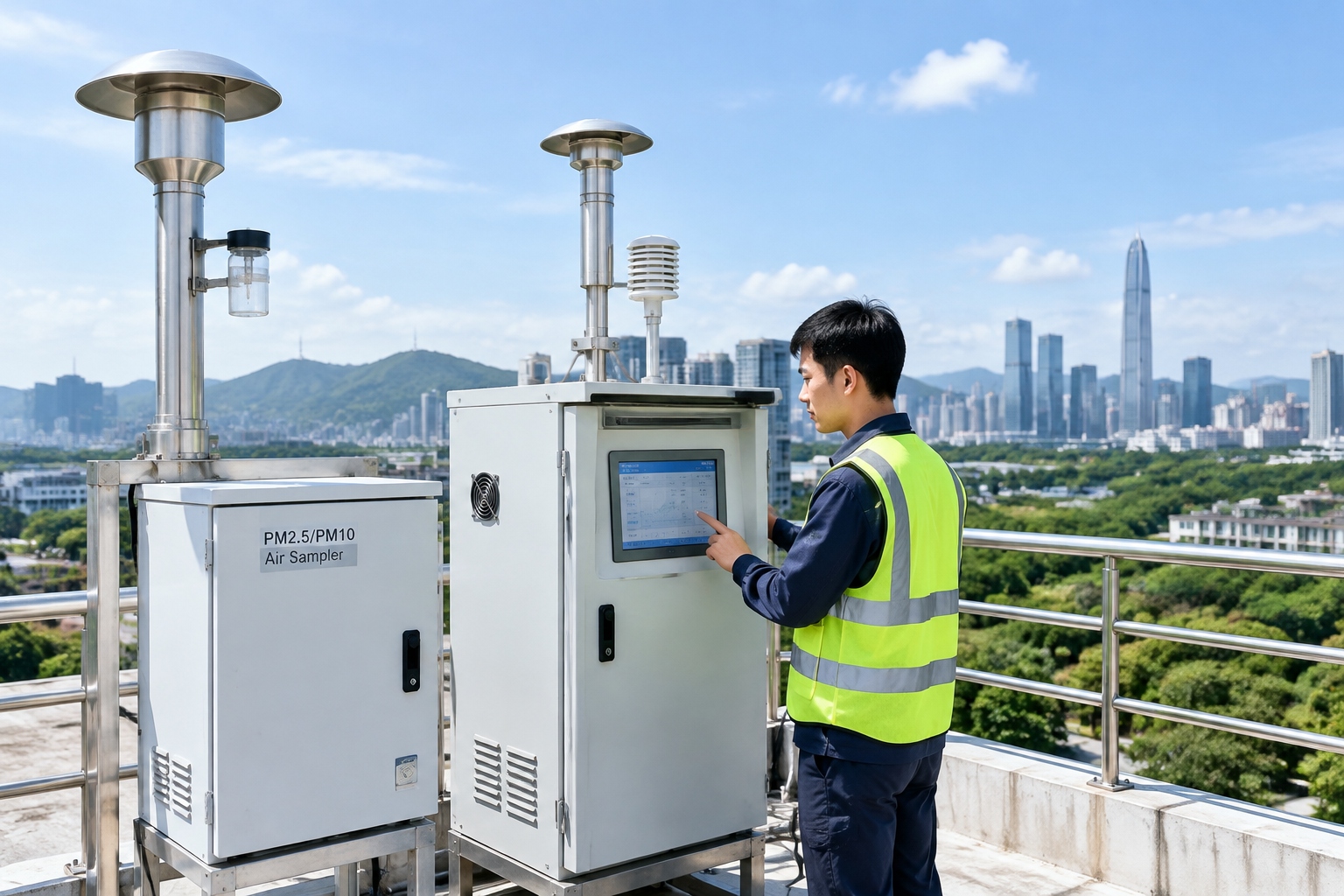
Shenzhen’s municipal ecology and environment bureau publishes an annual average for PM2.5 — the fine particles small enough to travel deep into the lungs. The curve since 2013 looks like this, in micrograms per cubic meter:
- 2013: about 38
- 2015: 30
- 2017: 28
- 2019: 24
- 2021: 18
- 2023: around 17
That is roughly a 55% cut in ten years. For scale, China’s national Grade II annual standard is 35 micrograms, so 2013 was a failing year and recent years have cleared the bar with room to spare. The World Health Organization’s 2021 guideline is 5 micrograms, with interim targets at 35, 25, 15 and 10. Shenzhen now sits between the WHO’s second and third interim steps: cleaner than most large cities on earth, and still about three times the level the WHO considers safe over a lifetime.
The count of bad days moved with the annual average. In 2013, roughly four days in five met China’s air quality standard. In recent years, the city has reported meeting it on more than 95% of days.
One caveat matters more than the others. The pollutant Shenzhen misses its targets on today is usually ozone, not PM2.5. Ozone forms in sunlight from nitrogen oxides and volatile organic compounds, which means it arrives from traffic, solvents, paint, printing and industry at the same time. Across the Pearl River Delta, ozone has been the leading cause of bad-air days since the mid-2010s. Removing particles turned out to be the easier half of the job.
One balcony in Yantian, twenty years of breathing
Ms. Lin, 47, has run a small shipping agency in Yantian since 2003, when the container port was still cutting into the hills and her office window faced the cranes.
She describes the early years in household chores. “You wiped the balcony rail on Monday and it was black again by Thursday,” she said. From October to December, the dry months, the windows stayed shut, and the washing machine ran on a schedule set by the air outside. Her son’s primary school cancelled outdoor sports days a few times each term. Her mother, who came down from Hunan to help with the children, coughed through the winter and blamed the city.
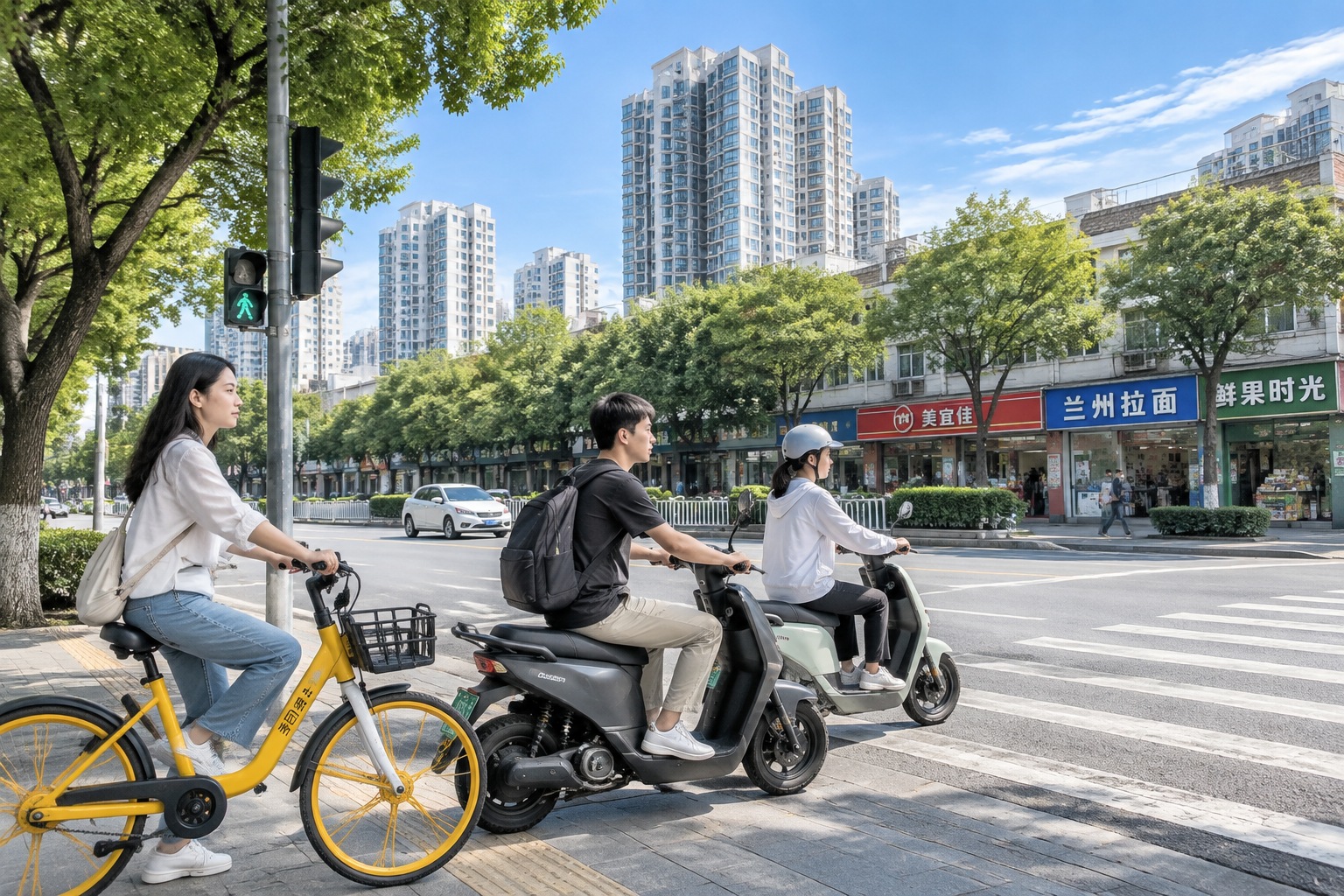
None of that is part of her routine now. The balcony gets wiped every few weeks. Her son, in secondary school, plays football twice a week on an outdoor pitch. She runs on the Yantian coastal greenway before work, past mangrove stands and joggers who are, she says, noticeably more numerous than five years ago. She still checks the air quality index most mornings — but for ozone and heat, not for haze.
Her street-level view matches the citywide statistics. Shenzhen now has more than 1,300 parks and a greenway network running into the thousands of kilometers, and around half the city’s land falls under ecological protection. Those are the places where the improvement in the numbers becomes something you can feel on a Saturday morning.
How the air actually got cleaner
1. The buses went electric first
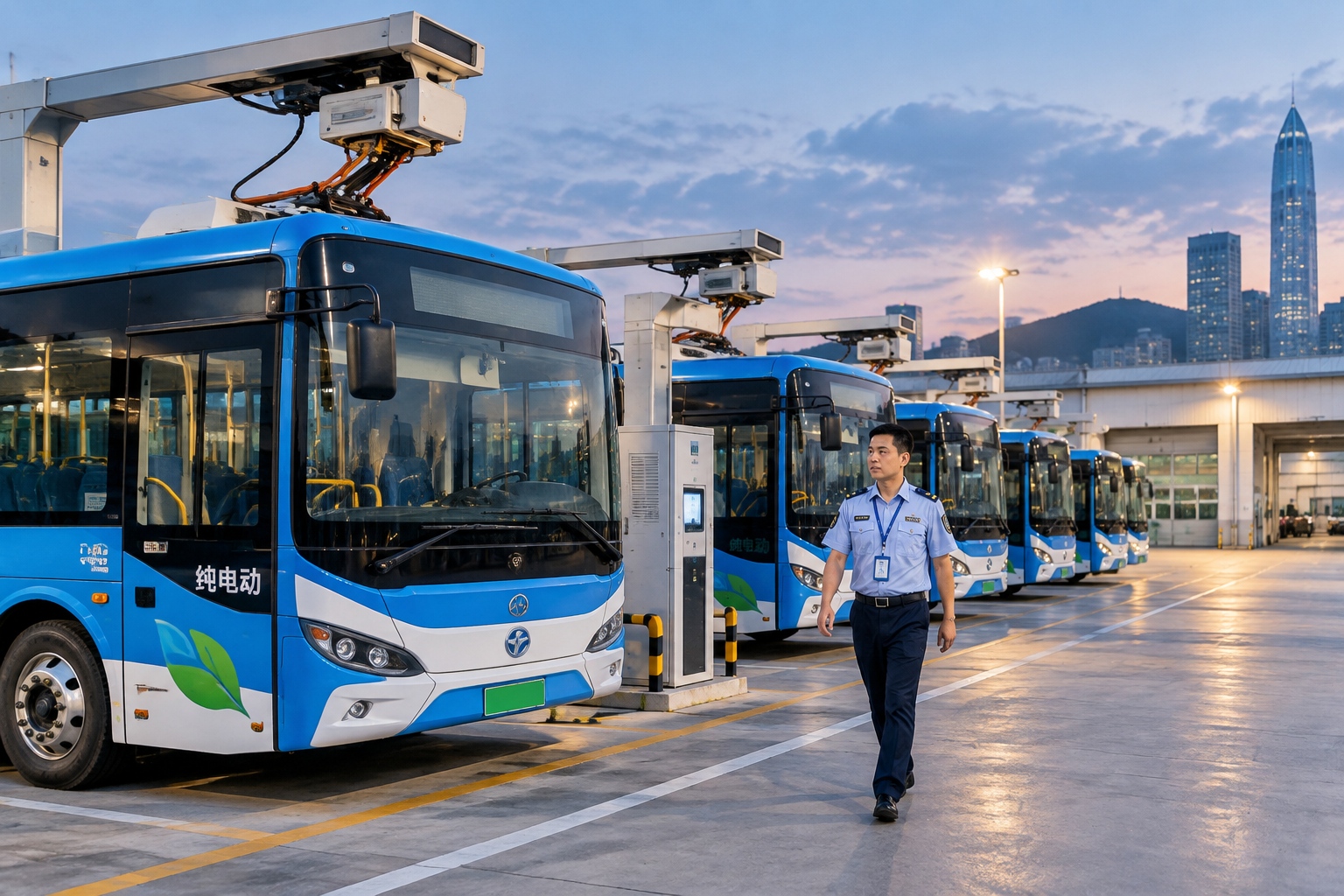
Shenzhen electrified its entire public bus fleet — roughly 16,000 vehicles — by the end of 2017, the first city in the world to do it at that scale. The taxis followed: today, nearly all of the city’s roughly 21,000 taxis run on batteries. The logic is arithmetic. Buses and taxis drive 200 kilometers or more a day in stop-and-go traffic, so they burn more fuel and emit more per vehicle than anything else on the road. Replacing them is where the cleanup pays off fastest.
2. Dirty industry moved out; better industry moved in
The stubborn pollution in Shenzhen was never only exhaust. It was solvent: printing, electronics coating, furniture finishing, all of which release volatile organic compounds. The city answered with discharge fees, mandatory treatment equipment for larger plants, and an unspoken bargain in which low-end processing drifted to Dongguan, Huizhou and beyond. Manufacturing did not disappear from Shenzhen; it climbed. In 2013, the city also launched China’s first pilot carbon emissions trading market, which put a price on the emissions of hundreds of local factories and buildings.
3. New cars, cleaner fuel, earlier than required
Shenzhen adopted the National VI vehicle emission standard ahead of the national timetable, retired aging diesel trucks, and built one of the densest electric vehicle charging networks in the country. It helped that BYD, one of the world’s largest electric vehicle makers, is headquartered here. Policy and industry grew up in the same city and pushed each other along.
4. Dust — and the neighbours
Construction sites across the city operate under a set of rules known locally as the “seven 100 percents”: enclosure, spraying, wheel washing, hardened roads and other requirements, with drones and cameras checking compliance. Air also ignores municipal borders. Shenzhen’s skies were never going to clear while the rest of the Pearl River Delta was still dirty, so Guangdong province coordinated emission controls across the region, a joint mechanism that has been running since the 2010s.
The problem that isn’t in the photographs
Blue-sky pictures are the easy part of the story. The hard part is ozone. On most of the days each year when Shenzhen fails its own air quality targets, ozone is the reason. It peaks in the sunny afternoons of autumn and early winter, when the sky looks perfect and the air is not.
Ozone is also harder to legislate than particulate matter, because no single chimney or tailpipe produces it. It requires cutting nitrogen oxides from vehicles and volatile organic compounds from industry at the same time, across a whole region, which is a coordination problem as much as a technical one. Shenzhen can electrify its own buses, but it cannot electrify its neighbours’ factories.
There is a second, quieter caveat. Some of Shenzhen’s improvement reflects a shift rather than a pure reduction: heavy manufacturing moved to other provinces, and emissions moved with it. Shenzhen’s air got cleaner partly because its economy changed shape, and partly because it is wealthy enough to buy electric fleets, dense monitoring and enforcement. Not every Chinese city has that combination. That is the honest limit of the Shenzhen model.
What Shenzhen’s sky is worth remembering
The interesting thing about Shenzhen’s air is not that it improved. It is that it improved far enough that residents stopped organizing their day around it — stopped checking whether the kids could play outside, stopped photographing the skyline as evidence.
That is a change measured in tens of micrograms, and it took a decade of unglamorous work: electric buses, scrubbers on factory roofs, dust rules on construction sites, a regional hotline between provincial officials. It is the kind of progress that becomes invisible almost as soon as it is achieved, which is precisely why it is worth writing down.
Figures in this article come from Shenzhen’s annual environmental bulletins, China’s national ambient air quality standards, and WHO air quality guidelines.
Start the discussion at forum.chinacomes.com