
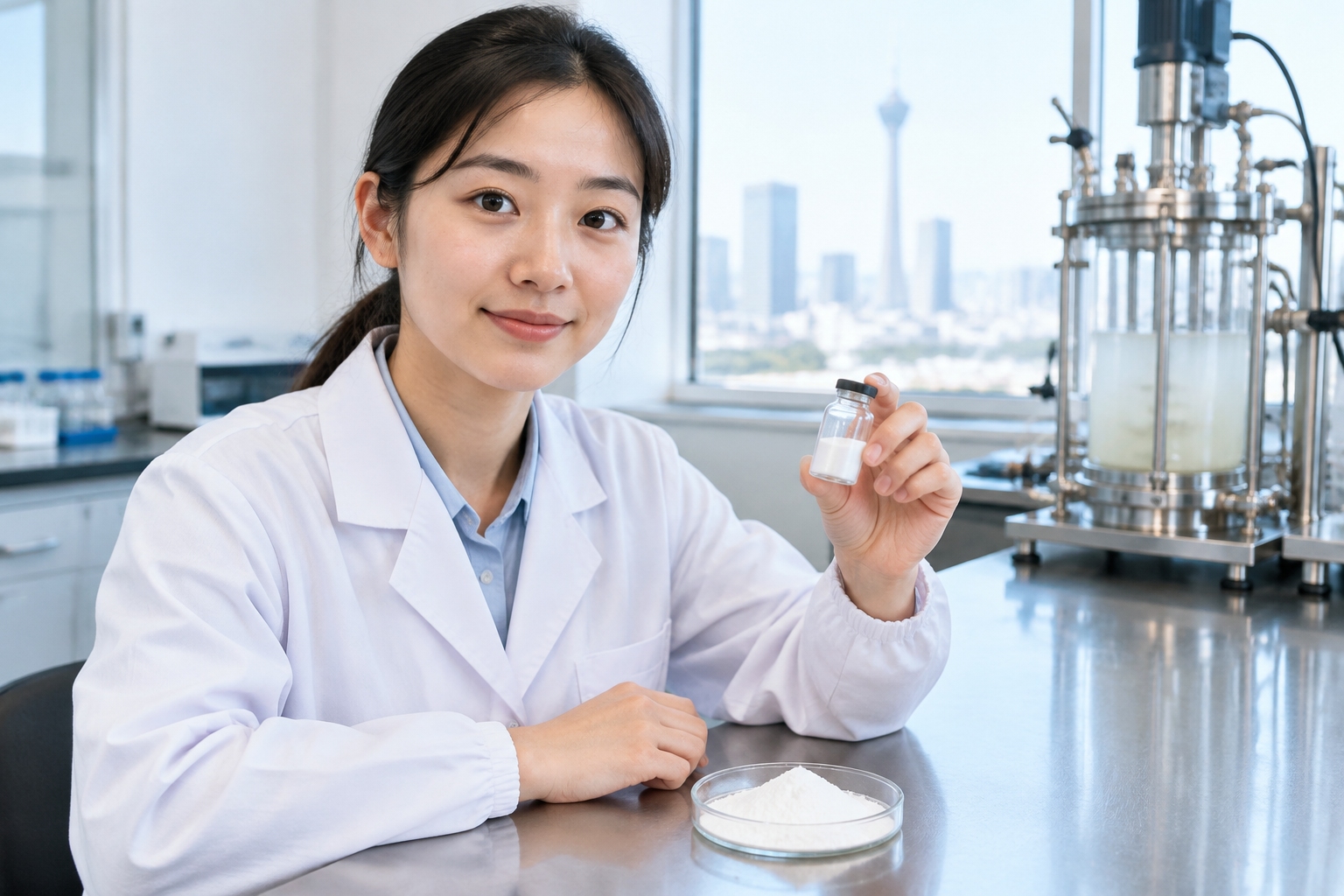

A vial of white powder
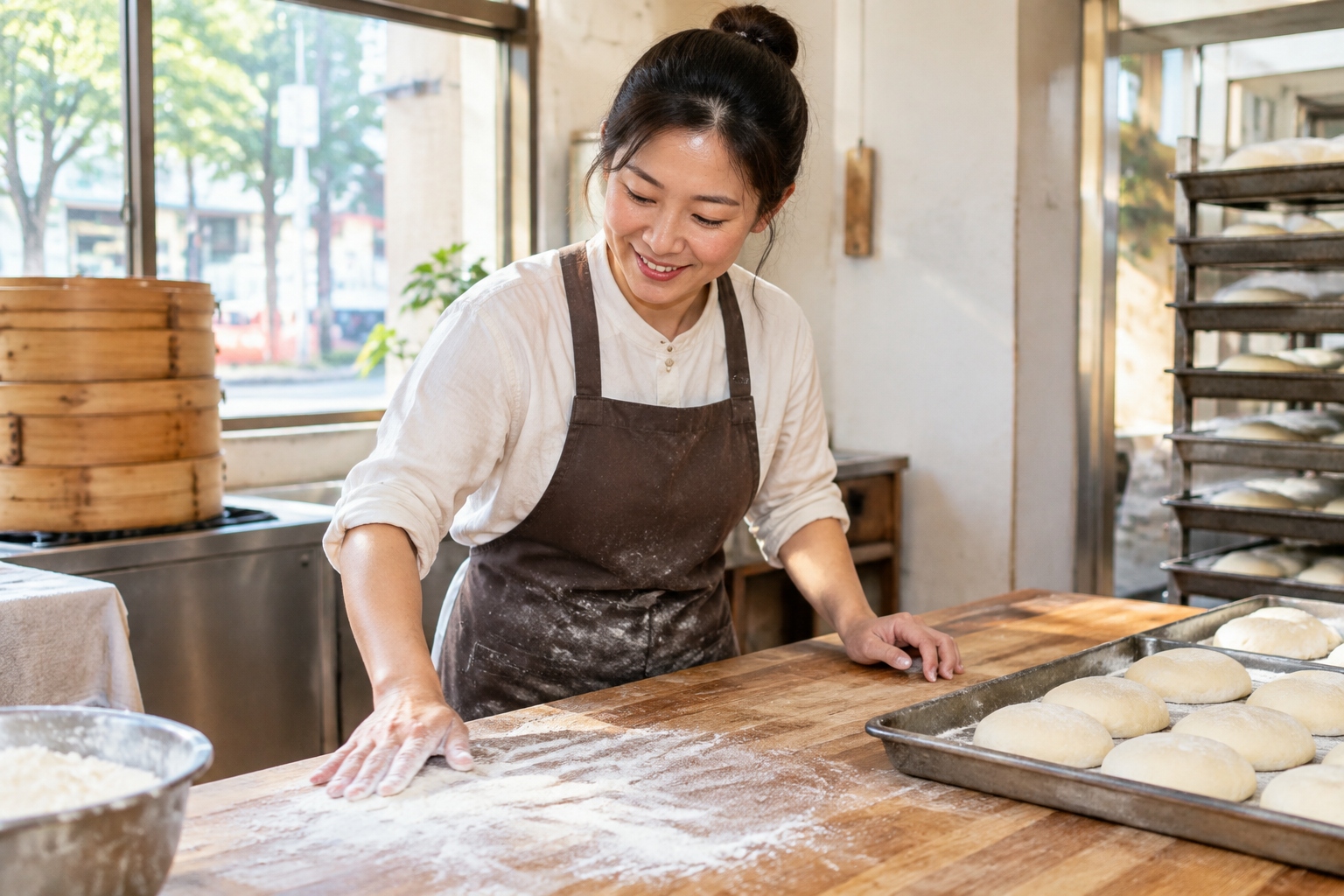
In a laboratory in Tianjin, a small vial of white powder sits on a bench. It looks almost ordinary—close to the cornstarch a baker dusts onto a wooden table. It was made from carbon dioxide.
That sentence sounds like a riddle. Starch is how rice, corn, potatoes and wheat store energy. Plants pull CO2 from the air and use sunlight to drive a chain of reactions that turns carbon into sugars and then into starch. The Tianjin work bypasses the plant. It uses chemistry and enzymes to turn CO2 and hydrogen into starch in a bioreactor.
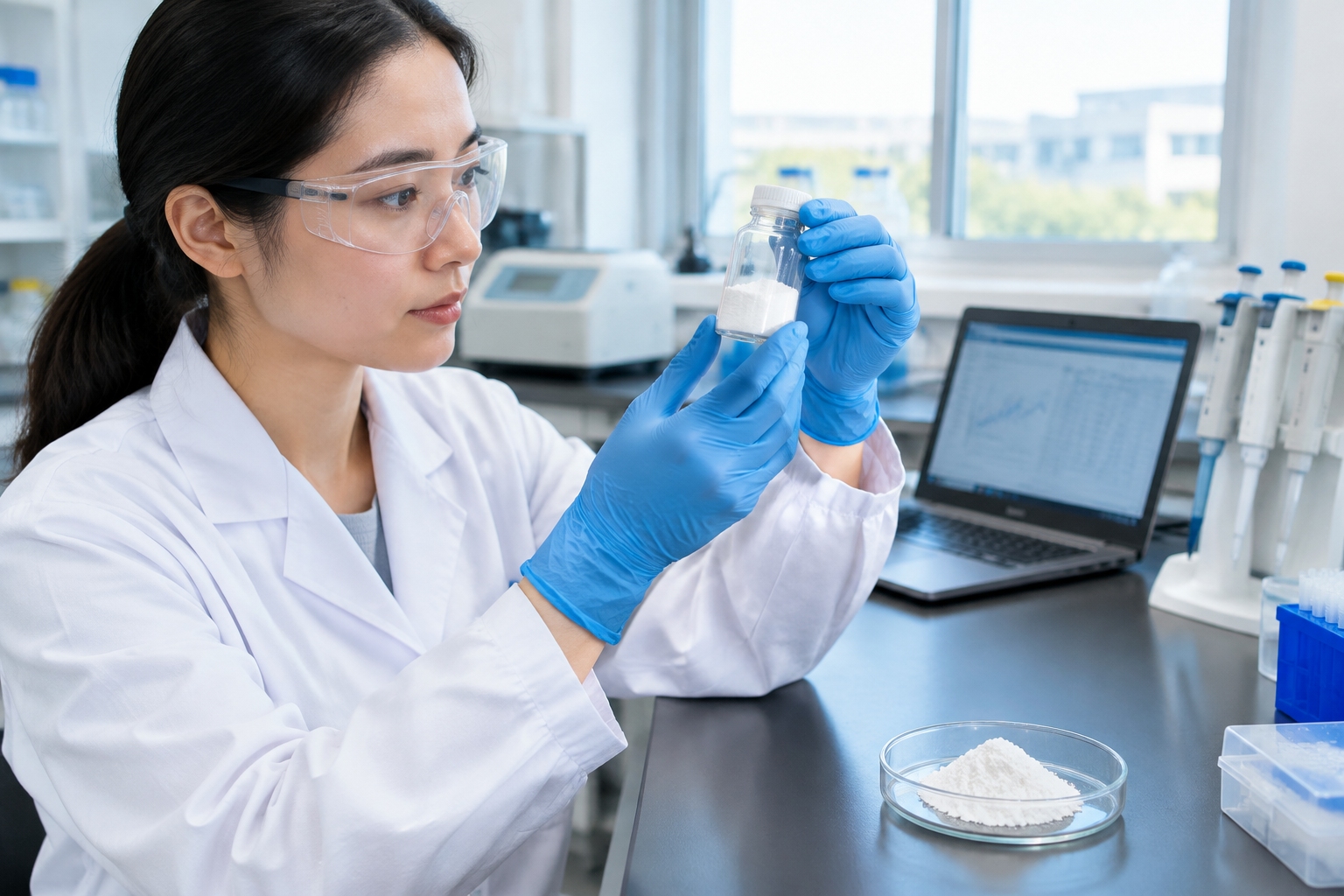
For anyone outside a lab, the immediate questions are practical: Is this real food? Can it scale? Will it change farming? The honest answers are: not yet on a plate, not yet at a competitive price, and not in the way headlines sometimes suggest. But the technology is more than a headline. It is an early example of a platform that could, over time, alter where some of our carbohydrates come from.
What “starch from CO2” actually means
Starch is a polymer of glucose. In conventional agriculture, a plant does the hard work: it captures sunlight, splits water, fixes CO2 and builds the carbon chain. The artificial route does not use light directly. The first step is chemical: CO2 is hydrogenated to methanol. Methanol is then converted to formaldehyde. Enzymes assemble the carbon units into sugars and, eventually, starch. The 2021 Science paper described a chemoenzymatic pathway with 11 core reactions.
This is why “air to food” is both useful and misleading. The carbon comes from CO2, but the energy and reducing power come from hydrogen. If that hydrogen is made with renewable electricity, the process could be low-carbon. If it is made from fossil gas, it is another chemical route with a carbon footprint. The source of hydrogen matters as much as the source of CO2.
The lab result: fast, small, and far from a factory
In 2021, researchers at the Tianjin Institute of Industrial Biotechnology, part of the Chinese Academy of Sciences, reported in Science that they had synthesized starch from CO2 using a cell-free chemoenzymatic system. The paper reported a starch synthesis rate about 8.5 times higher than that in corn, per unit of catalyst, under lab conditions.
That comparison is striking, but it is also narrow. It measures the speed of a reaction, not the cost of a kilogram of starch, the energy return of the whole system, or the ability to run 24 hours a day for years. The experiments produced small amounts. The team’s own projections—such as a one-cubic-meter bioreactor potentially matching the starch output of about five mu of corn—were calculated from lab rates. They are a sign of the direction, not a factory order book.
Efficiency, land, water and the energy bill
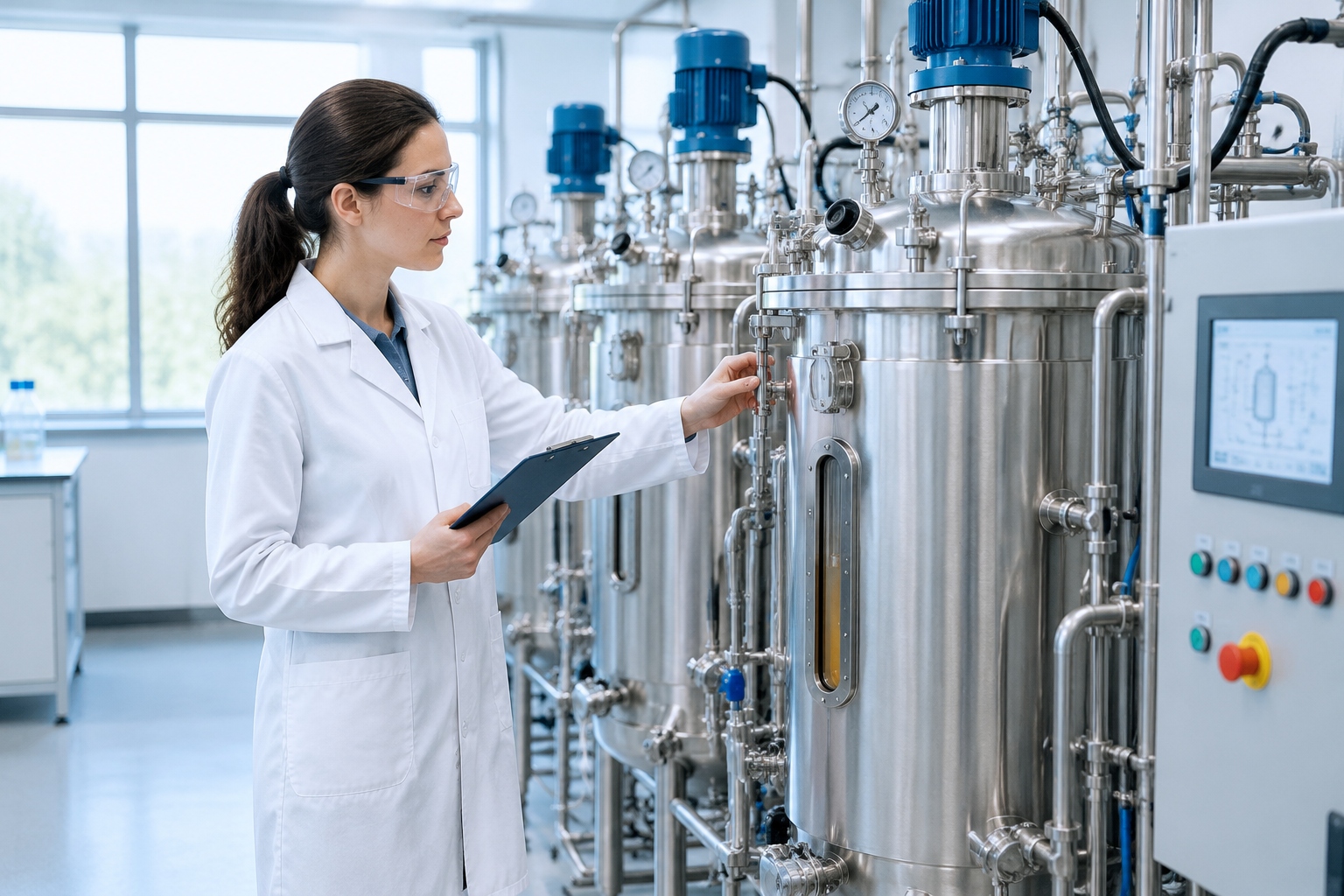
The appeal is resource efficiency. A factory can stack bioreactors vertically, use far less arable land, and avoid the vagaries of weather. It can be located near a CO2 source, such as a cement plant, a power station or an industrial fermentation facility. Water use would depend on cooling and downstream purification. It is not water-free.
The energy bill is the hard part. Even before enzymes and separation, the stoichiometry is demanding: a kilogram of starch needs roughly 150 grams of hydrogen. At current electrolyser efficiency, that is around 7–8 kilowatt-hours just for the hydrogen, before running pumps, bioreactors, purification and drying. Then come the enzymes, which are expensive and fragile. A cell-free system avoids the slow growth of plants, but it does not evade thermodynamics.
This is why the “8.5 times faster” number needs a companion: cost per kilogram. At lab scale, synthetic starch is far more expensive than cornstarch. Cornstarch is a commodity made in enormous plants; its price is shaped by corn, energy, transport and trade. For synthetic starch to compete in feed or food ingredients, enzyme costs must fall, reactors must run continuously, and CO2 and hydrogen must be cheap and clean. None of that is impossible. It is a matter of years and engineering, not a single paper.
Scale matters. China produced about 289 million tonnes of corn in 2023, much of it for feed and industrial use. Replacing even a small slice of that with synthetic starch would require a new chemical industry, not a few lab benches.
Where the technology could matter first
Food is the most attention-grabbing market, but not necessarily the first. Industrial starch—used in paper, textiles, adhesives and packaging—may be an earlier customer because specifications are different and the volume is large. Animal feed is another possibility, though starch is only one part of feed value. Special environments—space missions, remote islands, submarines, disaster relief—could justify high costs because the alternative is expensive logistics.
For ordinary consumers, the first encounter might not be a bowl of rice. It might be a packaged sauce, a noodle, a bakery product, or a sports nutrition ingredient. The technology makes a component, not a whole diet. It cannot replace vegetables, fruit, protein, oils or the micronutrients that come from diverse foods.
The distance from a vial to a supermarket shelf
Scaling up is the first obstacle. A lab vial is one thing; a continuous plant is another. Enzymes need to stay stable for long runs. Contamination must be controlled. The process needs food-grade materials, reliable waste streams and consistent quality. Cost curves in synthetic biology can fall quickly, but they do not fall on command.
Regulation is another gate. In China, a new food raw material must go through safety assessment before it can be sold. Other markets have their own rules. Regulators will ask for toxicology, allergenicity, purity and manufacturing consistency. The fact that a molecule is identical to starch from corn does not automatically settle the safety file, because residual enzymes, solvents and by-products matter.
Then there is the eating experience. Starch is not just a chemical; it is a material with texture. Different starches gel, thicken and retrograde differently. A synthetic amylose may not behave like the cornstarch in a sauce or the wheat starch in a noodle. Food scientists will need to test it in real recipes, not just in a reactor.
Public acceptance is the last mile. “Made from CO2” can sound clean or strange, depending on how it is framed. Clear labeling, independent data and a visible safety process will matter more than advertising. Consumers are not a single bloc; some will pay for low-carbon ingredients, others will avoid anything described as synthetic.
A platform, not a replacement for farms
The most useful way to see this work is as a platform. If CO2 can be converted into starch through a cell-free enzymatic route, the same logic could in principle produce other carbohydrates or precursors. That could open doors in food ingredients, materials and chemical feedstocks. It is a “bottom-layer” technology: not a new dish, but a new way to make a building block.
It does not make farms obsolete. Agriculture produces far more than starch: protein, oils, fiber, vitamins, flavor, rural incomes and landscapes. Even in a future where synthetic starch is cheap, farmers would still be needed for the rest of the meal. The more realistic impact is partial substitution: some industrial starch, some feed starch, some emergency supply, some new ingredients. That is less dramatic than “food from air,” but more useful.
Conclusion: a real breakthrough, with a long runway
Back in the Tianjin lab, the vial of white powder is still a long way from a bakery. But it answers a question that sounded like science fiction: can we make a staple carbohydrate without a plant? The answer is yes, in small amounts, with a lot of energy and enzymes. The next questions are engineering and economics, not just biology.
That is why the story is worth watching. It does not mean hunger is solved, or that farms will disappear. It means the boundary of how food can be made has moved a little. For a world with rising demand, climate pressure and fragile supply chains, a small move at the base of the system can matter more than a flashy prototype. The vial is not lunch. It is a beginning.
Start the discussion at forum.chinacomes.com