

A truck, a lens, and a very practical question
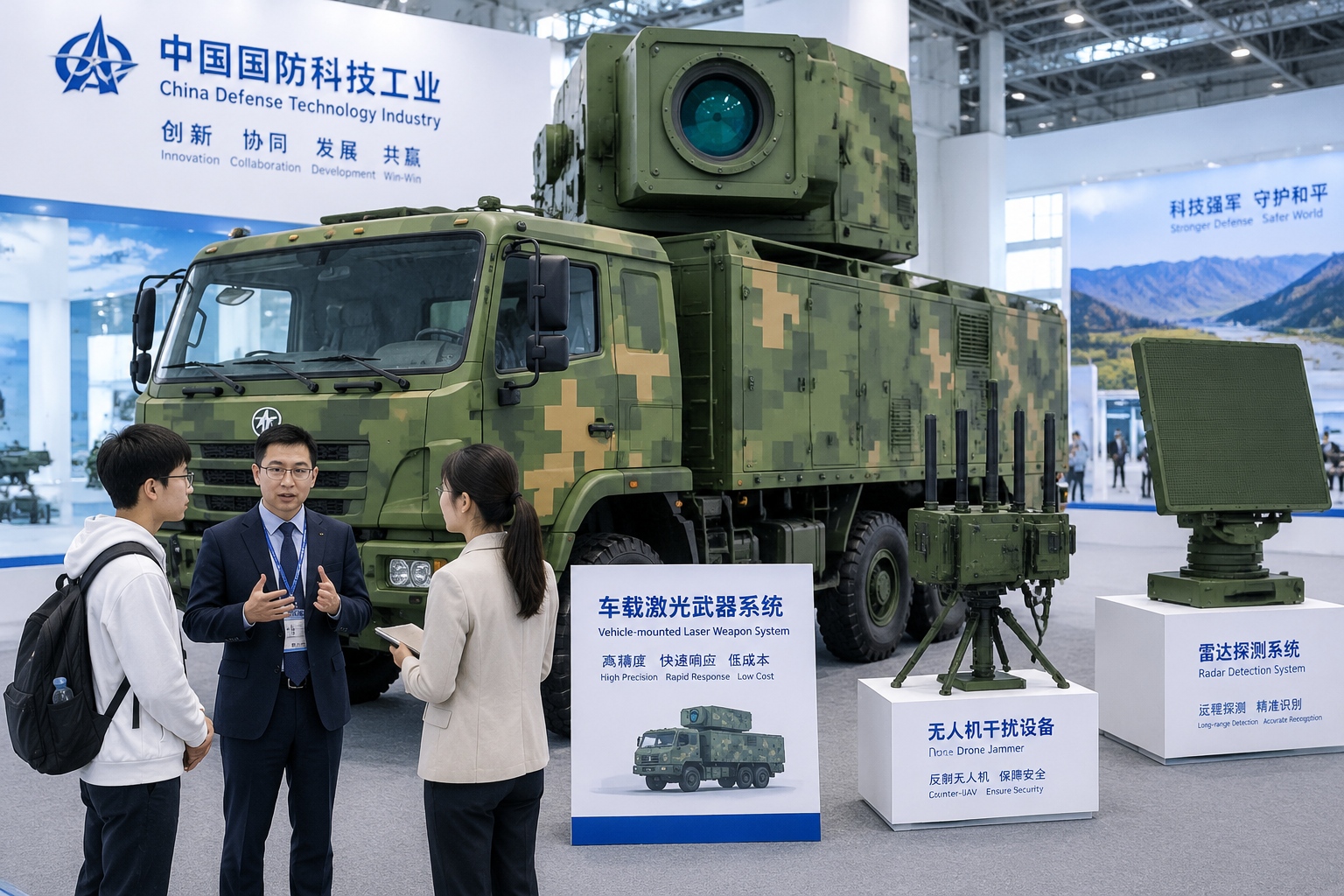
At the biennial airshow in Zhuhai, southern China, a visitor stops in front of a military truck. On its back is a boxy module with a circular aperture. The label is not a missile or a radar but a laser weapon. The visitor asks the engineer a question that sounds almost too ordinary for the setting: does it work in rain?
The answer is the best way into the subject. A laser weapon, or directed-energy weapon, sends a concentrated beam of light at a target. It does not need to calculate a ballistic arc. The beam travels at the speed of light. But it still needs steady electricity, effective cooling, clear optics and a target it can keep in view. In other words, it is an engineering system, not a magic ray.
China has displayed vehicle-mounted and shipborne laser systems at public exhibitions for several years. State media and company brochures often describe them as breaking a foreign monopoly in high-power lasers and precision optics. That claim is worth taking seriously, and worth unpacking. The interesting story is not that a weapon looks futuristic. It is that a set of industrial skills, from fiber lasers to thermal control, has moved from laboratories into hardware that can be shown on a truck.
What a laser weapon actually does
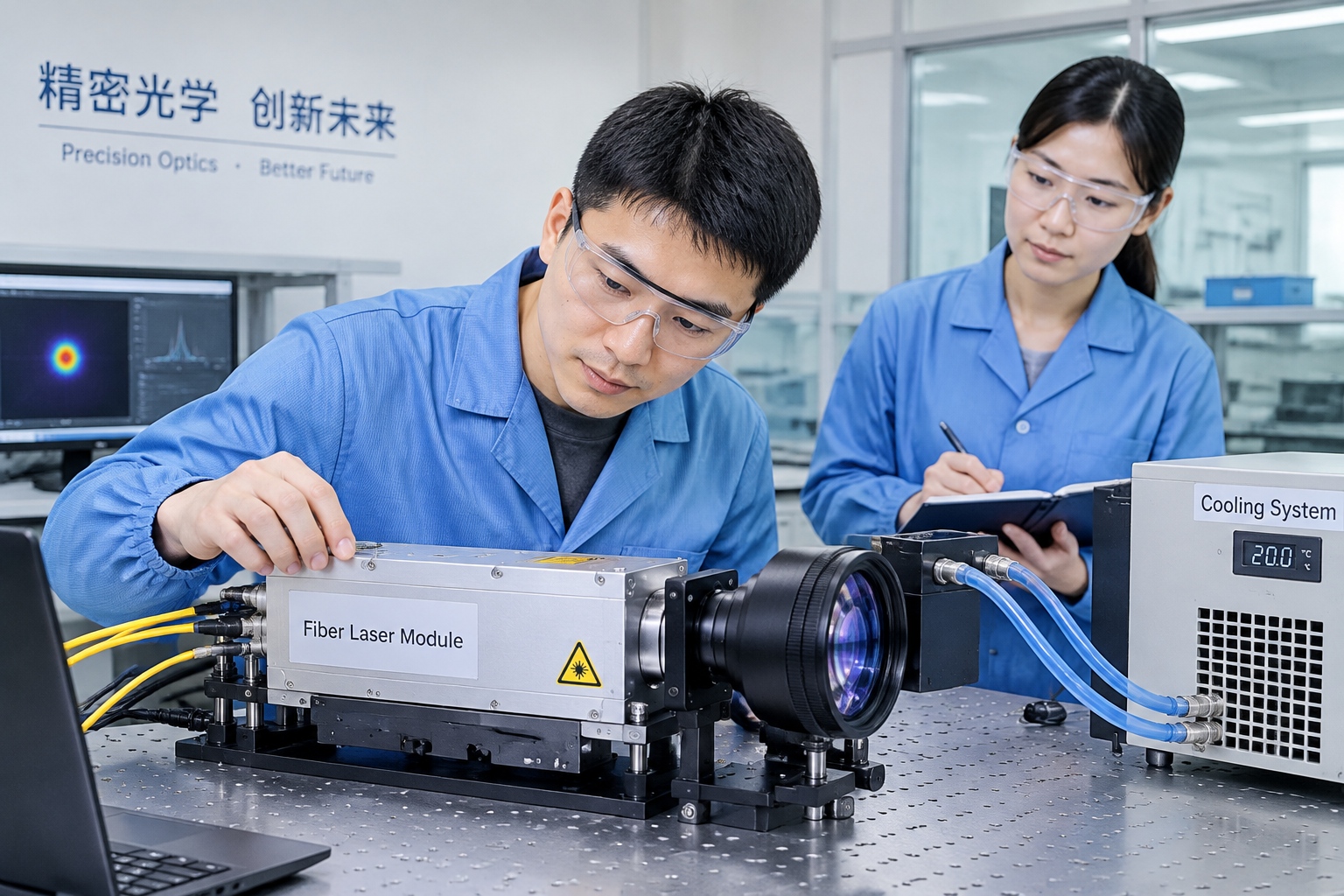
Imagine holding a magnifying glass in the sun. The glass does not make heat. It concentrates light into a small spot. A laser weapon does something similar with an engineered beam, usually infrared, and holds it on a target long enough to damage sensors, burn a drone’s plastic shell or disrupt its flight.
Two phrases matter. The first is speed of light. Once the beam leaves the emitter, it reaches a target kilometres away almost instantly. That shortens the reaction time against fast-moving drones or small boats. The second is dwell time. The beam must stay on the same spot. A moving drone, a vibrating ship or a gust of wind can spoil the aim. The system is therefore as much about tracking, stabilization and software as about raw power.
Public displays in China often put laser weapons in the 10 to 30 kilowatt class, with larger concepts discussed for shipborne use. These are not the city-block-vaporizing weapons of films. They are closer to precision tools for short-range defense, especially against small drones. A 30-kilowatt beam can be useful against a quadcopter at a few kilometres in good conditions. It is much less useful against a hardened missile or an aircraft moving fast at high altitude.
Why a truck and a ship are different
A vehicle-mounted laser is a mobile package. It has to fit on a truck, run from a generator or battery bank, survive dust and vibration, and be set up quickly. Its natural jobs are protecting a convoy, a temporary base, an airport or an event from small drones. In public demonstrations, Chinese companies have shown truck-mounted systems tracking and downing small drones. The appeal is simple: a drone costs little, and a laser shot costs electricity rather than an interceptor missile.
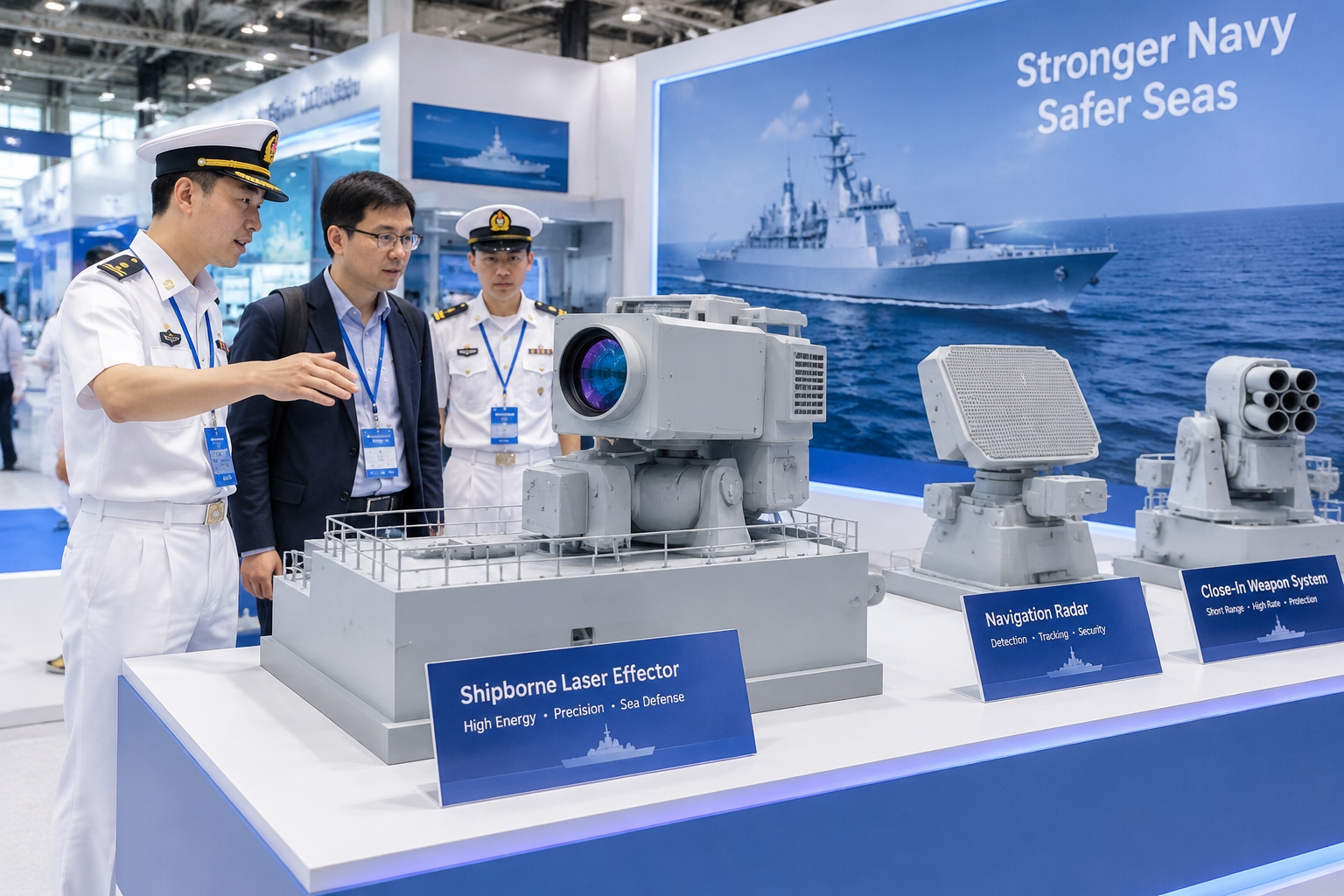
A shipborne laser has more room. A naval vessel can provide more power, more cooling and more weight allowance. It also has a stable platform, though the sea is never truly stable. Salt spray, humidity and deck motion are constant problems. Navies around the world are interested in lasers for close-in defense because a ship under drone or small-boat attack may not want to fire expensive missiles at every cheap target. China has publicly shown shipborne directed-energy concepts and reported tests, but the operational details remain limited.
The difference is not just size. A truck must be cheap enough to build in numbers and rugged enough for poor roads. A ship can carry a larger system but must keep it working in a corrosive marine environment. Both need the same unglamorous backbone: power conditioning, heat rejection, beam control and maintenance crews.
What breaking a foreign monopoly means in practice
In Chinese public reports, the phrase breaking a foreign monopoly usually refers to specific bottlenecks. High-power fiber lasers, large optical mirrors, precision gimbals, fast tracking algorithms and specialized power supplies have historically been dominated by a small number of suppliers in the United States, Europe and Israel. Export controls on some of these components are real. If a Chinese company can build a reliable 30-kilowatt-class laser module and the optics around it, that is a meaningful industrial step.
The same fiber-laser supply chain that cuts sheet metal in factories also feeds directed-energy prototypes. That overlap is easy to miss in defense coverage. A laser weapon is not only a military project. It sits on top of industrial laser manufacturing, optics, electronics and materials science. When those sectors mature, the military version becomes less exotic and easier to prototype.
But monopoly is not a switch that flips overnight. Laser weapons sit on top of a global supply chain. Some high-end optical materials, chips and test equipment still cross borders. Chinese firms have made progress in fiber lasers and optoelectronics, yet the claim of full self-sufficiency is hard to verify from public evidence. It is more accurate to say that China has reduced dependence in some areas, while remaining exposed in others.
That nuance matters for readers outside China. The story is not a simple tale of national genius. It is a story of industrial policy, research funding, engineering clusters and a large domestic market for drones and counter-drone systems. The same is true in the United States, Israel and Europe, where directed-energy programmes have advanced through defence budgets and repeated field tests. The technology is global, even when the politics is national.
The limits that do not make the headlines
Weather is the first limit. Rain, fog, smoke and dust scatter and absorb laser light. A system that works on a clear day at a desert test range may struggle in humid coastal air. This is why military planners talk about laser weapons as part of a layered defense, not a replacement for missiles and guns.
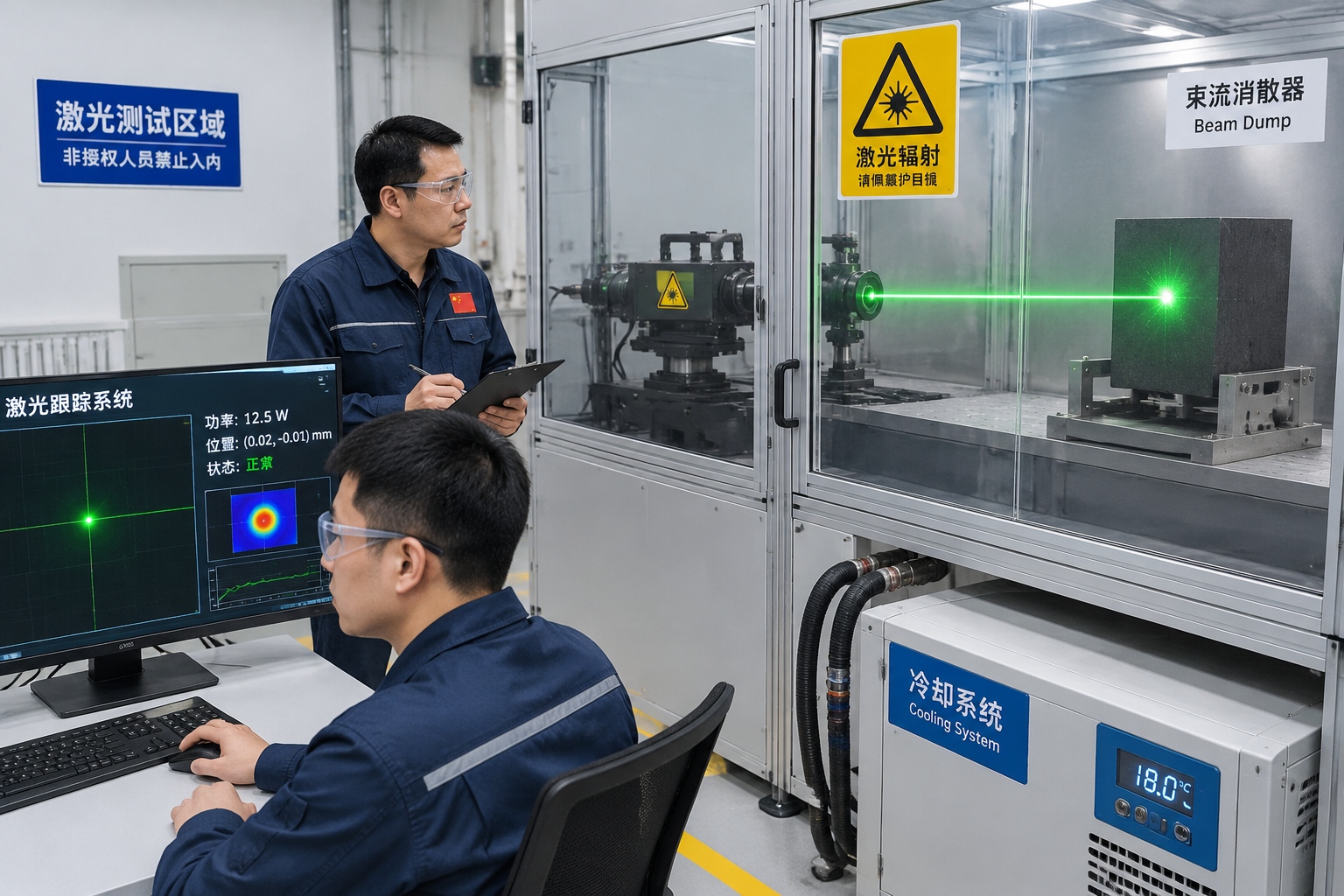
Heat is the second. No laser is perfectly efficient. Much of the electrical energy becomes waste heat, which must be removed. A truck can carry only so much cooling equipment. A ship can carry more, but a sustained beam still stresses the system. Burst shots are easier than continuous operation.
The third limit is targets. A single small drone is a manageable problem. A swarm of cheap drones arriving from several directions is harder. So is a target that is spinning, armored or reflective. Lasers can blind sensors, which may be enough for some missions, but the public record of large-scale combat use is thin. China has not published evidence of laser weapons in sustained combat. Neither have most other countries.
Cost is often oversimplified. A laser shot may cost a few dollars in electricity, but the system itself, its maintenance and its skilled operators are expensive. The economic argument works best when a cheap drone is attacking a valuable asset, and when the laser can fire many times without reloading.
Why the topic keeps appearing in exhibitions and news
Laser weapons are visible. A truck with a lens makes a better photograph than a software upgrade. They also speak to a real shift in warfare and security: small drones have become cheap, plentiful and disruptive. Airports, oil facilities, border posts and military bases all need ways to deal with them. A directed-energy system promises a deep magazine and a short reaction time, two things that matter when the threat is fast and numerous.
For Chinese manufacturers, public exhibitions serve several purposes. They signal technical capability to domestic buyers and foreign customers. They attract investment and talent. They also test public messaging. The Zhuhai airshow, the IDEX show in Abu Dhabi and naval defense exhibitions have all featured Chinese laser concepts. Some systems are marketed for export; others remain closer to prototypes.
The visible thresholds are not secret. A system must show reliable power output, stable beam quality, all-weather tracking and safe operation around people. It must be integrated with radar and command systems. It must be maintainable by ordinary crews. Those are the subjects engineers discuss at exhibitions, usually with more caution than the brochures.
This article relies on public exhibition displays, company materials, state media reports and independent defense-analysis coverage. Operational claims cannot be independently verified from open sources. That is not a reason to ignore the technology. It is a reason to describe it with the same care engineers use when they talk about weather, cooling and tracking.
Back at the truck
The engineer at Zhuhai does not promise a revolution. He explains that the laser works best in good visibility, that it is one layer in a defense network and that the team is still improving cooling and tracking. Then he points to a small drone hovering in a netted test area. The beam is invisible. The drone’s rotor stops, and it drops. The crowd claps.
That moment explains both the excitement and the limits. A laser weapon is a real machine, built from power supplies, lenses and software. It can do things conventional guns cannot. It also remains a fair-weather tool with a long list of engineering problems. China’s progress in this field is worth watching, but the most useful way to watch it is through the same lens as the visitor at the truck: ask what it can do, under what conditions, and what evidence we have.
Start the discussion at forum.chinacomes.com