

Morning in a plateau camp
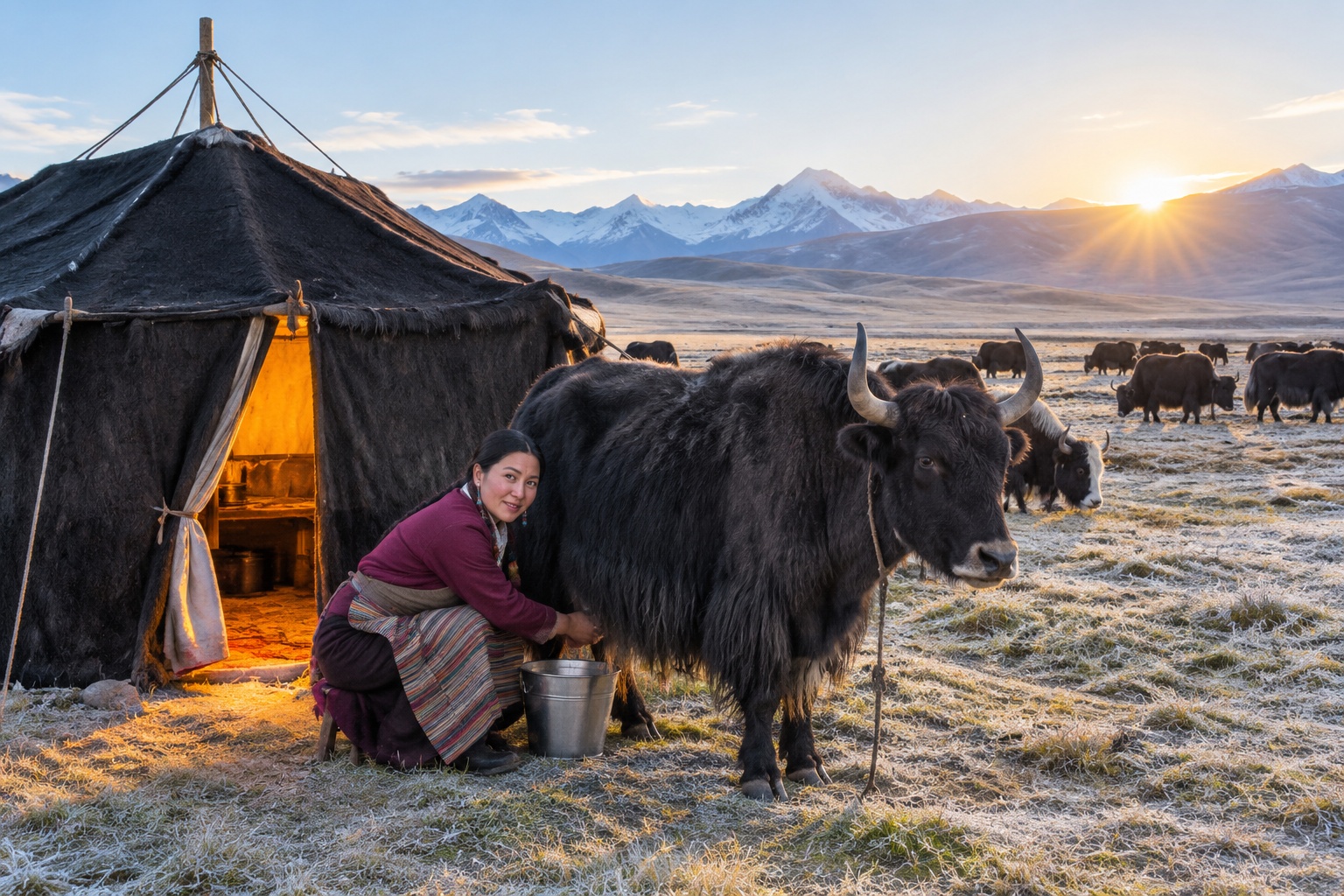
At dawn on the Tibetan Plateau, frost still glazes the grass and the air smells of woodsmoke and warm milk. Inside a black yak-hair tent, Drolma stirs a copper pot of butter tea, pours in fresh yak milk, and hands a bowl to her husband before he heads out into the grey light to round up the herd. Behind the tent, the family’s 150 yaks are already moving—dark shapes against a sky turning gold.
For the Tserang family, who live on the high grassland near Yushu in Qinghai Province, the yak is not just livestock. It is also their fridge, their bank account, their supermarket, and their fuel station, all rolled into one.
One animal, four lifelines
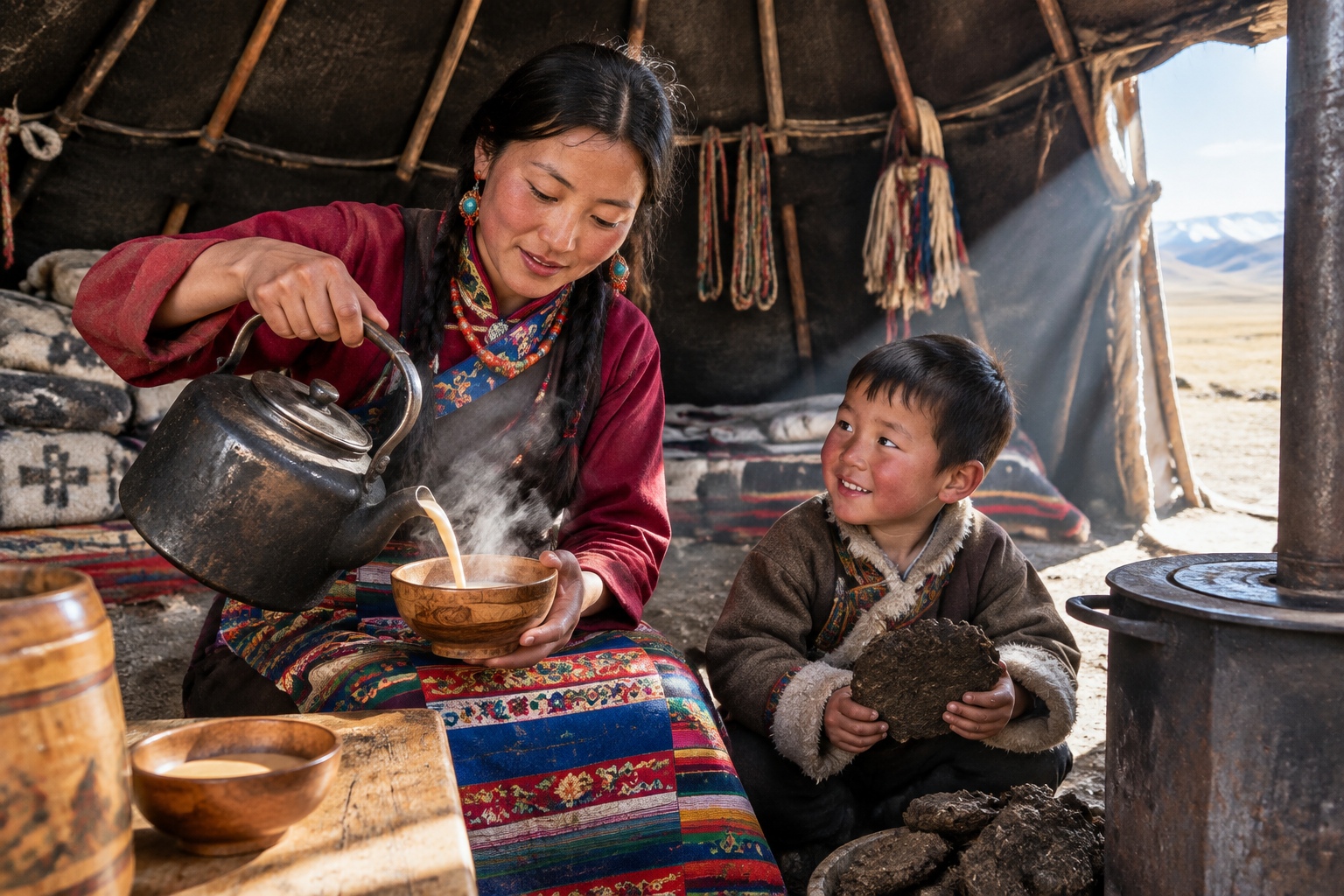
Yaks are built for the extremes of the Qinghai-Tibetan Plateau, where altitudes often pass 4,000 metres and winters can drop below minus 30°C. A single cow gives about four to six litres of milk a day, which the family turns into yogurt, butter, and hard cheese. Some is kept for the household; the rest is sold to a village depot twice a week.
Once a year, a few older yaks are sold for meat. The price depends on the season and the animal’s size, but in 2024 an adult yak could fetch between 8,000 and 12,000 yuan (about 1,100–1,700 US dollars). That is the family’s biggest cash payment of the year.
The yak’s thick hair is spun into ropes and blankets, and the tent itself is woven from it. The fine undercoat, called khullu, is used for scarves and sweaters sold in city boutiques. Leather from old animals is cut into boot soles and saddle straps. Nothing is wasted. The bones are boiled for soup, and the horns are sold to craftsmen who make combs and jewellery.
And when a yak is not providing food or income, it provides fuel: dried dung patties are collected by the children and stacked under a tarp, then burned on the stove. On the treeless plateau, there is no firewood, and this has been the only source of heat for centuries.
From self-sufficiency to cash
Tserang remembers a time when yaks were for survival, not for sale. His father used to barter meat for tea and flour at a small market town, and cash income was rare. Now the economy has changed. A cooperative in the next valley runs a small processing line that turns milk into high-end yogurt and cheese that is chilled and trucked to the provincial capital. Yak meat is vacuum-packed and sent to Beijing, Shanghai, and Shenzhen, where it appears in organic food shops and hotpot restaurants.
Some herding families have gone further. They buy a used refrigerator, install solar panels, and use mobile phones to sell skins, horns, and even dried yak meat on Chinese e-commerce apps like Pinduoduo and Douyin. There is a growing market in China and abroad for products that tell a story of clean grassland and traditional herding.
For example, a family in Henan County started a small yak yogurt brand in 2022. They borrowed money to buy a pasteuriser, learned to put QR codes on the cups, and now ship 400 cups a day to Lanzhou. That is just one story. Many more are trying.
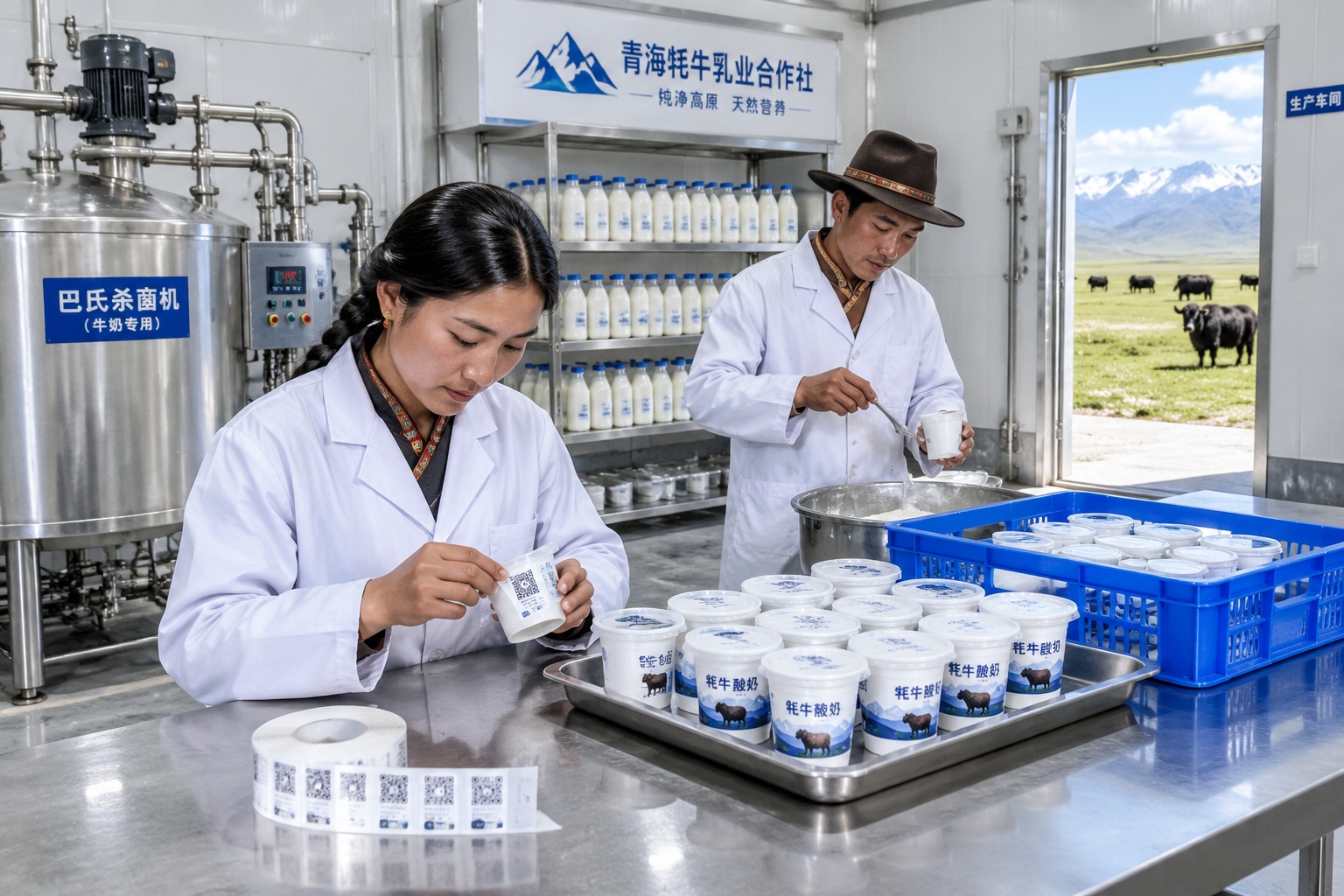
But not everyone can make the leap. Setting up a good processing line requires investment, hygiene licences, and marketing skills that rural families rarely have on their own. Most people, including Tserang, prefer to sell raw milk and live animals to cooperative managers they know, rather than risk the middleman stage.
The family budget: how many yaks does it take?
The Tserangs have about 150 yaks. That might sound like a lot, but the plateau’s harsh grazing means only about one calf survives per cow every two years. A herd like this can support a family of five, but just barely.
Here is a rough yearly budget for a family like theirs:
Income: 8–12 young yaks sold alive or for meat — 70,000–110,000 yuan. Milk products sold to the cooperative — 15,000–20,000 yuan. Wool and other small sales — 2,000–5,000 yuan. Government grassland subsidy — about 10,000 yuan. Total: 97,000–145,000 yuan.
Expenses: fodder and supplements in winter — 15,000–20,000 yuan; veterinary medicines and a vet’s occasional visits — 3,000–5,000 yuan; transport to market — 2,000–3,000 yuan; schooling and phone bills for the children — 20,000 yuan; a second-hand pickup truck and fuel — 10,000 yuan. Total: 50,000–60,000 yuan.
So a family can save about 40,000–80,000 yuan a year. That is enough to cover hospital bills, university fees, or a house deposit in a county town. Not rich, but not poor either.
What is changing on the grassland
Not everything fits neatly into the income statement. Climate change is bringing unpredictable snowfall and warmer winters that disturb the pasture cycle. The government’s grazing quotas and the “green fence” areas meant for restoration have reduced the number of animals some families may keep on state land. Young people often prefer to study in cities like Xining or Lanzhou and never come back to the slow rhythm of herding. Many families face a shortage of working hands.
The average age of a full-time herder in Yushu is around 50. At one local marriage fair last year, I noticed that most young brides and grooms had a plan to set up a shop or a trucking route instead of a tent. But the ones who did stay were often those who could link their parents’ skills with social media.
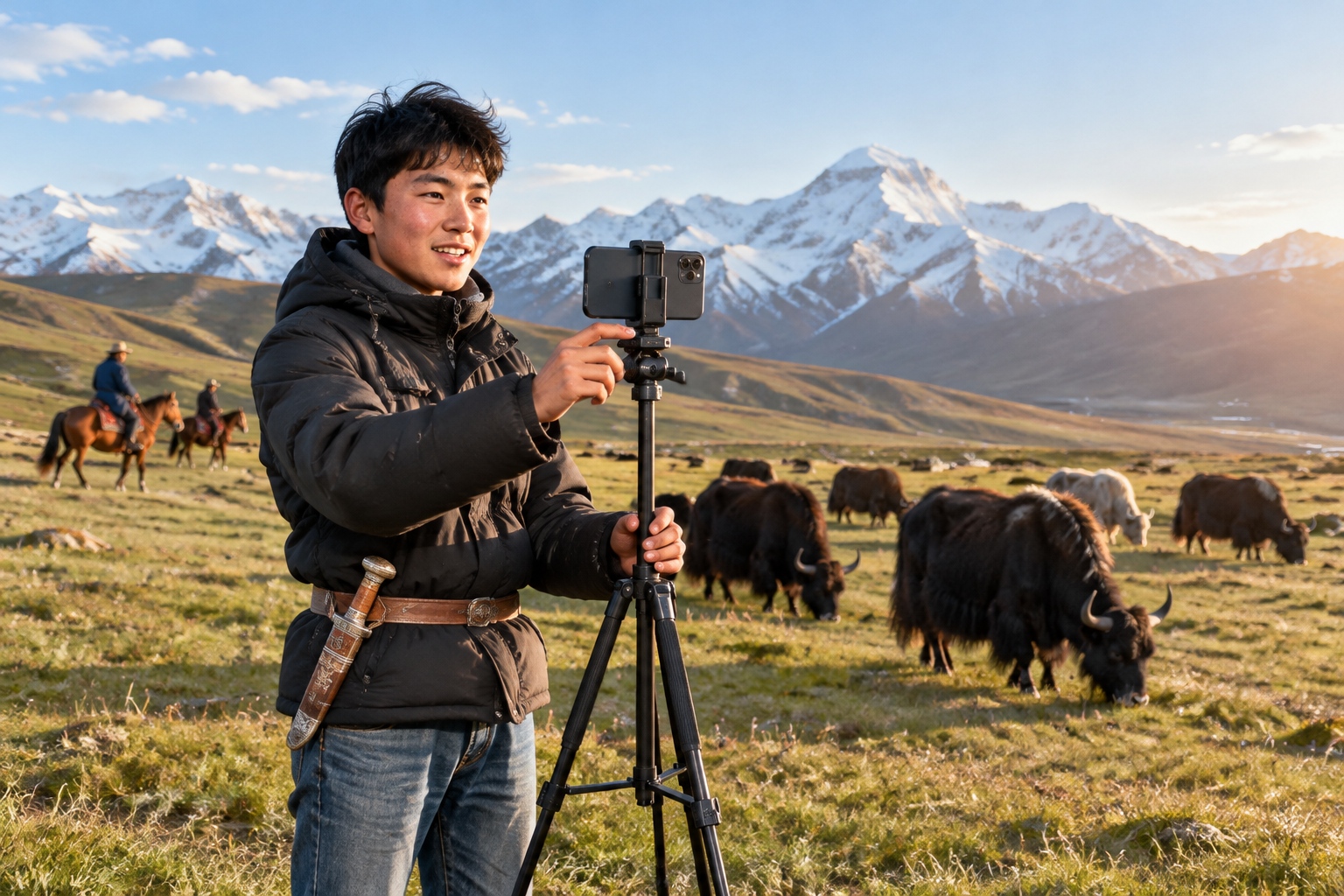
Yet there is also a younger generation choosing to stay, but differently. A few young herders have started filming short videos of their daily life—calving in spring, butter making, horse racing—and selling their products directly to viewers. They are learning marketing in Tibetan, Chinese, and even English, and talking about their culture without embarrassment.
When I visited a cooperative in Dari County, the manager, a former biology student named Sangdrol, put it plainly: “We are not trying to keep the past frozen. We want the yak to keep giving us a future.”
Tips for visitors: understanding the yak economy
If you travel to Qinghai, you do not need to be a farmer to appreciate what the yak means. Here are a few things worth noticing:
Look at the tents. A black one is traditional made of yak hair; white ones are canvas, usually for summer. The black tent marks a family that still moves with the seasons.
Share a cup of butter tea. It is salty, not sweet, and the butter added to the tea comes from yak milk. To refuse it politely can be difficult; to enjoy it is a small entry into the local rhythm.
Ask before taking a photo. Herders are usually happy, but they are proud people, and a camera can feel like an intrusion.
Try dried yak meat. It is chewy and smoky, and you will see it in every village shop. If you buy a bag, you are directly supporting the family that sold the animal.
Visit a cooperative if you can. Many will show you the dairy room and explain how milk travels from a yurt to a carton. That is where the wheel of the old and the new economy turns most clearly.
The yak is not a mascot. It is a partner. On the high plateau, where the sky feels close enough to touch, a single animal can still hold a family together, season after season.
Start the discussion at forum.chinacomes.com