
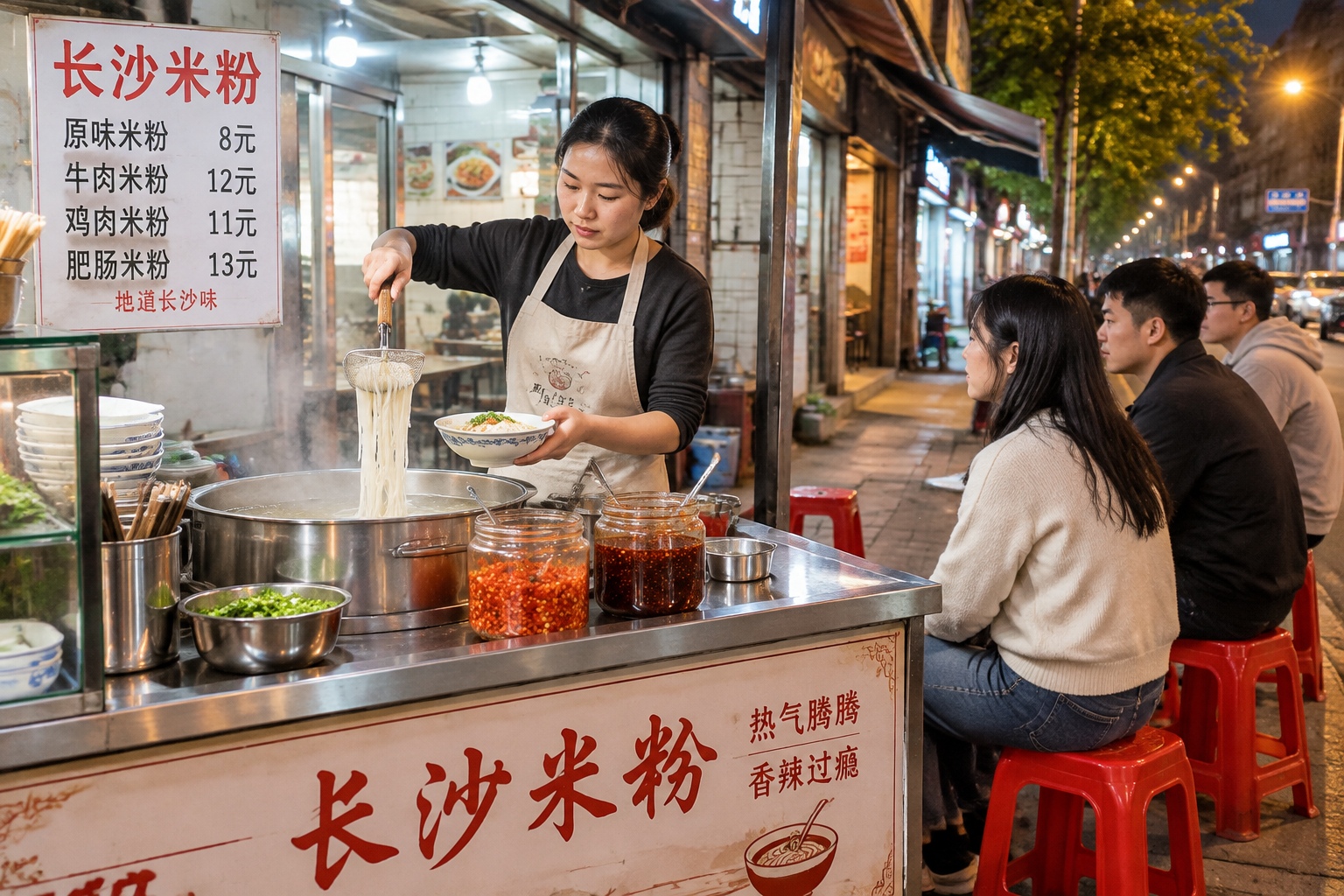

A bowl of rice noodles, and a jar of chili
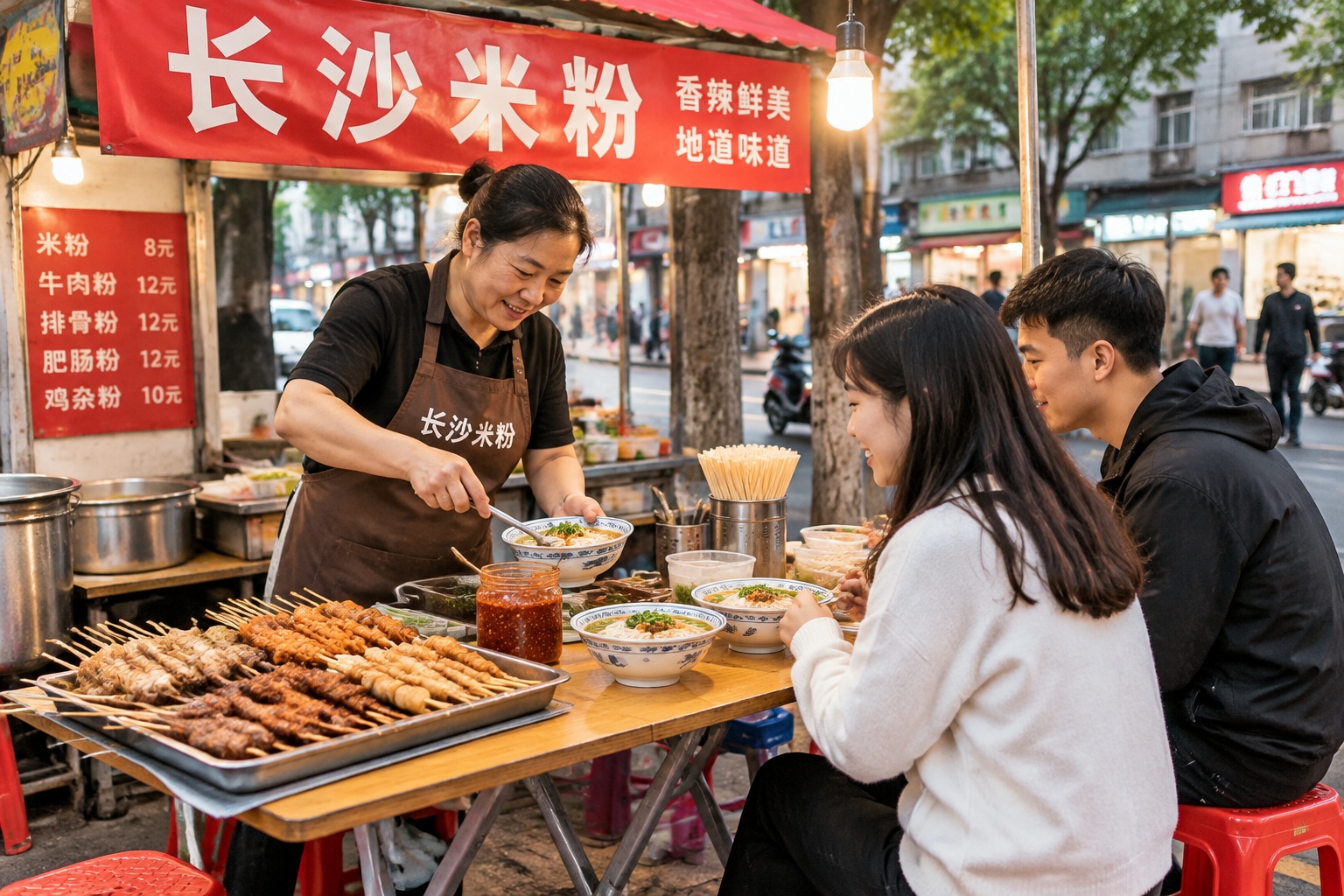
At 10 p.m. on a side street in Changsha’s Kaifu District, a vendor lifts a ladle of rice noodles from a steaming pot. She adds broth, pickled beans, scallions, and a spoonful of chopped red chili from a glass jar. The bowl costs 12 yuan, about $1.70. The chili is so ordinary that no customer asks where it came from.
Changsha, the capital of Hunan Province, is a city where chili is not a garnish. It is a daily habit: chopped chili in rice noodles, chili oil on stinky tofu, dried chili in stir-fries, pickled chili on the side. For overseas readers, Hunan’s reputation for heat is often treated as a tourist joke. In everyday life, it is also an economic fact. A street stall’s chili must be fresh enough, stable enough, and cheap enough to appear on the table every night.
That is why the interesting question is not why Hunan people eat so much chili. It is how the chili gets there. The answer runs through small farms, village collection points, cold-chain trucks, a wholesale market that wakes up at 3 a.m., and a network of traders and cooperative staff who mostly stay out of sight. This is the invisible supply chain behind a bowl of Changsha street food.
The first mile: picking chili before the city wakes
At 5:30 a.m. in a village outside Ningxiang, west of Changsha, the air is still cool. A farmer in her fifties moves along a row of peppers with a plastic basin. She picks only the firm, dark red ones. Green chilies go into another basket. Damaged fruit stays on the plant or is dropped into a separate bucket for local sauce makers. The work is fast but careful, because fresh chili bruises easily and bruises shorten shelf life.
Hunan is one of China’s major chili-producing provinces, with planting area often reported at around 2 million mu, or roughly 133,000 hectares. Most of that is not the famous premium pepper from Zhangshugang, a small town in Xiangyin County that sells at luxury prices. The everyday chili in a Changsha noodle shop is more likely to come from ordinary farms in Ningxiang, Liuyang, Yiyang, or Changde. A smallholder may have three to five mu, about half a hectare, and sell through a village broker or a cooperative.
The first sort happens in the field. Farmers separate chilies by color, size, and condition. A buyer at the collection point will look at the load, pinch a pepper, and set a price. In summer, when supply is heavy, the farm-gate price for common fresh chili can fall to 2 to 3 yuan per jin, about 30 to 45 cents per pound. In winter or after heavy rain, it can double. Farmers do not control that price. They control freshness, grading, and whether they can deliver on time.
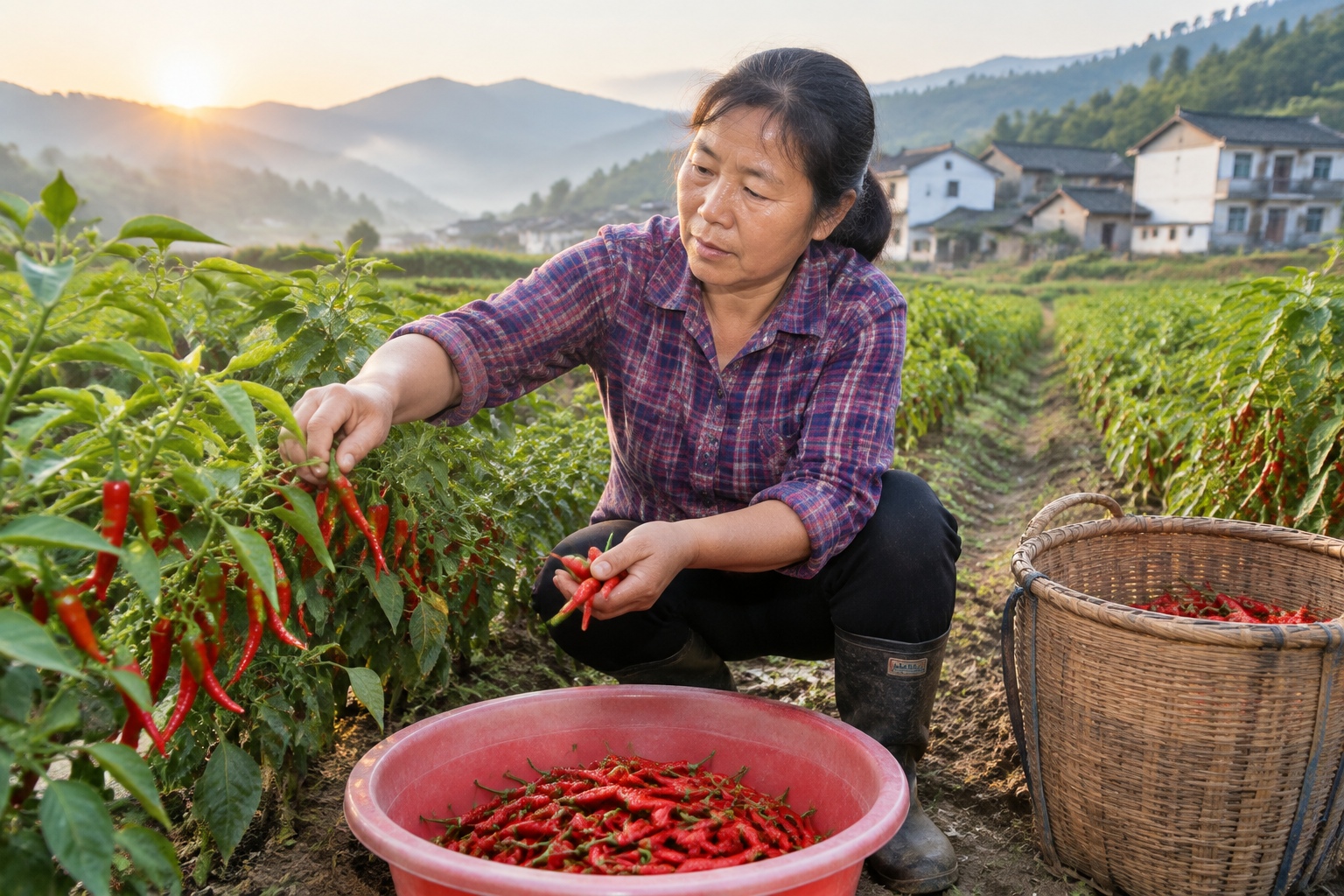
Fresh chili is a perishable product with a short clock. In hot weather, quality drops within hours. That is why the collection point matters as much as the field. It is the first place where a farm product becomes a supply-chain product.
The collection point: ice, boxes, and a truck headed east
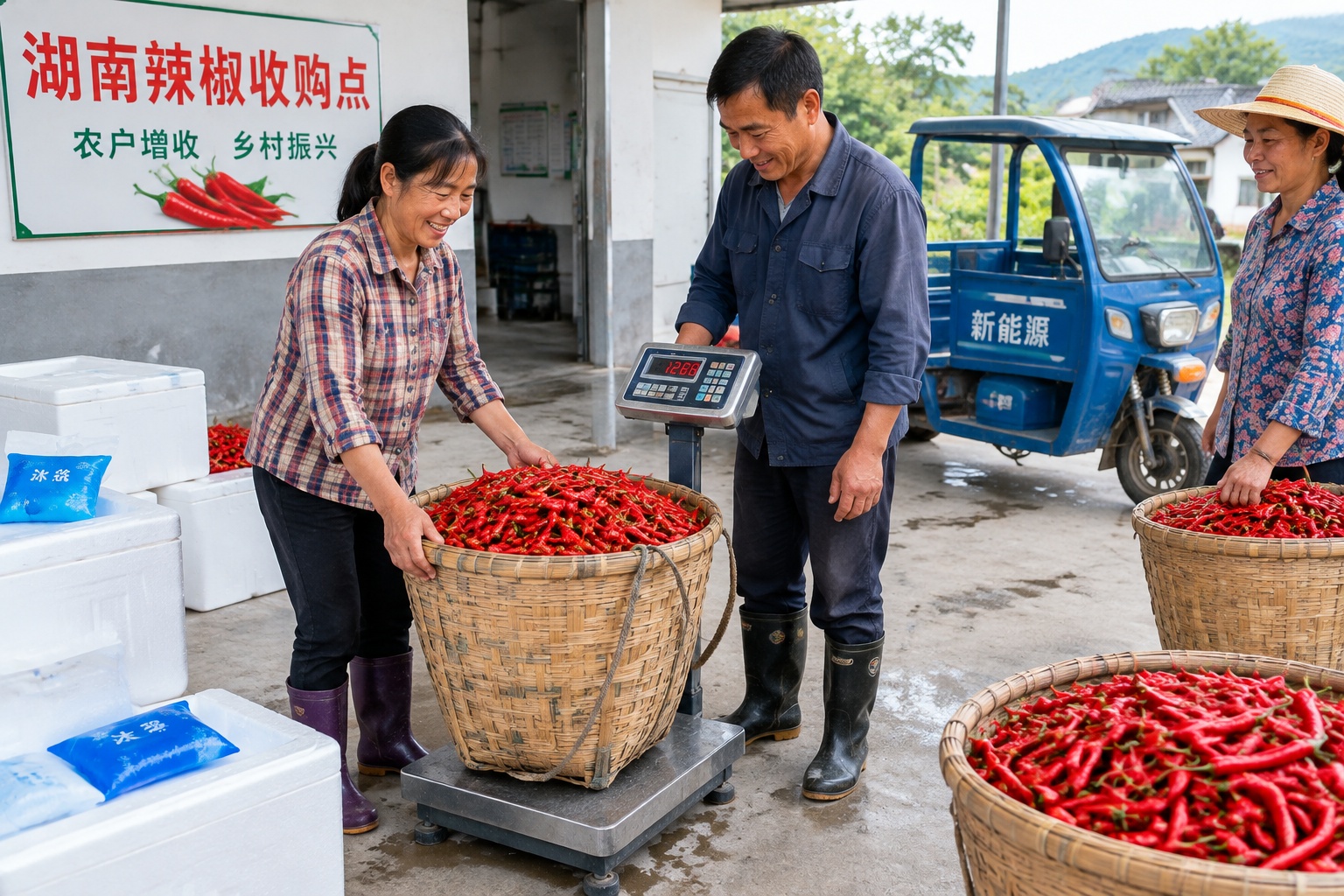
By 8 a.m., a collection point beside a county road is busy. Farmers arrive on three-wheeled electric carts and motorbikes. Workers weigh baskets on a digital scale, pour the chili onto a sorting table, and pack the best grade into foam boxes. In summer, they add ice packs. In cooler months, the boxes may travel in an ordinary truck. The difference between a good and bad load is often not the chili itself but the two hours after picking.
From here, a cold-chain truck or a shared logistics van takes the chili to Changsha. The distance is often only 60 to 120 kilometers, but the route matters. A truck that leaves at 9 a.m. can reach the wholesale market before the next morning’s trading peak. A truck delayed by traffic or rain may arrive with softer fruit and a lower price. Transport adds a few mao per jin, but for a small trader, that margin is the business.
Over the past decade, cold-chain capacity has moved down to smaller towns. Foam boxes, ice packs, and pre-cooling are no longer unusual. That change is quiet but important. It allows ordinary fresh chili to travel farther and arrive more consistently, and it lets urban buyers treat chili as a daily product rather than a seasonal gamble.
The 3 a.m. wholesale market
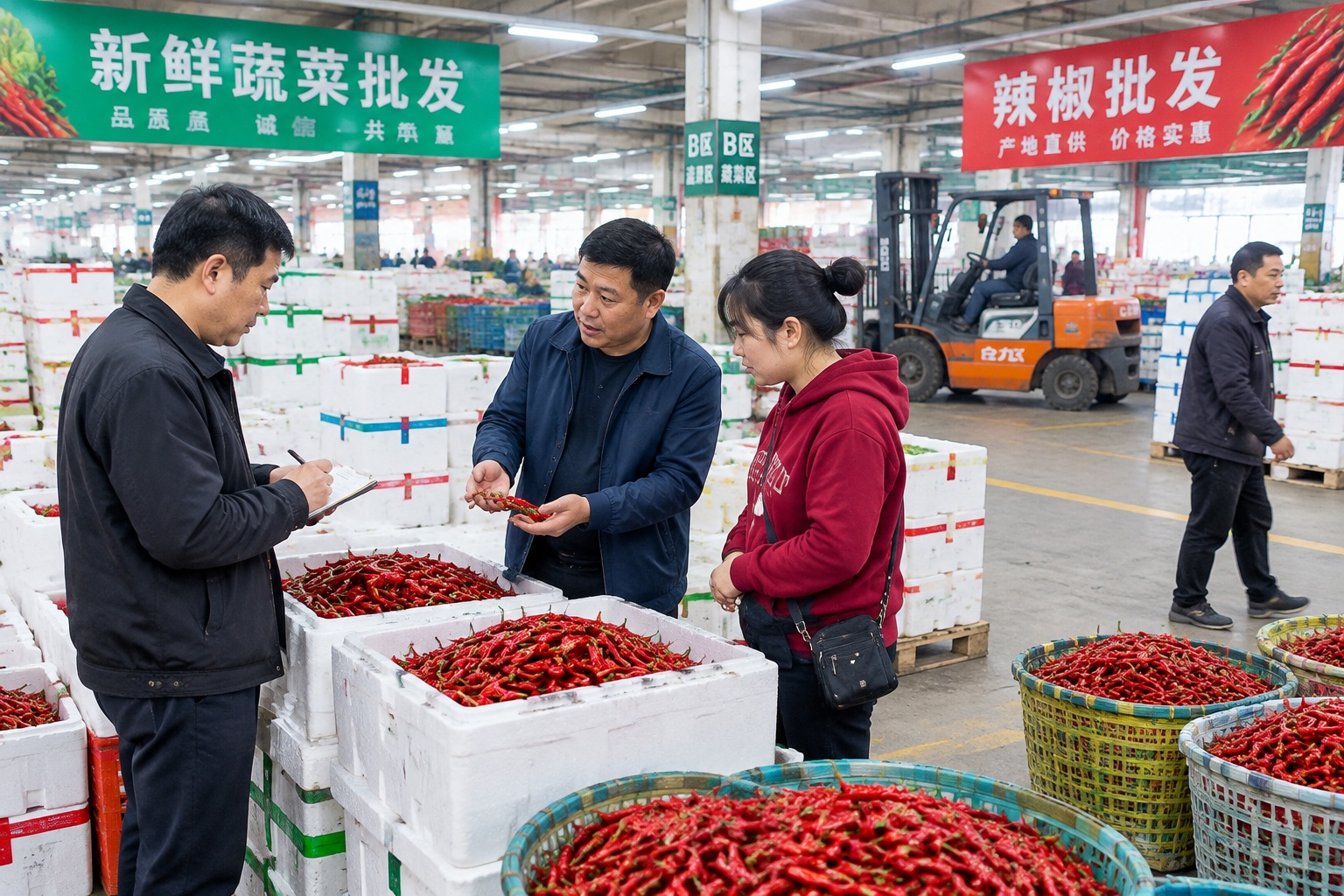
At 3 a.m., the Huangxing Haijixing agricultural wholesale market in Changsha County is already lit. The market, which opened in 2016 and took over much of the wholesale function of the old Mawangdui market, is one of the city’s main food distribution hubs. Trucks back into loading bays. Workers move boxes of greens, tomatoes, and peppers. The chili section smells sharp and clean.
Restaurant owners and street vendors come here to compare prices. A noodle shop owner may buy 10 to 20 jin of fresh chili at a time, plus dried chili and pickled chili from separate stalls. A barbecue stall buys larger volumes of chili powder. A small vendor may not come in person; instead, a supplier sends a message on WeChat with today’s price and delivers by electric tricycle before noon. Cash is rare. Payment goes through a phone.
This is where the city’s chili demand becomes visible. Prices are not posted like stock quotes, but traders know the range. A sudden rain in a growing area, a holiday weekend, or a fuel price change can move the wholesale price within days. Vendors absorb some of it and pass some on. The market is not a perfectly efficient machine. It is a crowded, practical place where information travels by phone calls and repeated relationships.
In the kitchen: chili as flavor and as cost
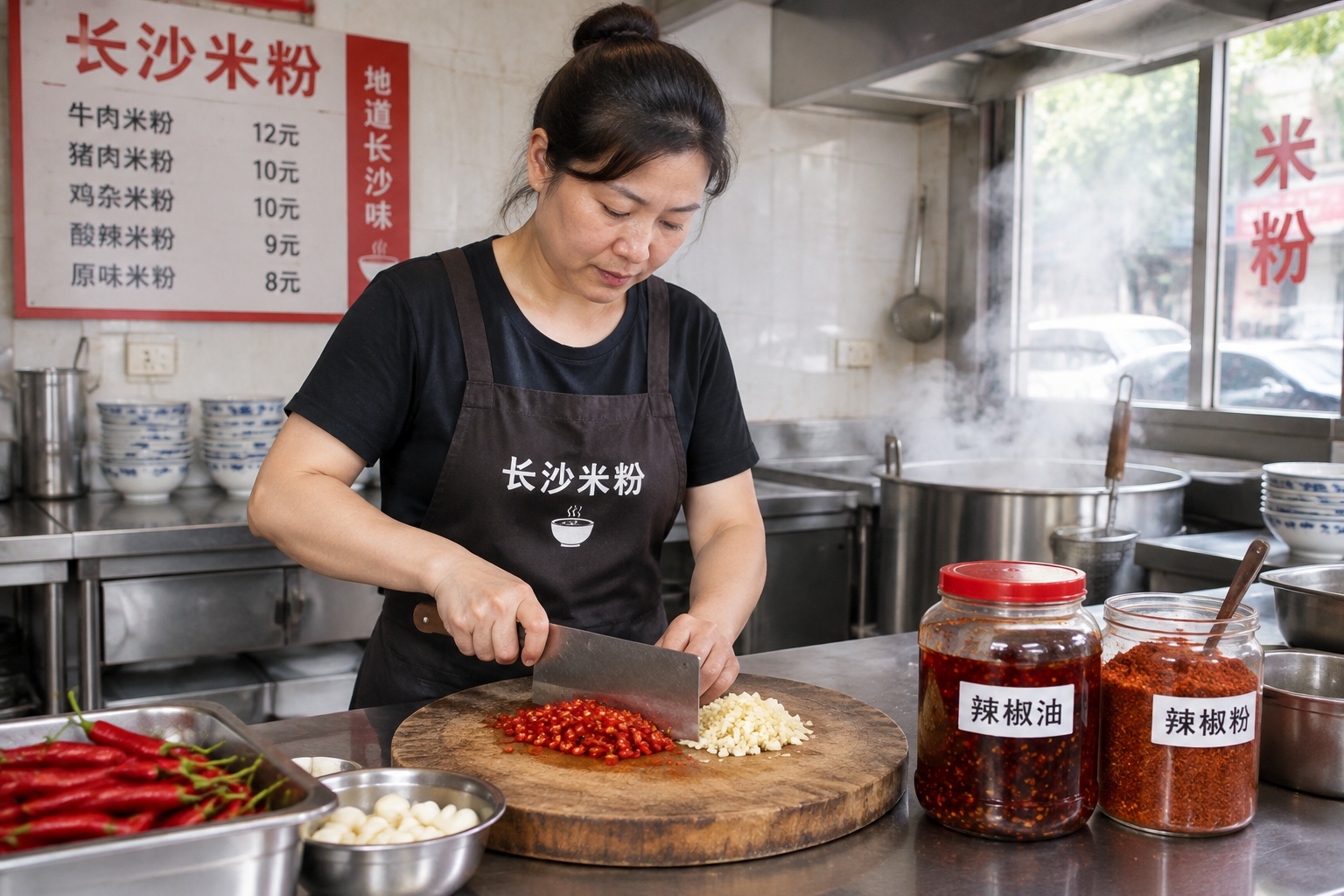
Back in the noodle shop, the chili is processed in a small kitchen. Fresh red chili is chopped with salt and garlic for a quick pickled chili. Dried chili is ground for chili powder. Oil is heated and poured over chili flakes for chili oil. Each shop has its own ratio. Customers notice the difference, even if they never see the supply chain behind it.
The economics are small but real. A bowl of rice noodles sells for 10 to 15 yuan. The chili in one bowl may cost only a few mao, less than 10 cents. That seems negligible, but a shop selling 300 bowls a day uses a meaningful amount of chili, oil, and labor. When fresh chili prices rise, the owner may adjust the mix: more dried chili, less fresh; a milder oil; a smaller bowl of pickled chili on the table. The goal is not to cheat the customer. It is to keep the price stable in a neighborhood where a 2-yuan increase is noticed.
This is the part of the supply chain that foreigners often miss when they see Chinese street food as cheap and abundant. Cheapness is not a natural fact. It is the result of many small cost decisions, made daily, by people who know exactly how much a box of chili costs.
The invisible network: cooperatives, platforms, and city rules
The network behind the chili is more organized than it looks. Cooperatives aggregate small farmers’ output, provide seeds and basic standards, and sometimes sign purchase agreements with buyers. Local brokers connect farms to wholesale markets. Community group-buying platforms and e-commerce companies have added another channel, especially for standardized boxes of chili and processed products such as chopped chili and chili sauce. Some wholesale markets now use digital trading records, and a few cooperatives attach traceability codes to boxes so buyers can check the origin.
City rules also shape the chain. Night markets and street stalls are more regulated than they were a decade ago. Vendors need permits, waste management, and designated hours. That can raise costs, but it also makes the street food scene more stable. The supply chain has adapted: deliveries are timed to fit market rules, and vendors order smaller quantities more often.
The challenges are real. Weather is more volatile. Labor in rural areas is aging; young people prefer city jobs. Cold-chain costs are still a burden for small traders. Price cycles can hurt farmers who planted too much after a good year. The chain is efficient at moving chili, but it does not eliminate risk. It spreads it across many people.
Why the street stall still works
At 11 p.m., the same Changsha vendor is still working. The jar of chopped chili is half empty. A customer asks for extra chili, and she adds it without comment. The bowl still costs 12 yuan. Behind that small transaction is a chain that began before dawn in a village field, passed through a collection point, a cold-chain truck, a wholesale market, and a shop kitchen. Most customers will never see it. They do not need to. But the chain is why the food is both spicy and affordable, and why a city of millions can eat the same daily dish without thinking about where it came from.
The invisible supply chain is not a miracle. It is a working arrangement of farms, trucks, markets, and rules. It has gaps and costs. But it is also a useful answer to a common outside question about China: how does everyday life keep running at this scale? Sometimes the answer is in a jar of chili on a street stall table.
Start the discussion at forum.chinacomes.com