
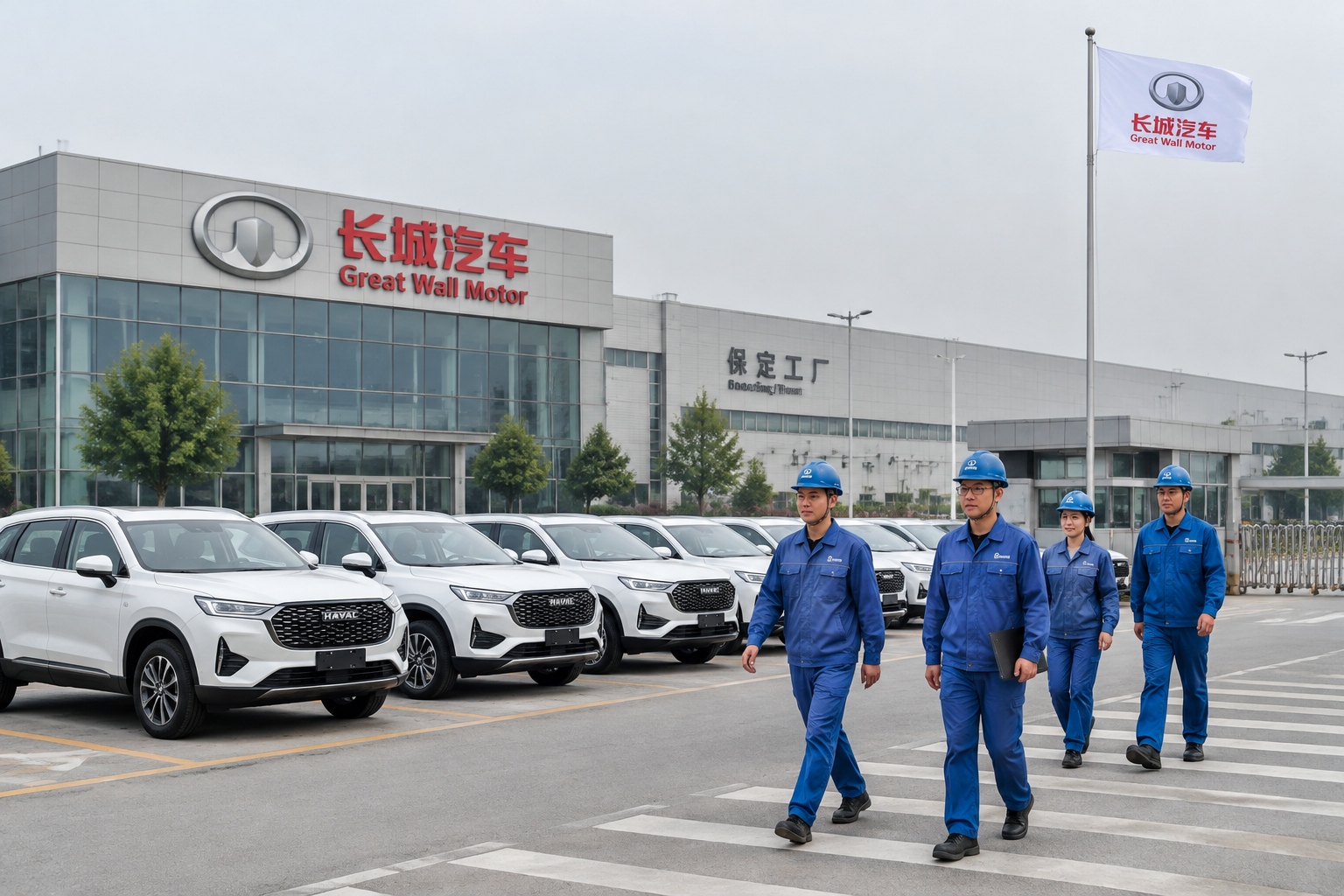

A Car Factory in the Shadow of Beijing
Drive an hour and a half southwest of Beijing, past the endless construction sites and dusty coal yards, and you’ll reach Baoding, a city of nearly 12 million people that most foreigners have never heard of. On its outskirts, a different kind of landmark dominates the skyline: the headquarters and giant production plants of Great Wall Motor, the company that makes more SUVs in China than anyone else. This is where the Haval H6, the country’s most popular SUV for over a decade, rolls off the line by the millions. And this is where the company’s founder, Wei Jianjun, has chosen to stay, even as rivals move to the glamour of Shanghai or Shenzhen. The story of Great Wall is inseparable from the story of Baoding itself.
From a Small Workshop to China’s SUV King
Great Wall didn’t start with SUVs. In 1990, a 26-year-old Wei Jianjun took over a failing 60-person auto repair shop in a rural part of Baoding. The company’s first product was a pickup based on the Toyota Hilux, sold under the name “Deer.” By the late 1990s, Great Wall had become the top pickup maker in China. But pickups were a niche market. Cars, the biggest market segment, were dominated by joint ventures like Volkswagen and Toyota.
Wei decided to bet on a segment that nobody else was taking seriously: SUVs. In 2002, the company released the Safe, a boxy SUV inspired by the Isuzu Axiom. It sold well. Then came the real breakthrough: the Haval brand, launched in 2013 with the H6. The H6 was cheap, spacious, and reliable—at roughly $16,000, it cost about half as much as a comparable Toyota RAV4. It wasn’t flashy, but it did everything a Chinese family needed: it carried five people, it could handle the rutted roads of a country town, and it looked like a real SUV. By 2016, the H6 was selling over 450,000 units a year, a record that still stands today.
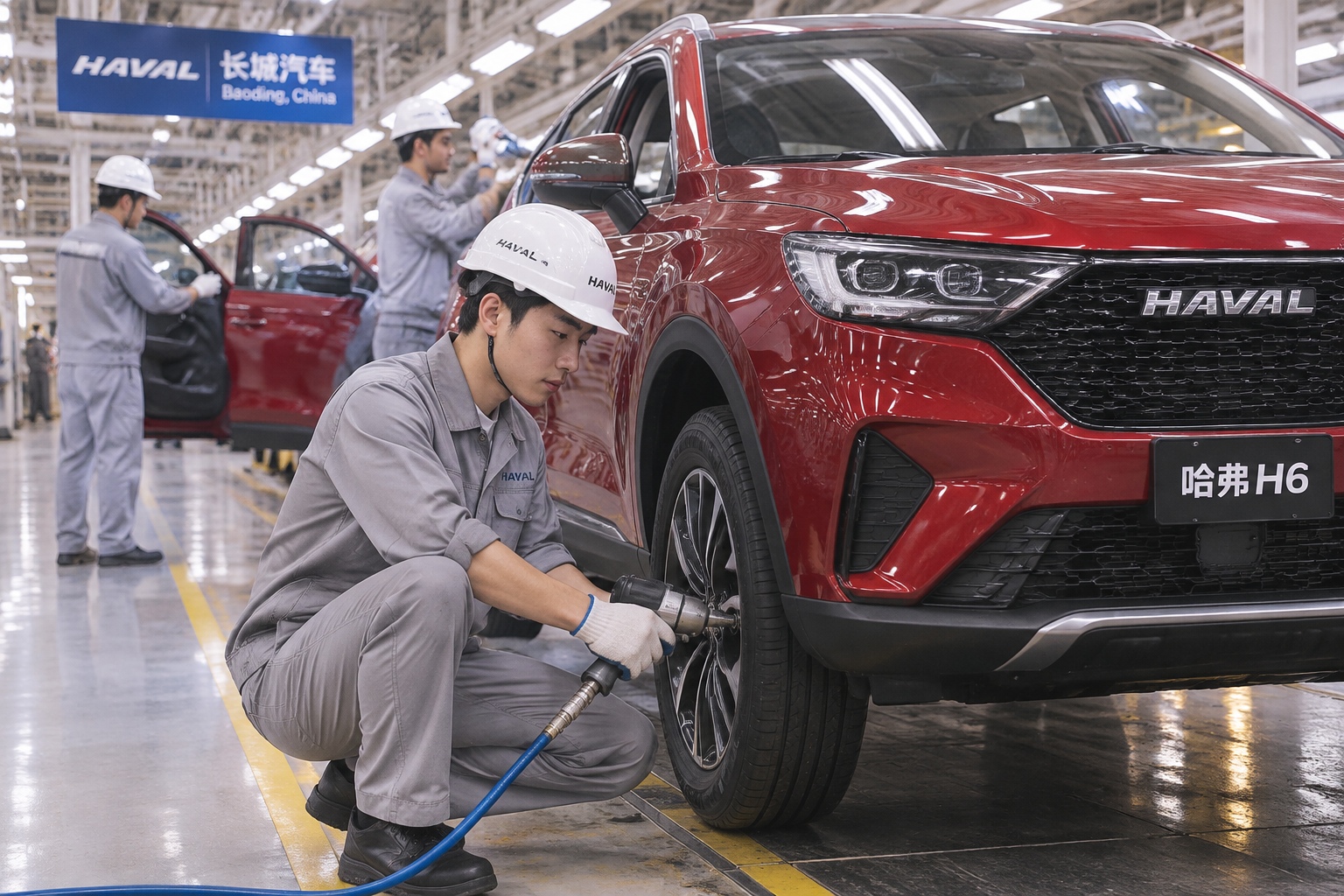
Why Great Wall’s SUVs Won Over Chinese Drivers
If you’re used to the global market, the success of a homegrown SUV from an unknown city may seem puzzling. But Great Wall understood something that global brands missed: the majority of Chinese car buyers in the 2010s were first-time buyers from smaller cities. They didn’t care about brand heritage or driving dynamics—they cared about space, value for money, and turning heads in their neighborhood.
Great Wall also had a key advantage: speed. While global carmakers took four years to develop a new model, Great Wall could do it in under two, thanks to a vertically integrated supply chain and a pragmatic engineering culture. It wasn’t unusual for a new Haval to go from sketch to showroom in less than 18 months.
This speed was made possible by Baoding. The city had a deep pool of mechanics, welders, and electrical engineers from its military-industrial past. Great Wall tapped into that, but it also built its own technical center and test tracks, and created a network of suppliers clustered around its factories. In effect, the company created a mini-Detroit on the edge of Beijing. But unlike Detroit, it kept costs low and profits high—Great Wall consistently posted profit margins above 8% in its SUV era, something many American automakers could only dream of.
Baoding: The Unlikely Engine Room
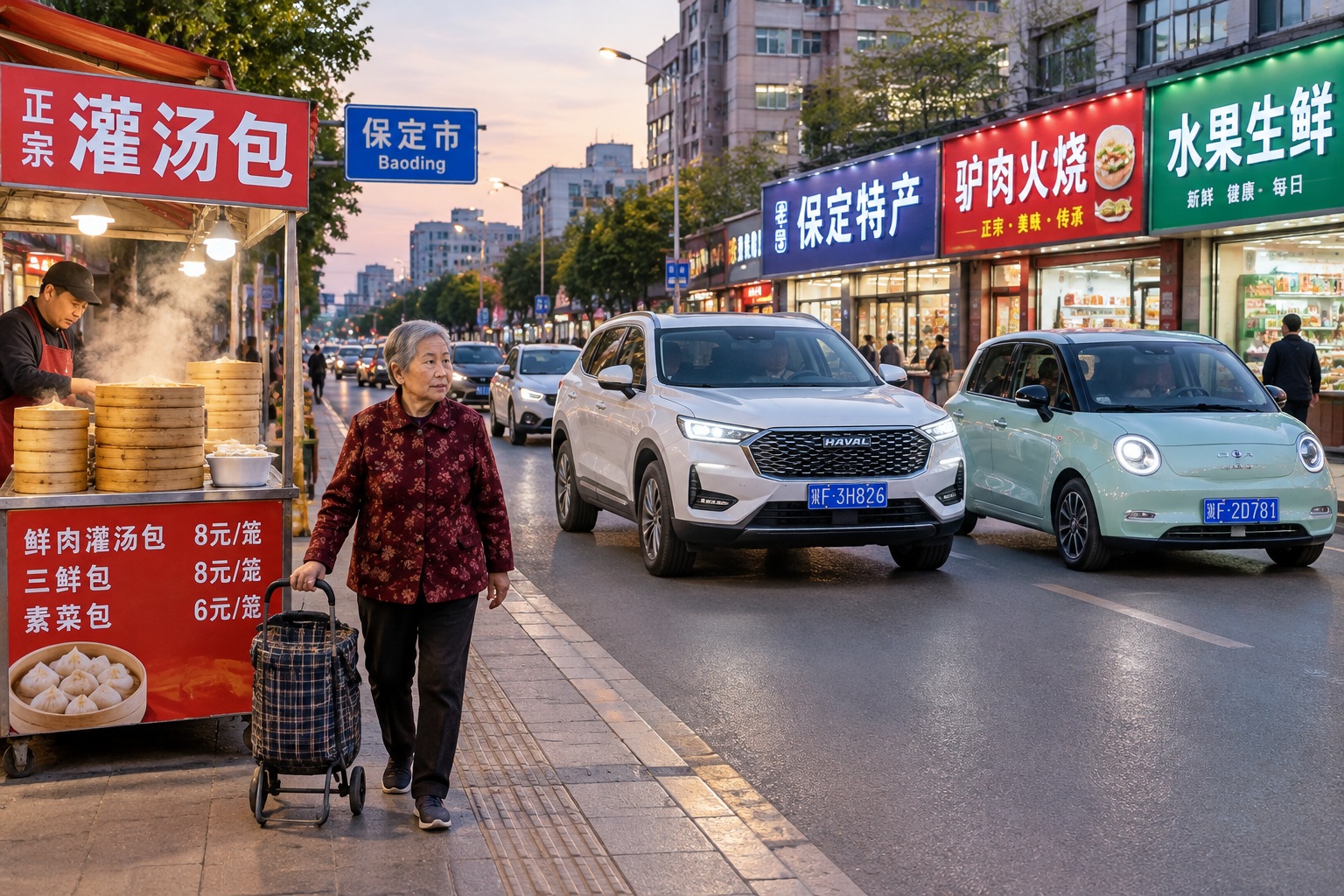
You won’t find Baoding on many maps of global auto hubs. It’s a midsize city in Hebei province, one of China’s most polluted and least glamorous provinces. But for Great Wall, Baoding was perfect. Land was cheap, labor was eager, and the local government was desperate for a champion. In the early 2000s, the city gave Great Wall a massive plot of land for its first factory and built roads, power lines, and a highway linking Baoding to the Beijing-Tianjin-Hebei megaregion. In return, Great Wall became the city’s top employer and taxpayer. Today, roughly 200,000 people in Baoding work directly or indirectly for the company—in factories, in parts plants, or in the thousands of small restaurants, hostels, and shops that serve the workers.
This symbiotic relationship is a common pattern in Chinese industrial policy. But Great Wall also benefited from a more intangible factor: Wei Jianjun’s roots. He was born in Baoding, and his father was a well-connected local businessman. Wei could rely on personal relationships that a foreign company could never access. He also had a stubborn engineer’s mindset—he reportedly tested his own cars on rural roads and once said that if a car couldn’t handle the road to his mother’s house, it couldn’t handle China.
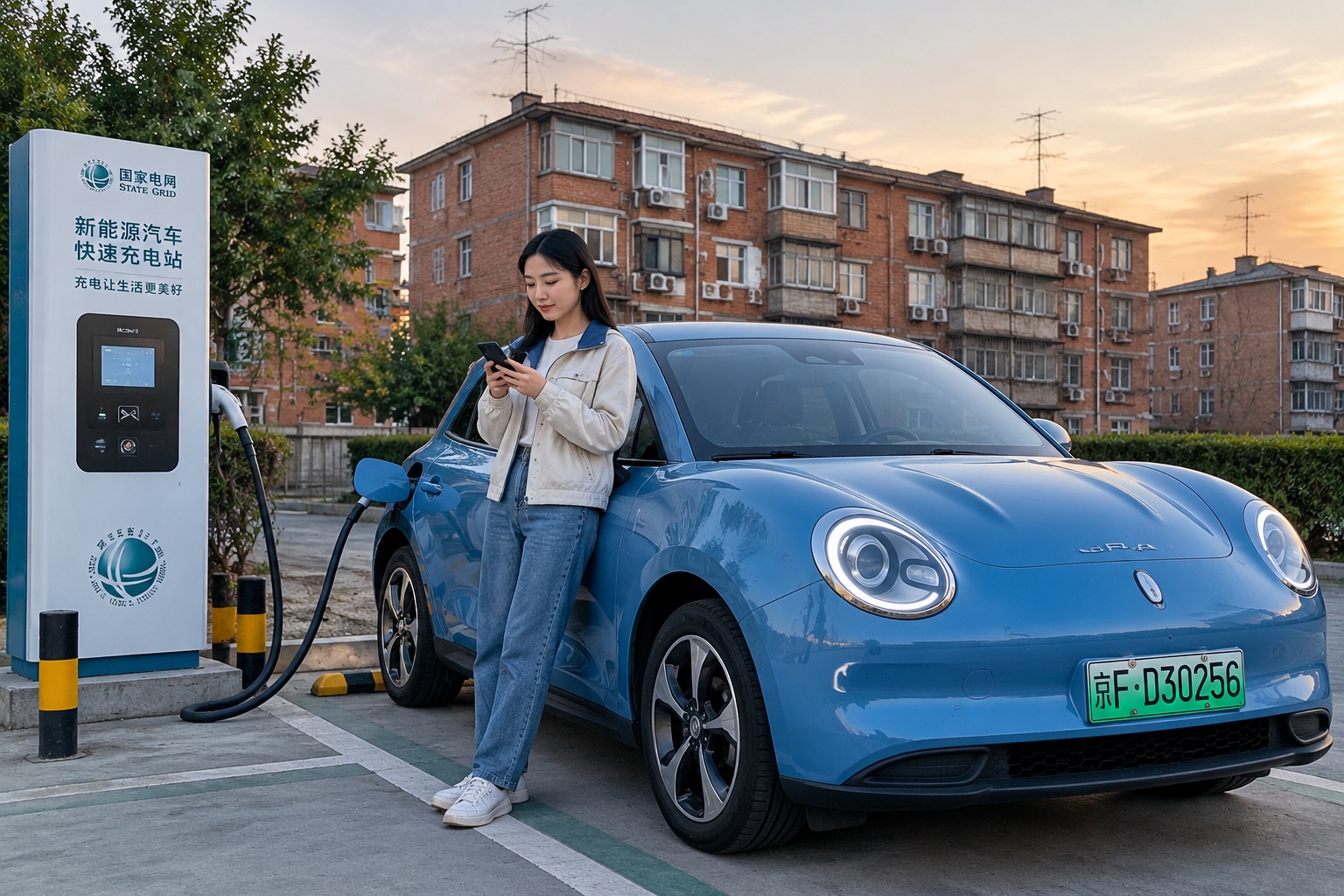
The Electric Crossing: Great Wall’s Next Chapter
The glory days of the gasoline SUV era are fading. BYD and other electric-vehicle makers have pushed Great Wall from the top spot in the Chinese auto market. To stay in the game, Great Wall is pivoting to electrification—but it’s doing so on its own terms. In 2018, it launched ORA, an EV brand aimed at young urban women, with retro-chic design. It introduced Tank, a retro off-road line offering petrol, hybrid, and pure EV versions. And it’s making the Haval brand increasingly electrified, with a plug-in hybrid H6.
The new models are still developed and built in Baoding. A giant factory for the Tank brand was completed in 2021, and the company is now investing in battery recycling and hydrogen fuel cells. Yet the transition is not easy. Two decades of success with cheap gasoline SUVs have made Great Wall a laggard in software and autonomous driving. The company’s market capitalization has been flat since 2021, and its EV market share in China is in the single digits.
What Great Wall’s Story Tells Us About Modern China
For a global reader, Great Wall’s story is more than a business case. It’s a window into how Chinese capitalism works. In the West, we often imagine China’s economic success as a top-down state project. But in Baoding, you see a more organic process: a pragmatic entrepreneur exploiting local advantages, a local government offering land and tax breaks, and a workforce willing to put in long hours for modest pay. The result is a company that is globally competitive in a sector—cars—that America and Europe thought impossible to crack only a decade ago.
Of course, Great Wall’s future is uncertain. It now competes with Tesla and BYD, not just Jeep. It is also wrestling with a generational shift: young Chinese are less interested in a bulky gas-guzzling SUV and more drawn to sleek, high-tech EVs with smartphone-like features. But whatever happens, Great Wall will always be remembered as the company that turned a city of nearly 12 million into a car-making powerhouse—and proved that in China, you don’t need to be in Shanghai or Shenzhen to build a global brand.
Start the discussion at forum.chinacomes.com