
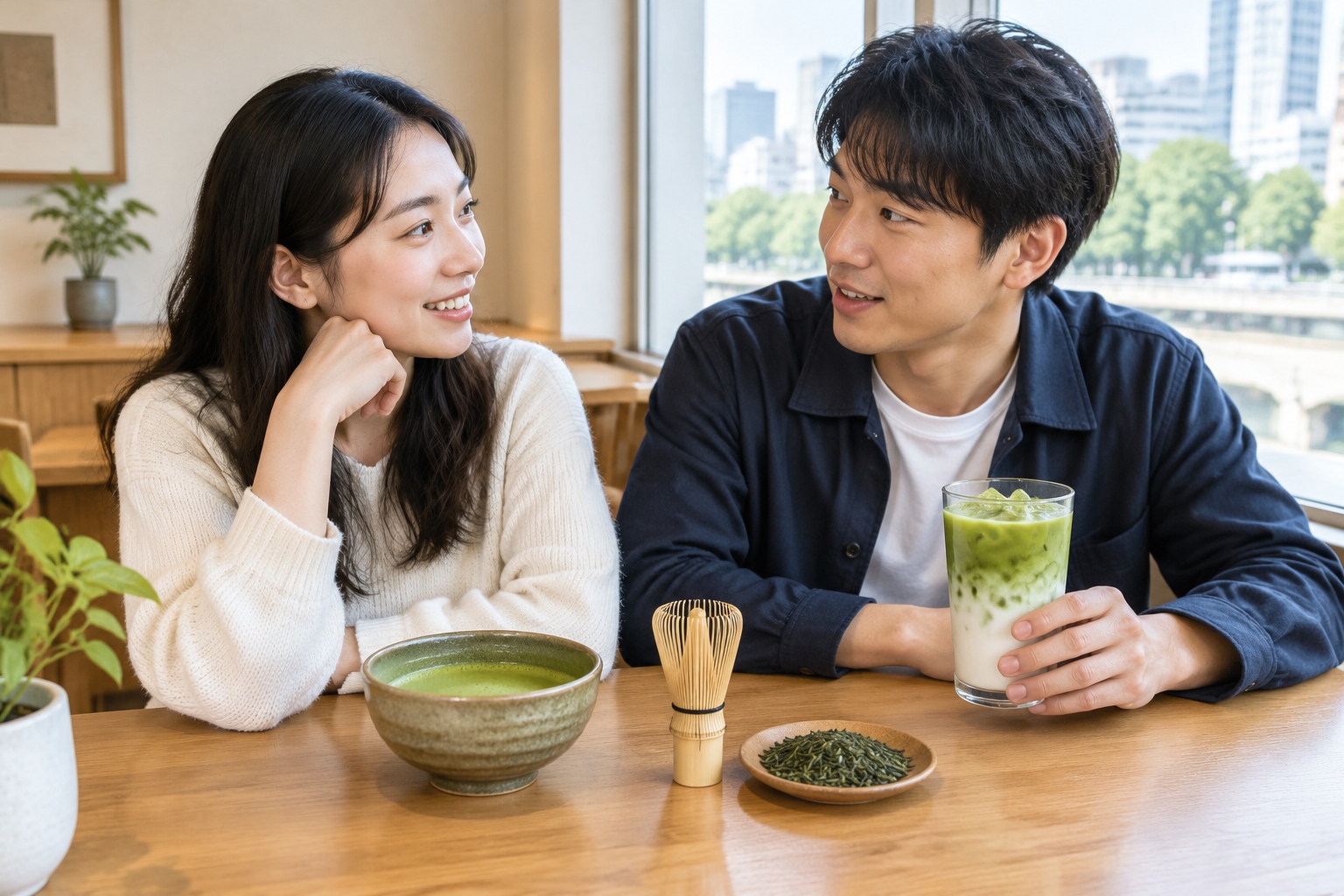

A Matcha Latte and an Old Question
On a wet Saturday in Hangzhou, a friend from London ordered a matcha latte at a small cafe near the Grand Canal. The drink arrived in a tall glass, bright green at the bottom, milk swirling above it. She took a photo and said, “This is so Japanese.” The barista, a young man in a black apron, smiled and said, “Actually, matcha started in China.” My friend put down her phone. “Really?”
That question follows matcha around the world. In London, New York, and Sydney, matcha usually arrives with Japanese associations: Kyoto tea houses, Zen temples, wooden bowls, quiet gardens. In China, the same green powder appears in bakeries, bubble tea shops, office drawers, and supermarket shelves. So which story is right? The answer is both, but they are not the same story.
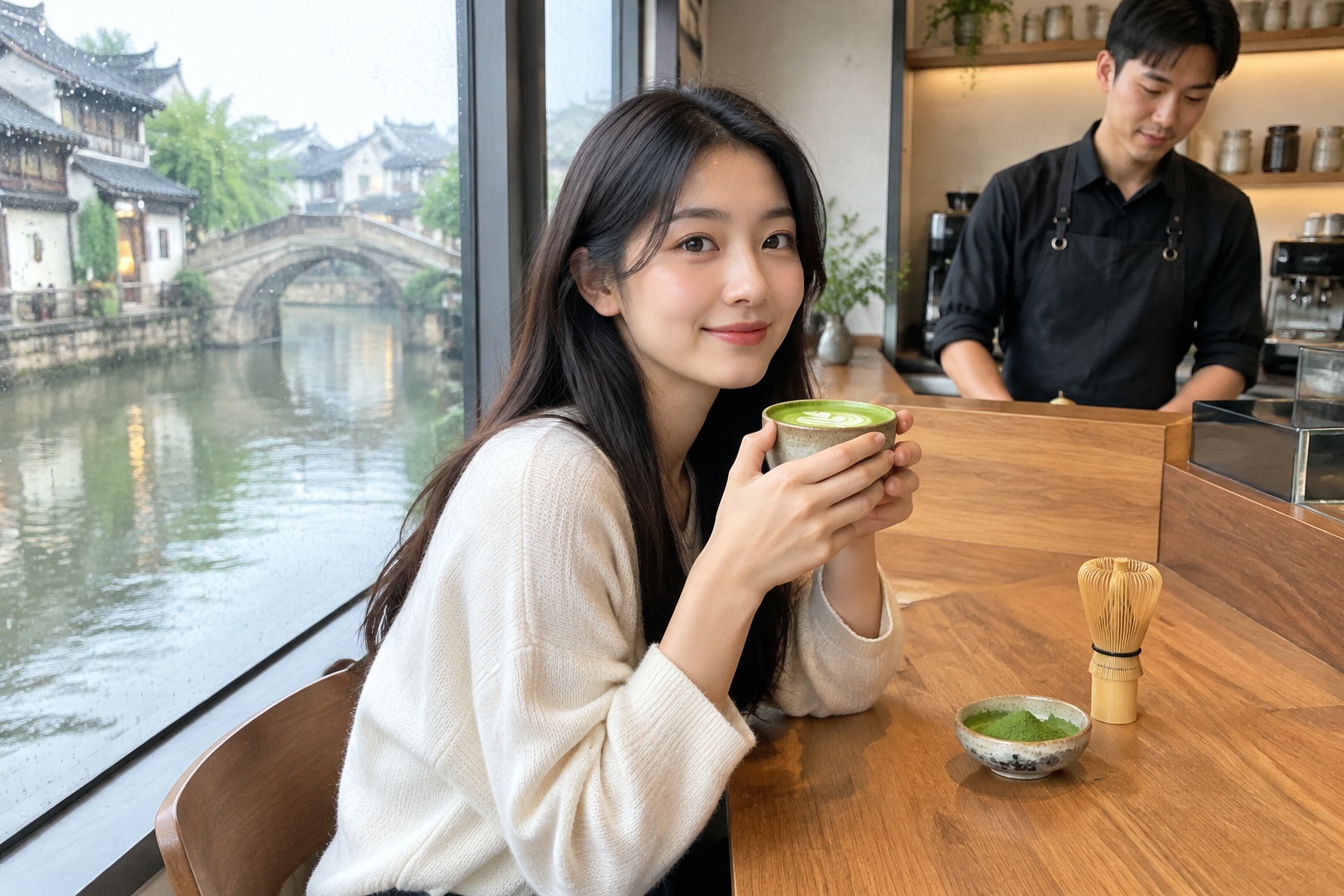
The Song Dynasty Tea That Traveled
Long before matcha became a global cafe ingredient, Chinese tea drinkers were grinding tea into powder. During the Song dynasty, roughly from the tenth to the thirteenth century, a style called diancha became fashionable among scholars, monks, and prosperous city dwellers. People placed fine tea powder in a bowl, added hot water, and whisked it with a bamboo tool until a pale foam rose. Tea contests judged the foam’s texture and staying power. Tea houses in cities such as Kaifeng and Hangzhou treated tea as both daily refreshment and social ritual.
Buddhist monks carried tea seeds and tea-making knowledge to Japan. Japanese monks who studied in China brought back seeds, bowls, and ideas about tea. By the twelfth and thirteenth centuries, tea cultivation was spreading in Japan, and powdered tea was becoming part of temple life. Over time, Japanese tea culture developed its own grammar. Matcha became central to chanoyu, the way of tea, a practice shaped by Zen Buddhism and later formalized by tea masters such as Sen no Rikyu in the sixteenth century. The Japanese tea ceremony gave matcha a highly structured setting: specific bowls, bamboo whisks, seasonal flowers, prescribed movements, and shared silence.
In China, powdered tea did not disappear overnight, but the center of gravity shifted. By the Ming dynasty, loose-leaf tea brewed in pots and glasses became dominant. Chinese tea culture moved toward appreciating leaf shape, aroma, water temperature, and the long conversation around a pot. The old whisked-tea method survived more strongly in Japan than in China. That is why a technique with Chinese roots became, in the modern imagination, a Japanese signature.
What “Matcha” Means Today
This is where the conversation often gets messy. Matcha’s processing method has Chinese precedents. The word matcha, the global cafe culture around it, the ceremonial image, and many of the best-known brands were shaped in Japan. Both statements are true. Culture is not a package that stays sealed. It moves, changes hands, and picks up new meanings.
The useful question is not who owns matcha. It is how this green powder traveled, and what different societies did with it.
A Day of Tea in China
Walk into an ordinary Chinese office at 9 a.m. and you may see three kinds of tea on the same desk. One colleague has a steel thermos with loose-leaf oolong. Another has a tea bag from a supermarket box. A third is drinking a chilled bottle of green tea bought at a convenience store for about five yuan. At 3 p.m., someone orders milk tea for the team. The delivery rider leaves a cardboard carrier at the front desk, and the office smells of roasted tea, cream, and sugar.
In the evening, a bakery sells matcha rolls, matcha cookies, and matcha ice cream. A supermarket may stock matcha powder next to cocoa powder and instant coffee. None of this feels ceremonial. It feels like daily consumption. A young person in Shanghai might drink tea without ever sitting through a formal tea ceremony. They may know more about a tea shop’s seasonal menu than about Song dynasty tea history.
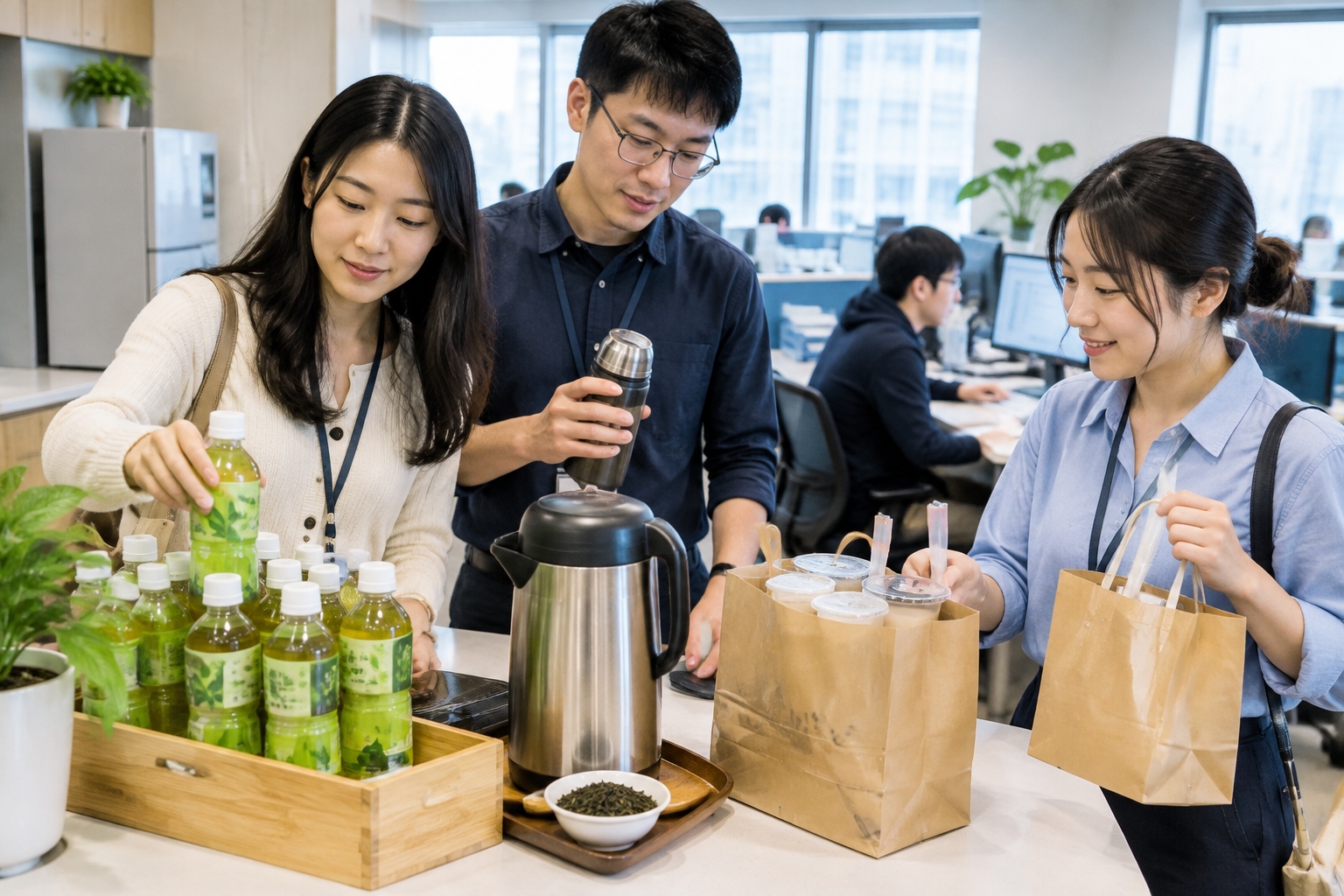
That everyday quality is important. China’s tea market is enormous and highly segmented. There are cheap bottled teas, 15-to-25-yuan milk teas, 100-yuan gift boxes, and 1,000-yuan tins of rare leaves. Tea is sold in convenience stores, live-streamed from mountain farms, and served in quiet studios where a host pours one small cup at a time. The same country can contain all of these habits because tea is not one thing. It is a household drink, a status language, a business, and a craft.
Japan: Ritual, Tourism, and the Taste of Memory
In Japan, matcha also has a mass-market life. Convenience stores sell matcha sweets and bottled green tea. Chain cafes serve matcha lattes. But the ceremonial image is strong because it has been carefully maintained and widely exported. A visitor to Kyoto can book a tea ceremony, sit on tatami, watch the host whisk a bowl, and receive a seasonal sweet before drinking. The setting teaches a lesson: tea is not only a flavor but a way of paying attention.
Tourism amplifies that lesson. Travelers return home with memories of temple gardens, wooden tea rooms, and bowls with irregular glazes. They buy matcha KitKats at airports and matcha ice cream near train stations. The Japanese matcha that reaches overseas shelves often comes with a story about calm, discipline, and craft. That story is real, and it is also a marketing asset. Japan has done a remarkable job of turning tea culture into a global cultural export.
Two Ways to Keep a Tradition Alive
Set a Japanese tea ceremony beside a Chinese milk-tea counter and the contrast is easy to see. The ceremony is slow, formal, and quiet. The milk-tea counter is fast, customized, and loud. One asks you to notice the temperature of the water. The other asks if you want less sugar and extra pearls.
But the contrast is not a simple scorecard. Japan also has fast tea: vending machines, bottled tea, tea-flavored snacks. China also has slow tea: mountain tea rooms, careful gongfu brewing, and young urban tea studios that treat tea like specialty coffee. The difference is more about emphasis. Japan has built strong institutions around ritual preservation. China has built a vast, restless market around daily innovation. One protects a form; the other keeps changing the form.
If you come from Europe or North America, the Chinese tea scene can feel surprisingly familiar and surprisingly foreign at the same time. It is familiar because tea is everywhere, cheap, and casual. It is foreign because the range is so wide and the pace so quick. A tea shop may look like a design studio, a pharmacy, and a bar all at once.
Inside China’s Matcha Boom
The global matcha story has a newer chapter that is less visible to tourists. In Jiangkou county, Guizhou province, and in parts of Zhejiang, tea fields are being managed for matcha production. Farmers shade the tea plants for weeks before harvest to deepen the green color and soften the flavor. Leaves are steamed, dried, sorted, and ground into fine powder. Factories run stainless-steel lines and package matcha for food companies, cafes, and export markets.
The work is ordinary and exacting. In peak season, workers start early, check leaf color, monitor moisture, and keep the grinding room clean. A small change in temperature or timing can affect the taste. Some of this matcha is sold in China under new local brands. Some is shipped abroad as an ingredient. Chinese producers are not only growing tea; they are learning the language of global food standards, certifications, and flavor profiles.
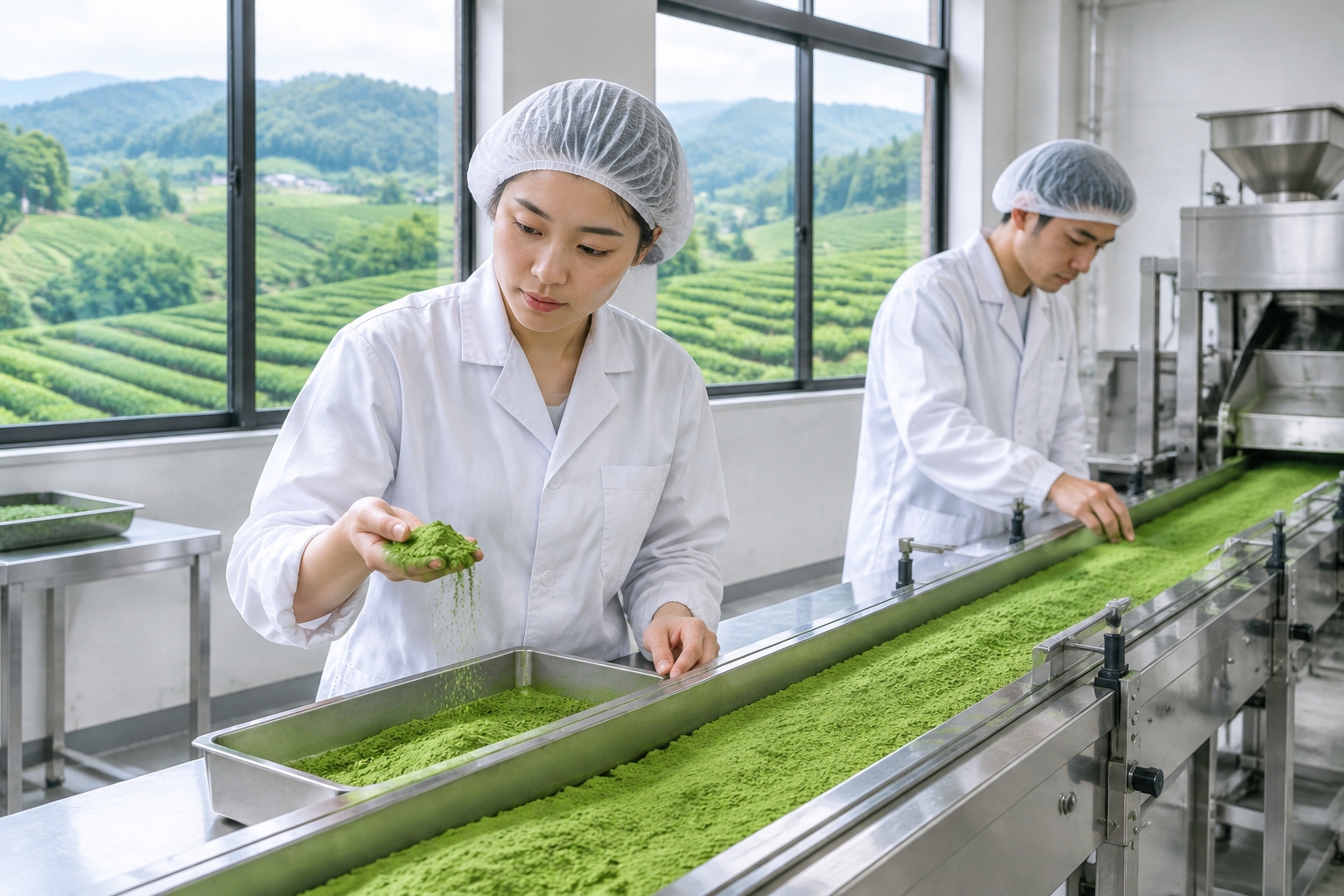
For a farmer, the change can be measured in contracts and harvest schedules. For a factory worker, it can be measured in shifts and quality checks. For a young consumer, it can be measured in a matcha croissant at a neighborhood bakery. These are different experiences of the same supply chain, and they do not fit neatly into a headline about cultural ownership.
Why the Confusion Persists
The confusion comes from the path, not from a conspiracy. Most global matcha marketing was built by Japanese brands and Japanese tourism. The visual language of matcha was fixed in tea rooms, temples, and package design. Chinese tea, meanwhile, became known abroad through a different set of images: loose leaves in tins, gongfu teapots, and restaurants serving jasmine tea. The two images grew apart.
Language adds another layer. The Chinese characters for matcha are the same as the Japanese characters. A casual reader may see the characters and assume a single origin and a single tradition. Media labels often simplify: matcha is Japanese, tea is Chinese. These labels are useful for quick comprehension and misleading for history.
The better framing is exchange. Tea seeds, tools, and techniques moved across East Asia for centuries. Each place made something of what it received. Japan gave matcha a ceremonial architecture and a global identity. China gave it an earlier technique and, now, a growing production base. Neither fact cancels the other.
Finding the Real Story in a Cup
If you want to understand today’s China, a cup of tea is a good place to start. Not because it proves a grand claim, but because it shows how tradition survives in ordinary life. In a single Chinese city, you can find a Song-style whisking workshop, a milk-tea shop with a QR code menu, a supermarket shelf of matcha powder, and an old man with a thermos of green tea on a park bench. None of these scenes is the whole country. Together they are more honest than a slogan.
The next time you order a matcha latte, you can hold two thoughts at once. The green powder carries a Chinese past and a Japanese present. It also carries a Chinese future, made in factories and tea fields that most foreign visitors never see. That is not a story about who won. It is a story about how culture moves, and how people keep making it their own.
Start the discussion at forum.chinacomes.com