

A shop wakes up at 6:20
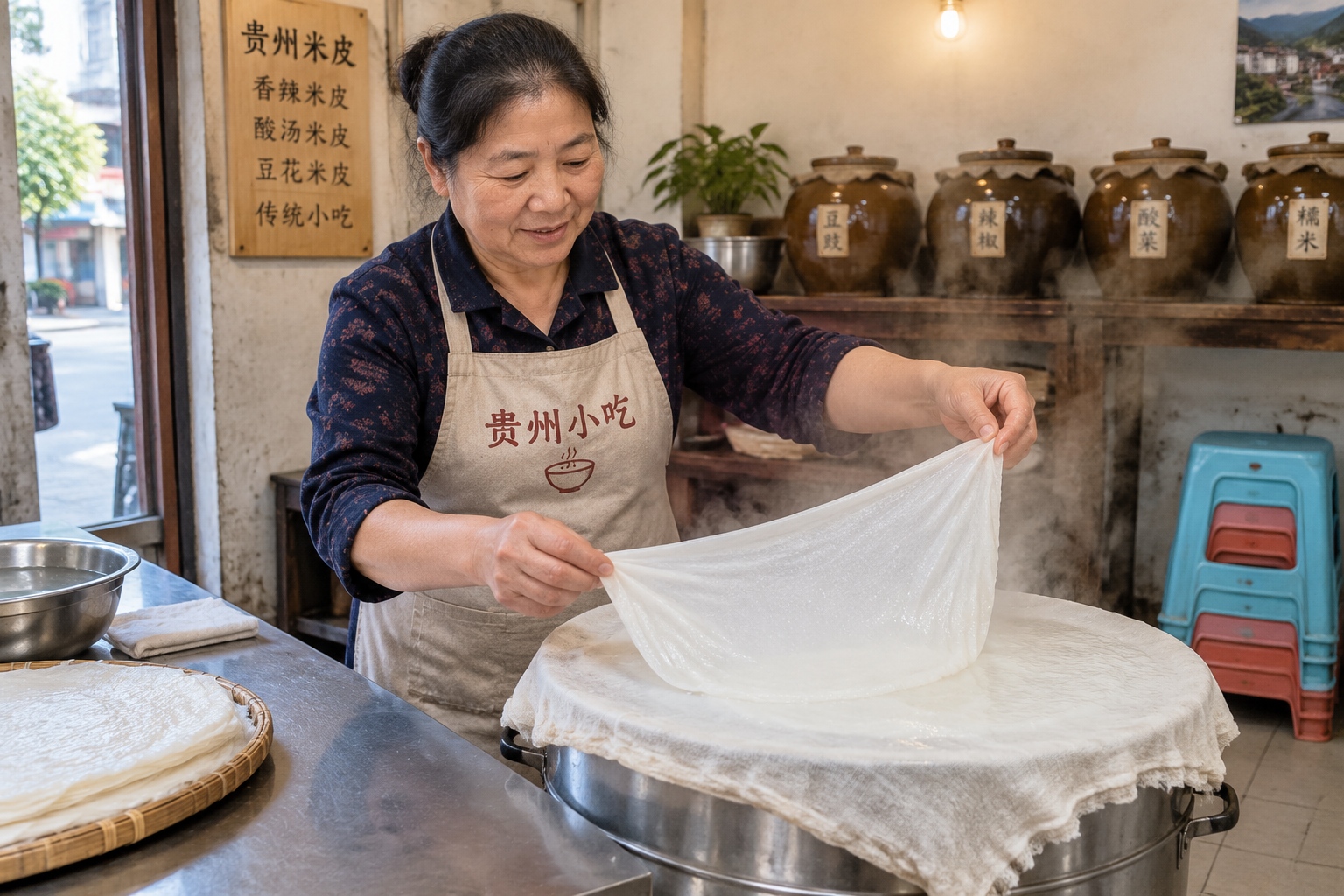
The steel counter is still cold when Yang arrives. By 6:20 two burners are lit, and the first thing she does is not chop or fry. It is steam rice batter, one ladle at a time, on a piece of cloth stretched over a pot of boiling water.
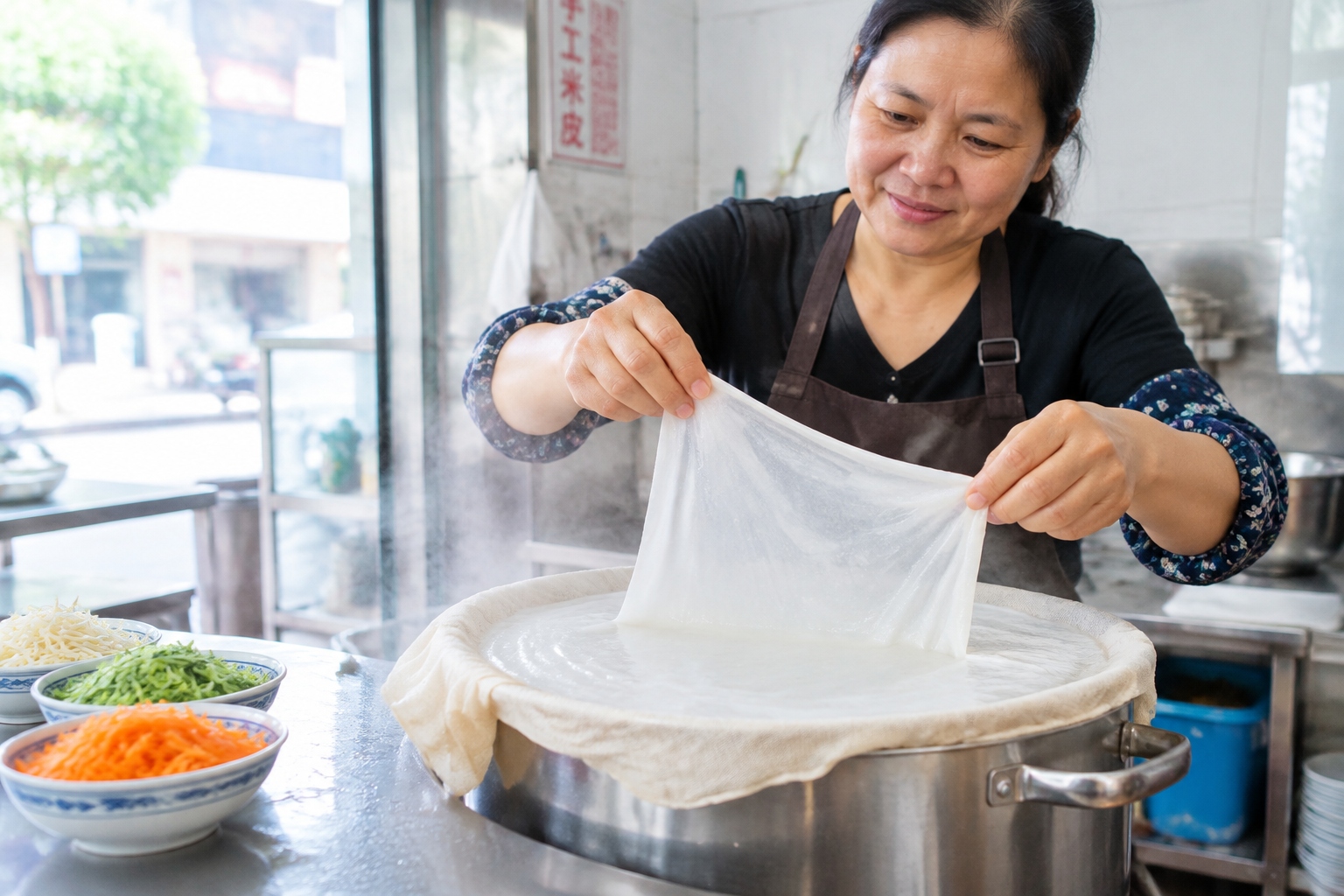
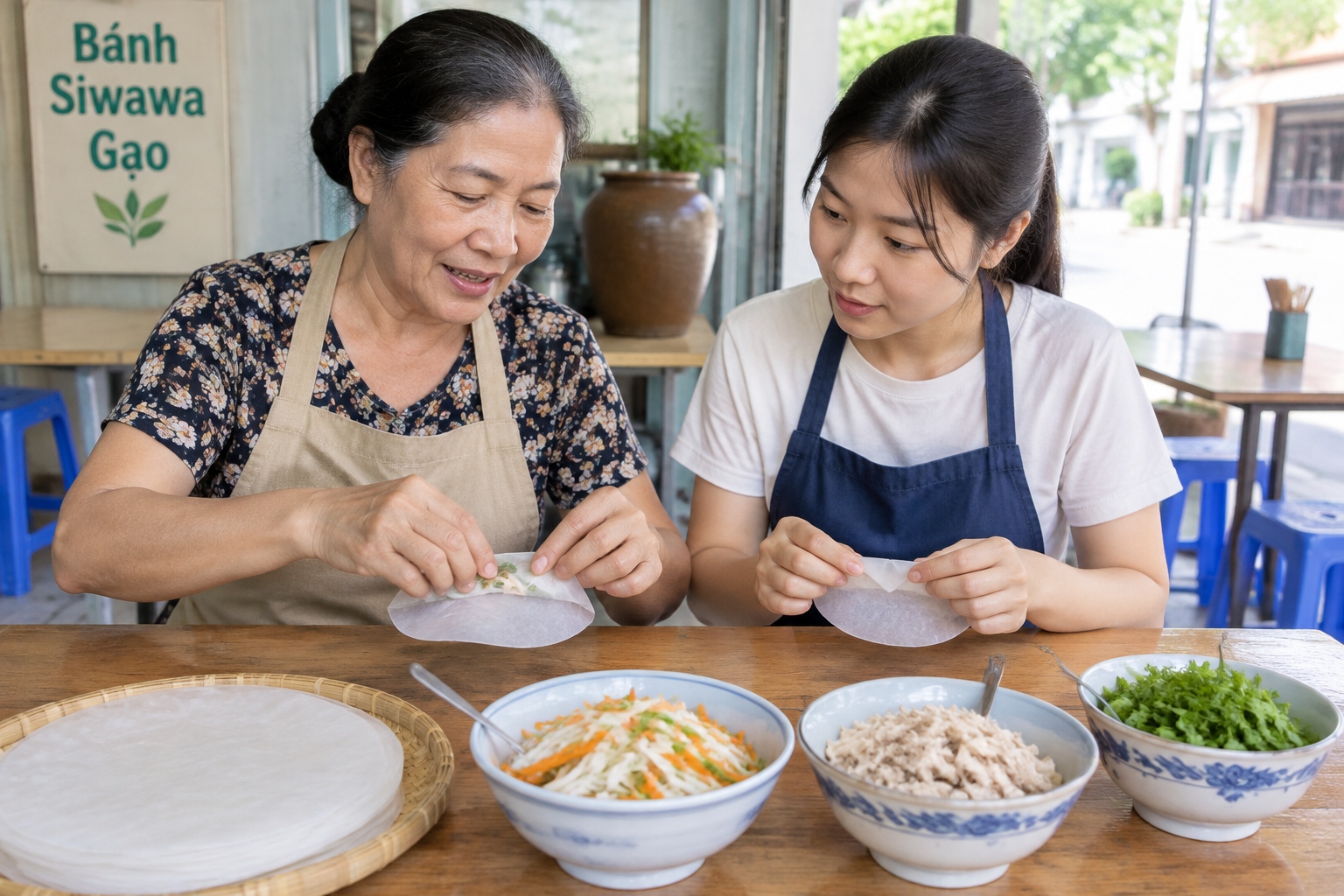
Ten seconds later she lifts the cloth and a pale, almost transparent sheet peels away. That is a siwawa wrapper. It will be stacked with ninety-nine others, folded around a pile of shredded vegetables, and eaten by someone at lunch who wraps it themselves at the table.
Her shop is about fifteen square meters, on a side street off Zhonghua Road in central Guiyang, the capital of Guizhou province in southwest China. Four tables, a fridge, a stack of plastic stools, and a row of clay jars behind the counter. The jars hold fermented sour soup: tomato, chili, rice water, salt and time.
The morning looks like a craft. The rest of the day looks like a business: 200 lunch covers, 60 delivery orders, two staff to pay, rent due on the first.
First, what “intangible heritage” actually means here
In English, “intangible cultural heritage” sounds like a museum category. In China it is an administrative one. Techniques are nominated onto lists at city, provincial and national level, and the people who practise them can be formally named as inheritors. The status brings recognition, modest subsidies, and a slot in school programmes and tourism campaigns. It does not come with a glass case. That is the whole problem, and the whole point.
Guizhou’s lists are crowded — embroidery, batik, silverwork, and a long section on food. In Guiyang, the making of siwawa, changwang noodles and tofu balls are all recorded as local techniques.
What that means in practice:
Siwawa, literally “silk baby”, named for the way the wrapper swaddles its filling. The wrapper is rice, ground, lightly fermented, and steamed to order. The fillings are usually a dozen or more shredded vegetables, plus pickled radish and a pinch of zhe’ergen, the fishy-tasting herb Houttuynia that splits eaters into two camps.
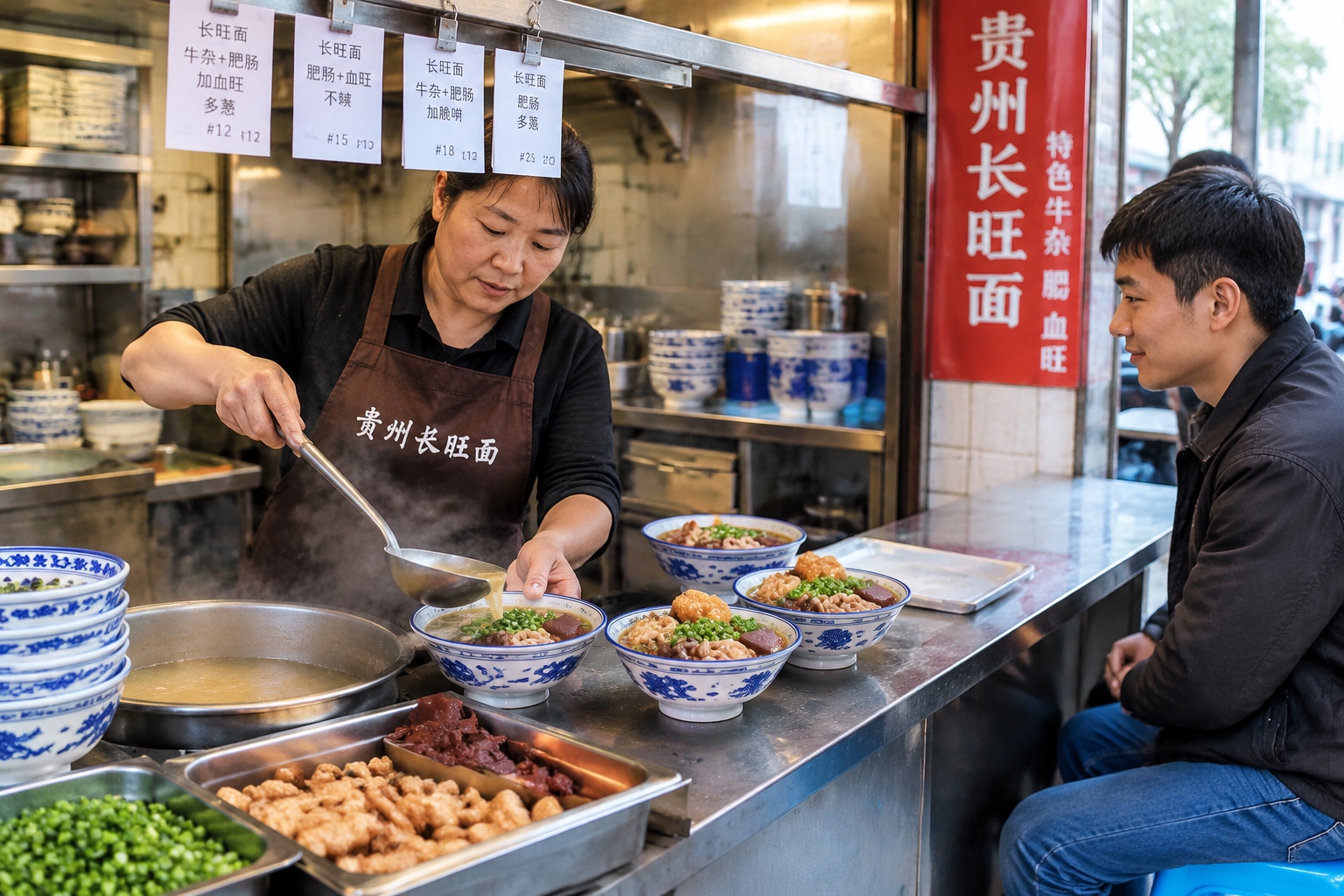
Changwang noodles: pork intestine and congealed blood, a spoon of crispy fried pork crackling, on egg noodles pressed with alkaline water so they stay springy. The noodles cook in under a minute. The blood curd has to be blanched at the right temperature or it turns rubbery.
Doufu yuanzi: tofu balls with a crackling shell and a hollow, custardy centre, shaped by hand from a fermented tofu paste and dropped into hot oil. Too much alkali and they taste of soap; too little and they collapse.
None of this is exotic to anyone from Guiyang. It is breakfast, or lunch, or a snack at four in the afternoon. The heritage label is recent. The eating is not.
The pressure isn’t abstract
Lunch in Guiyang runs roughly 11:30 to 1:30. In those two hours a mid-sized snack shop might serve 150 to 250 bowls. It isn’t a gentle curve. It’s a vertical wall of tickets, then silence.
Three things have made that wall steeper over the past decade.
Delivery. On Meituan and Ele.me, customers expect food in 30 minutes, and platforms take a commission in the region of 20%. A 13-yuan bowl of noodles earns the shop noticeably less than it does at the counter. It also changes the food itself: noodle soup that sits in a sealed box for twenty minutes arrives as one warm starch block.
Costs. Commercial rent in central Guiyang has climbed. A reliable kitchen helper costs roughly 4,000 to 5,000 yuan a month, and fewer young people want a job that starts at 4:30 in the morning.
Customers. Younger diners order less offal and less oil. Tourists want the version they read about online. Regulars want exactly what they had ten years ago, which is a third thing again.
What gets cut, and what doesn’t
Talk to enough shop owners and a pattern appears. They divide the kitchen into two kinds of steps, even if they never use these words: steps that carry the taste, and steps that only carry the labour.
What stays handmade, almost always: the siwawa wrapper, the sour soup, the chili oil, the crackling, and the final blanching of the blood curd. These are the places where a shortcut shows up in your mouth.
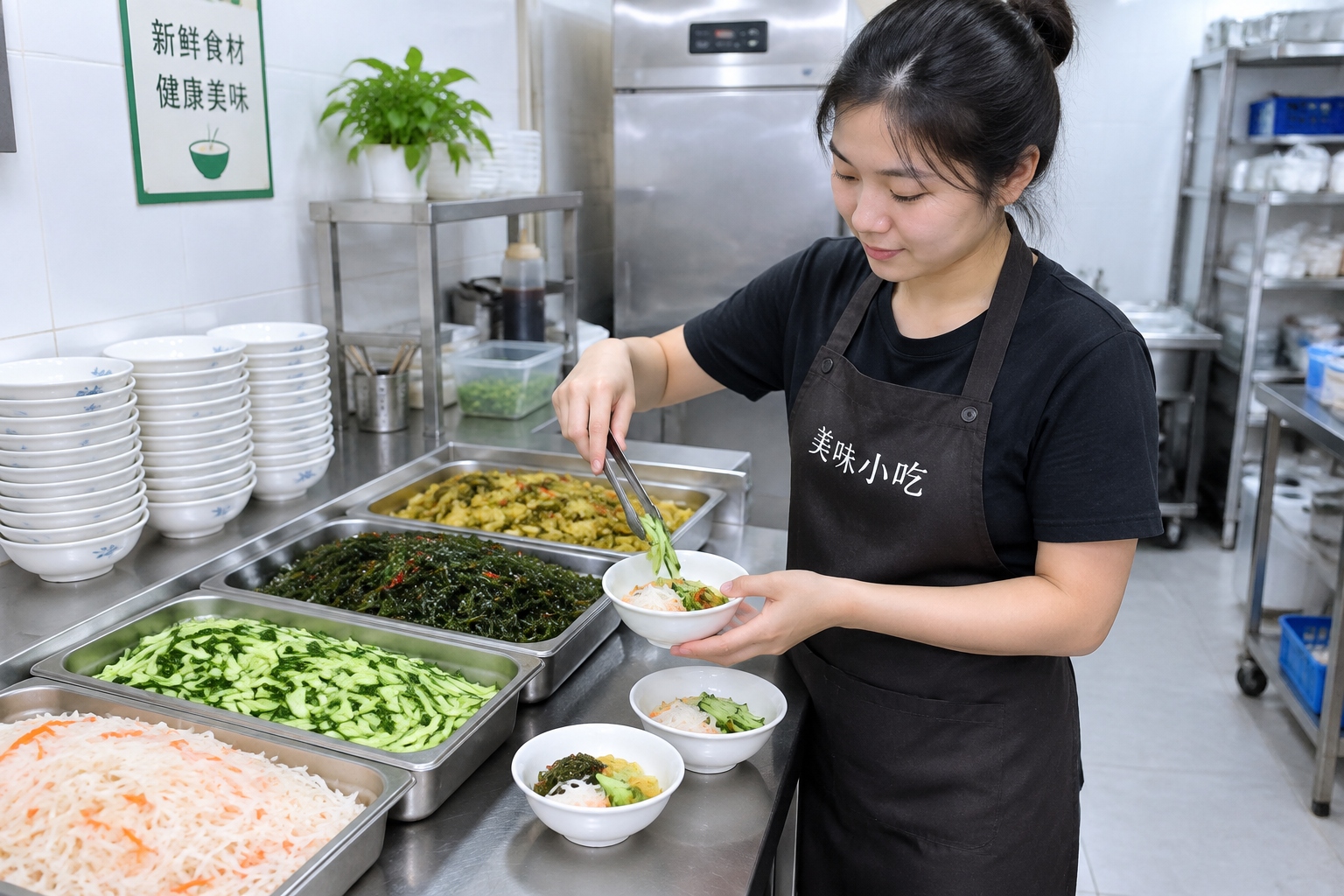
What gets standardised: vegetable shredding (a machine does in four minutes what took forty), portioning by weight, broth in large batches, noodles par-cooked and finished to order, and the flow of orders itself — a screen in the kitchen, one person calling, one person assembling.
Equipment changed quietly. Many shops now run induction plates alongside gas, because induction is easier to control at peak. Steamers are stainless and stackable. Some wrappers come off a temperature-controlled griddle instead of a pot of water. It is still rice batter and steam. The heat is just more predictable.
One owner’s arithmetic
Yang’s rough numbers: a skilled wrapper maker produces 800 to 1,200 sheets a day by hand, about ten seconds each. Machine-made wrappers cost a fraction of that, but they tear when you fold them and taste flat. So she pays a person.
Her sour soup takes five to seven days per batch. If a batch turns, she loses a day’s revenue and has no backup for the lunch rush. So she keeps two jars running in parallel, like a sourdough starter.
She also quietly buys her chili oil base from a supplier now. Ten years ago she fried it herself. “The smell was better,” she says. “But one person cannot do that every day and also run the front.”
That sentence is more or less the whole article.
Can a customer tell?
Some can. Regulars notice the wrapper first — whether it has that slight chew, whether it holds together when you overfill it, which everyone does. A man in his sixties told me he stopped going to a shop near his office when they changed suppliers. He couldn’t explain how he knew. “It felt like paper,” he said.
Tourists are a different market. They photograph the table, ask what to put inside, and often judge the meal by how it looks. Several shops now sell a single-person set with ten fillings instead of twenty, because a traveller eating alone can’t finish a full portion and hates wasting food.
Delivery customers are judging a different meal entirely. For noodles, some shops now pack the soup and the noodles separately and tell you to combine them at home. Less convenient for the shop, more honest to the food.
A craft is not a photograph
The most encouraging thing in these kitchens is also the least photogenic: the training.
A young helper learns the wrapper in about three months and the whole station in around two years. Some owners send staff to short courses run by heritage centres or vocational schools; others teach in-house because it’s cheaper. Tools keep being modified by the people using them — a wider griddle, a better ladle, a rack that holds twelve bowls instead of eight.
Supply chains steadied too. Sour soup base, fermented in Kaili and vacuum-packed, now reaches Guiyang shops by the case. Purists dislike it. It also means a small shop can open without a grandmother who has kept a jar alive for thirty years.
What tradition tastes like at 12:15
By noon, Yang’s shop is loud. Someone is calling orders. The steamers are going. A woman at table three is building a siwawa, badly, and laughing about it. A courier in a yellow jacket waits by the door, checking his phone.
The heritage of this food isn’t in a display case. It’s in the ten seconds it takes to lift a wrapper off the cloth, repeated a thousand times, in a room where the rent is high and the lunch rush is coming. The compromise is the point: keep the steps that carry the taste, mechanise the ones that don’t, and still be open tomorrow.
Start the discussion at forum.chinacomes.com